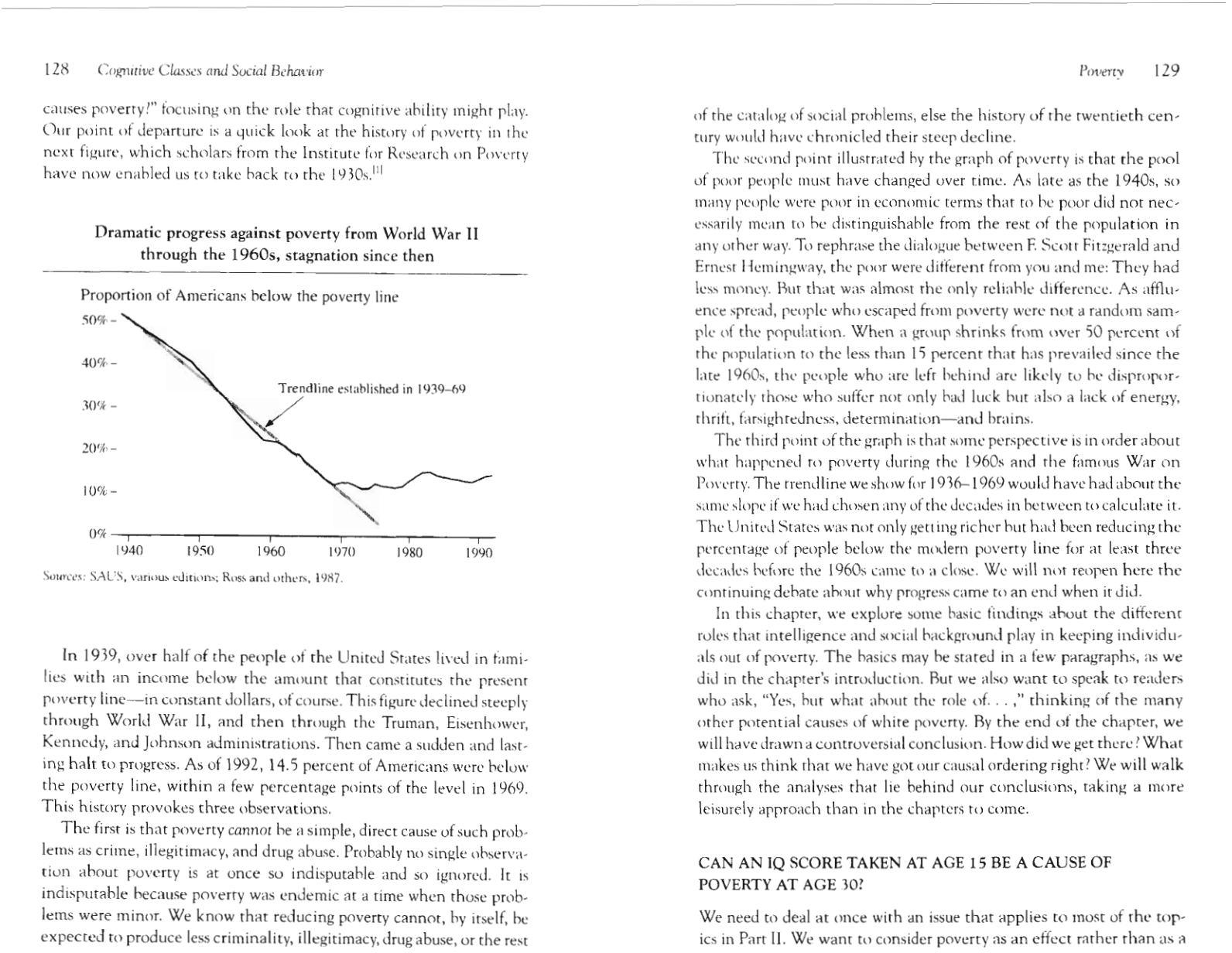
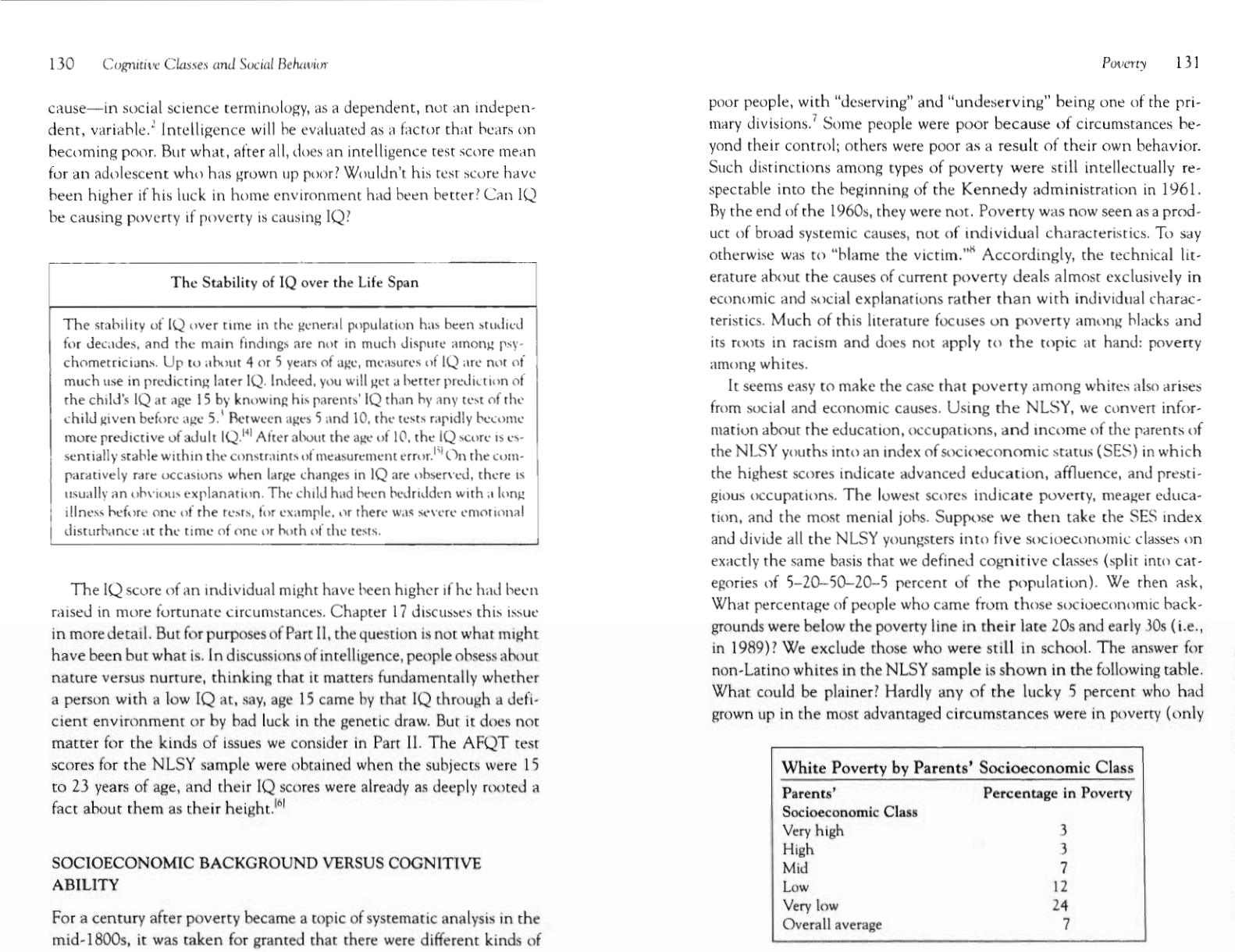
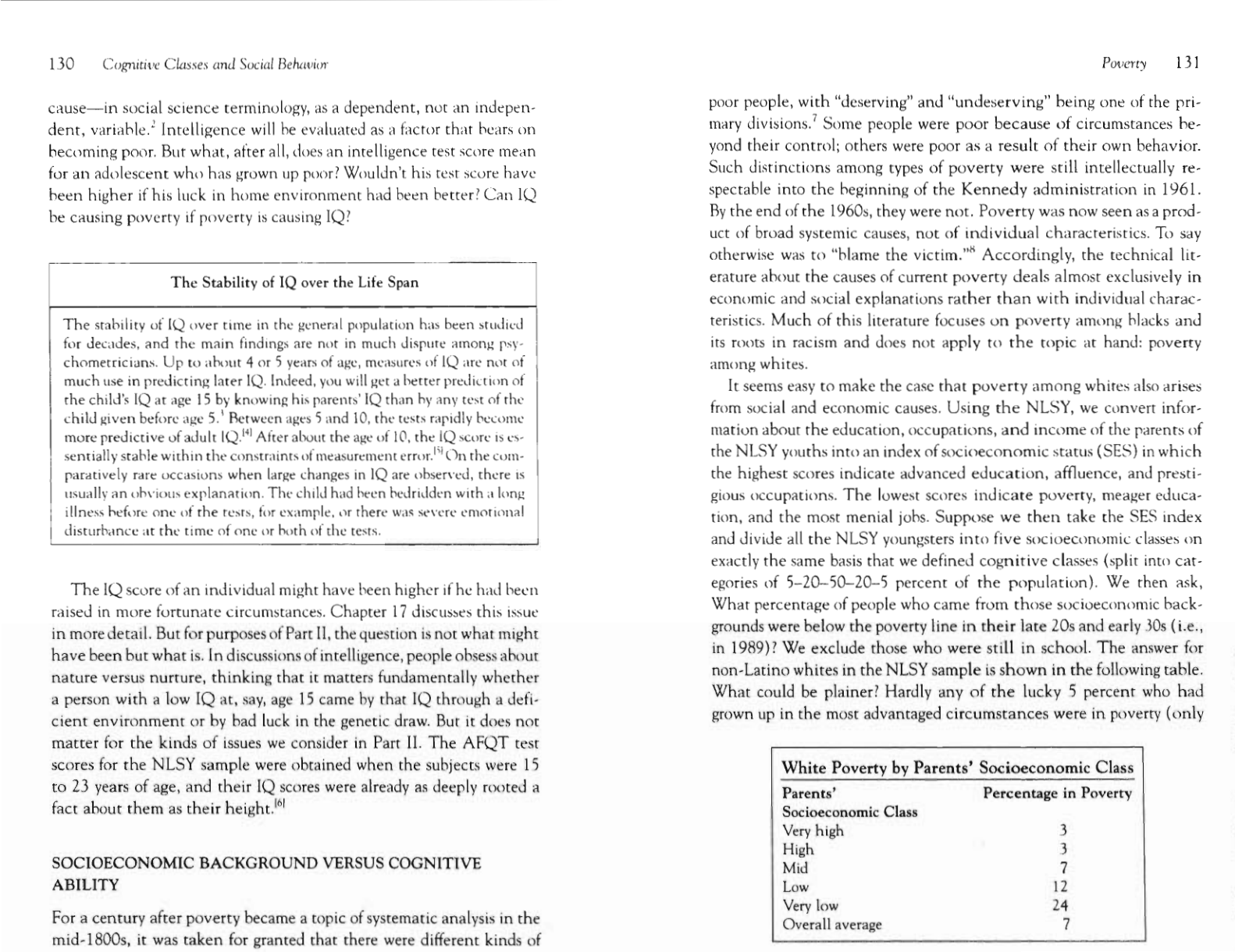
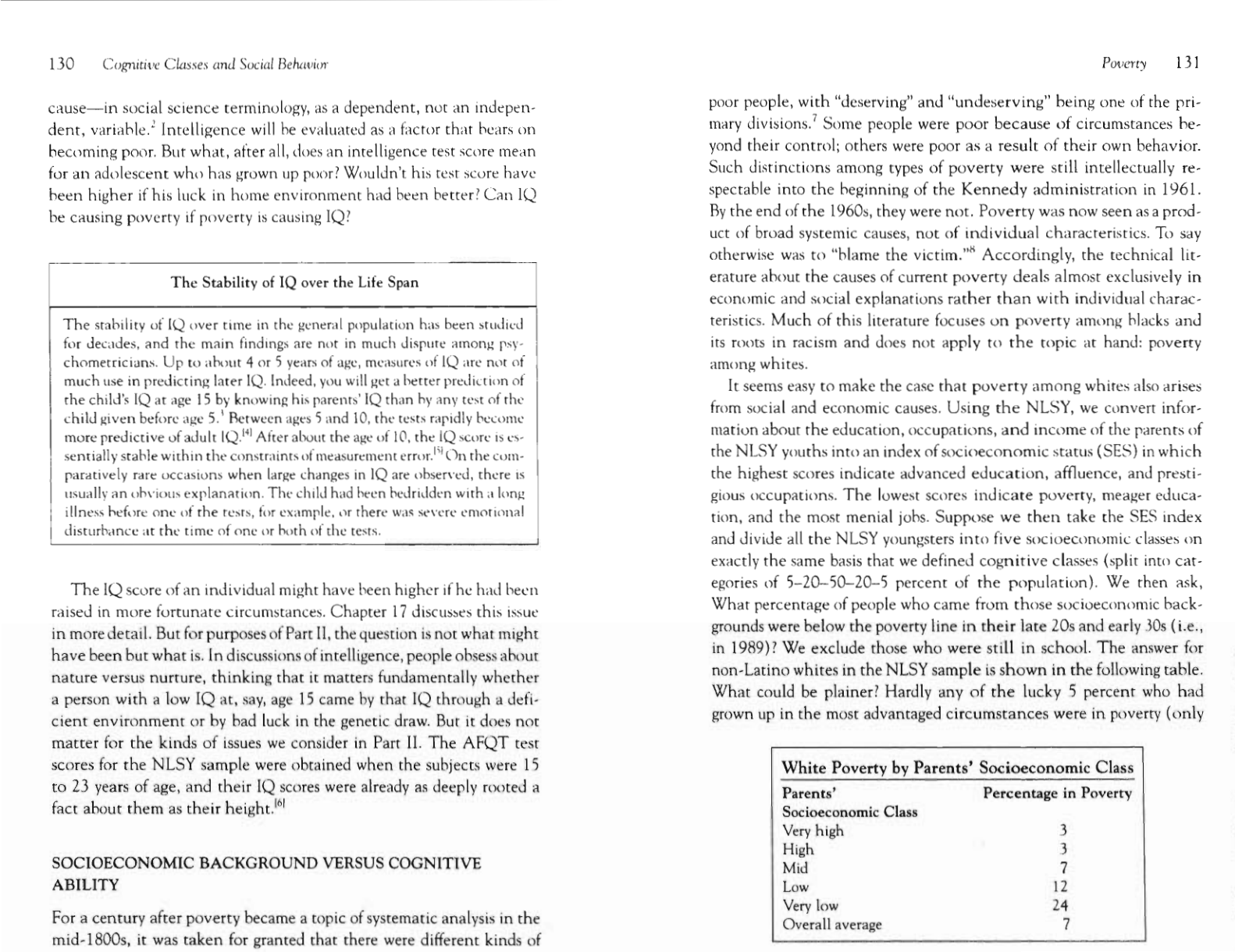
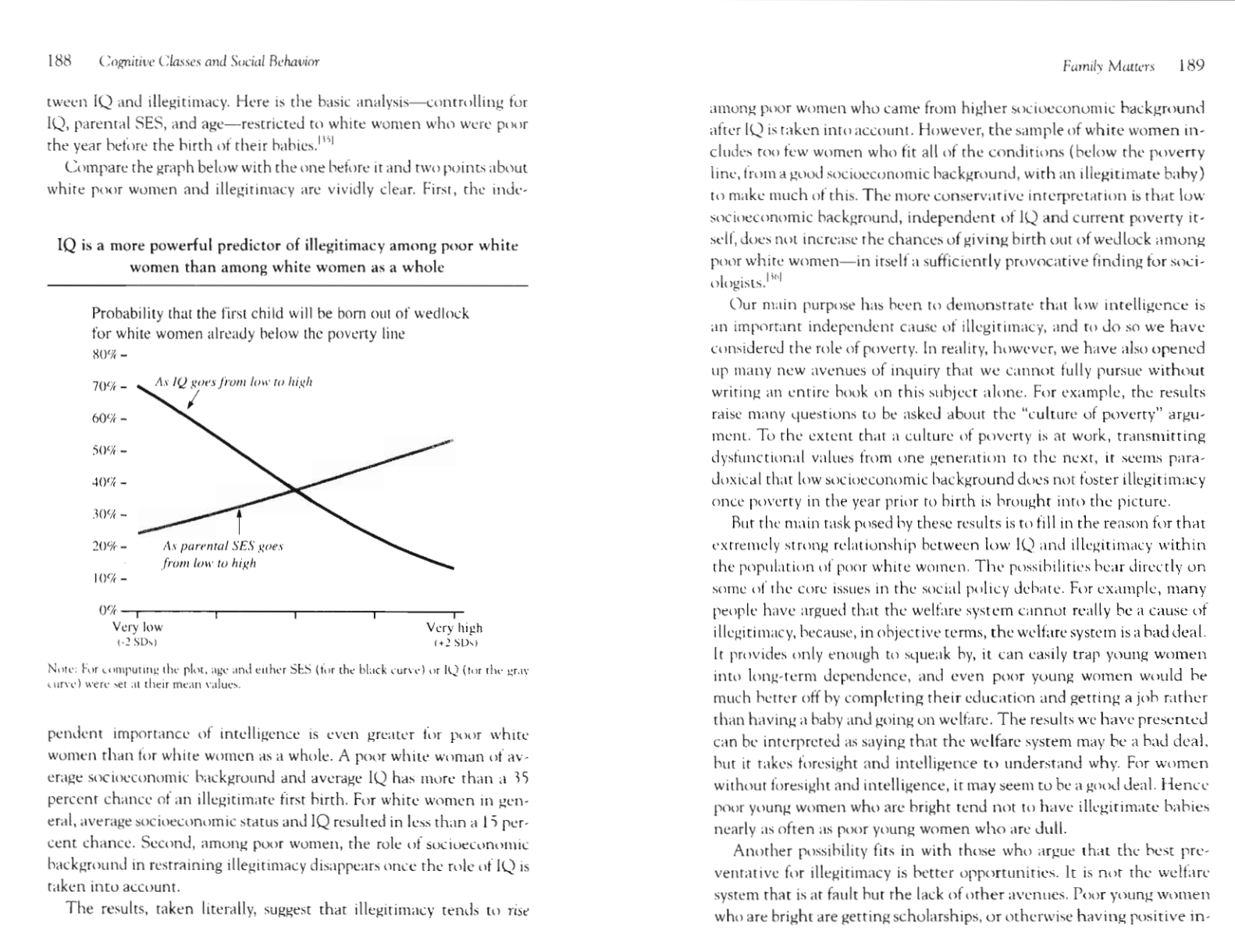
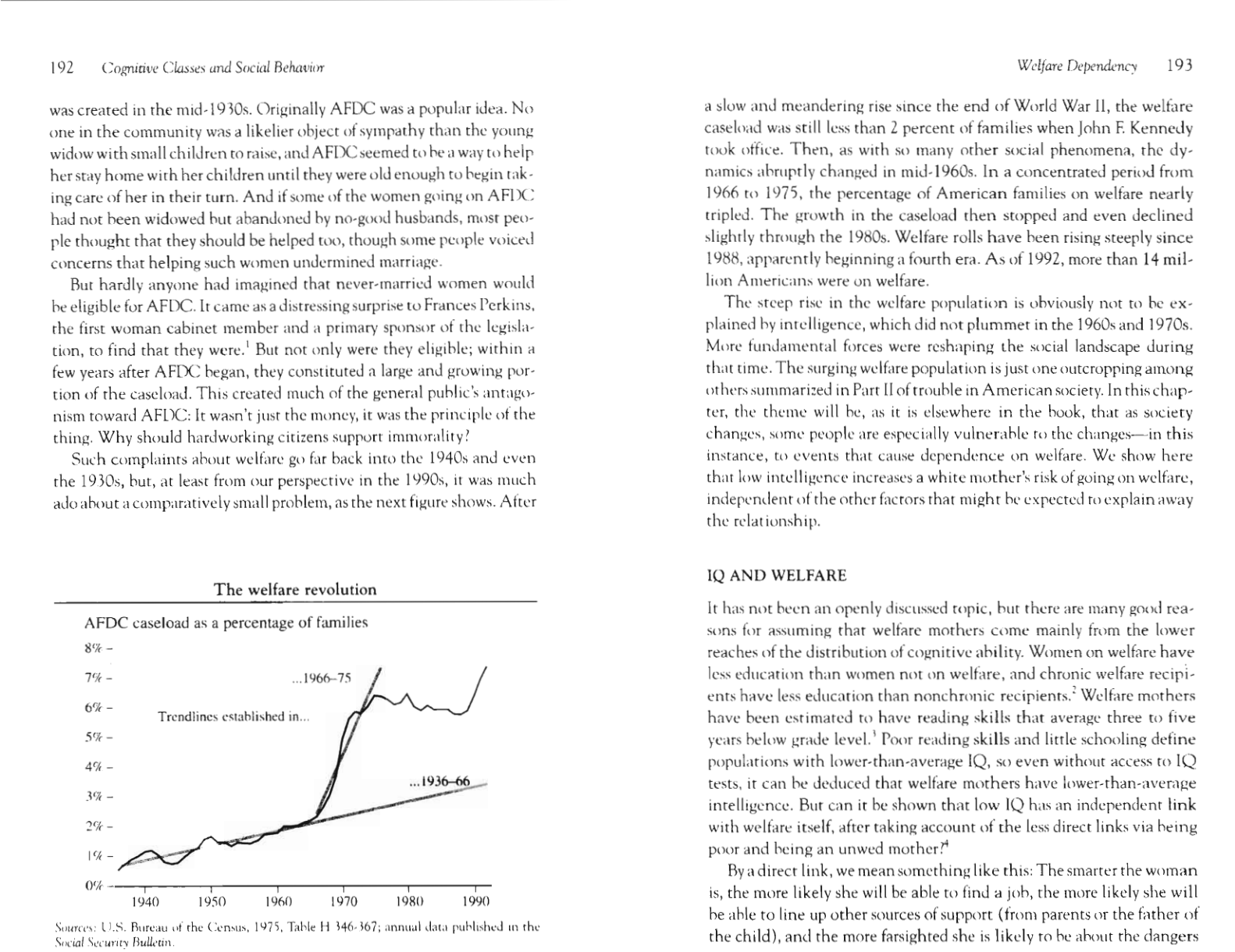
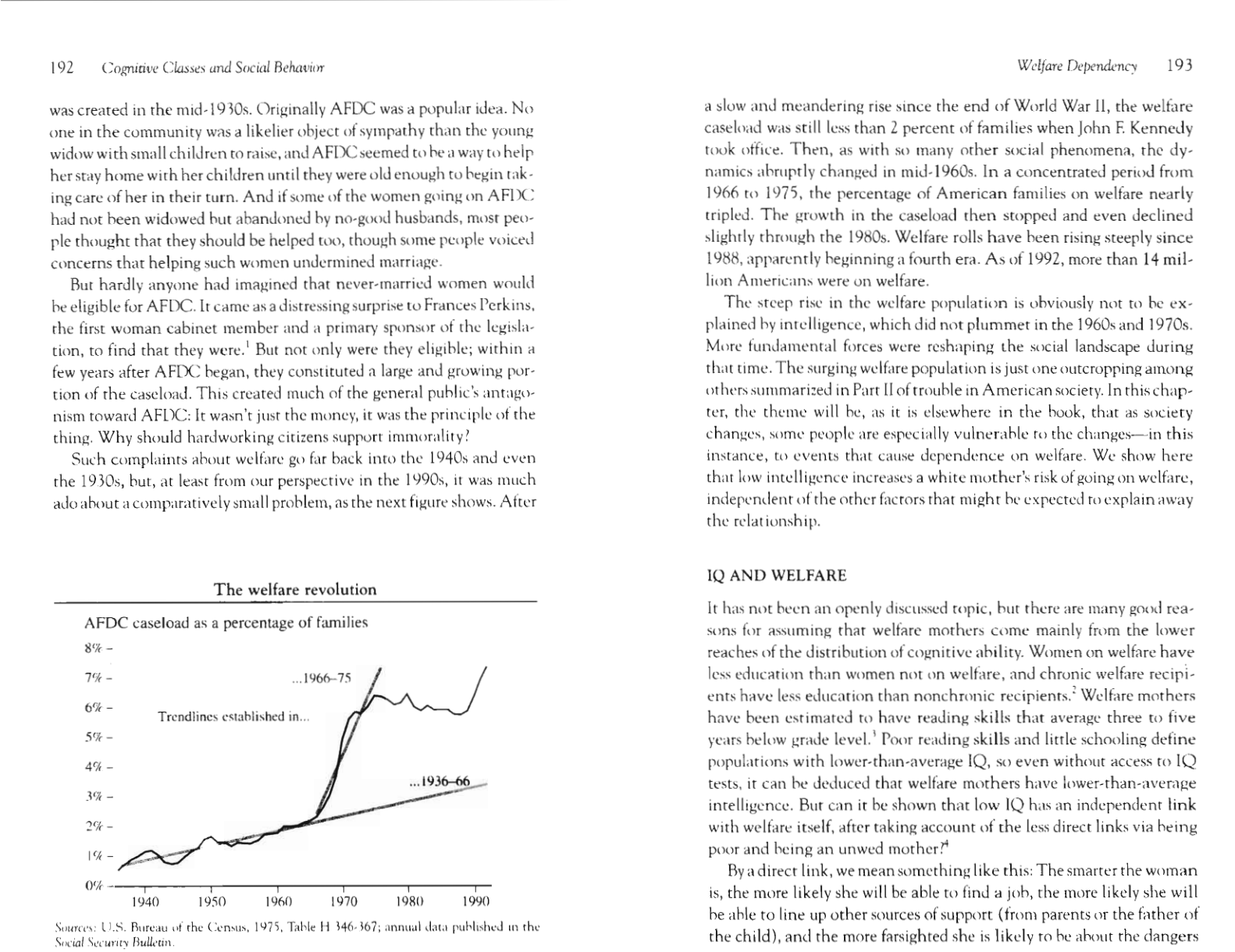
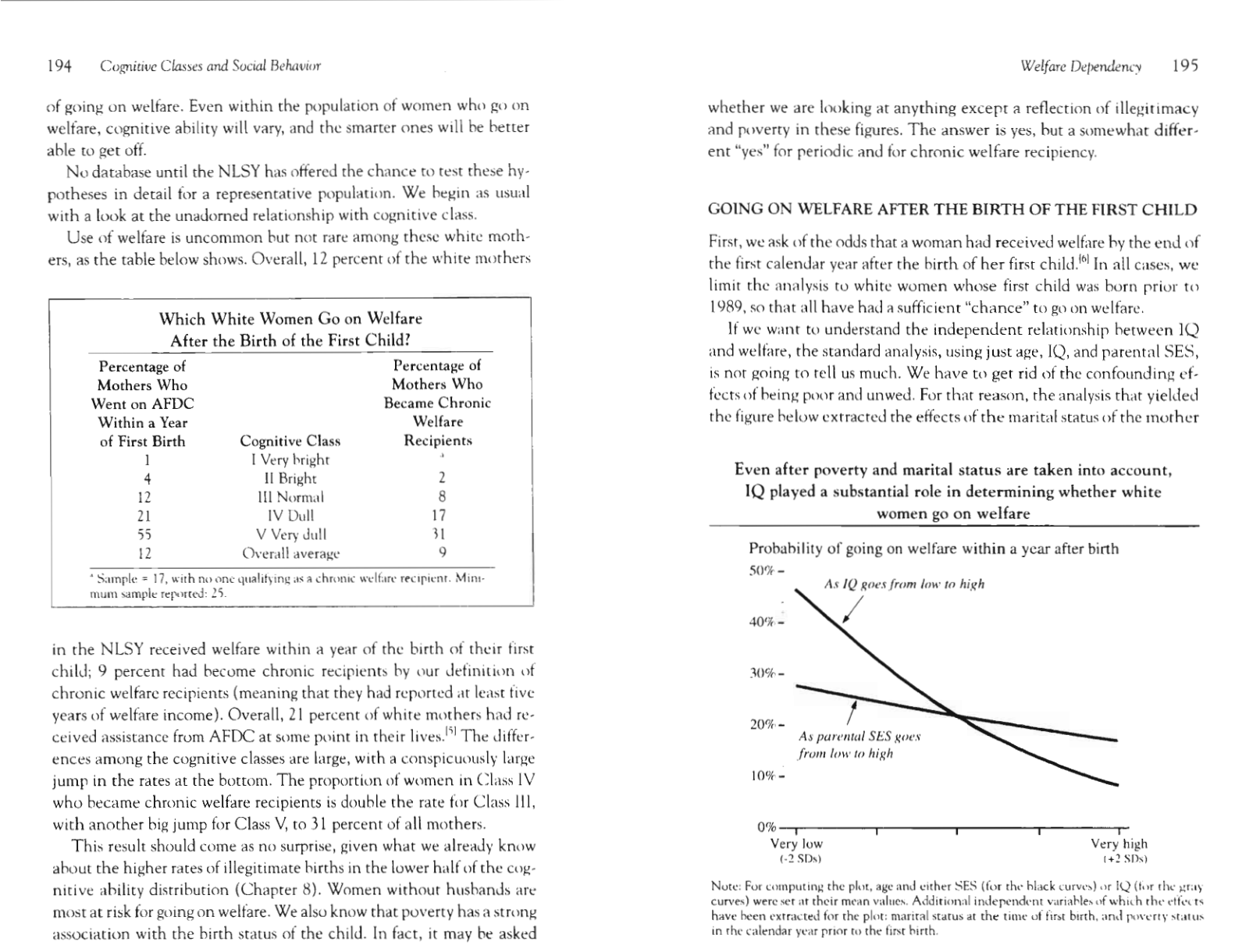
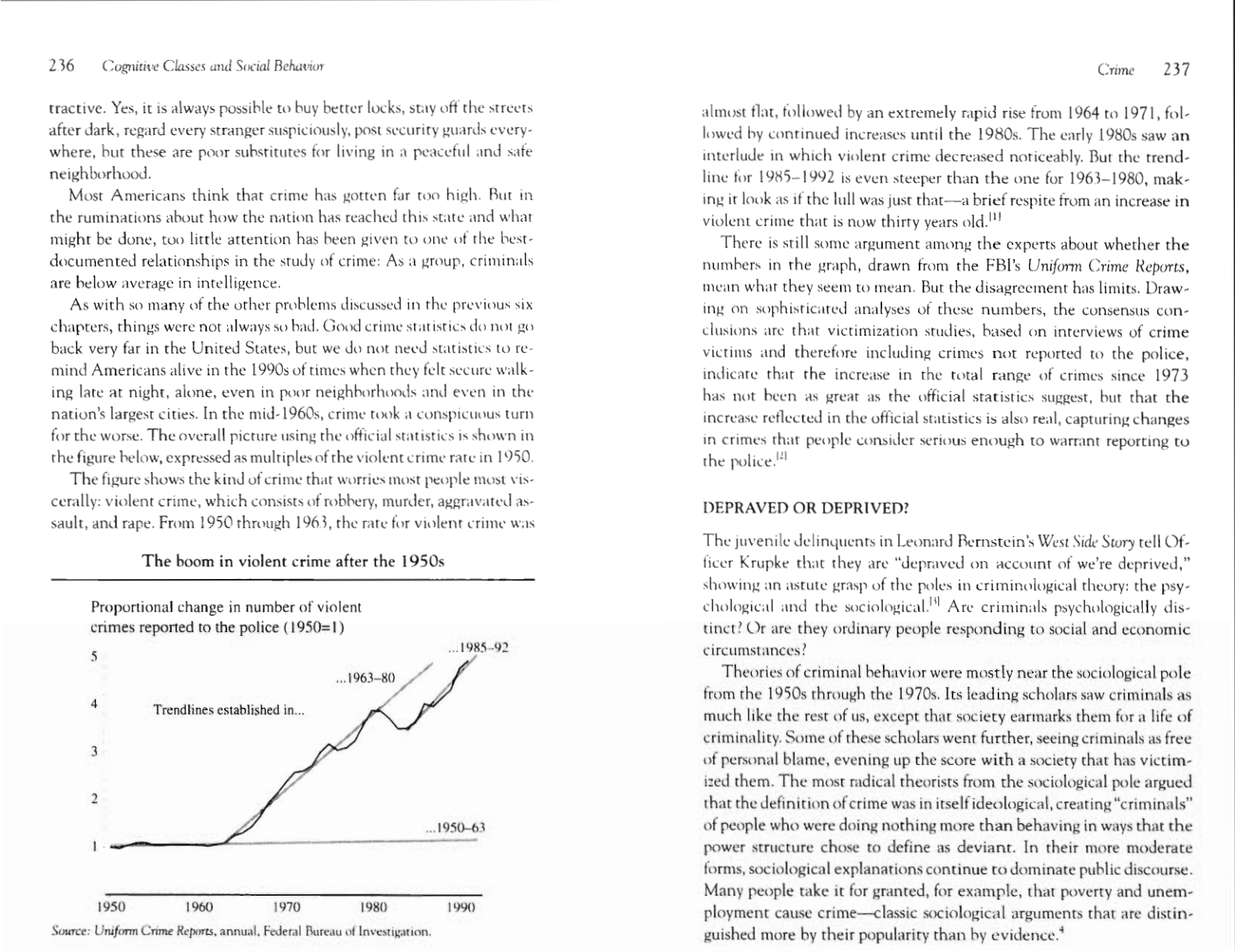
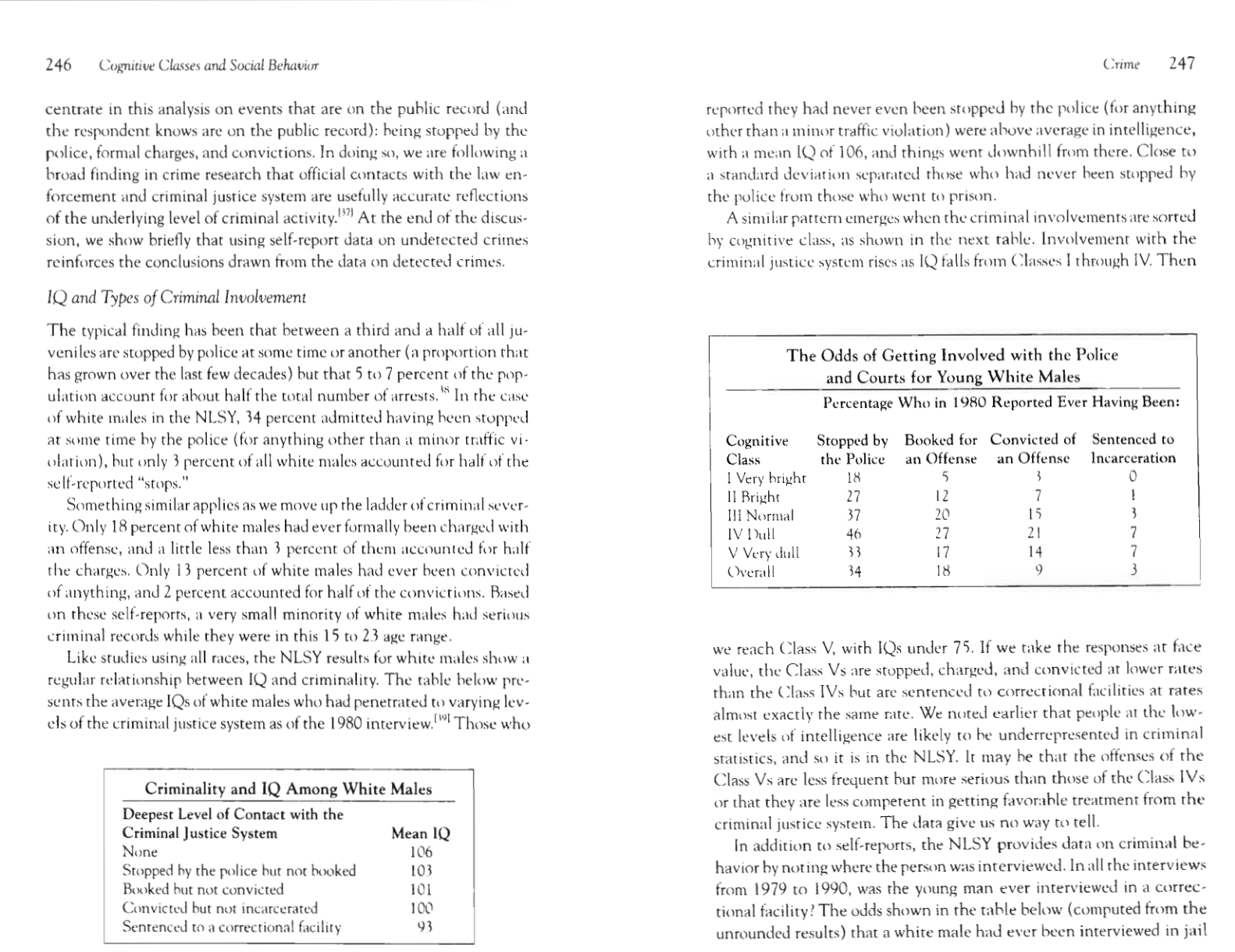
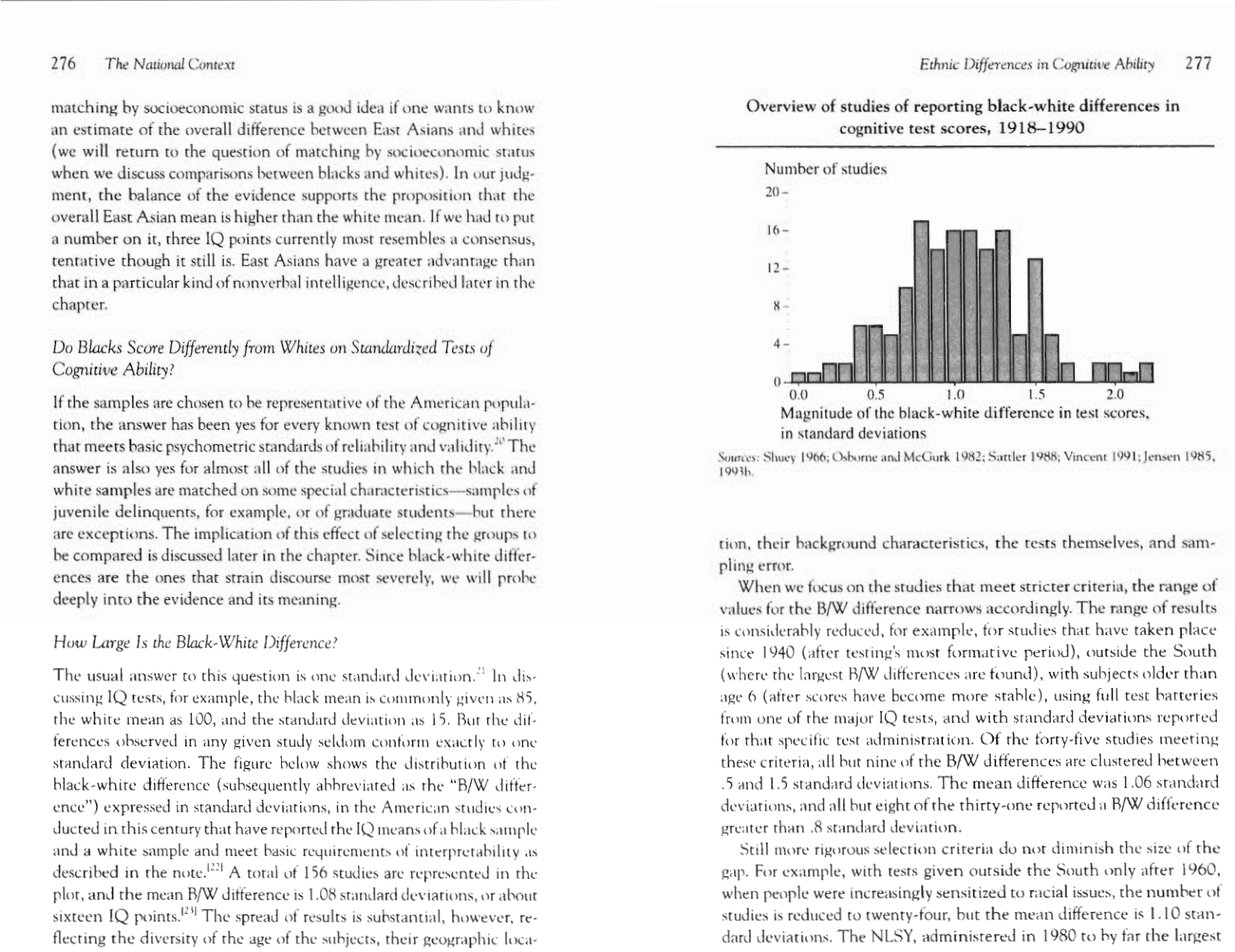
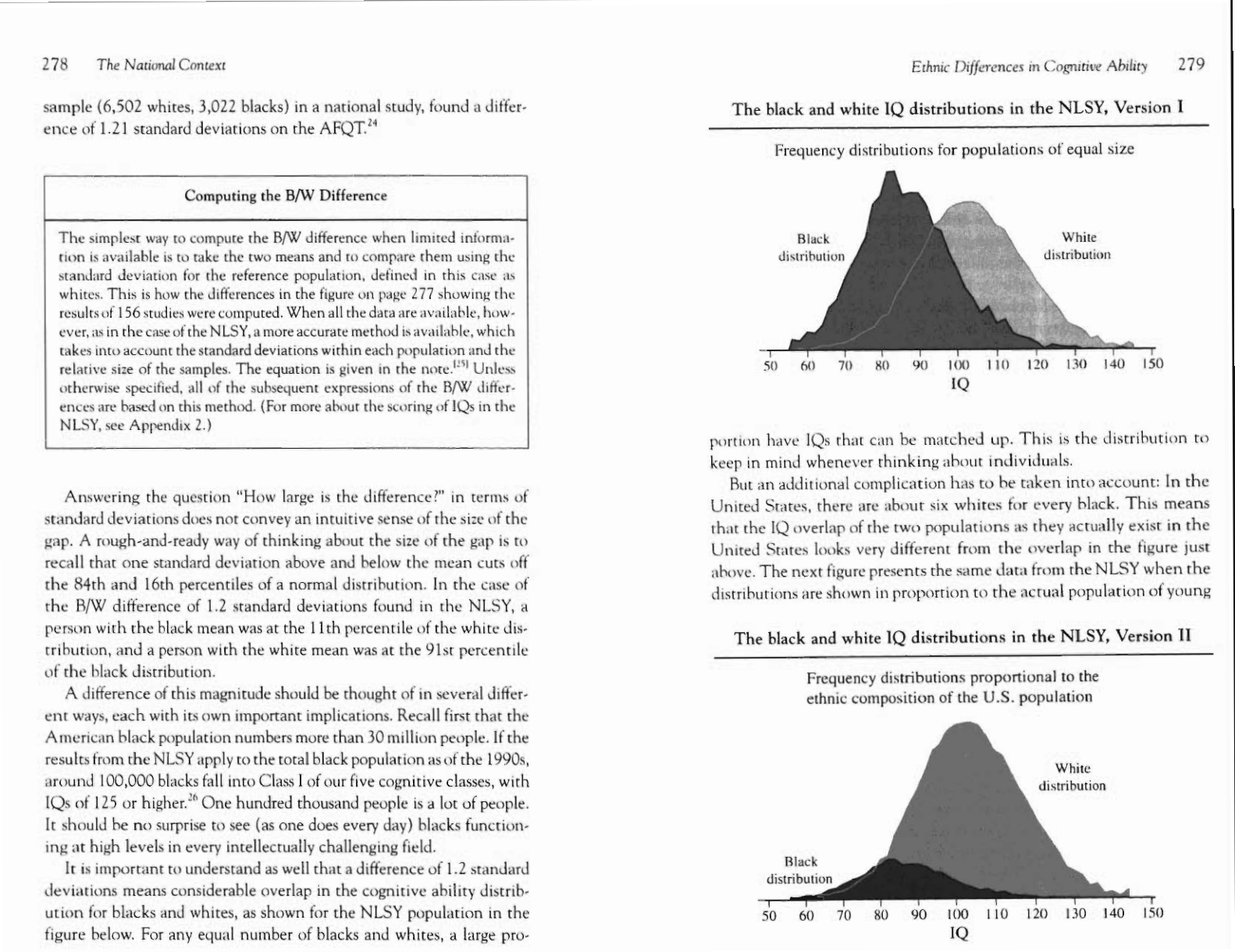
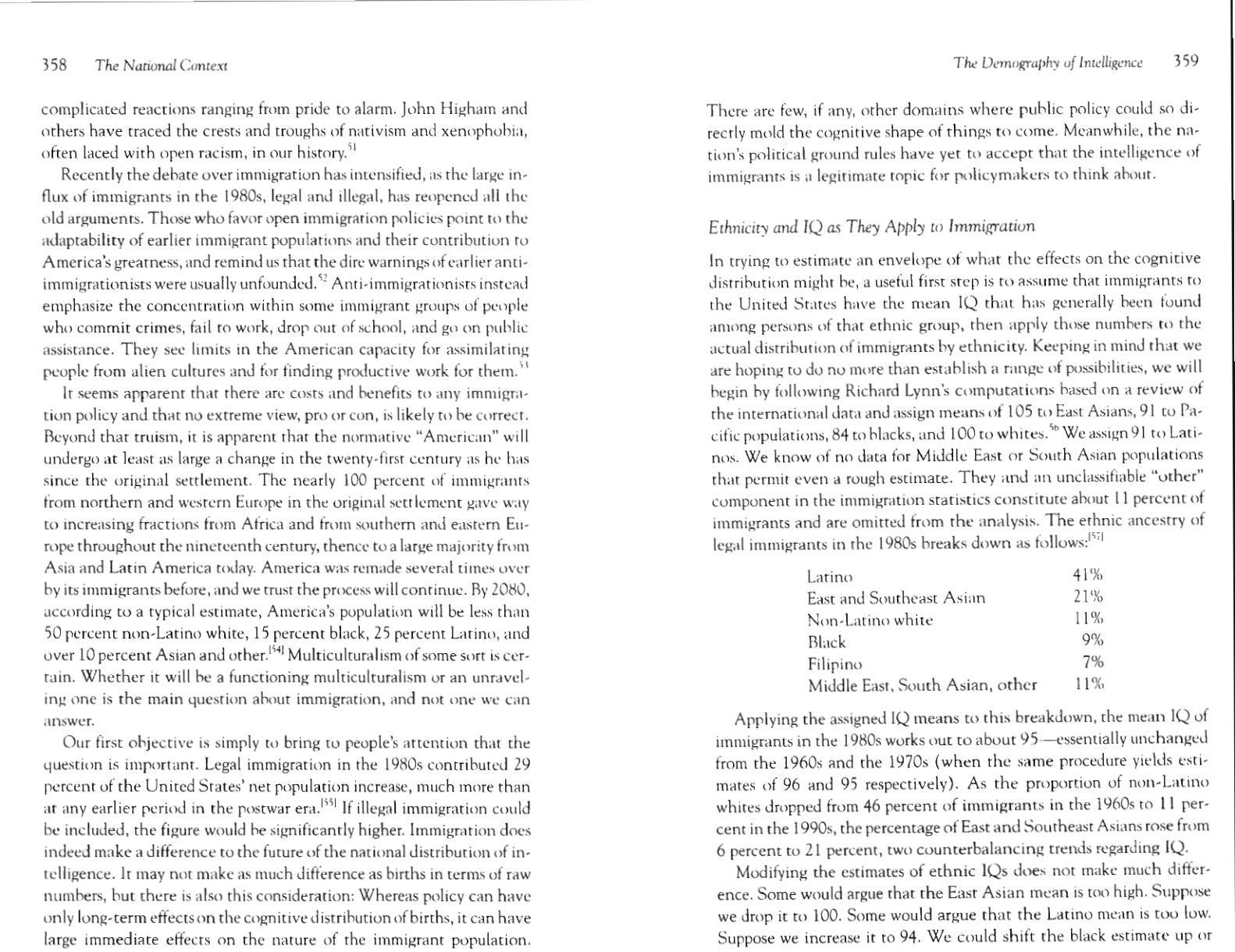
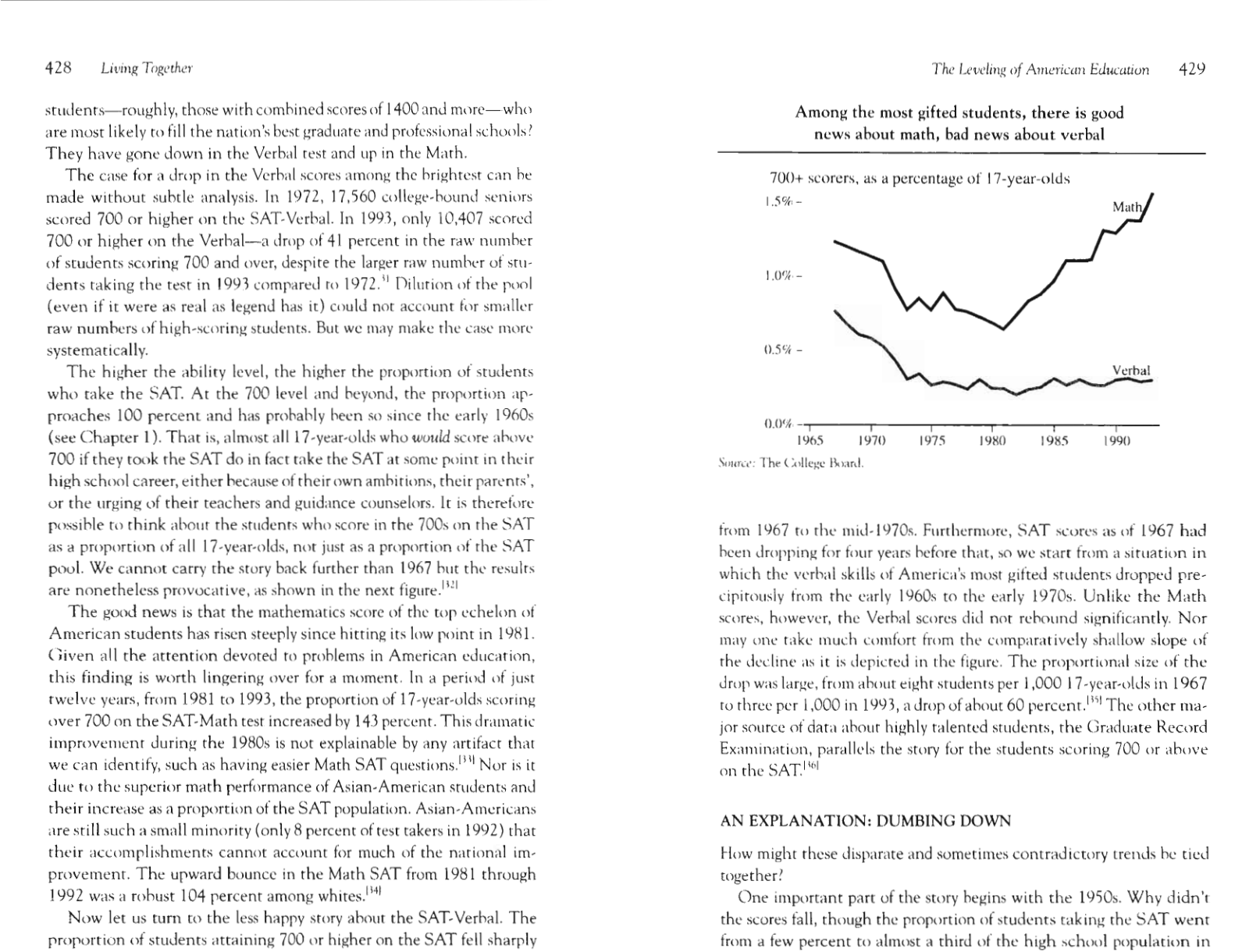
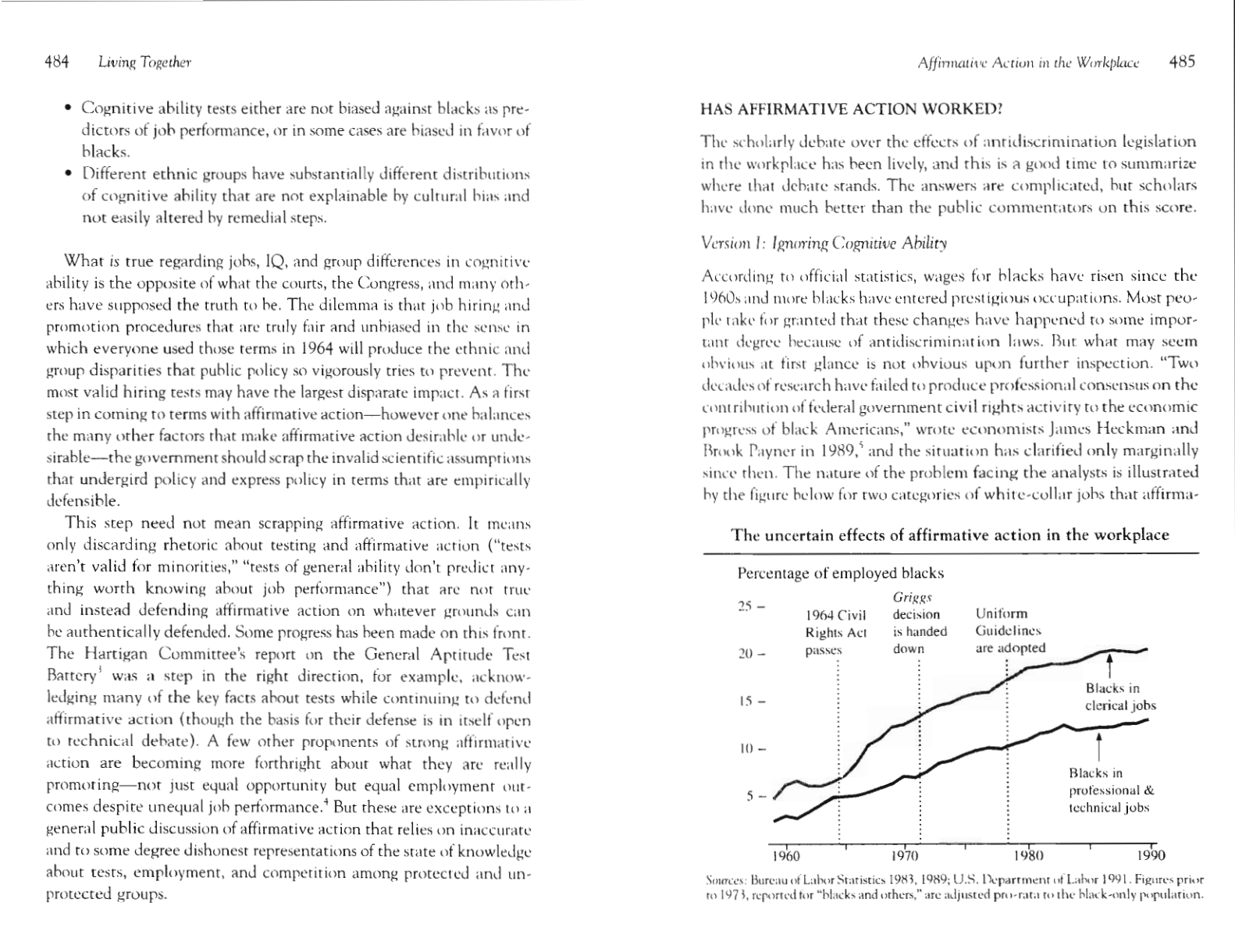
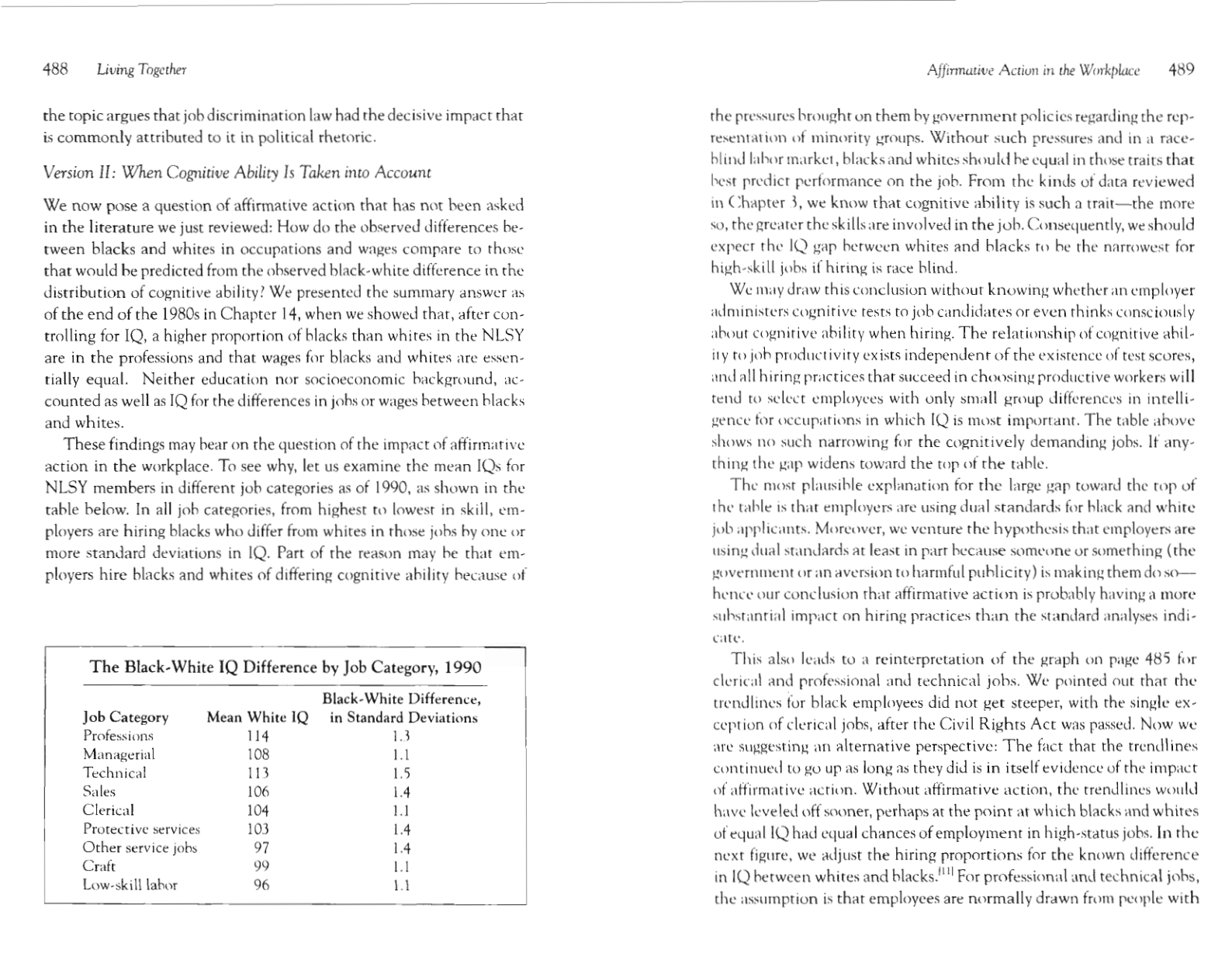
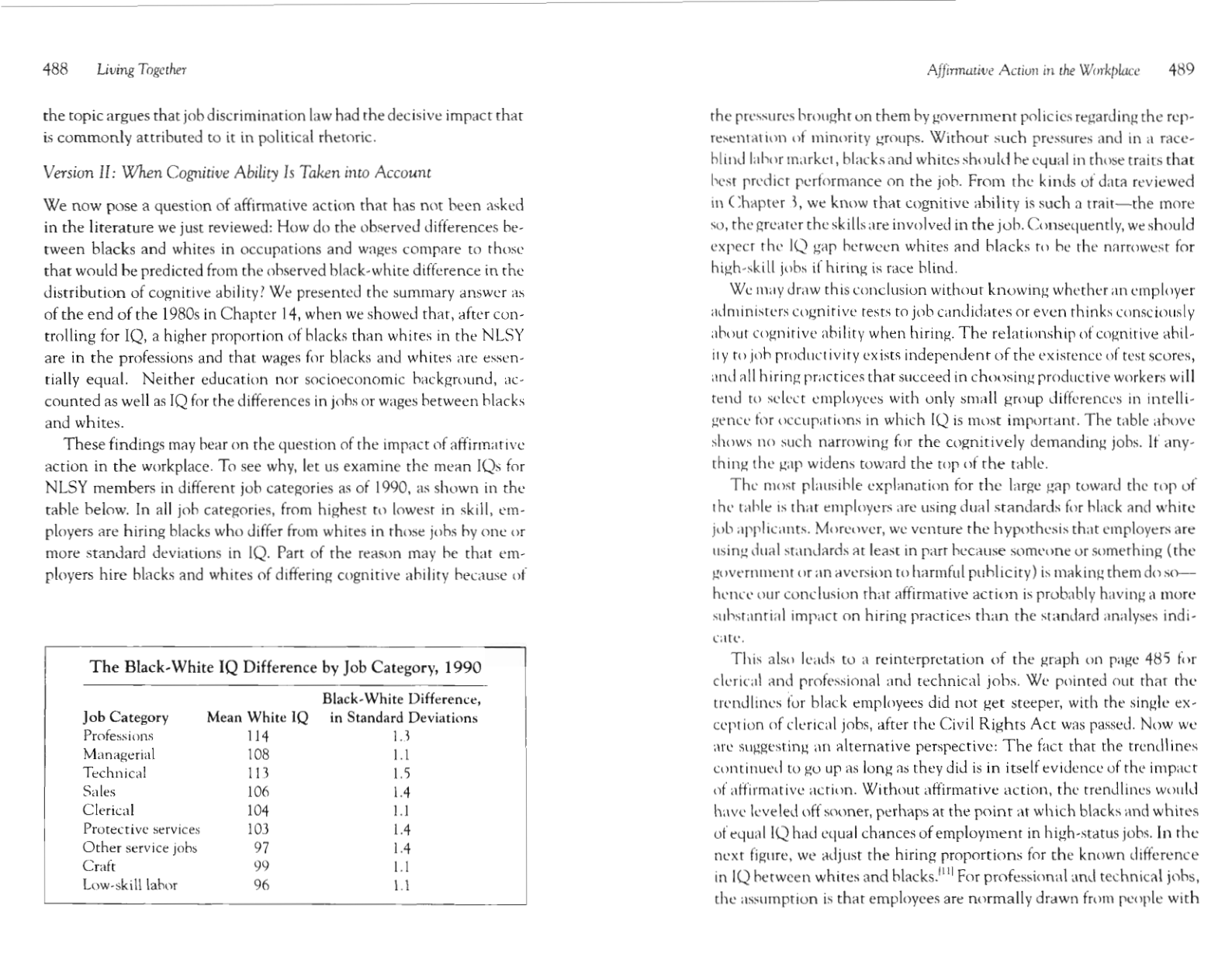
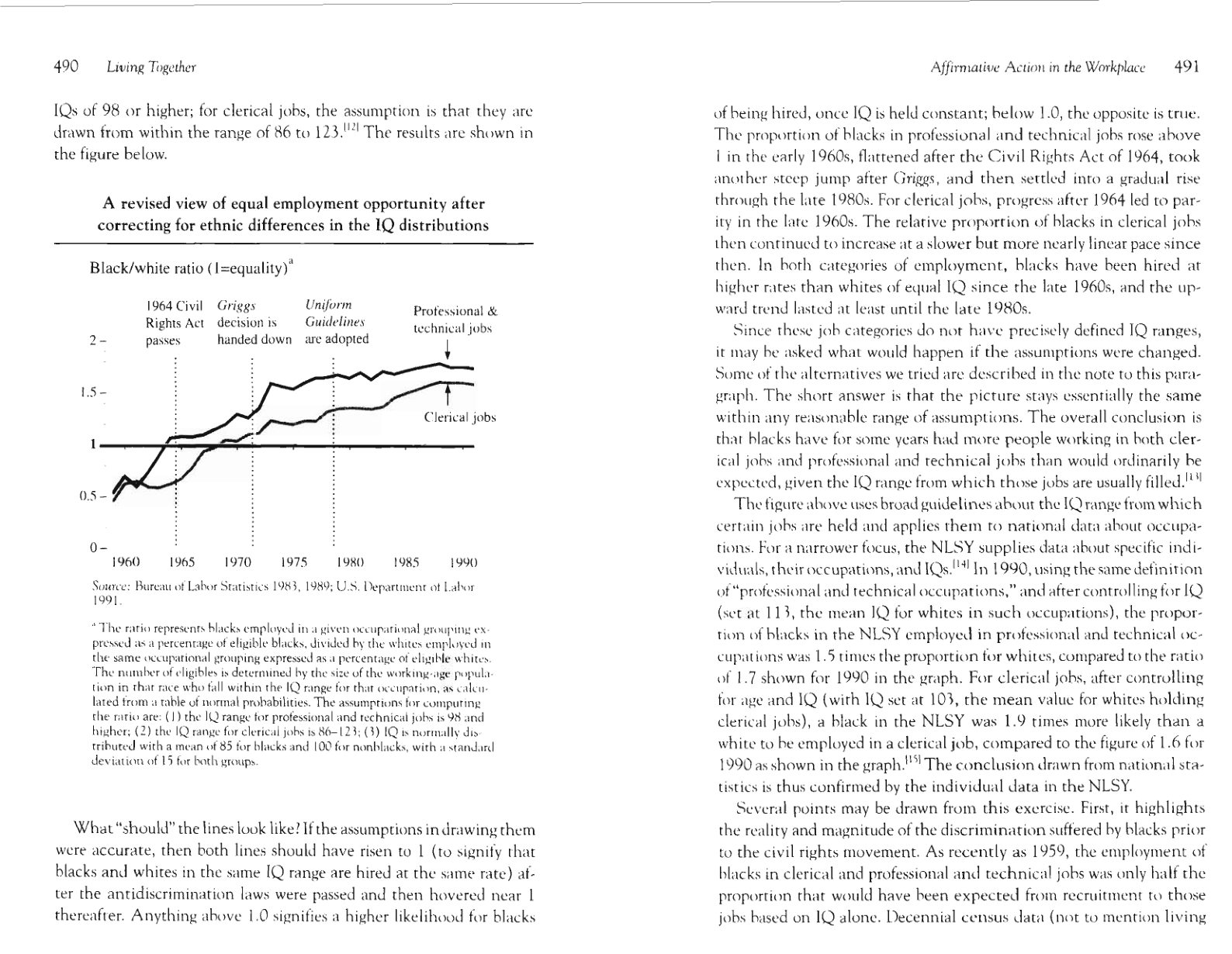
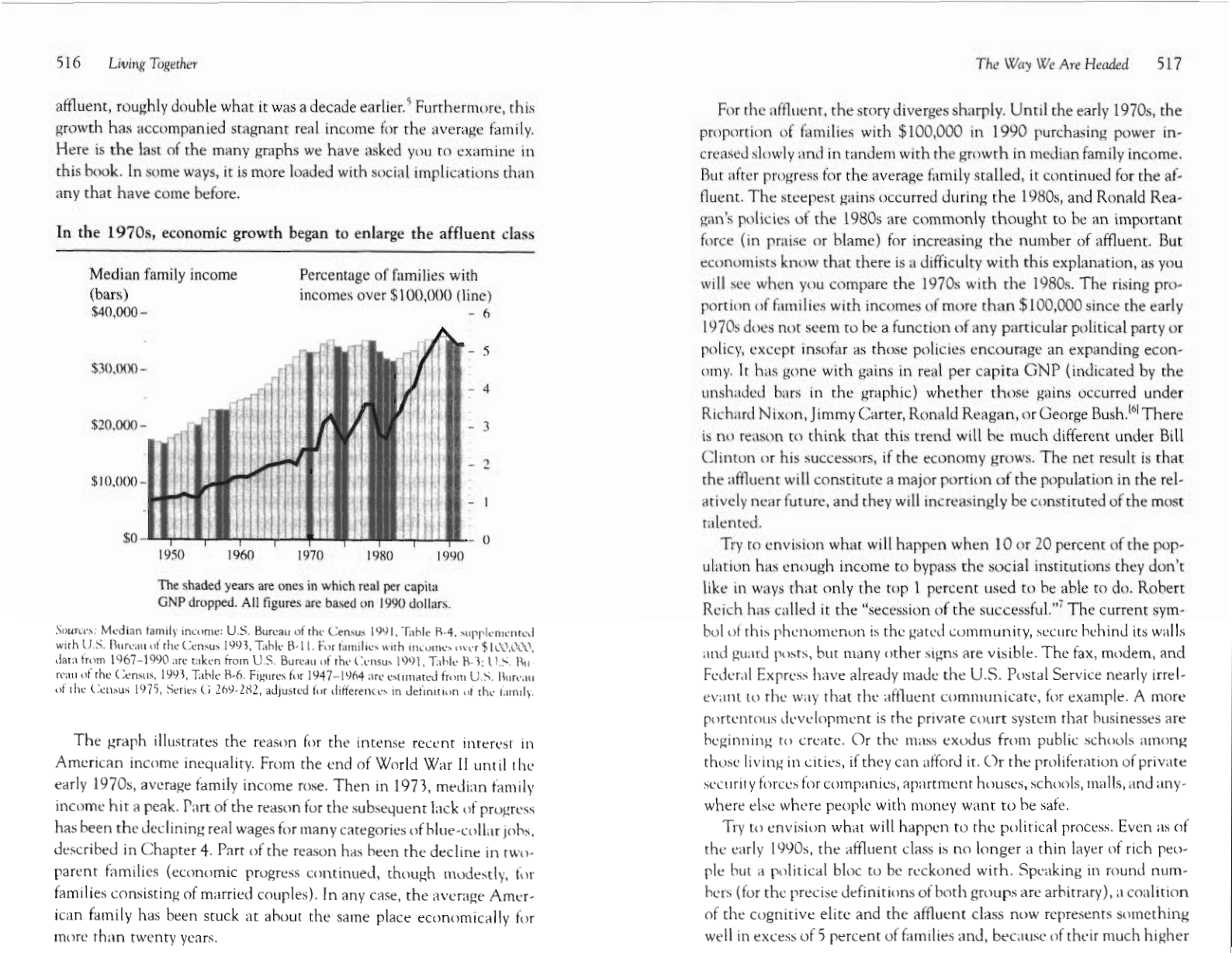
The authors argue that cognitive ability has become the primary determinant of success, status, and financial security in modern American life.
A new class structure is emerging, led by a 'cognitive elite' while those with lower intelligence are increasingly marginalized from the information economy.
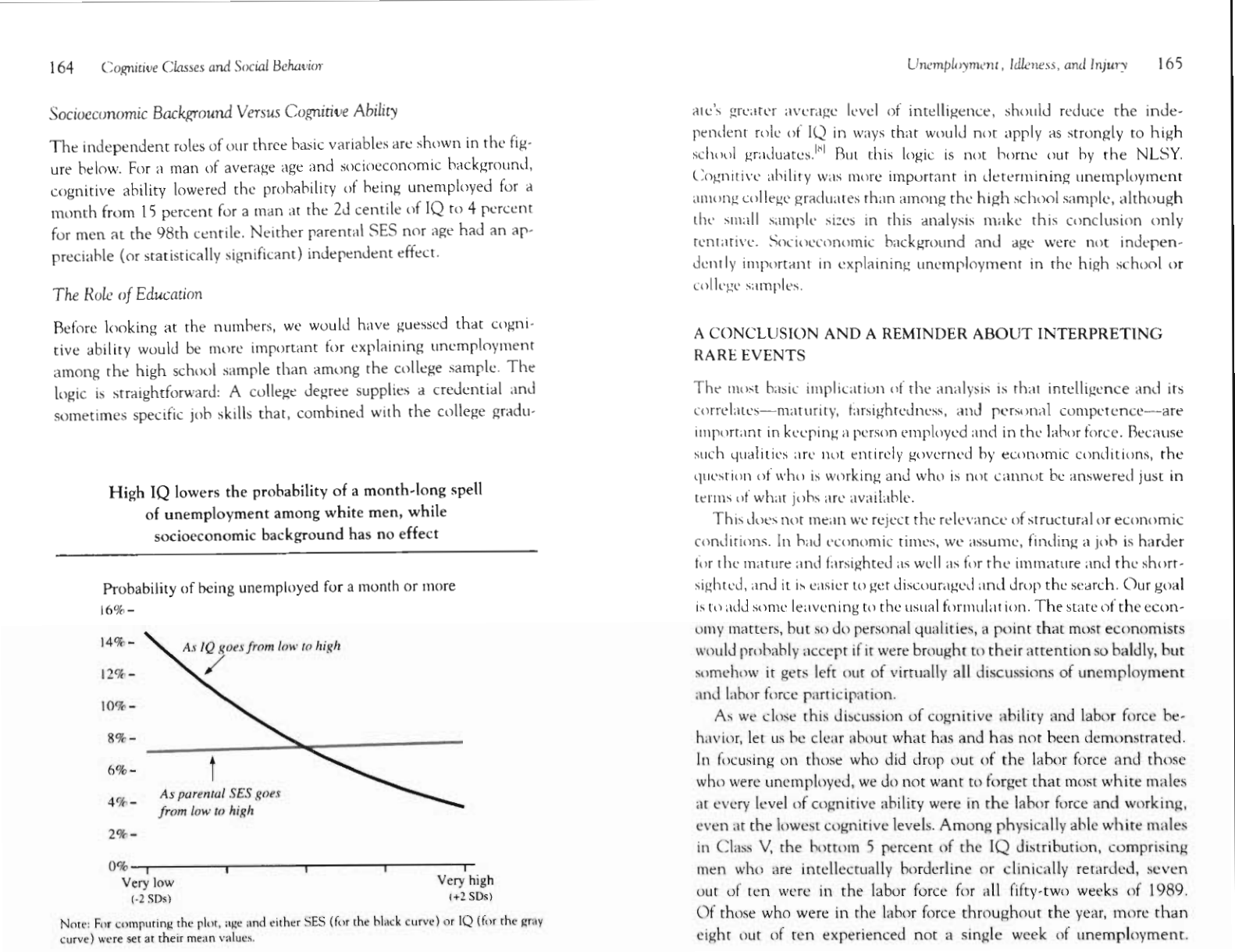
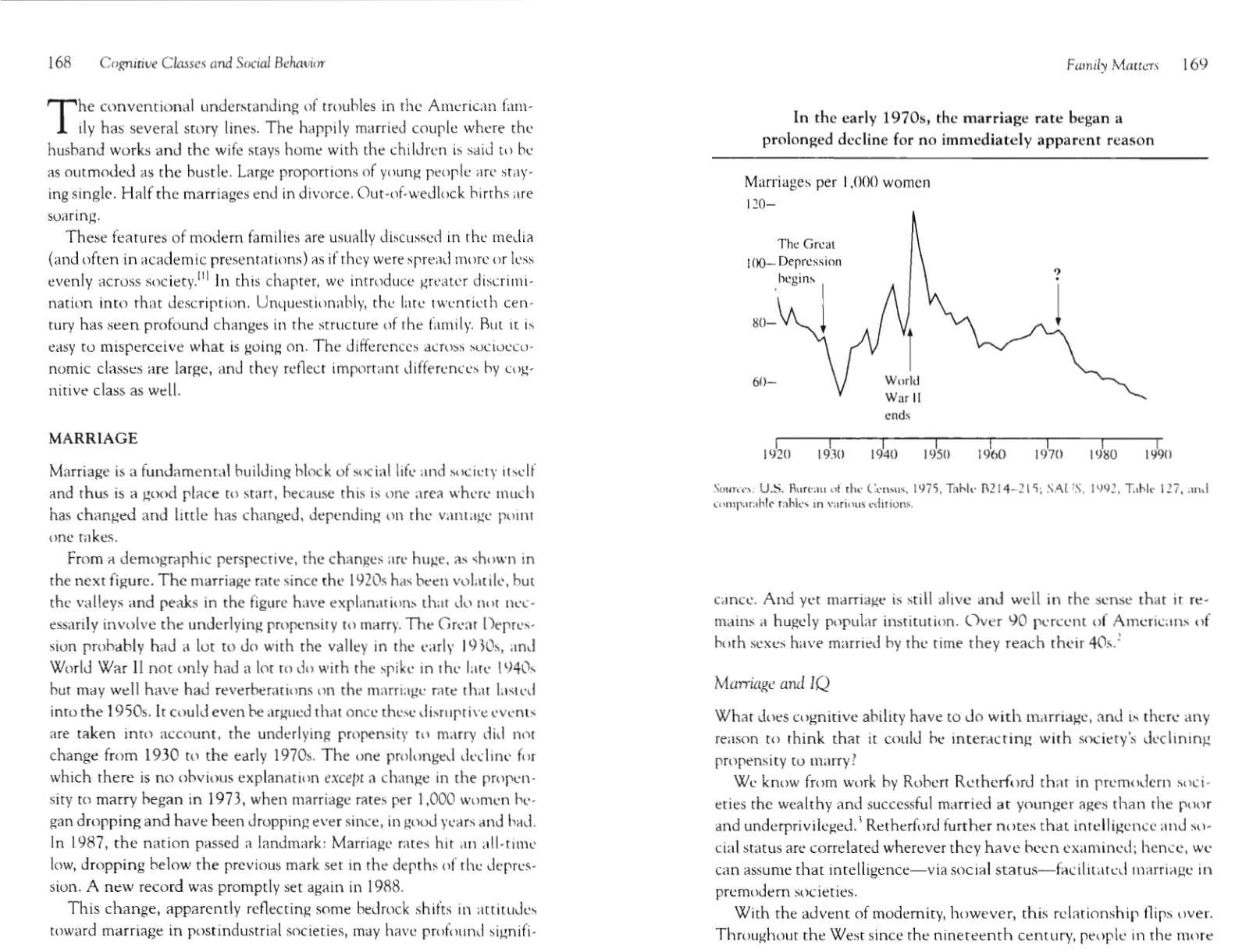
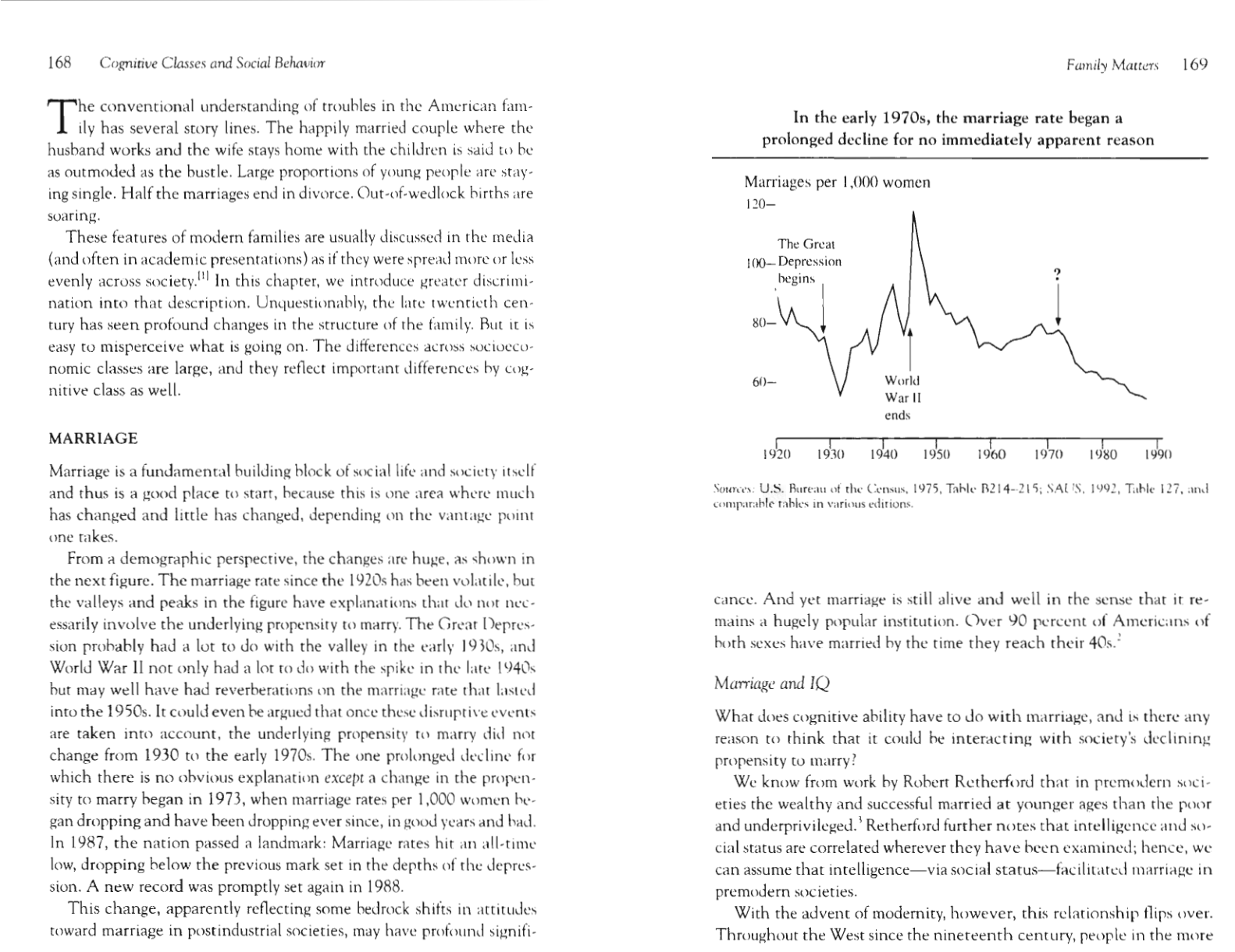
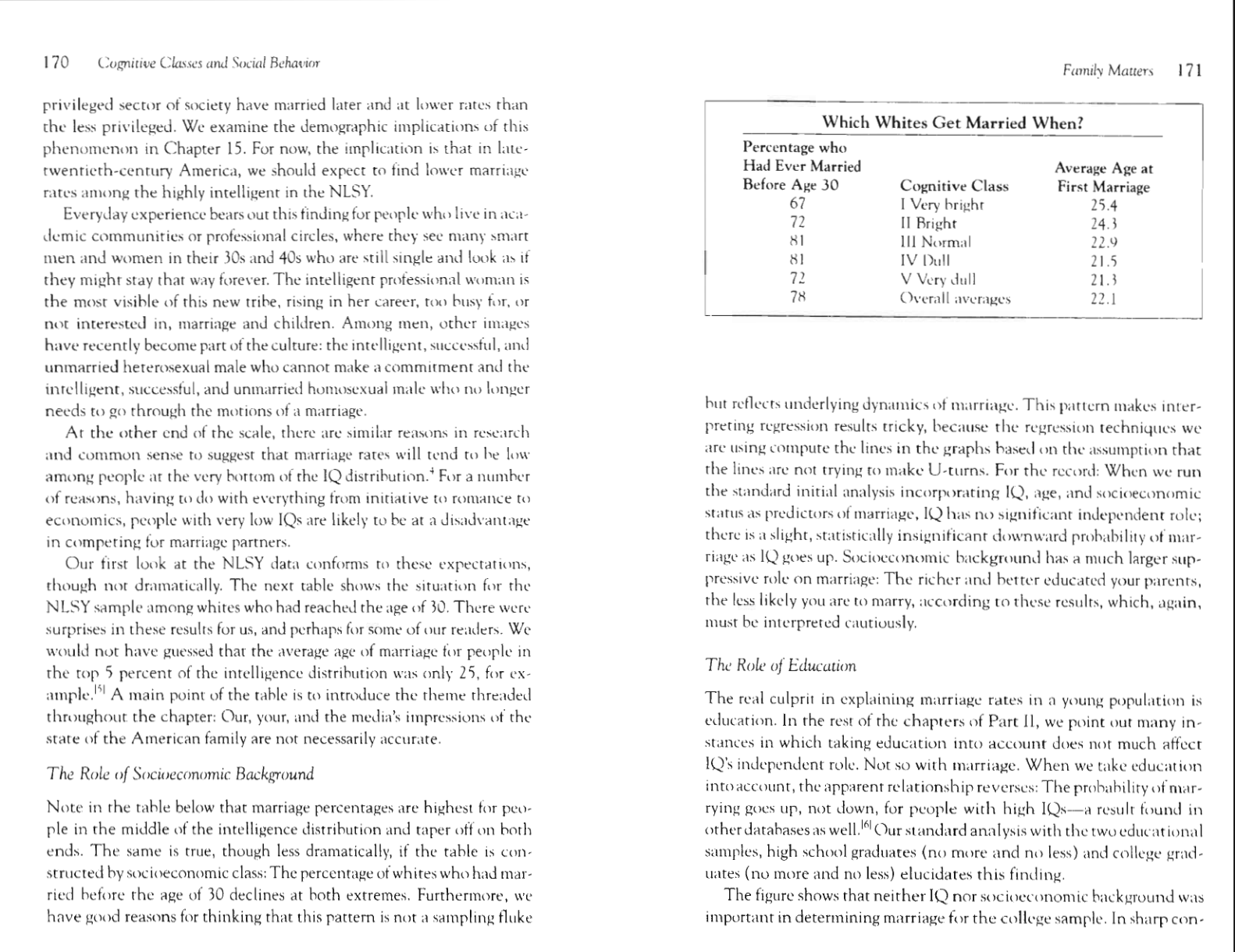
The book posits that low intelligence is a decisive factor in social problems like crime, unemployment, and school dropout rates, independent of socioeconomic background.
The text addresses the controversial finding that intelligence levels differ among ethnic groups, a topic the authors claim is often suppressed in public policy.
The authors advocate for a public policy shift that acknowledges innate intellectual differences to more realistically address national social issues.
But despite decades of fashionable denial, the overriding and insistent truth about intellectual ability is that it is endowed unequally, for reasons that government policies can do little to change.
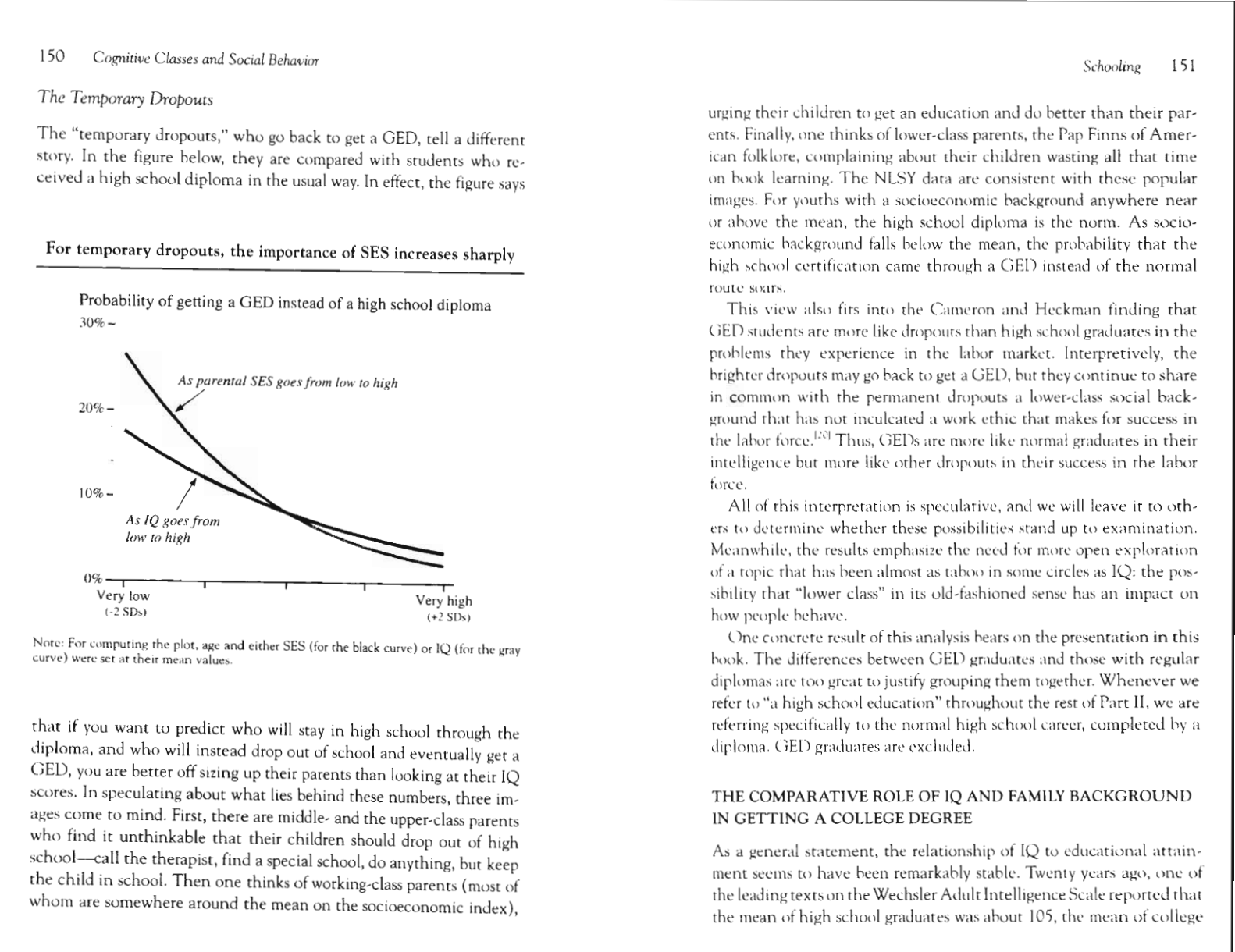
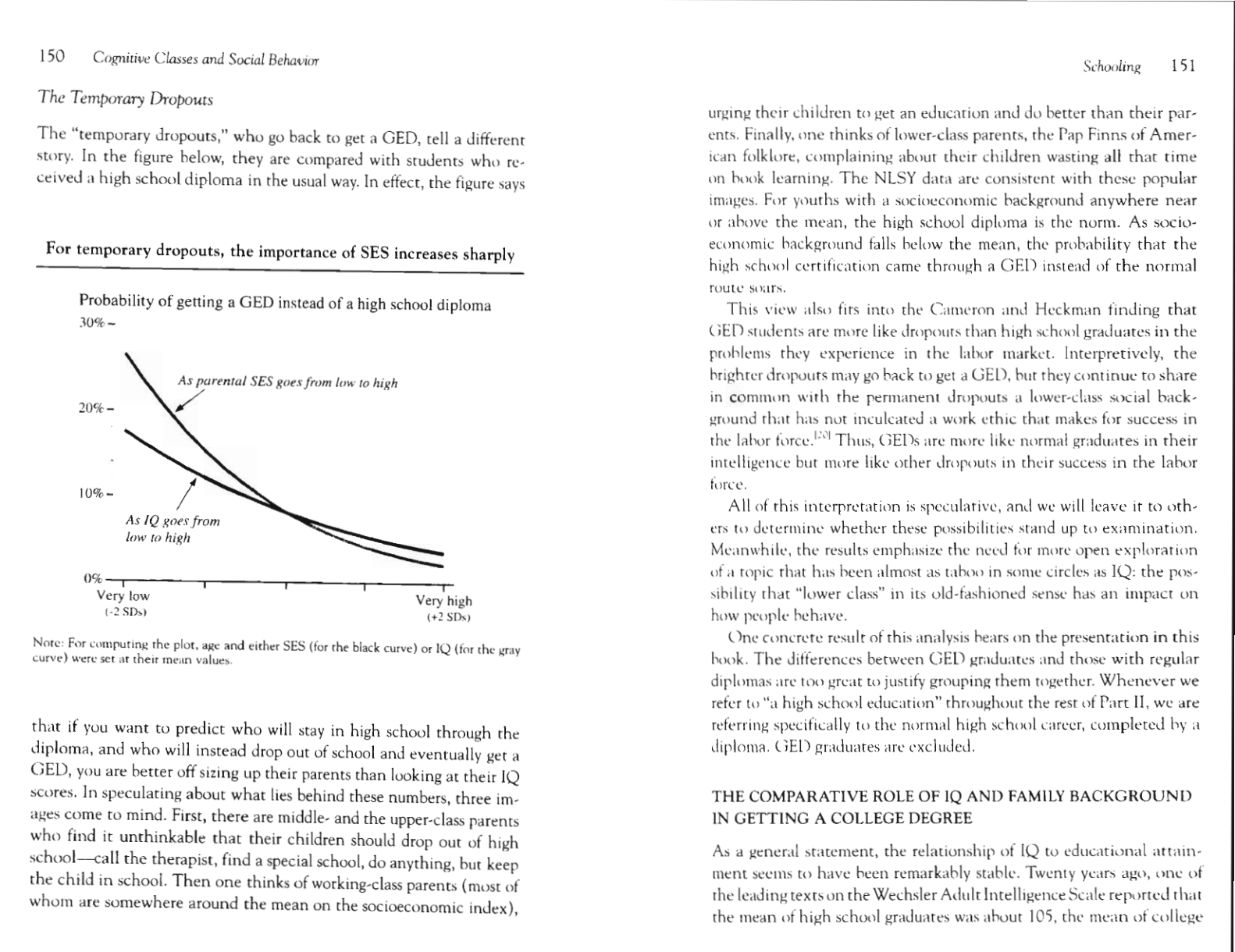
FigureFigure
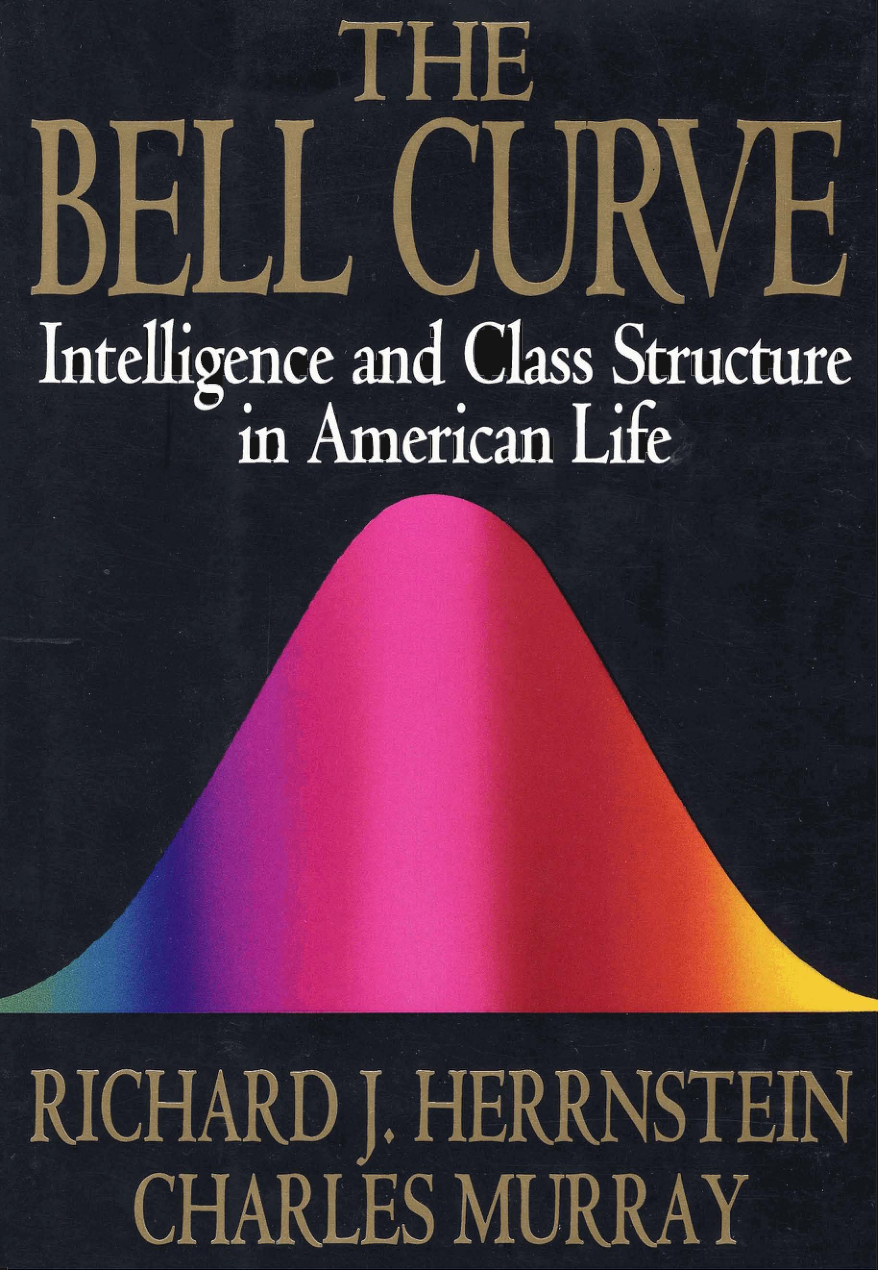
The Bell Curve Front Matter
The text establishes the formal publication details of 'The Bell Curve' by Richard J. Herrnstein and Charles Murray, published in 1994.
An introductory quote by Edmund Burke argues against the suppression of truth for fear of social consequences, setting a provocative tone for the work.
The table of contents outlines a four-part structure focusing on the emergence of a cognitive elite and the relationship between intelligence and social behavior.
The book explores controversial themes including ethnic differences in cognitive ability and the impact of IQ on welfare, crime, and parenting.
The final sections address policy-driven topics such as affirmative action and the future of American social stratification.
Early illustrations highlight a historical shift where college attendance and professional success became increasingly tied to IQ scores throughout the 20th century.
They argue against a fair Discussion of popular Prejudices, because, say they, tho' they would be found without any reasonable Support, yet the Discovery might be productive of the most dangerous Consequences.
IQ, Class, and Social Outcomes
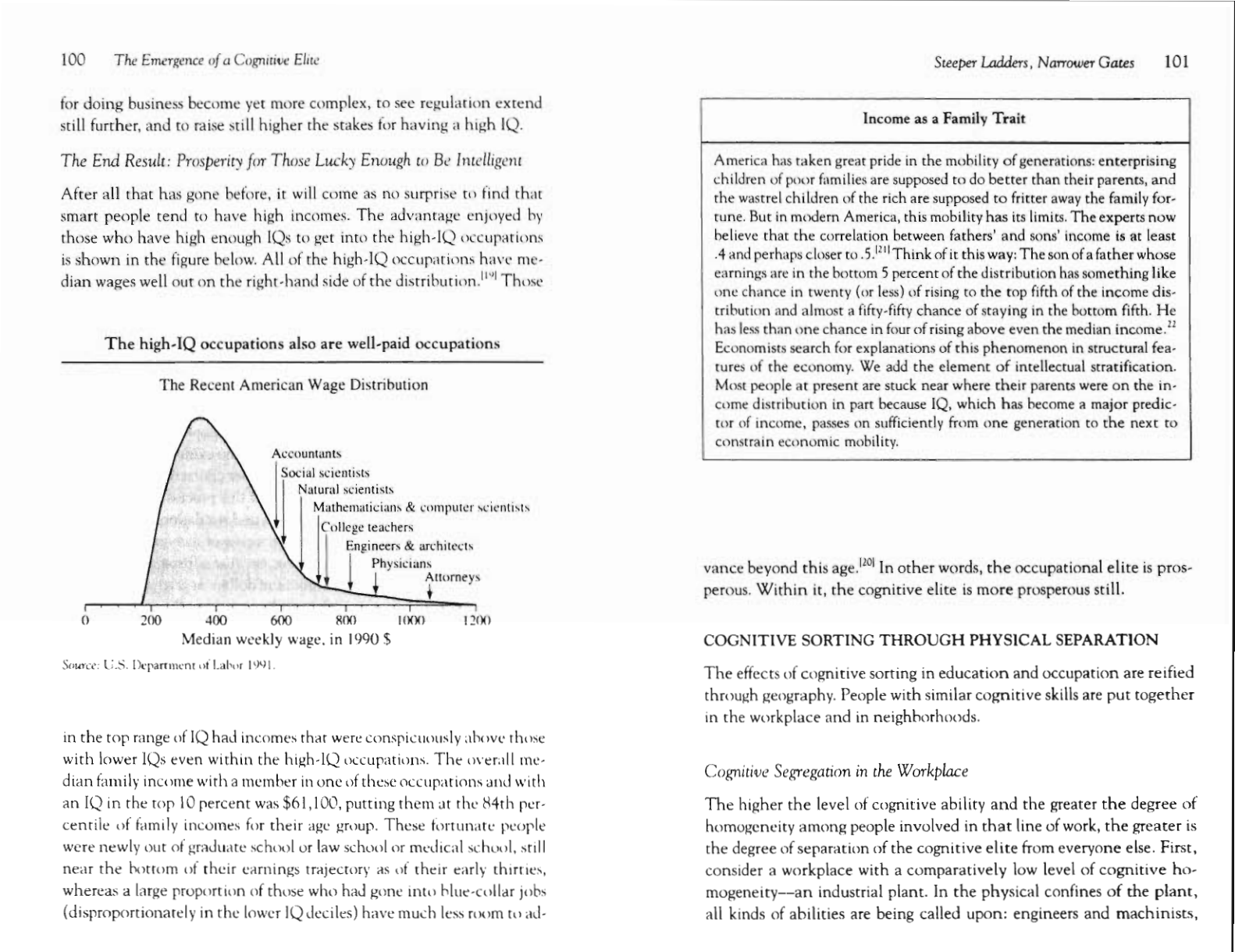
The text outlines the emergence of cognitive classes and the correlation between high-IQ and high-paying occupations.
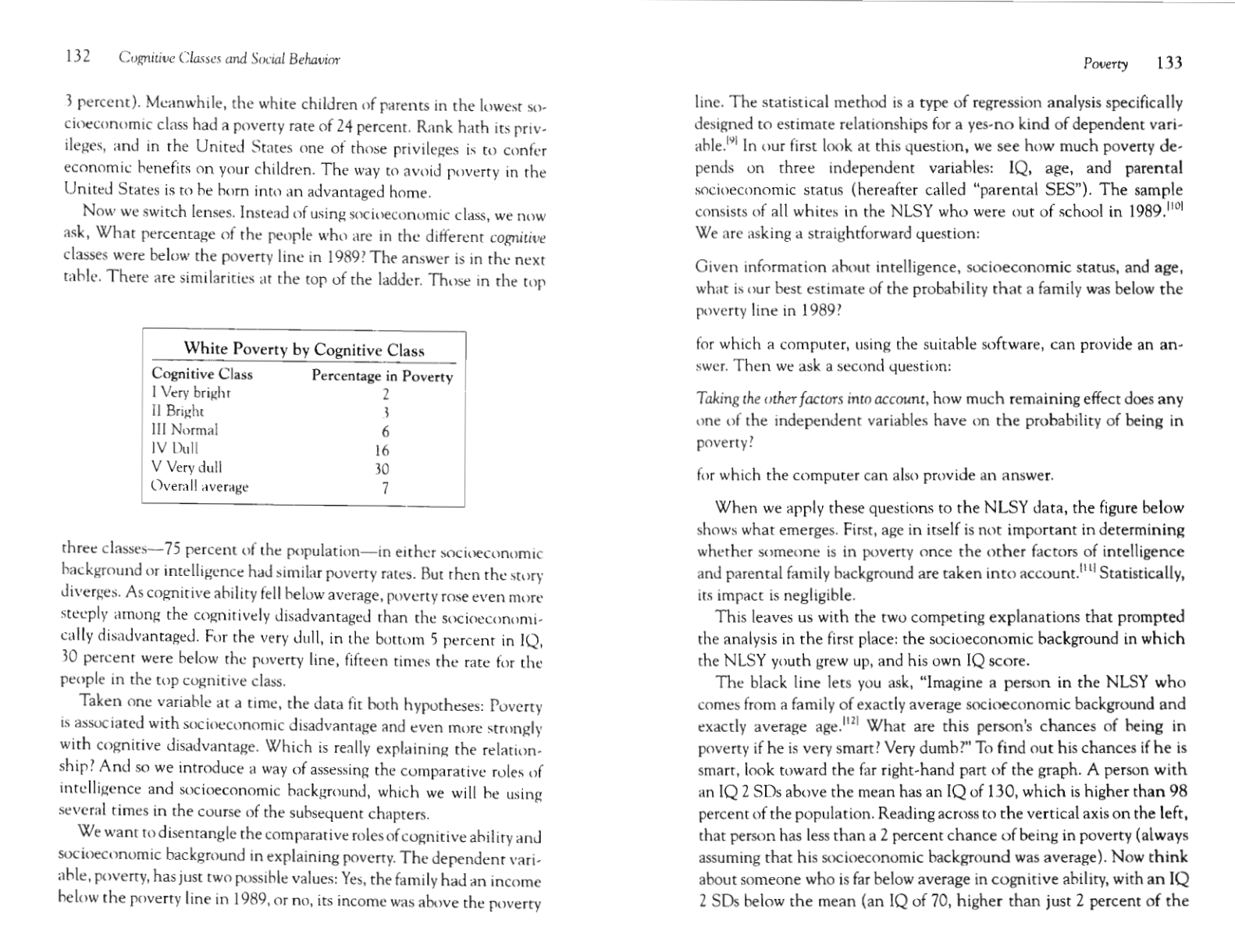
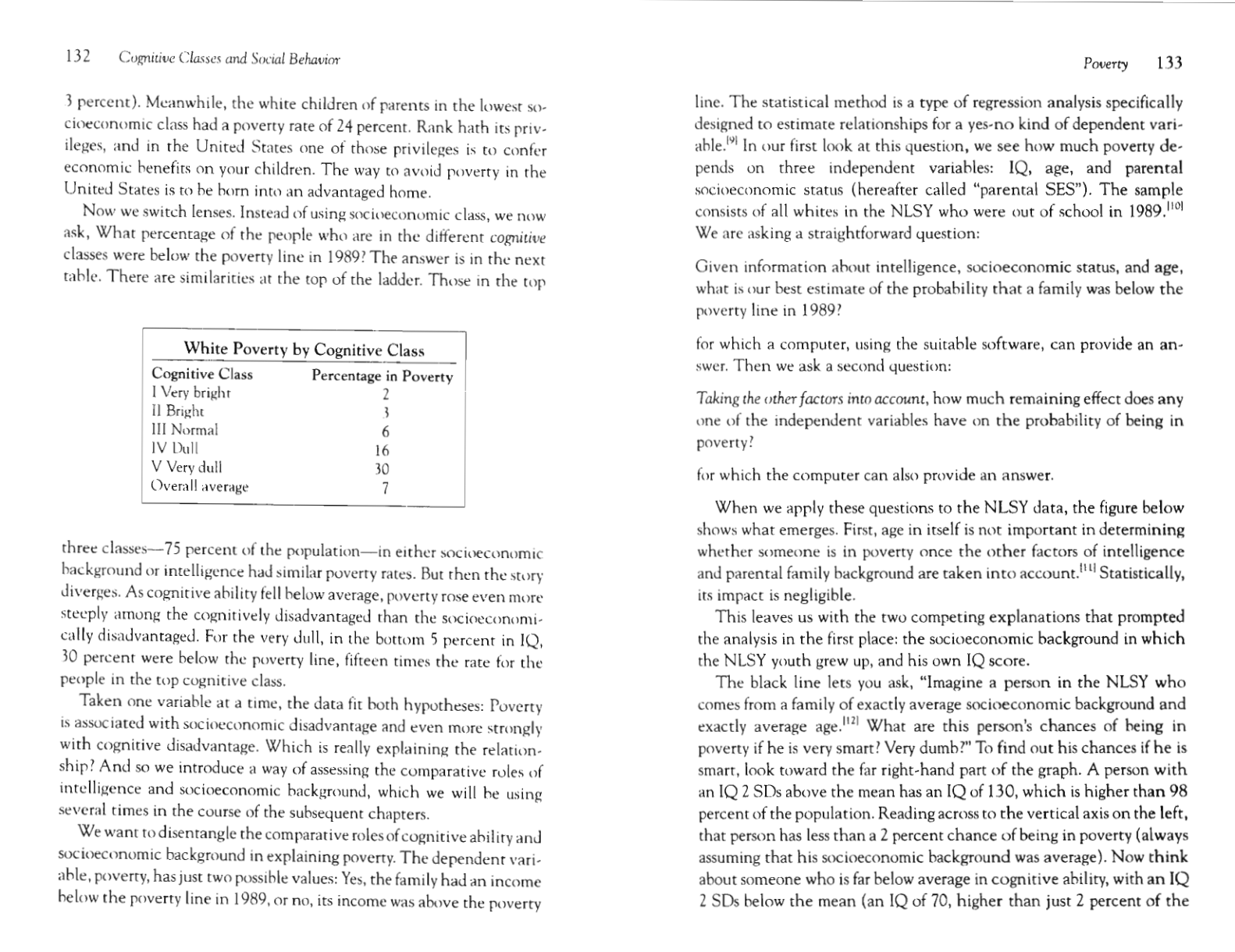
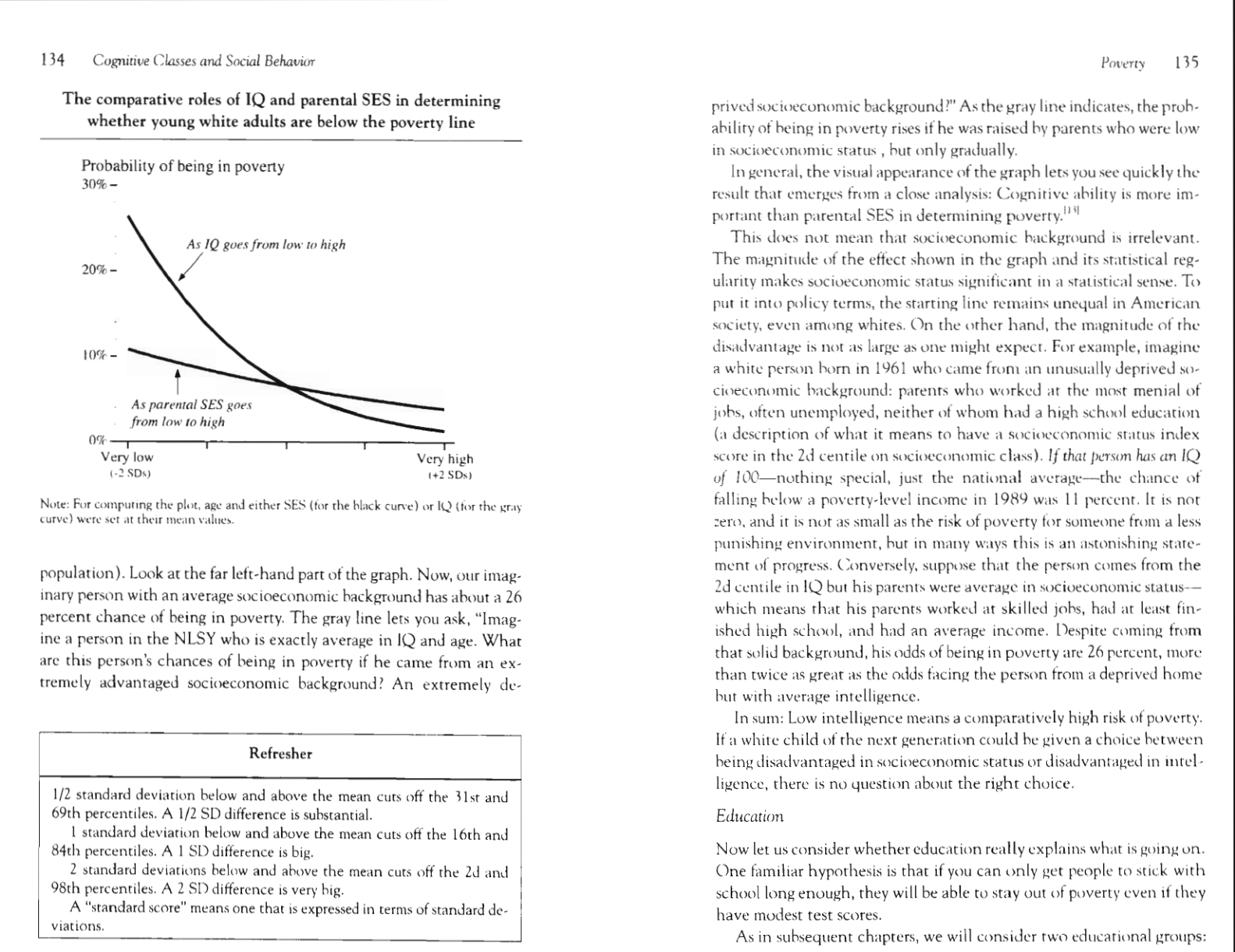
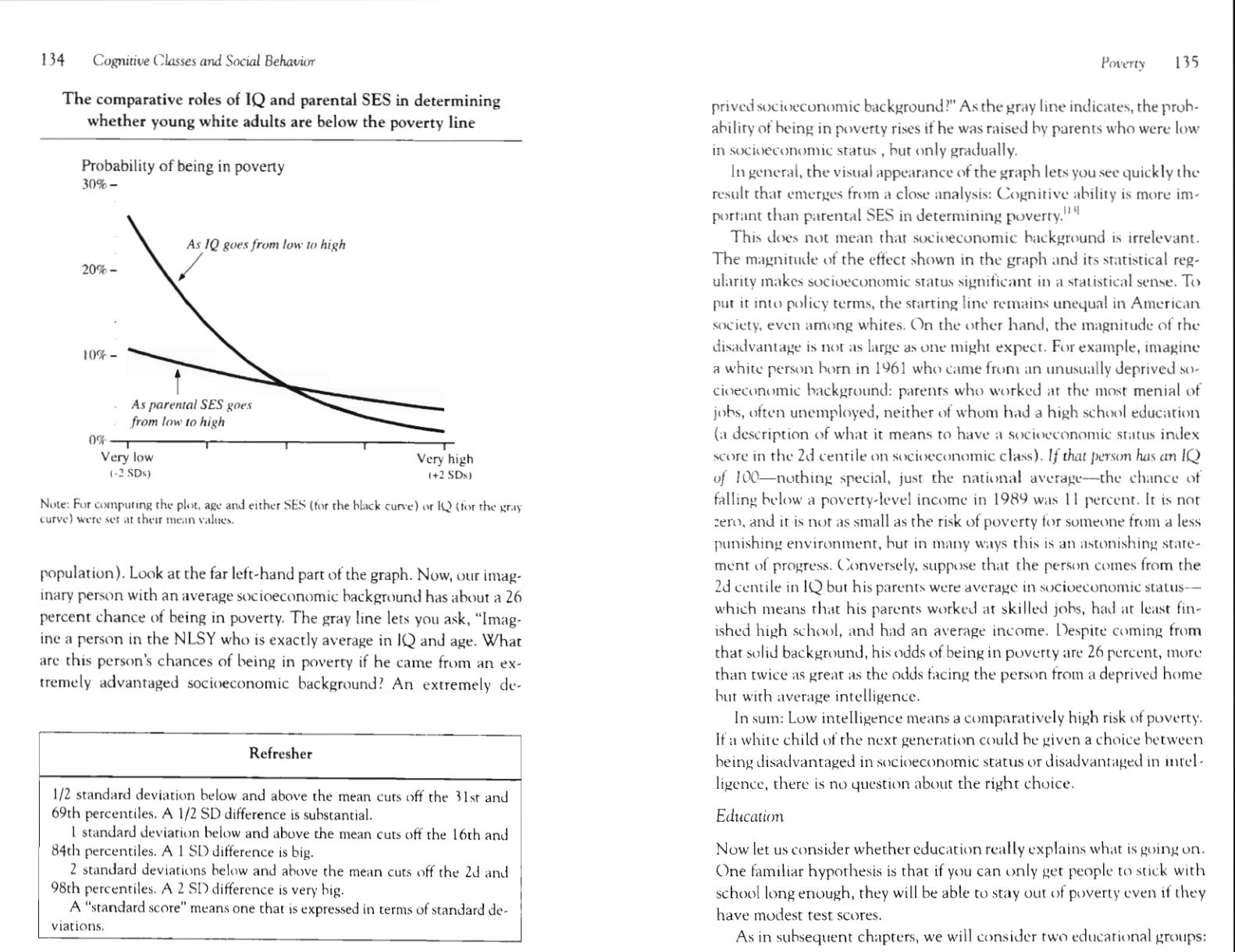
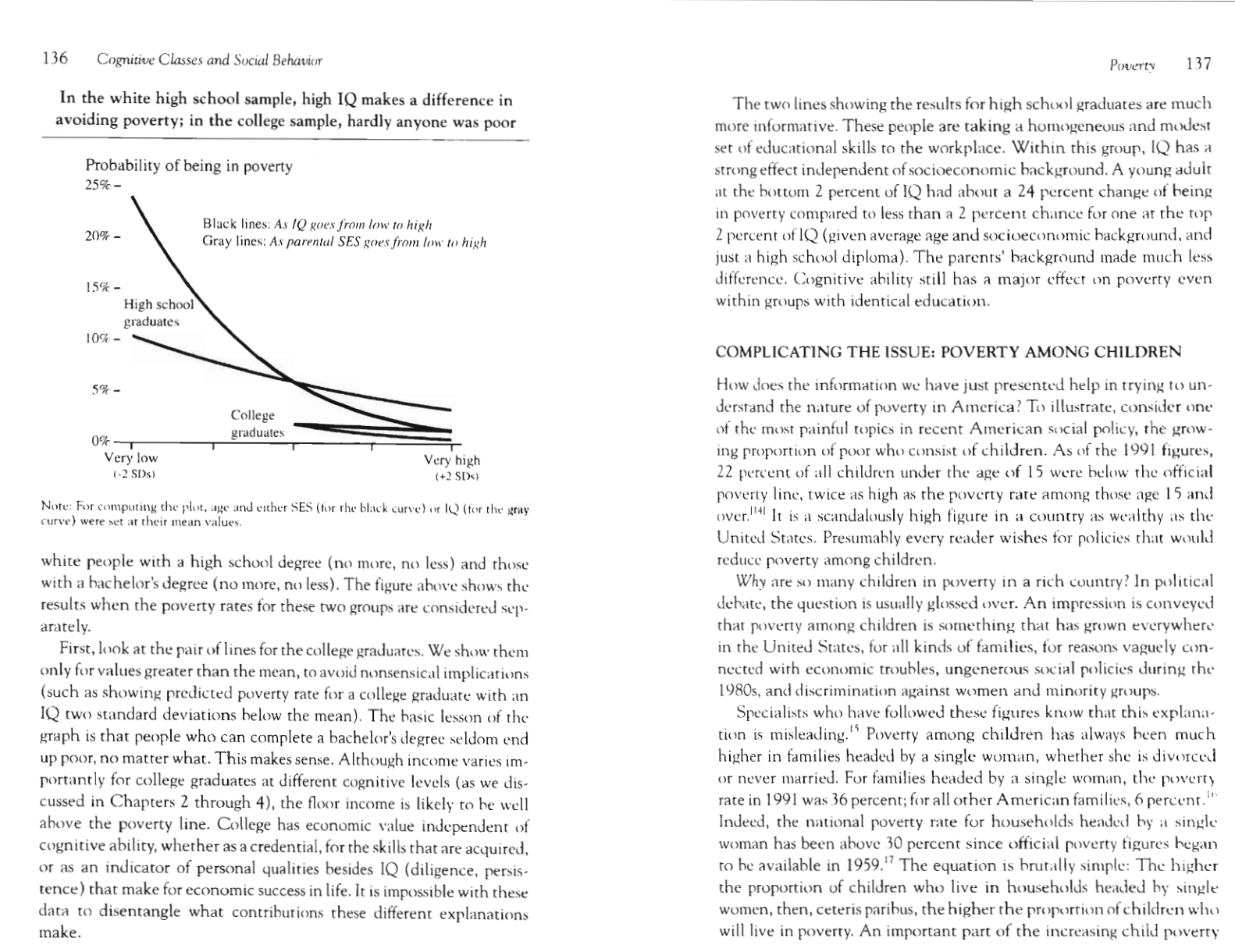
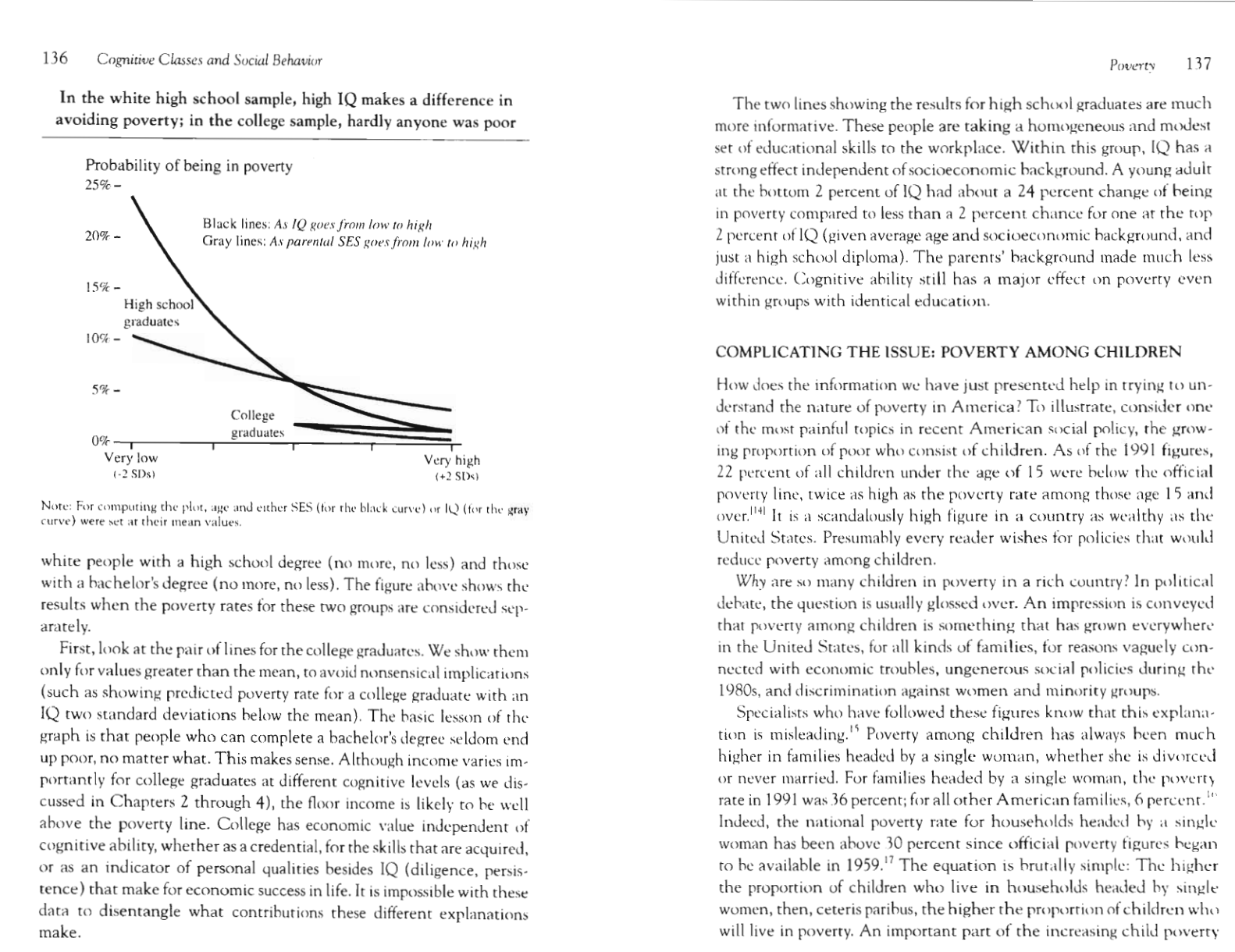
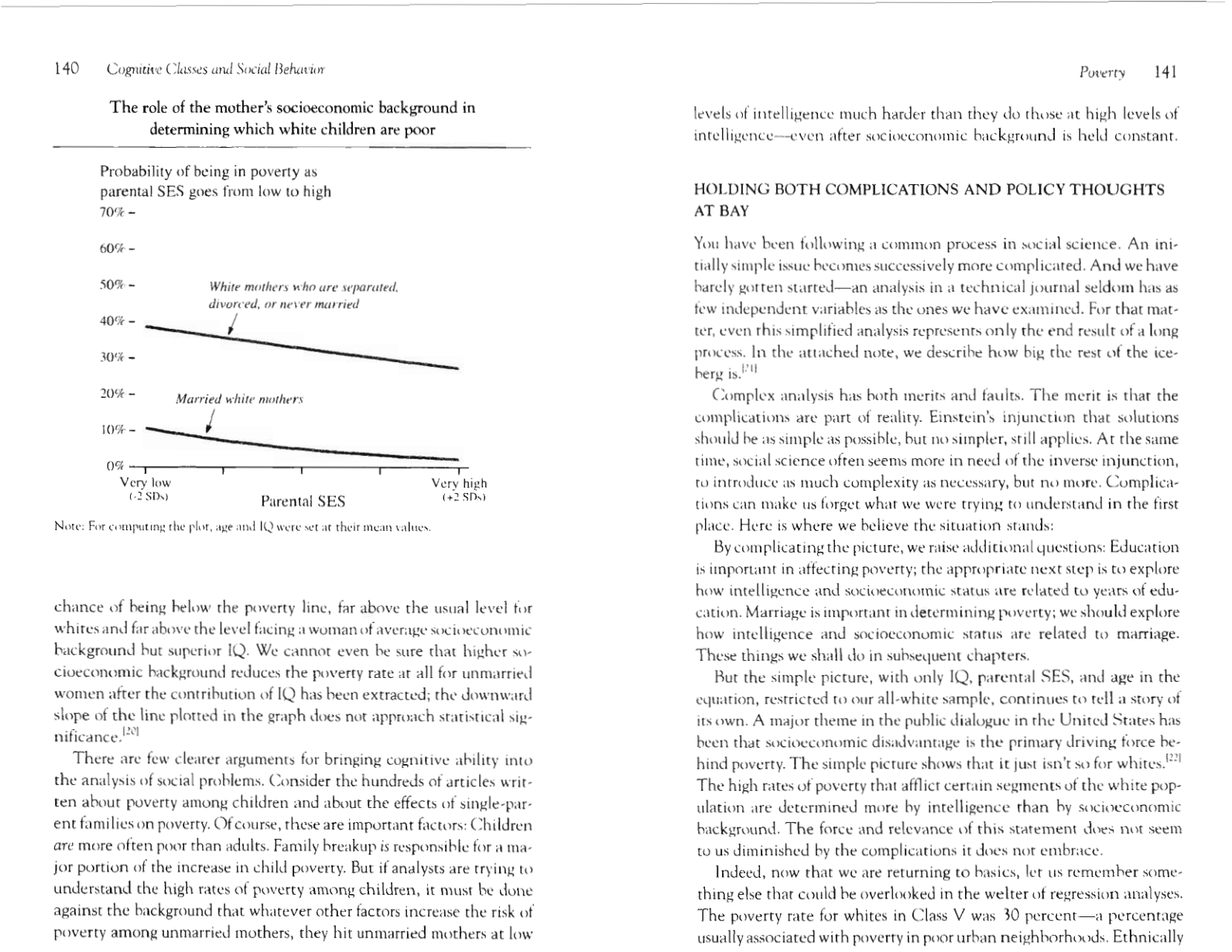
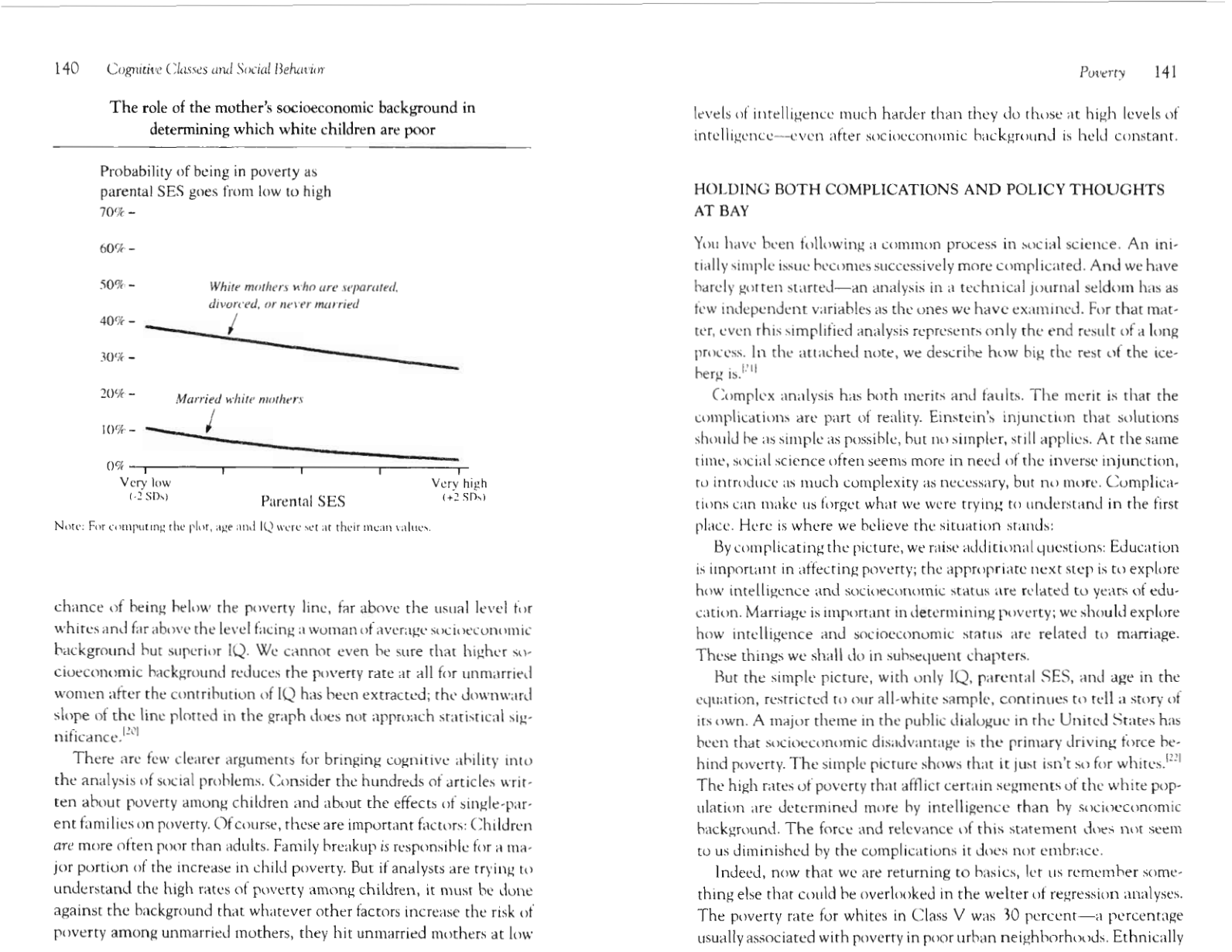
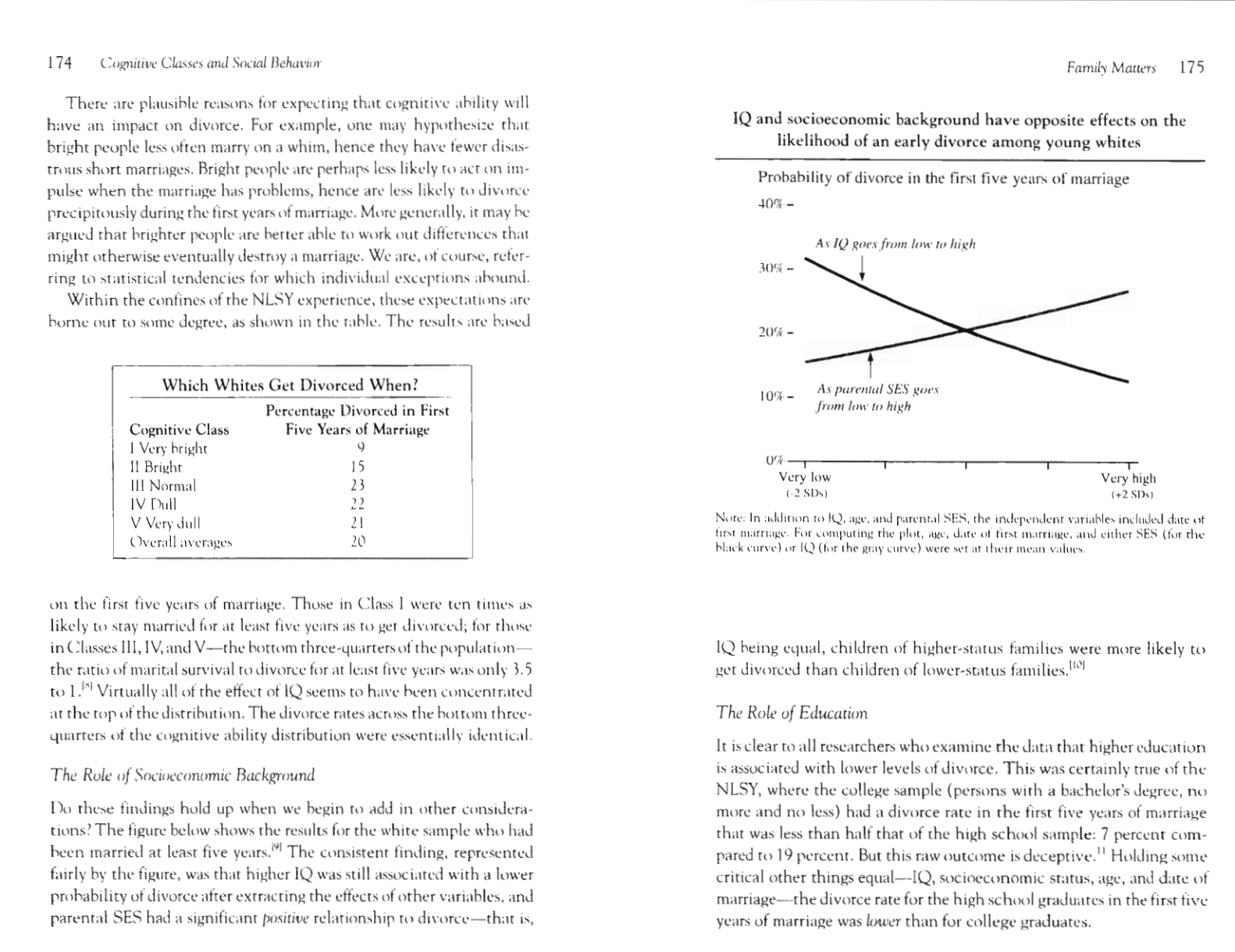
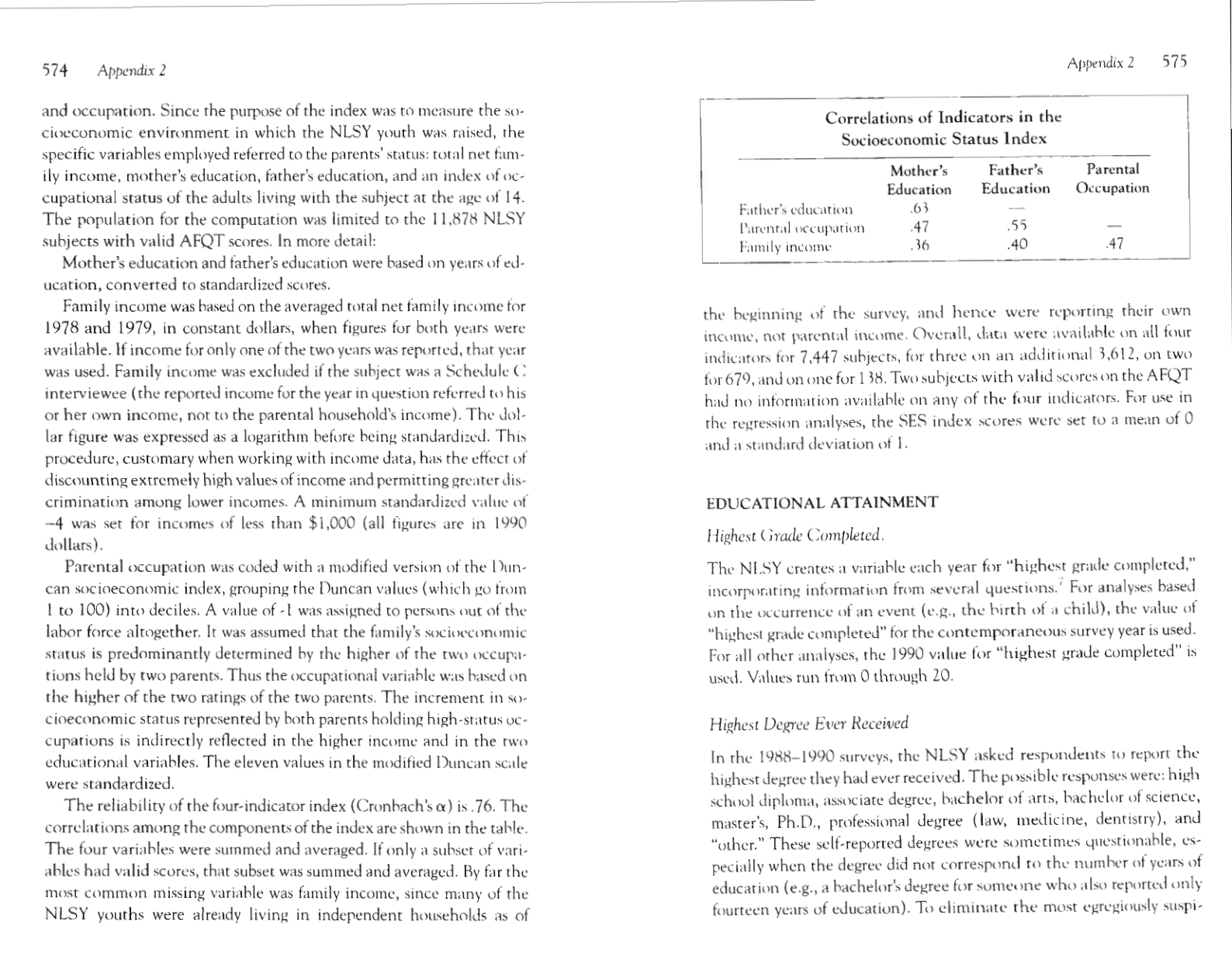
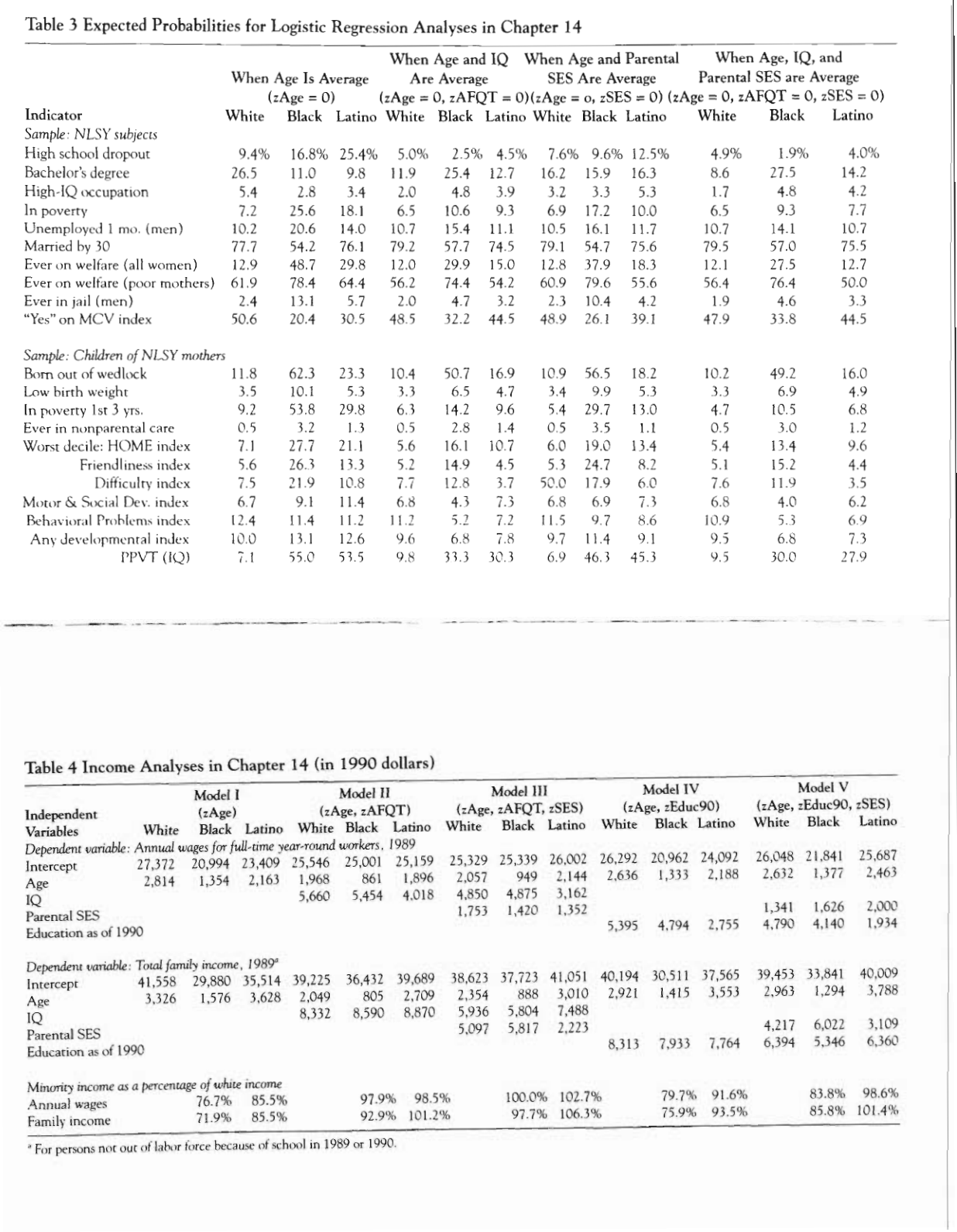
Statistical analysis suggests that for white youths, IQ is a more significant predictor of educational attainment and poverty avoidance than parental socioeconomic status.
Cognitive ability is linked to various social behaviors, including marriage stability, labor force participation, and the likelihood of relying on welfare.
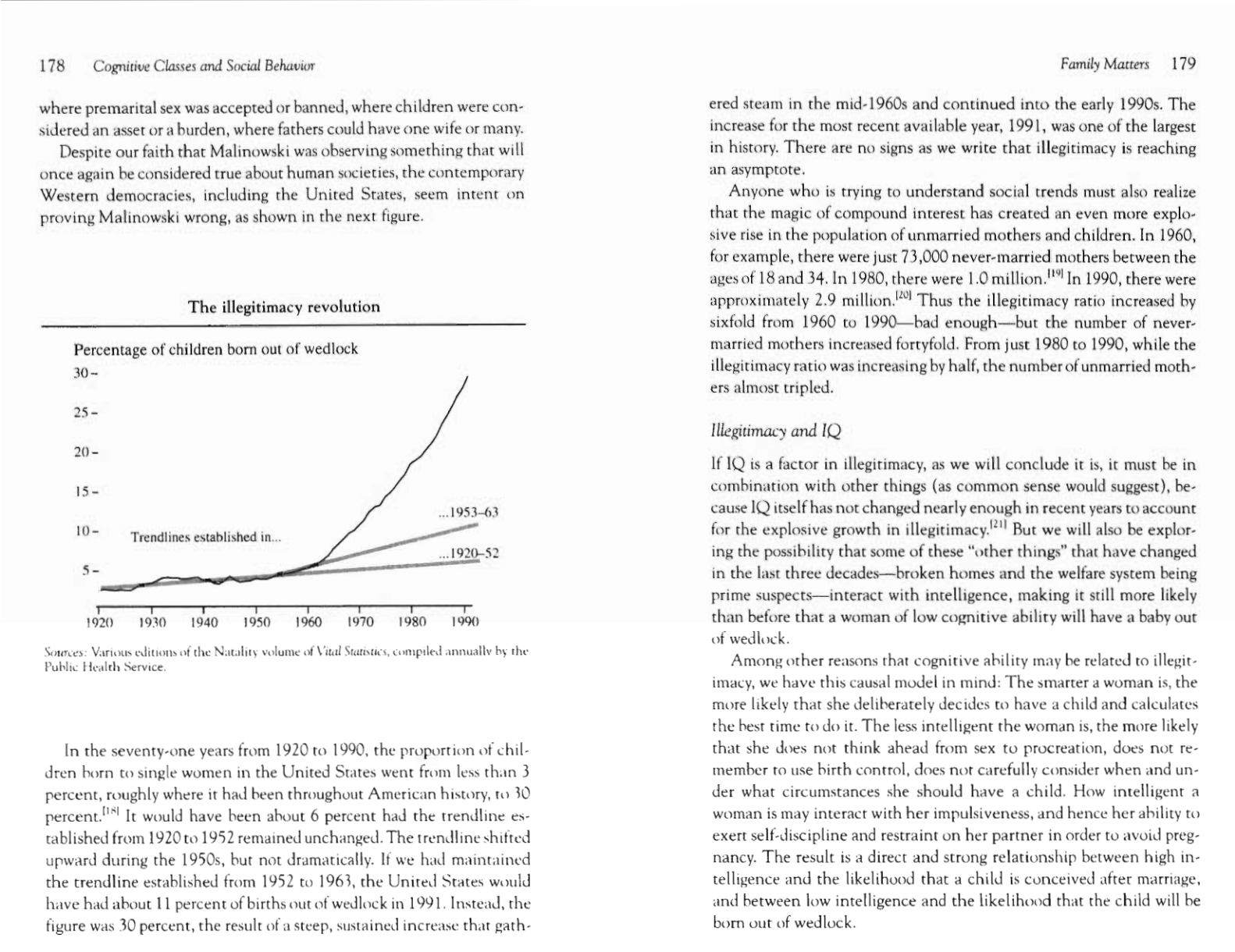
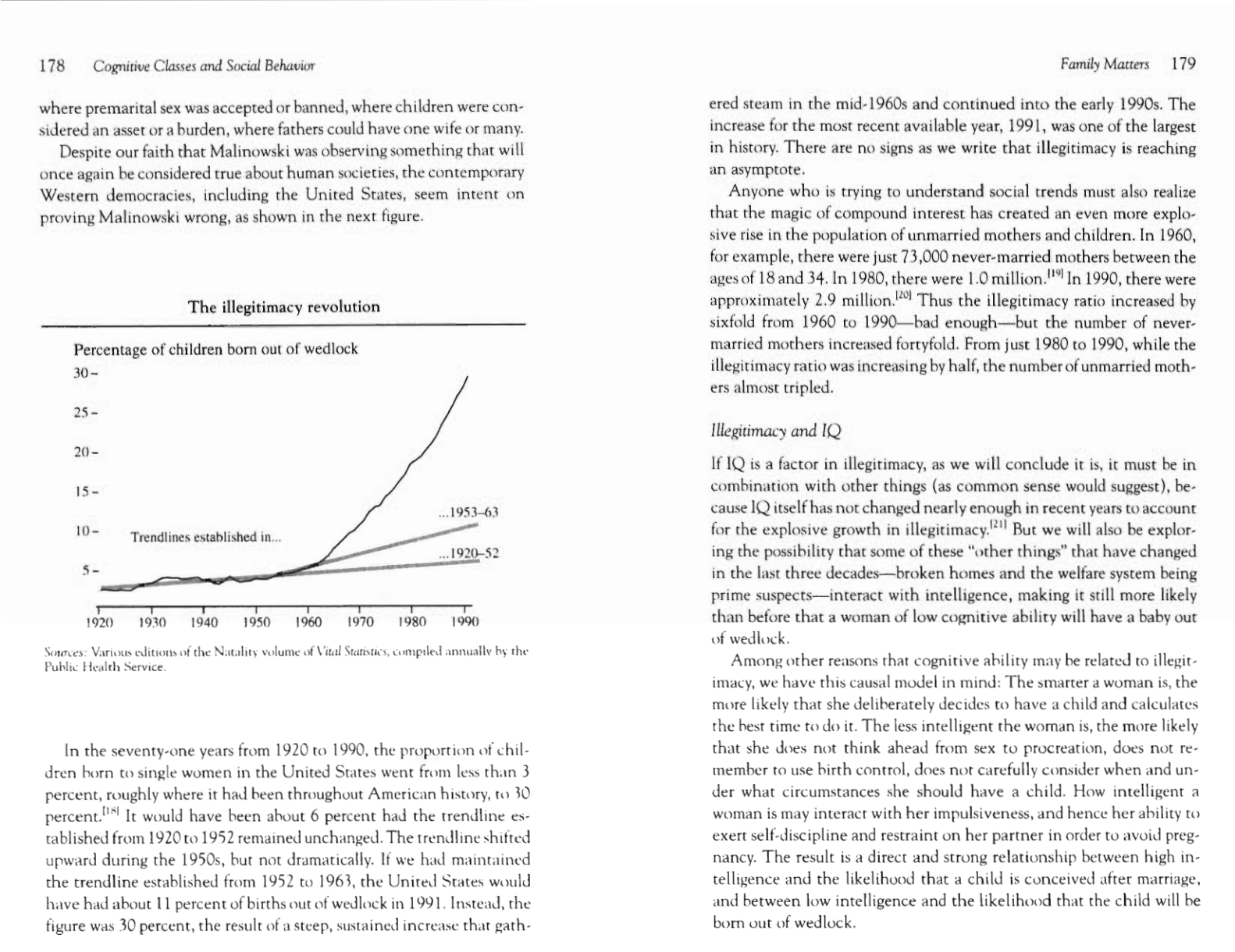
The data explores the 'illegitimacy revolution' and the 'crime boom,' asserting that IQ often dominates socioeconomic background as a predictive factor for these outcomes.
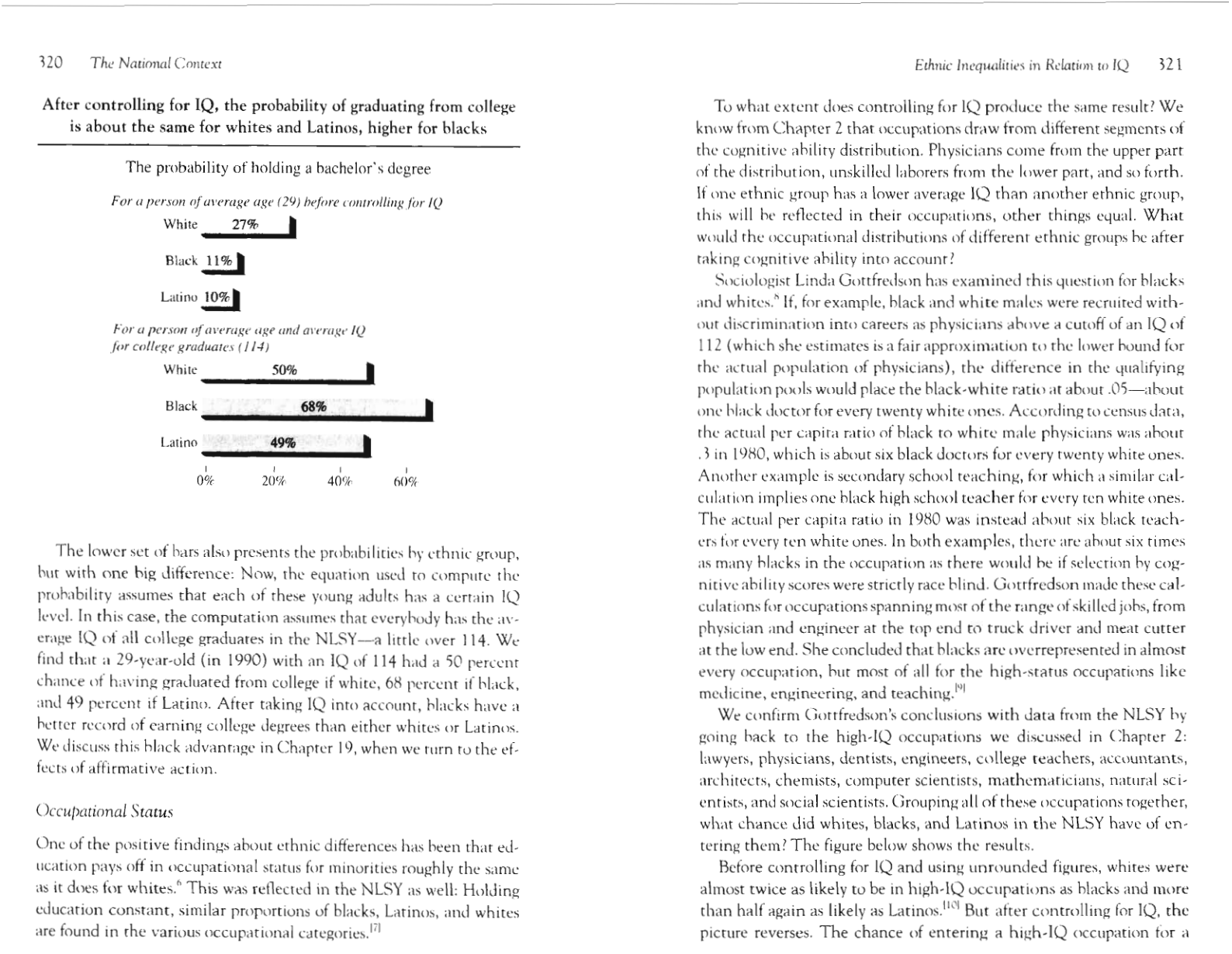
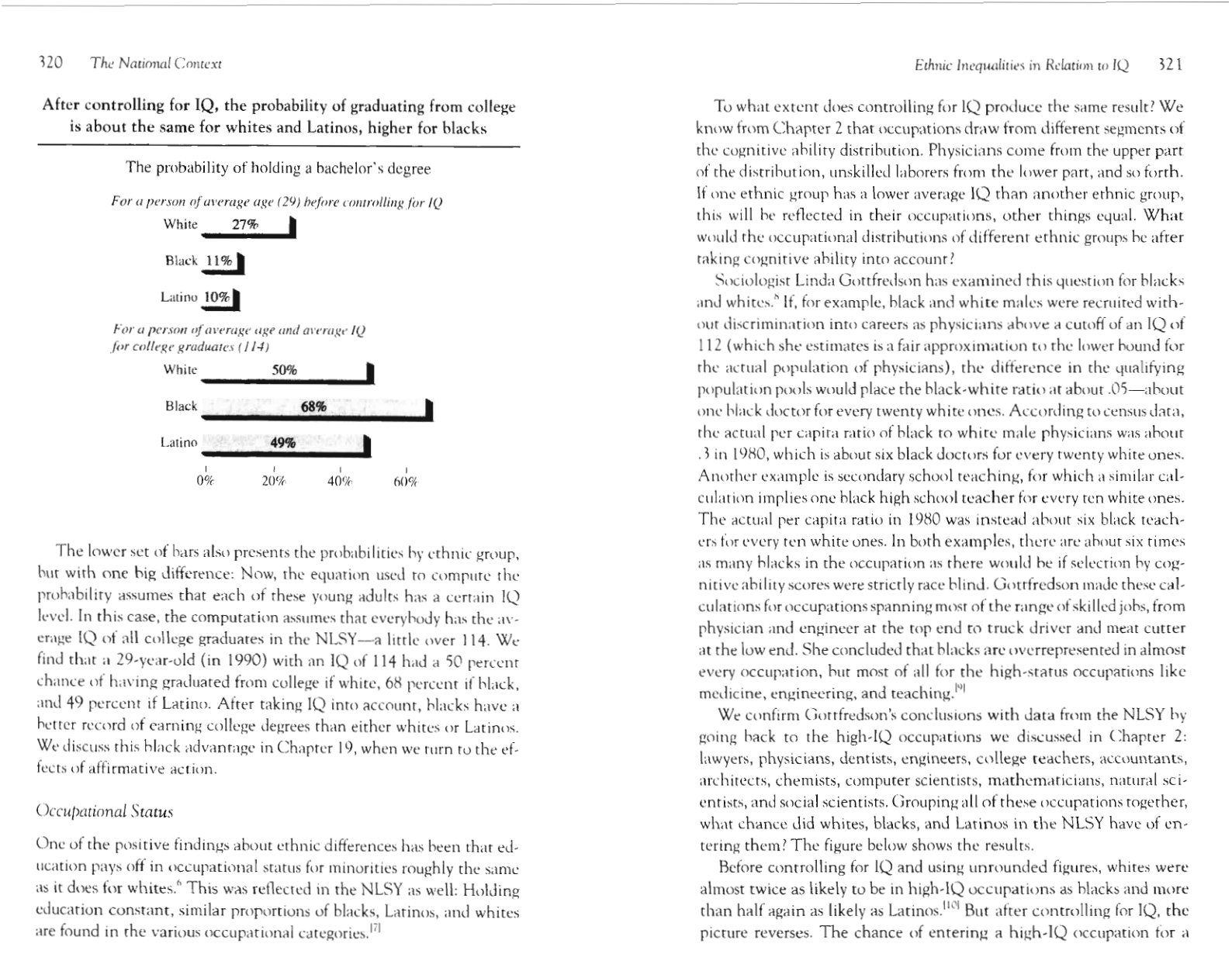
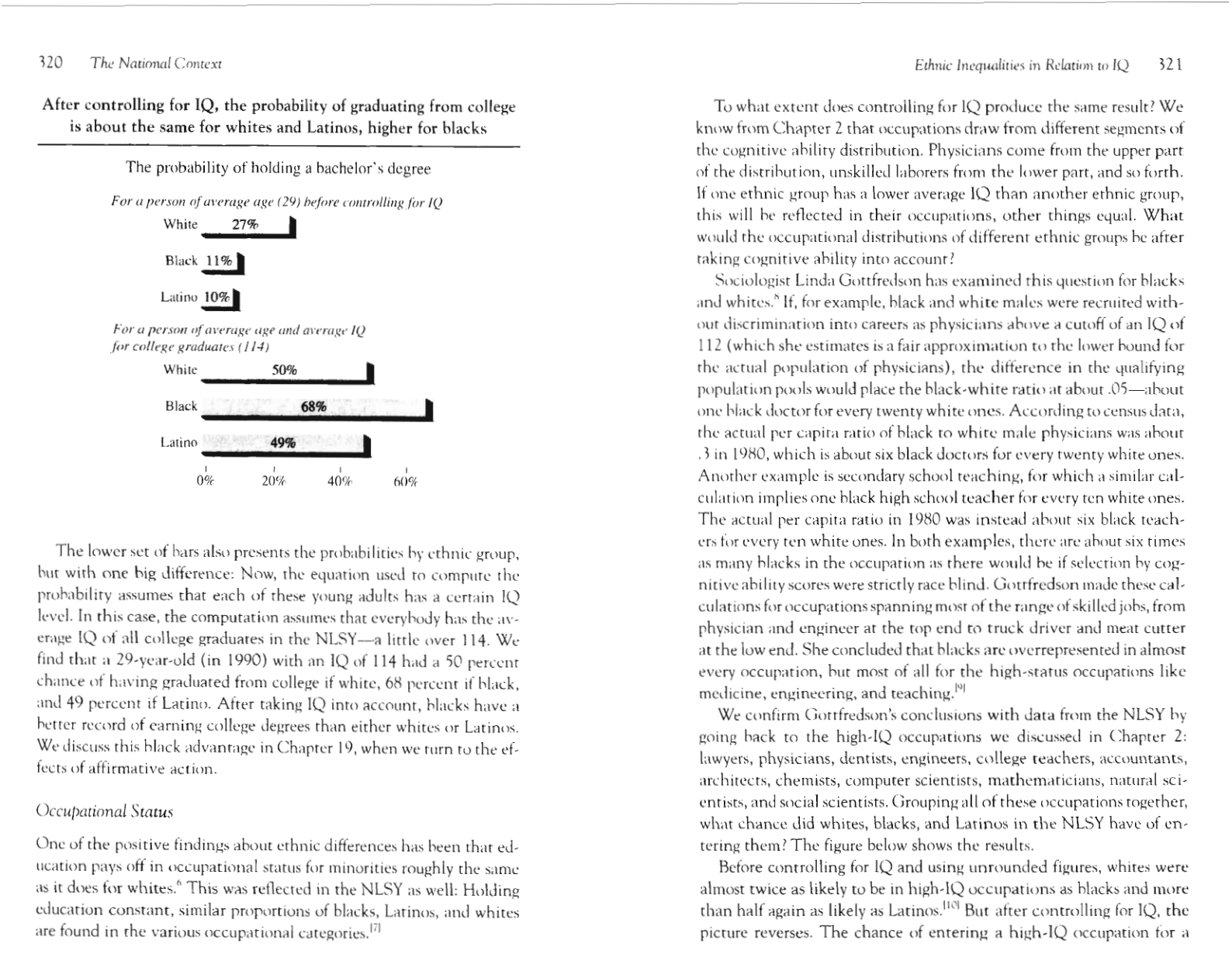
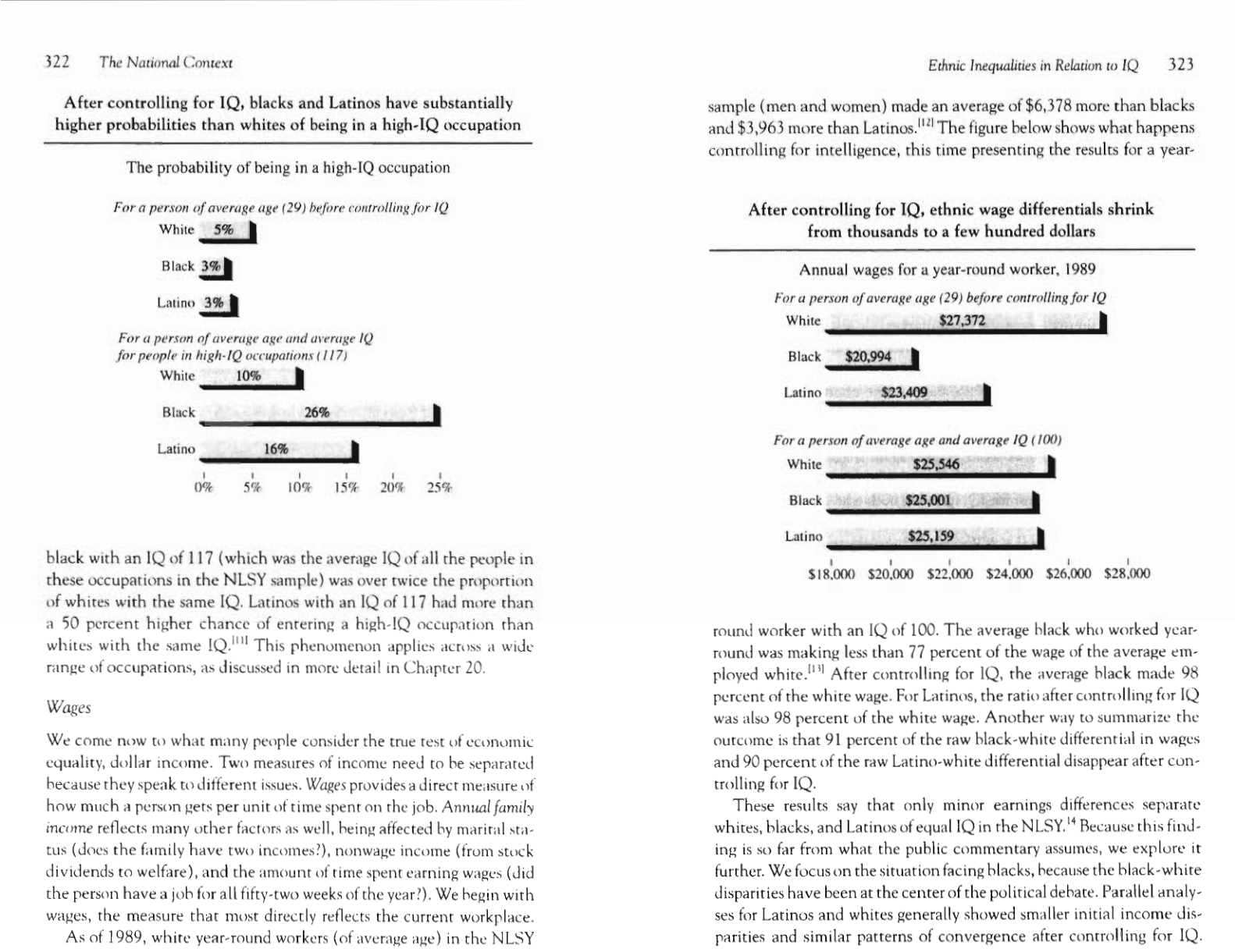
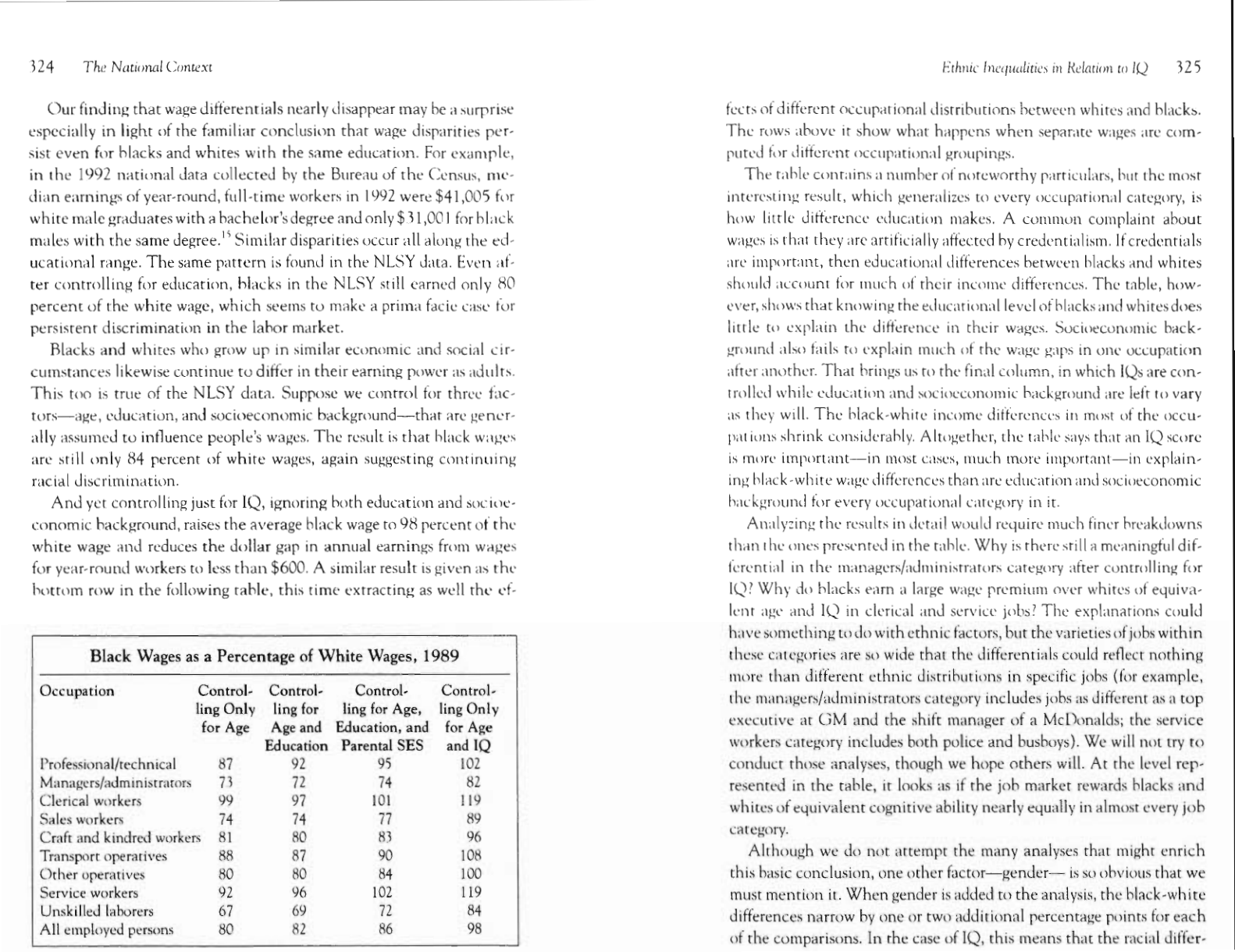
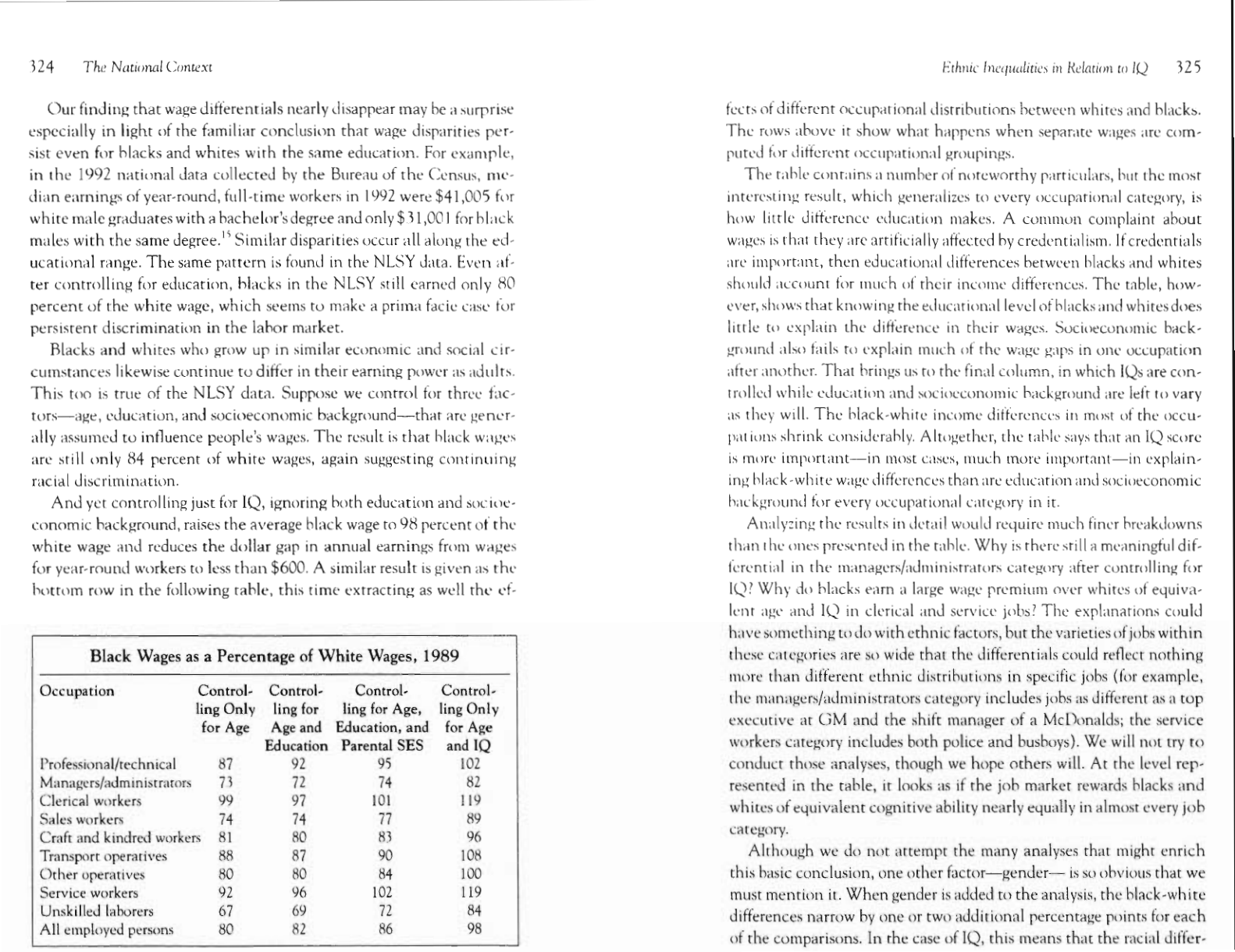
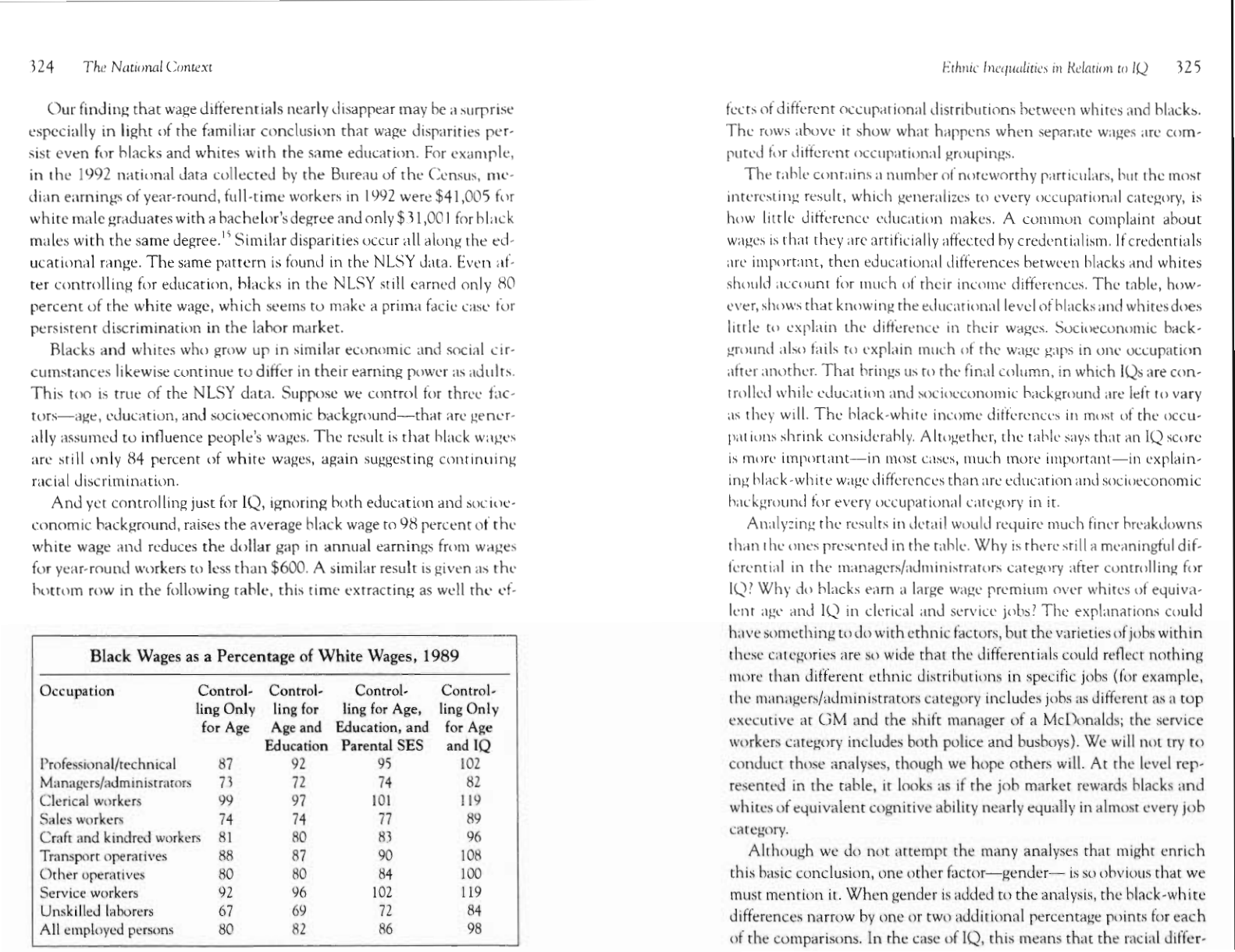
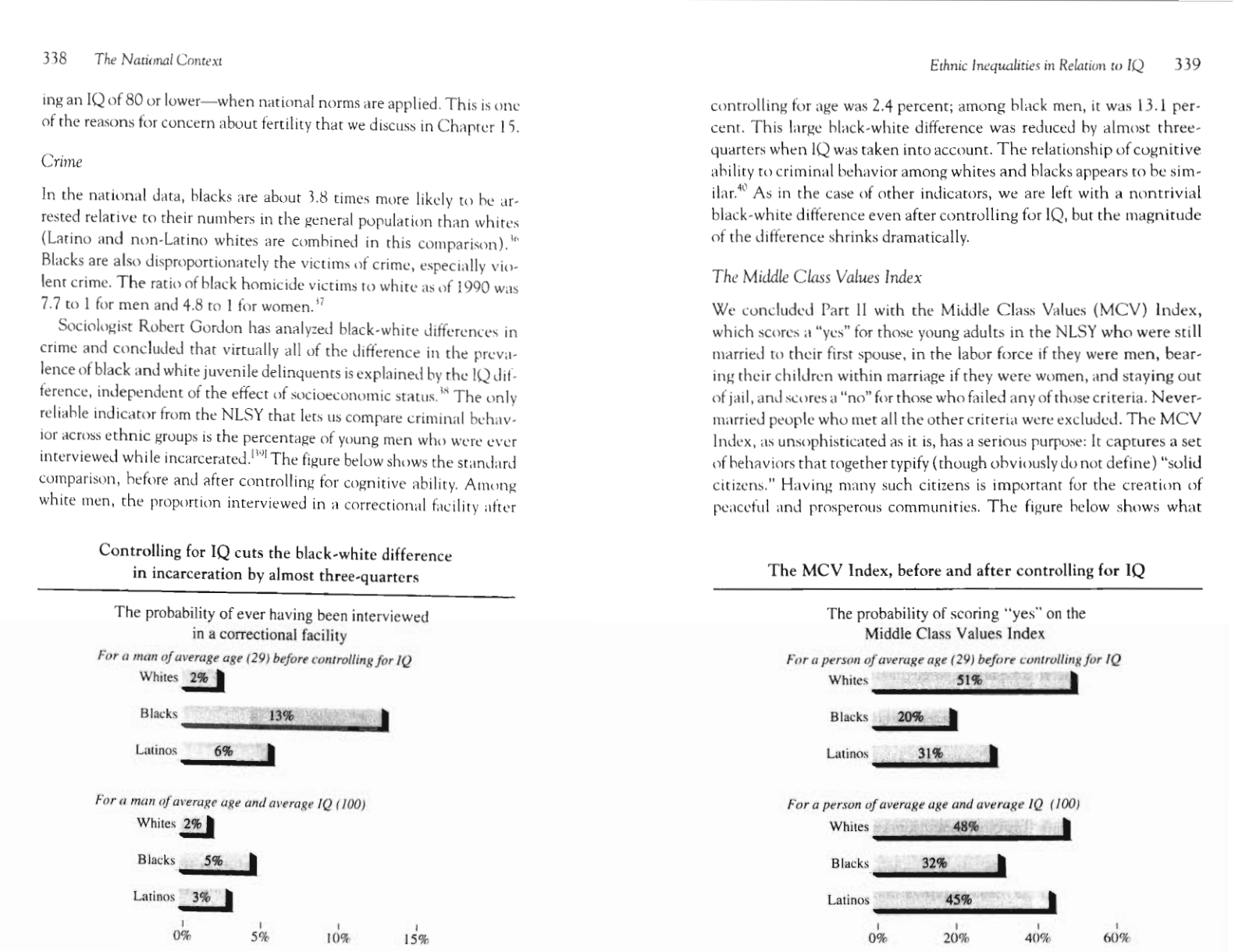
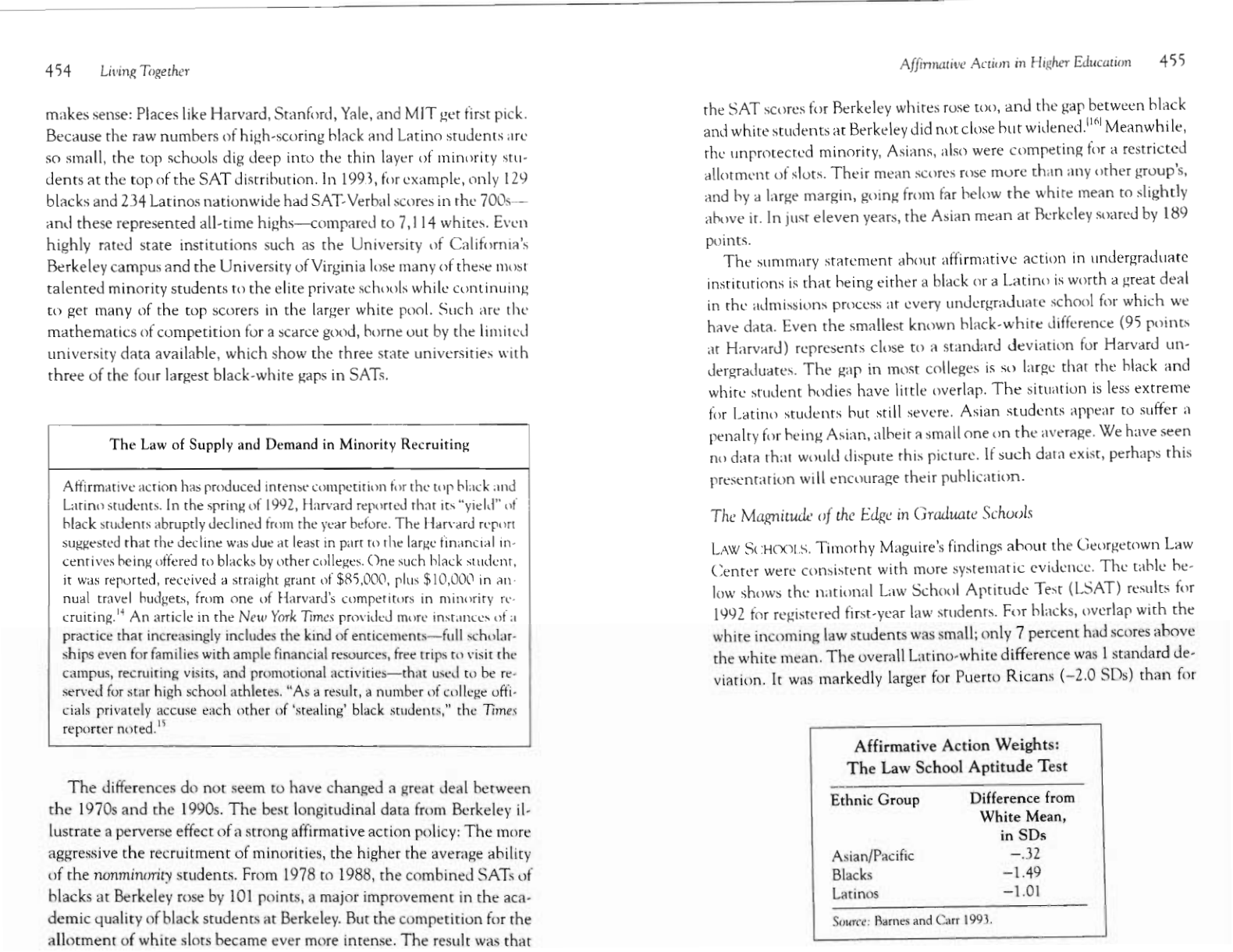
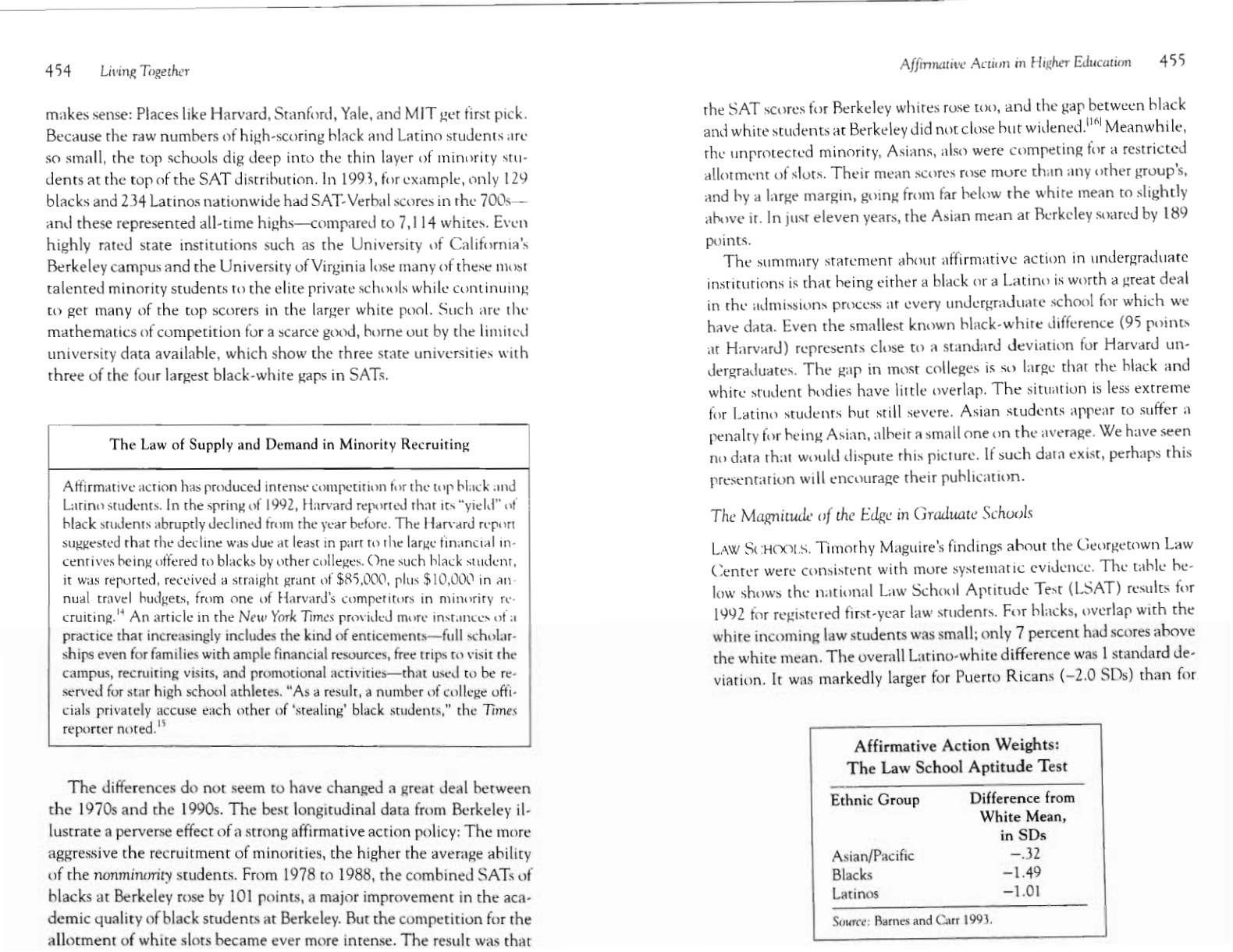
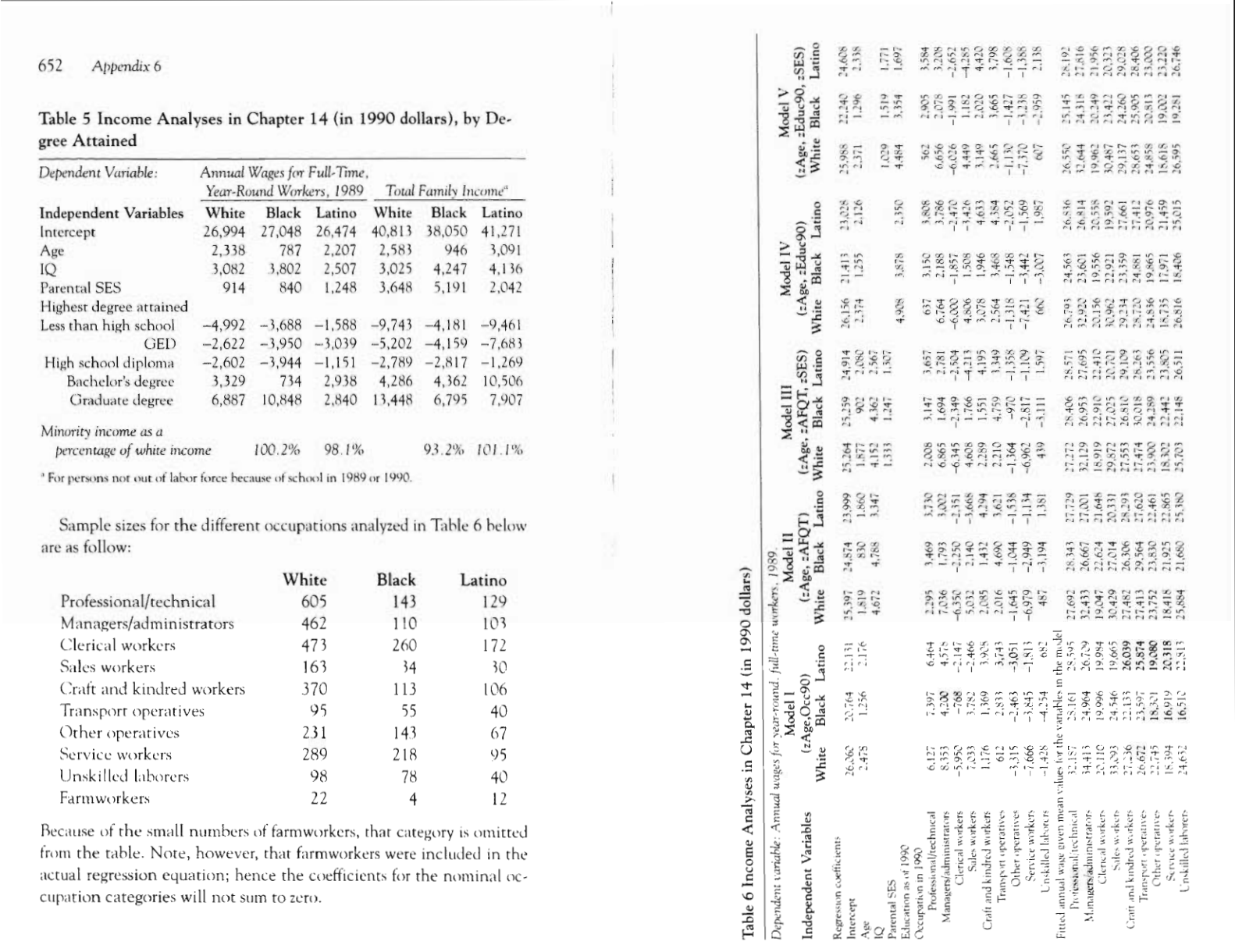
The text addresses ethnic disparities, noting that when IQ is controlled for, wage gaps shrink and the probability of blacks and Latinos entering high-IQ occupations increases.
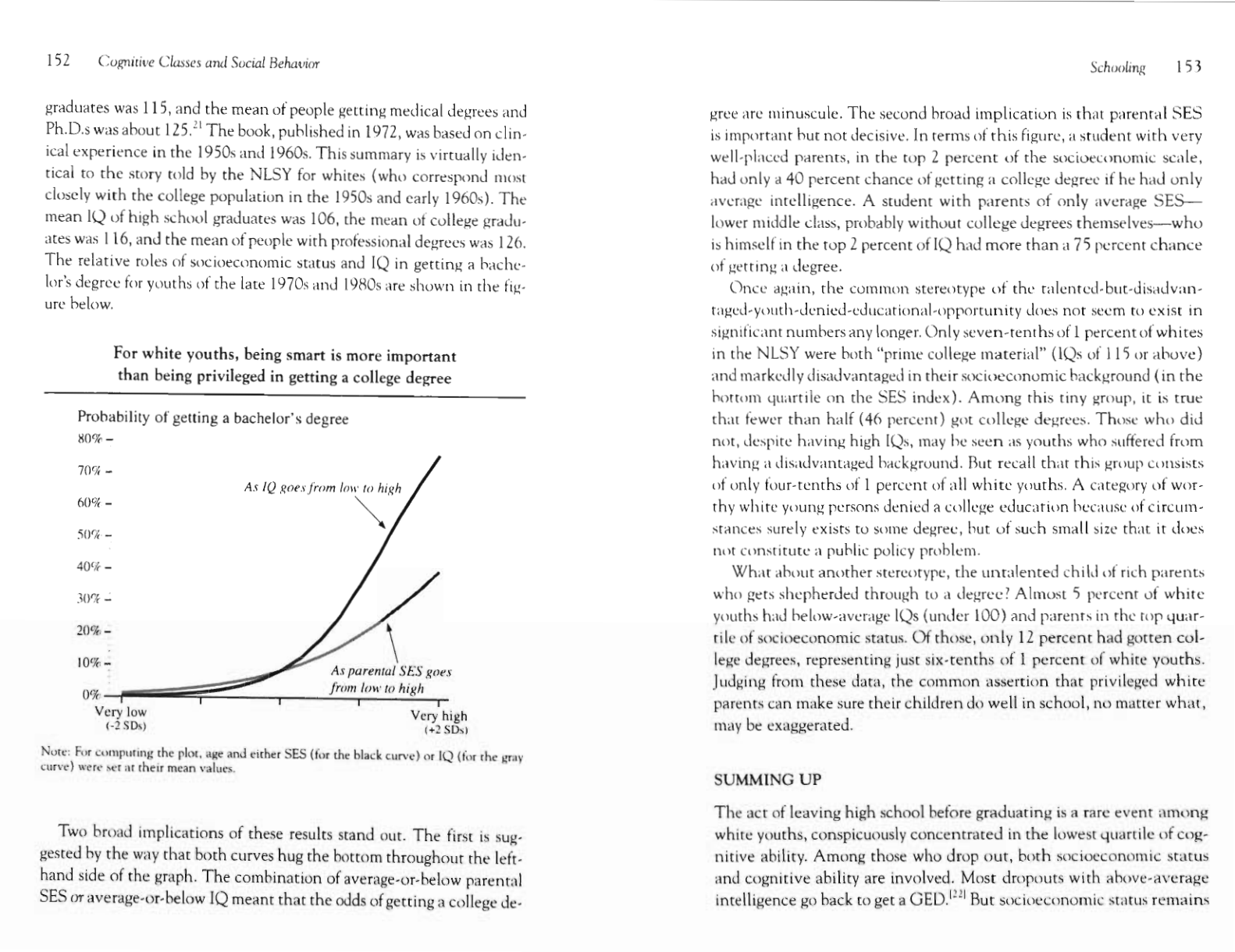
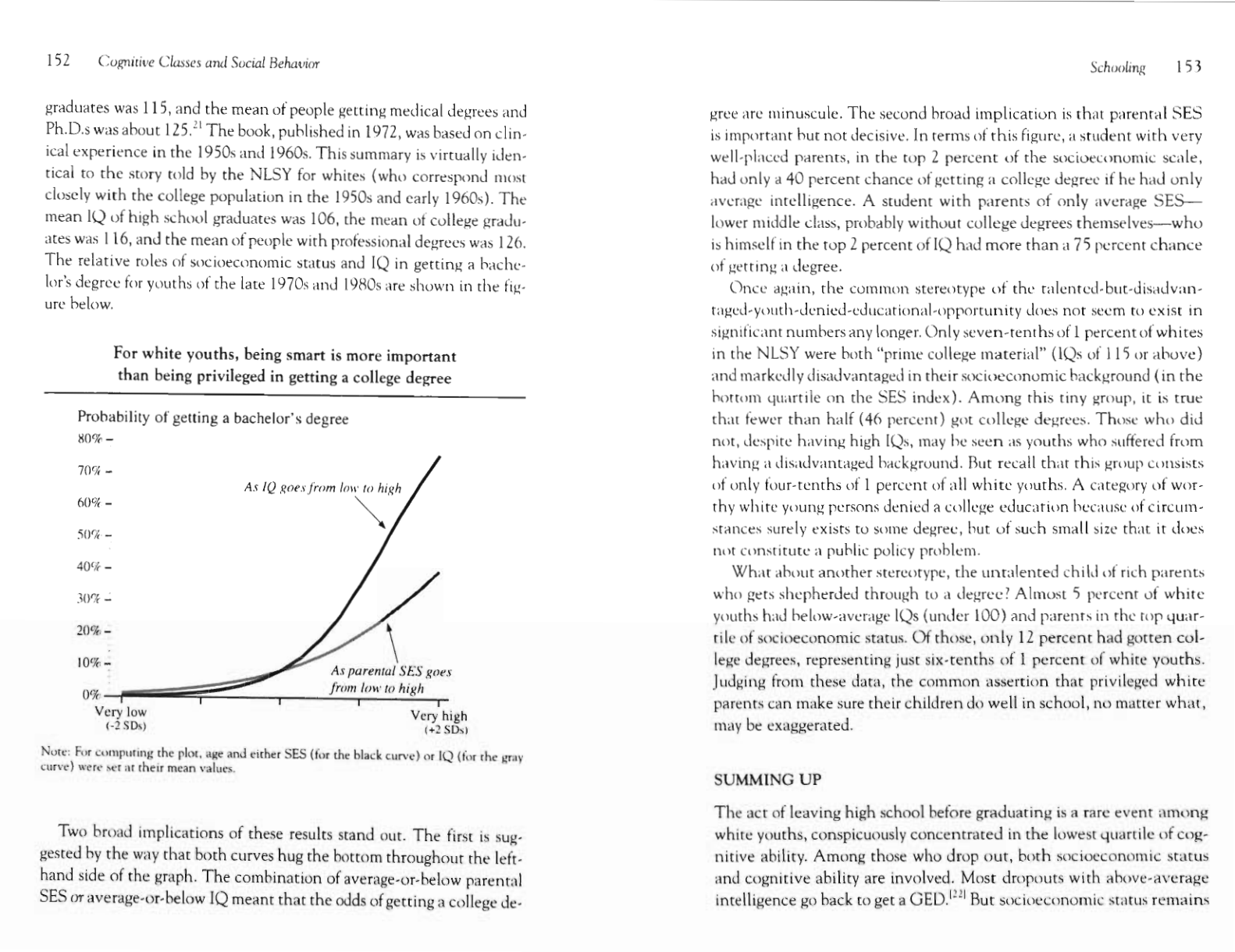
For white youths, being smart is more important than being privileged in getting a college degree.
IQ and Social Disparities
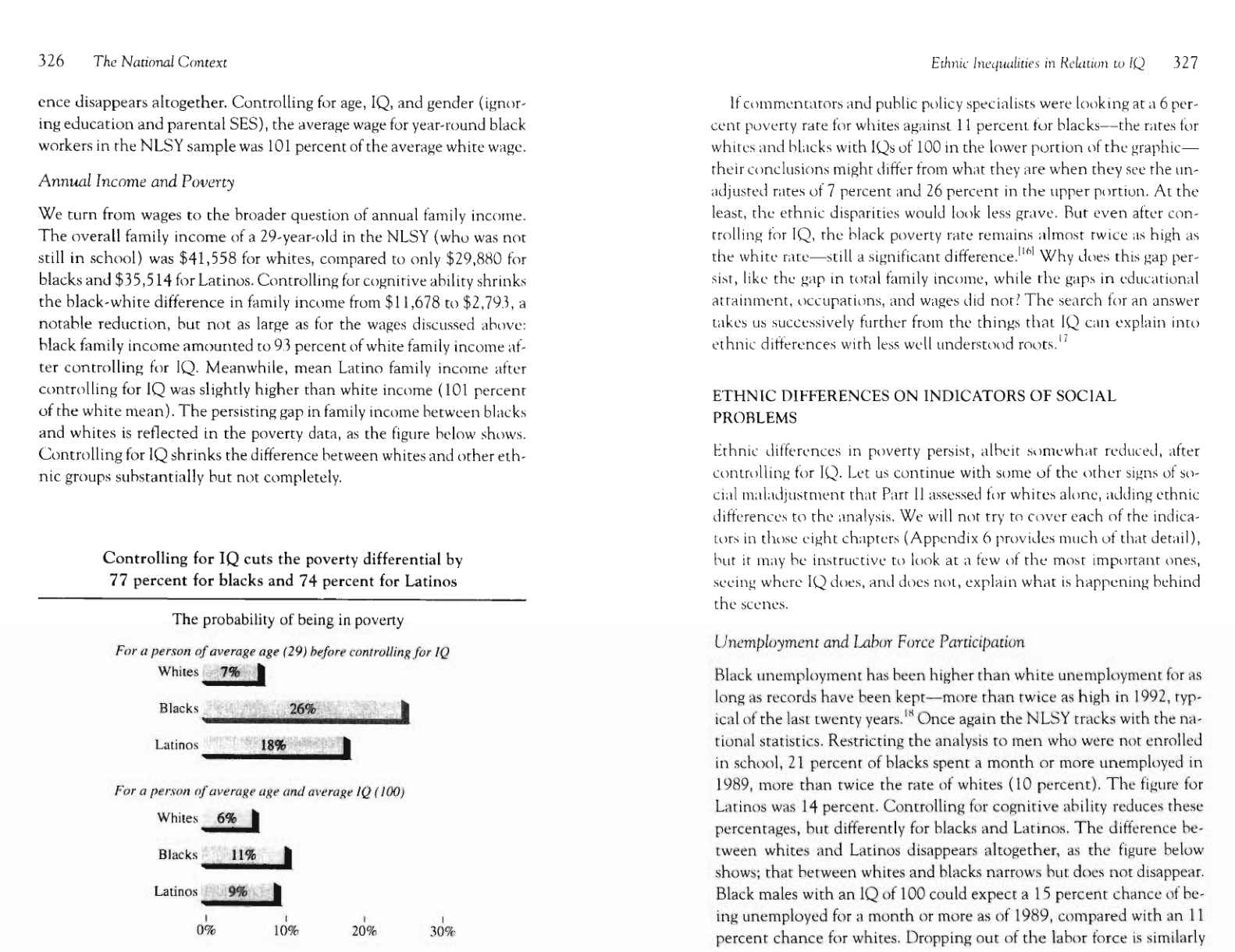
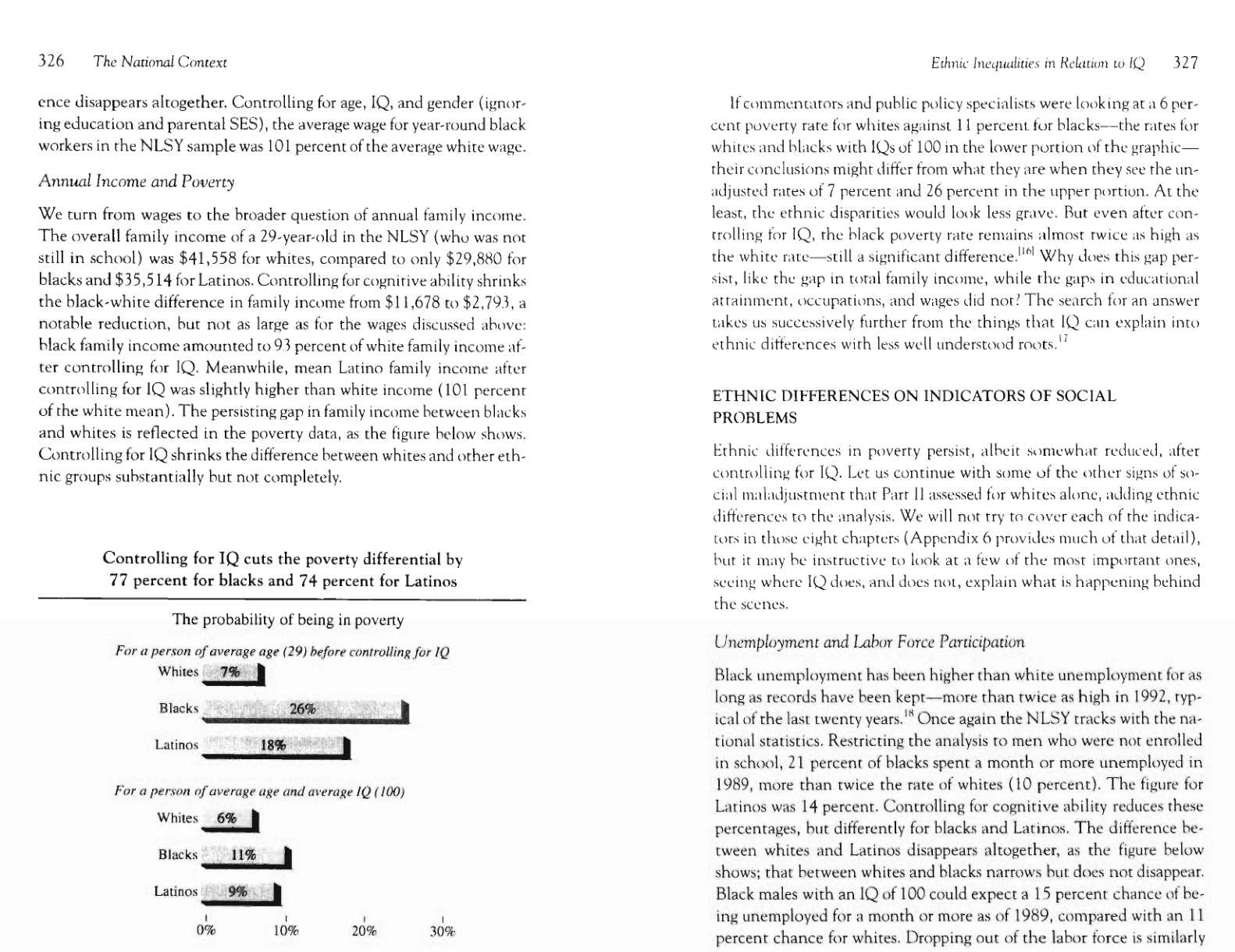
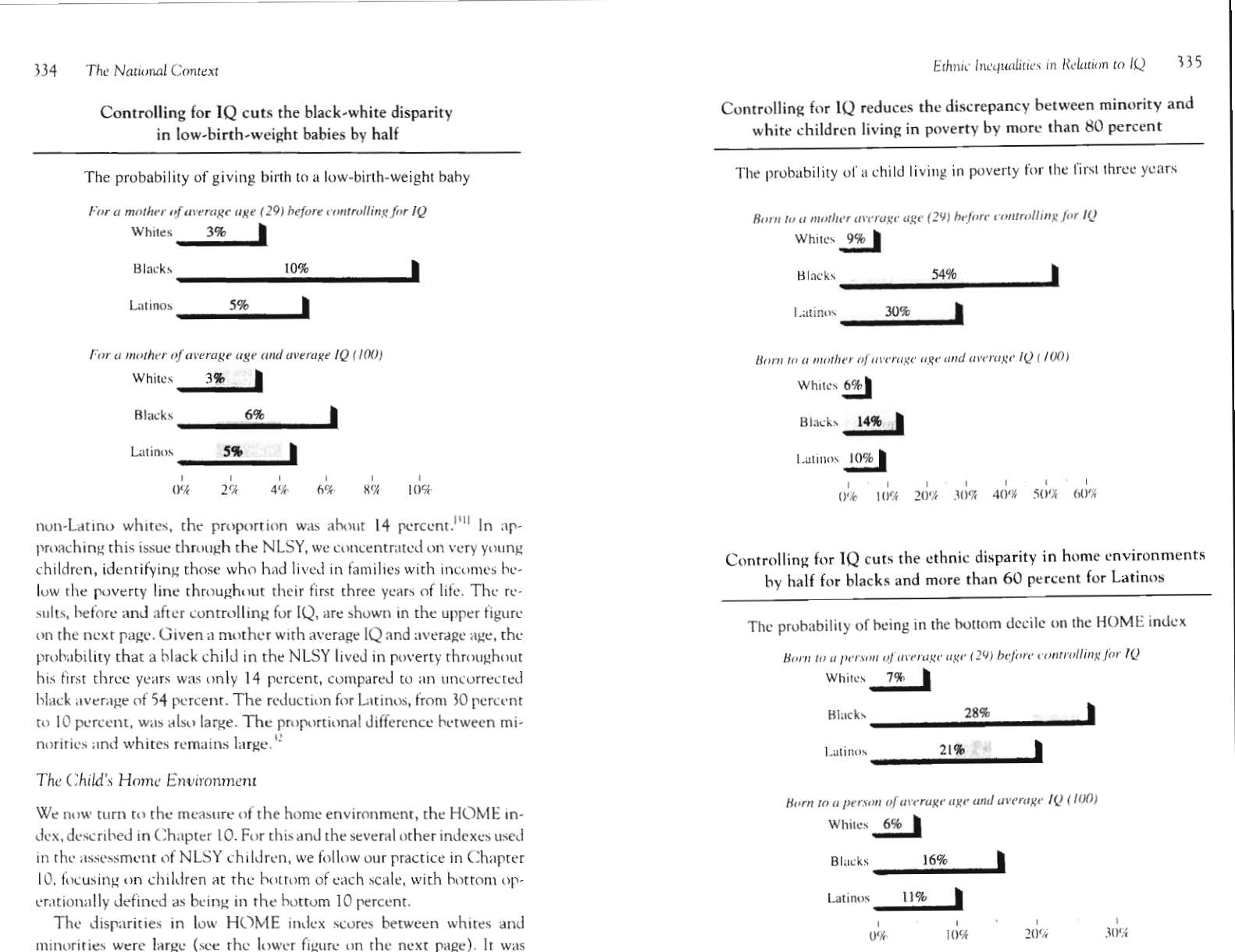
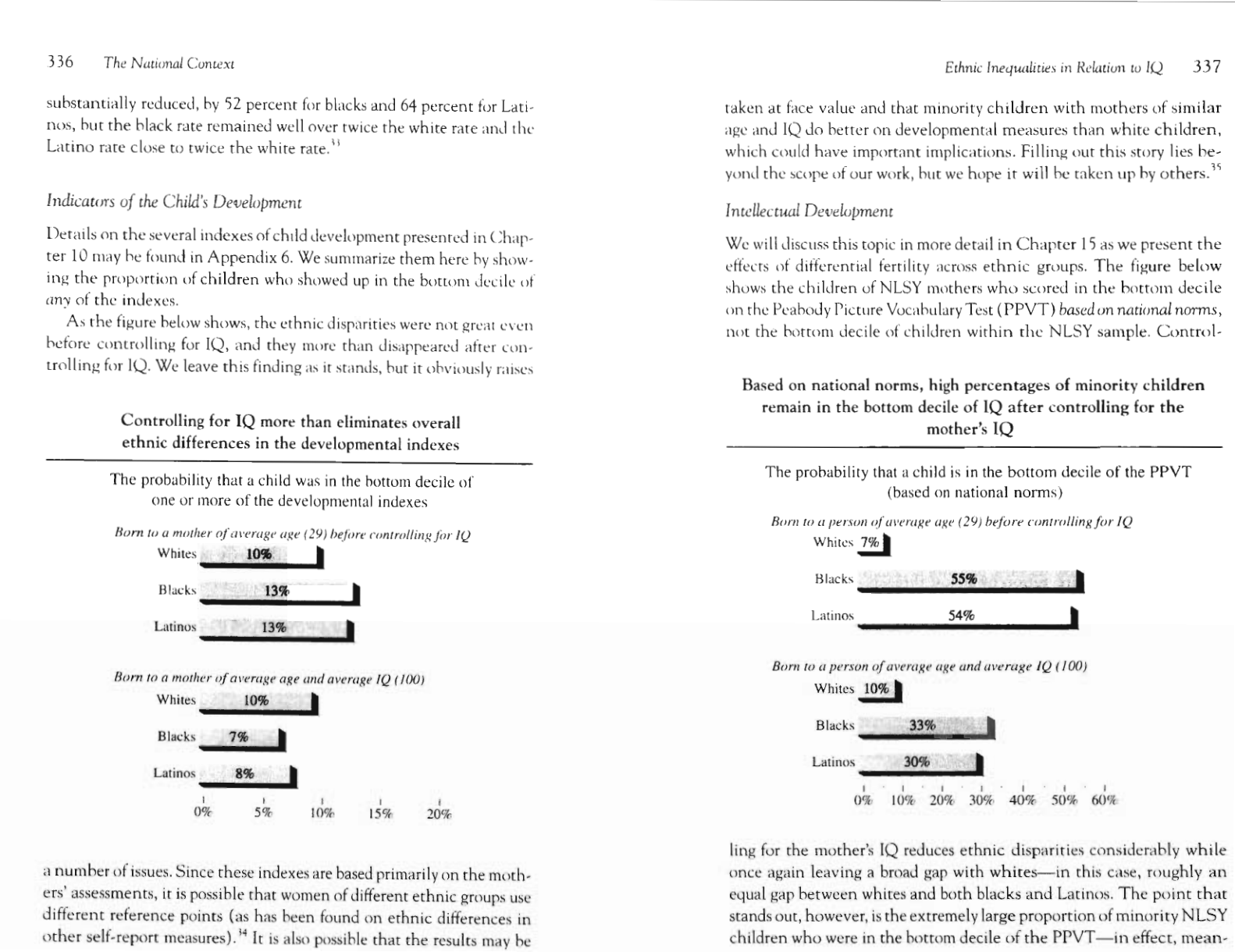
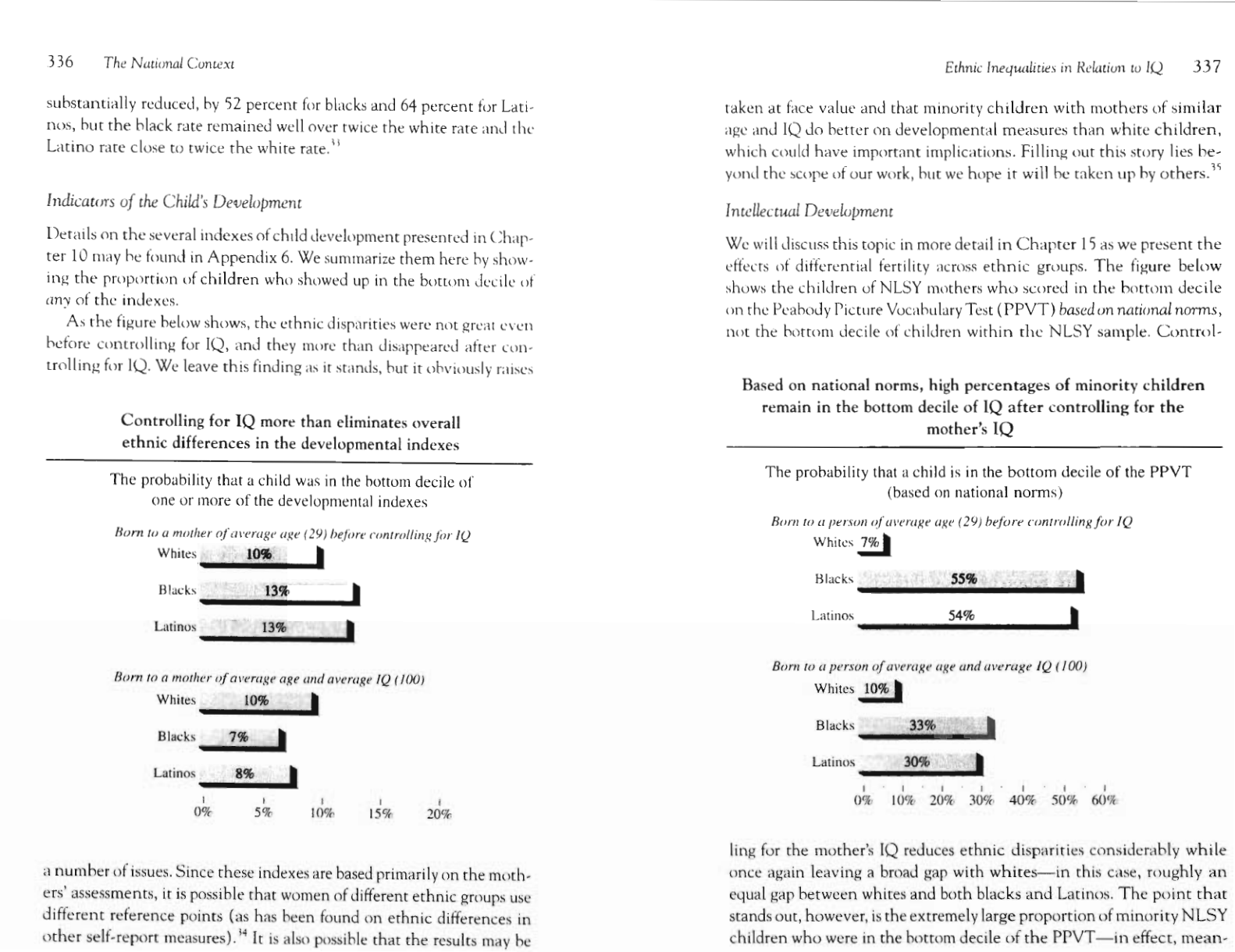
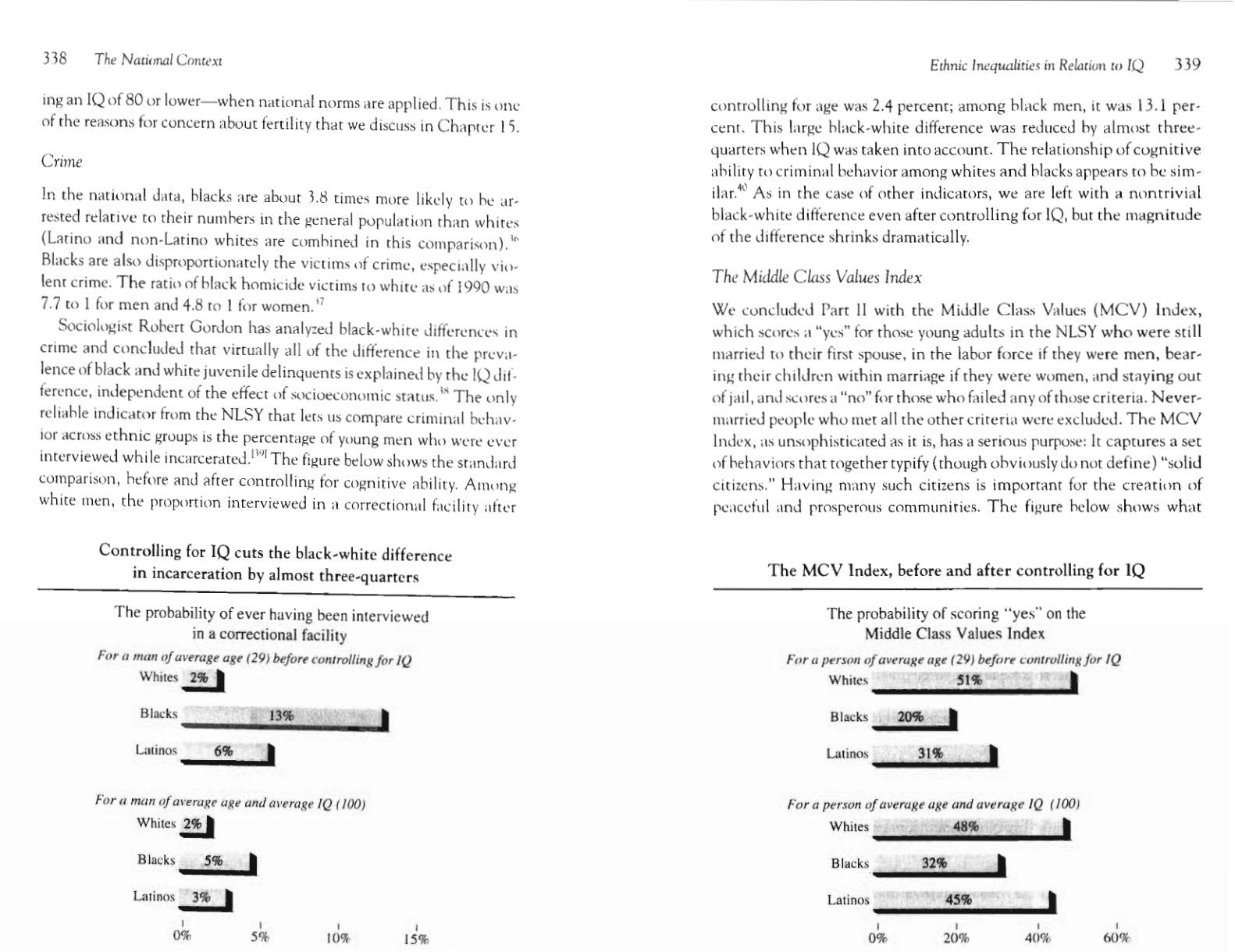
Statistical analysis suggests that controlling for IQ significantly reduces ethnic disparities in poverty, unemployment, and incarceration rates.
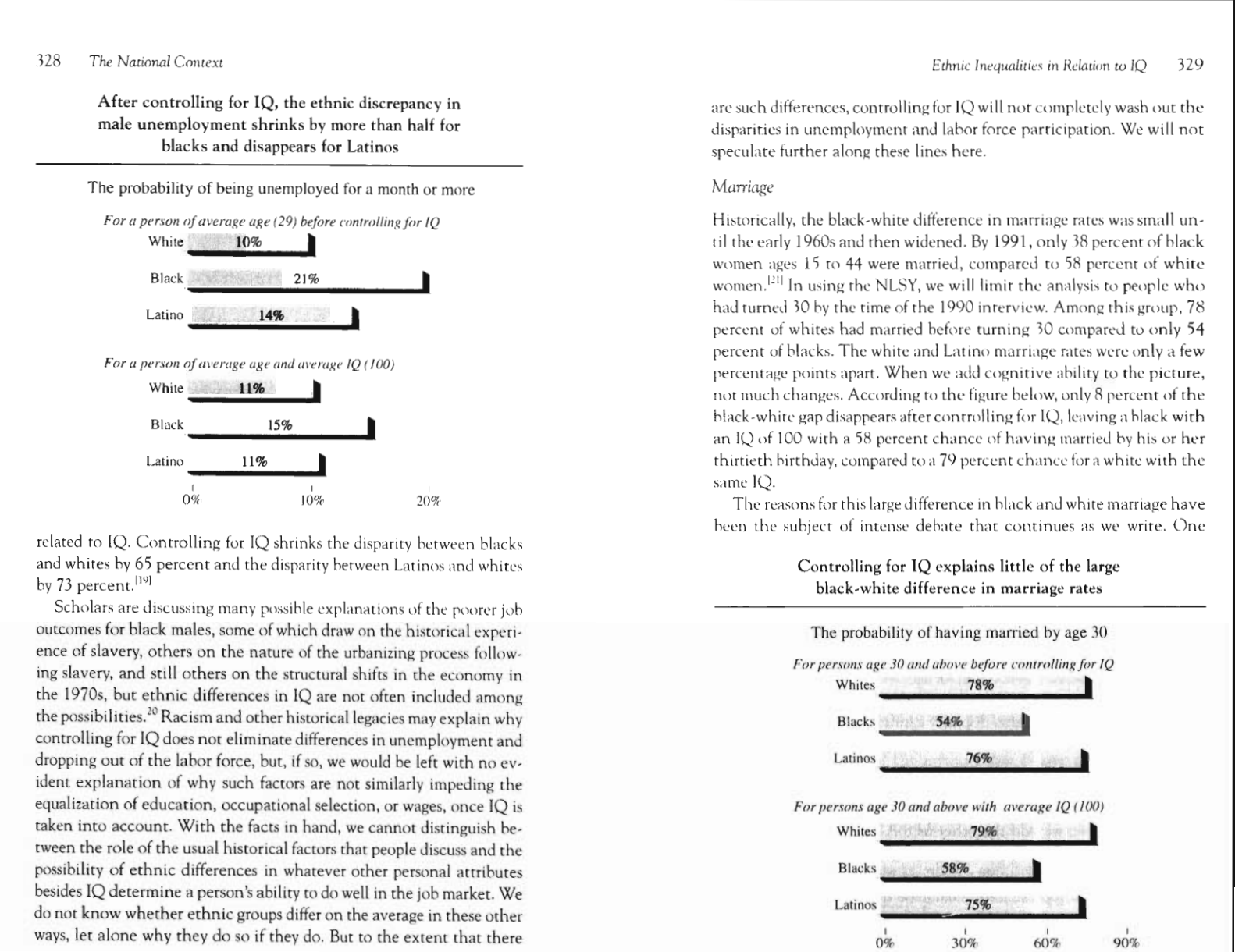
Despite IQ adjustments, certain social gaps—specifically black-white marriage rates and welfare recipiency—remain largely unexplained.
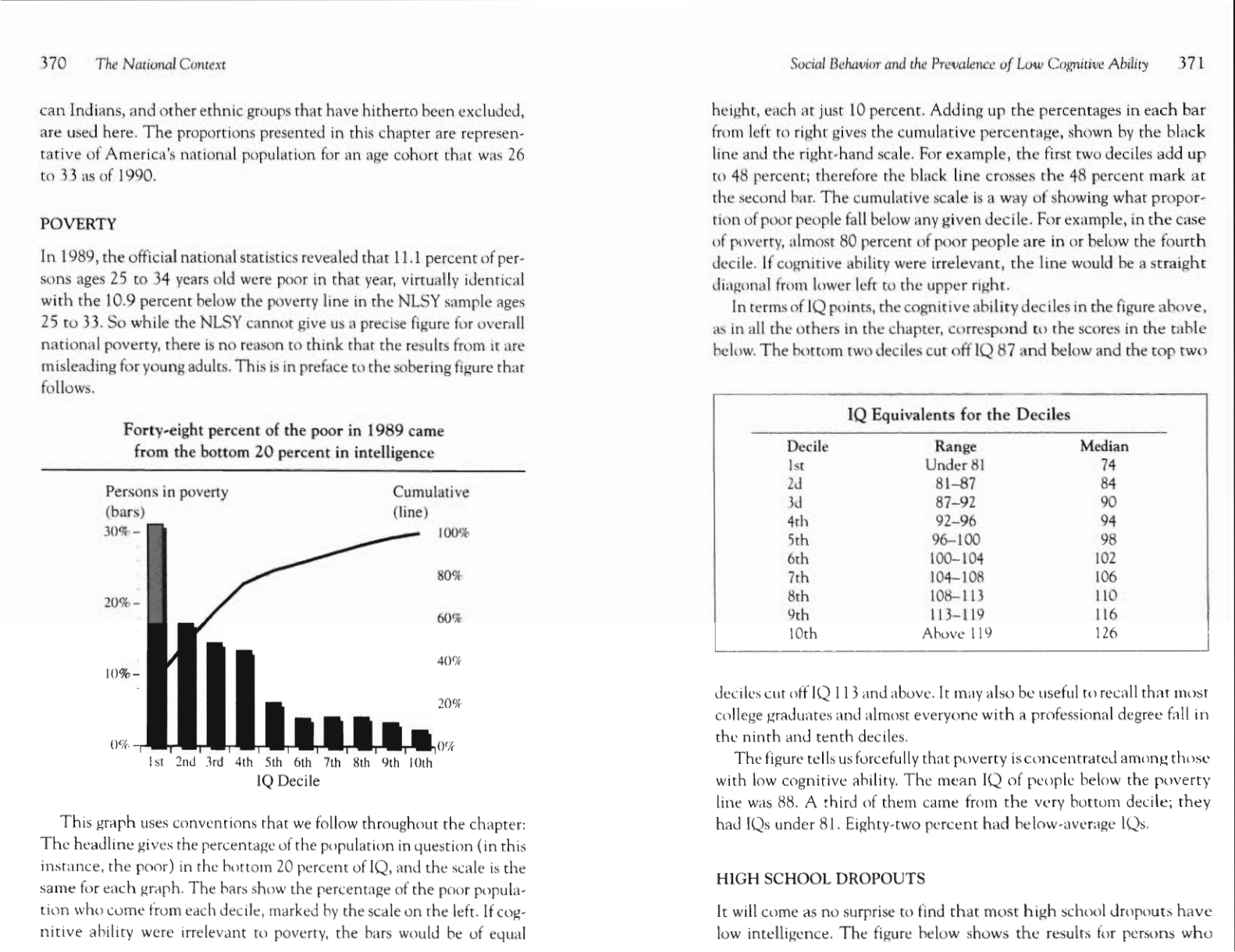
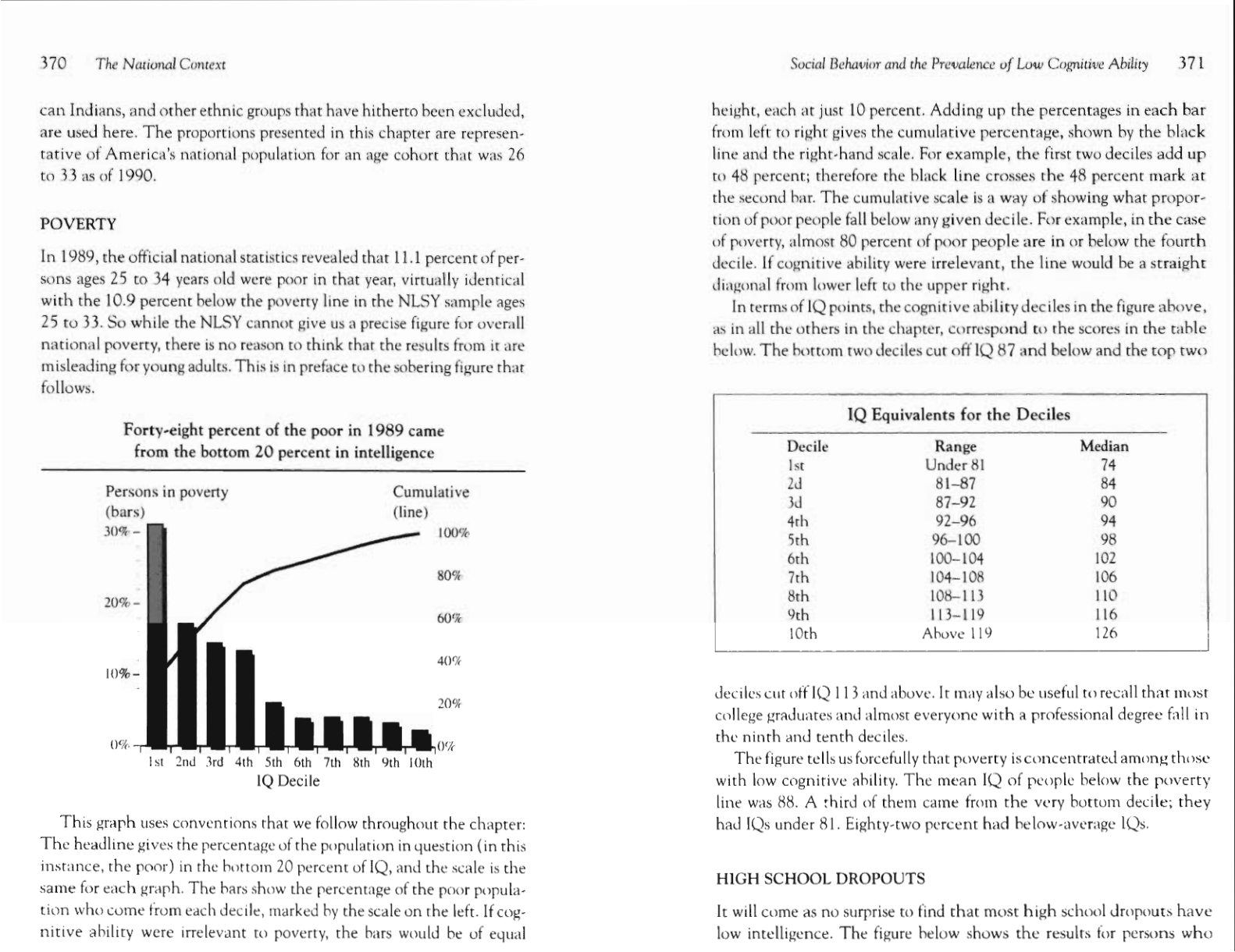
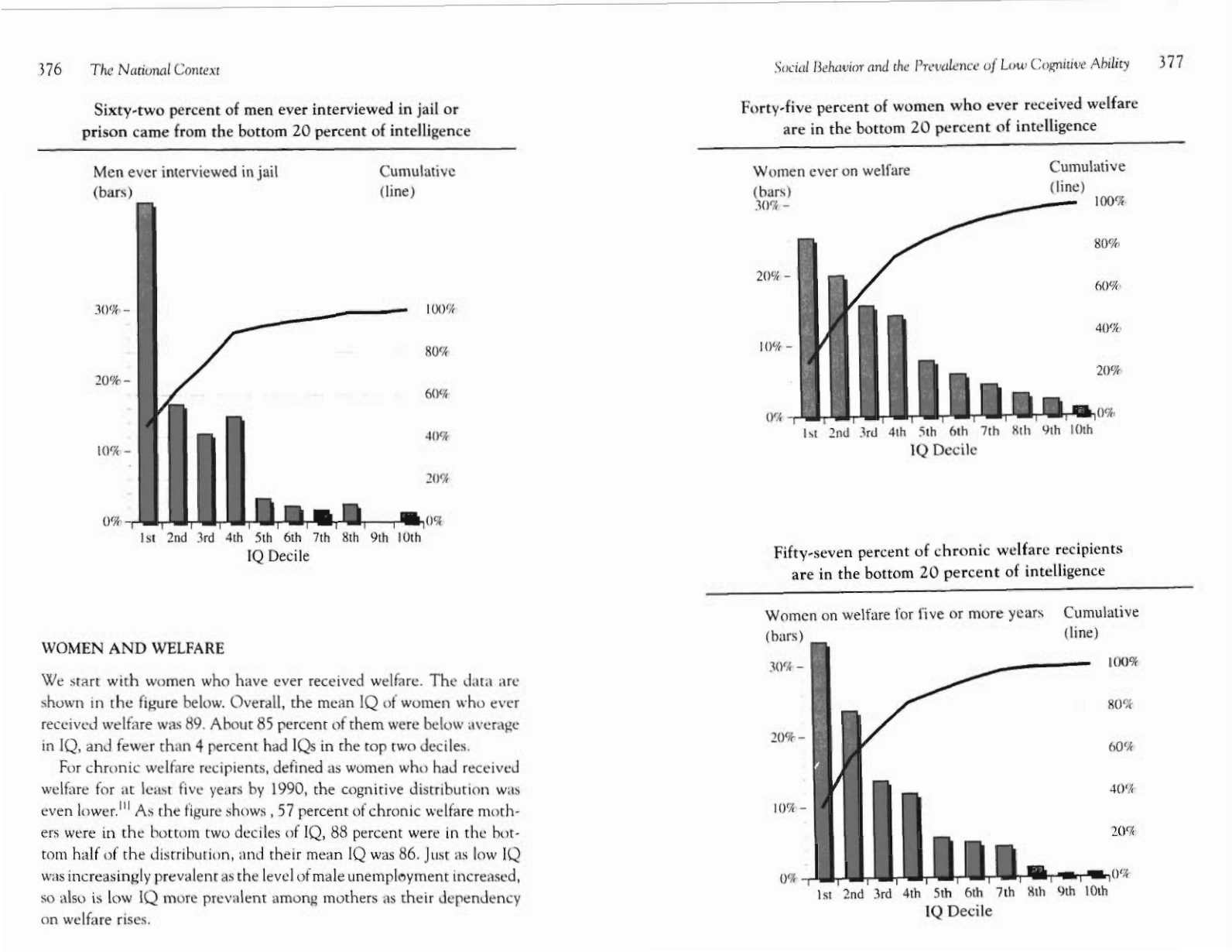
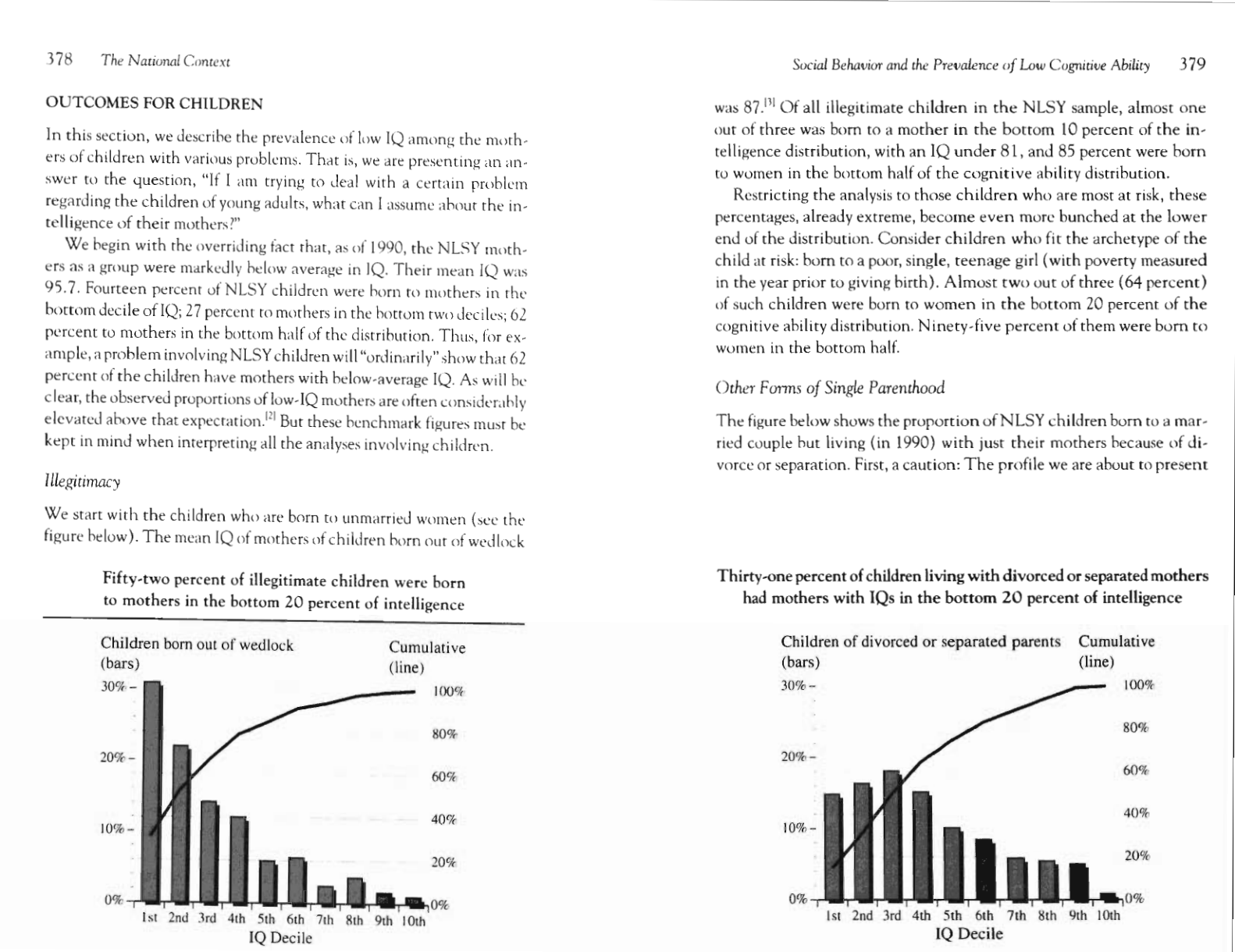
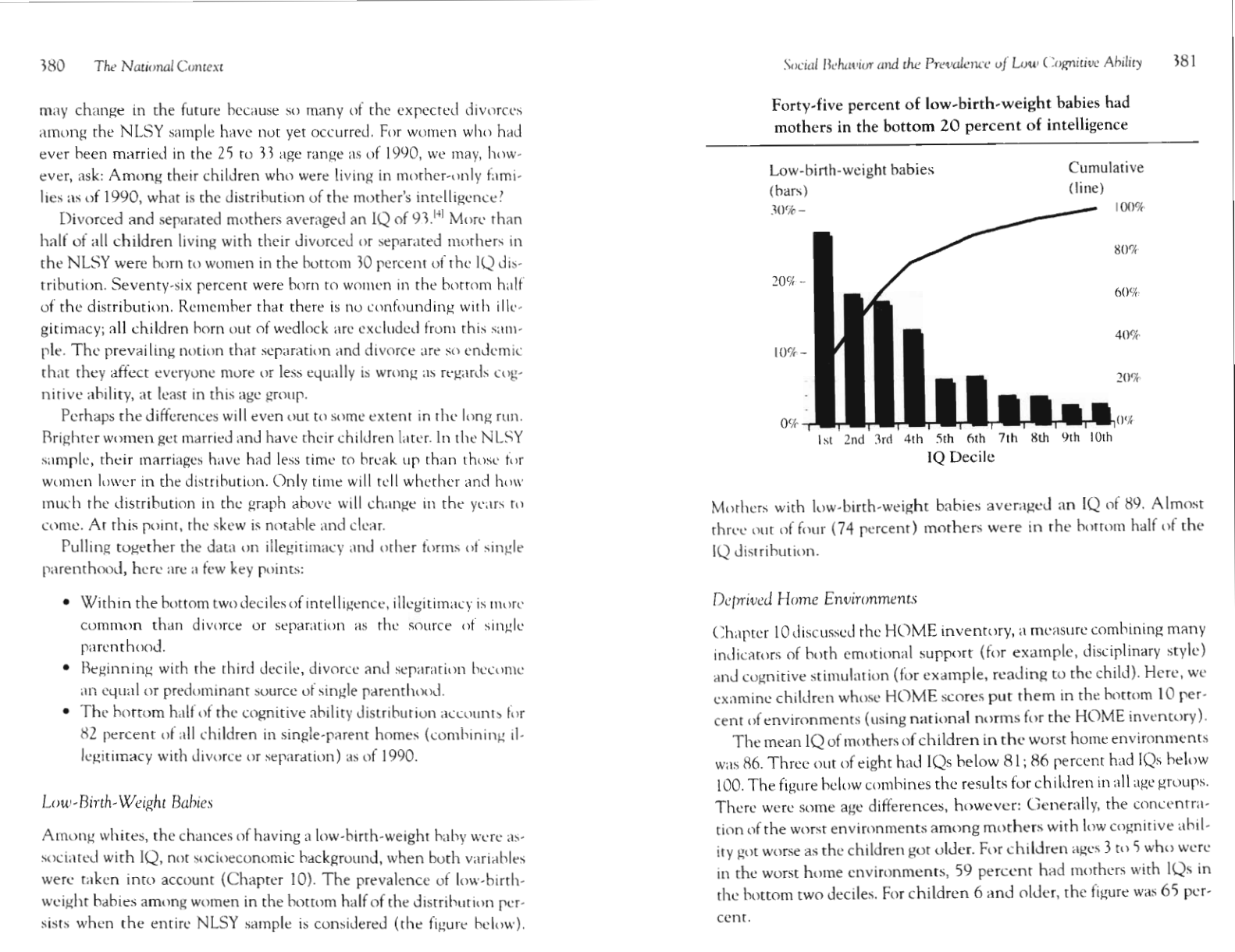
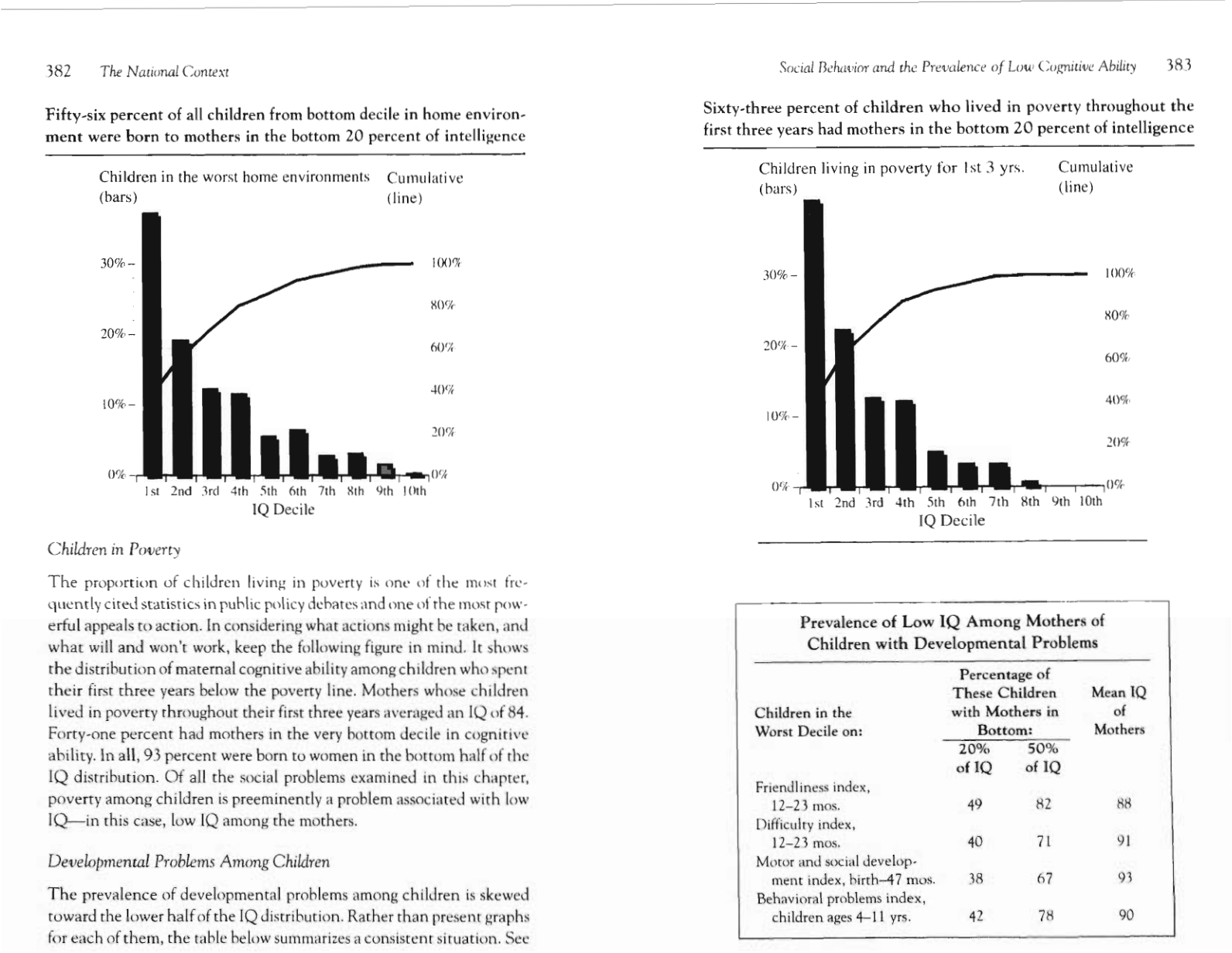
Data indicates a strong correlation between the bottom quintile of intelligence and chronic social issues like high school dropout rates and long-term welfare dependency.
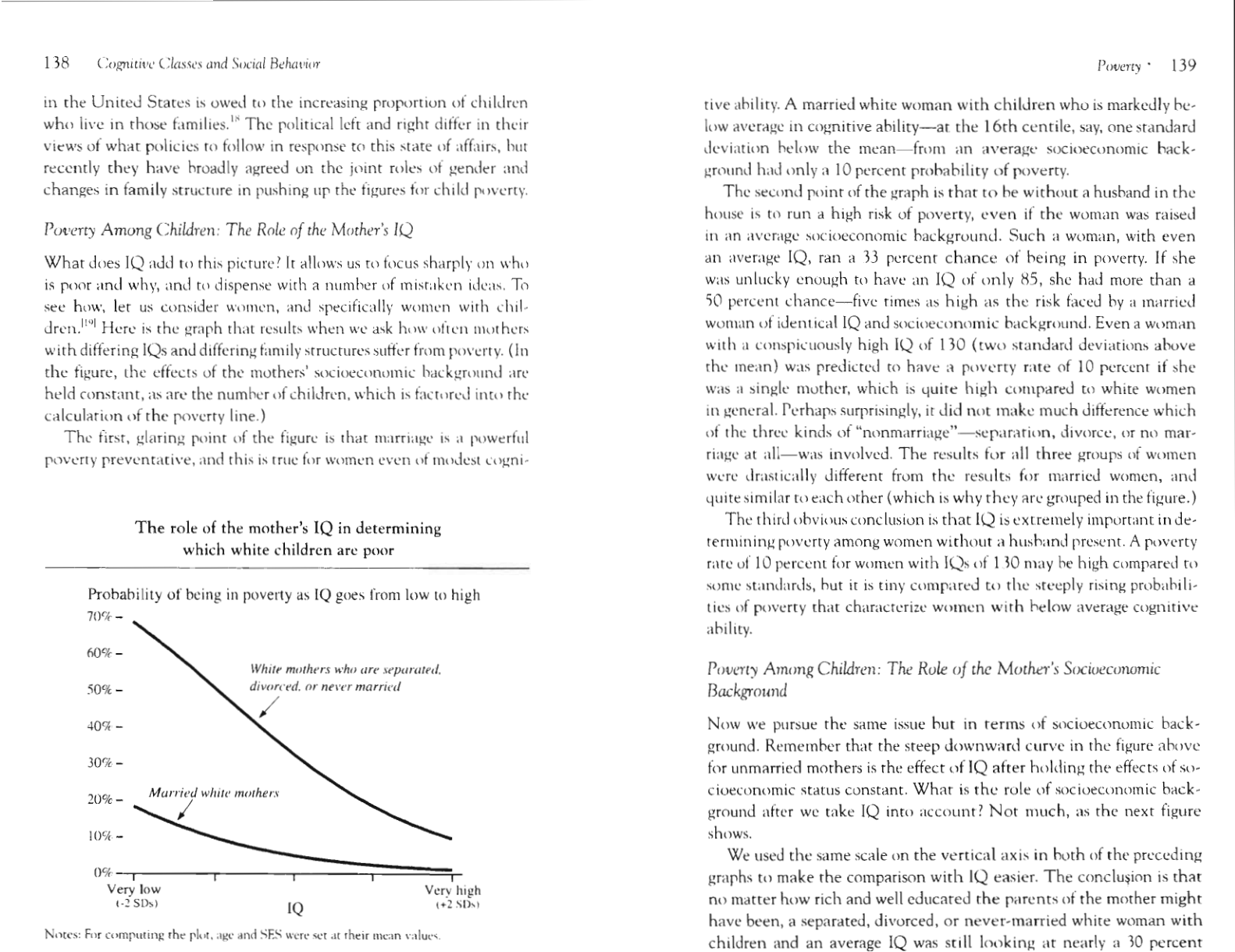
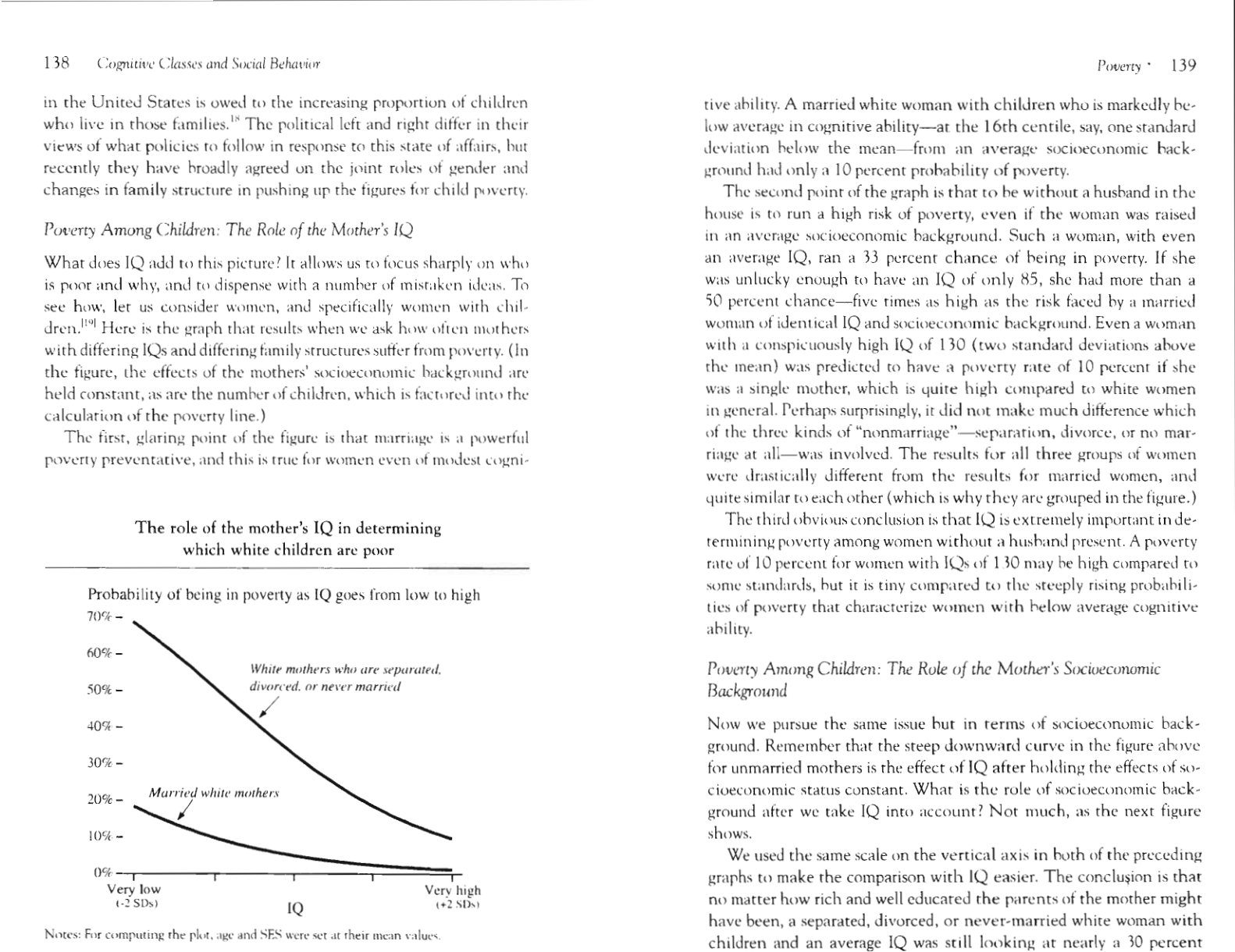
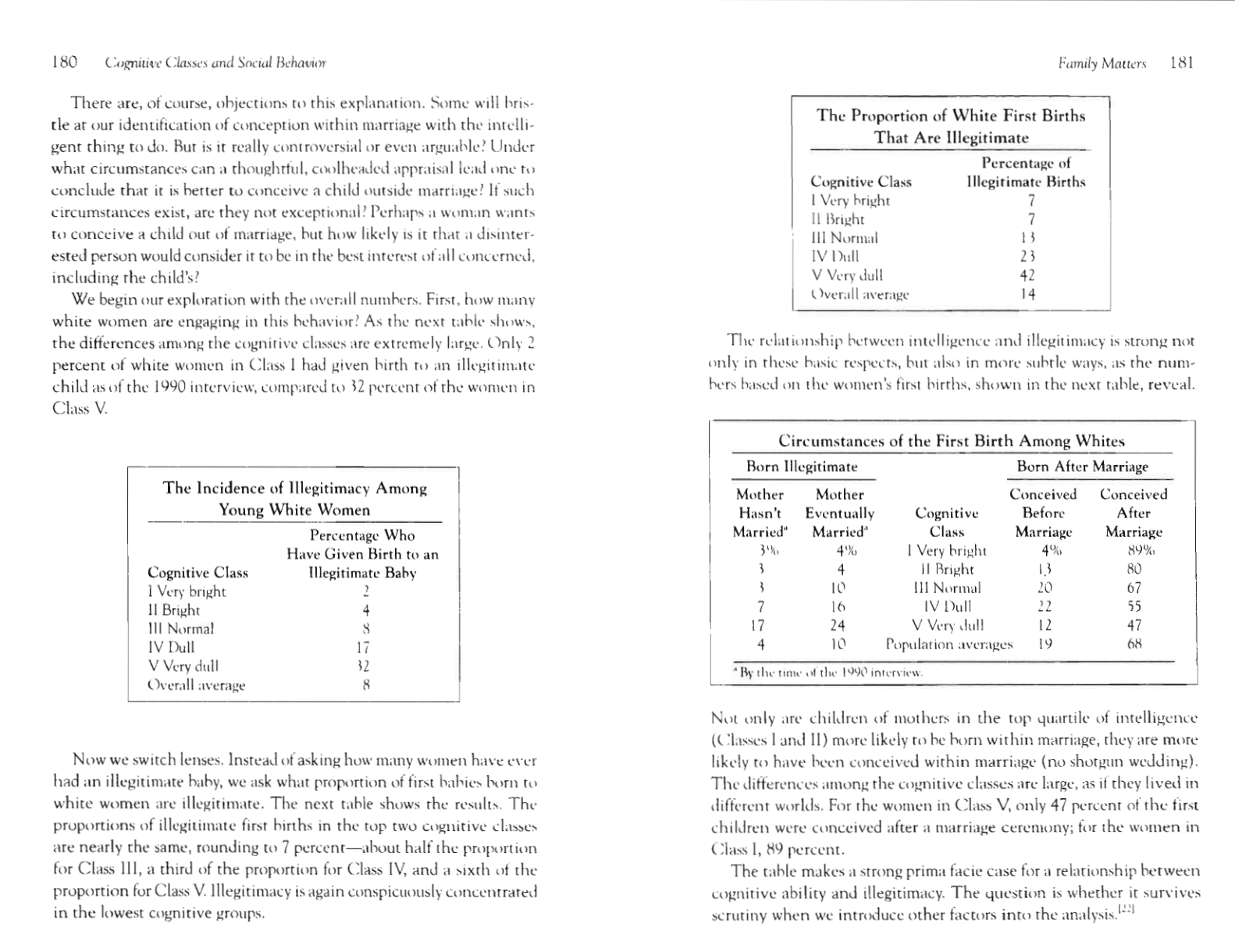
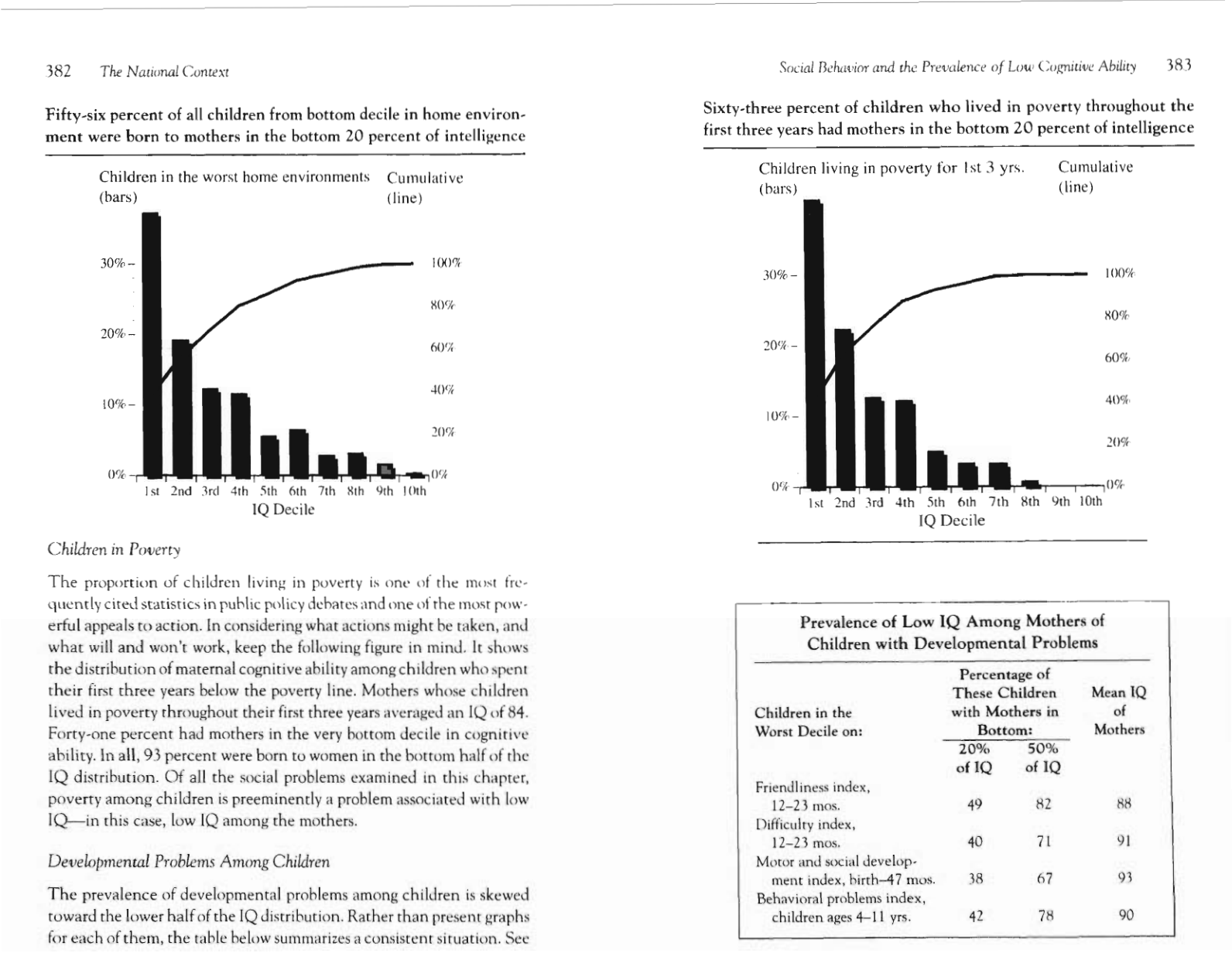
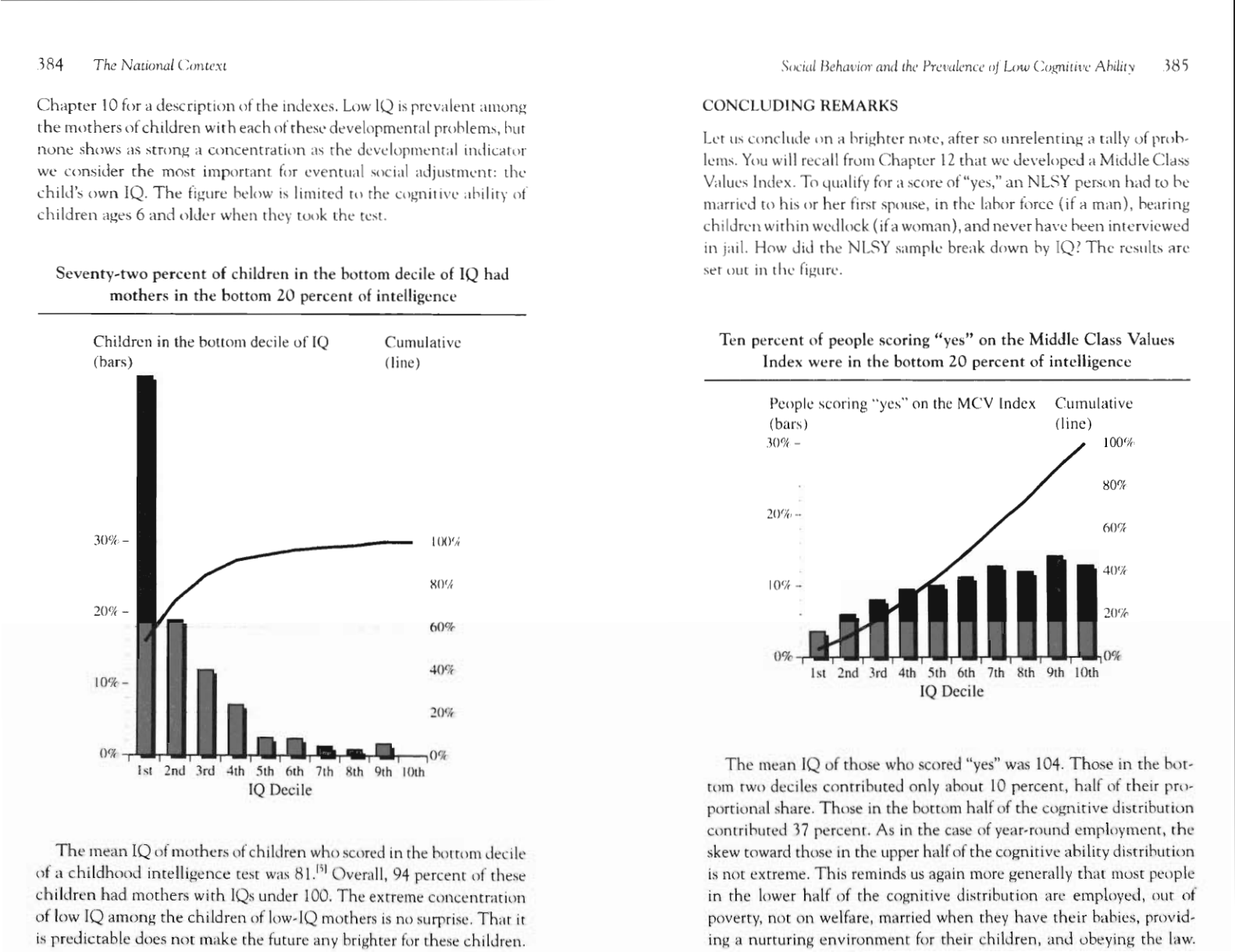
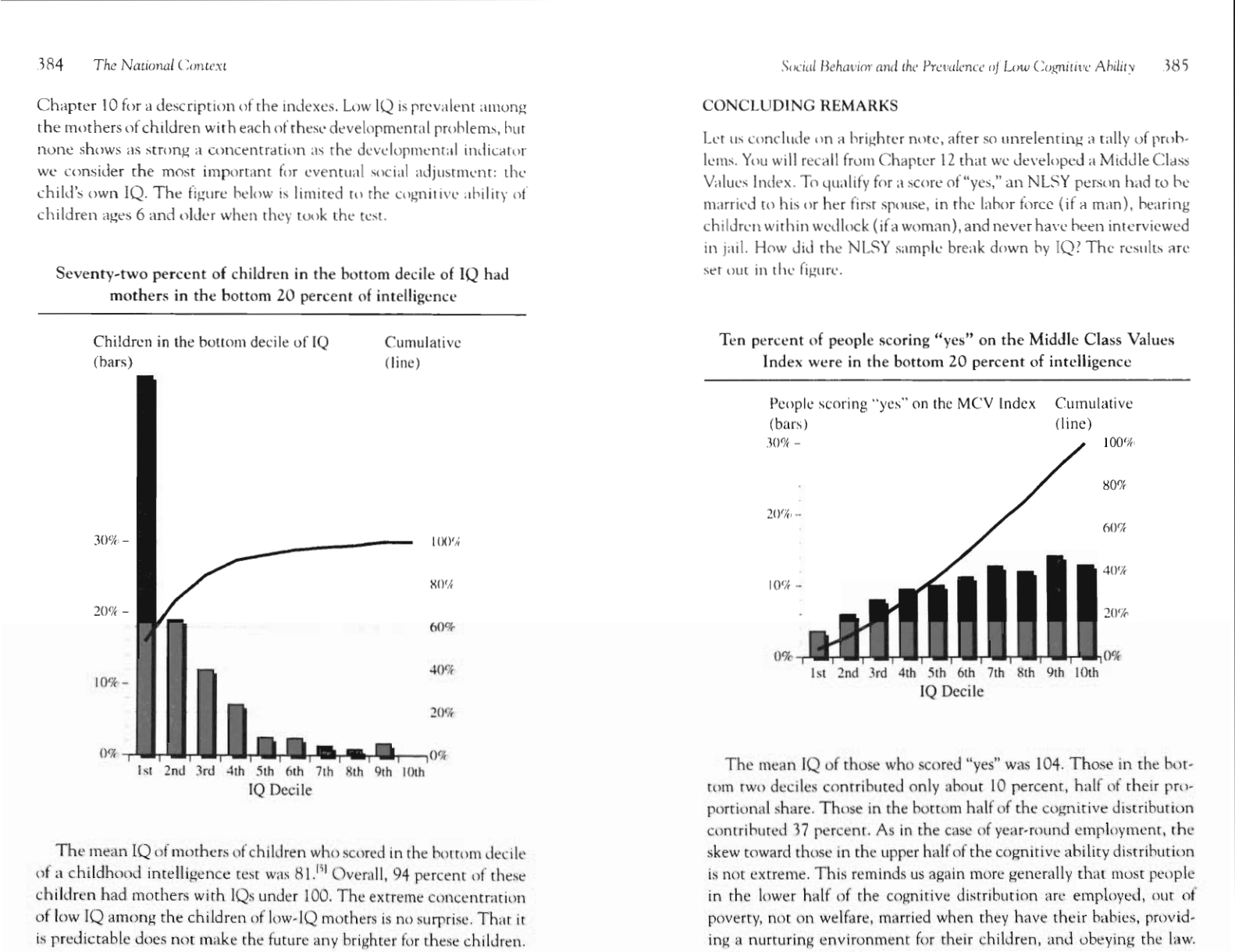
The text highlights a significant concentration of social problems, such as illegitimacy and childhood poverty, among populations in the lowest 20 percent of measured intelligence.
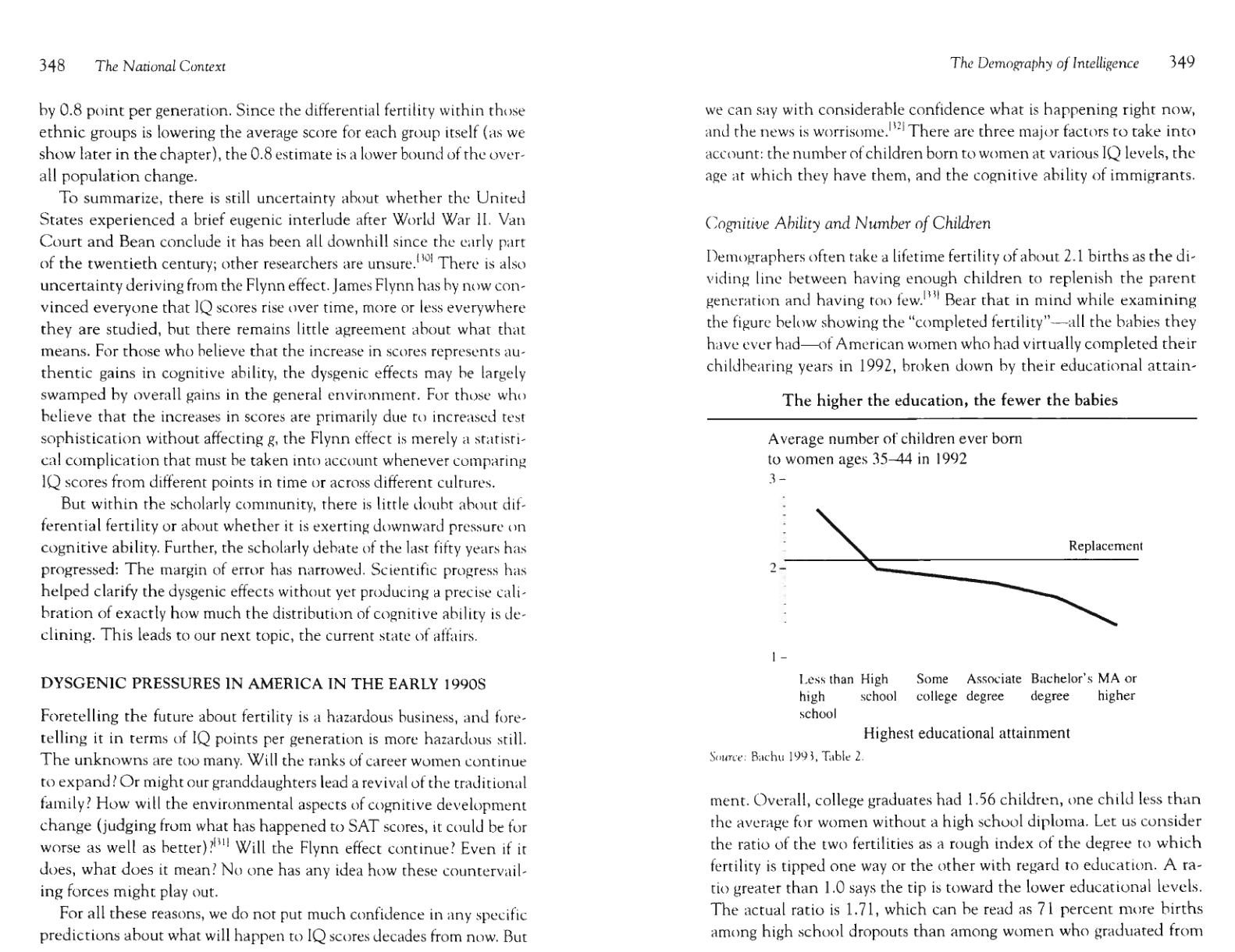
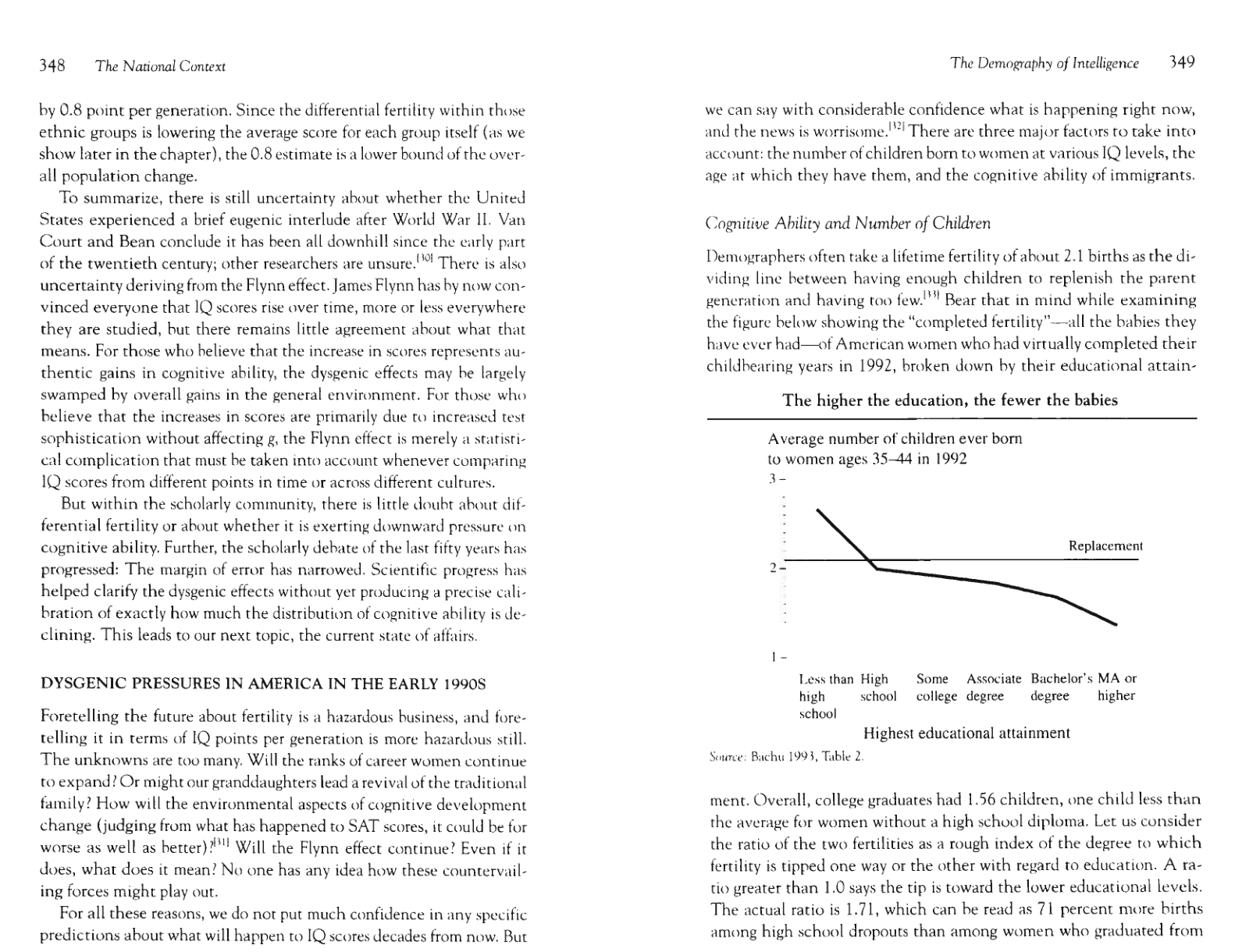
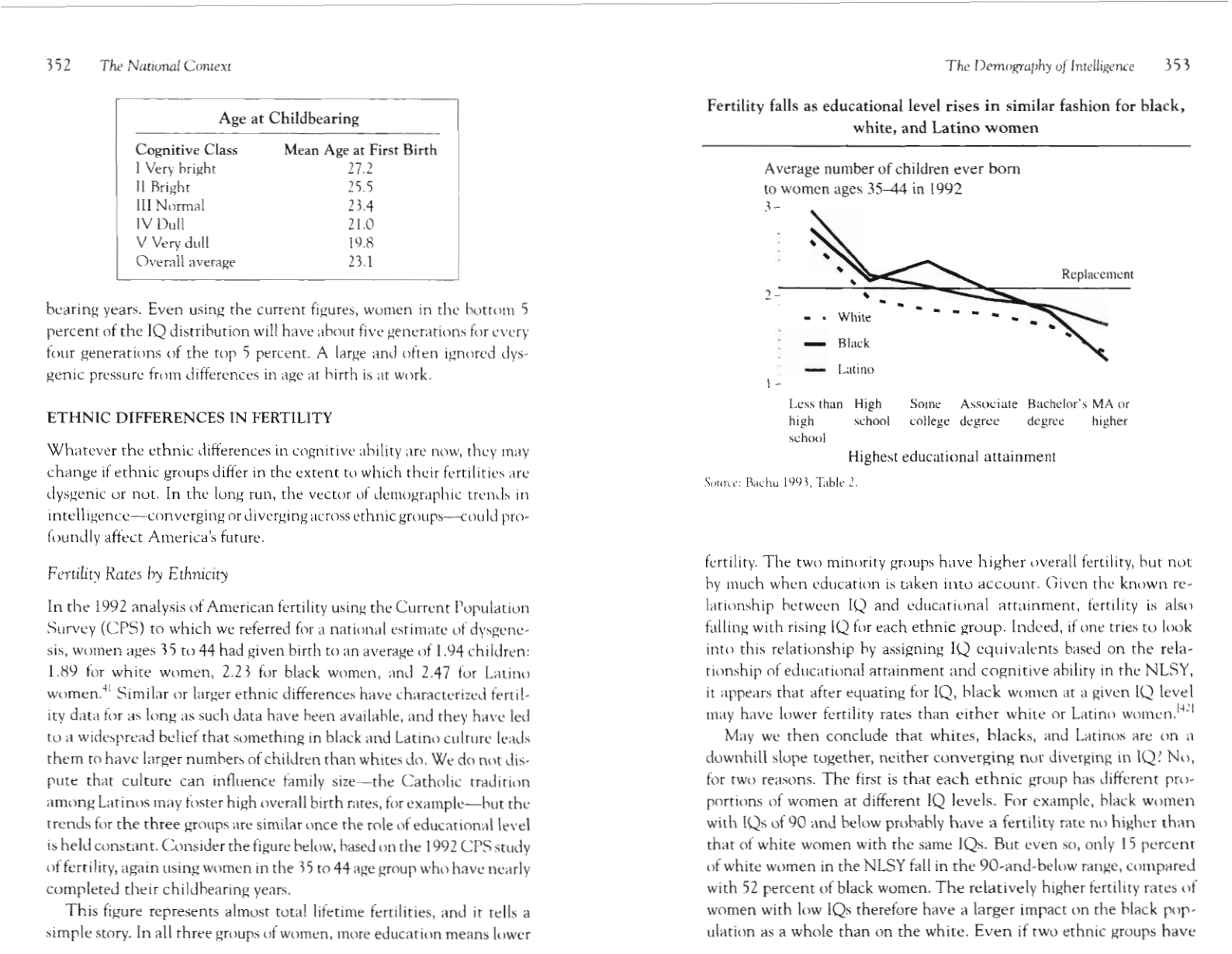
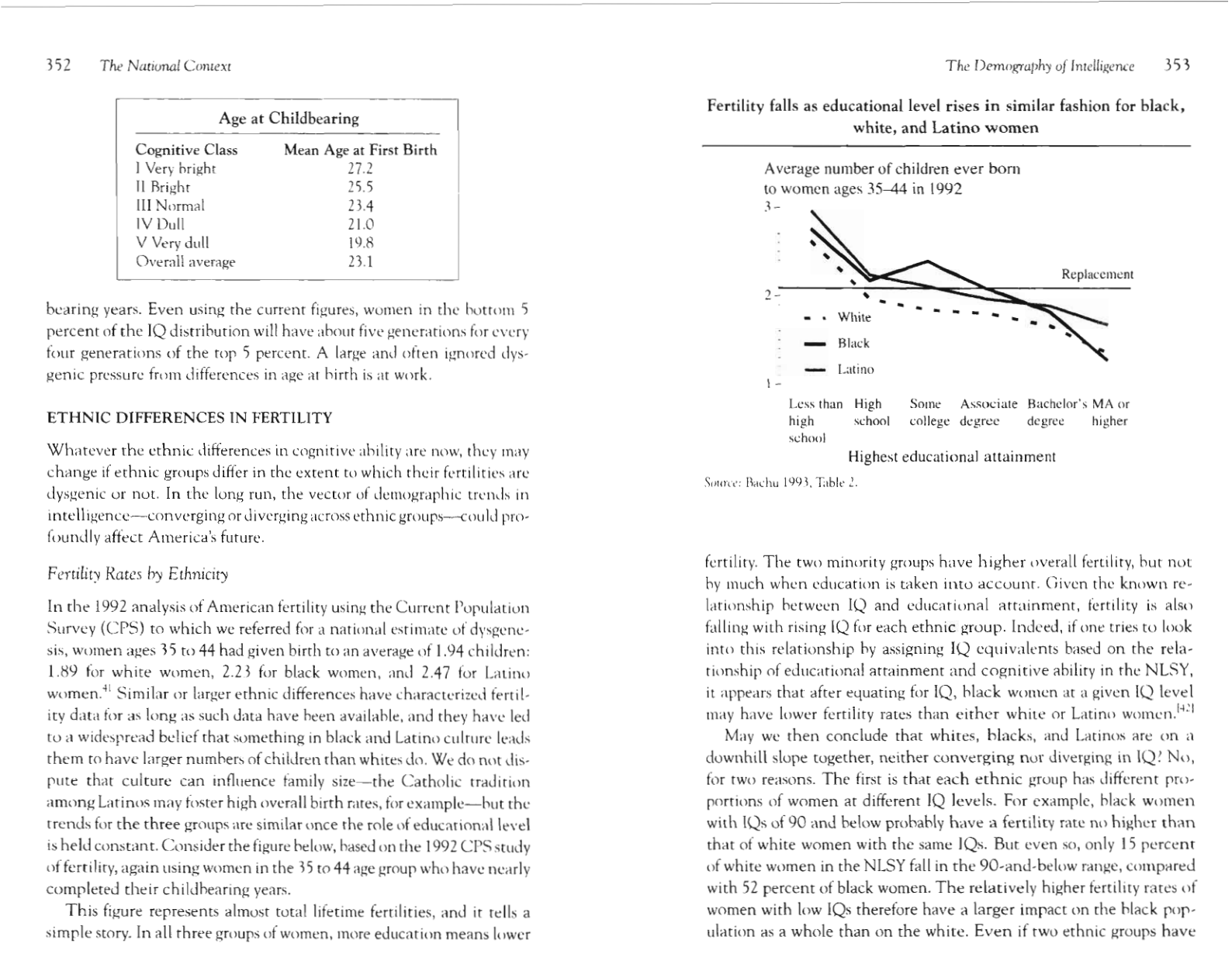
Educational trends show that fertility rates decrease as education levels rise across all major ethnic groups.
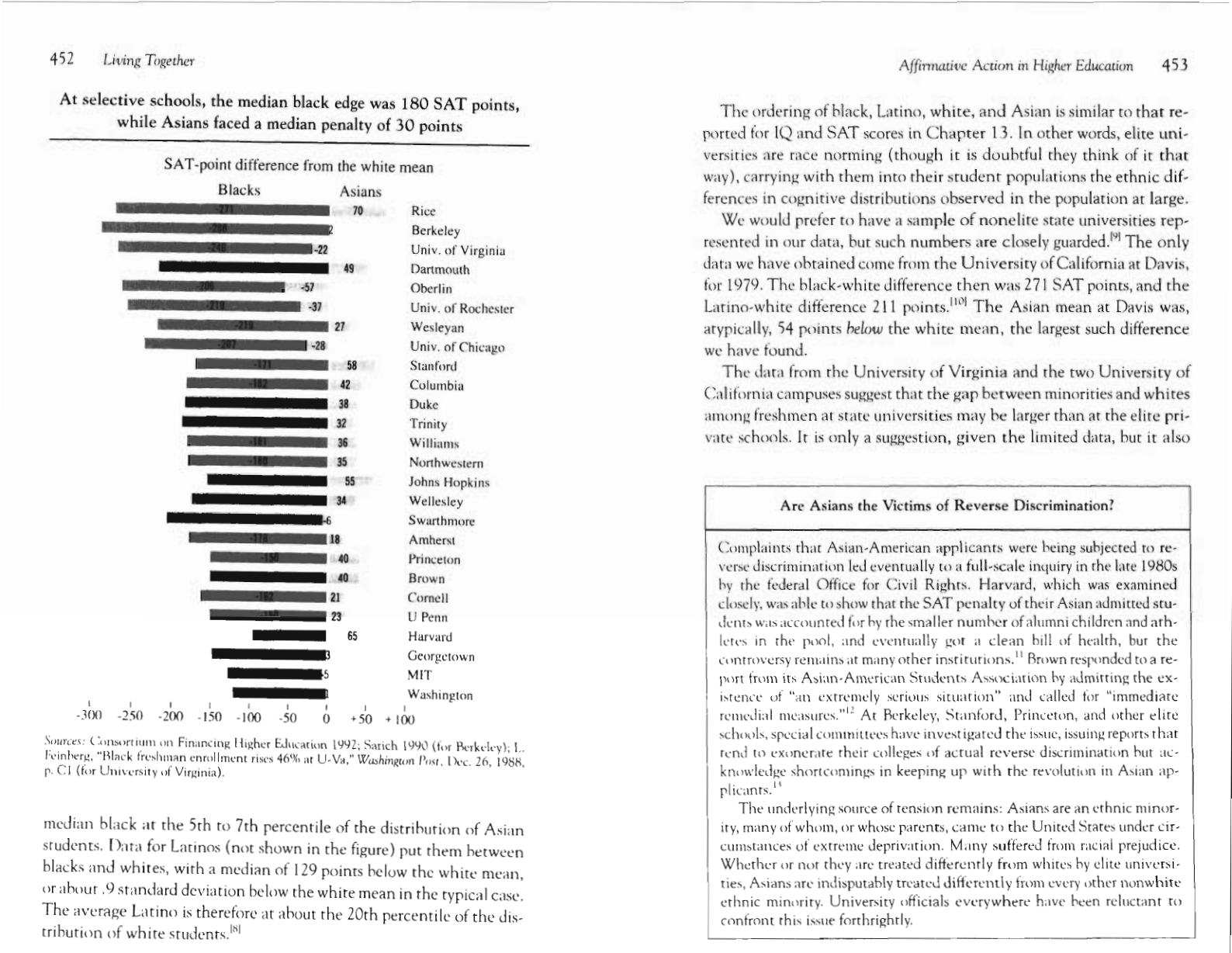
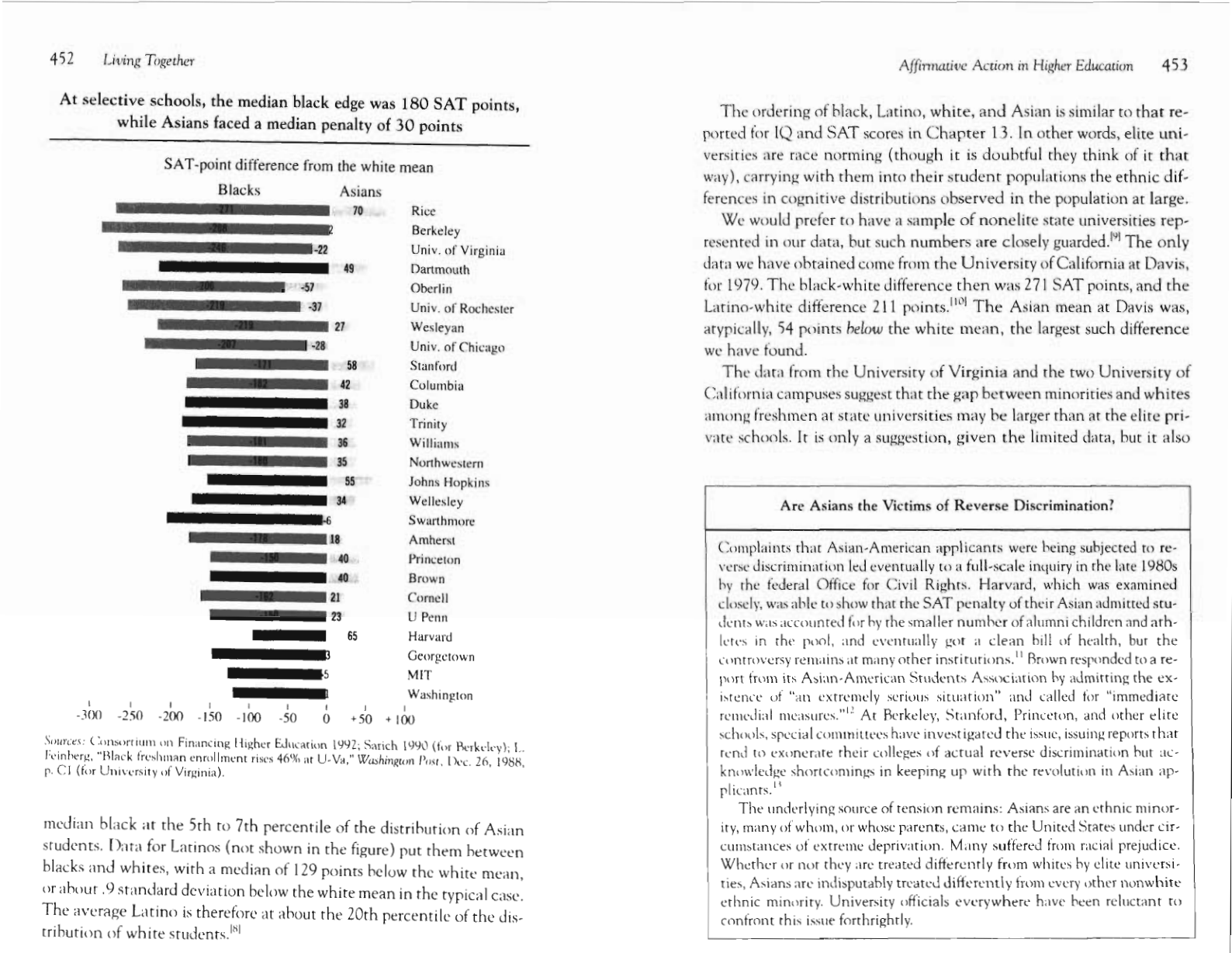
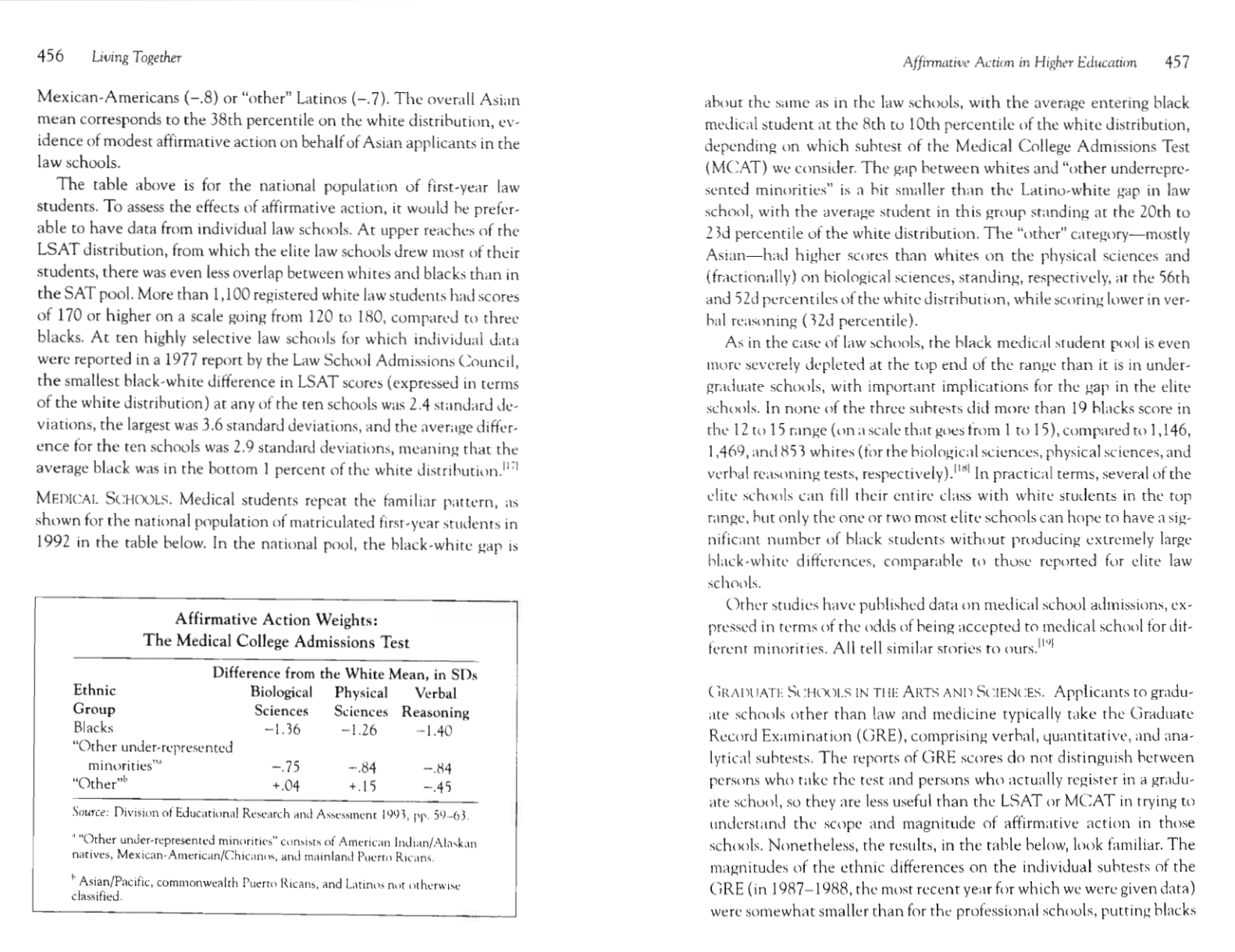
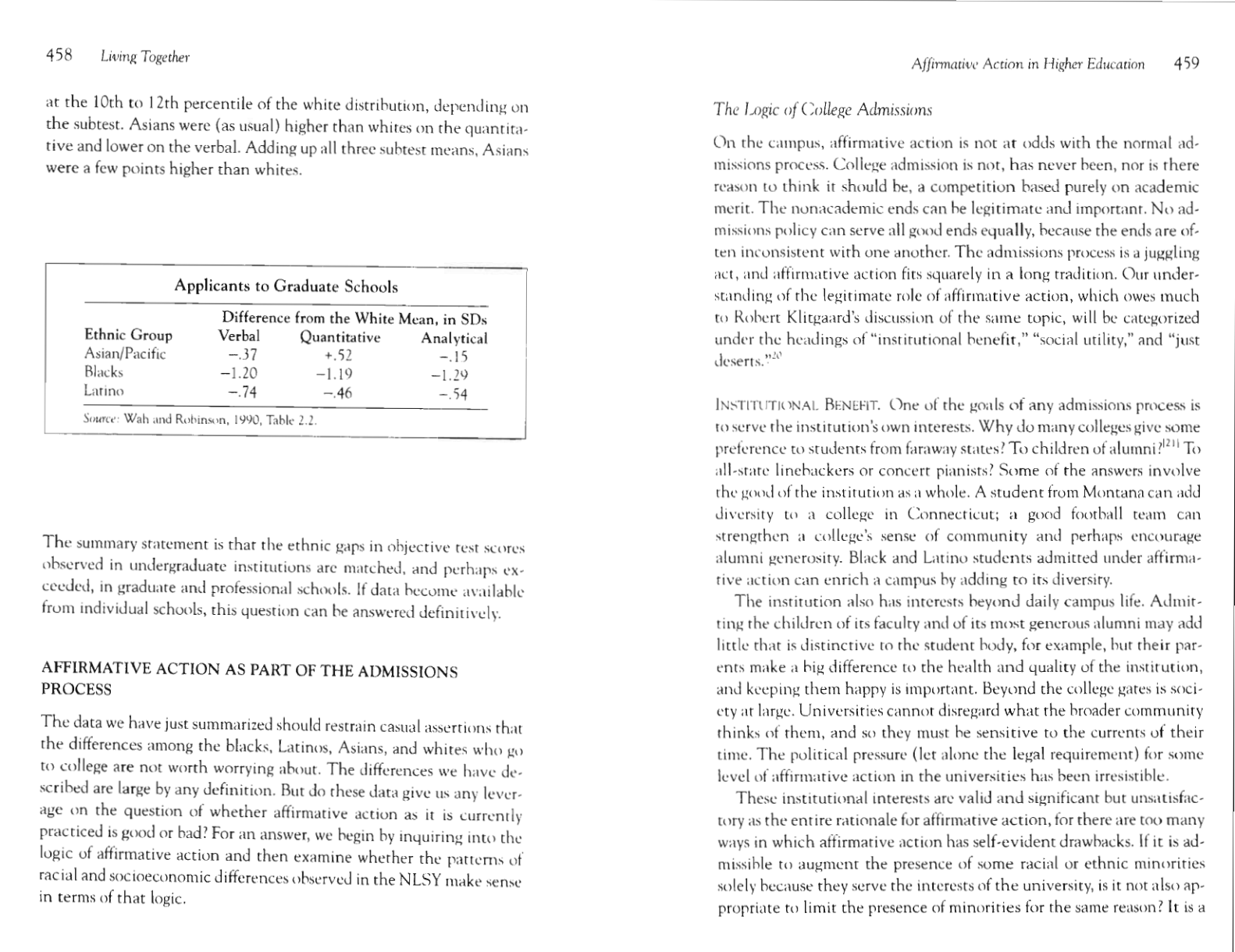
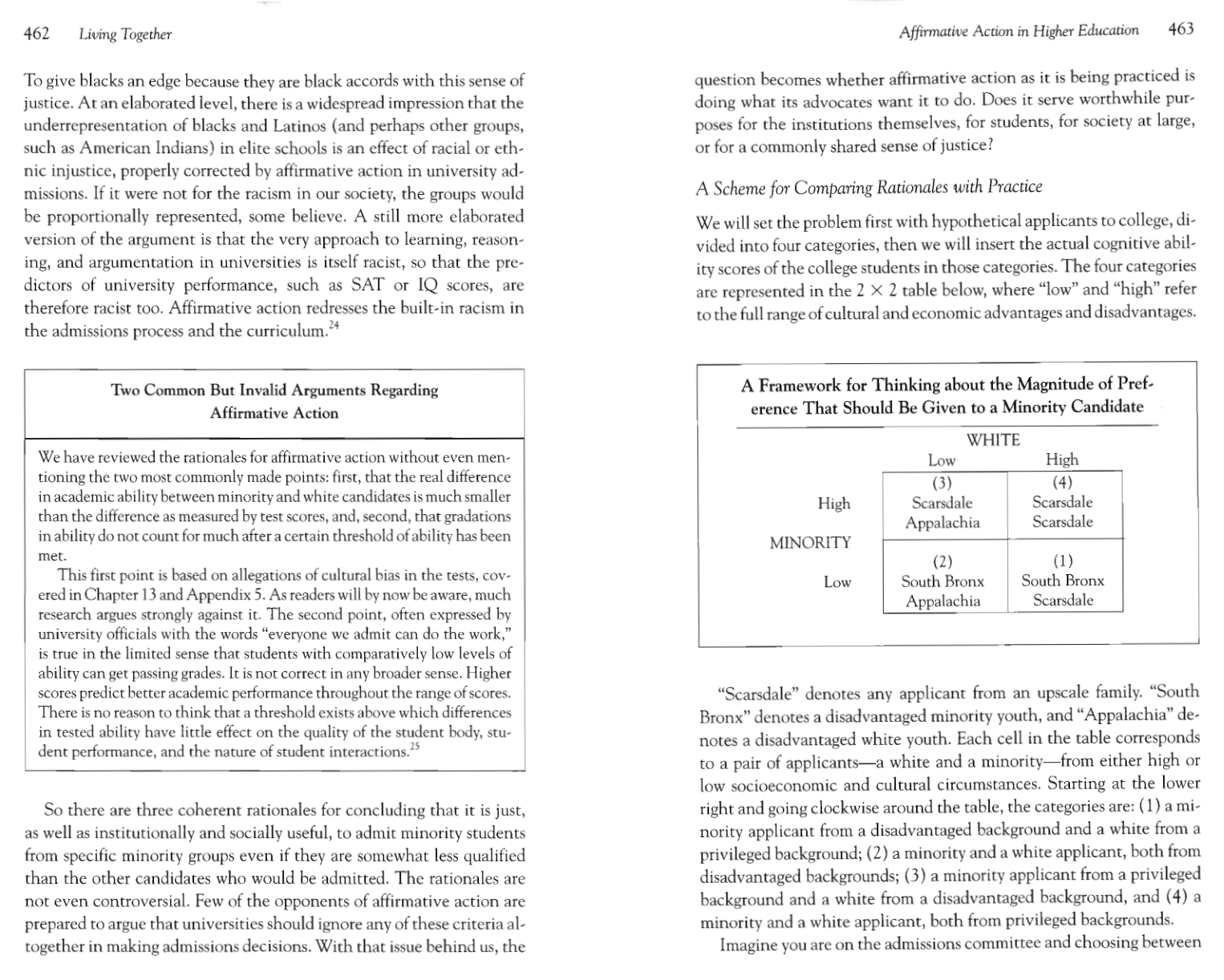
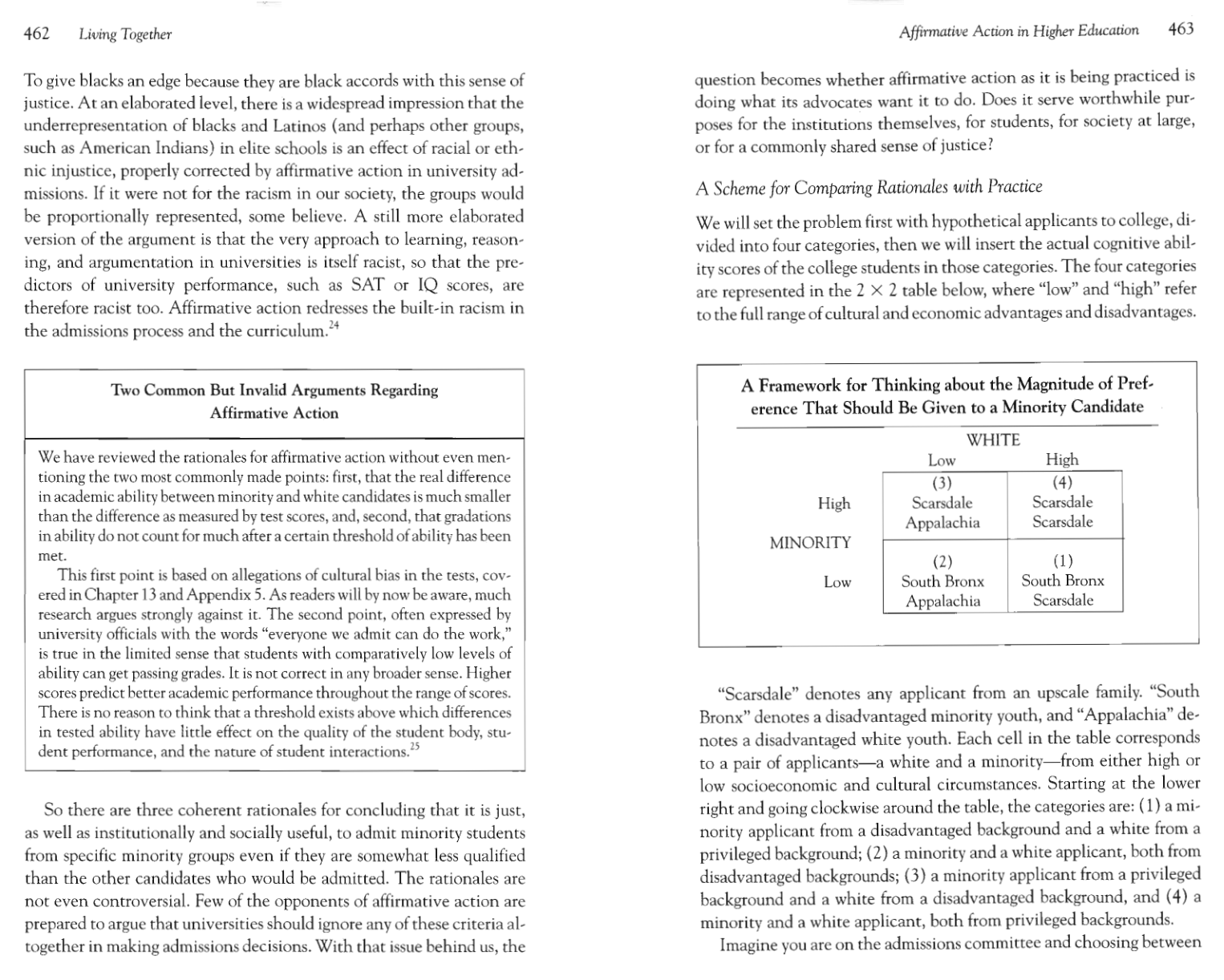
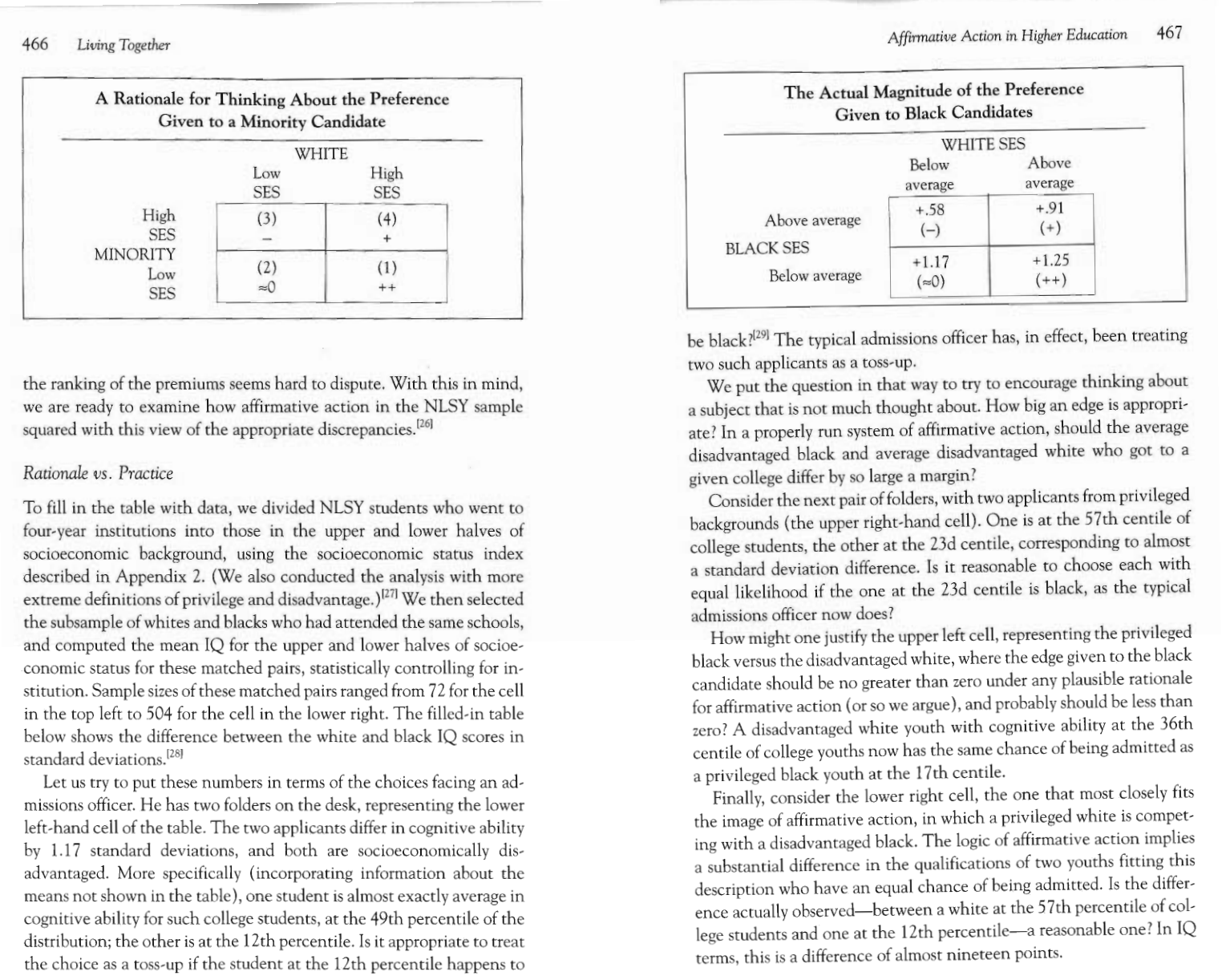
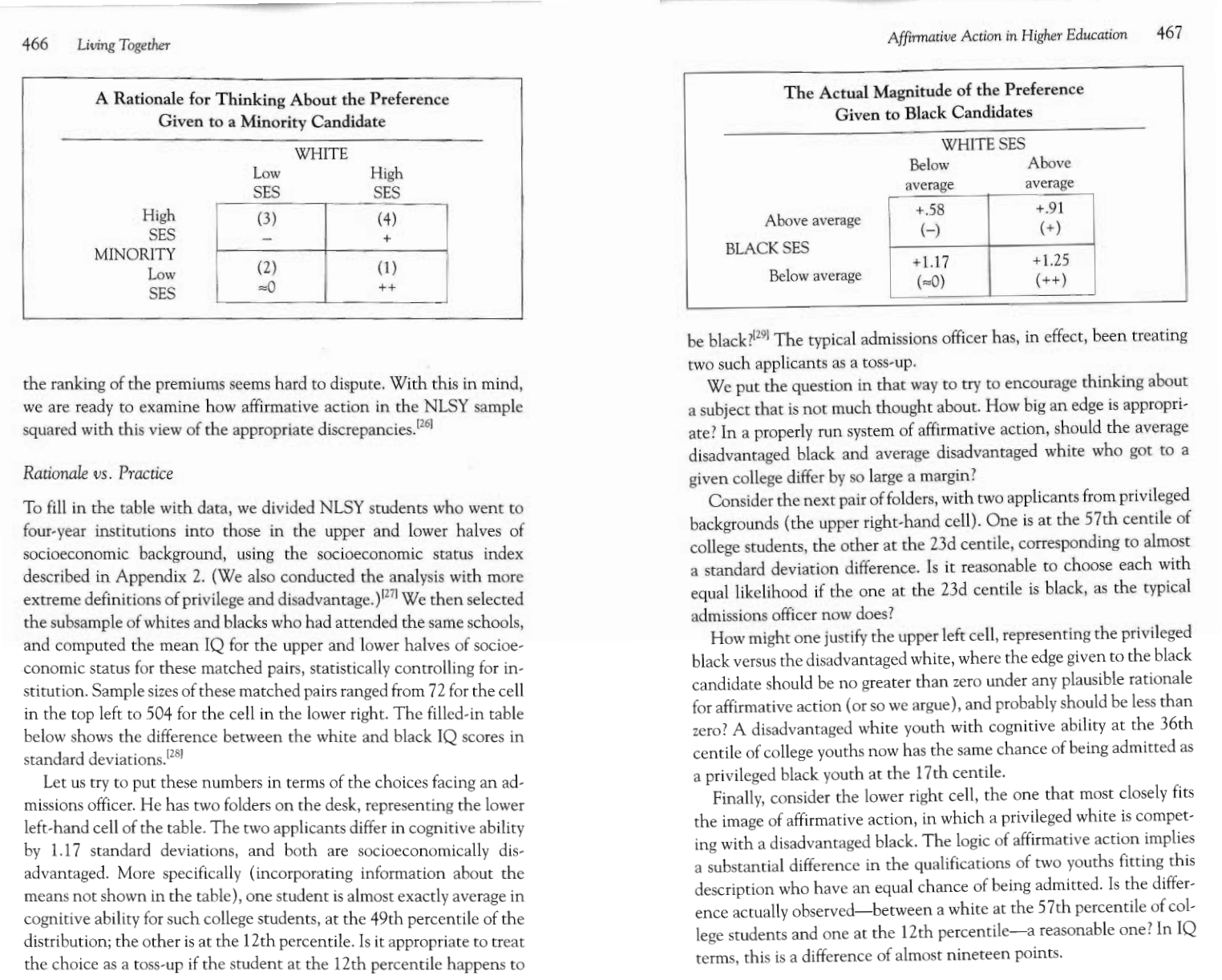
Admissions data at selective schools reveals a significant disparity in SAT score requirements between different ethnic groups.
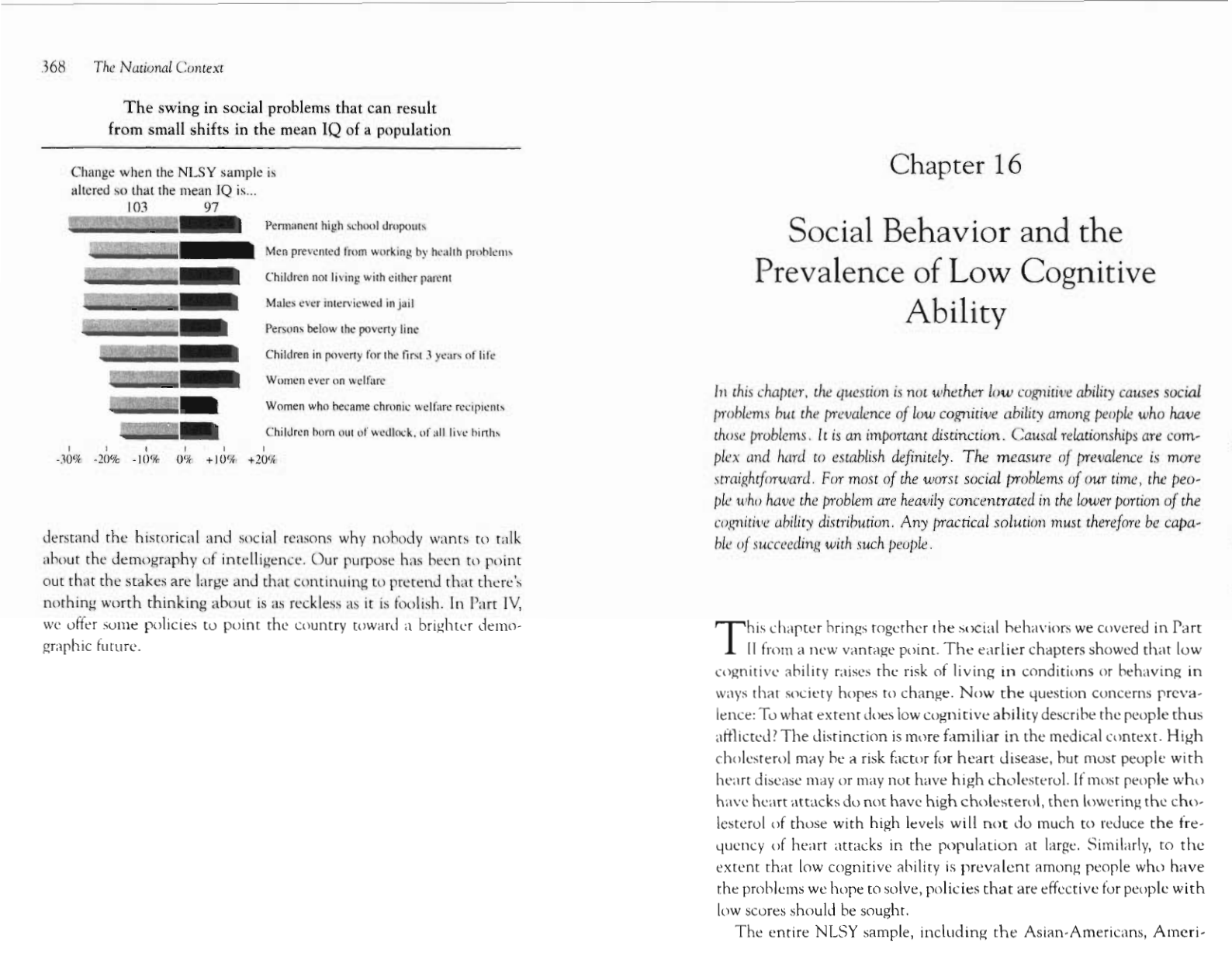
The swing in social problems that can result from small shifts in the mean IQ of a population
Structure and Scope of The Bell Curve
The text outlines a detailed table of contents focusing on the intersection of cognitive ability, socioeconomic status, and ethnic differences.
It provides a comprehensive list of tables analyzing white poverty, criminality, and family structure through the lens of 'cognitive class.'
The document addresses the historical impact of affirmative action on college enrollment and workplace dynamics during the 1970s and 1980s.
A significant portion of the data compares IQ distributions and test scores across different generations and ethnic groups.
The authors explain that the book is designed for multiple reading levels, ranging from a thirty-page summary of findings to a highly technical main text.
The methodology relies heavily on data from the National Longitudinal Survey of Youth (NLSY) to correlate IQ with social outcomes like welfare and job performance.
At the simplest level, it is only about thirty pages long.
Intelligence and Public Policy
The book explores the sensitive and controversial relationship between intellectual capacity and the future of American society.
The authors acknowledge that the topic is often avoided due to fears of promoting racism or recalling historical totalitarian eugenic schemes.
The text utilizes a variety of supplemental materials, including detailed boxes, scholarly endnotes, and technical appendixes to support its claims.
A central premise is that despite the triumph of equal rights, a cognitive elite is emerging and flourishing while others stagnate.
The authors adopt a specific stylistic convention for gendered pronouns, opting to use the first author's gender throughout the text.
The narrative aims to bridge the gap between academic data found in university journals and the public's reluctance to discuss cognitive differences.
The relationships we will be discussing are among the most sensitive in contemporary America—so sensitive that hardly anyone writes or talks about them in public.
Intelligence and Social Stratification
The affluent elite are increasingly using technology and resources to isolate themselves from the rest of society.
A growing underclass faces severe poverty and social decay, viewing technology as an 'electronic opiate' rather than a tool.
The divergence between these two extremes creates societal stress that tears at the 'fragile web of civility' and mutual obligation.
Social scientists and politicians often fail to address the underlying role of human intelligence in these shifting social dynamics.
The authors argue that ignoring the variance of intelligence leads to superficial solutions that cannot solve deep-seated social problems.
The book aims to confront the relationship between intelligence and social structure despite the potential for controversy.
The fragile web of civility, mutual regard, and mutual obligations at the heart of any happy society begins to tear.
The Genesis of The Bell Curve
The authors acknowledge a vast network of scholars, editors, and research assistants who contributed to the development of the book's controversial thesis.
One research assistant requested anonymity specifically to protect their 'viable political future,' highlighting the perceived risk of the project.
The book was a deeply symbiotic collaboration between Herrnstein and Murray, spanning nearly five years of full-time work.
The authors' wives provided critical support and editorial judgment despite their initial apprehension regarding the project's controversial nature.
The text asserts that while intelligence is an ancient, universal concept, it has become an intellectual 'pariah' over the last three decades.
The authors explicitly challenge the modern consensus that intelligence testing is a product of racism or statistical fraud.
Gossip about who in the tribe is cleverest has probably been a topic of conversation around the fire since fires, and conversation, were invented.
The Rise of Intelligence Testing
The scientific study of intelligence was catalyzed by Darwin's theory of evolution and Sir Francis Galton's pursuit of hereditary genius.
Galton pioneered the concept that intellectual capacity is a measurable, quantitative trait that varies uniquely among individuals.
Early attempts to measure intelligence through sensory acuity failed, leading Alfred Binet to focus on reasoning and pattern recognition.
By the late 19th century, standardized mental testing had spread globally across the United States, Europe, and Japan.
The development of the correlation coefficient allowed scientists to precisely quantify the relationship between different mental variables.
Charles Spearman's statistical breakthroughs in 1904 laid the foundation for modern psychometric methodology and its subsequent controversies.
So began a long and deeply controversial association between intelligence and heredity that remains with us today.
The Discovery of g
Charles Spearman observed that performance across disparate cognitive tests is almost always positively correlated.
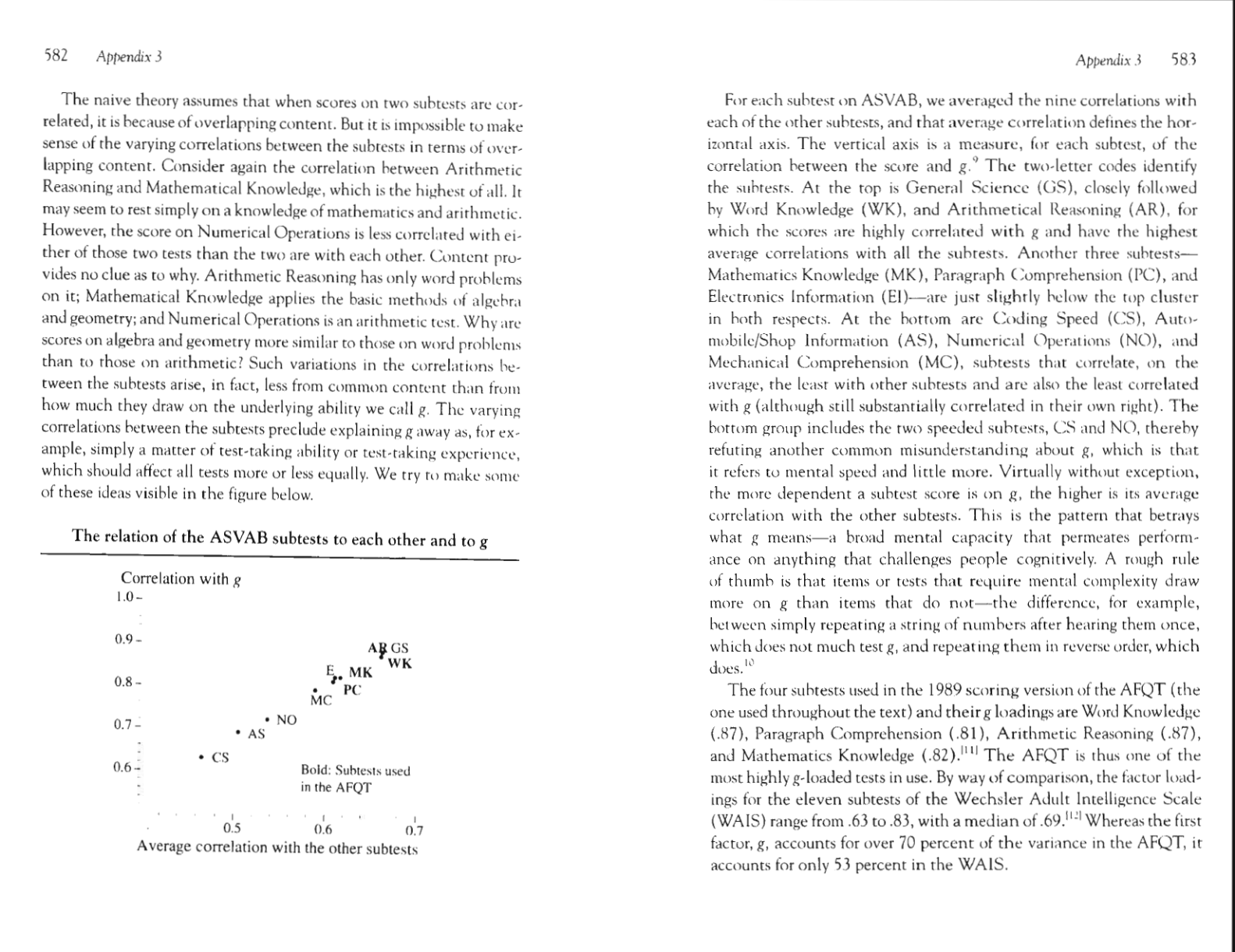
Spearman proposed the existence of 'g', a general intelligence factor that serves as a unitary mental trait underlying all cognitive tasks.
The varying strength of correlations between test items suggests that some tasks tap into this general trait more directly than others.
Spearman defined 'g' specifically as the capacity for complex mental work and the ability to infer and apply relationships from experience.
This statistical approach, known as factor analysis, shifted the focus from specific learning abilities to a broader measure of intellectual capacity.
The development of the intelligence quotient (IQ) followed shortly after, leading to large-scale applications such as U.S. Army recruit classification.
It turned out to be nearly impossible to devise items that plausibly measured some cognitive skill and were not positively correlated with other items that plausibly measured some cognitive skill, however disparate the pair of skills might appear to be.
Figure
The Rise of Psychometrics
The term IQ entered the American vernacular as a synonym for intelligence, marking the birth of psychometrics as a rigorous psychological specialty.
The concept of 'g' or general intelligence persisted despite fierce academic debates and increasingly complex theories of cognitive structure.
Early enthusiasm for mental testing was co-opted to support radical social policies, including state-mandated sterilization laws in the United States.
Prominent figures and politicians used the veneer of intelligence testing to argue for immigration restrictions based on ethnic and national origins.
Historical folklore often conflates specific screening experiments at Ellis Island with a broader, more complex reality of how testing influenced policy.
The perceived power of intelligence testers sparked immediate public backlash from influential critics like Walter Lippmann.
'Three generations of imbeciles are enough,' Justice Oliver Wendell Holmes declared in an opinion upholding the constitutionality of such a law.
Figure
The Rise of Intelligence Testing
Walter Lippmann fiercely criticized early IQ testing, arguing that a fifty-minute exam could not justly determine a human being's lifelong potential.
Despite technical inaccuracies in Lippmann's arguments, he correctly identified the public's dangerous tendency to link IQ scores with social Darwinism.
Early psychometric methods were often flawed, yet the tests persisted because large institutions required objective ways to measure individual differences.
The 1930s saw the development of iconic assessments like the WAIS and WISC, alongside a shift toward machine-gradable group tests for economic efficiency.
World War II accelerated the industry, leading to specialized aptitude tests and the creation of standardized personality inventories like the MMPI.
Testing evolved from a small-scale academic pursuit into a massive global industry used by schools, militaries, and governments to classify millions.
I hate the impudence of a claim that in fifty minutes you can judge and classify a human being's predestined fitness in life.
The Shift Toward Environmentalism
During the 1940s and 1950s, intelligence testing was widely accepted as a pragmatic tool with little ideological controversy.
The 1960s ushered in a fundamental shift in public policy and psychology, prioritizing social equality and the 'War on Poverty.'
A new consensus emerged that human potential was almost perfectly malleable and shaped primarily by the environment rather than genetics.
Behaviorists like B.F. Skinner popularized the idea that social deficiencies were caused by external flaws in society rather than individual traits.
Paradoxically, the public and academic denial of genetic influence on intelligence grew even as scientific evidence for those factors strengthened.
It had somehow become controversial to claim, especially in public, that genes had any effect at all on intelligence.
The Jensen Controversy
The 1960s egalitarian ideal that government intervention could erase cognitive deficiencies clashed with decades of IQ data suggesting intelligence is largely heritable.
Arthur Jensen's 1969 article argued that compensatory education programs failed because they targeted populations with lower average IQs, which he claimed had a genetic basis.
The public and academic reaction to Jensen was explosive, leading to riots and comparisons of his work to national disasters like Vietnam and Watergate.
William Shockley further inflamed the debate by proposing eugenicist schemes, such as paying individuals with low IQs to undergo sterilization.
Richard Herrnstein introduced a controversial syllogism linking heritable intelligence to economic success and, ultimately, to an inherited social hierarchy.
The era's scientific discourse became a volatile mix of ideology and data, where discussing the heritability of traits was viewed as a 'disgrace' or 'forbidden territory'.
During the first few years after the Harvard Educational Review article was published, Jensen could appear in no public forum in the United States without triggering something perilously close to a riot.
The Backlash Against Testing
In the early 1970s, the U.S. Supreme Court and major school districts began restricting standardized tests, viewing them as 'built-in headwinds' for minority groups.
The National Education Association called for a moratorium on testing, arguing that biased exams were 'mutilating' the intellectual potential of American students.
Legal challenges culminated in the 1978 Larry P. case, which ruled the use of IQ tests unconstitutional if they led to disproportionate placement of Black children in special education.
The intellectual debate shifted from scientific disagreement to personal attacks, with critics like Leon Kamin accusing proponents of heritability of being 'scoundrels' and 'charlatans.'
The credibility of psychometrics suffered a massive blow with the exposure of Cyril Burt, a leading researcher accused of fabricating data on identical twins.
Stephen Jay Gould's 1981 book 'The Mismeasure of Man' served as a public capstone to the era's assault on the integrity of intelligence research.
Psychologists and biologists might consider the possibility that heritability is the first.
The Intelligence Debate Schism
Reexaminations of the Cyril Burt affair in the late 1980s suggested that allegations of data fraud were motivated by professional and ideological antagonism rather than evidence.
The Minnesota twin study eventually produced an IQ correlation of +.78 for identical twins reared apart, nearly identical to Burt's widely derided and allegedly fraudulent figure of +.77.
Stephen Jay Gould's 'The Mismeasure of Man' successfully popularized the view that intelligence is a bankrupt, culturally biased concept used primarily to justify social prejudice.
By the early 1980s, a public 'received wisdom' emerged that IQ tests are useless tools that fail to predict real-world success like earnings or productivity.
A profound gap developed between the public perception of intelligence research and the actual state of knowledge within the technical field of psychometrics.
While scholars like Arthur Jensen remained respected and prolific in technical journals, they were largely discredited or ignored in the broader public discourse.
The dialogue about testing has been conducted at two levels during the last two decades—the visible one played out in the press and the subterranean one played out in the technical journals and books.
Figure
The Cloistered Study of Intelligence
In the 1970s, scholars faced severe social and professional penalties for publicly discussing the merits or heritability of IQ.
Research on cognitive abilities retreated into the 'ivory tower,' where it continued to flourish away from public scrutiny.
While the public still debates whether IQ tests are biased or useless, a scholarly consensus has been reached on many of these foundational issues.
By the 1990s, the professional community was divided into three main factions: classicists, revisionists, and radicals.
The classicist faction views 'g' (general intelligence) as a core, scientifically demonstrated human mental ability that sits at the center of cognitive structure.
Early psychometricians often resisted the idea of a single 'g' factor, seeking instead a set of primary and independent mental abilities.
Their careers, family lives, relationships with colleagues, and even physical safety could be jeopardized by speaking out.
Figure
Theories of Intellectual Structure
Psychologists have proposed various models of intelligence, ranging from a dozen primary abilities to over 120 distinct components.
Despite diverse theories, researchers consistently find a large general factor of ability, known as Spearman's g, in all standardized testing.
Classicists argue that modern IQ tests effectively measure g and are not biased against specific socioeconomic or ethnic subgroups.
Revisionists shift the focus from the structure of intelligence to the mental processes and information processing involved in thinking.
Jean Piaget's work exemplified the process-oriented approach by studying the specific errors children made to understand their cognitive development.
While revisionists acknowledge the existence of g, they question whether defining its structure is as important as understanding how intelligence is exercised.
Piaget discovered quickly that he was less interested in how well the children did than in what errors they made.
Revisionist Views on Intelligence
Revisionists argue that traditional IQ scores camouflage individual strengths by averaging distinct intellectual processes into a single number.
Robert Sternberg’s triarchic theory emphasizes the internal architecture of how humans process information rather than static mental structures.
The theory explores how intelligence converts novel, creative tasks into routine performances that can be executed without conscious thought.
A key component of the triarchy is the relationship between intelligence and the real world, focusing on adaptation, environmental shaping, and selection.
Radical critics like Walter Lippmann and Howard Gardner argue that intelligence is too subjective and culturally dependent to be measured like height or weight.
The shift toward 'multiple intelligences' suggests that intelligence is more akin to abstract concepts like beauty or justice than a simple quantifiable metric.
If a person is a wonderful visualizer but can barely compose a sentence, and another person can write glowing prose but cannot begin to visualize the simplest spatial images, what do you really learn about these two people if they are reported to have the same IQ?
Gardner and the Classical Tradition
Howard Gardner defines intelligence as the ability to solve problems, create products, and identify new questions to acquire knowledge.
Gardner's theory is considered radical because it rejects the concept of a general intelligence factor (g) in favor of seven distinct intelligences.
The theory challenges the hierarchy of human faculties, arguing that linguistic and logical skills should not be placed on a pedestal above other talents.
Gardner intentionally avoids psychometric data and factor analysis, claiming that statistical results are often a matter of interpretation or taste.
He argues that correlations between different test scores are flawed because most tests are biased toward linguistic and logical facility.
The authors of this book declare their alignment with the classical tradition, citing its rigorous quantitative evidence and relevance to public policy.
If critics were willing to label language and logical thinking as talents as well, and to remove these from the pedestal they currently occupy, then I would be happy to speak of multiple talents.
Predictive Power of IQ
Individual IQ scores are limited tools that require additional context like personality and background to be useful for guidance.
Aggregate IQ scores for groups or classes allow for high-confidence predictions regarding social and educational outcomes.
The authors focus on the classical tradition of intelligence because of its relevance to aggregate social and economic data.
The text argues against the 'multiple intelligences' framework, preferring specific terms like talent, charm, or sensitivity to maintain linguistic precision.
Intelligence is often overvalued as a human virtue, leading to the 'insidious' error of assuming one can judge IQ through casual interaction.
One of the most insidious but also widespread errors regarding IQ, especially among people who have high IQs, is the assumption that another person's intelligence can be inferred from casual interactions.
Defining Intelligence and IQ
The common tendency to equate high IQ with attractive personality traits like humor or fluency is statistically weak and often misleading.
While 'smartness' in everyday language often aligns with mental quickness and complexity, an IQ score is not a synonym for general human excellence.
Individuals with average or low IQs can demonstrate high levels of specialized expertise, such as complex plumbing diagnostics or intricate betting systems.
The phenomenon of 'idiot savants' and successful track bettors illustrates that low measured IQ does not preclude the performance of complex cognitive tasks.
The authors advocate for the more neutral term 'cognitive ability' to avoid the political and emotional baggage associated with the word 'intelligence'.
IQ scores serve as reliable statistical tools for studying social phenomena but are limited when evaluating the worth or character of a specific individual.
This thing we know as IQ is important but not a synonym for human excellence.
Figure
The Classical View of Intelligence
The authors define intelligence as a neutral noun describing cognitive ability rather than a moral accolade.
Six core conclusions from the classical tradition of testing are presented as being beyond significant technical dispute among experts.
These conclusions assert that a general factor of cognitive ability exists, is measurable by IQ tests, remains relatively stable, and is substantially heritable.
The text claims that properly administered IQ tests are not demonstrably biased against specific social, economic, or ethnic groups.
A significant gap exists between scientific consensus and media perception, which often contradicts these six foundational points.
While the data points are considered scientifically robust, the authors acknowledge that different values can lead to different practical and theoretical interpretations.
But at least we hope that it will help you think of intelligence as just a noun, not an accolade.
Figure
The Rise of Cognitive Stratification
The 20th century transitioned from social classes defined by hereditary rank and wealth to a system increasingly dominated by cognitive ability.
Modern societies have become highly efficient at identifying the brightest youths and funneling them into lucrative, influential career paths.
This process has created a 'Cognitive Elite' that is increasingly isolated and inbred, rarely forming intimate bonds with those outside their intellectual level.
Historically, cognitive stratification was prevented by factors like clerical celibacy and the biological regression to the mean within aristocratic lineages.
The authors argue that intelligence has become the 'decisive dividing force' of the 21st century, pulling the train of social class.
While identifying talent has societal benefits, the extreme isolation of the intellectual top tier carries significant social and cultural costs.
Social class remains the vehicle of social life, but intelligence now pulls the train.
The Rise of Cognitive Stratification
Historically, the British aristocracy maintained power by absorbing talented commoners and funneling younger sons into high-level military and administrative roles.
Despite social hierarchies, cognitive stratification remained low in the past because most high-IQ individuals were scattered across ordinary occupations like farming and trade.
A true cognitive elite only emerges in a technological society where high intelligence becomes an indispensable requirement for specialized, high-status jobs.
The 20th century saw a massive democratization of education, yet this process created new, more intractable barriers based on cognitive ability rather than birth.
The 1950s marked a turning point where elite colleges began aggressively sorting and concentrating the nation's brightest students into a distinct social class.
Mathematical necessity tells us that a large majority of the smart people in Cheops's Egypt, dynastic China, Elizabethan England, and Teddy Roosevelt's America were engaged in ordinary pursuits, mingling, working, and living with everyone else.
The Rise of Cognitive Stratification
In the early 1950s, elite institutions like Harvard prioritized socioeconomic status and lineage over raw academic performance.
By 1960, a rapid shift occurred where admission became significantly more competitive and based on standardized test scores.
The average Harvard freshman from 1952 would have ranked in the bottom 10 percent of the 1960 incoming class.
This transition moved the university from a regional school for the wealthy to a national hub for the 'brightest of the bright.'
While expanding access is a success story, it created a new social divide based on cognitive ability rather than just family background.
Education acts as a powerful classifier that sorts the population by income, occupation, and social tastes.
The average Harvard freshman in 1952 would have placed in the bottom 10 percent of the incoming class by 1960.
The Rise of Cognitive Sorting
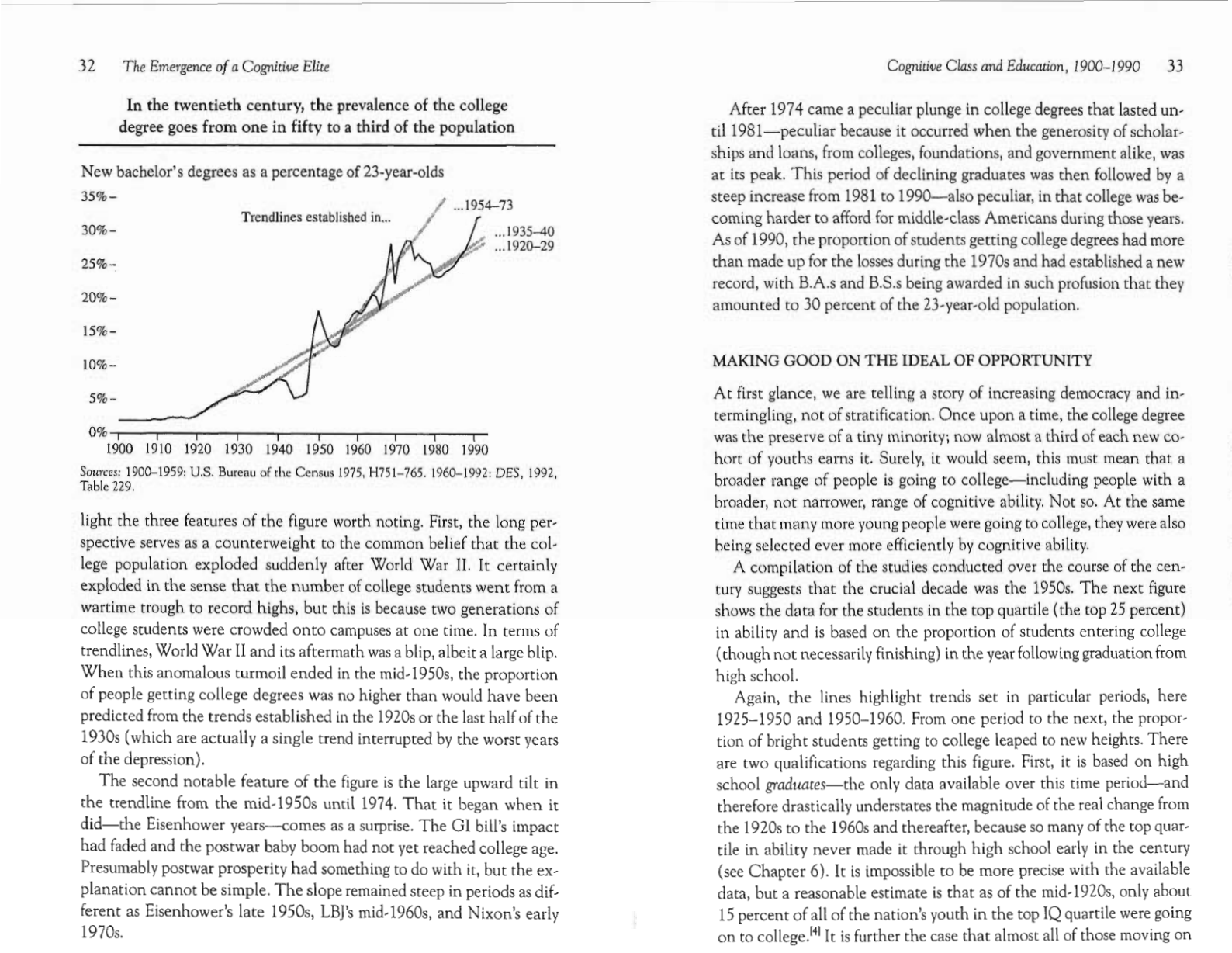
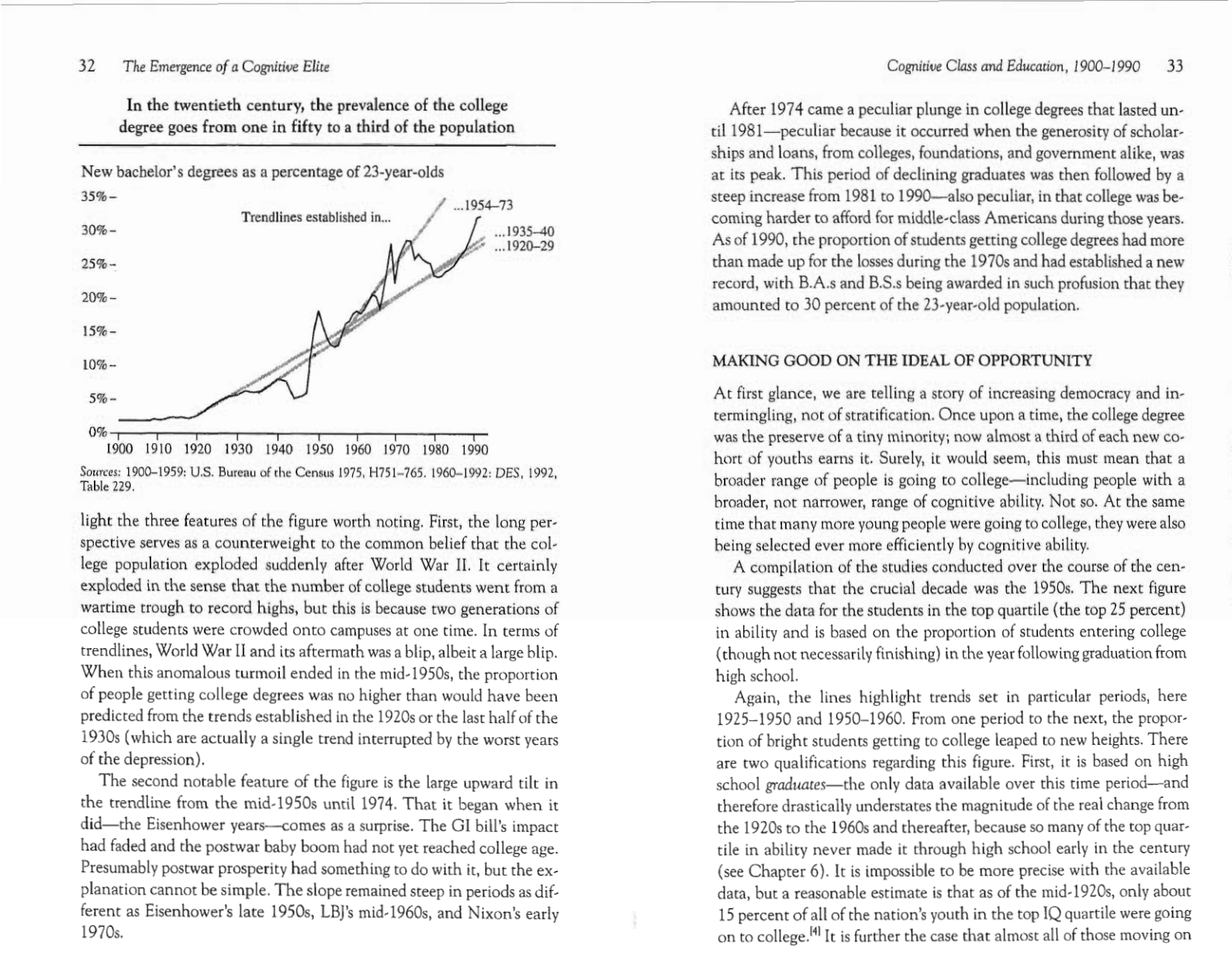
In 1900, a college degree was rare, held by only 2 percent of 23-year-olds, meaning the vast majority of the nation's brightest individuals were not college-educated.
The growth of the college population was not a sudden post-WWII phenomenon but a steady trend established as early as the 1920s.
Between 1900 and 1990, the prevalence of college degrees shifted from one in fifty people to nearly a third of the population.
A significant upward tilt in degree attainment began in the mid-1950s and continued through the early 1970s, regardless of the political or social climate.
The 1970s saw a counterintuitive decline in graduates despite high financial aid, followed by a sharp rise in the 1980s despite increasing costs.
This expansion of higher education acted as a mechanism for more efficiently sorting the population based on cognitive ability.
In 1900, only about 2 percent of 23-year-olds got college degrees. Even if all of the 2 percent who went to college had IQs of 115 and above (and they did not), seven out of eight of the brightest 23-year-olds in the America of 1900 would have been without college degrees.
Chart
The Rise of Cognitive Sorting
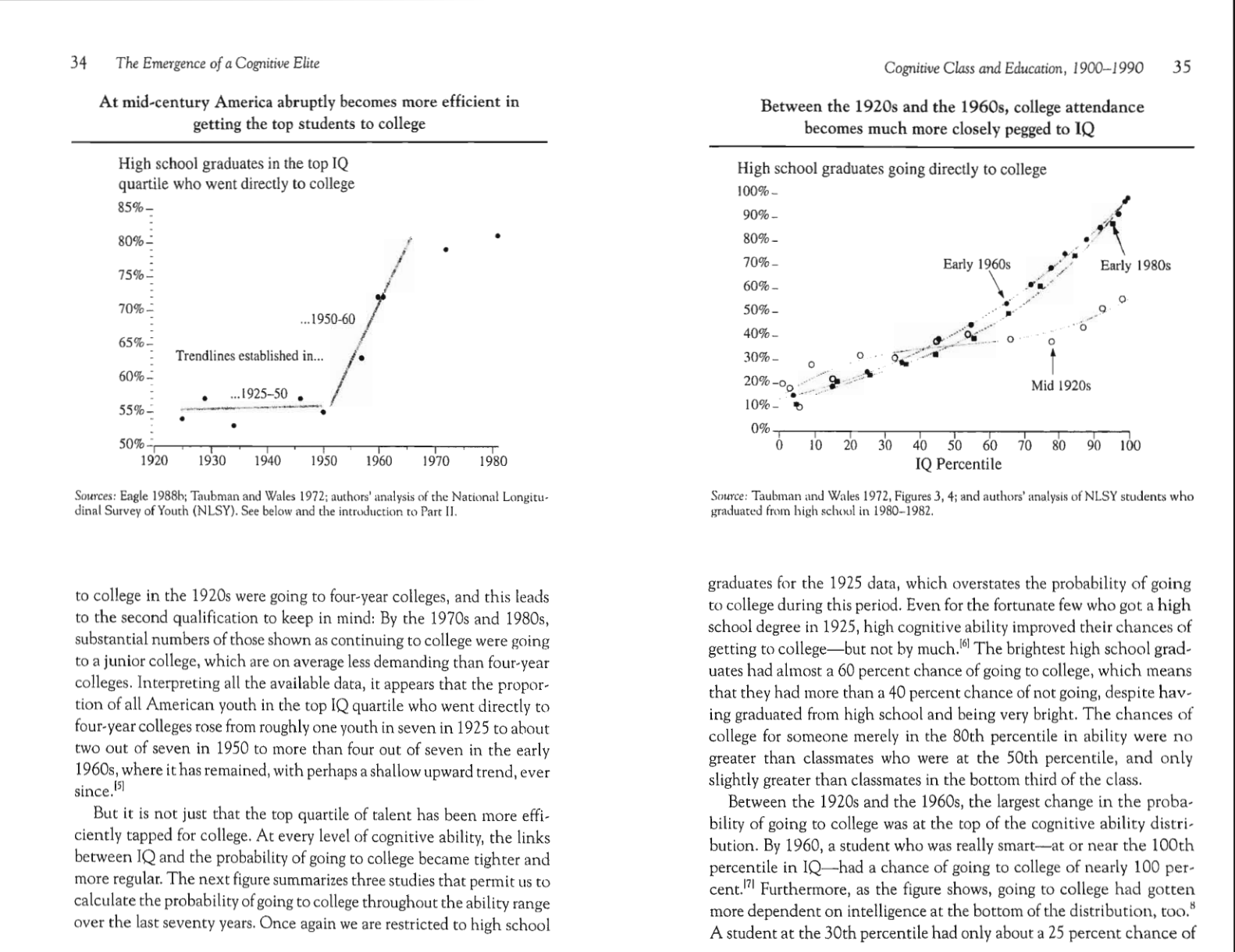
While college attendance expanded to a third of the youth population, it did not result in a broader range of cognitive ability among students.
The 1950s marked a pivotal decade where the American education system became significantly more efficient at funneling high-IQ students into college.
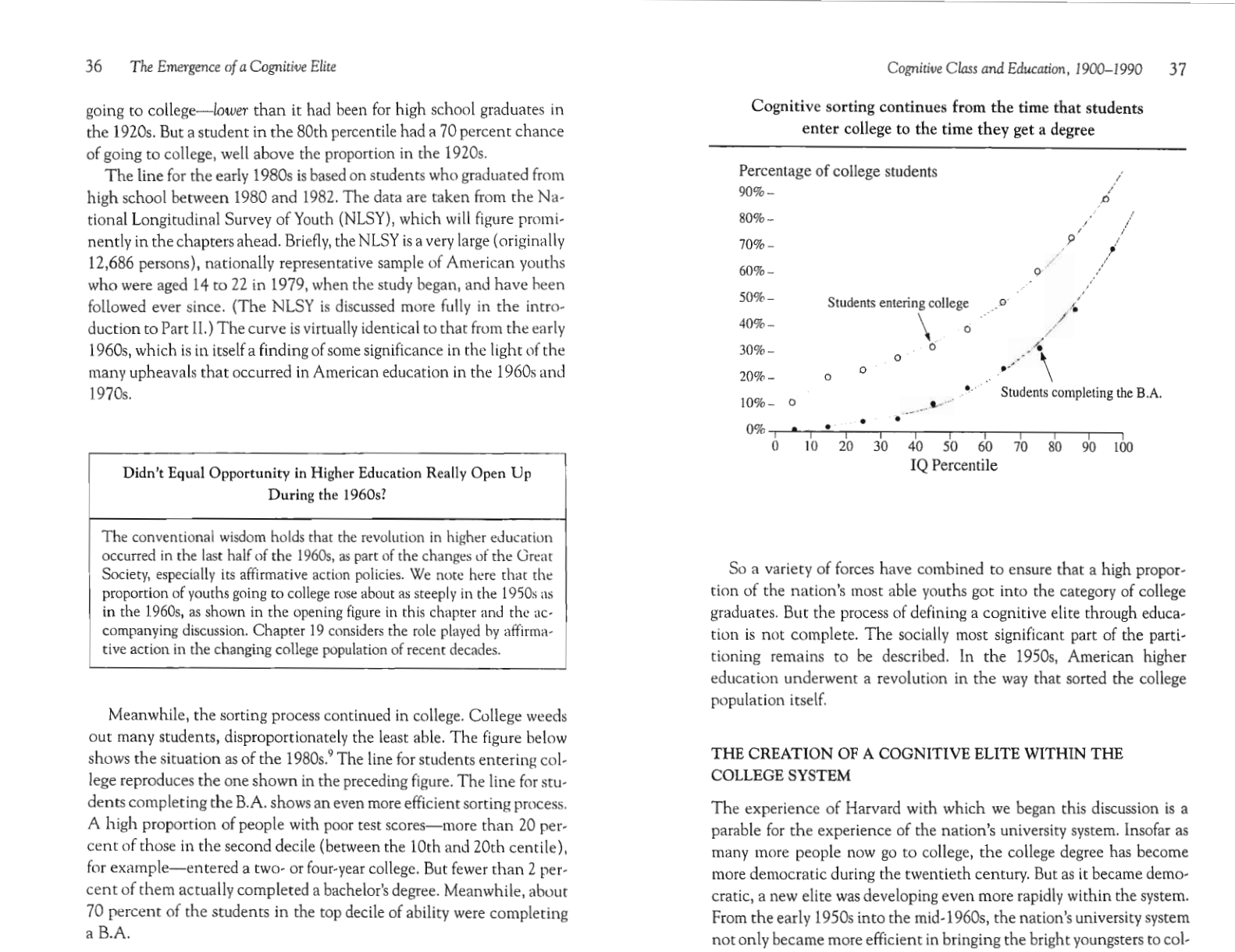
In the 1920s, only about 15 percent of the nation's top IQ quartile attended college, a figure that rose to over 50 percent by the 1960s.
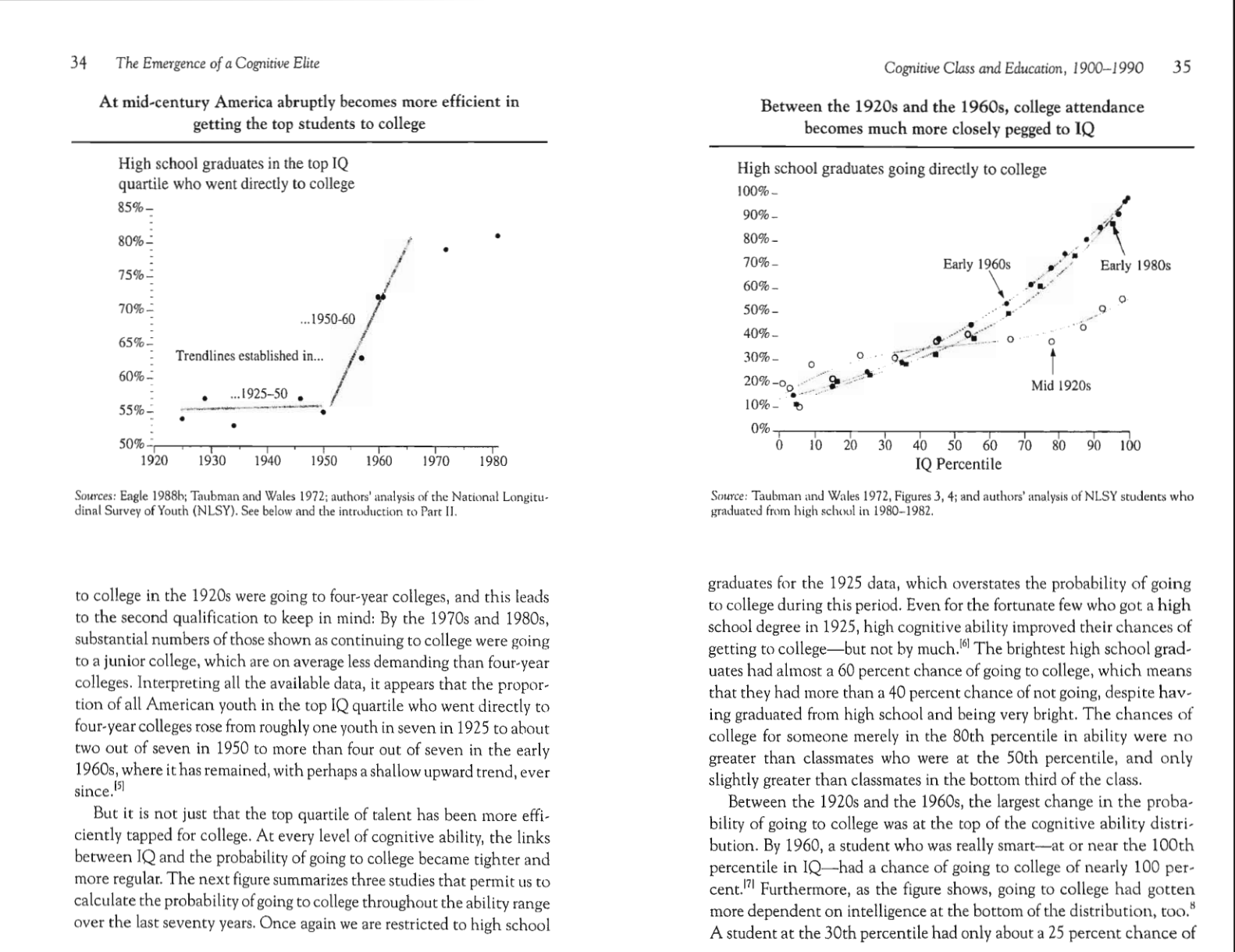
The correlation between cognitive ability and the probability of attending college has become increasingly tight and regular over the last seventy years.
Early in the century, high cognitive ability only marginally improved one's chances of attending college compared to the rigid 'pegging' of IQ to education seen today.
At mid-century America abruptly becomes more efficient in getting the top students to college.
ChartChart
The Rise of Cognitive Sorting
Between the 1920s and 1960s, the probability of attending college became increasingly tied to cognitive ability rather than just high school graduation.
By 1960, students at the top of the IQ distribution had a nearly 100 percent chance of attending college, a significant shift from earlier decades.
Data from the early 1980s shows that despite educational upheavals, the correlation between intelligence and college attendance remained remarkably stable.
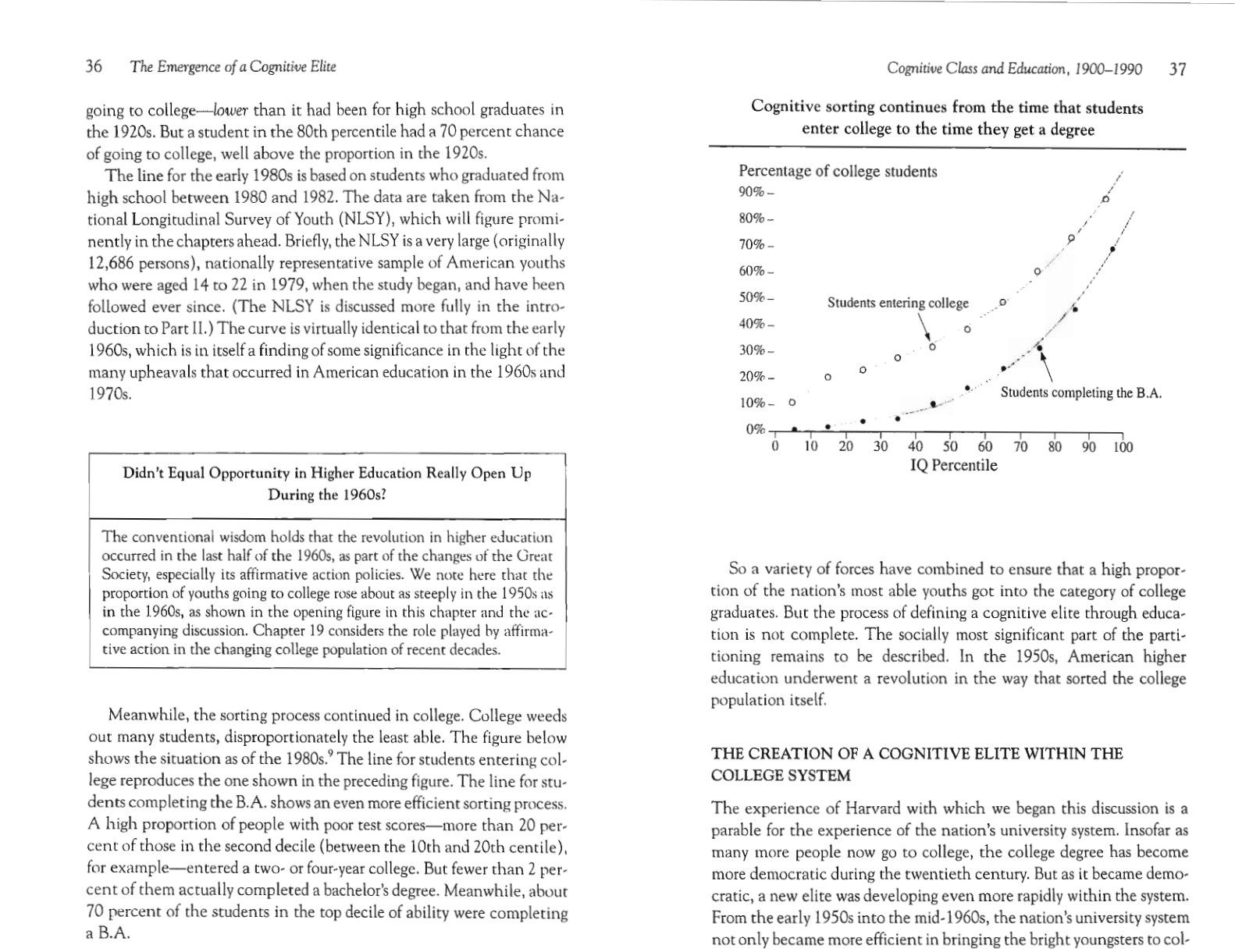
The college system acts as a 'weeding' mechanism, where students with lower test scores may enter college but rarely complete a bachelor's degree.
While 20 percent of students in the second decile of ability entered college in the 1980s, fewer than 2 percent actually graduated with a B.A.
This educational partitioning has effectively created a 'cognitive elite' by ensuring the most able youths are concentrated within the ranks of college graduates.
The line for students completing the B.A. shows an even more efficient sorting process.
ChartChart
The Rise of Cognitive Sorting
While college degrees became more democratic and accessible in the 20th century, a new internal hierarchy emerged based on cognitive ability.
Between the 1950s and 1960s, the university system became radically more efficient at concentrating the 'brightest of the bright' into a few elite institutions.
Prior to World War II, elite schools like the Ivy League hosted a mix of brilliant, mediocre, and average students rather than a concentrated cognitive elite.
In the 1920s, high-IQ students from rural or non-elite backgrounds typically attended local state universities or religious colleges rather than national elite schools.
Historical SAT and IQ data from 1926 show that the average student at a prestigious Ivy League school was only at the 88th percentile of the general population.
The data suggests that early 20th-century elite colleges tapped only a small fragment of the nation's total cognitive talent pool.
The valedictorian in Kalamazoo and the Kansas farm girl with an IQ of 140 might not even be going to college at all.
Chart
The Rise of Cognitive Stratification
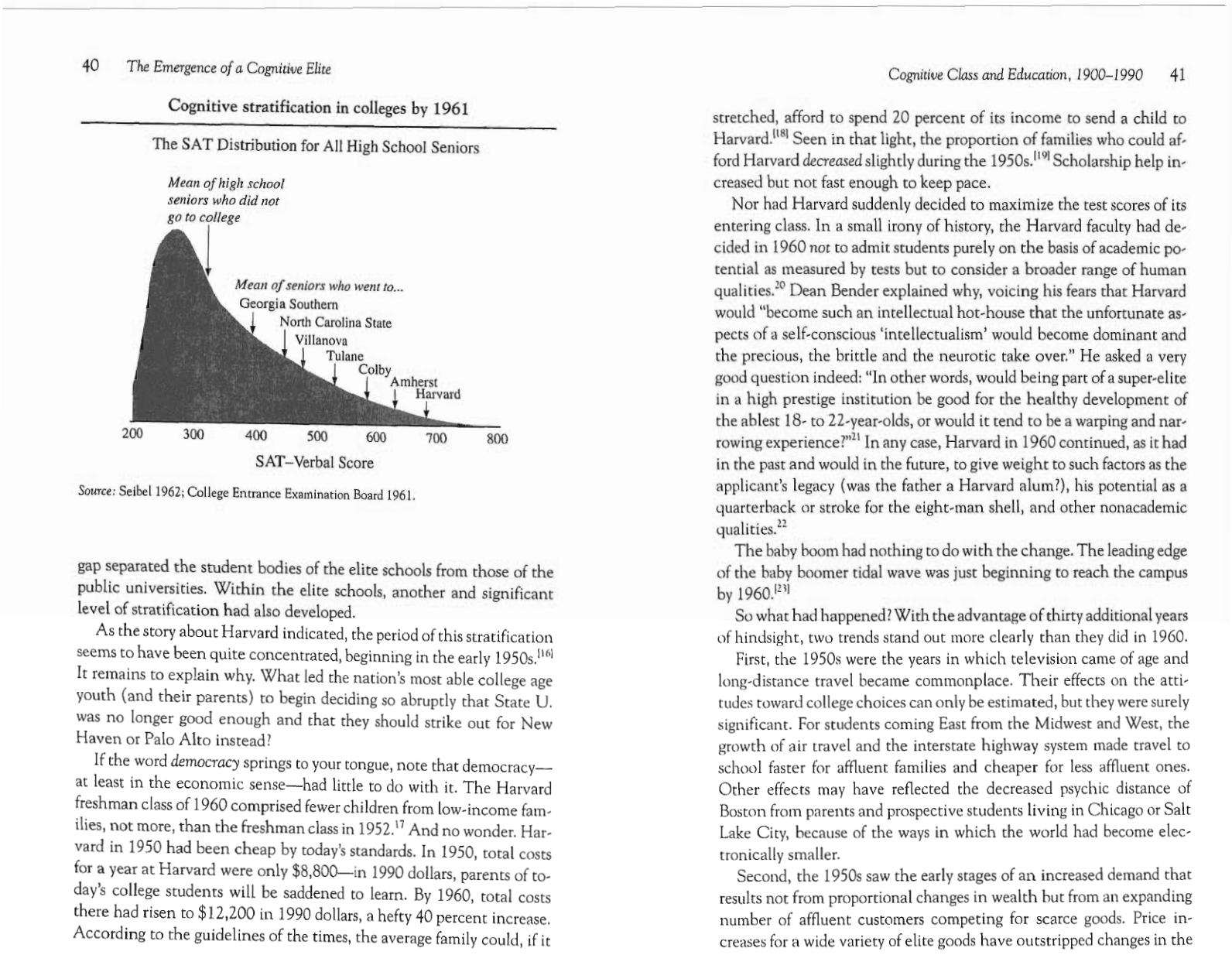
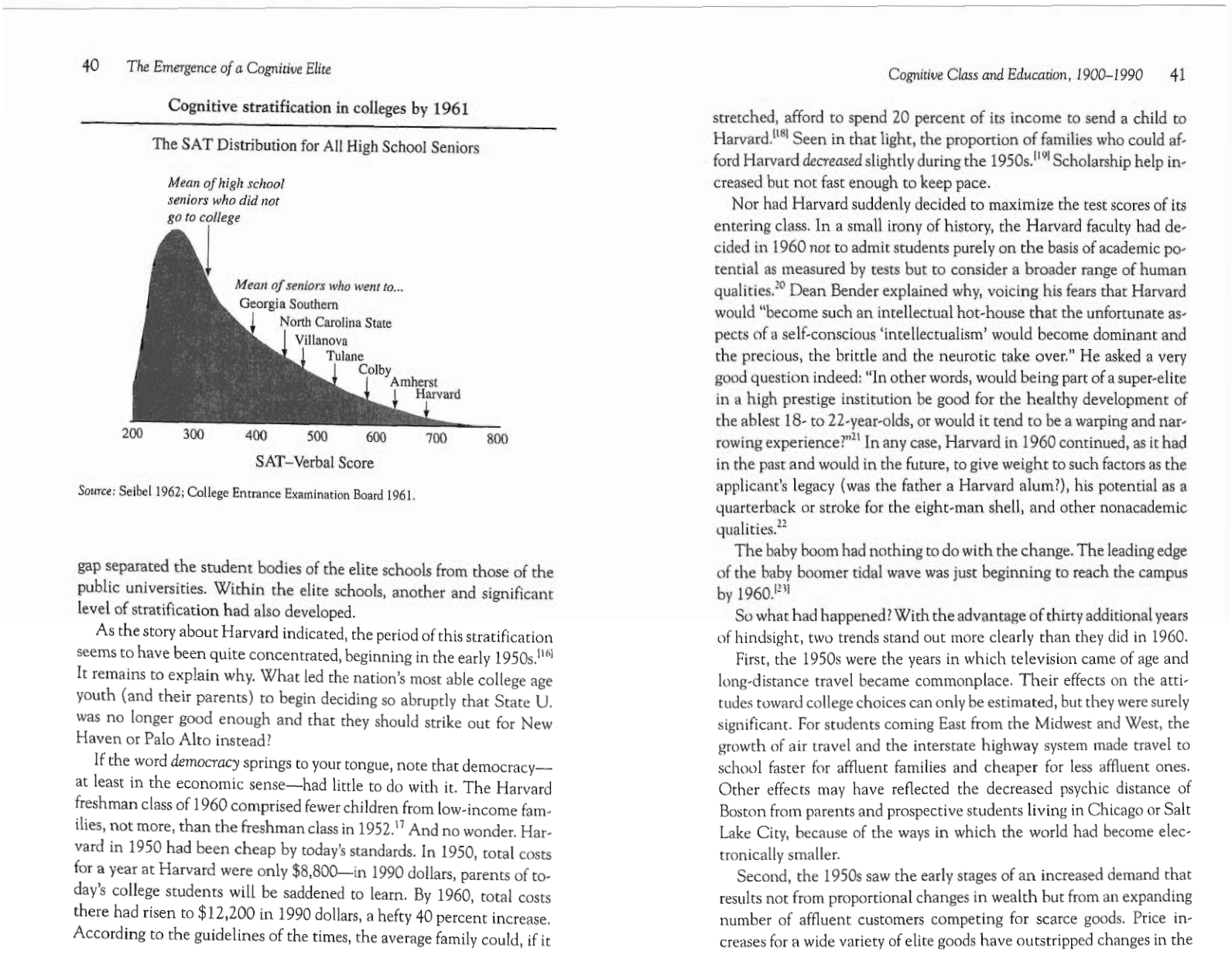
Between 1928 and 1964, the average intelligence of college freshmen rose significantly, but elite institutions pulled away from the rest of the system.
By the early 1960s, a massive cognitive gap had formed between elite private schools and large state universities.
This shift toward cognitive stratification was highly concentrated, occurring rapidly during the 1950s.
Economic democratization was not the driver of this change, as the cost of attending elite schools like Harvard rose 40 percent during the decade.
The concentration of high-ability students at elite schools happened despite faculty concerns about admitting students solely based on test scores.
What led the nation's most able college age youth (and their parents) to begin deciding so abruptly that State U. was no longer good enough?
Chart
The Rise of Cognitive Screens
Critics feared that concentrating the brightest students into a 'super-elite' would create a neurotic, brittle, and warped intellectual environment.
Despite the shift toward meritocracy, Harvard maintained traditional preferences for legacies and athletes throughout the 1960s.
Technological advances like television and air travel reduced the 'psychic distance' of elite Eastern schools for families across the country.
The 1950s saw an explosion in the number of affluent families competing for a fixed supply of 'elite goods,' including prestigious university degrees.
The primary filter for elite admissions shifted from social class and religion to a fine-meshed screen of cognitive ability.
Instead of the old screen-woven of class, religion, region, and old school ties-the new screen was cognitive ability, and its mesh was already exceeding fine.
Chart
The Rise of Cognitive Partitioning
Elite universities have seen a dramatic intensification in the concentration of top-performing students since the early 1990s.
Data from the Westinghouse Science Talent Search shows a significant shift of finalists toward a handful of top-tier colleges.
A small group of fifty schools accounts for only five percent of freshmen but captures sixty percent of students with top-tier SAT scores.
The top ten universities alone enroll nearly one-third of all students nationwide who score in the 700s on the SAT-Verbal.
This trend creates a 'cognitive partitioning' where the most intellectually gifted are increasingly isolated from the general population.
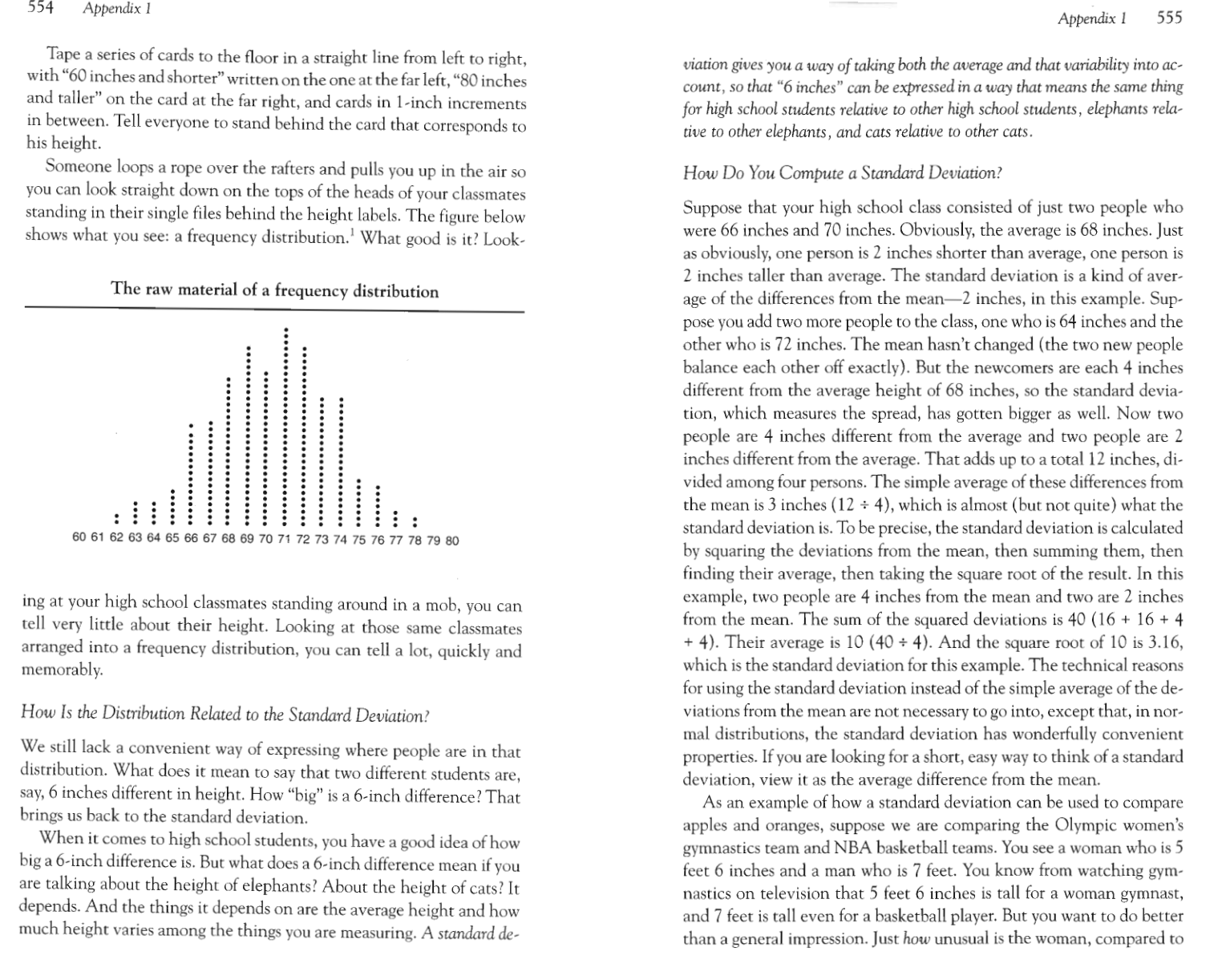
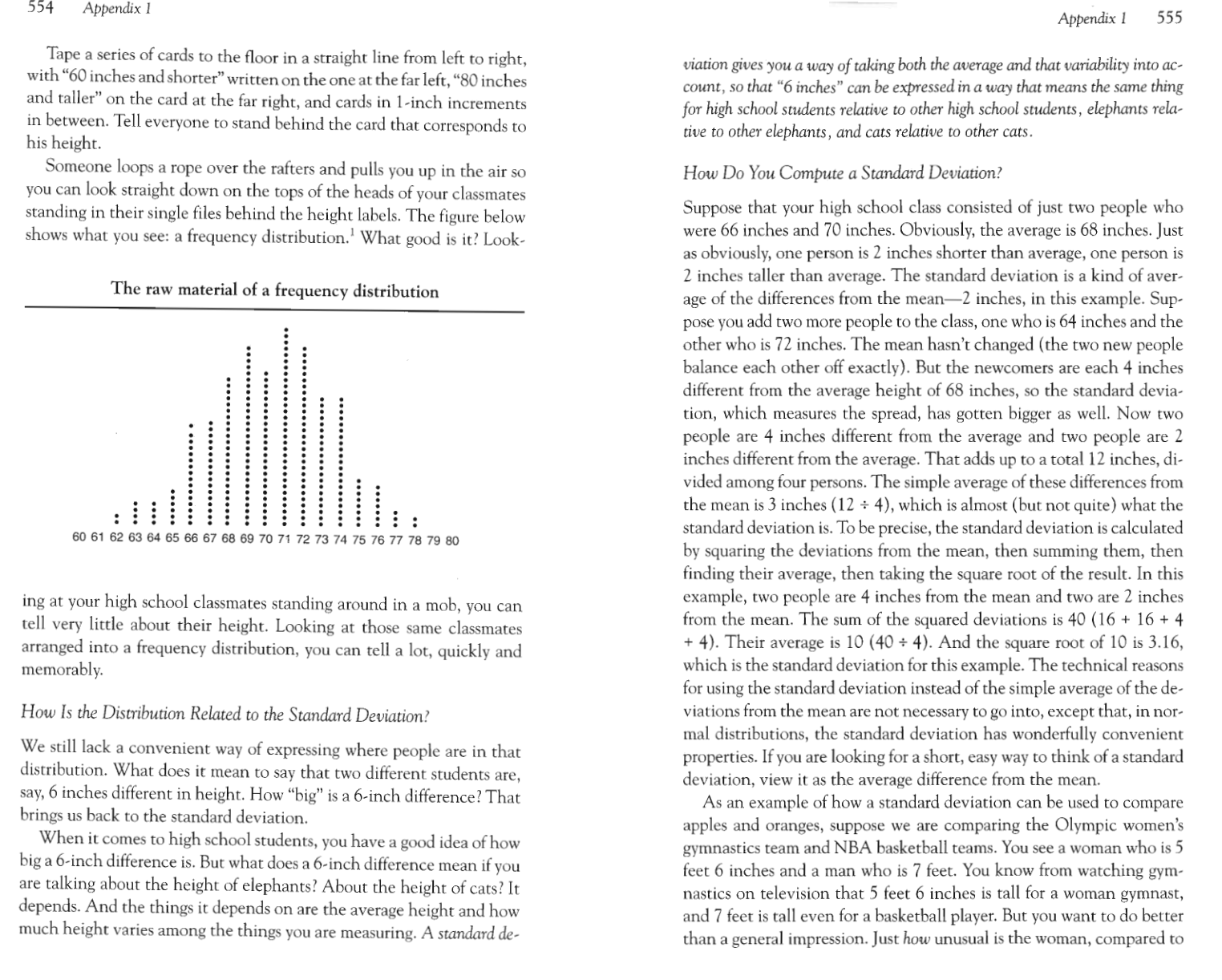
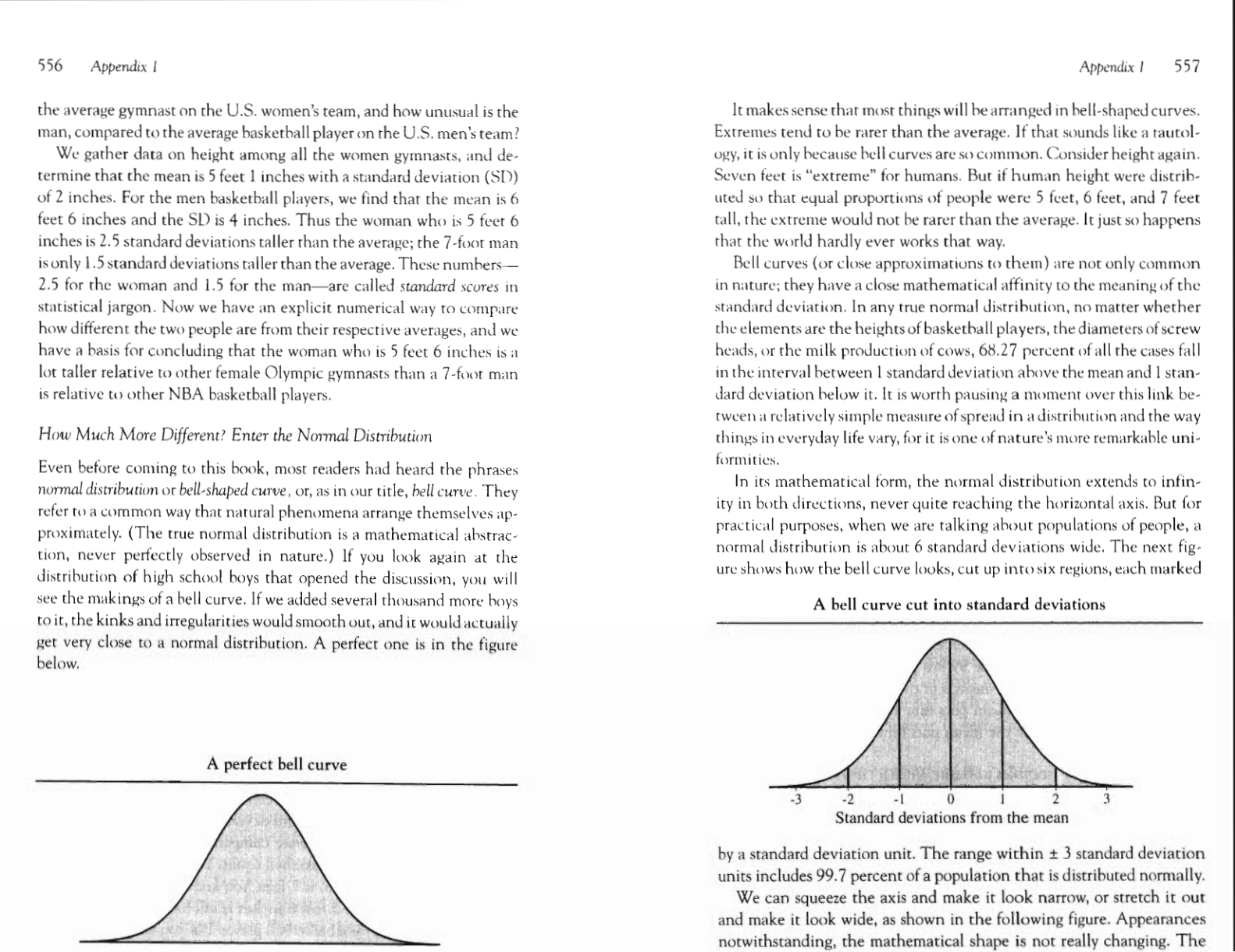
The authors introduce the concept of the normal distribution to explain how these elite populations represent the extreme 'tail' of the curve.
The degree of partitioning off of the top students as of the early 1990s has reached startling proportions.
Diagram
The Language of Standard Deviation
Standard deviation serves as a universal metric, similar to the inch, allowing for the comparison of disparate data sets like ACT and SAT scores.
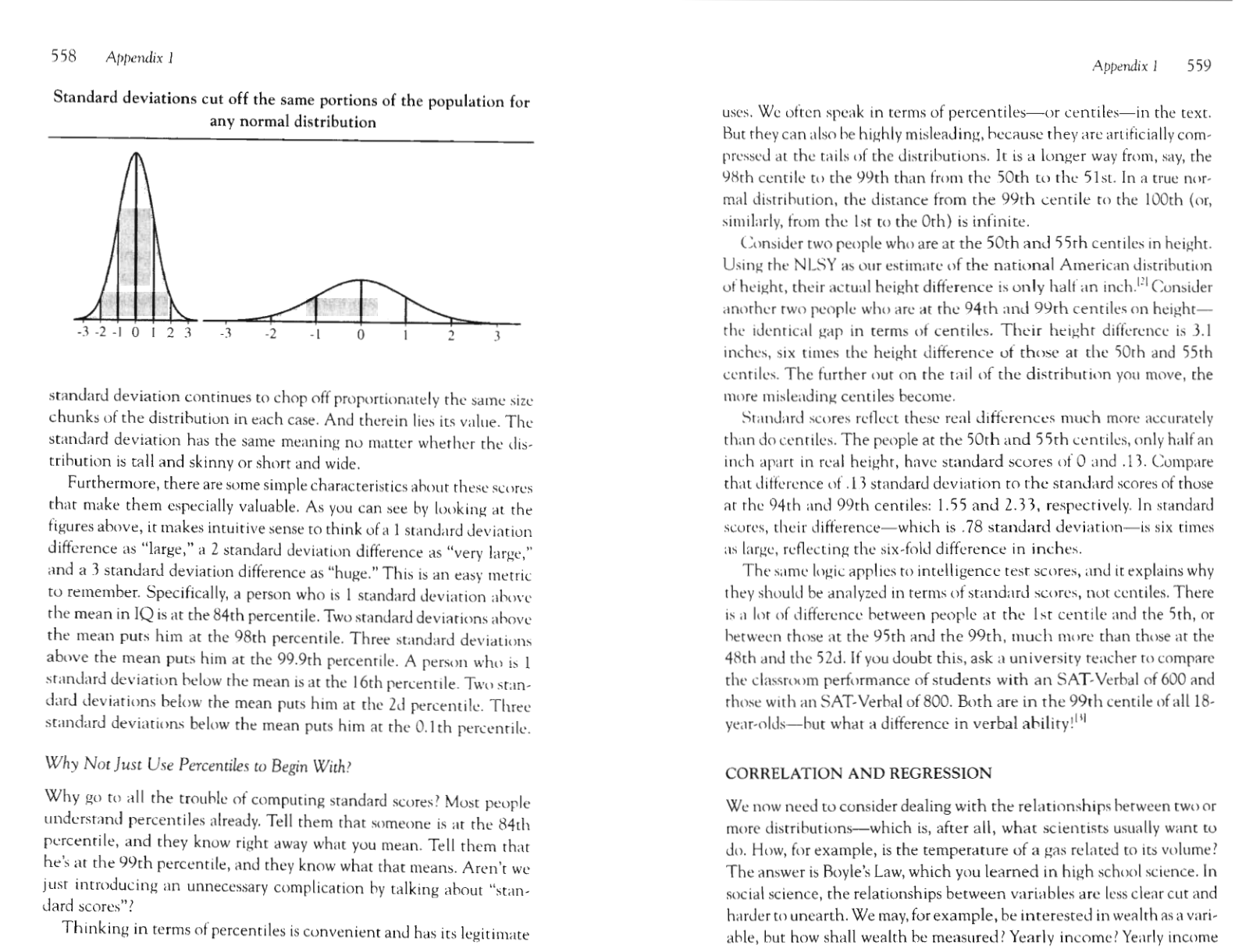
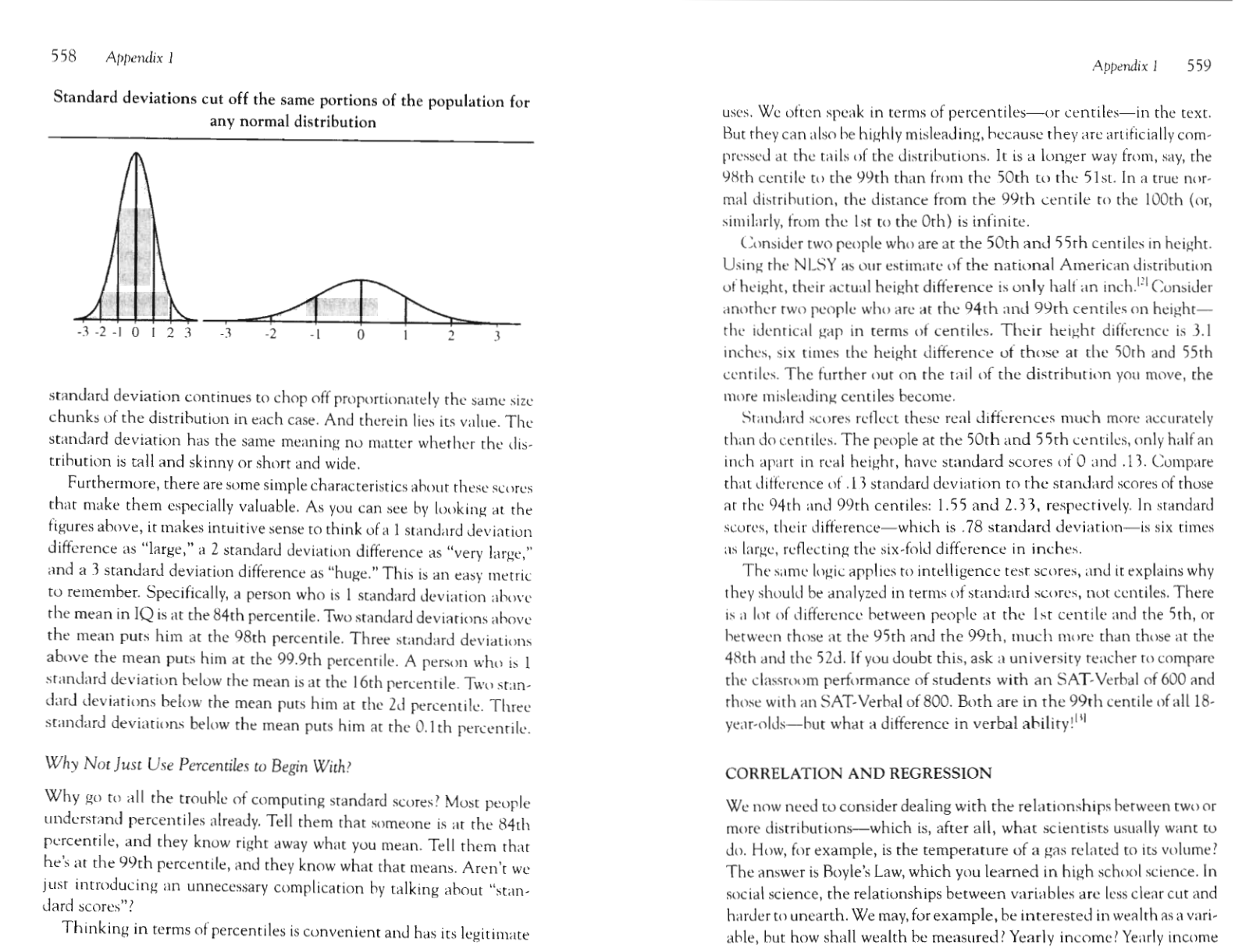
In a normal distribution, standard deviations correspond to specific percentiles, where one SD above the mean represents the 84th percentile and three represents the top thousandth.
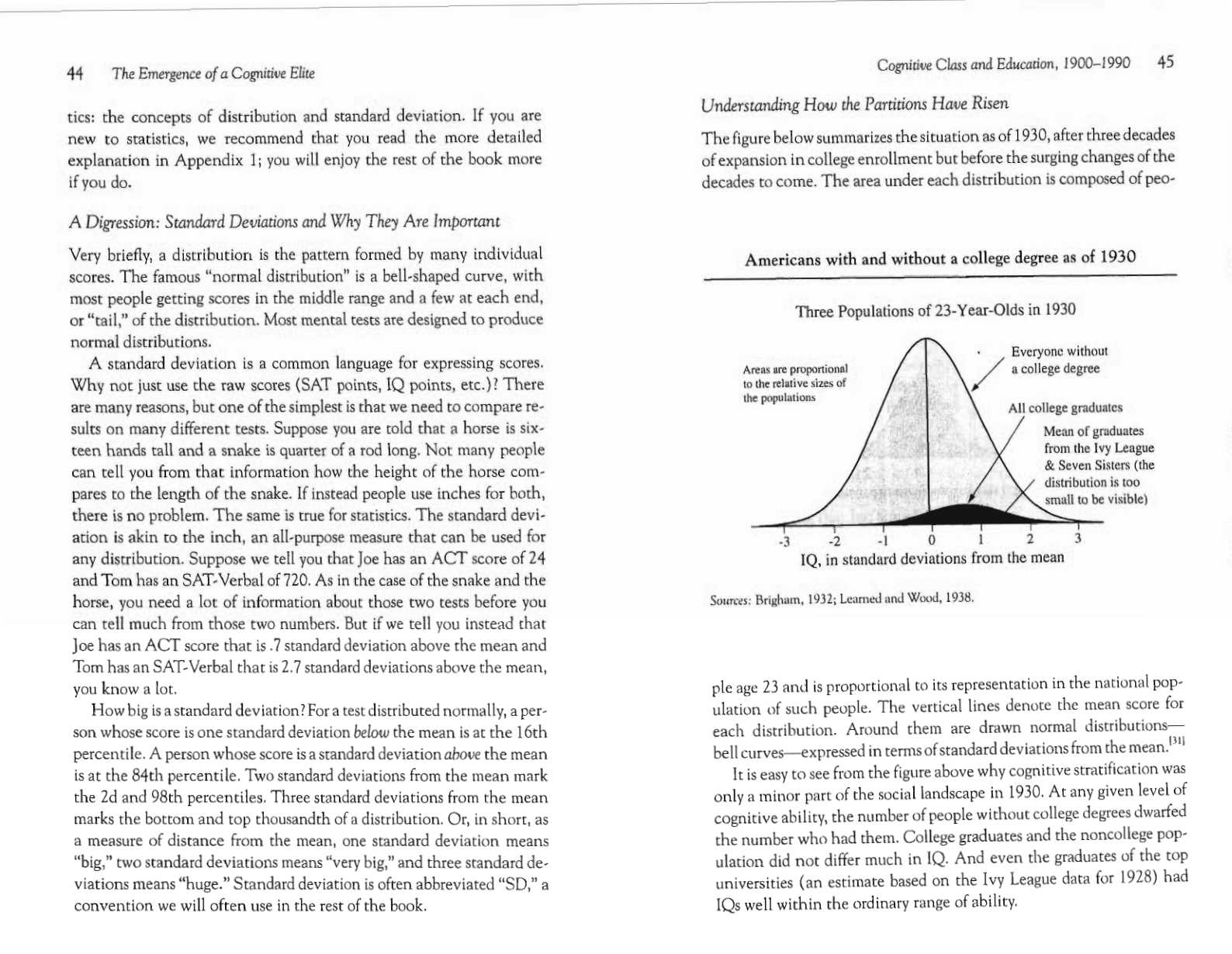
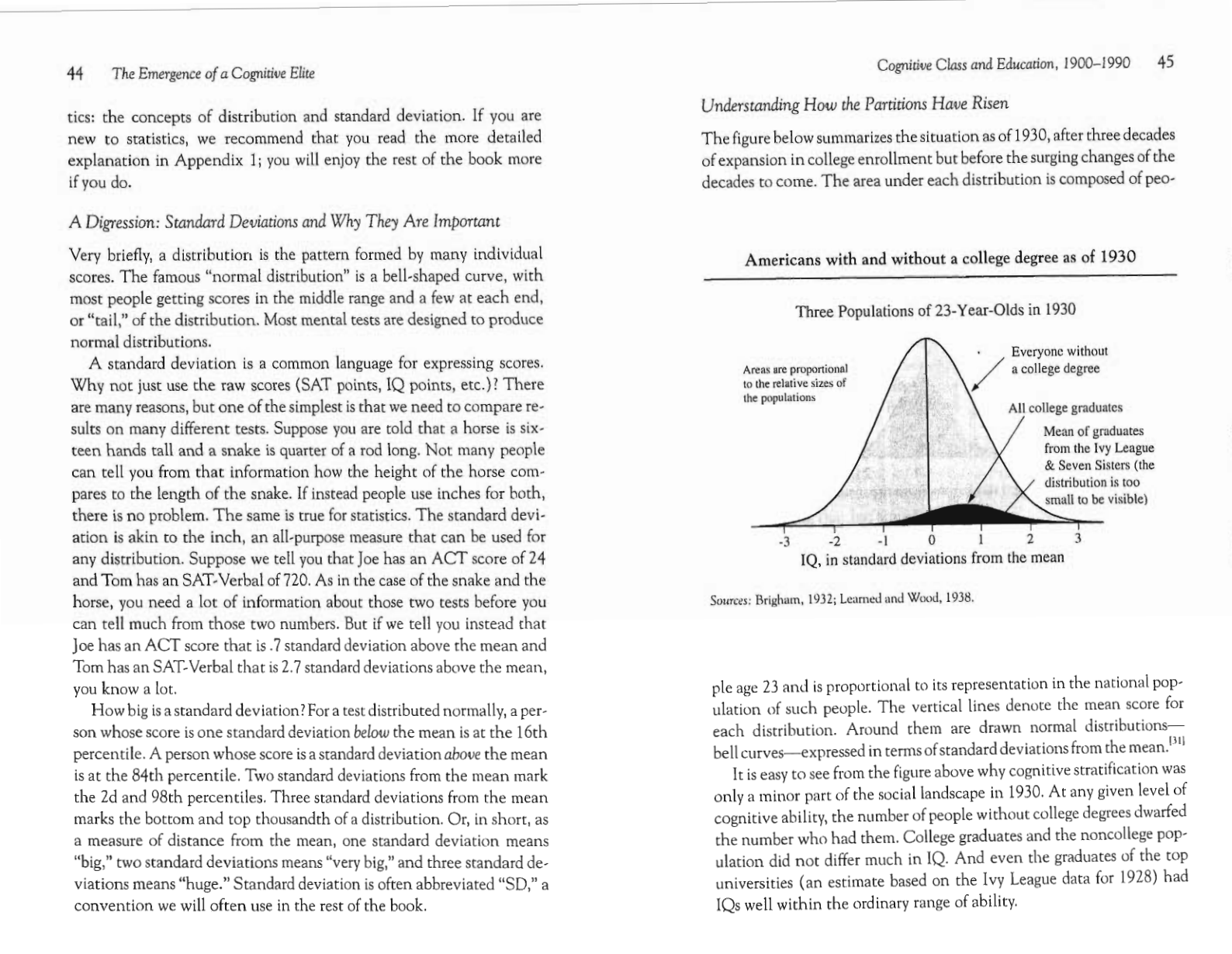
In 1930, cognitive stratification was minimal because the vast majority of high-ability individuals did not possess college degrees.
Historical data shows that the IQ distributions of college graduates and the general population overlapped significantly in the early 20th century.
The emergence of a 'cognitive elite' is traced through the increasing concentration of high-IQ individuals into specific educational tiers over sixty years.
Suppose you are told that a horse is sixteen hands tall and a snake is quarter of a rod long. Not many people can tell you from that information how the height of the horse compares to the length of the snake.
DiagramDiagram
The Rise of Cognitive Partitioning
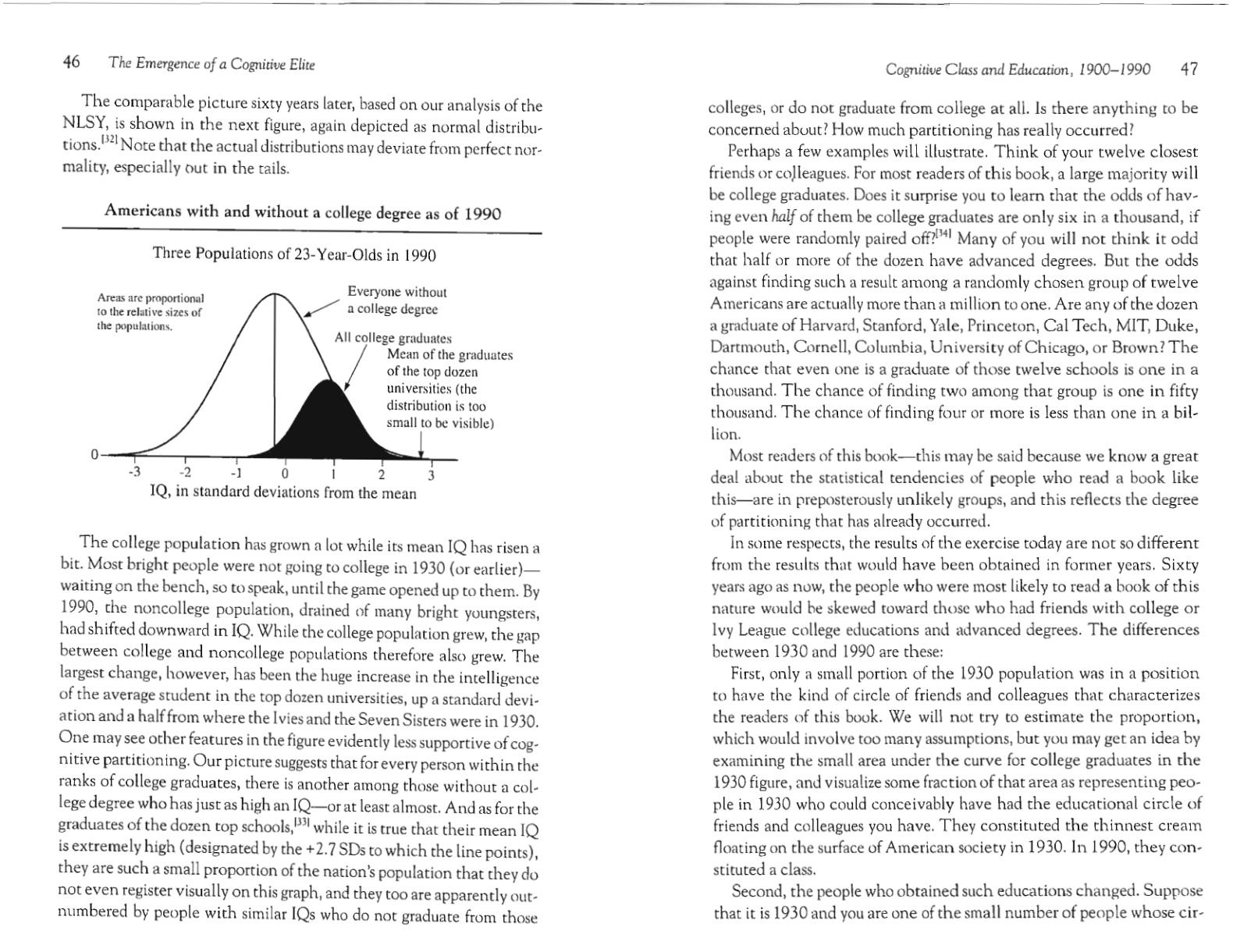
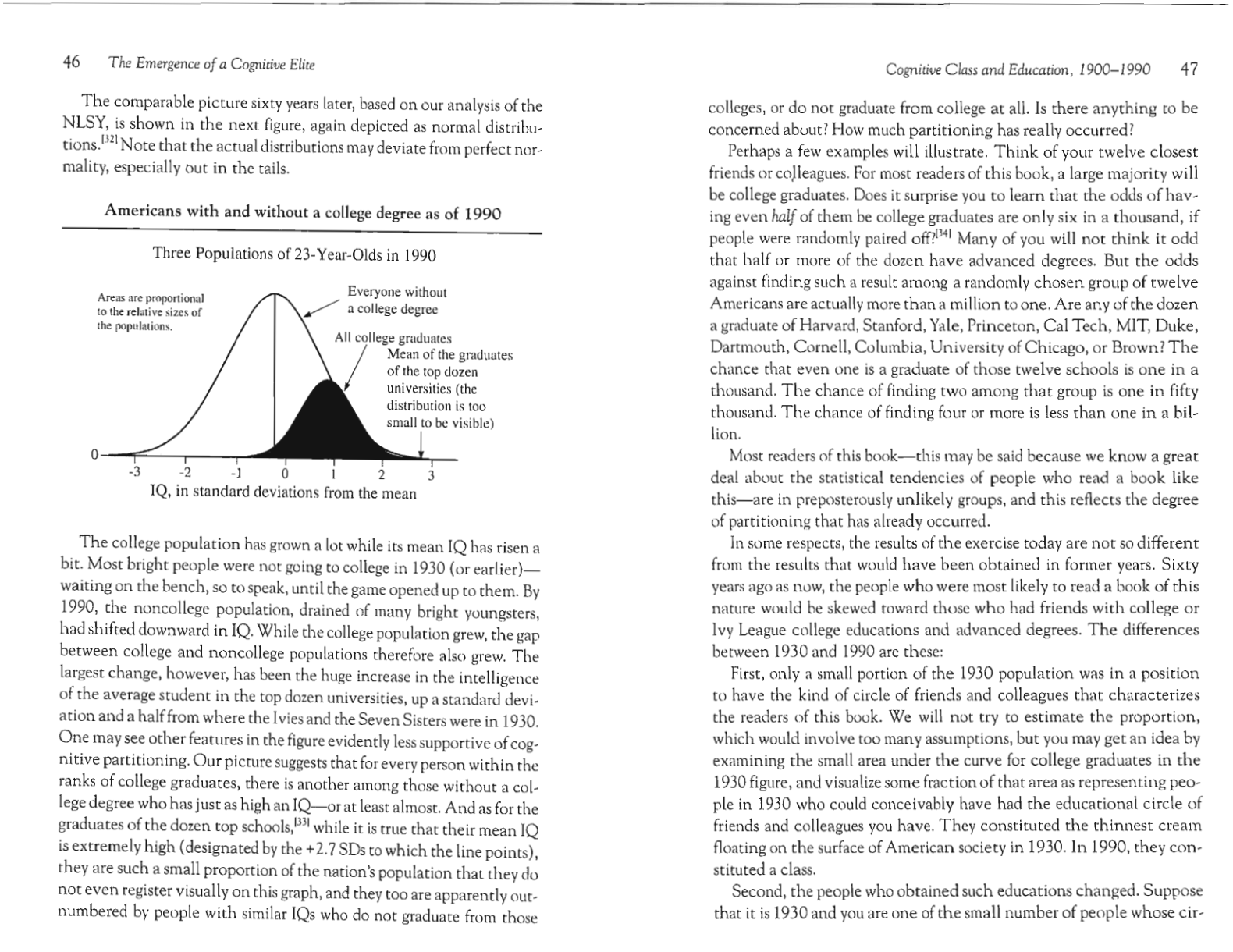
The average IQ of students at elite universities has surged by 1.5 standard deviations since 1930, creating a distinct cognitive layer.
While the college population has expanded, the non-college population has seen a downward shift in mean IQ as bright individuals are increasingly siphoned into higher education.
Despite the concentration of high IQs in elite schools, there remains a significant number of highly intelligent individuals who do not graduate from top-tier institutions.
Social circles have become highly segregated; the statistical probability of a random American having a friend group dominated by elite degree holders is nearly zero.
What was once a 'thin cream' of educated individuals in 1930 has transformed into a distinct and isolated social class by 1990.
Most readers of this book are in preposterously unlikely groups, and this reflects the degree of partitioning that has already occurred.
DiagramChart
The Great Cognitive Partitioning
Social circles that were once defined by class or education have shifted to being defined by narrow ranges of high IQ.
The migration of high-IQ individuals into higher education has drained the intellectual diversity of blue-collar occupations and neighborhoods.
Modern society has created a 'residuum' at the bottom of the distribution that is more intellectually and economically homogeneous than in the past.
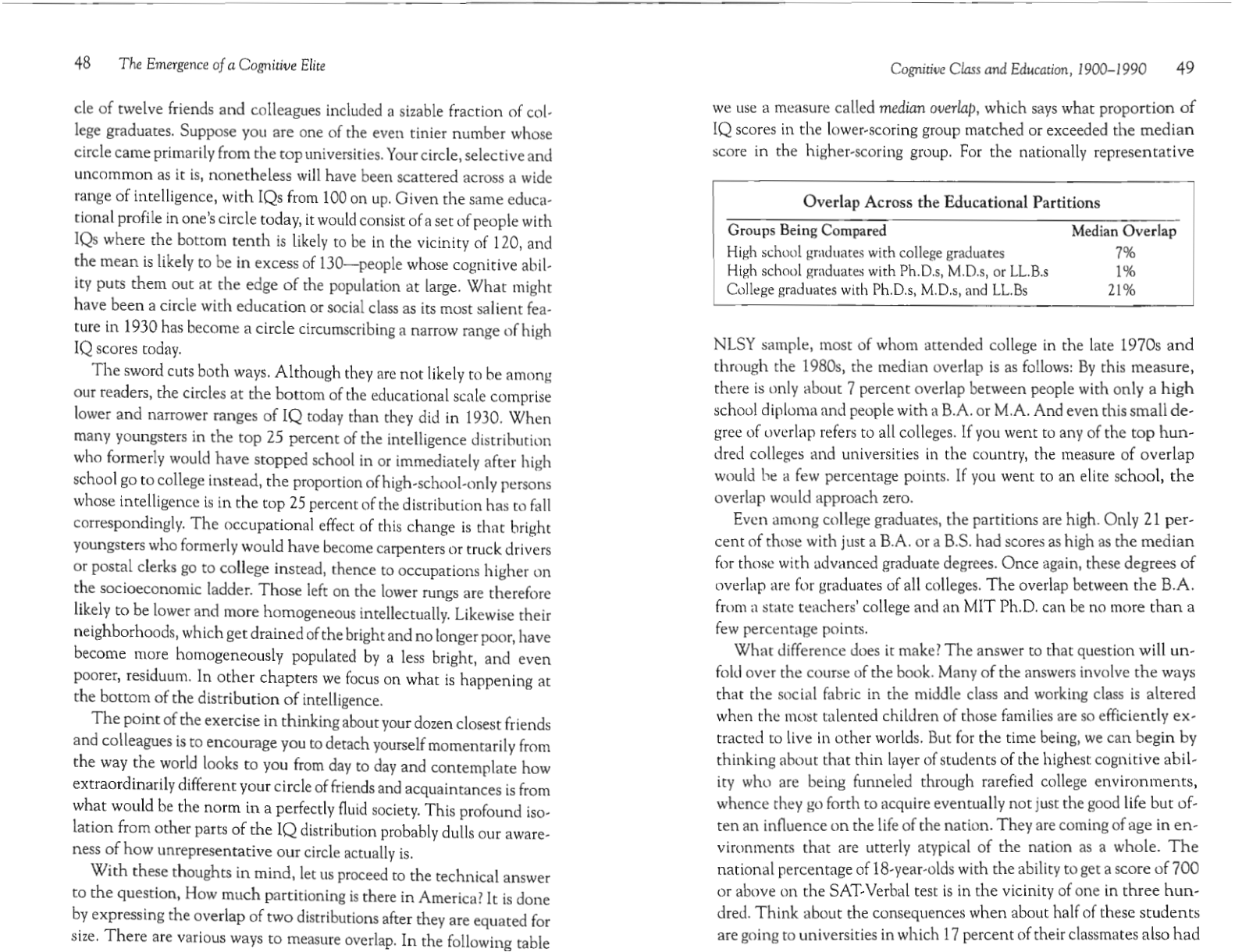
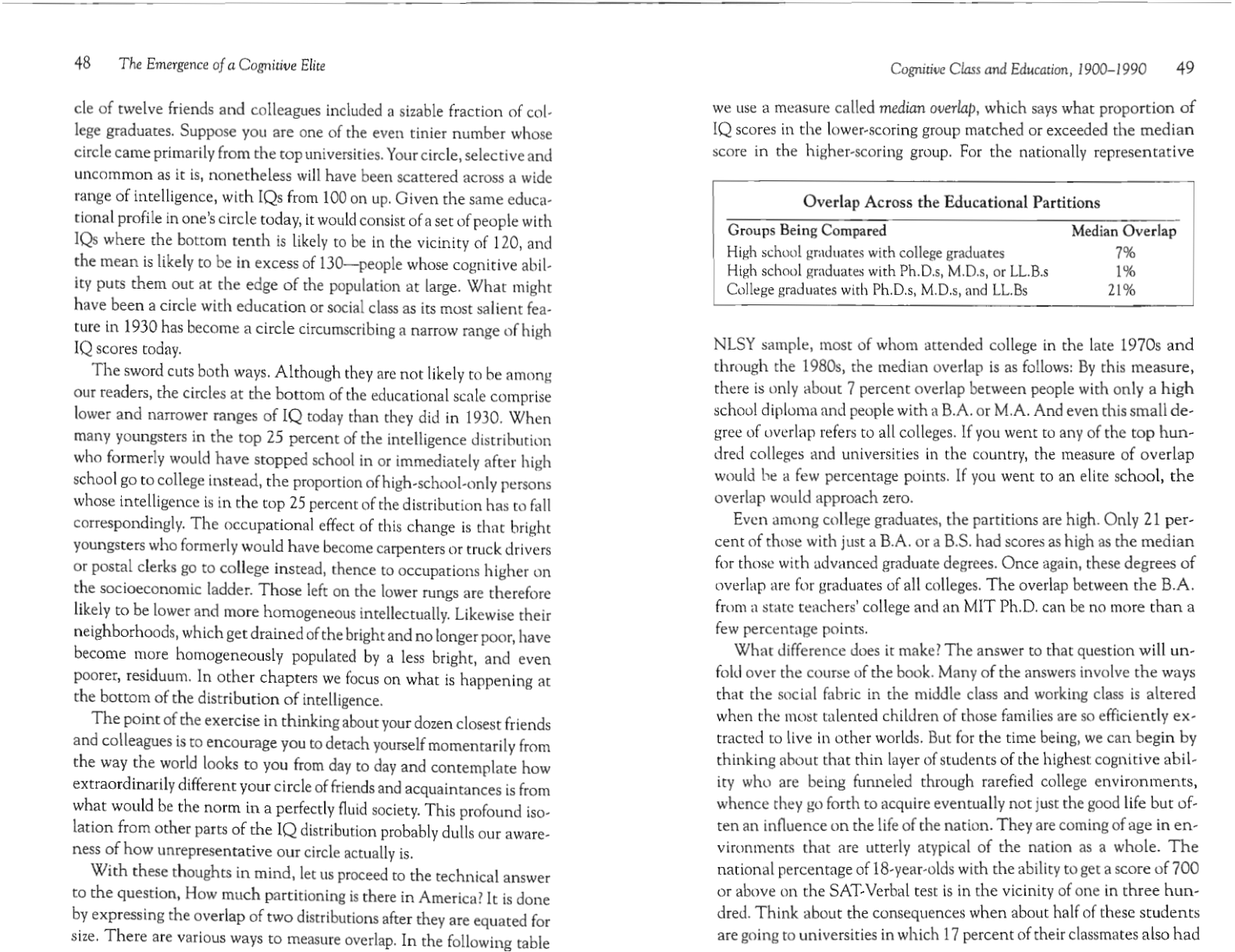
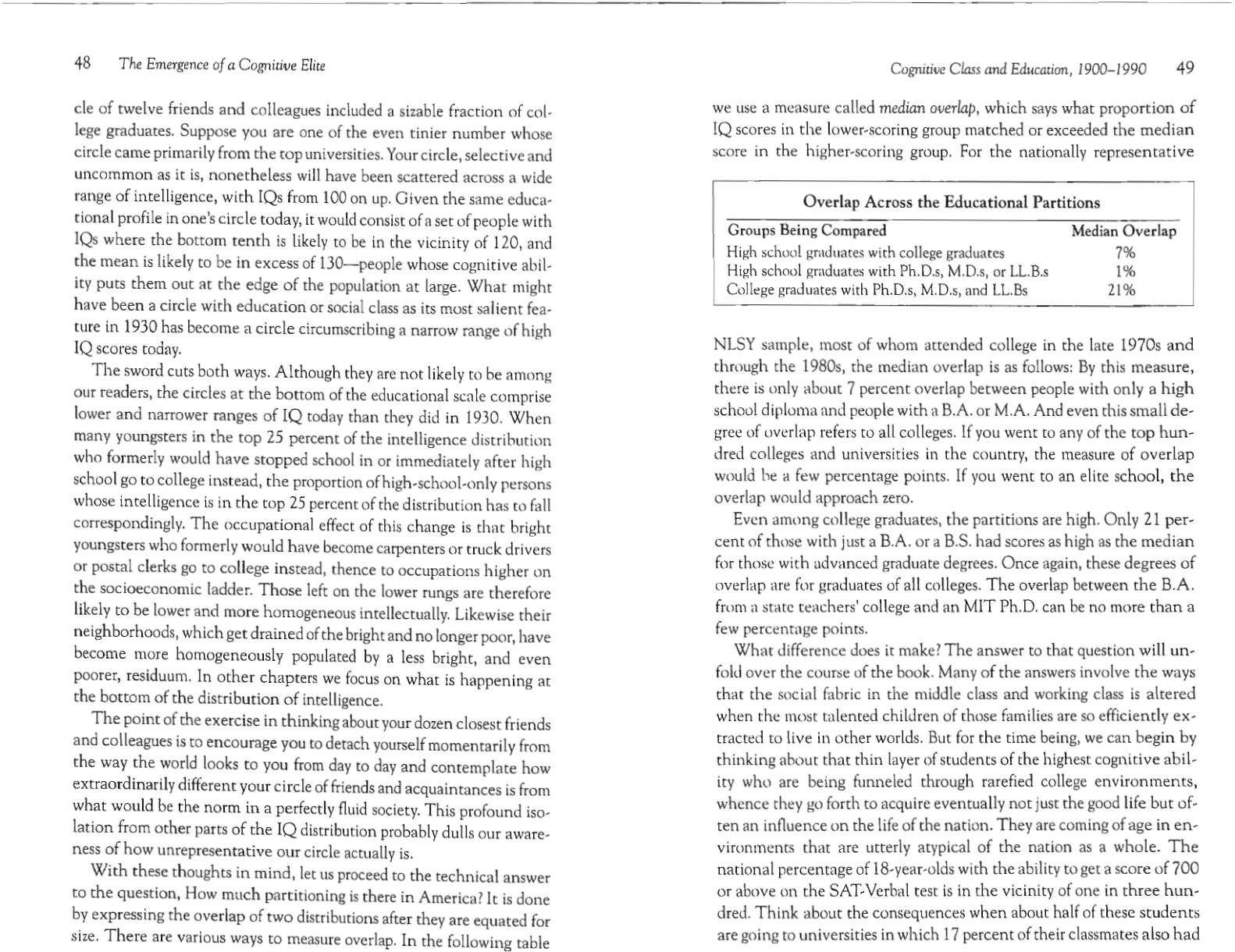
There is a profound isolation between cognitive classes, with only a 7 percent IQ overlap between high school and college graduates.
For those at elite universities, the cognitive overlap with the general population approaches zero, creating a distorted view of the world.
This partitioning suggests that the most educated segments of society are increasingly detached from the norms of a fluid society.
This profound isolation from other parts of the IQ distribution probably dulls our awareness of how unrepresentative our circle actually is.
Chart
The Emergence of Cognitive Partitioning
Elite universities extract the most talented children from diverse backgrounds and funnel them into rarefied, atypical environments.
The concentration of high-ability students creates a 'cognitive elite' with social and political outlooks that differ vastly from the general population.
While educational access for the bright is heartening, it creates 'encapsulated worlds' where leaders lack experience with the realities of those they influence.
The sorting process continues after graduation as occupations further seal the partitions between different cognitive layers of society.
Intelligence serves as a primary predictor for job status, becoming increasingly critical as the intellectual demands of a profession rise.
When people live in encapsulated worlds, it becomes difficult for them, even with the best of intentions, to grasp the realities of worlds with which they have little experience but over which they also have great influence.
Chart
The Rise of Cognitive Partitioning
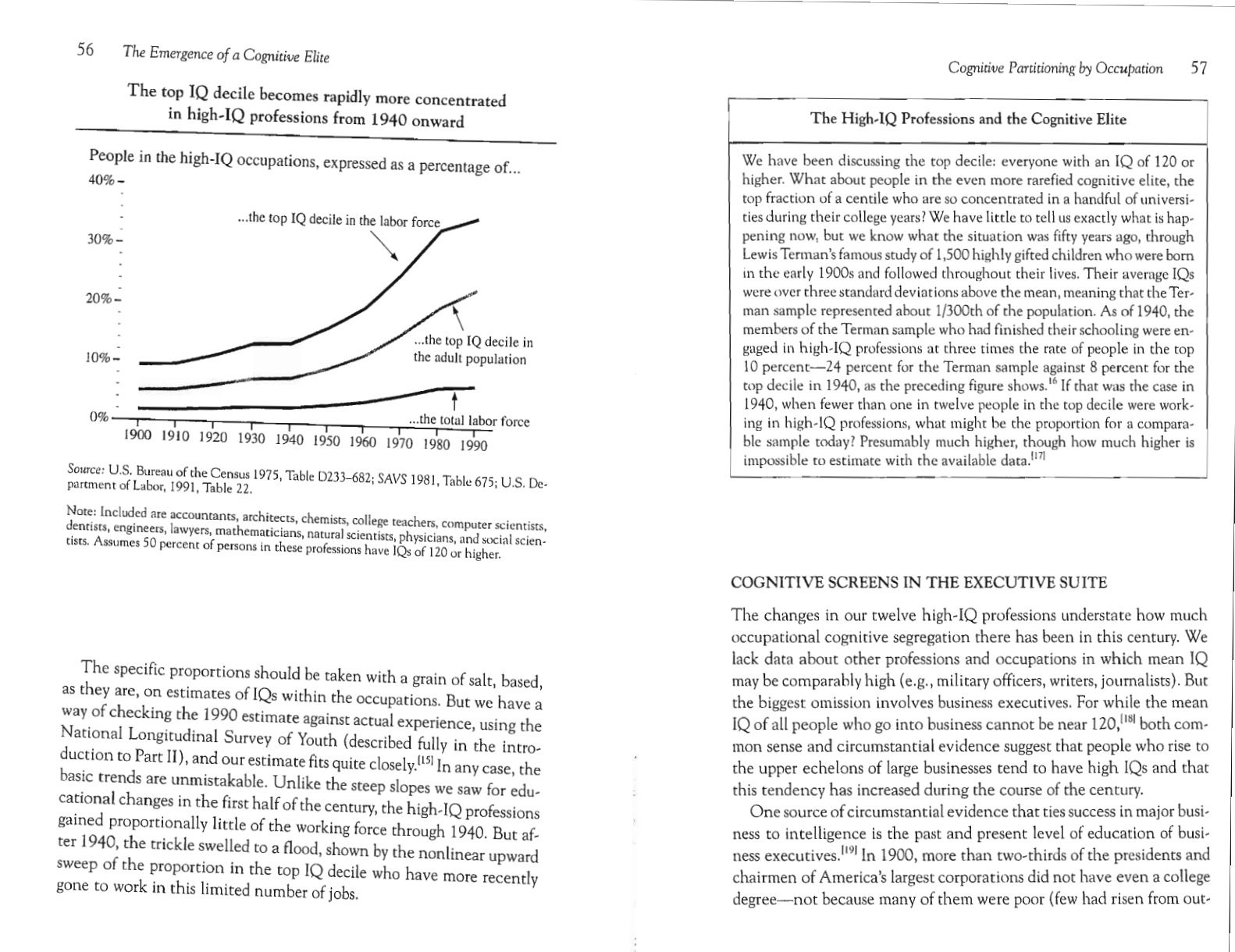
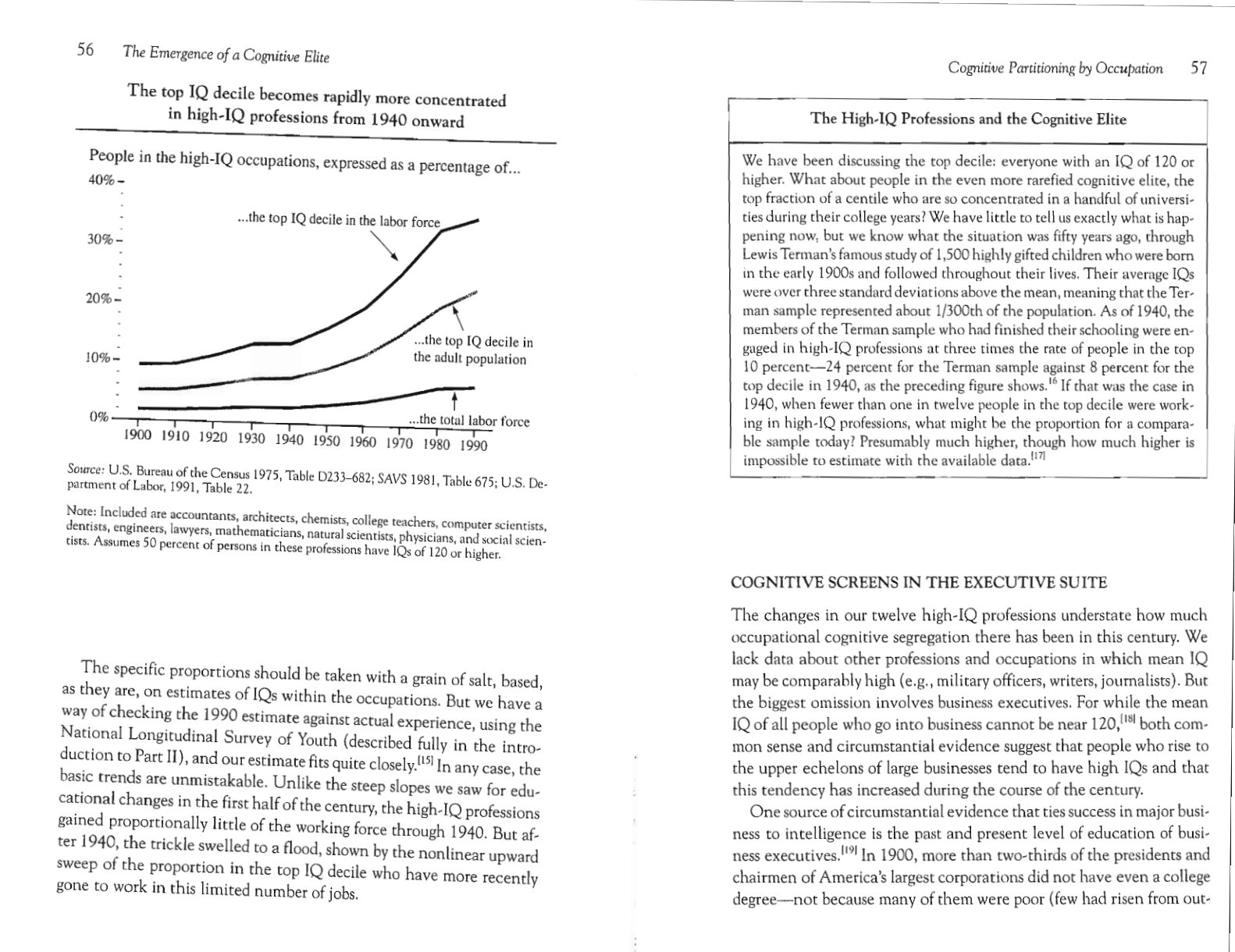
Between 1940 and 1990, the concentration of high-IQ individuals in a handful of elite professions increased from roughly 5% to 25%.
The corporate world shifted from a system of aristocratic privilege and social pedigree to a meritocracy that prioritizes cognitive ability and profit maximization.
Higher education credentials, once rare in business, have become a mandatory screening mechanism for senior executive positions.
Unlike the temporary sorting of the school years, occupational sorting defines a person's social circles, communities, and lifelong environment.
The 'invisible hand' of the labor market naturally aligns job status with intelligence scores, a phenomenon observed across various countries and eras.
Debates persist regarding whether high-IQ requirements for certain jobs are functional necessities or merely by-products of educational gatekeeping.
The next three decades saw a great social leveling, as the executive suites filled with bright people who could maximize corporate profits, and never mind if they came from the wrong side of the tracks or worshipped at a temple instead of a church.
IQ and Occupational Status
Childhood IQ scores are as predictive of adult job status as IQ tests taken later in life, suggesting a stable underlying trait.
The correlation between early intelligence and later career success persists regardless of the total years of education completed.
Family members tend to occupy similar rungs on the occupational ladder, a phenomenon often attributed to shared cognitive traits.
A Danish adoption study revealed that biological siblings raised apart show more similar job status than adoptive siblings raised together.
The data suggests that genetic factors play a more significant role in determining professional status than the shared home environment.
The link between intelligence and occupation becomes increasingly rigid as the cognitive demands of a profession rise.
The biologically related siblings resembled each other in job status, even though they grew up in different homes.
The Rise of Cognitive Stratification
High-IQ professions, such as law, engineering, and medicine, typically require a mean IQ of approximately 120, representing the top tenth of the population.
Economic incentives and the expansion of professional roles have diverted high-ability individuals away from manual trades like cabinetmaking.
In 1900, only about one out of twenty people in the top IQ decile worked in these high-IQ professions.
By 1990, the concentration of high-ability individuals in these specific fields increased fivefold, 'soaking up' one out of four talented people.
This trend illustrates a rapid cognitive partitioning of the American labor market, where the most intellectually gifted are increasingly clustered into a narrow set of occupations.
In 1900, the number of jobs in the high-IQ professions soaked up only about one out of twenty of these talented people. By 1990, they soaked up almost five times as many, or one out of four.
Chart
The Rise of Cognitive Segregation
The proportion of high-IQ individuals entering specialized professions like law, engineering, and science shifted from a trickle to a flood after 1940.
Historical data from the Terman study suggests that the most gifted individuals are increasingly concentrated in a narrow set of elite occupations.
Occupational cognitive segregation is likely understated because data often excludes high-IQ roles in the military, journalism, and executive leadership.
In 1900, a college degree was often viewed as a hindrance to business success, with two-thirds of top corporate leaders lacking a degree.
Modern business recruitment has undergone a revolution, increasingly using educational attainment and cognitive ability as primary screens for executive roles.
But after 1940, the trickle swelled to a flood, shown by the nonlinear upward sweep of the proportion in the top IQ decile who have more recently gone to work in this limited number of jobs.
ChartChart
The Rise of Cognitive Meritocracy
From 1900 to 1950, the American corporate elite was defined by inherited wealth, social connections, and specific religious affiliations like Episcopalianism.
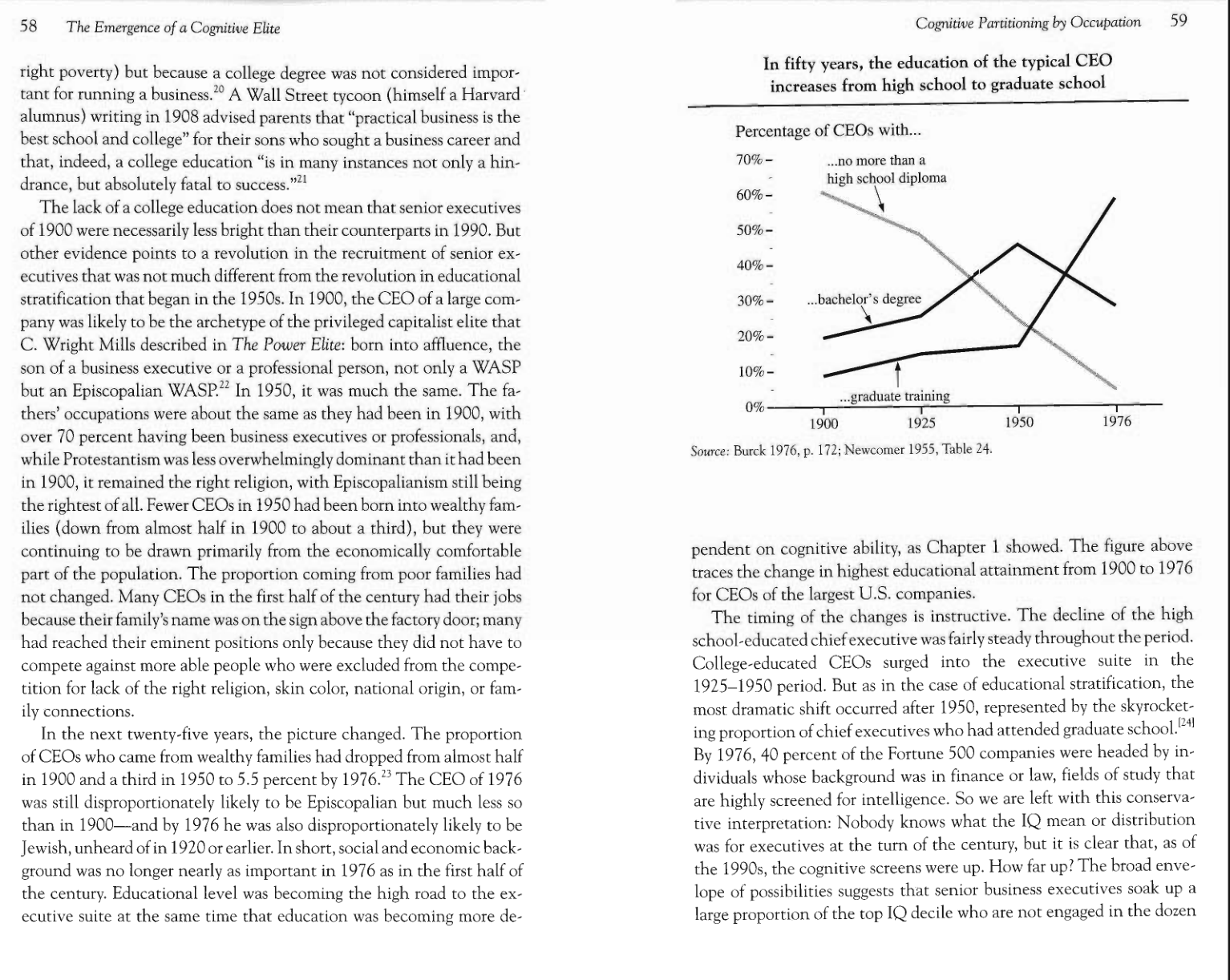
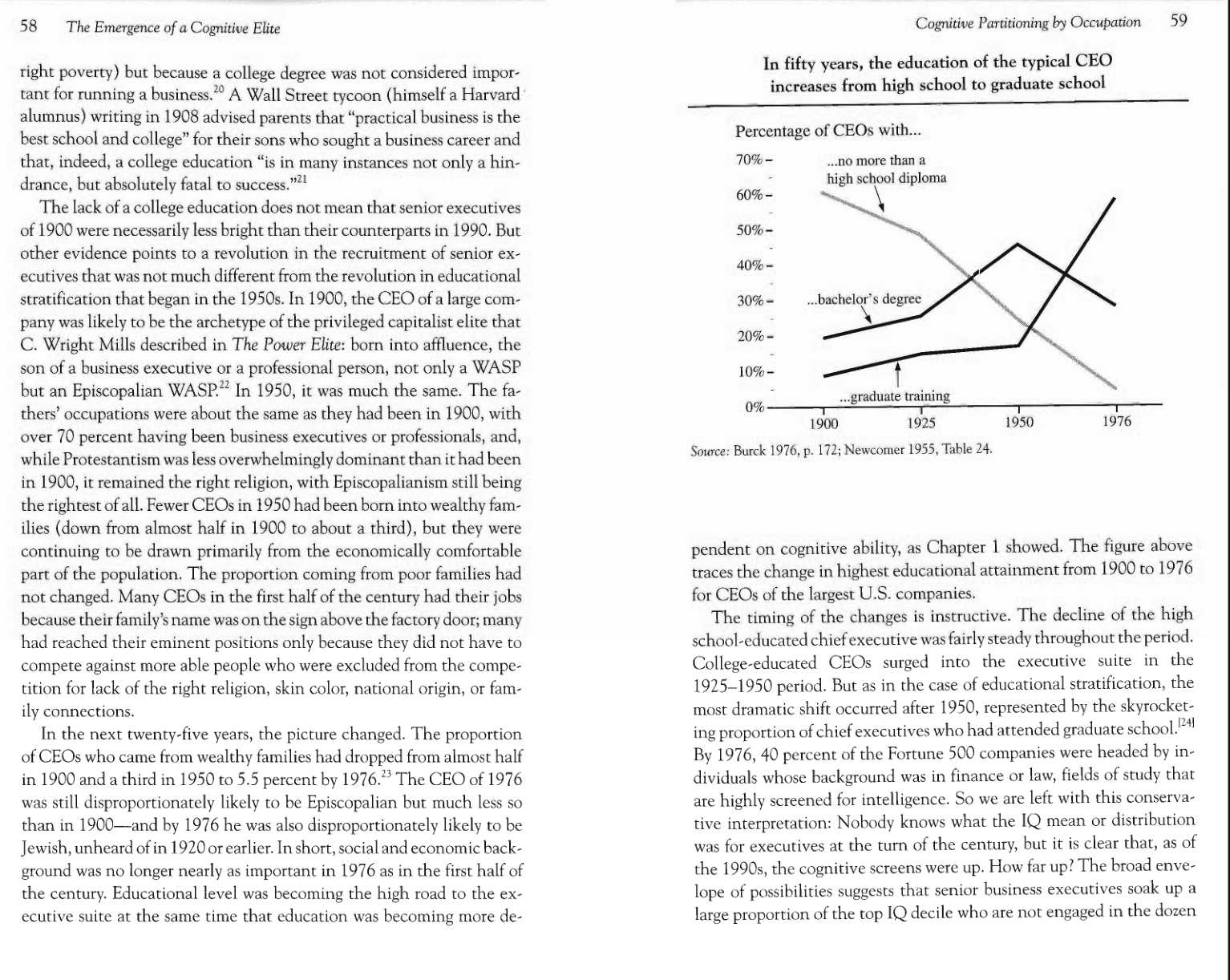
By 1976, the influence of family background plummeted, with CEOs from wealthy families dropping from nearly half to only 5.5 percent.
Educational attainment replaced social pedigree as the primary path to the executive suite, shifting from high school diplomas to graduate degrees.
The post-1950 era saw a surge in CEOs with backgrounds in finance and law, fields that act as rigorous cognitive screens for high intelligence.
Modern executive selection functions as a 'cognitive partition,' drawing heavily from the top decile of the IQ distribution.
The transition represents a shift from a closed capitalist elite to a meritocracy based on cognitive ability and academic credentials.
Many had reached their eminent positions only because they did not have to compete against more able people who were excluded from the competition for lack of the right religion, skin color, national origin, or family connections.
Chart
The Efficiency of Cognitive Sorting
Statistical analysis suggests that a vast majority of individuals in the top IQ decile are now concentrated in high-IQ professions or managerial roles.
Historical shifts show that in the mid-20th century, high-IQ individuals were more evenly scattered throughout various levels of the workforce.
Modern corporate hierarchies and college graduation requirements act as effective screens that filter for higher cognitive ability.
While education is the fashionable explanation for occupational placement, the underlying driver is the inherent proficiency of smarter employees.
The concentration of cognitive talent into specific sectors has reached a point where 70 to 80 percent of the top IQ tier may already be 'captured' by elite professions.
At this point, we are left with startlingly little room for maneuver.
Intelligence and Job Performance
High IQ correlates with increased productivity across all job types, from skilled professions like law to manual labor.
General intelligence (g) is a more accurate predictor of job proficiency than specific aptitude tests or traditional hiring metrics like interviews and transcripts.
The economic advantage of hiring high-IQ employees is significant, leading to a more efficient economy when employers are free to select based on cognitive ability.
Legal restrictions since 1971 have limited the use of intelligence tests in American hiring, creating a tension between policy and economic efficiency.
The text explores whether the value of IQ in the workplace is inherent or merely a byproduct of educational credentials and social stratification.
Despite legal prohibitions, the inherent relationship between cognitive ability and job performance remains a persistent economic reality.
Laws can make the economy less efficient by forbidding employers to rue intelligence tests, but laws cannot make intelligence unimportant.
Intelligence and Economic Productivity
A college degree often serves as an indirect measure of cognitive talent rather than a specific credential of acquired knowledge.
Elite universities like Stanford and Yale act as hubs where employers 'rob the bank' for high-level cognitive ability.
Credentialing requirements, such as the B.A. or Ph.D., are frequently irrelevant to the actual tasks performed in many professional roles.
Intelligence is fundamentally linked to productivity across the entire job spectrum, creating a strong business incentive to use IQ as a selection tool.
While test scores like the SAT may not predict individual success within a high-achieving group like Harvard, they remain powerful indicators of general economic partitioning.
Places like Stanford and Yale are where you find the coin of cognitive talent.
Figure
Understanding the Correlation Coefficient
The relationship between IQ scores and job performance is often debated, with some arguing it depends more on specific job skills than general intelligence.
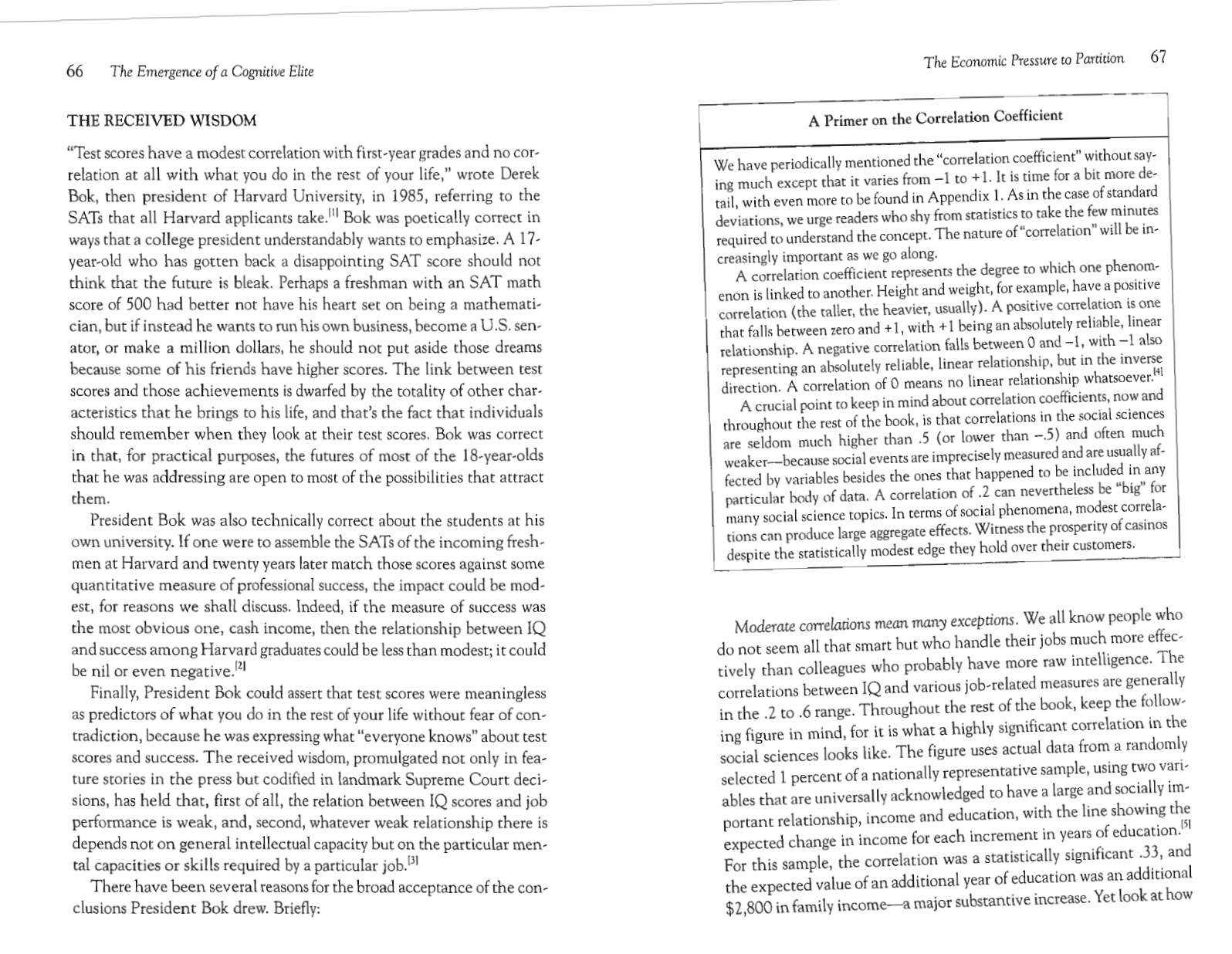
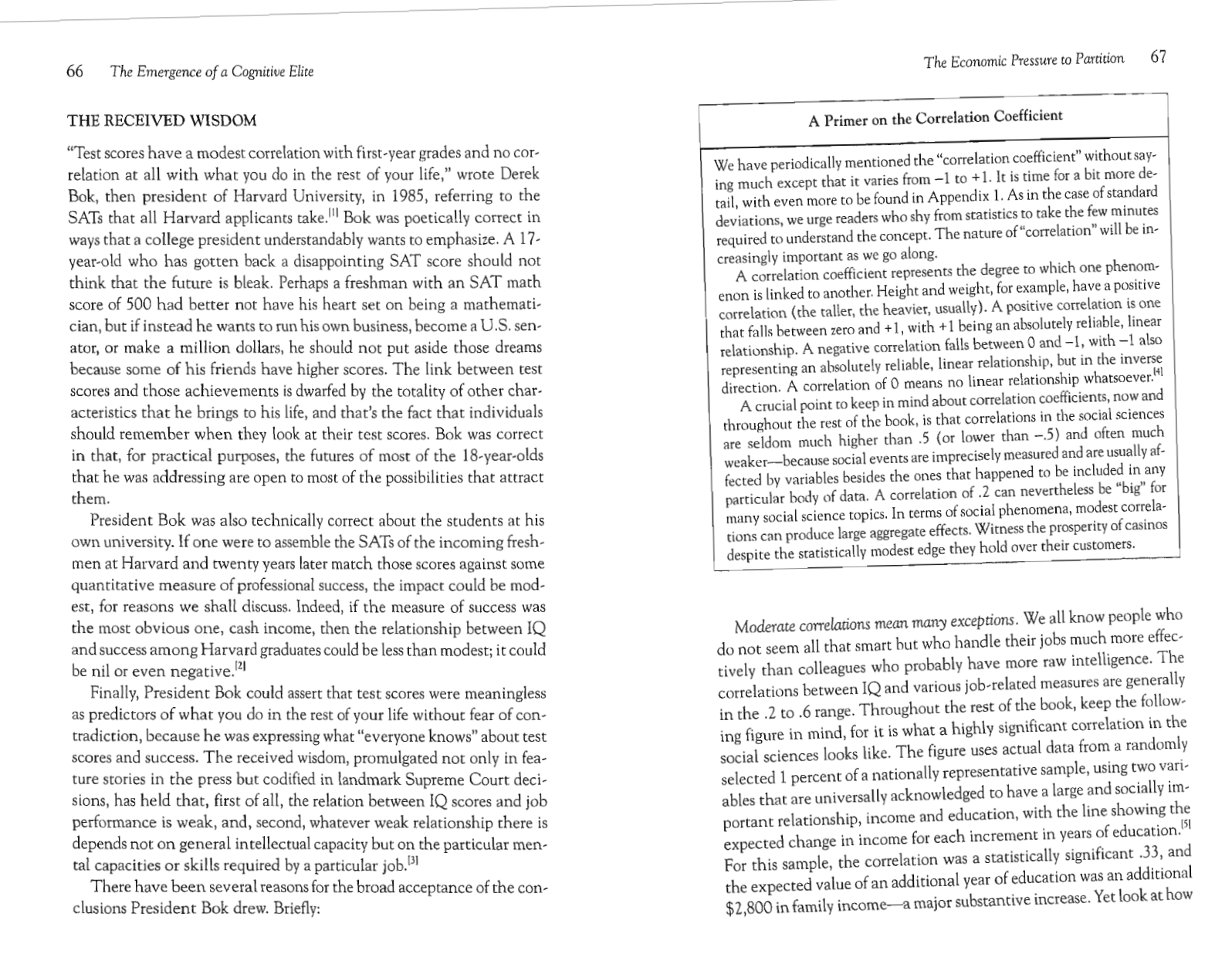
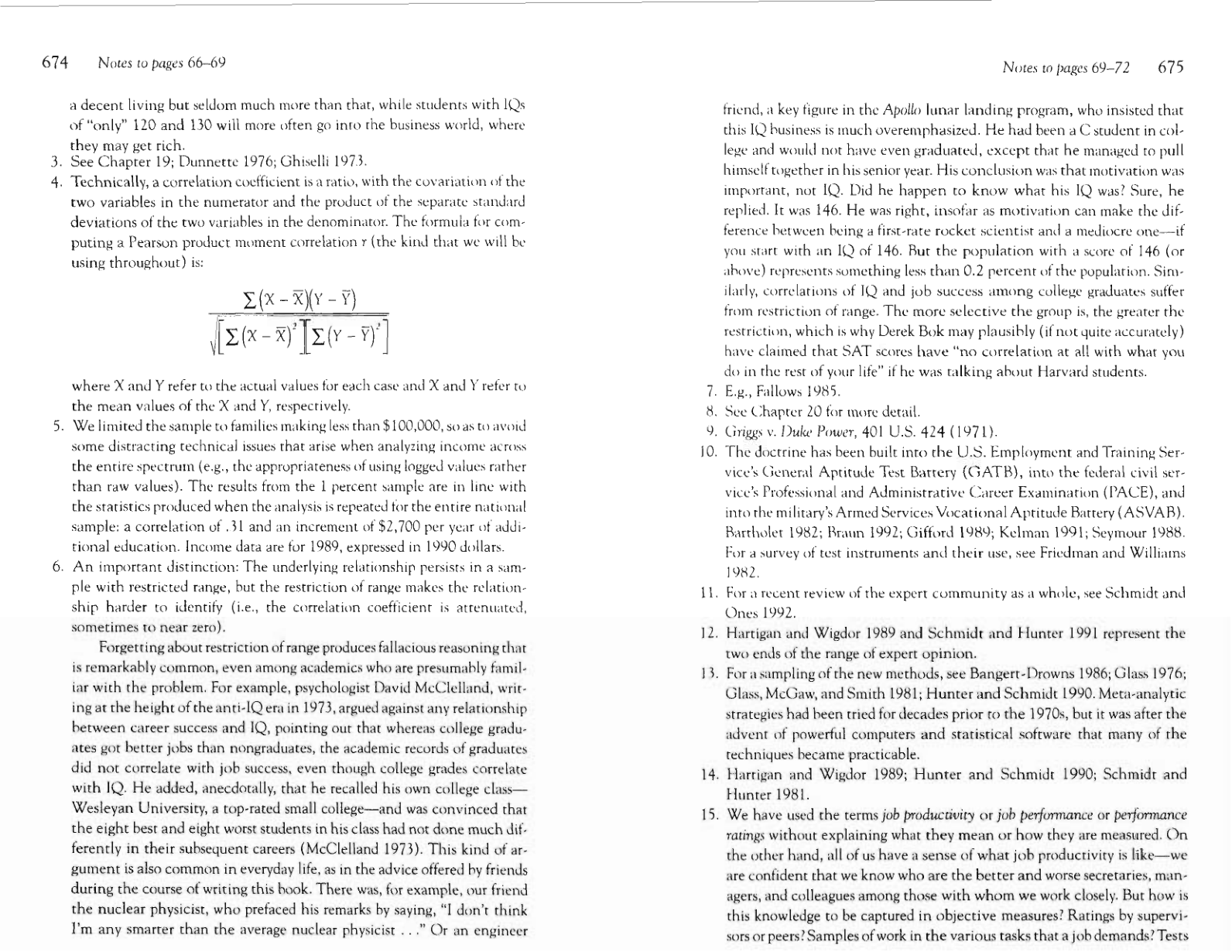
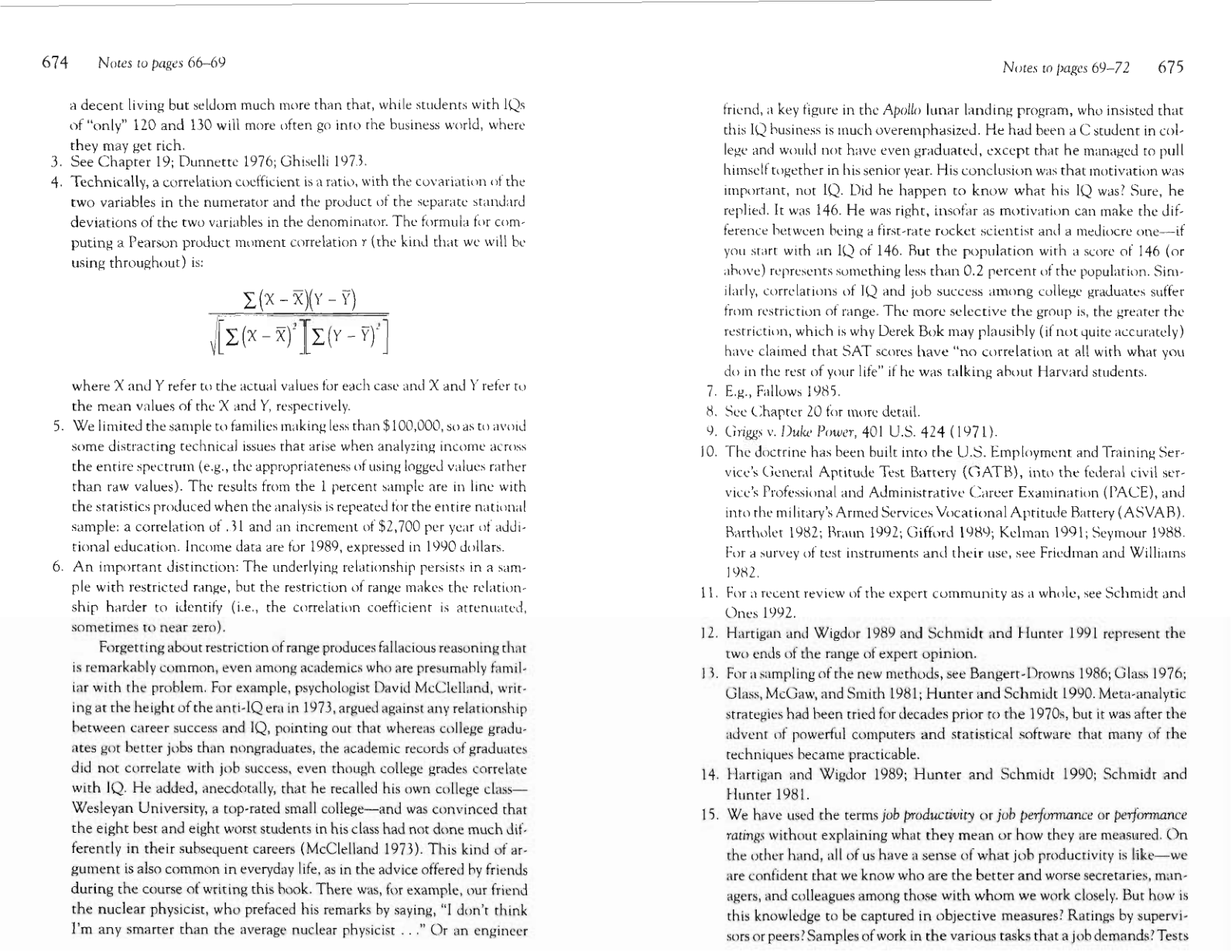
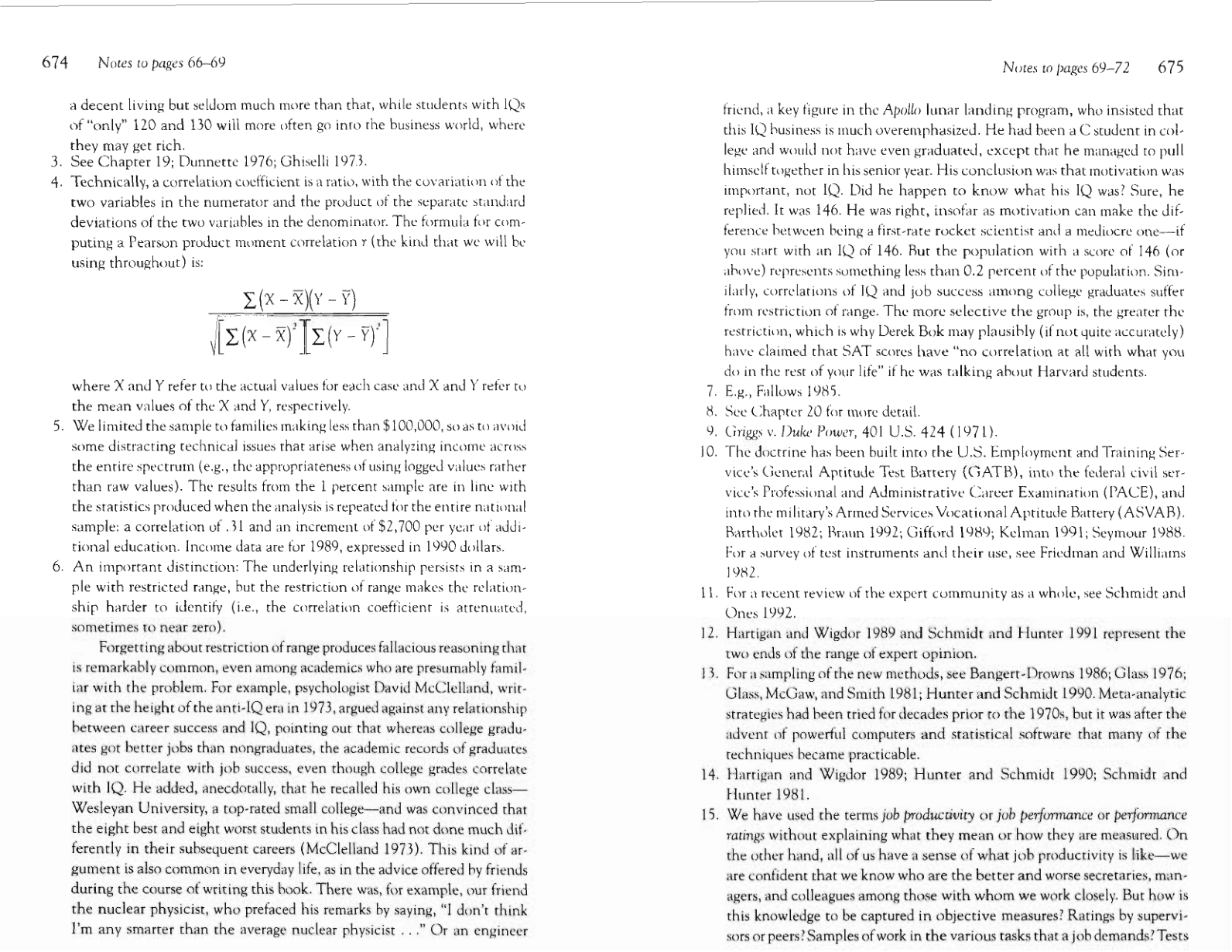
A correlation coefficient measures the degree of linkage between two phenomena, ranging from -1 to +1, where 0 indicates no linear relationship.
In the social sciences, correlations are rarely higher than .5 due to imprecise measurements and the influence of numerous external variables.
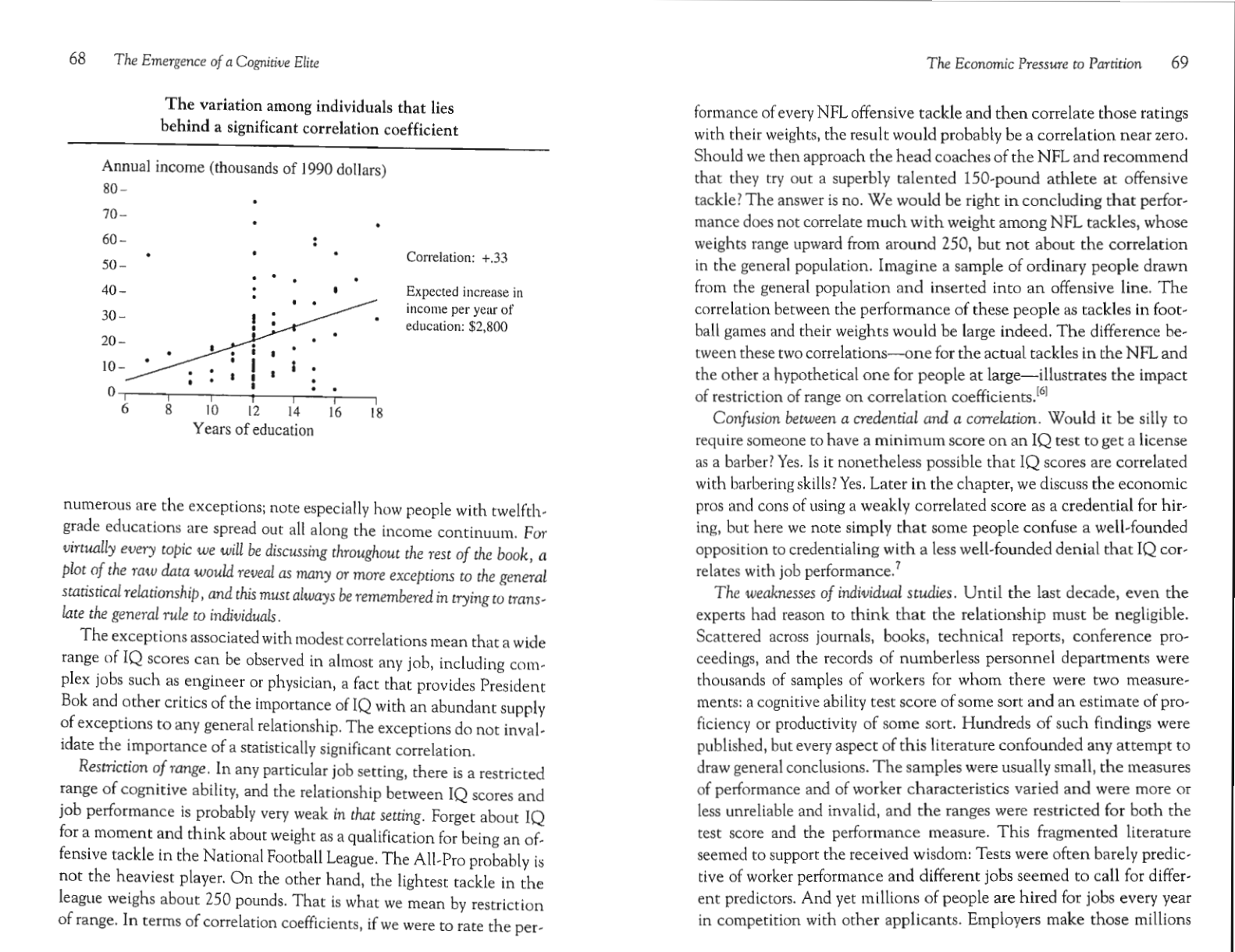
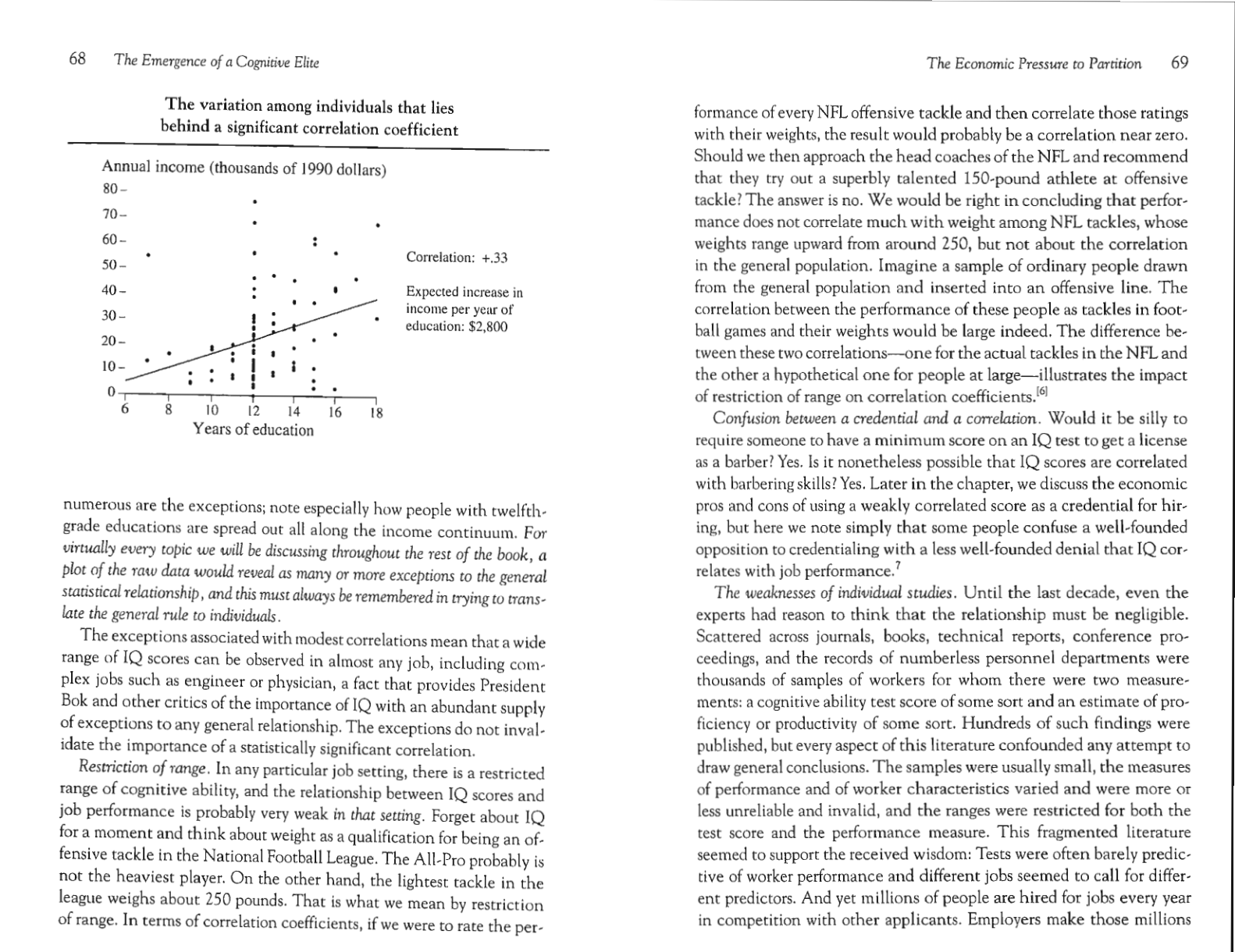
Even modest correlations, such as .2 or .33, can result in significant aggregate social effects, much like the house edge in a casino.
A correlation of .33 between education and income shows a clear trend but also reveals vast individual exceptions across the data spectrum.
Witness the prosperity of casinos despite the statistically modest edge they hold over their customers.
FigureChart
The Restriction of Range
Statistical correlations between IQ and job performance are often masked by the restricted range of ability within specific professions.
The NFL offensive tackle analogy demonstrates that while weight may not correlate with success among pros, it is a critical threshold for entry.
Critics often confuse the opposition to using IQ as a formal credential with the statistical reality of its correlation to performance.
Early research into IQ and productivity was fragmented by small sample sizes and unreliable performance measures.
The historical lack of consensus on testing led to the landmark Supreme Court decision in Griggs v. Duke Power Co. regarding hiring practices.
Should we then approach the head coaches of the NFL and recommend that they try out a superbly talented 150.pound athlete at offensive tackle?
Chart
Intelligence and Job Performance
The Supreme Court initially ruled that employment tests must focus on specific job-related skills rather than general mental aptitude.
Recent research and meta-analysis have overturned the common-sense belief that narrow skill tests are superior to general intelligence tests.
Broadly based tests of intelligence (g) are better predictors of job training and performance than tests targeted at specific job routines.
The correlation between cognitive ability and job performance is higher than previously estimated and carries significant economic consequences.
Meta-analysis allowed researchers to pool hundreds of small studies, revealing stable patterns that were previously obscured by statistical noise.
Experts now largely agree that general cognitive ability is a primary driver of individual economic productivity across various occupations.
The problem is that common sense turned out to be wrong.
Intelligence and Job Performance
Significant variations in job performance exist across all levels of employment, from menial labor to complex management.
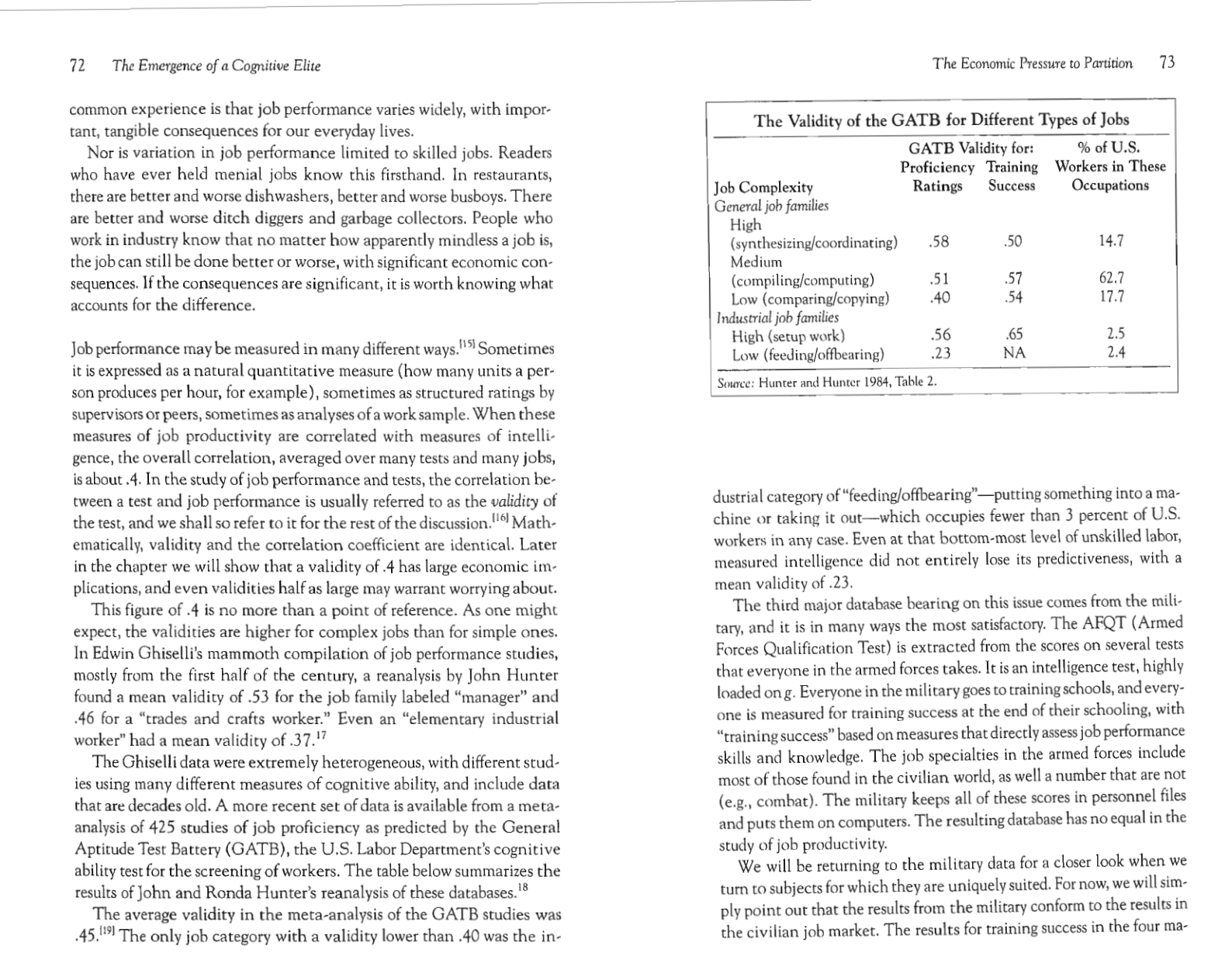
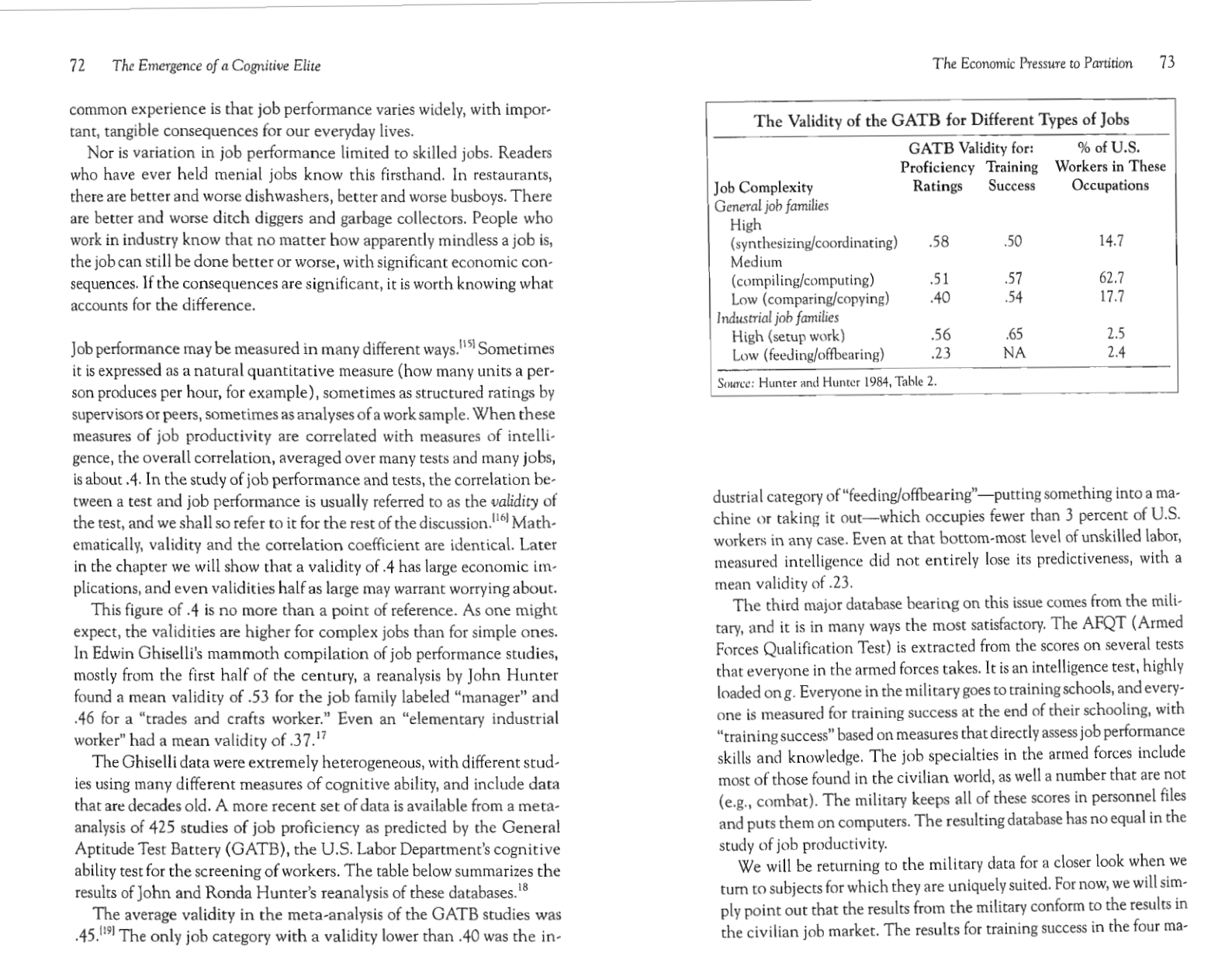
The correlation between cognitive ability and job productivity, known as validity, averages approximately .4 across various industries.
Higher job complexity generally results in a stronger correlation between intelligence and performance, with managerial roles showing a validity of .53.
Even in low-complexity industrial roles, such as 'comparing and copying,' cognitive ability remains a statistically significant predictor of success.
Economic consequences of these performance differences are substantial, justifying the use of cognitive testing for worker screening.
In restaurants, there are better and worse dishwashers, better and worse busboys.
Chart
Cognitive Ability and Job Performance
The military maintains an unparalleled database linking intelligence test scores (AFQT) to training success across diverse job specialties.
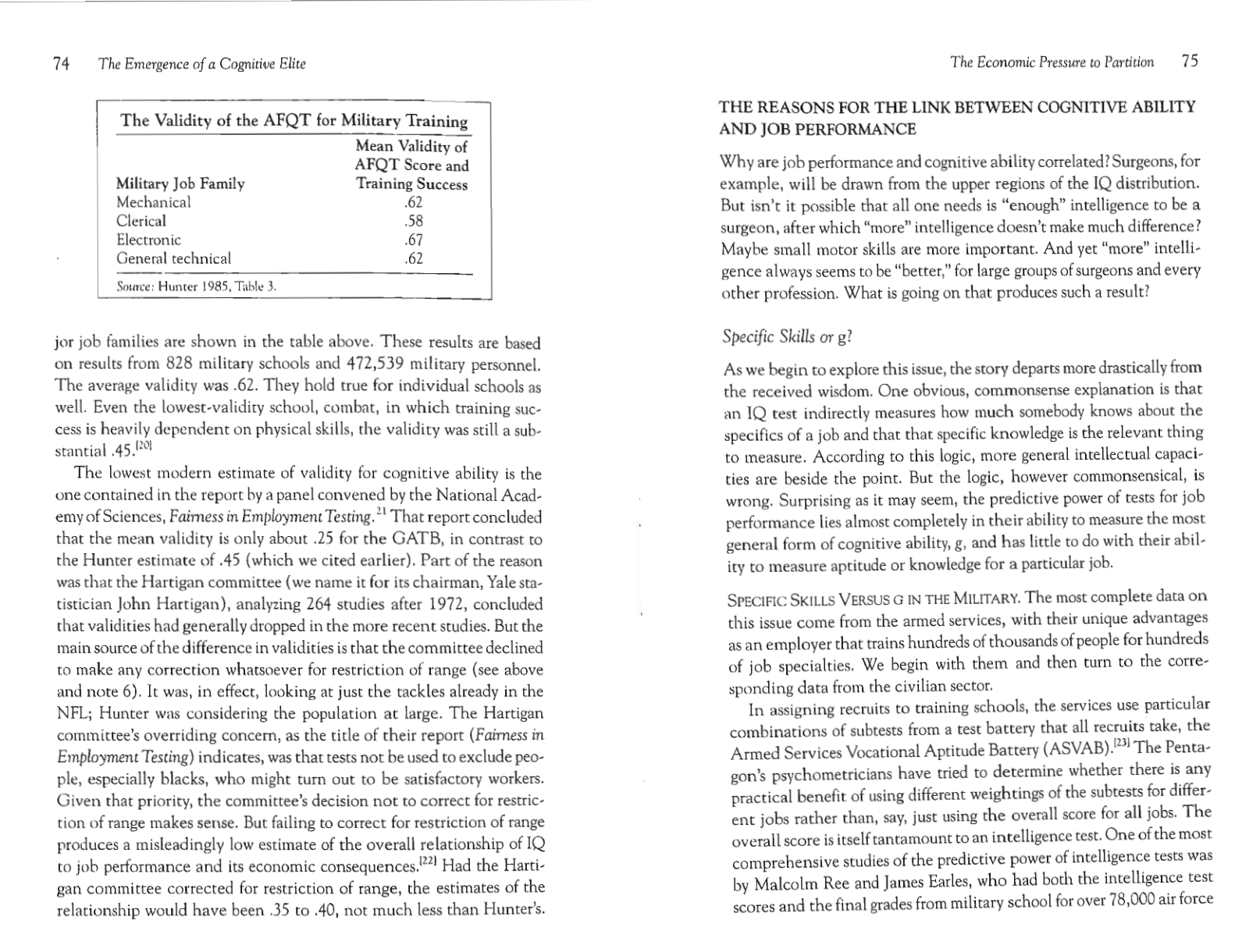
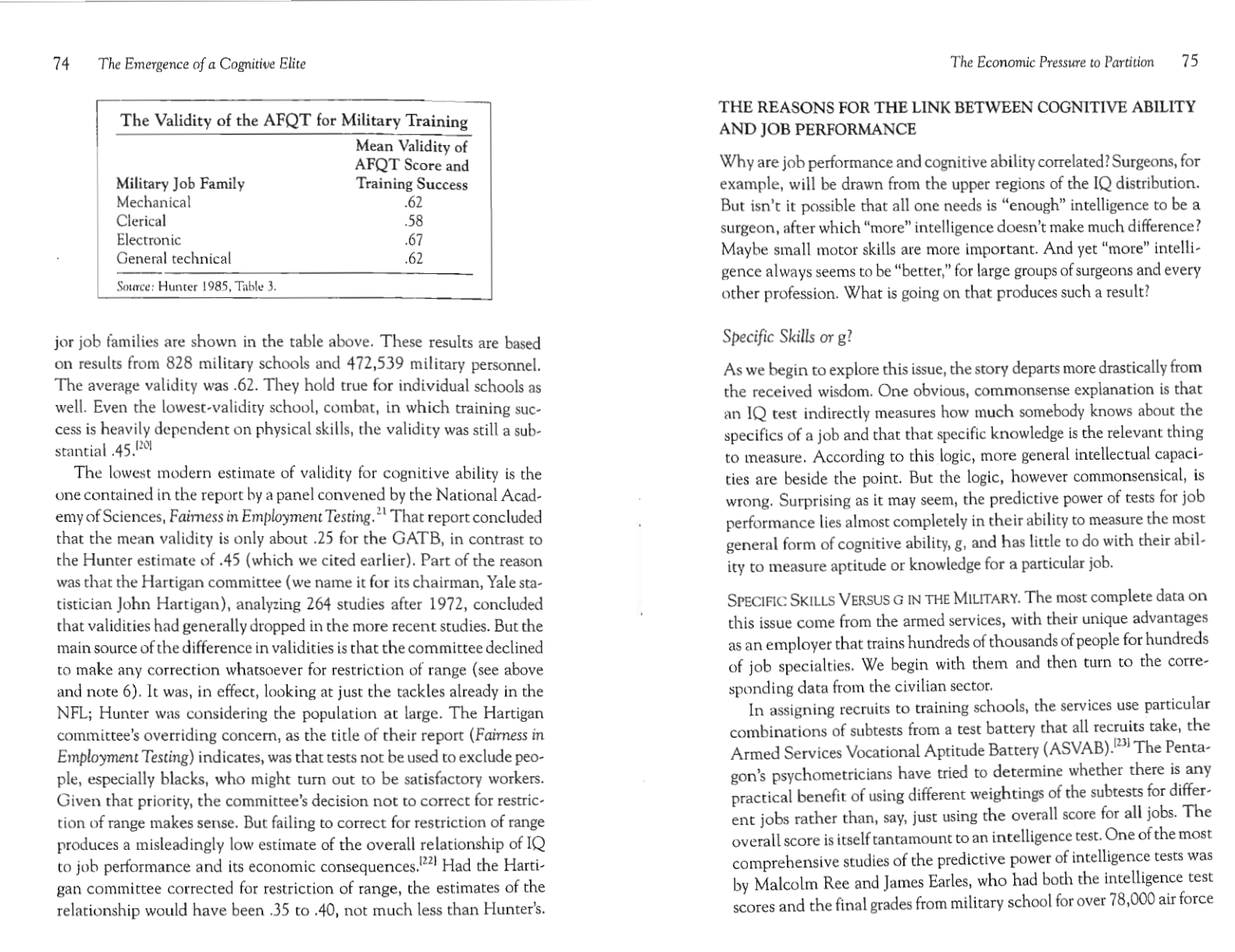
Data from over 470,000 personnel across 828 military schools shows a high average validity of .62 for predicting job performance.
Even in physically demanding roles like combat, cognitive ability remains a substantial predictor of success with a validity of .45.
Discrepancies in validity estimates often arise from whether researchers correct for 'restriction of range' within specific professional populations.
The Hartigan committee's lower validity estimates were influenced by a priority on fairness and avoiding the exclusion of minority candidates.
Evidence suggests that 'more' intelligence consistently correlates with better performance across all professions, rather than hitting a plateau of 'enough' intelligence.
Even the lowest-validity school, combat, in which training success is heavily dependent on physical skills, the validity was still a substantial .45.
ChartChart
The Dominance of General Intelligence
Common sense suggests that specific job skills are the best predictors of performance, but data indicates that general cognitive ability (g) is actually the primary factor.
The military provides a unique dataset for studying this phenomenon due to its massive scale and standardized testing of hundreds of thousands of recruits.
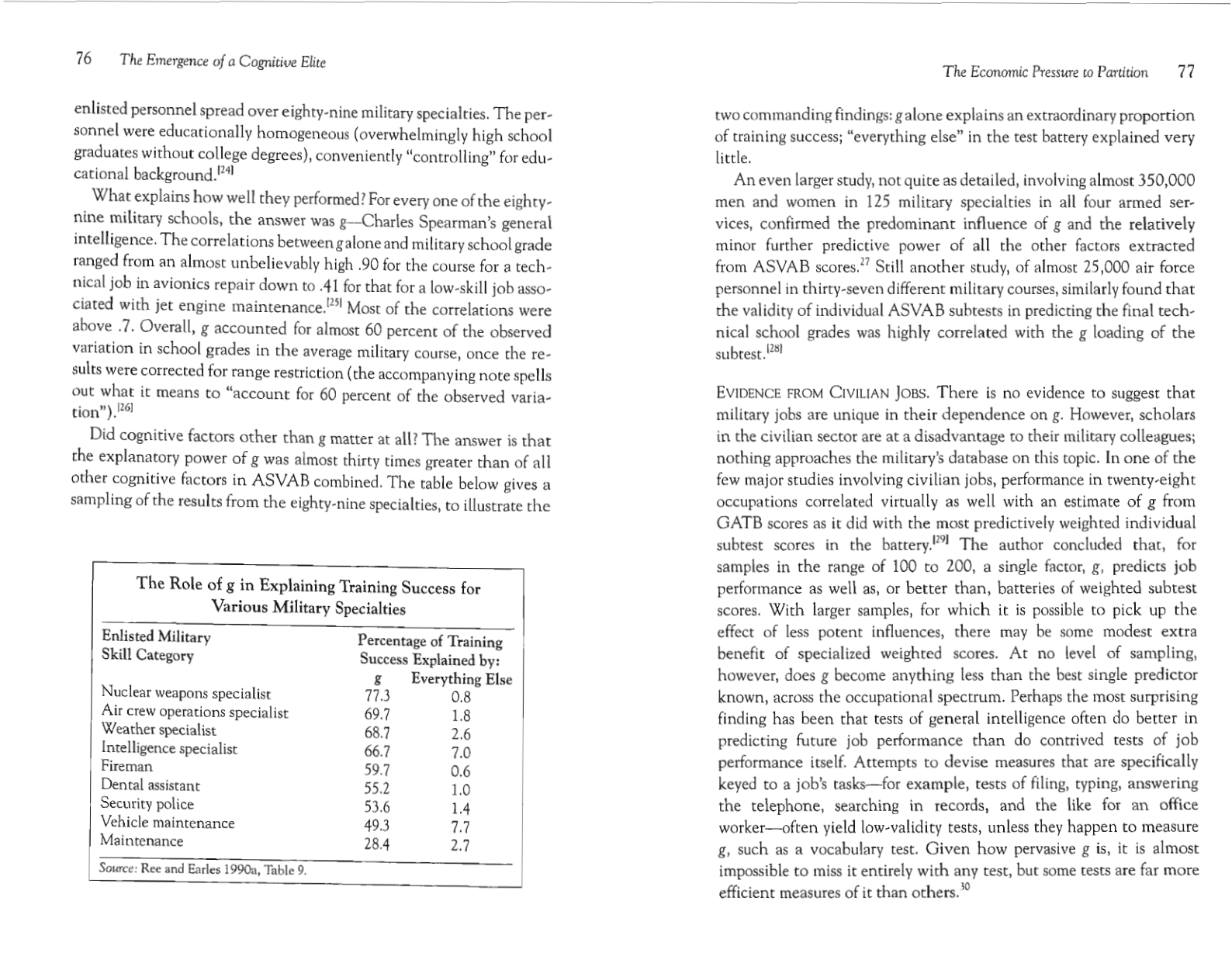
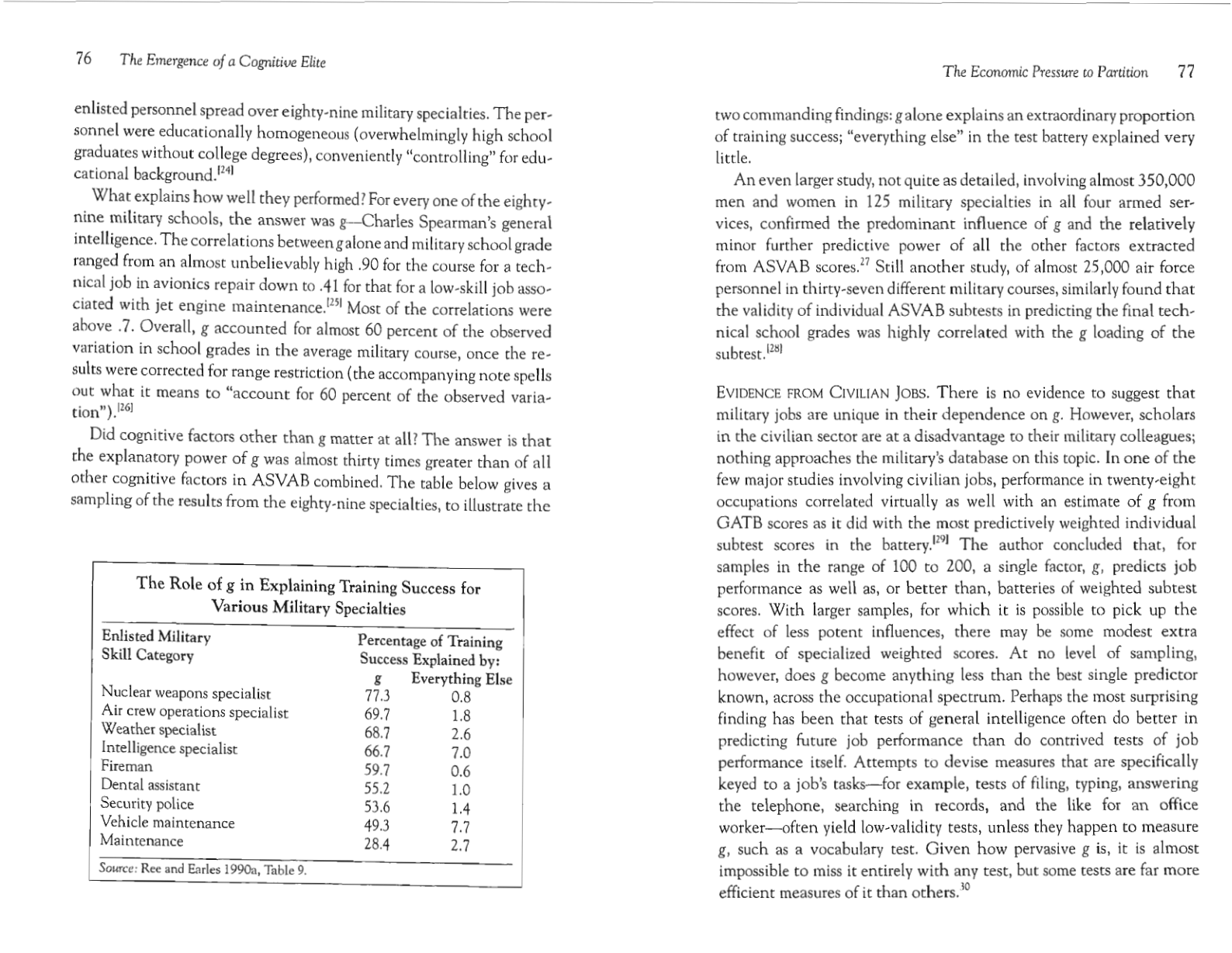
Research on 78,000 Air Force personnel across 89 specialties showed that g accounted for nearly 60 percent of the variation in training success.
In many technical fields, such as nuclear weapons and intelligence, the predictive power of g is dozens of times greater than all other cognitive factors combined.
Large-scale studies across all four armed services confirm that specific vocational aptitudes offer very little additional predictive value beyond a general intelligence score.
The explanatory power of g was almost thirty times greater than of all other cognitive factors in ASVAB combined.
ChartChart
The Predictive Power of G
General intelligence (g) consistently serves as the most effective single predictor of job performance across both military and civilian sectors.
Large-scale studies indicate that weighted batteries of specific subtests rarely outperform a single measure of g in predicting occupational success.
Surprisingly, general intelligence tests often predict future job performance more accurately than tests designed to mimic specific job tasks.
Task-specific tests, such as filing or typing assessments, often yield low validity unless they inadvertently measure general cognitive ability.
Even in menial roles like busing tables, higher intelligence allows workers to better manage complex queuing problems and prioritize tasks under pressure.
While traits like diligence and cheerfulness are vital, g provides the cognitive flexibility needed to solve the spontaneous problems that arise in any workplace.
The point is one that should draw broad agreement from readers who have held menial jobs: Given the other necessary qualities of diligence and good spirits, intelligence helps.
Chart
Intelligence Versus Job Experience
General intelligence is a better predictor of job productivity than job-specific skills, even for relatively simple roles like busing tables.
While experience provides an initial boost in performance, its benefits typically level off after a few months on the job.
Unlike experience, the advantages of higher intelligence do not show a 'leveling-off' effect or diminishing returns over time.
Evidence suggests that the performance gap between high-ability and low-ability employees does not converge as they gain more experience.
Apparent convergence in academic settings, such as college grades, may be due to students selecting easier courses rather than a closing of the ability gap.
In controlled environments like the U.S. Military Academy, where course choice is limited, the performance gap between students remains constant.
The ploaded items, on the other hand, will reveal whether the applicant will ever become the kind of busboy who will clear table 12 before he clears table 20 because he relates the needed task to something that happened twenty minutes earlier regarding table 15.
Chart
Intelligence and Job Productivity
Long-term studies show that the performance gap between high and low intelligence workers often persists for decades rather than converging over time.
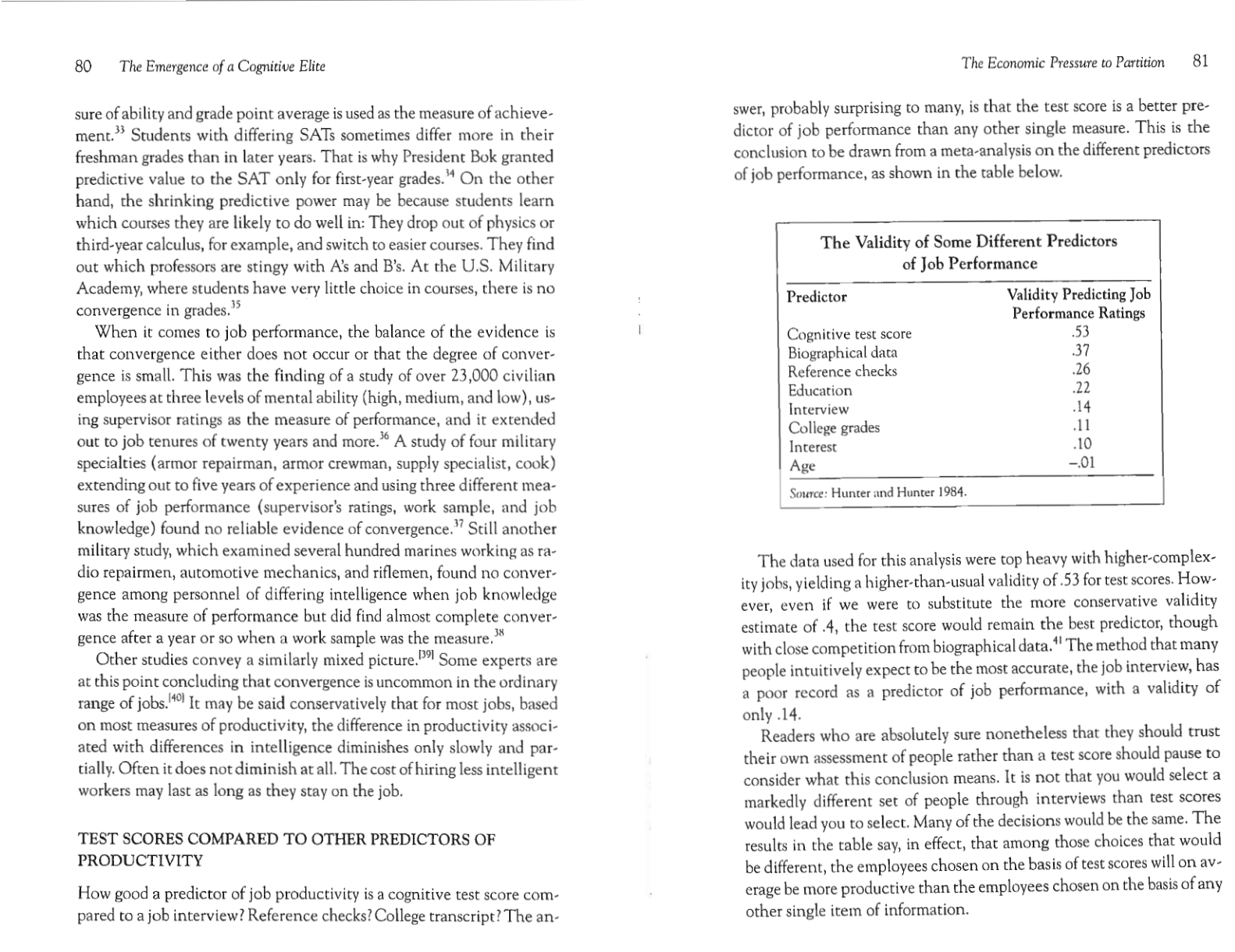
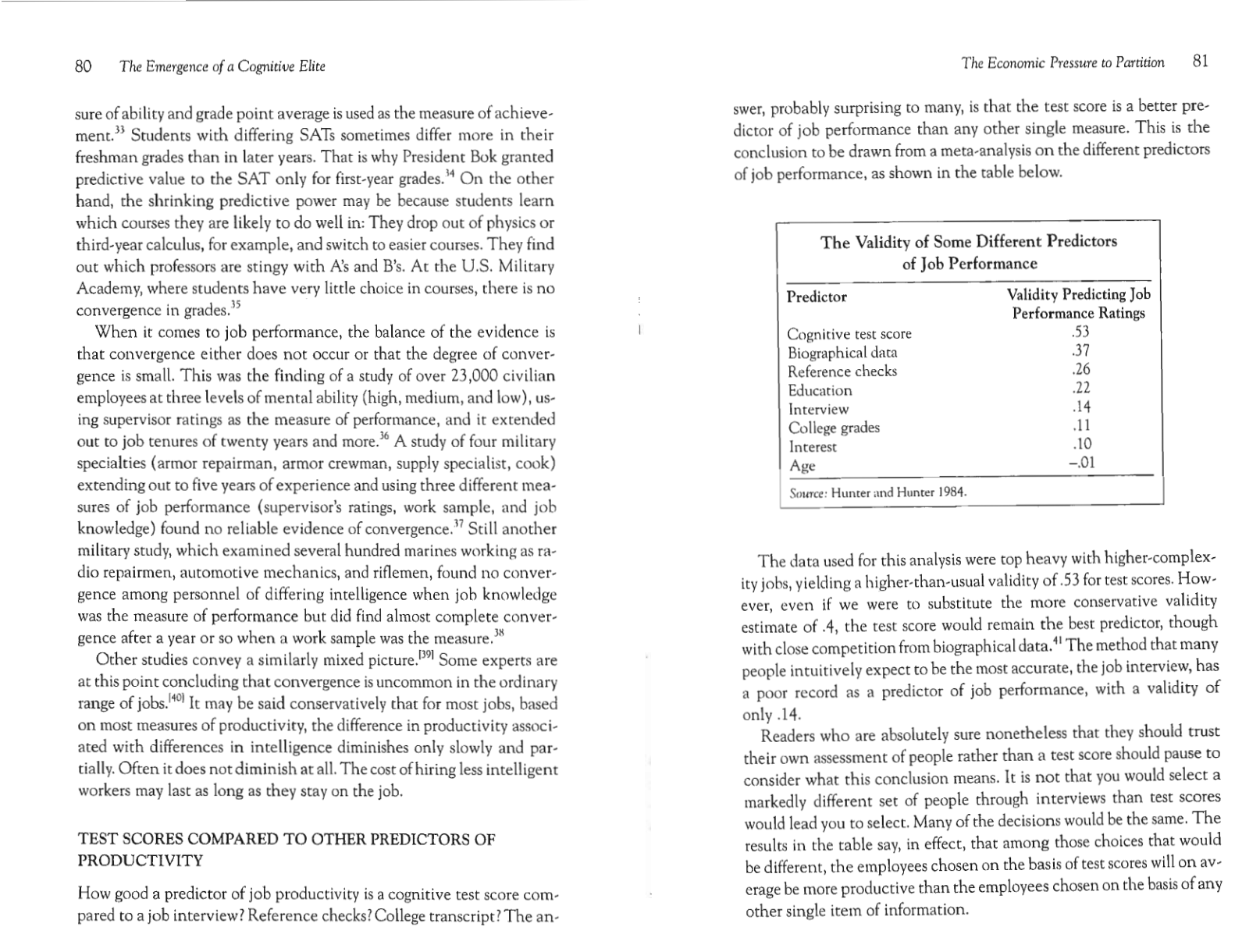
Cognitive test scores are statistically superior to any other single predictor of job performance, including interviews and education.
The job interview, despite being the most trusted method for many employers, has a very low validity rating of only .14.
The economic cost of hiring less intelligent workers can last as long as their entire tenure on the job because productivity differences diminish slowly, if at all.
While individual exceptions exist, the aggregate importance of cognitive ability increases as job complexity and the scale of hiring grow.
The method that many people intuitively expect to be the most accurate, the job interview, has a poor record as a predictor of job performance, with a validity of only .14.
Chart
The Value of Performance Variation
The dollar value of variation in job performance is typically measured by standard deviations of annual productivity.
Conservative estimates suggest that a worker at the 84th percentile of proficiency is worth a 40 percent premium over an average worker.
The standard deviation for output increases significantly with the complexity of the job being performed.
An interaction effect occurs because complex jobs both have higher base salaries and greater internal variance in performance value.
In a hypothetical HMO, hiring a top-tier dentist provides over thirteen times more incremental value than hiring a top-tier receptionist.
Effective screening procedures for high-complexity roles yield disproportionately large financial returns for employers.
Getting high quality for a complex job can be worth large multiples of what it is worth to get equally high quality for a simpler job.
The Economic Value of Intelligence Testing
The financial benefit of hiring high-IQ employees varies significantly by profession, with a 'brighter' dentist providing forty times more added value than a 'brighter' receptionist.
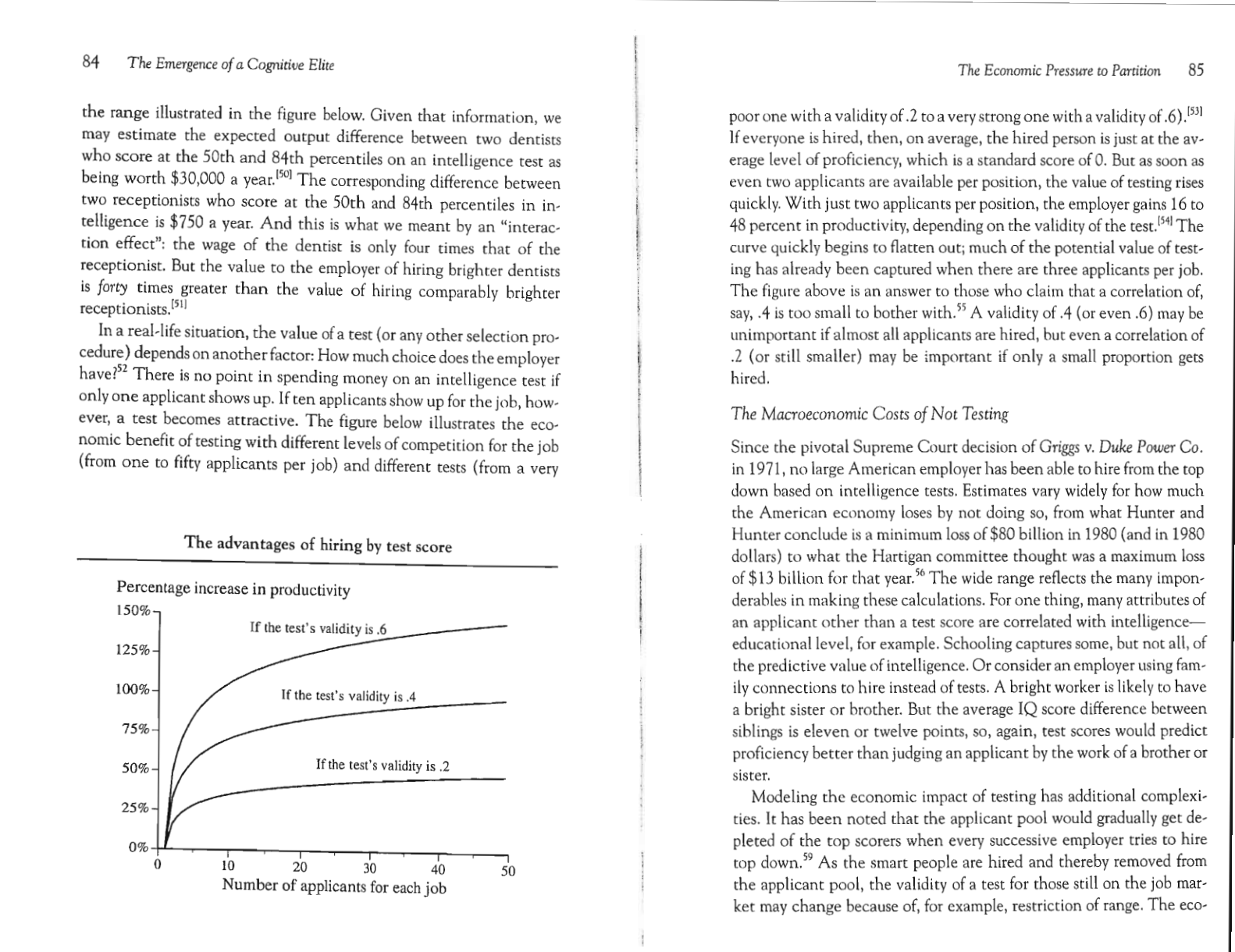
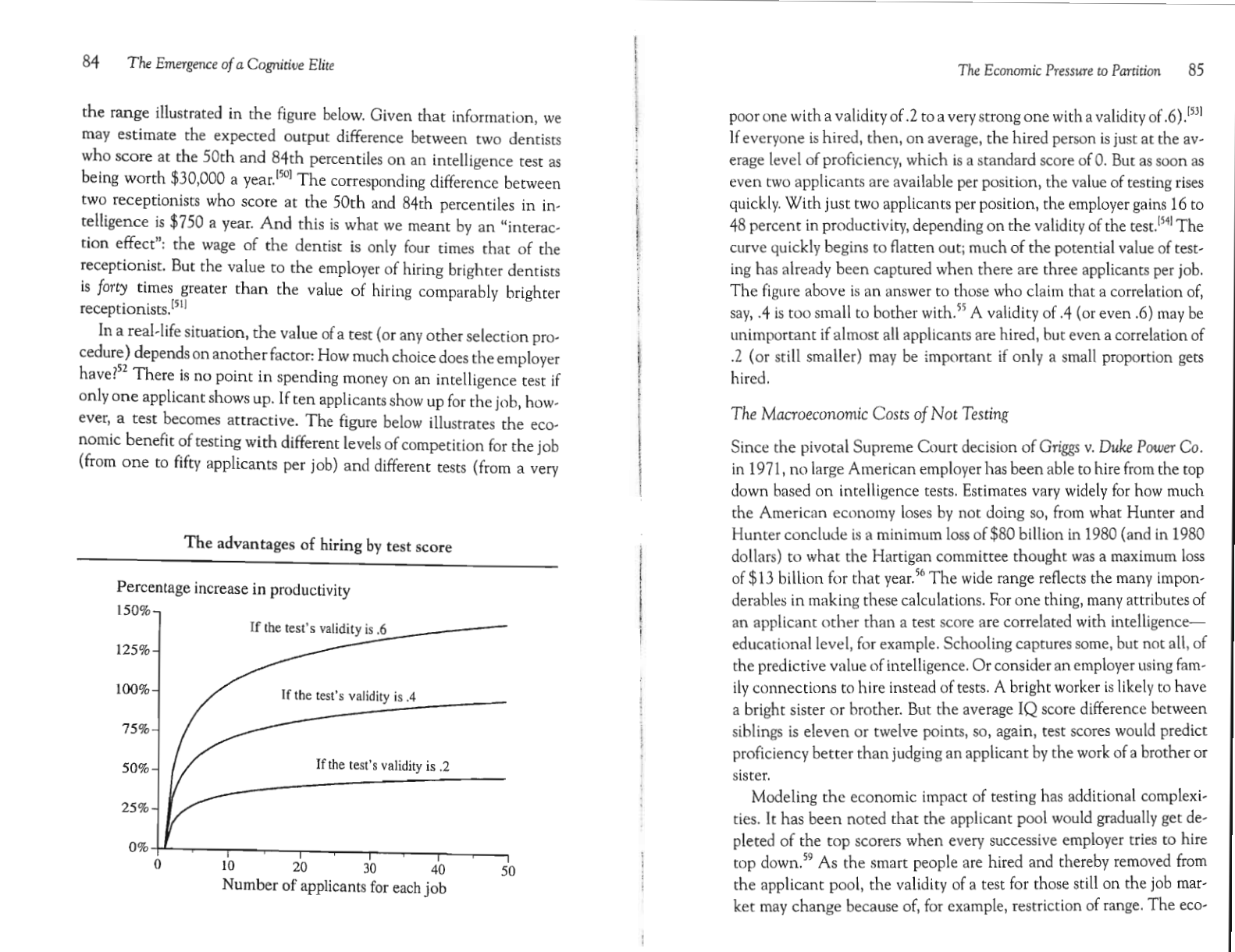
Intelligence tests become exponentially more valuable to employers as the number of applicants per position increases, even with low test validity.
A test validity of only .2 can still yield significant productivity gains if the employer is selective and only hires a small percentage of applicants.
Legal restrictions on top-down hiring based on intelligence tests, stemming from the 1971 Griggs v. Duke Power Co. decision, have created substantial macroeconomic costs.
Estimates of the annual loss to the American economy due to restricted intelligence testing range from $13 billion to over $80 billion in 1980 dollars.
Alternative hiring methods, such as educational attainment or family connections, fail to capture the full predictive power of direct cognitive assessment.
But the value to the employer of hiring brighter dentists is forty times greater than the value of hiring comparably brighter receptionists.
Chart
The Economic Pressure to Partition
High-stakes industries like law and investment banking utilize extreme selection ratios, sometimes hiring only one in several hundred applicants.
Even within a pool of elite candidates, significant productivity differences exist between those at the 98th percentile versus the 99.9th percentile.
The economic value of output in top-tier firms is so high that marginal gains in cognitive ability translate into massive financial returns.
A 1939 New York City police recruitment case study demonstrates that hiring from the top of the cognitive pool leads to extraordinary career success and leadership.
The 'restriction of range' phenomenon complicates testing as top scorers are removed from the labor pool, yet the incentive to hire the smartest remains powerful.
The dollar value of output is so high that the difference between a new hiree who is two standard deviations above the mean and one who is four standard deviations above the mean on any given predictor measure can mean a huge economic difference.
Chart
Intelligence and Job Performance
Cognitive ability is the single most predictive variable for job proficiency across all employment sectors, often outperforming educational level and job-specific tests.
The predictive power of intelligence tests is derived from 'g', or general intelligence, and increases as the cognitive demands of a job become more complex.
From an economic standpoint, even marginally predictive tests can yield significant profit for employers by identifying high-productivity workers at a low administrative cost.
Legislative or judicial restrictions on formal testing do not eliminate the underlying importance of intelligence in the labor market.
Employers naturally gravitate toward hiring smarter individuals by refining their selection processes based on employee quality, even if they do not explicitly target 'intelligence.'
Alternative hiring criteria like biographical data and reference checks are effective primarily because they serve as imperfect proxies for an applicant's cognitive ability.
Getting rid of intelligence tests in hiring--as policy is hying to do-will not get rid of the importance of intelligence.
Steeper Ladders, Narrower Gates
The economic value of intelligence is rising, causing wages in high-IQ occupations to pull away from the rest of the labor market.
The cognitive elite are becoming physically and socially segregated, working and living in environments isolated from the general population.
As environmental opportunities are equalized through social policy, genetic differences become the primary driver of remaining intellectual variance.
Assortative mating—the tendency for people to marry those with similar IQs—is intensifying the concentration of cognitive ability in the next generation.
The modern educational and occupational systems act as efficient sorting mechanisms that funnel high-ability individuals into a narrow set of elite roles.
These trends are driven by market forces and productivity requirements that are unlikely to be reversed by any government administration.
The irony is that as America equalizes the circumstances of people's lives, the remaining differences in intelligence are increasingly determined by differences in genes.
Chart
The Rising Value of Intelligence
Cognitive stratification is identified as a novel social process where intelligence increasingly dictates social and economic standing.
The marketplace value of high-IQ individuals is rising, leading to more efficient recruitment and higher productivity for the 'cognitive elite.'
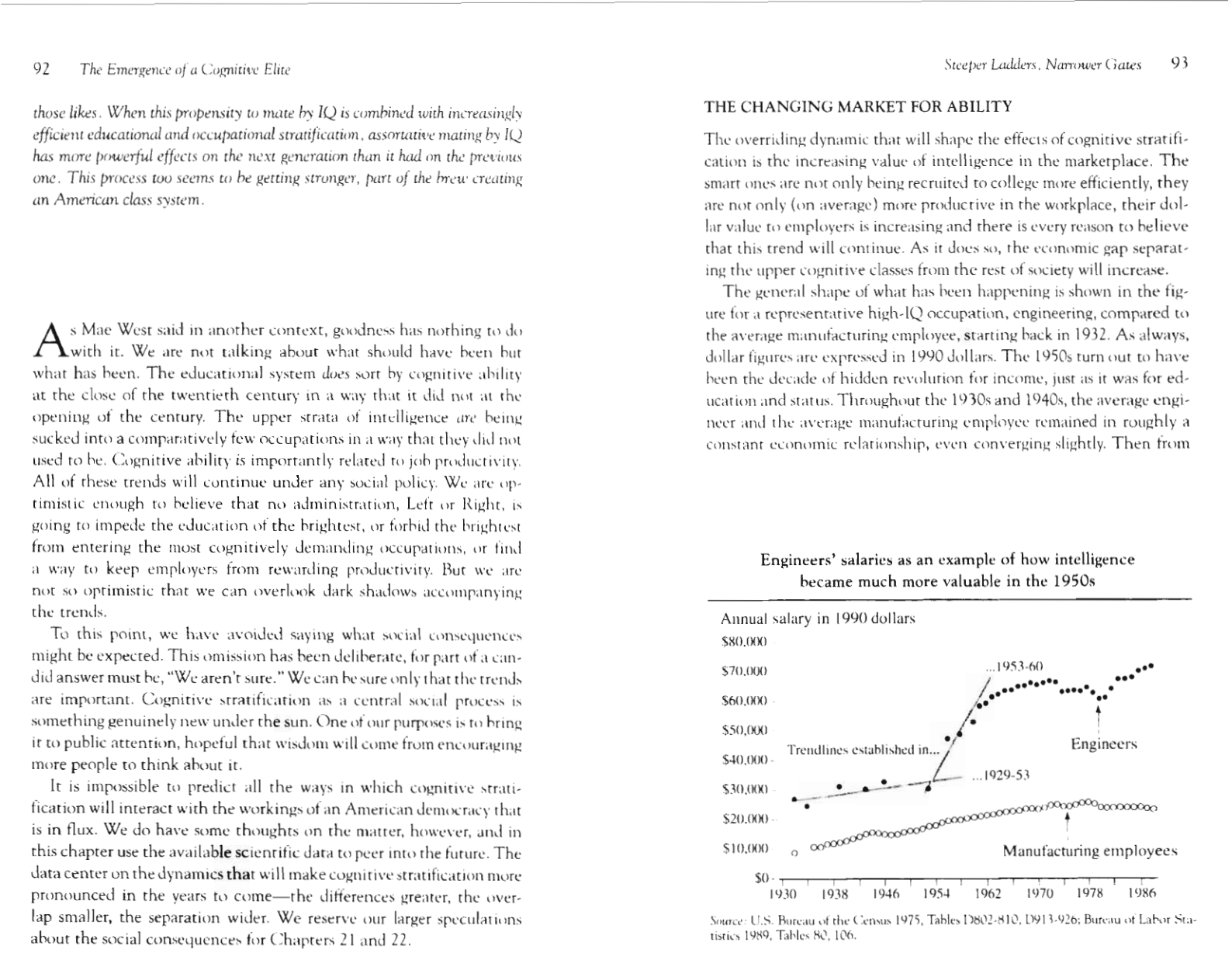
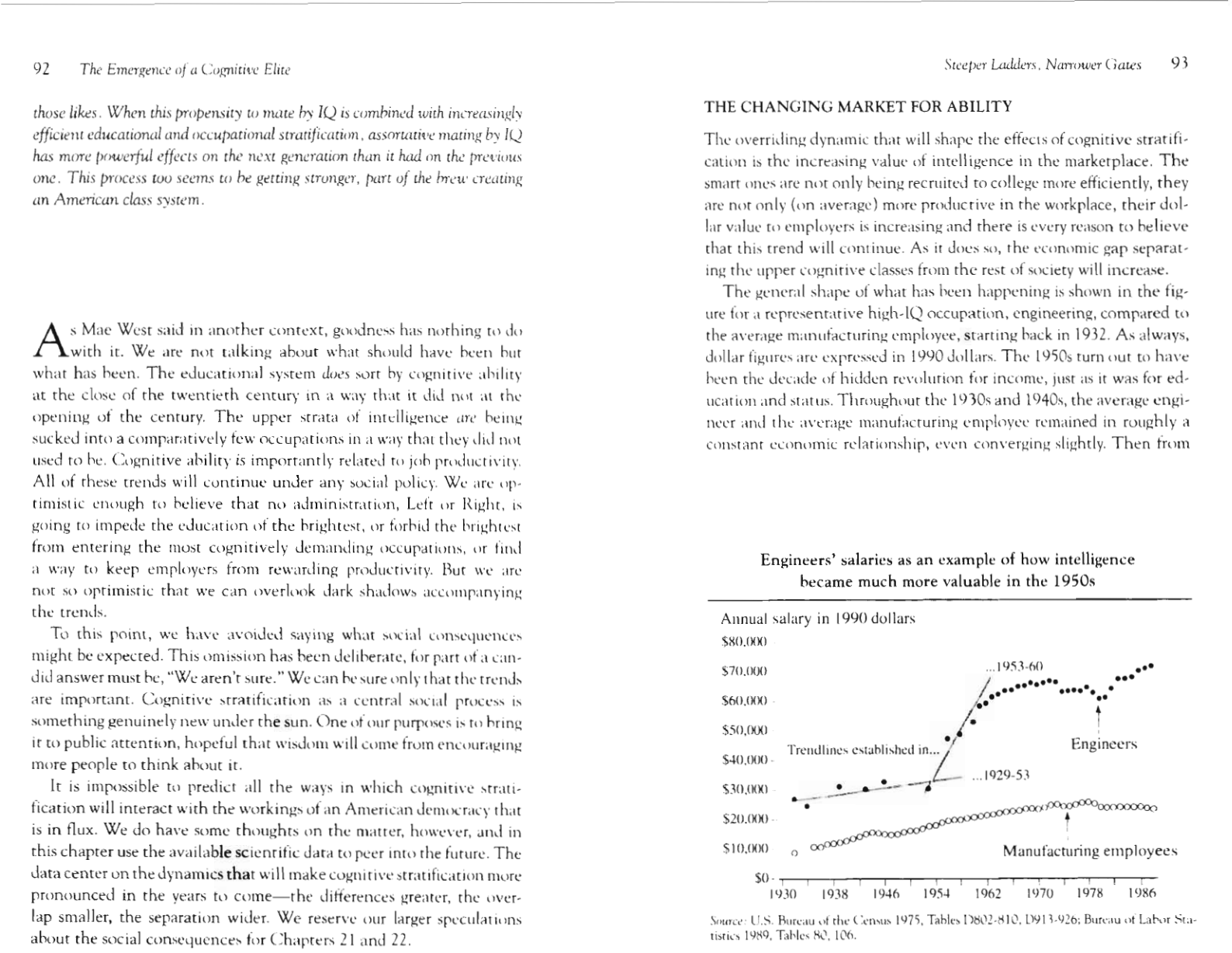
Historical data shows a divergence beginning in the 1950s, where salaries for high-IQ professions like engineering began to outpace manufacturing wages significantly.
By the late 1980s, the purchasing power gap between engineers and manufacturing workers tripled, moving them into distinct economic brackets.
The 1980s presented a complex economic picture where household income rose due to dual-income families, but real wages for blue-collar workers often declined.
Cognitive stratification as a central social process is something genuinely new under the sun.
ChartChart
Education and Wage Inequality
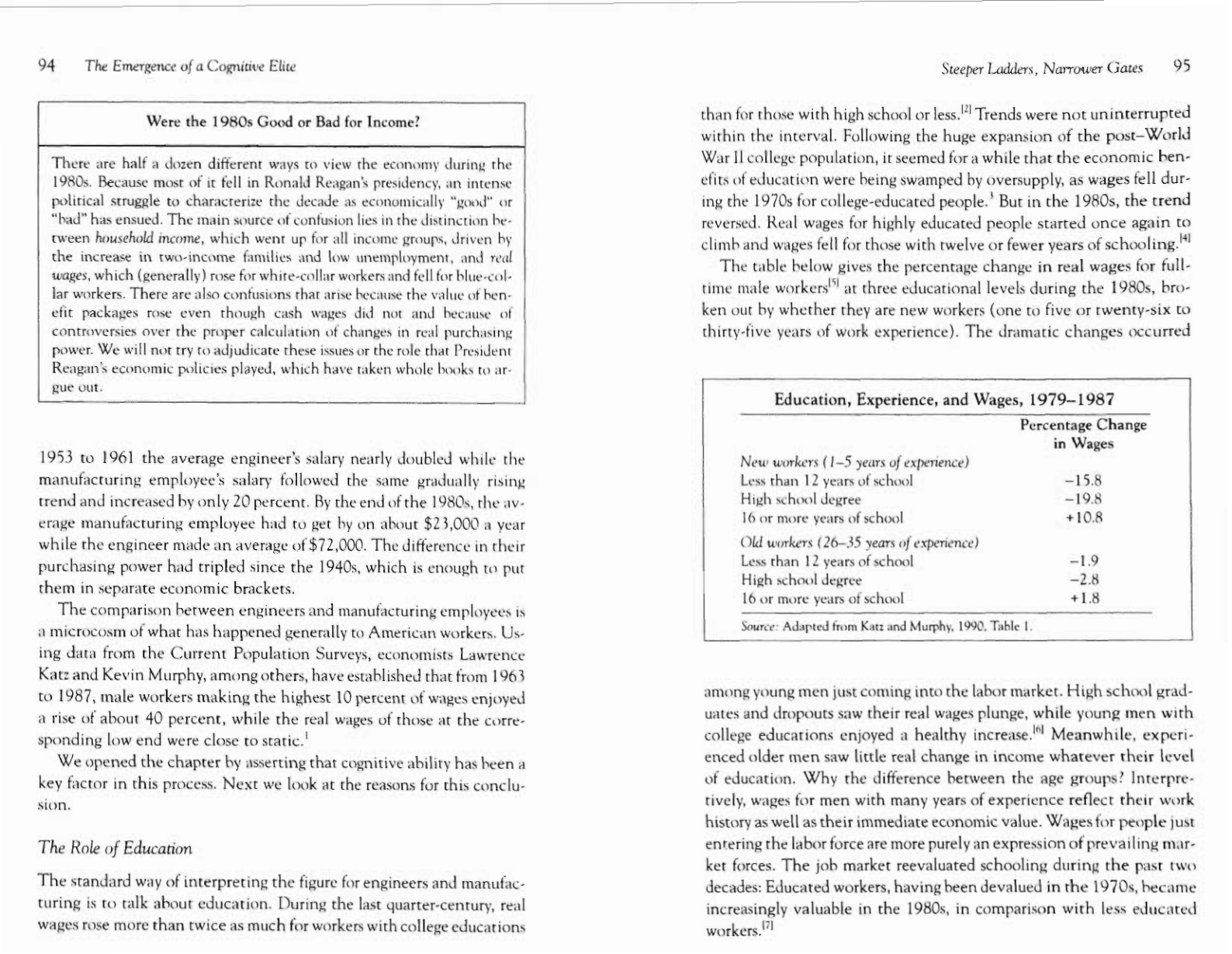
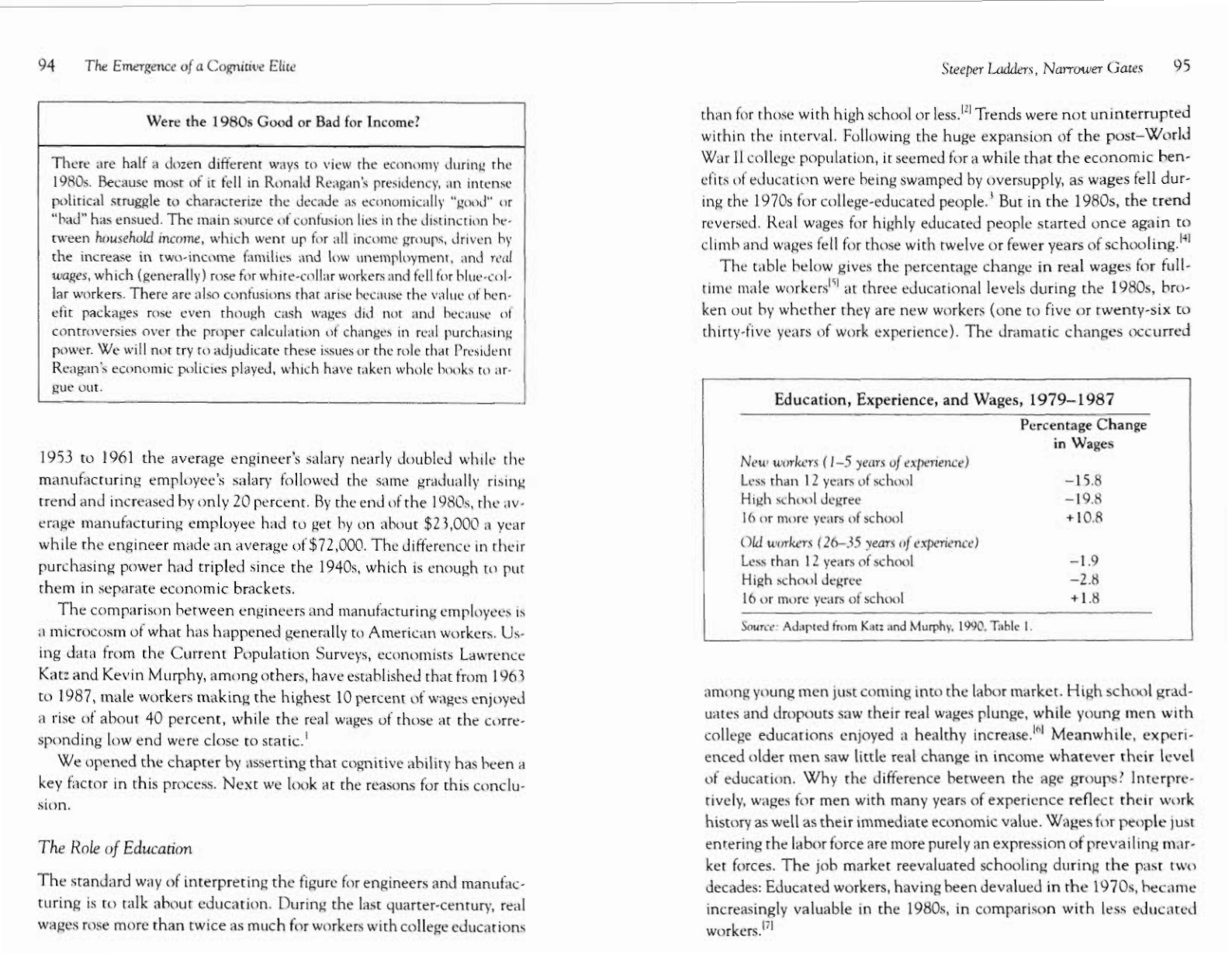
From 1963 to 1987, the highest-earning American male workers saw a 40 percent wage increase while low-end wages remained static.
The 1980s marked a sharp reversal of 1970s trends, with real wages climbing for the college-educated and falling for those with high school diplomas or less.
Wage shifts were most dramatic among young workers entering the labor market, where high school dropouts saw real wages plunge by nearly 16 percent.
Wages for new entrants are viewed as a 'pure' expression of market forces, indicating a fundamental reevaluation of the economic value of schooling.
The widening income gap is attributed to various factors including technological displacement, global outsourcing of blue-collar jobs, and the decline of labor unions.
The text questions whether simply increasing years of schooling can fix the economic disadvantage of low-wage earners in a changing market.
The job market reevaluated schooling during the past two decades: Educated workers, having been devalued in the 1970s, became increasingly valuable in the 1980s, in comparison with less educated workers.
Chart
The Mysterious Wage Residual
Statistical analysis of wage variation reveals a 'residual' factor beyond education, gender, and experience that drives income disparity.
Since 1970, the demand for these residual characteristics has risen steadily while the supply has not kept pace.
Most of the increasing wage inequality over the last twenty-five years is attributed to this residual rather than formal education levels.
The authors argue that cognitive ability is a primary component of this X factor, commanding an increasing wage premium.
The shifting occupational structure toward high-status jobs naturally increases the economic demand and price for high intelligence.
Data suggests that intelligence correlates with job performance and income even when controlling for demographic variables and work experience.
The job market for people lacking the residual characteristics declined, while expanding for people having them.
The Rising Premium of IQ
Data from the National Longitudinal Survey of Youth indicates that the economic benefits of education are increasingly concentrated among those with high intelligence test scores.
Even within high-IQ professional occupations, individuals in the top 10 percent of cognitive ability earn significantly higher annual incomes than their peers.
Technological advancement is a primary driver of this trend, as complex new roles in robotics and programming replace simpler manual labor jobs.
The increasing complexity of management in traditional industries like banking and farming has turned general intelligence into a highly marketable commodity.
The growth in scale of global corporations means that even marginal improvements in performance by highly intelligent employees can result in millions of dollars in value.
The rise of the business consultancy profession exemplifies the modern market's desire to 'buy' trained intelligence to navigate complex economic landscapes.
The magnitude of the economic consequences of ordinary business transactions has mushroomed, and with it the value of people who can do their work at a marginally higher level of skill.
The Value of Complexity
High-IQ professionals like lawyers and consultants command massive fees by navigating increasingly labyrinthine government regulations and tax loopholes.
As society becomes more complex, the economic value of intelligence grows, creating a 'cognitive elite' that thrives on managing this complexity.
High-IQ occupations, including engineering, medicine, and law, consistently occupy the highest tiers of the American wage distribution.
Economic mobility is becoming more restricted, with a strong correlation between a father's income and his son's future earnings.
Intellectual stratification acts as a primary driver of modern income inequality, as IQ becomes a dominant predictor of economic success.
The more complex a society becomes, the more valuable are the people who are especially good at dealing with complexity.
Chart
Geography of Cognitive Sorting
Cognitive sorting in education and occupation is increasingly reified through physical and geographic separation.
Industrial plants represent low cognitive homogeneity where diverse skill levels must intermingle for efficient production.
Corporate offices exhibit higher average intelligence and narrower spreads, leading to increased physical stratification between executives and support staff.
Professional environments like law firms represent the extreme of this trend, where almost all employees reside in the upper portion of the ability distribution.
The physical separation of the cognitive elite from the rest of society limits daily interaction between different cognitive classes.
This segregation is driven by the requirement for high-level cognitive ability in specialized, competitive industries.
The executives do not spend much time with the janitors or the data entry clerks. They spend almost all their time interacting with other executives or with technical specialists, which means with people drawn from the upper portion of the ability distribution.
Chart
The Rise of Cognitive Isolation
Modern professional environments, such as law firms and engineering hubs, are becoming increasingly stratified by cognitive ability rather than just social skill.
The most intelligent professionals are being pulled into 'cloistered' roles that insulate them from the general public and traditional labor.
Specialized professions are beginning to mimic academia by recruiting and isolating a cognitive elite from the rest of the population.
Residential segregation is shifting from purely socioeconomic status to a partitioning based on cognitive and professional commonalities.
Urbanization has reduced the natural socioeconomic mixing that once occurred in small-town schools and neighborhoods.
The isolation of the cognitive elite's children within these rarefied environments poses a significant long-term social challenge.
The brightest public policy specialists shuttle among think tanks, bureaucracies, and graduate schools of public policy, never having to encounter an angry voter.
The Mechanics of Cognitive Segregation
Urban decay and failing school systems drive wealthy families into homogeneous suburbs or private schools, intensifying residential and educational segregation.
The modern educational system acts as a filter, 'whisking' intellectually talented youth out of working-class neighborhoods and into elite environments.
Children of high-status professionals increasingly grow up in isolation from the broader spectrum of cognitive ability and socioeconomic backgrounds.
The authors propose a syllogism suggesting that if mental abilities are inherited and success requires those abilities, social standing will become partially hereditary.
Current scientific consensus estimates the heritability of IQ to be between 40 and 80 percent, with the authors adopting a 60 percent estimate for their analysis.
The combination of environmental sorting and genetic partitioning creates a feedback loop that solidifies the emergence of a distinct cognitive elite.
Much of the cognitive talent that used to be in the working-class neighborhood is being whisked up and out of the community through an educational system that is increasingly driven by academic performance.
The Heritability of IQ
Heritability measures the relative contribution of genes to the variation of a trait within a specific population rather than an individual.
IQ is uniquely suited for heritability studies because it provides more high-quality data than any other human physical or psychological trait.
As environments become more uniform through egalitarian efforts, the heritability of traits actually increases because environmental variation is minimized.
Direct estimates of heritability are derived from studying blood relatives, such as identical twins, who were raised in separate environments.
Modern studies of identical twins reared apart suggest that the heritability of general intelligence may be as high as .75 to .80.
The central irony of social equalization is that making environments more uniform causes family members to resemble each other more and differ more from others.
It is the central irony of egalitarianism: Uniformity in society makes the members of families more similar to each other and members of different families more different.
The Heritability of Intelligence
Genetic overlap, rather than shared environment, explains why siblings and cousins show varying degrees of IQ correlation.
While technical estimates vary, a broad consensus places the heritability of IQ between .4 and .8, with .6 serving as a responsible midpoint.
The heritability of intelligence appears to increase as individuals age, meaning genes play a larger role in IQ during adulthood than in childhood.
Surprisingly, the 'shared environment' of a family has relatively little impact on adult IQ compared to unique individual experiences and genetic inheritance.
As environmental conditions become more equal across society, the proportion of remaining inequality attributable to genetic differences necessarily increases.
These findings suggest that social stratification is increasingly rooted in inherited cognitive differences that are difficult to manipulate through policy.
The fact that family members resemble each other in intelligence in adulthood as much as they do is very largely explained by the genes they share rather than the family environment they shared as children.
The Genetic Lottery and Assortative Mating
Equalizing environmental opportunities paradoxically increases the relative importance of genetic inheritance in determining IQ variation.
While extreme environmental shifts can impact cognitive development, most social interventions only move children from 'awful' to 'below average' conditions.
Success in the modern era is increasingly tied to the 'IQ lottery' rather than social circumstances as environmental barriers are reduced.
Assortative mating—the tendency for people to marry those with similar traits—is particularly strong regarding cognitive ability.
The correlation between the IQs of spouses is approximately .45, which is nearly as high as the correlation between siblings.
The combination of educational stratification and cognitive-based mating patterns reinforces the emergence of a distinct cognitive elite.
In this sense, luck continues to matter in life's outcomes, hut now it is more a matter of the IQ handed out in life's lottery than anything else about circumstances.
The Rise of Cognitive Homogamy
Even if the propensity to mate by intelligence remains constant, the rising average IQ at elite universities ensures that the next generation will have a higher mean IQ.
A comparison of Harvard/Radcliffe graduates from 1930 and 1964 shows a dramatic shift in the expected intelligence of their offspring due to more rigorous student selection.
Data suggests that assortative mating, or 'homogamy,' by educational level increased significantly between 1940 and 1987, particularly among college graduates.
The link between educational attainment and IQ has tightened in the postwar period, suggesting a substantial increase in mating based on cognitive ability.
Social changes, including the feminist movement and the shift to coeducational elite colleges, have increased the frequency of high-IQ individuals meeting and marrying.
The economic value of a high-ability spouse has risen, providing a greater 'dollar payoff' for marrying within one's own cognitive stratum.
In such numbers lurk large social effects.
The Rise of Cognitive Assortative Mating
The shift to coeducational universities and the feminist revolution have significantly increased the 'information' available for high-IQ individuals to find and pair with one another.
Delayed marriage among the cognitive elite now favors intelligence over socioeconomic background, as professionals meet intellectual peers in high-stakes workplaces.
Cultural shifts have redefined intelligence in women as a desirable asset rather than a social liability, altering the 'marriage calculus' for high-achieving men.
There is a growing concern that the top percentiles of intelligence are intermarrying at a rate that could create a self-perpetuating cognitive caste.
While historical American society was characterized by 'churning' across social classes, modern educational efficiency is increasingly capturing almost all high-IQ individuals into the elite.
Data suggests that over 80 percent of those in the top 5 percent of IQ are now funneled into elite educational and professional tracks, reducing social mobility.
In depressing contrast, we have been envisioning a society that becomes increasingly quiescent at the top, as a cognitive elite moves toward the upper income brackets and runs most of the institutions of society, taking on some of the characteristics of a caste.
The Efficiency of Cognitive Funneling
A very small percentage of high-IQ individuals fail to obtain college degrees due to socioeconomic barriers, suggesting the educational funnel is highly efficient.
Many high-IQ individuals without degrees, like Bill Gates, still enter the cognitive elite through high-income occupations and social status.
The number of talented individuals who 'slip between the cracks' has decreased radically since the early 1900s and is expected to continue shrinking.
Policy interventions aimed at expanding college access for the disadvantaged may have limited impact on the most talented, as most are already being identified.
The cognitive elite is becoming increasingly isolated through three interlocking phenomena: rising wealth, physical segregation, and assortative mating.
The author raises concerns about the potential for this elite class to develop distinct political interests that may conflict with the values of a free society.
What if the cognitive elite were to become not only richer than everyone else, increasingly segregated, and more genetically distinct as time goes on—but were also to acquire common political interests?
Intelligence and Social Behavior
The authors argue that cognitive ability is significantly linked to America's most pressing social problems.
While IQ is a poor predictor of individual behavior, accounting for less than 20 percent of variance, it reveals large behavioral differences between groups.
The text claims that intelligence itself, rather than just socioeconomic status, is a primary driver of social outcomes like parenting and employment.
Mainstream social science is criticized for neglecting cognitive ability as a causal factor in studies of marriage, family, and poverty.
The authors contend that the correlation between low IQ and social issues must inform public policy regardless of the specific causal path.
Part II of the work utilizes data from the National Longitudinal Survey of Youth (NLSY) to provide statistical evidence for these claims.
It is not that cognitive ability has been considered and found inconsequential but that it has barely been considered at all.
The NLSY Data Mother Lode
Historically, researchers lacked high-quality data to link cognitive ability with specific social behaviors like poverty or illegitimacy.
While several longitudinal studies exist, most have limitations regarding sample size, continuity, or the precision of their intelligence metrics.
The National Longitudinal Survey of Youth (NLSY) is identified as the premier dataset for analyzing the intersection of IQ and socioeconomic outcomes.
The NLSY is uniquely comprehensive, tracking childhood environment, parental status, work history, and family formation in a single representative sample.
A 'lucky coincidence' involving the Department of Defense allowed the NLSY to include high-quality psychometric data via the Armed Forces Qualification Test (AFQT).
The AFQT serves as a 'highly g-loaded' measure, providing a reliable estimate of general cognitive ability for the study's participants.
But the mother lode for scholars who wish to understand the relationship of cognitive ability to social and economic outcomes is the NLSY.
Figure
Defining the Cognitive Classes
The Armed Forces Qualification Test (AFQT) is utilized as a reliable proxy for IQ, though it is noted to be truncated at the highest levels of intelligence.
The authors divide the population into five distinct cognitive classes based on IQ percentiles: Class I (top 5%), Class II (next 20%), Class III (middle 50%), Class IV (next 20%), and Class V (bottom 5%).
The classification system prioritizes the extremes of the distribution over equal quintiles to better analyze social behavior at the margins.
Class I is defined as the 'cognitive elite,' a group that includes approximately 12.5 million people in the United States.
The authors suggest that the typical reader's social circle is likely composed almost entirely of Class I individuals, creating a skewed perception of the general population's intelligence.
The terminology used for these classes, such as 'very dull' for Class V, is chosen to be descriptive while attempting to navigate the lack of neutral language for intelligence levels.
In all likelihood, almost all of your friends and professional associates belong in that top Class I slice.
FigureDiagram
Statistical Methods and IQ
The text defines regression analysis as the primary tool for determining how much specific independent variables affect a dependent variable.
A central goal of the study is to isolate the relationship between cognitive ability and various social behaviors like crime and unemployment.
The authors use a socioeconomic status (SES) index—combining parental education, income, and occupation—to test if IQ's effects are merely environmental.
If the relationship between IQ and a behavior remains significant after controlling for SES, the authors argue it warrants serious policy consideration.
The methodology anticipates and addresses potential criticism by testing alternative causal variables that might explain away the influence of intelligence.
Because intelligence has been such a taboo explanation for social behavior, we assume that our conclusions will often be resisted, if not condemned.
Diagram
Statistical Limits and Education
Statistical analysis risks becoming a 'bottomless pit' when too many independent variables are introduced into a single regression equation.
Researchers must avoid including variables that are merely different expressions of factors already present in the model, such as IQ and socioeconomic status.
Education is a uniquely difficult variable because it is heavily influenced by both parental background and the individual's cognitive ability.
The impact of education is often discontinuous, meaning a degree carries more weight than the specific number of years spent in school.
The effectiveness of education is fundamentally tied to cognitive ability, as the same schooling will yield different life outcomes for individuals with different IQs.
Indisputably, giving nineteen years of education to a person with an IQ of 75 is not going to have the same impact on life as it would for a person with an IQ of 125.
Diagram
Intelligence and the Poverty Trap
The authors utilize the NLSY dataset to analyze the independent roles of cognitive ability and education by comparing subpopulations with identical degree levels.
The study focuses exclusively on non-Latino whites in this section to demonstrate that cognitive ability influences social behavior independently of race or ethnicity.
Statistical analysis reveals that low intelligence is a significantly stronger predictor of poverty than low socioeconomic background.
A youth of average intelligence born into extreme poverty has a 90 percent chance of escaping it by their early 30s, whereas a youth with low intelligence from a middle-class home faces a higher poverty risk.
While marital status and education are important factors, intelligence remains the dominant precursor of poverty even when multiple variables are controlled.
The historical context shows that significant progress against poverty made between World War II and the 1960s has since stagnated.
If you have to choose, is it better to be born smart or rich? The answer is unequivocally "smart."
Chart
The Changing Nature of Poverty
Historical data shows a steep decline in U.S. poverty from over 50% in 1939 to approximately 15% by 1969, after which progress halted.
The author argues that poverty is not a direct cause of social ills like crime or drug abuse, as these problems were minor when poverty was most widespread.
As the poverty rate shrank, the remaining 'poor' population became less of a random sample and more concentrated with specific personal and cognitive deficits.
The decline in poverty was a long-term trend that predated the 1960s War on Poverty, suggesting that government programs were not the sole driver of progress.
The text proposes shifting the analytical focus to treat poverty as a dependent variable, specifically examining how intelligence influences the likelihood of being poor.
To rephrase the dialogue between F. Scott Fitzgerald and Ernest Hemingway, the poor were different from you and me: They had less money.
ChartChart
IQ Stability and Poverty Origins
IQ scores become highly predictive of adult intelligence between ages 5 and 10, reaching essential stability after age 10.
The authors argue that by late adolescence, an individual's IQ is as 'deeply rooted' a fact as their physical height.
While environmental factors may influence early IQ development, the text posits that the origin of a low IQ (nature vs. nurture) is irrelevant to its social consequences in adulthood.
The historical view of poverty shifted in the 1960s from individual-based 'deserving vs. undeserving' distinctions to systemic and economic explanations.
The study utilizes a socioeconomic status (SES) index to compare how parental background correlates with the likelihood of living in poverty as an adult.
The AFQT test scores for the NLSY sample were obtained when the subjects were 15 to 23 years of age, and their IQ scores were already as deeply rooted a fact about them as their height.
Chart
Cognitive Ability vs Socioeconomic Status
Statistical data shows that white children from the highest socioeconomic backgrounds have only a 3 percent poverty rate, compared to 24 percent for those from the lowest class.
When analyzed by cognitive class, the disparity is even more pronounced: only 2 percent of the 'very bright' are in poverty, while 30 percent of the 'very dull' fall below the line.
While both parental background and IQ correlate with poverty, cognitive ability shows a steeper relationship with economic disadvantage at the lower end of the spectrum.
The authors utilize regression analysis to disentangle the independent effects of IQ, age, and parental socioeconomic status (SES) on the probability of being in poverty.
Initial findings suggest that age has a negligible impact on poverty status once intelligence and family background are statistically controlled.
The analysis aims to determine whether a person's own IQ or their parents' social standing is the more powerful predictor of their economic future.
Rank hath its privileges, and in the United States one of those privileges is to confer economic benefits on your children.
ChartChart
IQ, SES, and Poverty Risk
The text compares the influence of cognitive ability (IQ) and parental socioeconomic status (SES) on the likelihood of living in poverty.
Statistical analysis suggests that cognitive ability is a more significant predictor of poverty than the socioeconomic background of one's parents.
A person with an average IQ from an extremely deprived background has an 11 percent chance of being in poverty.
In contrast, a person with a very low IQ (70) from an average socioeconomic background faces a much higher poverty risk of 26 percent.
While the 'starting line' in American society remains unequal due to SES, the data suggests that intelligence acts as a more powerful buffer against economic hardship.
The findings imply that high cognitive ability significantly reduces the probability of poverty regardless of initial social standing.
Despite coming from that solid background, his odds of being in poverty are 26 percent, more than twice as great as the odds facing the person from a deprived home but with average intelligence.
ChartChart
Intelligence, Education, and Poverty
The text compares the influence of socioeconomic status (SES) versus cognitive ability (IQ) on the likelihood of living in poverty.
For college graduates, the risk of poverty is consistently low regardless of IQ or background, suggesting a degree provides a high economic floor.
Among high school graduates, IQ is a much stronger predictor of poverty than parental socioeconomic background.
A high school graduate in the bottom 2 percent of IQ has a 24 percent chance of being in poverty, compared to less than 2 percent for those at the top.
The author argues that cognitive ability has a major effect on economic outcomes even when educational attainment is identical.
The discussion transitions to the 'scandalous' rise of child poverty in America, questioning common political explanations for the trend.
College has economic value independent of cognitive ability, whether as a credential, for the skills that are acquired, or as an indicator of personal qualities besides IQ.
ChartChart
IQ, Marriage, and Child Poverty
Single motherhood is identified as a primary driver of child poverty, with poverty rates for single-mother households consistently exceeding 30 percent since 1959.
Marriage acts as a powerful economic buffer, significantly reducing the risk of poverty even for women with below-average cognitive ability.
A mother's IQ is a critical determinant of poverty risk in single-parent households, with the probability of poverty rising steeply as cognitive scores decrease.
Even women with high IQs (130+) face a 10 percent poverty risk if they are single mothers, which is notably high compared to the general population of married women.
The economic outcomes for separated, divorced, and never-married mothers are remarkably similar, suggesting that the absence of a husband is the defining factor regardless of the specific cause.
The equation is brutally simple: The higher the proportion of children who live in households headed hy single women, then, ceteris paribus, the higher the proportion of children who will live in poverty.
ChartChart
IQ vs Socioeconomic Background
The text argues that a mother's IQ is a more significant predictor of poverty than her socioeconomic background.
For unmarried white mothers, even high parental socioeconomic status does not significantly lower the risk of poverty if IQ is average.
Statistical analysis suggests that the downward slope of poverty risk relative to parental SES lacks statistical significance once IQ is controlled.
The authors contend that social problems like child poverty cannot be fully understood without accounting for cognitive ability.
While factors like family breakup are important, they disproportionately affect those at lower levels of intelligence.
The authors acknowledge that while social science often demands complexity, the primary relationship between IQ and poverty remains a central, simplified truth.
The conclusion is that no matter how rich and well educated the parents of the mother might have been, a separated, divorced, or never-married white woman with children and an average IQ was still looking at nearly a 30 percent chance of being below the poverty line.
ChartChart
Intelligence and Social Outcomes
The authors argue that intelligence is a more significant predictor of poverty among white Americans than socioeconomic background.
Low intelligence is framed as a disability that is largely fixed by the time an individual reaches adulthood, creating a sense of inherent unfairness.
The text suggests that traditional socioeconomic analyses are inadequate for understanding the root causes of modern American poverty.
Solving income inequality alone may not address the broader social 'discontents' arising from cognitive stratification.
High school dropout rates are shown to be almost non-existent among those with high IQs, regardless of their family's financial status.
Socioeconomic disadvantage primarily impacts school completion for those who are already in the lower half of the intelligence distribution.
Ethnically and culturally, these are supposed to be the advantaged Americans: whites of European descent. But they have one big thing working against them: they are not very smart.
Chart
The Evolution of School Failure
High IQ is a stronger predictor of college completion than high socioeconomic status, while low IQ is a greater barrier than poverty.
The concepts of 'school failure' and 'dropping out' are modern inventions that did not exist in the era of one-room schoolhouses.
High school graduation was rare in 1900, with only 6 percent of 17-year-olds receiving a diploma.
The graduation ratio did not surpass the 50 percent mark until the beginning of World War II.
Historical perspectives often opposed universal education, with some early 20th-century thinkers arguing that many students were being educated beyond their abilities.
Despite fears of educating the 'ineducable,' psychometric evidence from the mid-century found little support for the idea that students were over-extended.
The very concept of school failure is a modern invention.
Chart
The Widening IQ Gap
Early 20th-century data showed a trivial IQ difference between high school graduates and dropouts as the education system expanded.
As high school diplomas became the societal norm, dropouts became increasingly self-selected for lower cognitive ability.
By 1960, the IQ gap between graduates and dropouts had widened to approximately sixteen points, or one standard deviation.
Current NLSY data indicates that cognitive class is a stark predictor of educational attainment among white students.
While 39 percent of whites in the bottom IQ quartile fail to graduate, over 60 percent of that same group still manage to obtain a diploma.
As the high school diploma became the norm, the dropouts were likely to become more self-selected for low IQ, and so indeed it transpired.
ChartChart
Redefining the High School Dropout
Nearly half of students with IQs below 75 managed to complete high school, raising questions about educational standards.
Research by Cameron and Heckman suggests that GED recipients are not economically equivalent to traditional high school graduates.
GED holders tend to mirror the unemployment rates and job tenures of dropouts rather than those of diploma holders.
The population of GED graduates grew significantly from 5 percent in 1968 to over 13 percent by 1980.
Data suggests the 'gifted-but-disadvantaged' dropout is a myth, as almost no high-IQ white students in the NLSY sample failed to graduate.
The study argues for a strict separation between 'normal' graduates, GED recipients, and permanent dropouts in social analysis.
A closer look at these numbers dispels the stereotype of the high school dropout as the bright but unlucky youngster whose talents are wasted because of economic disadvantage or a school system that cannot hold onto him.
ChartChart
IQ, SES, and Dropout Dynamics
For permanent high school dropouts, cognitive ability (IQ) is a more significant predictor than socioeconomic status (SES).
The 'advantaged dropout'—someone with high IQ but low SES—is statistically rare, representing only a tiny fraction of the dropout population.
A synergistic risk effect exists where white youths with both low IQ and low SES have a 50% chance of permanently dropping out.
Temporary dropouts who eventually earn a GED are influenced more by parental SES than by their own IQ scores.
Higher-SES parents often intervene through therapy or alternative schooling to prevent permanent dropout, whereas lower-SES backgrounds correlate with higher GED rates.
Despite having higher intelligence than permanent dropouts, GED recipients often struggle in the labor market due to social backgrounds that may not emphasize a traditional work ethic.
The permanent dropout instead fits the older image, more common among the general public than intellectuals, of the youngster who is both not very smart and from the wrong side of the tracks.
ChartChart
IQ, Class, and College Attainment
The authors argue that the concept of 'lower class' behavior should be explored more openly, despite being a taboo subject in academic circles.
Data suggests that GED graduates differ significantly from traditional high school diploma holders, necessitating their separation in educational analysis.
Mean IQ scores for various levels of educational attainment have remained remarkably stable since the mid-20th century, with college graduates averaging around 115.
Statistical analysis indicates that for white youths, cognitive ability (IQ) is a more significant predictor of obtaining a college degree than parental socioeconomic status.
The 'talented-but-disadvantaged' youth who is denied education due to poverty is described as a statistically tiny group that does not constitute a major public policy problem.
Privileged but low-IQ students rarely obtain degrees, debunking the stereotype of untalented wealthy children being shepherded through college.
The differences between GED graduates and those with regular diplomas are too great to justify grouping them together.
ChartChart
Cognitive Ability and Social Outcomes
High cognitive ability acts as a significant equalizer, making socioeconomic disadvantage less of a barrier to obtaining a college degree.
While socioeconomic status is a strong predictor of high school dropout rates, its influence diminishes significantly for high-IQ individuals seeking higher education.
Labor force participation among young white men is strongly predicted by cognitive ability, with lower IQ scores correlating to higher rates of unemployment and idleness.
Surprisingly, after controlling for IQ, higher parental socioeconomic status actually correlates with an increased probability of a young man being out of the labor force.
Physical disability claims are heavily concentrated in the bottom quartile of the IQ distribution, suggesting a potential link between cognitive ability and accident proneness or self-perception of health.
The data suggests that parental influence on academic and professional success may be exaggerated compared to the impact of innate cognitive ability.
But while socioeconomic privilege can help if the youngster is reasonably bright, there are limits to what it can do if he is not.
Chart
Cognitive Ability and Employment
The text investigates the relationship between low cognitive ability and the inability to secure or maintain employment.
Data shows a significant long-term decline in employment for young men not in school, dropping from 86 percent in 1953 to 66 percent in 1992.
The analysis focuses specifically on white males to isolate cognitive factors from complex social variables associated with gender and race.
Labor force dropout is distinguished from unemployment, as the former involves men who are not even actively seeking work.
While high-IQ individuals may be out of the labor force due to advanced schooling, the study seeks to identify why others in their prime working years drop out.
In 1953, the first year for which data are available, more than 86 percent of these young men had jobs. In 1992, it was just 66 percent.
ChartChart
Cognitive Ability and Labor Dropout
The study examines the relationship between cognitive class and the likelihood of white males spending at least a month out of the labor force.
Data shows a clear inverse correlation: men in the lowest cognitive class (Class V) are more than twice as likely to drop out as those in the highest class (Class I).
When controlling for IQ, socioeconomic status (SES) has a counterintuitive effect: men from high-SES backgrounds are actually more likely to leave the labor force than those from low-SES backgrounds.
Intelligence is positively correlated with workplace competence, making the labor market a more rewarding environment for those with higher cognitive ability.
The authors suggest that higher intelligence is linked to longer time horizons, encouraging young men to build reliable employment records rather than succumbing to short-term diversions.
Given equal age and IQ, a young man from a family with high socioeconomic status was more likely to spend time out of the labor force than the young man from a family with low socioeconomic status.
ChartChart
Intelligence and Labor Force Participation
High socioeconomic status (SES) does not necessarily prevent labor force dropout and may actually facilitate it among the wealthy who lack immediate financial pressure.
While cognitive ability is a significant factor in staying employed, the majority of even the lowest IQ groups remain in the labor force, indicating other influential variables.
The protective effect of high intelligence against labor force dropout is more pronounced among college graduates than high school graduates.
There is a dramatic correlation between low cognitive ability and reported job disabilities, with rates of total work prevention increasing sharply in lower IQ classes.
The higher disability rates in lower cognitive classes are partially explained by the physical nature of blue-collar work, where injuries are more common and more debilitating to career prospects.
An executive with a limp can still be an executive; a manual laborer with a limp faces a more serious job impediment.
ChartChart
Intelligence and Labor Force Participation
Research indicates that white men with lower IQs have a significantly higher probability of reporting work disabilities than their higher-IQ counterparts in the same job categories.
The correlation between intelligence and disability remains robust even when controlling for the physical hazards of blue-collar versus white-collar occupations.
Higher cognitive ability is linked to a lower frequency of accidents, including motor vehicle and workplace injuries, which may partially explain the disability gap.
The data suggests potential biases in self-reported health problems, as some disability claims may serve as social justifications for long-term labor force withdrawal.
Cognitive ability is identified as a primary determinant for healthy young men dropping out of the labor force entirely.
Unemployment rates show a stark gradient across cognitive classes, with the 'very dull' group experiencing six times the month-long unemployment of the 'very bright' group.
The evidence in the NLSY regarding the seriousness of the ailments, whether a doctor has been consulted, and their duration raises questions about whether the self-reported disability data have the same meaning.
ChartChart
IQ and Labor Force Stability
Cognitive ability significantly reduces the probability of unemployment, dropping from 15% at the 2nd centile of IQ to 4% at the 98th centile.
Parental socioeconomic status and age have no statistically significant independent effect on the likelihood of a month-long unemployment spell.
Contrary to expectations, cognitive ability appears more important for determining unemployment among college graduates than high school graduates.
The analysis suggests that personal qualities like maturity and farsightedness, correlated with intelligence, are essential for maintaining employment.
Economic conditions are not the sole factor in labor participation; personal competence plays a critical role that is often overlooked in policy discussions.
Despite statistical disadvantages, the vast majority of men at the lowest cognitive levels remain in the labor force and avoid unemployment.
Condescension toward these men is not in order, nor are glib assumptions that those who are cognitively disadvantaged cannot be productive citizens.
Chart
Intelligence and Family Structure
The decline of the traditional family is not uniform across society but is heavily concentrated among those with lower cognitive ability and less education.
Higher intelligence is positively correlated with higher marriage rates, though this trend is often masked by the tendency of higher education to delay marriage.
Cognitive level is a more accurate predictor of divorce than socioeconomic status, with lower intelligence being a significant driver of marital instability.
Illegitimacy is strongly linked to cognitive ability, with women in the bottom 5 percent of intelligence being six times more likely to have an illegitimate first child than those in the top 5 percent.
Low cognitive ability acts as a stronger predisposing factor for out-of-wedlock births than being raised in poverty or a broken home.
At the highest levels of education, illegitimacy is virtually nonexistent regardless of a woman's family background or intelligence level.
Rumors of the death of the traditional family have much truth in them for some parts of white American society—those with low cognitive ability and little education.
Chart
Cognitive Ability and Marriage Trends
Since 1973, marriage rates in the United States have entered a prolonged decline, eventually dropping below the record lows of the Great Depression.
Despite declining rates, marriage remains a popular institution with over 90 percent of Americans marrying by their 40s.
The historical relationship between status and marriage has flipped; while the wealthy once married earlier, modernity has led the privileged to marry later or not at all.
High cognitive ability is increasingly associated with a 'new tribe' of single professionals, including career-focused women and men who avoid traditional commitments.
Individuals at the lowest end of the IQ distribution also face lower marriage rates due to disadvantages in competing for partners.
Data suggests that public and media perceptions of family life often diverge from the statistical reality of marriage ages and rates.
The intelligent professional woman is the most visible of this new tribe, rising in her career, too busy for, or not interested in, marriage and children.
ChartChart
Intelligence, Education, and Marriage Trends
Marriage rates among whites follow a bell-shaped curve relative to intelligence, with the highest rates found in the middle of the IQ distribution.
Standard regression analysis initially suggests that IQ has no significant independent role in marriage probability, while high socioeconomic status appears to suppress it.
Education is identified as the primary variable that complicates the relationship between cognitive ability and marriage rates.
When controlling for education, high IQ actually increases the probability of marriage, particularly among high school graduates where the likelihood jumps from 60% to 89% across the IQ spectrum.
The data reveals a 'divorce revolution' starting in the mid-1960s, marking a cataclysmic shift from the historical stability of American marriages.
The real culprit in explaining marriage rates in a young population is education.
ChartChart
Intelligence and Divorce Trends
The divorce rate underwent a massive 'revolution' from the mid-1960s to the late 1970s, doubling the rates seen in previous decades.
Statistical data suggests a correlation between cognitive ability and marital stability, particularly within the first five years of marriage.
Individuals in the highest cognitive class are significantly more likely to remain married than those in the bottom three-quarters of the distribution.
The protective effect of intelligence against divorce is most pronounced at the top of the IQ scale, while rates remain similar across the lower three-quarters.
Socioeconomic background and IQ have opposite effects: higher parental status actually correlates with a higher likelihood of early divorce when IQ is held constant.
The steep upward sweep of the divorce rate from the mid-1960s through the end of the 1970s represents one of the most rapid, compressed changes in a basic social behavior that the twentieth century has witnessed.
ChartChart
Cognitive Ability and Marital Stability
Raw data suggests college graduates have lower divorce rates, but when controlling for IQ and age, high school graduates actually show higher stability in early marriage.
IQ has a significantly stronger protective effect against divorce for college graduates than for high school graduates.
Growing up in a broken home increases the risk of divorce, though the statistical impact is less pronounced than cognitive ability in this specific sample.
The presence of two biological parents in the childhood home remains the most favorable predictor for a child's future marital stability.
Many socioeconomic risk factors for divorce, such as low income or unemployment, are highly correlated with and often secondary to cognitive ability.
The study focuses on the first five years of marriage, noting that long-term trends for this generation are still unfolding.
For them, the probability of divorce in the first five years plunged from 28 percent for someone with an IQ of 100 to 9 percent for someone with an IQ of 130.
Chart
The Illegitimacy Revolution
The authors explore the relationship between intelligence and social consequences, specifically focusing on fertility patterns and the decline of the two-parent family.
They defend the use of the term 'illegitimacy' by citing anthropologist Bronislaw Malinowski’s 'principle of legitimacy,' which posits that a father is sociologically indispensable to a child's status.
Statistical data shows a dramatic shift in American birth patterns, where out-of-wedlock births rose from under 3 percent in 1920 to 30 percent by 1991.
The growth of the unmarried mother population has been exponential, with the number of never-married mothers increasing fortyfold between 1960 and 1990.
The text suggests that while IQ is likely a factor in these trends, the rapid pace of social change indicates that other environmental or cultural factors are also at play.
No matter what the culture might be, 'there runs the rule that the father is indispensable for the full sociological status of the child as well as of the mother, that the group consisting of a woman and her offspring is sociologically incomplete and illegitimate.'
Chart
Intelligence and Illegitimacy
The text explores the correlation between low cognitive ability and the likelihood of a woman having a child out of wedlock.
A causal model is proposed where higher intelligence leads to deliberate family planning, while lower intelligence may correlate with impulsiveness and a lack of foresight regarding procreation.
Statistical data presented shows a stark disparity: only 2% of 'Very bright' white women had an illegitimate child compared to 32% of 'Very dull' women.
The authors argue that conceiving within marriage is the objectively 'intelligent' choice for the well-being of the child and society.
The data suggests that illegitimacy is conspicuously concentrated in the lowest cognitive groups, with the proportion of illegitimate first births rising significantly as IQ scores decrease.
The less intelligent the woman is, the more likely that she does not think ahead from sex to procreation, does not remember to use birth control, does not carefully consider when and under what circumstances she should have a child.
ChartChart
Cognitive Ability and Illegitimacy
Data reveals a stark contrast in marriage and conception patterns between cognitive classes, with Class I women being nearly twice as likely to conceive within marriage as Class V women.
While modern cultural narratives suggest that out-of-wedlock births have become normalized across all social strata, statistical evidence indicates they remain heavily concentrated in the lower socioeconomic quartiles.
A 1980 study found that white women without a high school diploma were twenty times more likely to have a child out of wedlock than those with a college degree.
Research from the RAND Corporation and NLSY suggests that cognitive ability serves as a significant predictor of illegitimacy, independent of a woman's socioeconomic background.
Statistical modeling shows that as IQ increases, the probability of an illegitimate first birth drops significantly, even when controlling for parental status.
The differences among the cognitive classes are large, as if they lived in different worlds.
ChartChart
Intelligence and Illegitimacy Factors
Statistical analysis suggests that a woman's cognitive ability has a significantly larger impact on the likelihood of having a child out of wedlock than her socioeconomic background.
While media attention often focuses on educated women choosing single motherhood, the vast majority of births to college-educated women occur within marriage.
Among high school graduates, the probability of an illegitimate first birth varies drastically based on IQ, ranging from 3 percent for high-IQ women to 34 percent for low-IQ women.
Family structure during adolescence plays a critical role, with girls living with both biological parents at age 14 showing the lowest rates of out-of-wedlock births.
The presence of a biological father appears to be a protective factor, whereas living in a mother-only household correlates with the highest risk of illegitimacy.
Among white women in the NLSY who had a bachelor's degree (no more, no less) and who had given birth to a child, 99 percent of the babies were born within marriage.
Chart
Family Structure and Cognitive Ability
Statistical data suggests that a white woman's likelihood of having a child out of wedlock is significantly higher if her biological father was absent during her youth.
Cognitive ability remains a powerful independent predictor of illegitimacy across all family configurations.
High IQ acts as a significant protective factor, reducing the probability of out-of-wedlock births even in high-risk family environments.
Socioeconomic status offers surprisingly weak protection against illegitimacy once cognitive ability is factored into the analysis.
The 'welfare explanation' suggests that government support enables low-income women to bear children by mitigating the immediate economic penalties of single motherhood.
Social stigma regarding out-of-wedlock births has largely eroded in the poorest communities, making welfare a more relevant factor in decision-making.
If she had an IQ at the 98th centile (an IQ of 130 or above), the probability plunged to 8 percent. If she had an IQ at the 2d centile (an IQ of 70 or below), the probability soared to 55 percent.
Poverty, IQ, and Illegitimacy
The text investigates whether the correlation between low IQ and illegitimacy is merely an artifact of poverty.
Data shows a stark contrast in out-of-wedlock births: 44 percent for white mothers below the poverty line versus 6 percent for those above it.
The authors argue that being in a state of poverty itself may make single motherhood more 'attractive,' potentially due to the welfare system.
Statistical analysis reveals that IQ is actually a more powerful predictor of illegitimacy among poor white women than among the general population.
When focusing on poor women, the influence of socioeconomic background in restraining illegitimacy effectively disappears once IQ is controlled for.
It is one thing to say that single women with babies are disproportionately poor... It is quite another thing to say that women who are already poor become mothers.
Chart
Intelligence and Family Structure
The authors argue that low cognitive ability is a significant independent cause of illegitimacy among poor white women.
Research suggests that poverty alone does not increase the chances of out-of-wedlock births as much as previously assumed by sociologists.
The welfare system may be perceived as a 'bad deal' by those with high foresight, but women with lower cognitive ability may view it as a viable option.
Bright young women in poverty often defer childbearing due to better educational opportunities and scholarships that are unavailable to their less intelligent peers.
Family breakdown in America is highly selective, with divorce and illegitimacy rates being significantly lower in the top quartile of cognitive ability.
The data shows that 87 percent of high-IQ households remain married couples compared to only 70 percent in the bottom IQ quartile.
The results we have presented can be interpreted as saying that the welfare system may be a bad deal, but it takes foresight and intelligence to understand why.
Chart
Cognitive Ability and Welfare Dependency
Statistical analysis of the NLSY suggests a strong correlation between low cognitive ability and the likelihood of receiving welfare after a first child.
While low IQ is a primary risk factor for temporary welfare use, chronic dependency is more heavily influenced by socioeconomic background and a 'culture of poverty.'
The data indicates that white women with above-average cognitive ability or socioeconomic status almost never become chronic welfare recipients.
The original intent of AFDC was to support widows, but the program's scope unexpectedly expanded to include abandoned and never-married women.
Public antagonism toward welfare grew as the caseload shifted from 'deserving' widows to what many perceived as the subsidization of immorality.
The welfare caseload remained relatively stable and low until the mid-1960s, when the dynamics of dependency underwent a sudden and dramatic shift.
It came as a distressing surprise to Frances Perkins, the first woman cabinet member and a primary sponsor of the legislation, to find that they were.
Chart
Cognitive Ability and Welfare Dependency
Welfare enrollment in America saw a massive tripling between 1966 and 1975, followed by a new steep rise beginning in 1988.
The authors argue that while broad social forces reshape the landscape, individuals with lower cognitive ability are more vulnerable to welfare dependence.
Data from the NLSY suggests a strong correlation between low IQ and the likelihood of a mother becoming a chronic welfare recipient.
Higher intelligence is hypothesized to provide a 'direct link' to self-sufficiency by helping women find jobs and navigate social support systems.
Statistical evidence shows a dramatic jump in welfare usage at the bottom of the cognitive distribution, specifically in 'Dull' and 'Very Dull' categories.
The study aims to prove that low IQ remains a risk factor for welfare dependency even after controlling for poverty and unwed motherhood.
The smarter the woman is, the more likely she will be able to find a job, the more likely she will be able to line up other sources of support (from parents or the father of the child), and the more farsighted she is likely to be about the dangers of going on welfare.
ChartChart
Cognitive Ability and Welfare Dependency
The analysis examines the independent relationship between IQ and welfare recipiency among white women, controlling for marital status and poverty.
Even when accounting for socioeconomic background and marital status, cognitive ability remains a significant predictor of whether a woman goes on welfare after her first child.
Statistical models show that a white woman at the 2nd IQ centile has a 47 percent chance of going on welfare, compared to only 8 percent for those at the 98th centile.
Socioeconomic background was found to be a statistically insignificant factor in predicting welfare dependency when IQ and other variables were held constant.
Welfare use among women with a bachelor's degree is extremely rare, with only one out of 102 women in the sample ever having received benefits.
The data suggests that the impact of low intelligence on welfare use involves factors beyond just the failure to get an education or having a child out of wedlock.
The other variables swept away all of the connections between welfare and social class that seem so evident in everyday life.
Chart
Demographics of Chronic Welfare
Research from the 1980s reveals a divide between short-term welfare spells, averaging two years, and chronic dependency, which often lasts eight or more years.
Teenage motherhood and remaining single are significant risk factors, yet even among poor single teen mothers, only 28 percent become chronic recipients.
Chronic welfare dependency is almost non-existent among white women with high cognitive ability or high socioeconomic backgrounds.
Data from the NLSY shows that out of 152 chronic recipients, only one woman came from the top quartile of both ability and socioeconomic status.
Education level is the most critical predictor, with over half of chronic recipients lacking a high school diploma and fewer than one percent holding a college degree.
White women with above-average cognitive ability or socioeconomic background rarely become chronic welfare recipients.
Chart
Intelligence and Welfare Dependency
The text argues that cognitive ability is a more significant predictor of chronic welfare dependency than socioeconomic status for women with at least a high school education.
Among women who drop out of high school to have children, family background and parental support play a larger role in determining welfare status than the mother's own IQ.
The authors suggest that middle-class and working-class parents often prevent their daughters from entering the welfare system due to social stigma, whereas lower-SES parents may lack the means or motivation to do so.
Data shows a clear downward trend in mean IQ scores from women who remain childless or marry (105) to those who become chronic welfare recipients (92).
The analysis supports the 'culture of poverty' theory, adding that those most susceptible to this cycle often possess lower cognitive ability.
The prospect of welfare is theorized to be most attractive to women who are 'thinking least clearly about their futures' due to lower intelligence.
Altogether, almost a standard deviation separated the IQs of white women who became chronic welfare recipients from those who remained childless or had children within marriage.
Chart
Intelligence and Parental Competence
Welfare usage is rare among college-educated whites, but for those with less education, cognitive ability serves as a significant independent predictor of welfare dependency.
The text explores the tension between viewing welfare as a 'dumb idea' and viewing it as a necessary recourse for women with limited job market value.
Research indicates that IQ often explains parenting differences previously attributed to socioeconomic status or education levels.
Low maternal IQ in the NLSY sample correlates with negative outcomes including low birth weight and poor motor or social development in toddlers.
While high IQ is not a prerequisite for good parenting, the most detrimental home environments are disproportionately concentrated among mothers with low cognitive scores.
Parenting is framed as a public concern because it determines whether children become productive citizens or social burdens.
The disquieting finding is that the worst environments for raising children, of the kind that not even the most resilient children can easily overcome, are concentrated in the homes in which the mothers are at the low end of the intelligence distribution.
Cognitive Ability and Parenting Styles
The apparent unpredictability of parenting outcomes is often an illusion caused by a narrow observation of middle-class variation.
Good parenting is defined by providing nourishment, safety, love, consistent rules, and intellectual engagement.
Social scientists have historically focused on how social class, rather than IQ, influences parenting techniques.
Working-class parents tend to favor authoritarian styles and physical punishment to ensure respectability.
Middle-class parents generally prioritize internalized standards of conduct and use reasoning to guide behavior.
The text questions whether cognitive ability is a primary driver behind these observed differences in parenting quality.
A middle-class mother may think that one of her friends is far too permissive or strict, but put against the full range of variation that police and social workers are forced to deal with, the differences between her and her friend are probably small.
Class Differences in Parenting
Working-class parents tend to discipline based on the immediate irritation of a child's behavior, whereas middle-class parents focus on the child's underlying intent.
Research suggests working-class physical punishment is often impulsive and serves as emotional relief for the parent rather than a strategic pedagogical tool.
The author argues that middle-class parenting is qualitatively 'better' rather than just different, a claim often avoided by social scientists.
Intellectual development varies by class; middle-class parents engage in 'Gateway' style interactions that encourage questioning and abstract reasoning.
Working-class 'Roadville' parents prioritize directives and rote learning, which helps children in early grades but leaves them struggling with imaginative or analytical tasks.
Middle-class conversational habits, such as discussing story meanings, serve as informal training for standardized intelligence tests and academic success.
The middle-class way sounds like 'better' behavior on the part of parents, not just a neutral socioeconomic difference in parenting style.
Social Class and Malparenting
Research confirms that children from higher socioeconomic backgrounds consistently receive more intellectually advantageous home environments across all racial groups.
The technical literature distinguishes between child abuse as an act of commission and child neglect as a chronic act of omission.
Neglect is significantly more common than abuse, occurring at ratios between three to one and ten to one.
While extreme abuse can occur randomly across all demographics due to parental derangement, most malparenting is heavily concentrated in lower socioeconomic classes.
The definition of neglect can be subjective, as behaviors considered normal in poor communities might be classified as neglect in more affluent neighborhoods.
Despite the common belief that abuse afflicts all communities equally, data suggests a strong correlation between social class and the prevalence of malparenting.
Abuse is typically episodic and of short duration; neglect is chronic and continual.
Socioeconomic Status and Child Maltreatment
Media and advocacy groups often portray child abuse and neglect as being evenly distributed across all social classes.
Empirical data consistently shows a strong, authentic link between socioeconomic status and child maltreatment, particularly regarding neglect.
Critics argue that reporting bias protects affluent families, but multiple studies over twenty years suggest the class disparity remains even when accounting for unreported cases.
Statistical evidence from national studies indicates that a vast majority of families involved in abuse incidents live below or near the poverty line.
Beyond income, other precursors to maltreatment include premature births, low birth weight, and illegitimacy, which occur at disproportionately high rates in abuse cases.
People are likely to think the worst of socially unattractive people and give socially attractive people the benefit of the doubt.
Chart
The Myth of Classlessness
The 'myth of classlessness' persists because professionals and politicians prefer a medical model where child abuse strikes randomly like a virus.
Advocates may suppress the link between poverty and child abuse to prevent public hostility from being directed at disadvantaged populations.
The authors argue that parental cognitive ability, rather than socioeconomic status alone, is a primary driver of parenting styles and maltreatment.
Research indicates that neglecting parents often have significantly lower educational attainment and higher rates of placement in special education.
Studies of 'failure to thrive' cases and severe battery show a high prevalence of mothers with IQs in the bottom decile or with 'mental deficiency.'
A distinction is noted between neglecting families, who often have lower intelligence, and abusing families, who are more likely to be literate and of normal intelligence.
Pelton himself blamed social service professionals and politicians, arguing that both of these powerful groups have a vested interest in a medical model of child abuse, in which child abuse falls on its victims at random, like the flu.
Chart
Cognitive Ability and Parenting Quality
A Dutch study found that parents with higher 'reasoning complexity' respond to children with more flexibility and sensitivity than those with lower cognitive scores.
Clinical research by Norman Polansky identifies a profile of neglectful mothers characterized by limited intelligence and an inability to perceive children's emotional needs.
Abusive and neglectful parenting is frequently marked by extreme impulsiveness and a lack of consistency in discipline and reinforcement.
Studies show that children in abusive families are often as likely to be rewarded for aggressive behavior as they are for pro-social behavior.
Despite strong evidence linking parental incompetence to low cognitive ability, researchers have historically been reluctant to investigate intelligence as a primary factor.
Evidence from British studies suggests that higher maternal intelligence can serve as a protective factor, compensating for other environmental deprivations.
The inconsistency can reach mystifying proportions; one study of parent-child interactions found that children in abusing families had ahout the same chance of obtaining positive reinforcement for aggressive hehaviors as for pro-social behaviors.
Maternal Intelligence and Infant Health
The text explores the relationship between maternal cognitive ability and parenting behaviors, specifically focusing on prenatal care and infant outcomes.
While most prenatal behaviors like alcohol consumption and seeking medical care were similar across cognitive classes, smoking habits showed a stark divide.
Higher maternal intelligence and education levels were strongly correlated with a significant decrease in smoking during pregnancy, even when controlling for socioeconomic status.
Low birth weight is identified as a critical indicator of a child's future health and cognitive development, often influenced by maternal behaviors during pregnancy.
Statistical analysis suggests that a mother's IQ plays a more significant role in determining the probability of a low-birth-weight baby than her socioeconomic background.
The authors argue that failures in prenatal care may stem from low IQ factors such as slow comprehension, short time horizons, and difficulty connecting cause and effect.
The failure of scholars and policymakers alike to look at the role of low intelligence in malparenting may properly be called scandalous.
Chart
IQ and Infant Health Outcomes
Low maternal IQ is identified as a major risk factor for low birth weight, significantly outweighing the impact of socioeconomic background.
Statistical analysis suggests that poverty's independent role in low birth weight is negligible once cognitive ability is accounted for.
Mothers at the 2nd percentile of IQ have a 7 percent chance of having a low-birth-weight baby, compared to less than 2 percent for those at the 98th percentile.
Traditional risk factors such as the mother's age at birth showed no appreciable relationship to birth weight outcomes in the NLSY data.
The authors hypothesize a link between cognitive ability and infant mortality, suggesting that childproofing and medical judgment require foresight and intelligence.
Data for the highest cognitive class (Class I) shows some anomalous results, though small sample sizes make these findings difficult to verify.
It takes more than love to childproof a house effectively; it also takes knowledge and foresight.
Figure
Cognitive Ability and Child Welfare
Effective parenting requires more than just medical knowledge; it demands the judgment to monitor symptoms and the diligence to follow treatment protocols.
Statistical data from California shows a strong inverse correlation between a mother's education level and infant mortality rates.
Preliminary NLSY data suggests that mothers of infants who die between two and twelve months of age have lower average IQs than mothers of surviving infants.
The impact of maternal IQ on infant survival appears most pronounced in the period after the baby leaves the hospital but before they reach one year of age.
A mother's IQ and her socioeconomic background are both powerful, independent predictors of whether a child will live in chronic poverty during their first three years.
For mothers with average intelligence and socioeconomic status, the risk of a child spending their first three years in poverty is less than 5 percent.
The problem facing pediatricians dealing with children of less competent parents is even more basic than getting them to apply good judgment: It is to get such mothers to administer the medication that the doctor has provided.
FigureChart
Cognitive Ability and Childhood Poverty
A mother's poverty status at the time of birth is the strongest predictor of whether a child will spend their first three years in poverty.
Cognitive ability remains a powerful independent factor in poverty outcomes, even when controlling for the mother's socioeconomic background.
Educational attainment significantly buffers against childhood poverty, with virtually no instances of poverty found among children of white college graduates in the sample.
The HOME index reveals that mothers with higher cognitive scores tend to provide more enriched environments, such as reading more frequently and limiting television.
Higher cognitive class is associated with lower rates of physical punishment, despite mothers across classes agreeing in principle that such punishment can be appropriate.
While the correlation between maternal IQ and the quality of the home environment is statistically significant, it is described as moderate rather than overpowering.
A child born to a white mother who was living under the poverty line but was of average intelligence had almost a 49 percent chance of living his first three years in poverty.
ChartChart
Cognitive Ability and Parenting Quality
Children exhibit resilience against moderate disadvantages, but extreme environments in the bottom decile pose significant developmental risks.
Data suggests a sharp correlation between a mother's cognitive class and the likelihood of providing a home environment in the bottom decile.
While socioeconomic status (SES) is traditionally blamed for poor home environments, maternal IQ appears to be a stronger predictor of the 'worst homes.'
A mother with average intelligence but very low SES has a lower probability of providing a poor home environment than a mother with low intelligence and average SES.
The analysis challenges the assumption that poverty alone is the primary driver of developmental problems in children.
Both common sense and much of the scholarly work on child development suggest that children are resilient in the face of moderate disadvantages and obstacles and, on the other hand, that parents are frustratingly unable to fine-tune good results for their children.
ChartChart
Poverty, IQ, and Home Environments
The text distinguishes between historical material deprivation and contemporary poverty correlates like fatherlessness and high crime.
While poverty increases the likelihood of a poor home environment, it does not diminish the independent role of a mother's cognitive ability.
Welfare recipiency is identified as a slightly more powerful predictor of a deficient home environment than poverty alone.
Statistical analysis shows that a mother with very low intelligence who is also poor and on welfare has a 34 percent chance of providing a bottom-decile home environment.
The authors argue that low income itself does not inherently prevent a nurturing environment, as evidenced by historical child-rearing and regression data.
The findings suggest that poverty often serves as a proxy for other personality characteristics or social factors rather than being the sole causal agent.
What can be said unequivocally is that low income as such does not prevent children from being raised in a stimulating, nurturing environment.
Chart
Cognitive Ability and Parenting
While cognitive classes show differences in parenting quality, excellent parents are found across almost the entire range of cognitive ability.
Education acts as a buffer, with college graduates generally providing high-quality home environments regardless of their specific IQ within that group.
For high school graduates, lower cognitive ability significantly increases the risk of a child being in the bottom decile for home environment quality.
Maternal IQ surprisingly plays a more dominant role in providing emotional support than it does in providing cognitive stimulation.
Data suggests that toddlers of mothers with lower cognitive ability are more likely to be categorized as 'difficult' or 'less friendly.'
It would be worthwhile for investigators to explore with other data the NLSY's indications that parental IQ is especially important for the home environment from ages 3 to 5, and the peculiar finding that parental IQ is more important for Emotional Support than for Cognitive Stimulation.
Chart
Maternal IQ and Child Development
Statistical data suggests a U-shaped curve where children of both the highest and lowest cognitive classes show elevated developmental risks.
Children of mothers in the lowest cognitive class (Class V) are significantly more likely to fall into the bottom decile of motor and social development.
A mother's IQ and socioeconomic background both show moderate relationships with a child's probability of experiencing developmental problems.
Environmental factors such as poverty, welfare dependency, and illegitimacy significantly increase the likelihood of developmental issues.
A child born to an unmarried mother on welfare in poverty faces nearly double the risk of developmental problems compared to a child in a stable, married household.
The results look like a U-shaped curve, with a big jump in Class V.
ChartChart
IQ and Intergenerational Outcomes
Statistical analysis shows that maternal IQ and socioeconomic background remain independent predictors of child outcomes even after controlling for poverty and welfare status.
A provocative but small-scale finding suggests that among college graduates, higher maternal IQ might correlate with a higher probability of child developmental problems.
Children's cognitive ability, measured by the Peabody Picture Vocabulary Test (PPVT), tends to closely mirror the IQ of their mothers.
The risk of a child falling into the bottom decile of IQ remains low for the top three-quarters of the maternal IQ distribution but rises precipitously for the bottom quarter.
Maternal IQ is found to be significantly more influential than socioeconomic background in determining a child's IQ score.
A one standard deviation increase in maternal IQ results in a 6.3 point gain for the child, compared to only a 1.7 point gain for a similar increase in socioeconomic status.
The provocative finding was that among those 29, 5 were children of women in Class I (10 percent of the 50 such children tested).
ChartChart
Cognitive Ability and Parenting
A mother's IQ is a significantly stronger predictor of a child's low IQ risk than her socioeconomic background.
When maternal IQ is accounted for, the effects of poverty and home environment on a child's cognitive outcome become statistically insignificant.
Mothers who fail to complete high school show a higher risk of having children in the bottom IQ decile, even when controlling for their own IQ and SES.
The data suggests a strong correlation between low cognitive ability and negative parenting outcomes, including neglect and developmental issues.
While low IQ is linked to poor parenting, there is no evidence that the highest-IQ women necessarily make the 'best' mothers.
Disadvantaged home environments are disproportionately associated with the low end of the intelligence distribution regardless of poverty status.
If the indicators that were used in the studies we have reported are indeed ones that you find valid in your own beliefs about what children need, then the conclusion follows: Over the long run and in the broad perspective, based on your best understanding of the realities of child rearing, smart parents tend to be better parents.
Chart
Intelligence and Criminal Behavior
Criminal offenders typically have an average IQ of 92, which is eight points below the general population mean.
The correlation between low cognitive ability and criminality remains significant even when controlling for socioeconomic status.
High intelligence acts as a protective factor, reducing the likelihood of criminal behavior in individuals from high-risk backgrounds.
Data from the NLSY indicates that for white males, low IQ is a more significant risk factor for incarceration than socioeconomic upbringing.
The rise in violent crime since the mid-1960s has fundamentally altered American society, forcing a shift from cooperation to coercion.
Despite the well-documented link between IQ and crime, this relationship is often overlooked in public policy discussions.
The first casualty is not just freedom hut the honds that make community life attractive.
Chart
Theories of Criminal Behavior
Official FBI crime statistics and victimization studies both confirm a real increase in serious crime since 1973, though the scales differ.
Criminological theory has historically oscillated between sociological explanations (environmental deprivation) and psychological explanations (individual depravity).
Sociological theories, which dominated from the 1950s to the 1970s, often view criminals as ordinary people responding to poverty or social labeling.
Psychological theories focus on the offender's inherent characteristics, such as deficiencies in conscience, self-restraint, or biological predispositions.
While public discourse remains largely focused on sociological causes like unemployment, expert consensus is shifting back toward psychological and biological factors.
The authors propose that cognitive ability is a key personal characteristic that interacts with social and economic environments to influence criminal behavior.
The juvenile delinquents in Leonard Bernstein's West Side Story tell Officer Krupke that they are 'depraved on account of we're deprived,' showing an astute grasp of the poles in criminological theory.
Chart
Psychological Roots of Crime
The authors address the argument that rapid shifts in crime rates must be caused by social circumstances rather than stable personal traits.
They contend that aggregate crime levels can change due to demographic shifts, such as the 'baby boomer' bulge, or changes in child-rearing styles.
The text refutes the idea that crime is too 'arbitrarily defined' by society to have psychological or biological roots.
Using a violin-playing analogy, they argue that even culturally specific behaviors require individual talents and self-discipline rooted in psychology.
Core crimes like murder and robbery are described as universal across human history rather than being arbitrary social constructs.
The section concludes by introducing the potential link between low intelligence, school failure, and criminal tendencies.
A violin is a cultural artifact, no less arbitrary than any other man-made object, and so is the musical scale. Yet few people would argue that the first violinists in the nation's great orchestras are a random sample of the population.
Intelligence and Criminal Behavior
Low intelligence may lead to crime as an alternative route to status and income when traditional job markets are inaccessible.
Cognitive deficits like a lack of foresight can make the immediate gains of crime more attractive while rendering future punishments abstract and meaningless.
Low IQ may be part of a broader complex of traits, including an appetite for danger and an insensitivity to social ostracism, that foster criminal careers.
Ethical principles and the value of cooperative social life may be less accessible or persuasive to individuals with lower cognitive ability.
Early 20th-century studies established a statistical link between crime and IQ, though this connection was later suppressed by influential criminologists like Edwin Sutherland.
Despite decades of academic skepticism and claims that IQ differences would disappear with better testing, the statistical gap between offenders and non-offenders persisted.
To a person of low intelligence, the threats of apprehension and prison may fade to meaninglessness. They are too abstract, too far in the future, too uncertain.
Intelligence and Criminality Reconsidered
Criminology textbooks in the mid-20th century largely dismissed the link between low intelligence and crime, viewing IQ tests as biased measures of socioeconomic status.
The 1977 work of Travis Hirschi and Michael Hindelang resurrected the study of IQ in criminology, proving a consistent correlation between lower test scores and delinquency.
Current consensus among criminologists acknowledges an IQ gap of approximately 10 points between offenders and non-offenders.
Data suggests that chronic and serious offenders typically possess lower IQ scores than casual offenders, with predictive patterns appearing as early as age four.
A significant portion of crime is concentrated among those at the lower end of the intelligence scale, though extremely low IQs can actually hinder the competence required to commit crimes.
While critics argue that smarter criminals simply avoid capture, the correlation between intelligence and arrest remains a central, if debated, topic in the field.
By the 1960s, the association between intelligence and crime was altogether dismissed in criminology textbooks, and so it remained until recently.
Intelligence and Criminal Behavior
The theory that high-IQ criminals simply avoid capture is unsupported by data, as uncaught offenders show no measurable IQ difference from those arrested.
A significant negative correlation exists between cognitive ability and the frequency of offending among those with criminal records.
High cognitive ability appears to act as a protective factor, preventing individuals from becoming criminals even when they have high-risk backgrounds.
Longitudinal studies in Denmark and New Zealand show that high-risk children who avoid delinquency consistently score higher on IQ tests than their delinquent peers.
Research in Hawaii indicates that even in impoverished or troubled families, higher intellectual ability is a primary factor in building psychological resilience.
The relationship between IQ and crime remains a significant variable even when controlling for race, as evidenced by studies focusing specifically on white populations.
Among these high-risk sons, the ones who had no police record at all had IQ scores one standard deviation higher than the sons who had a police record.
Intelligence and Criminal Involvement
The study focuses on white males to minimize demographic variables, noting that 83 percent of self-reported criminal convictions in the sample were from men.
Self-report data is utilized to capture crimes that may have evaded official detection, though researchers acknowledge the need for cautious interpretation.
The analysis prioritizes public record events like police stops and convictions, as these are considered reliable indicators of underlying criminal behavior.
A small 'chronic' minority of the population—roughly 2 to 3 percent—is responsible for approximately half of all criminal charges and convictions.
Initial data suggests a correlation between cognitive ability and the level of contact with the justice system, with non-offenders averaging higher IQs than those stopped by police.
Only 13 percent of white males had ever been convicted of anything, and 2 percent accounted for half of the convictions.
Chart
IQ and Criminal Justice Involvement
Data from the NLSY shows a strong inverse correlation between cognitive class and the likelihood of being stopped, booked, or convicted.
Individuals in the highest cognitive classes are significantly less likely to have any police contact compared to those in the 'Dull' or 'Very Dull' categories.
While 'Very Dull' individuals (Class V) report fewer police stops than Class IV, they are incarcerated at much higher rates, suggesting more serious offenses or less legal competence.
The odds of a white male being interviewed in a correctional facility are fourteen times higher for those in the bottom IQ quartile compared to the top quartile.
The gap in intelligence between offenders and non-offenders widens at each progressive stage of the criminal justice process, from initial stop to incarceration.
The study utilizes both self-reported criminal activity and actual incarceration status to account for both uncaught crimes and the severity of legal outcomes.
Close to a standard deviation separated those who had never been stopped by the police from those who went to prison.
ChartChart
IQ, Socioeconomics, and Criminality
Statistical analysis suggests that for white men, IQ is a more dominant predictor of criminal behavior and incarceration than socioeconomic background.
When controlling for IQ, the influence of parental socioeconomic status on the likelihood of being in a correctional facility is statistically insignificant.
Growing up in an intact family with both biological parents is associated with significantly lower rates of police contact, convictions, and sentencing.
While family structure impacts crime rates, it does not negate the predictive power of IQ; low IQ remains a high-risk factor regardless of home environment.
There is a massive correlation between lack of education and incarceration, with 74 percent of jailed subjects lacking a high school diploma.
The relationship between school dropout and crime is complex, suggesting that the same behavioral traits leading to crime also lead to academic failure.
The youngster who commits assaults on the street probahly gets in fights on the school grounds; the youngster who is undeterred by the prospect of jail time probably is not much motivated by the prospect of getting a high school degree.
Chart
Cognitive Ability and Civic Life
Research indicates a significant relationship between low cognitive ability and criminal behavior, though most individuals with low IQ remain law-abiding.
The increase in crime over recent decades is attributed to environmental factors that put those with lower cognitive ability at greater risk rather than shifts in intelligence itself.
Data suggests that cognitive disadvantage, rather than socioeconomic status alone, is a primary driver of criminal activity and social dysfunction.
A free society relies on 'civility'—the willing participation in civic life—to maintain order without resorting to state coercion.
Studies of children show that higher cognitive ability correlates with faster political learning and greater civic engagement regardless of socioeconomic background.
The gap in political development between brighter and duller children tends to widen as they age, unlike gaps based on social class.
Lacking this quality--civility, in its core meaning--a society must replace freedom with coercion if it is to maintain order.
Intelligence and Civil Society
Educational level, rather than socioeconomic status or income, is the primary predictor of political involvement and voting behavior.
Research suggests that education serves as a proxy for cognitive ability in determining a citizen's engagement with political matters.
High intelligence is strongly associated with 'middle-class values,' such as educational persistence, workforce stability, and marital loyalty.
Civility is defined not as mere politeness, but as an allegiance to the social order that allows a free society to function without heavy state constraint.
The Founders' vision of a free society relied on 'virtue' or civility to ensure that citizens remain both considered and considerate in their communal lives.
While many acts of civility are too fleeting to quantify, they represent a necessary social engagement that stands in contrast to criminal behavior.
Civility is not obedience but rather 'allegiance' and 'deference'—words with old and honorable meanings that are now largely lost.
Civility and Cognitive Ability
The text suggests that criminal behavior is often an extension of a broader lack of civility and neighborly duty in American life.
Political participation, specifically the act of voting, is presented as an indirect measure of a person's commitment to civic life.
While voting may seem mathematically irrational, the author argues it is a manifestation of being a 'political animal' and a good citizen.
The polling place is described as a 'civic hearth' where individuals fulfill the duties of being a neighbor and a member of the state.
Research indicates a historical link between cognitive ability and the development of political awareness and civility in children.
The authors claim that simple democratic acts betoken larger attitudes of civility that are influenced by cognitive classes.
The polling place is a sort of civic hearth.
Intelligence and Political Socialization
Researchers examined how children develop political awareness, including their understanding of government branches and the duties of citizenship.
While socioeconomic status influences political efficacy, the study found that IQ is a more powerful predictor of political development.
Brighter children from poor backgrounds learned about government more rapidly and were more likely to engage in political activities than their peers.
The gap in political development across cognitive classes tends to widen with age, whereas socioeconomic gaps remain relatively static.
A study of high school students confirmed that verbal intelligence, rather than family wealth or parental education, is the primary driver of political knowledge and civility.
Multivariate analysis suggests that when socioeconomic status appears to influence political involvement, it is often acting through its relationship with intelligence.
If this be civility, then it is most purely a result of intelligence, at least among the variables examined.
Intelligence and Political Participation
Intelligence has a potent effect on political behavior for teenagers and preteens, independent of socioeconomic variables.
Voter turnout in federal elections typically ranges from 25 to 70 percent, creating a significant divide between voters and nonvoters.
Traditional social science models emphasize that political participation is highly dependent on socioeconomic status (SES).
Research by Verba and Nie shows a linear relationship where higher SES correlates with increased levels of political activity and campaigning.
When breaking down the components of socioeconomic status, education emerges as the primary driver influencing the probability of voting.
The study of voting behavior serves as a vital window into the nature of civility and civic engagement in American life.
Social scientists do not find it easy to dragoon large samples of adult Americans and make them sit still for the kinds of assessments of political involvement that can be conducted with children.
Education and Political Participation
Educational attainment is the primary predictor of voting behavior, outweighing both income and occupational status.
College education significantly increases the probability of voting even among the highest income earners.
Educated individuals demonstrate higher political sophistication, consuming more news and engaging with issues at an abstract level.
The correlation between socioeconomic status and voting is largely a byproduct of education rather than wealth or professional rank.
Political participation is driven more by a sense of 'civility' and civic duty than by the pursuit of direct personal or economic benefit.
The data challenges cynical views of disenfranchisement by showing that an educated clerk is more likely to vote than a less-educated wealthy businessman.
What is the cynic to make of the fact that an underpaid but well-educated shop clerk is more likely to vote than a less educated, rich businessman?
Intelligence and Political Participation
Research suggests a direct link between cognitive ability and political sophistication, often independent of socioeconomic status.
A 1976 study found that rated intelligence and personal interest were the most significant predictors of political engagement.
Traditional variables like income and education show smaller effects on political involvement once intelligence is accounted for.
A San Francisco study demonstrated that even a rudimentary vocabulary test could predict political sophistication as effectively as educational attainment.
While factors like age, sex, and civic duty influence voting, cognitive ability remains a powerful and often overlooked explanatory variable.
The correlation between intelligence and the sentiment of civic duty was found to be significantly higher than the correlation with socioeconomic background.
The more familiar independent variables-education, income, occupational status, exposure to the media, parental interest in politics-had small or no effects, after rated intelligence was taken into account.
IQ and Middle-Class Values
Research indicates a strong correlation between cognitive ability and political sophistication, often outweighing factors like education or occupation.
The relationship between IQ and political participation remains consistent across an individual's lifespan, suggesting a foundational link.
The authors introduce the Middle Class Values (MCV) Index to measure social cohesion through behaviors like educational attainment and marital stability.
The MCV Index defines 'doing everything right' as staying in the labor force, avoiding crime, and confining childbearing to marriage.
Unlike economic metrics, the MCV Index focuses on behavioral standards rather than wealth, allowing for those below the poverty line to qualify.
The text argues that these middle-class behaviors are essential components of 'civility' and social order within American life.
Many academic intellectuals hold middle-class values in contempt.
Chart
Intelligence and Middle Class Values
The Middle Class Values (MCV) Index identifies the 'spine' of American communities—those who volunteer, coach, and participate in civic life.
Data shows a strong correlation between cognitive class and civic behavior, with 74% of the 'Very Bright' scoring high on the index compared to only 16% of the 'Very Dull'.
Statistical analysis suggests that cognitive ability is a more significant predictor of civic virtue than socioeconomic background or upbringing.
While education level plays a role, IQ remains a significant independent factor in determining the likelihood of a person exhibiting 'middle-class' virtues.
Intelligence is described as a 'raw material' for civility, enabling individuals to better understand complex trade-offs and diverse points of view.
The authors acknowledge that high intelligence does not guarantee moral behavior, noting that many smart people are conspicuously uncivil.
It is this population that forms the spine of the typical American community, filling the seats at the PTA meetings and the pews at church, organizing the Rotary Club fund-raiser, coaching the Little League team, or circulating a petition to put a stop light at a dangerous intersection.
Chart
Ethnic Differences in Cognitive Ability
The authors transition from individual social behaviors to a national context involving all races and ethnic groups.
Data suggests that East Asians typically score higher on intelligence tests than white Americans, particularly in nonverbal intelligence.
A consistent gap of approximately one standard deviation in IQ scores has been observed between African-Americans and European-Americans for several decades.
The black-white IQ gap persists across all socioeconomic levels and is actually wider at higher levels of status.
While the gap narrowed slightly in recent decades due to fewer very low scores, the debate over genetic versus environmental causes remains unresolved.
The authors argue that these differences are real and have social consequences, though they claim the facts are not as alarming as feared.
Despite the forbidding air that envelops the topic, ethnic differences in cognitive ability are neither surprising nor in doubt.
Chart
Ethnic Differences and Cognitive Ability
Social scientists challenge the universal meaning of intelligence tests across different cultural settings and historical backgrounds.
The authors argue that even if genetic components existed in ethnic differences, it should not affect how individuals treat one another.
Individual differences in intelligence are significantly greater than the average differences found between ethnic groups.
The text emphasizes that intellectual inequality would persist and strain political processes even in a completely ethnically homogeneous society.
The authors adopt a self-identification approach to ethnic classification, acknowledging the complexity of racial labels in the American context.
Open and informed discussion is presented as the only way to prevent the public from swinging between dangerous ideological extremes.
If all the ethnic differences in intelligence evaporated overnight, most of the intellectual variation in America would endure.
Chart
Ethnic Differences in Cognitive Ability
The authors establish a terminological framework for discussing racial groups, using 'white' for non-Latino whites and 'East Asian' for Japanese, Chinese, and Korean populations.
The text asserts that biological differences between races are a natural rule rather than an exception, challenging the 'intellectual fashion' that denies all differences except physical appearance.
A significant focus is placed on the 'black-white difference' due to its social ramifications, though the text notes a rising public interest in Asian cognitive performance.
Data from researcher Richard Lynn suggests that East Asians in both Asia and North America typically score higher on IQ tests than white Americans.
Studies of Chinese students in Hong Kong and South Korean children indicate IQ medians ranging from 103 to 110, compared to a white American mean of 101 to 102.
The authors argue that racial differences are complex and contribute to the adaptability and interest of the human species.
Intellectual fashion has dictated that all differences must be denied except the absolutely undeniable differences in appearance, but nothing in biology says this should be so.
Chart
East Asian Cognitive Performance Debates
Researchers like Vernon and Lynn document superior academic and IQ performance among East Asians compared to whites.
James Flynn challenges the IQ-based explanation, suggesting Asian-American success is driven by overachievement rather than higher innate intelligence.
The National Longitudinal Survey of Youth (NLSY) data on East Asians is inconclusive due to a very small sample size of only forty-two individuals.
Cross-national comparisons are complicated by differences in testing years, cultural settings, and socioeconomic status among subjects.
Specific studies using identical tests show mixed results, with some finding large gaps in spatial reasoning and others finding no significant difference when socioeconomic variables are matched.
The debate remains unsettled as experts continue to disagree on whether observed differences are due to ethnic IQ variations or environmental factors.
The smaller the IQ difference, the more questionable its reality, and this has proved to be the case with the East Asian-white difference.
Group Differences in Cognitive Ability
The authors conclude that East Asian populations likely possess a mean IQ approximately three points higher than the white mean.
Ashkenazi Jews of European origin demonstrate the highest mean IQ of any ethnic group, particularly in verbal components, scoring nearly a full standard deviation above the general population.
Jewish success in scientific and artistic fields is noted as being disproportionately high, often by orders of magnitude compared to other groups.
Latino IQ scores generally fall between a half and one standard deviation below the national mean, though results are complicated by diverse cultural heritages and potential language biases.
Gender comparisons reveal nearly identical mean IQs, but men exhibit a broader distribution, resulting in more men at the extreme high and low ends of the spectrum.
These tests results are matched by analyses of occupational and scientific attainment by Jews, which consistently show their disproportionate level of success, usually by orders of magnitude, in various inventories of scientific and artistic achievement.
Chart
Black-White Cognitive Test Differences
The text examines historical data regarding standardized cognitive test score gaps between black and white populations in America.
A meta-analysis of 156 studies conducted between 1918 and 1990 shows a mean difference of approximately 1.08 standard deviations, or 16 IQ points.
The authors note that while results vary based on geography and age, the gap persists even when samples are matched for specific characteristics like graduate student status.
Applying stricter criteria—such as excluding Southern states or focusing on post-1960 data—does not significantly diminish the observed statistical gap.
The 1980 NLSY study, featuring a large national sample, reported a difference of 1.21 standard deviations on the Armed Forces Qualification Test.
Since hlack-white differences are the ones that strain discourse most severely, we will probe deeply into the evidence and its meaning.
ChartChart
Quantifying Ethnic IQ Differences
The text utilizes data from the National Longitudinal Survey of Youth (NLSY) to calculate a black/white IQ gap of 1.2 standard deviations.
This statistical gap places the mean black score at the 11th percentile of the white distribution and the mean white score at the 91st percentile of the black distribution.
Despite the gap, the author notes that approximately 100,000 black Americans possess IQs of 125 or higher, explaining their presence in high-level intellectual fields.
The text emphasizes that while distributions overlap significantly, the 6-to-1 ratio of whites to blacks in the U.S. population creates massive disproportions at the higher end of the IQ scale.
The author raises the question of whether these observed differences are authentic or the result of cultural bias and artifacts within the testing process.
To the extent that the difference represents an authentic difference in cognitive functioning, the social consequences are potentially huge as well.
ChartFigure
Predictive and Internal Bias
Test validity is defined by its ability to accurately predict real-world performance, such as college grades or job success.
Predictive bias occurs if a test systematically underpredicts the performance of one group or is less accurate for that group than another.
Extensive research across schools, the military, and various professions suggests that major standardized tests do not systematically underpredict black performance.
Internal bias, often called cultural bias, refers to specific test items that require knowledge of specific upper-middle-class cultural activities.
The 'oarsman:regatta' analogy is a famous example used by critics to argue that tests measure cultural exposure rather than innate aptitude.
Psychometricians distinguish between external evidence of bias (predictive accuracy) and internal evidence (item content).
How would a black youngster from the inner city ever have heard of a regatta?
Figure
Cultural Content and Test Bias
The hypothesis that racial score gaps are caused by culturally specific questions, such as those referencing 'regattas,' is contradicted by empirical data.
Black and white test-takers generally find the same items easy or difficult, suggesting a consistent order of difficulty across racial groups.
Counterintuitively, the gap between black and white scores is often wider on culturally neutral items than on culturally loaded ones.
While language barriers affect scores for Latinos and American Indians, cultural content does not explain the black/white score differential.
Researchers have investigated 'test willingness' or motivation as a factor, but studies generally find that black subjects are as motivated as white subjects.
Internal test data, such as the digit span subtest, provide a way to analyze cognitive ability while minimizing cultural and motivational variables.
The B/W difference is wider on items that appear to be culturally neutral than on items that appear to be culturally loaded.
Cognitive Processing and Motivation
The 'backward digit' test is twice as g-loaded as the 'forward digit' test because reversing numbers requires significantly more mental demand.
Racial performance gaps are twice as large on backward digits compared to forward digits, despite identical test content and timing.
Reaction time (RT) correlates strongly with general intelligence (g), whereas movement time (MT) relates primarily to motor skills.
Studies show that while white subjects often have faster reaction times, black subjects often have faster movement times.
The split-second nature of RT and MT measurements makes it difficult to attribute performance differences to a lack of motivation.
These findings suggest that cognitive differences are rooted in neurological processing speed rather than cultural loading or test-taking effort.
How can one be unmotivated to do well during one split-second of a test but apparently motivated during the next split-second?
The Limits of Test Bias
Empirical investigations into specific factors like coaching, testwiseness, and examiner race have failed to sustain the hypothesis of test bias against blacks.
A theoretical 'invisible bias' hypothesis suggests that cultural disadvantage permeates all aspects of life, masking bias in both tests and real-world performance.
The author compares this pervasive bias to Einstein's traveler near the speed of light, who lacks an independent clock to measure time dilation.
Critics of the invisible bias theory point to specific cognitive anomalies, such as why bias would affect backward digit span more than forward digit span.
The text argues that assuming a uniform 'background radiation' of bias across all occupations and institutions requires a significant leap of faith.
The discussion transitions to whether socioeconomic status (SES) can fully account for the observed differences in test scores between racial groups.
In assessing test bias, we would have no test or criterion measure that exists independent of this culture and its history.
Socioeconomic Status and IQ Gaps
Statistical analysis shows that controlling for socioeconomic status (SES) reduces the black/white IQ gap by approximately 37 percent.
The authors argue that 'controlling' for SES is problematic because SES is partially a result of cognitive ability rather than just a cause of it.
Using a sports analogy, the text suggests that narrowing a sample to specific status levels artificially shrinks differences found in the general population.
A common hypothesis suggests that the IQ gap should diminish as black families move up the socioeconomic ladder and face fewer environmental deficits.
Empirical data contradicts this hypothesis, showing that the IQ gap between races does not decrease even as socioeconomic status increases.
The relationship between parental intelligence, child intelligence, and social standing creates a complex feedback loop that resists simple statistical isolation.
The trouble is that socioeconomic status is also a result of cognitive ability, as people of high and low cognitive ability move to correspondingly high and low places in the socioeconomic continuum.
Ethnic Differences in Cognitive Ability
Black IQ scores increase as socioeconomic status (SES) rises, but the gap between Black and White scores does not shrink and may even widen at higher SES levels.
Studies of African populations show that standardized tests have similar psychometric properties and predictive validity for academic and job performance as they do in the United States.
Research estimates the median IQ of Black Africans to be approximately 75, which is lower than the average for American Blacks.
The data from Africa suggests that the historical legacy of American slavery and discrimination is not the primary factor depressing test scores, as African populations without that history score lower.
While some data suggests the Black-White test score gap may be diminishing, recent large-scale studies like the NLSY still show differences at the high end of the range.
One reason for this reluctance to discuss averages is that blacks in Africa, including urbanized blacks with secondary educations, have obtained extremely low scores.
Chart
Black-White Cognitive Gap Trends
Recent normative studies of children show a reduced black-white IQ gap, with some tests reporting differences as low as seven to twelve points.
Critics argue that some of these diminished gaps may be the result of psychometric and statistical artifacts rather than genuine cognitive convergence.
Data from the National Longitudinal Survey of Youth (NLSY) presents a conflicting view, suggesting the gap may actually be widening in the newest generation.
Longitudinal data from academic achievement tests like the NAEP and SAT provide the most extensive evidence of a narrowing gap over the last two decades.
Between 1969 and 1990, the average black-white difference across science, math, and reading for various age groups decreased by approximately 0.28 standard deviations.
In contrast to Vincent's optimistic conclusions, the NLSY shows a growing rather than a shrinking gap in the next generation of blacks and whites.
Chart
Narrowing the Cognitive Gap
Data from the NAEP and SAT show a significant narrowing of the black-white test score gap between the 1960s and early 1990s.
The convergence is primarily driven by rising black scores rather than a decline in white performance.
Researchers estimate the narrowing of the gap to be approximately 0.15 to 0.25 standard deviation units, or two to three IQ points.
Environmental factors are cited as the primary cause for this shift, as genetic changes do not occur within a twenty-year timeframe.
Improvements in living conditions, including better access to education, public health, and nutrition, have disproportionately benefited African-Americans.
The rise of modern media and increased mobility have acted as leveling forces, bringing educational benefits to those previously isolated by poverty.
In a period as short as twenty years, environmental changes are likely to provide the main reason for the narrowing racial gap in scores.
Chart
The Stalled Convergence Gap
Socioeconomic leveling and diminishing racism are proposed as primary drivers for the historical narrowing of the black-white cognitive test score gap.
Linear projections suggest score equality by the mid-twenty-first century, though recent data indicates this convergence may have already stalled.
Differential fertility patterns between demographic groups are cited as a potential factor that could eventually widen the gap again.
Recent gains in black SAT scores were primarily driven by a reduction in the number of students scoring at the lowest end of the spectrum rather than gains at the top.
A pessimistic theory suggests that narrowing gaps may reflect an educational system that has slowed to the 'speed of the slowest ship in the convoy' to favor less capable students.
On the contrary, pessimists can develop a case that the convergence of black and white SAT scores in the last two decades is symptomatic of what happens when education slows down toward the speed of the slowest ship in the convoy.
The Debate on Racial IQ
Statistical analysis shows that recent gains in test scores are primarily driven by improvements at the bottom of the distribution rather than the top.
Interpretations of these trends vary between 'pessimists' who see a biological ceiling and 'optimists' who believe we are merely on a temporary plateau.
A survey of over 1,000 experts reveals a lack of consensus on the heritability of IQ differences, with 45 percent attributing differences to both genetics and environment.
Despite the scientific uncertainty, many educational textbooks and public intellectuals assert that there is no evidence for genetic racial differences.
The authors argue that predicting the future of cognitive convergence is currently guesswork and urge a suspension of definitive judgment.
We have considered leaving the genetics issue at that, on grounds that no useful purpose is served by talking about a subject that is so inflammatory, so painful, and so far from resolution.
Genetics, Race, and Public Taboos
Stephen Jay Gould argues that human racial equality is a contingent fact of history based on recent evolutionary divergence and minor genetic differences.
The authors contend that even if racial categories are blurred, distinct ethnic groups possess genetic differences that manifest in physical and potentially intellectual traits.
The text challenges the prevailing public assumption that racial differences in intelligence are purely environmental, arguing this stance lacks a burden of proof.
The authors compare the modern discourse on race and intelligence to Victorian attitudes toward sex, where public silence masks intense private fascination.
A widening gulf between 'politically correct' public discussion and private beliefs is seen as a breeding ground for misinformation and social friction.
The authors argue that confronting the possibility of genetic cognitive differences is necessary because the assumption of equality has significant practical policy consequences.
Second, we have become convinced that the topic of genes, intelligence, and race in the late twentieth century is like the topic of sex in Victorian England.
Genes, Environment, and Ethnic Differences
The authors argue that the danger of suppressing private beliefs about genetic factors in cognitive ability is greater than the risk of publicizing the evidence.
A critical distinction is made: high heritability of a trait within individuals does not automatically prove that differences between groups are genetic.
Using a seed corn analogy, the text illustrates how identical genetic potential can yield vastly different outcomes based on environmental quality.
Statistical modeling suggests that for IQ differences to be purely environmental, the average black environment would need to be at the 6th percentile of the white distribution.
The authors contend that such extreme environmental disparities are implausible, especially since the black/white IQ gap actually widens at higher socioeconomic levels.
The text questions why racism and discrimination have not suppressed the high cognitive scores of other historically marginalized groups like Jews or Chinese Americans.
Anyone who douhts this assertion may take two handfuls of genetically identical seed corn and plant one handful in Iowa, the other in the Mojave Desert, and let nature (i.e., the environment) take its course.
Ethnic Differences in Cognitive Profiles
The authors caution that neither genetic nor environmental explanations for ethnic IQ differences should be assumed without rigorous evidence.
While individual IQ heritability is established, it does not automatically prove that differences between ethnic groups are also heritable.
East Asian populations consistently demonstrate a distinct cognitive profile characterized by higher visuospatial scores compared to verbal scores.
This specific cognitive imbalance persists across different cultures, including East Asians in Asia, overseas, and even infants adopted into Western families.
The prevalence of Asian-Americans in STEM fields versus humanities may reflect these underlying cognitive profiles rather than just language barriers.
Similar patterns of higher visuospatial than verbal performance are also observed in American Indian and Inuit populations.
At this complex intersection of complex factors, the easy answers are unsatisfactory ones.
Cognitive Profiles and Ethnic Differences
Research indicates a consistent verbal-visuospatial discrepancy in East Asian populations, with visuospatial scores typically outperforming verbal scores.
This cognitive pattern persists across diverse geographic locations and socioeconomic conditions, including East Asia, North America, and Europe.
The authors argue that simple cultural or linguistic explanations are insufficient to explain these global patterns, suggesting a role for common genetic history.
Spearman's hypothesis is introduced to examine Black-White cognitive differences, suggesting gaps are largest on tests most saturated with general mental ability (g).
A comparison of subtest patterns shows that while low-SES and high-SES whites with identical IQs share the same subtest profiles, Black and White individuals with identical IQs do not.
Any simple socioeconomic, cultural, or linguistic explanation is out of the question, given the diversity of living conditions, native languages, educational resources, and cultural practices.
Spearman's Hypothesis and Ethnic Differences
Research indicates that black and white test-takers show distinct subtest profiles, with whites scoring higher on spatial-perceptual tasks and blacks scoring higher on arithmetic and memory.
The pattern of differences between ethnic groups contradicts the hypothesis that socioeconomic status (SES) is the primary driver of the IQ gap.
Spearman's hypothesis suggests that the magnitude of the black-white difference is positively correlated with a test's 'g' loading, or its measure of general intelligence.
This phenomenon appears specific to ethnic comparisons, as other groups like deaf children do not show the same correlation between g-loading and score deficits.
The confirmation of Spearman's hypothesis challenges environmentalist critiques by suggesting that the more 'accurate' a mental test is, the larger the observed ethnic gap becomes.
Despite findings on g-loading, evidence from rural Georgia suggests that specific disadvantaged environments can progressively depress the IQ scores of black children over time.
Spearman's hypothesis says in effect that as mental measurement focuses most specifically and reliably on g, the observed black-white mean difference in cognitive ability gets larger.
Debating Cognitive Ability Differences
The authors highlight an asymmetry in the debate: genetic proponents allow for environmental factors, while opponents often deny any genetic role entirely.
Spearman's hypothesis suggests that the racial gap in test scores is largest on tasks that most heavily require general intelligence (g).
A scholarly review of Jensen's evidence showed that while critics raised philosophical and technical objections, few could dispute the empirical data regarding the 'g' loading gap.
Sociologist Jane Mercer argues that IQ tests are cultural artifacts and that subcultures vary in ways that inevitably affect performance.
Mercer's 'uniform background radiation' theory suggests cultural influence is diffuse and affects even seemingly culture-free test items.
The text concludes that Spearman's hypothesis remains a significant challenge to purely environmental explanations of cognitive differences.
Those who argue that genes might be implicated in group differences do not try to argue that genes explain everything.
The Debate Over Sociocultural Variables
Jane Mercer's SOMPA system uses eight sociocultural variables to argue that ethnic IQ differences disappear when environmental factors are controlled.
Critics argue that controlling for variables like socioeconomic status and home ownership effectively controls for parental IQ, making the results circular.
The authors contend that Mercer fails to prove sociocultural characteristics are independent of genetic intelligence factors.
The text highlights that sociocultural theories fail to explain why the black-white IQ gap is most pronounced on tests with high 'g' loading.
Alternative theories, such as Wade Boykin's, suggest a distinctive black culture with dimensions like spirituality that conflict with Eurocentric testing models.
The authors note that cultural diffusion theories do not explain why certain groups, like Asians, excel despite not being part of the dominant European white culture.
One obvious criticism of SOMPA is that it broadens the scope of the control variables to such an extent that the procedure becomes meaningless.
Cultural and Environmental IQ Factors
Alternative theories suggest that non-material forces, such as rhythm, affect, and social time perspectives, influence cognitive styles beyond traditional testing metrics.
Anthropologist John Ogbu categorizes minorities into autonomous, immigrant, and castelike groups to explain differences in intellectual attainment.
Castelike minorities, such as black Americans or the Buraku in Japan, often face systemic social barriers that impact educational achievement regardless of race.
The 'Flynn effect' describes a worldwide phenomenon where IQ scores consistently rise over time, necessitating more difficult restandardization of tests.
The magnitude of the Flynn effect's upward drift is comparable to the current IQ point gap observed between different racial groups in America.
These environmental and historical arguments challenge the notion that test score differences are rooted in innate or genetic intelligence.
Ogbu argues that the differences in test scores are an outcome of this historical distinction, pointing to a number of castes around the world—the untouchables in India, the Buraku in Japan, and Oriental Jews in Israel—that have exhibited comparable problems in educational achievement despite being of the same racial group as the majority.
The Flynn Effect and IQ
Rapid historical shifts in IQ scores are likely driven by environmental changes rather than genetic evolution.
The 'Flynn effect' suggests that while black IQ means could rise, white and Asian means are also likely to continue shifting simultaneously.
Experts debate whether rising scores reflect genuine intelligence or merely improved test-taking skills and better nutrition.
Evidence suggests the upward drift in scores is primarily due to the lower half of the population catching up to the mean.
Despite rising averages, there is little evidence that the top tier of human intellect is more insightful today than in previous generations.
The instability of test scores across generations suggests that current ethnic differences should not be viewed as permanent or 'etched in stone'.
Whether one looks at the worlds of science, literature, politics, or the arts, one does not get the impression that the top of the IQ distribution is filled with more subtle, insightful, or powerful intellects than it was in our grandparents' day.
Racial IQ and Adoption Studies
The Minnesota transracial adoption study showed that IQ scores for adopted children followed a racial ordering, with children of two black parents scoring lower than those with mixed or white parentage.
A ten-year follow-up during the children's adolescence revealed that the IQ gap between adopted black and white children remained at seventeen points, mirroring national averages.
Researchers Scarr and Weinberg suggest the data supports a mixed model of both genetic and environmental influences rather than a purely environmental explanation.
A contrasting study of illegitimate children born to German women and Allied servicemen found no IQ difference between offspring of black and white fathers, though father IQs were unknown.
The academic debate has shifted from whether environment explains all of the racial IQ gap to whether it explains more than a trivial portion.
Critics like Lewontin, Rose, and Kamin argue against genetic interpretations by highlighting environmental correlations such as parental education and home setting.
The bottom line is that the gap between the adopted children with two black parents and the adopted children with two white parents was seventeen points, in line with the B/W difference customarily observed.
Diagram
The Genetic-Environmental Debate
The authors argue that existing research often fails to distinguish between entirely genetic causes and those with a partial genetic component.
Evidence suggests correlations between the IQs of adopted children and their biological parents, pointing toward genetic influence.
The authors maintain a position of agnosticism regarding the exact mix of nature and nurture, stating that current evidence is insufficient for a precise estimate.
Public discourse often treats the issue as a binary between 'dreadful' genetic consequences and 'temporary' environmental bias.
The text posits that the specific origin of cognitive differences—whether genetic or environmental—should not fundamentally change how society approaches the issue.
It is as if people assumed that we are faced with two alternatives: either ( I ) the cognitive difference between blacks and whites is genetic, which entails unspoken but dreadful consequences, or (2) the cognitive difference between blacks and whites is environmental, fuzzily equated with some sort of cultural bias in IQ tests, and the difference is therefore temporary and unimportant.
Diagram
Genetic Differences and Social Policy
The authors argue that knowing if ethnic IQ differences are genetic should not logically change how individuals are treated, as group means do not predict individual ability.
For employers and educators, an individual's measured IQ remains the primary metric of talent regardless of the underlying cause of group-level distributions.
Government investment in education is justified by the goal of maximizing individual potential and social return, independent of the heritability of group differences.
The text suggests that the source of a cognitive deficit—whether genetic or environmental—does not necessarily determine how 'hard-wired' or difficult it is to change.
Historical evidence indicates that environmental interventions have found it extraordinarily difficult to permanently raise realized intelligence levels.
The authors conclude that the practical intersections with policy depend on the existence of differences, not their specific biological or environmental origins.
The underlying error is to assume that an environmentally caused deficit is somehow less hard-wired, that it has less impact on 'real' capabilities, than does a genetically caused deficit.
The Reality of Environmental Impact
Environmental deficits, such as stunted growth or cognitive impairment, are as physically real and irreversible as genetic ones once a person reaches maturity.
Environments are effectively heritable because social and economic conditions tend to be passed down through generations regardless of genetic transmission.
Intergenerational links are difficult to break because factors like prenatal nutrition and substance abuse affect cognitive potential before a child is even born.
The origin of cognitive differences—whether 100 percent genetic or 100 percent environmental—should not change how individuals are treated or which policies are pursued.
The belief that environmental causes are less 'threatening' or more easily fixed than genetic ones is a natural but dangerous illusion.
The authors argue for a balanced perspective that acknowledges both environmental and genetic factors without succumbing to denial or hysteria.
The corn planted in the Mojave Desert that could have flourished if it had been planted in Iowa, wasn't planted in Iowa, and there's no way to rescue it when it reaches maturity.
Ethnic Inequalities and IQ
The text asserts that IQ tests are valid across different ethnic groups and that cognitive ability distributions vary among whites, blacks, and East Asians.
When controlling for IQ, Latinos and whites exhibit similar social behaviors and economic outcomes, suggesting cognitive ability is a primary driver of their parity.
For black Americans, controlling for IQ reverses some success indicators; higher numbers of blacks than whites graduate college and enter professions when cognitive ability is equalized.
Despite IQ adjustments, significant gaps remain between blacks and whites in areas like annual family income, poverty rates, and illegitimacy.
The authors argue that while IQ explains much, other factors like history, racism, and cultural heritage must still be investigated to understand remaining disparities.
The chapter suggests that incorporating cognitive ability into social research is indispensable for identifying the actual causes of troubling national inequalities.
On two vitul indicators of success--educational attainment and entry into prestigious occupations-the black-white discrepancy reverses.
Ethnic Differences and Cognitive Ability
The text investigates how ethnic gaps in social and economic outcomes change when cognitive ability (IQ) is held constant.
Using NLSY data, the authors find that many traditional ethnic disparities in success indicators diminish or disappear when IQ is factored in.
In certain instances, controlling for IQ reveals that minority groups may actually have better outcomes than whites with the same cognitive scores.
High school graduation rates for blacks and Latinos are statistically higher than for whites when comparing individuals with an average IQ of 103.
The authors argue that scholars have ignored the contribution of IQ to ethnic differences in social outcomes for three decades.
While some gaps vanish with IQ adjustments, other substantial differences remain even after accounting for both cognitive ability and socioeconomic status.
In some cases, large ethnic differences disappear altogether, or even reverse, with whites having the disadvantageous outcome compared to blacks and Latinos.
Chart
IQ and Ethnic Educational Attainment
Raw data shows that 27% of whites hold bachelor's degrees compared to 11% of blacks and 10% of Latinos.
When controlling for an average college graduate IQ of 114, the probability of having a degree rises to 68% for blacks, significantly higher than whites (50%) and Latinos (49%).
Research suggests that education provides a similar payoff in occupational status across different ethnic groups when education levels are held constant.
Sociologist Linda Gottfredson's analysis indicates that blacks are represented in high-status professions like medicine and teaching at rates higher than their cognitive test score pools would predict.
In professions such as medicine, the actual ratio of black to white doctors is roughly six times higher than it would be if selection were based strictly on race-blind cognitive ability scores.
The text attributes these disparities in educational and occupational outcomes to the effects of affirmative action policies.
After taking IQ into account, blacks have a better record of earning college degrees than either whites or Latinos.
Chart
IQ and Ethnic Economic Disparities
Initial data shows whites are significantly more likely to hold high-IQ occupations than blacks or Latinos.
When controlling for IQ, the trend reverses: blacks and Latinos with an IQ of 117 are substantially more likely than whites of the same IQ to enter high-IQ professions.
Raw wage data indicates a multi-thousand dollar gap between white workers and their black and Latino counterparts.
After adjusting for IQ, the wage gap nearly disappears, with blacks and Latinos earning approximately 98 percent of what whites with the same IQ earn.
The analysis suggests that 90 to 91 percent of the ethnic wage differential is statistically explained by differences in measured IQ.
These findings challenge the common public assumption that significant wage disparities persist between ethnicities when cognitive ability is held constant.
After controlling for IQ, the average black made 98 percent of the white wage.
ChartChartChart
IQ and Wage Disparities
Initial data from the NLSY shows that black workers earn significantly less than white workers even when controlling for education and socioeconomic background.
Traditional factors like age, education, and parental status only account for a small portion of the racial wage gap, leaving a prima facie case for discrimination.
When IQ is introduced as a control variable, the black-white wage gap shrinks dramatically, with black wages rising to 98 percent of white wages on average.
In specific sectors like clerical and service work, controlling for IQ actually results in a wage premium for black workers over their white counterparts.
The data suggests that IQ scores are more predictive of earnings across various occupational categories than formal educational credentials or social background.
Discrepancies remain in certain fields like management, which the authors suggest may be due to the broad variety of job types within those specific census categories.
And yet controlling just for IQ, ignoring both education and socioeconomic background, raises the average black wage to 98 percent of the white wage and reduces the dollar gap in annual earnings from wages for year-round workers to less than $600.
Chart
IQ and Ethnic Economic Disparities
When controlling for cognitive ability, age, and gender, the wage gap between black and white workers in the NLSY sample virtually disappears.
Adjusting for IQ significantly reduces the family income gap between blacks and whites, though a 7 percent difference remains compared to Latinos who slightly exceed white income levels.
The poverty rate differential between ethnic groups is cut by over 70 percent when IQ is held constant, though the black poverty rate remains nearly double that of whites.
While educational and wage gaps close when IQ is considered, disparities in total family income and poverty suggest other underlying social factors are at play.
Black unemployment rates remain historically higher than white rates, but controlling for cognitive ability begins to reduce these observed differences.
Controlling for age, IQ, and gender (ignoring education and parental SES), the average wage for year-round black workers in the NLSY sample was 101 percent of the average white wage.
ChartChart
IQ and Ethnic Labor Disparities
Statistical analysis shows that controlling for IQ significantly reduces the unemployment gap between white and black males and eliminates it for Latinos.
The probability of a black male with an average IQ being unemployed for a month is 15 percent, compared to 11 percent for whites with the same IQ.
While IQ explains a large portion of labor force participation disparities, it does not account for the persistent gap in marriage rates between races.
Controlling for cognitive ability only reduces the black-white marriage gap by 8 percent, leaving a 21-point percentage difference at age 30.
The authors suggest that while historical factors like racism are often cited for job outcomes, they do not explain why some economic sectors equalize under IQ controls while others do not.
The text highlights a debate regarding whether structural unemployment or other personal attributes beyond IQ contribute to the lower marriage rates among black populations.
With the facts in hand, we cannot distinguish between the role of the usual historical factors that people discuss and the possibility of ethnic differences in whatever other personal attributes besides IQ determine a person's ability to do well in the job market.
ChartChartChart
Ethnic Disparities in Family Structure
Research indicates that socioeconomic deprivation and male shortages do not fully explain the significant black-white disparity in marriage rates.
While birth within marriage was the norm for all races in 1960, by 1991, 68 percent of black births occurred out of wedlock.
Controlling for cognitive ability (IQ) reduces the Latino-white gap in illegitimacy significantly but only narrows the black-white gap by 20 percent.
The disparity in out-of-wedlock births persists regardless of variables like poverty, education, or coming from a broken home.
In contrast to illegitimacy, controlling for IQ explains away a much larger portion of the ethnic disparity in welfare recipiency.
The debate over the causes of ethnic disparities in family structure remains intense and unresolved by current data models.
For reasons that are yet to be fully understood, black America has taken a markedly different stance toward marriage than white and Latino America.
Chart
IQ and Ethnic Welfare Disparities
Statistical analysis shows that controlling for IQ significantly reduces the gap in welfare participation rates between white, black, and Latino populations.
Adjusting for IQ reduces the black-white welfare gap by half and the Latino-white gap by 84 percent among the general female population.
Among women who were already below the poverty line prior to giving birth, controlling for IQ does not diminish the racial disparity in welfare usage.
The data suggests that differences in welfare dependency between ethnic groups may be influenced by factors that transcend both poverty and cognitive ability.
In the context of infant health, adjusting for maternal IQ reduces the black-white disparity in low-birth-weight babies by approximately 50 percent.
Despite these adjustments, black children remain significantly more likely to live in poverty compared to white and Latino children.
These data, like those on illegitimacy and marriage, lend support to the suggestion that blacks differ from whites or Latinos in their likelihood of being on welfare for reasons that transcend both poverty and IQ.
ChartChart
IQ and Ethnic Disparities
The text examines how controlling for maternal IQ significantly reduces the statistical gap in poverty rates between white, black, and Latino children.
When maternal IQ and age are held constant, the probability of a black child living in poverty for their first three years drops from 54 percent to 14 percent.
Disparities in the HOME index, which measures the quality of a child's home environment, are cut by half or more when IQ is factored into the analysis.
Ethnic differences in child development indexes nearly disappear or even reverse after controlling for maternal IQ, with minority children sometimes scoring better than white children.
The authors suggest that developmental index results might be influenced by mothers using different ethnic reference points when self-reporting their children's progress.
The ethnic disparities were not great even before controlling for IQ, and they more than disappeared after controlling for IQ.
ChartChart
IQ and Ethnic Disparities
The text examines how controlling for maternal IQ reduces, but does not eliminate, the high percentage of minority children in the bottom decile of national IQ norms.
Data suggests that black children are significantly more likely to score in the bottom decile of the PPVT (IQ of 80 or lower) compared to white children, even when mothers have average IQs.
The authors cite research suggesting that IQ differences may explain a large portion of the disparity in juvenile delinquency rates between black and white populations.
Incarceration rates for black men are over five times higher than for white men in the sample, but this gap shrinks by nearly three-quarters when cognitive ability is controlled.
The Middle Class Values (MCV) Index is introduced as a metric for 'solid citizenship,' tracking marriage stability, labor force participation, and legal status.
The findings are presented as a source of concern regarding national fertility trends and the creation of peaceful, prosperous communities.
This large black-white difference was reduced by almost three-quarters when IQ was taken into account.
ChartChart
Cognitive Ability and Ethnic Disparities
The MCV Index reveals that ethnic disparities in social and economic behaviors shrink significantly when controlling for IQ, particularly between Latinos and whites.
Black individuals with similar cognitive ability to whites or Latinos often have a higher probability of obtaining degrees and white-collar employment.
Despite these findings, some ethnic differences in social indicators remain unexplained even after accounting for intelligence and other variables.
The text argues that understanding the role of cognitive ability is an essential prerequisite for addressing ethnic inequality and constructing an equitable society.
Demographic trends in the West suggest a 'dysgenic' pressure on national intelligence as birth rates fall faster among more educated women.
There is concern that these demographic shifts are more pronounced among minority groups, potentially leading to further divergence in future generations.
Racial and ethnic differences in this country are seen in a new light when cognitive ability is added to the picture.
Chart
The Demography of Intelligence
Current immigration rules and shifting self-selection processes may be contributing to a decline in the average cognitive ability of new arrivals.
The concept of 'dysgenesis' is used to describe the downward pressure on the national distribution of IQ scores due to demographic shifts.
Differential birth rates, where women with lower IQ scores reproduce more rapidly than those with higher scores, are identified as a primary driver of this trend.
The authors argue that the impact of these demographic trends is significant enough to have measurable social consequences regardless of the nature-nurture debate.
Historical concerns about dysgenesis date back to the late nineteenth century, noting that fertility often declines most sharply among higher social classes.
Environmental improvements in health and education may be masking these underlying demographic effects, creating a 'demographic head wind' for social progress.
Whatever good things we can accomplish with changes in the environment would be that much more effective if they did not have to fight a demographic head wind.
The Demography of Intelligence
Early twentieth-century eugenicists feared that differential reproduction rates between social classes would degrade the national genetic legacy.
The demographic transition describes a shift from high birth and death rates to a state of low growth as modernization improves hygiene and medicine.
In modern Western societies, declines in fertility occur disproportionately among educated and high-status women.
Privileged women in premodern times had a reproductive advantage due to better health, but modernization has narrowed these biological gaps.
Modern social structures create opportunity costs for educated women, who often defer motherhood for schooling and professional careers.
The negative correlation between fertility and educational status is a consistent demographic pattern observed across various modern cultures.
Were those huddled masses bringing to our shores a biological inheritance inconsistent with the American way of life?
Figure
Intelligence and Demographic Trends
Privileged women often delay or limit childbearing due to high perceived costs of raising children to elite standards.
For women in poverty, children may impose fewer opportunity costs and can be viewed as intrinsically rewarding or financially neutral.
Cultural and religious factors in Japan, Islamic communities, and Mormonism can override the typical Western demographic transition.
The correlation between lower educational levels and higher reproductive rates has led to long-standing fears of a 'dysgenic effect' on national IQ.
Early 20th-century psychometricians predicted significant declines in average intelligence based on the larger size of lower-IQ families.
Later studies, such as those in Scotland, challenged these pessimistic forecasts by showing rising IQ scores despite family size trends.
In 1951, another scholar gloomily predicted that 'if this trend continues for less than a century, England and America will be well on the way to becoming nations of near half-wits.'
Figure
The Rise and Fall of Dysgenic Optimism
A 1962 study briefly reversed the belief in dysgenic trends by suggesting that childless individuals often came from lower IQ brackets, balancing out larger low-IQ families.
This period of optimism was later debunked due to methodological flaws, including the 'Flynn effect' and the use of unrepresentative, nearly all-white Midwestern samples.
Researchers discovered that previous studies often ignored the lower half of the ability distribution or relied on problematic male fertility data.
Demographer Daniel Vining, Jr. proposed that high-IQ individuals only maintain high fertility during baby booms, with rates dropping significantly during periods of falling birth rates.
Recent findings by Van Court and Bean suggest a continuous dysgenic effect in the United States since the early 20th century, with childless individuals actually possessing slightly higher IQs.
Modern data from the mid-1980s indicates a measurable decline in average intelligence, estimated at approximately 0.8 IQ points per generation.
The optimism proved to be ephemeral. As scholars examined new data and reexamined the original analyses, they found that the optimistic results turned on factors that were ill understood or Ignored at the time the studies were published.
The Demography of Intelligence
Shifting ethnic demographics in America, driven by differing birth rates, are estimated to lower the national average IQ by at least 0.8 points per generation.
The 'Flynn effect'—the observed rise in IQ scores over time—remains a point of contention regarding whether it represents true cognitive gains or mere test sophistication.
Scholars generally agree that differential fertility is exerting downward pressure on cognitive ability, though the exact rate of decline is difficult to calibrate.
Future cognitive trends are unpredictable due to variables like the expansion of career-oriented women, changes in family structures, and environmental factors.
Current data shows a strong inverse correlation between a woman's educational attainment and the number of children she bears.
The study identifies three primary factors currently influencing national IQ: fertility rates across IQ levels, the age of mothers at birth, and the cognitive ability of immigrants.
Foretelling the future about fertility is a hazardous business, and foretelling it in terms of IQ points per generation is more hazardous still.
Chart
Education and Fertility Trends
There is a significant inverse relationship between educational attainment and fertility rates, with high school dropouts having 71 percent more births than college graduates.
Data suggests that the average IQ of American mothers is approximately 98, indicating a potential generational decline in cognitive ability of about 0.8 points.
While the proportion of births to college-educated women rose slightly between 1982 and 1991, births to women without high school diplomas also increased.
Differential fertility—where lower-IQ groups have more children—is exerting downward pressure on the national average IQ.
The timing of childbirth also impacts population intelligence, as younger childbearing ages in lower-IQ groups accelerate dysgenic trends.
Current NLSY data shows the mean IQ of mothers of young children is below 96, though this may rise as more educated women complete their families.
The conclusion in both cases is that differential fertility is exerting downward pressure on IQ.
Chart
The Demography of Intelligence
The timing of childbearing significantly impacts population growth, as earlier births lead to more generations over the same period.
Data from the NLSY indicates a seven-year gap in the age of first birth between women in the bottom and top 5 percent of the IQ distribution.
The authors argue that this timing creates a 'dysgenic pressure,' where lower-IQ groups reproduce at a faster generational rate than higher-IQ groups.
Fertility rates also vary by ethnicity, with black and Latino women historically showing higher average birth rates than white women.
The text suggests that ethnic fertility differences largely stabilize or converge when educational levels are held constant.
These demographic trends are presented as factors that could profoundly affect the future cognitive landscape of the United States.
A large and often ignored dysgenic pressure from differences in age at birth is at work.
Chart
Demography and Ethnic Fertility Gaps
Fertility rates decline consistently across white, black, and Latino demographics as educational attainment and IQ levels increase.
While minority groups show higher overall fertility, the rates are comparable to whites when adjusted for specific IQ and education levels.
A significant demographic divergence exists because a much higher percentage of black and Latino women in the study fall into lower IQ cohorts compared to white women.
Data from the NLSY indicates that 69% of children born to black women were from the sub-90 IQ group, compared to 19% for white women.
The tendency of high-IQ, college-educated women to delay childbirth is most pronounced among whites, potentially widening the cognitive gap in future generations.
The authors suggest that the large discrepancies in birth patterns make a further divergence in cognitive ability between ethnic groups highly probable.
On the face of it, the discrepancies are so dramatically large that the probability of further divergence seems substantial.
ChartChart
Ethnic Divergence and Birth Trends
Ethnic groups show significant differences in the average age of childbirth, with white mothers generally being older than Latino and black mothers.
These age differentials in reproduction are predicted to cause increasing divergence in mean cognitive ability across successive generations.
Data from the NLSY indicates that the IQ gap between children of different ethnic groups is wider than the gap between their mothers.
The Peabody Picture Vocabulary Test (PPVT) results for NLSY children showed an overall mean of 92, significantly lower than the national average of 100.
The authors suggest that while current data is worrisome, more definitive conclusions on dysgenic trends will be possible as the NLSY cohort completes its childbearing years.
The text identifies demographic pressures, including fertility rates and immigration, as primary drivers of potential national IQ shifts.
If we take the NLSY results at face value, American intelligence is plunging.
ChartChart
Regression and Immigration Trends
The United States remains the primary destination for global migrants, receiving approximately half of the world's resettling population.
Public debate over immigration is polarized between those who emphasize historical adaptability and those who fear social costs like crime and dependency.
The statistical concept of 'regression to the mean' is often incorrectly cited as a biological guarantee that IQ gaps between groups will naturally vanish.
Data on mothers and children shows that while individuals regress toward their own group's average, the gaps between ethnic groups can remain static.
Regression to the mean is a mathematical phenomenon rather than a biological process, meaning it does not inherently force different population means to converge.
Regression to the mean is a statistical phenomenon, not a biological one.
ChartChart
Immigration and Cognitive Demographics
The ethnic composition of the United States is projected to shift significantly by 2080, with non-Latino whites becoming a minority of the population.
Immigration accounted for nearly 30 percent of the U.S. population increase in the 1980s, representing a major lever for shaping national demographics.
The authors argue that public policy can more directly and immediately influence the cognitive distribution of the nation through immigration rules than through birth rates.
Using estimated mean IQ scores for different ethnic groups, the authors calculate that the average IQ of legal immigrants in the 1980s was approximately 95.
The decline in white immigration has been statistically offset in these calculations by an increase in East and Southeast Asian immigration, keeping the estimated immigrant IQ mean stable since the 1960s.
The text asserts that the intelligence of immigrants is a legitimate but currently ignored topic for national policymaking.
There are few, if any, other domains where public policy could so directly mold the cognitive shape of things to come.
Chart
Immigration and Cognitive Distributions
Data from the NLSY suggests that the average IQ of immigrants in the 1980s was approximately 0.4 standard deviations lower than that of native-born Americans.
The cognitive profiles of immigrants vary significantly by ethnicity, with white and black immigrants scoring higher than their native-born counterparts, while Latino immigrants score lower.
Test scores for immigrants may be suppressed by language barriers and lack of acculturation, though it is unclear if these factors fully account for the observed gap.
The historical 'self-selection' mechanism that attracted high-initiative immigrants may be weakening due to modern support networks and easier travel.
The text argues that current immigration patterns are exerting a downward pressure on the national distribution of intelligence scores.
The absence of data on East Asian and Vietnamese immigrants in the NLSY sample represents a significant gap in the overall statistical picture.
The United States had going for it a crackerjack self-selection mechanism for attracting immigrants who were brave, hard-working, imaginative, self-starting—and probably smart.
The Economics of Immigration Selection
Immigrants generally exhibit more steeply rising earnings than native-born Americans, often reaching parity within ten to fifteen years.
Economist George Borjas suggests that immigration is a self-selection process based on how different countries reward or protect specific ability levels.
High-ability individuals are drawn to the U.S. from countries with high income equality and extensive welfare states where their talents may be underrewarded.
Low-ability individuals may be drawn to the U.S. from countries with high inequality if they perceive better labor market protections or welfare benefits.
Census data from 1970 and 1980 indicates a decline in the earnings potential of certain immigrant groups, particularly from Latin American nations.
The shift in immigrant profiles may be linked to the expansion of the American welfare state during the 1960s and 1970s.
It makes sense for high-ability people to emigrate when they can reasonably think that they are being underrewarded in their home country, relative to their ability, and that the United States rewards the same level of ability more generously.
Shifting Immigrant Earnings Potential
Recent immigrant cohorts from the Dominican Republic and Colombia show a 30 percent lower earnings potential compared to those who arrived in 1955.
The historical economic success of West Indian black immigrants, once cited as a model of upward mobility, is not being replicated by more recent waves.
Data suggests a widening gap in labor market quality between immigrants from Western European countries and those from less developed nations.
The author argues that higher fertility among less intelligent citizens combined with lower-skilled immigration creates 'dysgenic pressure' on national cognitive capital.
Statistical estimates suggest a potential decline in the national average IQ of one to two points per generation due to these demographic shifts.
The text acknowledges a tension between statistical generalizations about immigrant groups and the visible energy and ability of individual immigrants in daily life.
The observations of everyday life and the statistical generalizations we have just presented can both be true at the same time, however.
The Impact of Shifting IQ
Small shifts in the mean IQ of a population result in disproportionately large changes in the size of the distribution's tails.
A three-point drop in mean IQ could reduce the number of high-IQ individuals by over 40 percent while increasing the low-IQ population by nearly 70 percent.
Simulations suggest that a minor IQ decline correlates with significant increases in poverty, incarceration, and high school dropout rates.
While individual differences of three points are negligible, the societal consequences of such a shift are predicted to be profoundly negative.
The authors suggest that current social problems may already be reflecting an ongoing dysgenic effect despite the countervailing Flynn effect.
Environmental interventions like education might be more effective if they did not have to combat a downward pressure on cognitive ability.
Three points in lQ seem to he nothing (and indeed, they are nothing in terms of understanding an individual's ability), hut a population with an IQ mean that has slipped three points is likely to be importantly worse off.
Consequences of Shifting IQ
Raymond Cattell predicted that a decline in average IQ would lead to lower academic standards and a shift toward less abstract curricula.
A falling IQ in a complex society may result in 'fantasy compensations' like cinema and television to satisfy instinctive desires at the expense of reality-based thinking.
Cattell foresaw the growth of a 'social problem group' dependent on state welfare, which he believed would undermine the human solidarity necessary for democracy.
Demographic pressures act as a 'head wind' against educational and social improvements, forcing interventions to work just to maintain the status quo.
Statistical modeling suggests that raising the mean IQ by just three points could reduce poverty and incarceration rates by 25 percent.
Improvements in average IQ are associated with significant reductions in high school dropouts, welfare dependency, and low-weight births.
He saw the novel and the cinema as the contemporary means for satisfying it, but he added that 'we have probably not seen the end of its development or begun to appreciate its damaging effects on "reality thinking" habits.'
The Demography of Intelligence
Small shifts in the mean IQ of a population, such as a move from 97 to 103, correlate with significant swings in the prevalence of social problems.
A higher mean IQ in the sample results in a 43 percent reduction in high school dropouts and a 36 percent reduction in poverty rates.
The authors argue that social problems like welfare dependency and foster care placement are heavily concentrated in the lower portion of the cognitive ability distribution.
A distinction is made between IQ as a causal risk factor and its prevalence among those already experiencing social afflictions.
The text suggests that public policy must be specifically designed to succeed with individuals of lower cognitive ability to be effective.
The authors claim that ignoring the demographic implications of intelligence is reckless and foolish given the high stakes for the nation's future.
Our purpose has been to point out that the stakes are large and that continuing to pretend that there's nothing worth thinking about is as reckless as it is foolish.
ChartChart
Cognitive Ability and Poverty
The National Longitudinal Survey of Youth (NLSY) data aligns closely with national statistics, showing roughly 11 percent of young adults live in poverty.
Statistical analysis reveals a strong correlation between low IQ scores and poverty, with 48 percent of the poor originating from the bottom 20 percent of the intelligence distribution.
Nearly 80 percent of individuals living in poverty fall within or below the fourth IQ decile, which corresponds to an IQ of 96 or lower.
High school dropouts show an even more extreme cognitive skew, with 94 percent of permanent dropouts possessing below-average IQ scores.
While those who obtain a GED later in life perform better than permanent dropouts, 69 percent still fall within the bottom half of the IQ distribution.
In contrast to poverty and education, year-round employment for men shows only a minor association with cognitive ability.
The figure tells us forcefully that poverty is concentrated among those with low cognitive ability.
ChartChart
Intelligence and Labor Participation
Year-round workers are distributed across the full spectrum of IQ scores, with a mean IQ of 102, suggesting that low cognitive ability does not preclude steady employment.
Long-term unemployment is strongly correlated with low cognitive ability, as 50 percent of men who did not work at all in 1989 were in the bottom IQ decile.
Short-term unemployment shows a much weaker relationship to intelligence than chronic joblessness, indicating that temporary work gaps affect a broader range of the population.
The data suggests a 'general principle' where the prevalence of low IQ increases in direct proportion to the duration of unemployment.
Criminal justice involvement is heavily concentrated among those with lower cognitive ability, with 93 percent of interviewed inmates scoring in the bottom half of the IQ distribution.
Short-term unemployment is not conspicuously characterized by low IQ; long-term unemployment is.
ChartChartChart
Intelligence and Welfare Dependency
Statistical data indicates a strong correlation between low IQ scores and long-term welfare dependency among women.
Chronic welfare recipients, defined as those receiving aid for five or more years, have a mean IQ of 86, with 57 percent scoring in the bottom two deciles.
The average IQ of all mothers in the NLSY sample is 95.7, which is notably below the national average.
Over half of children born out of wedlock are born to mothers in the bottom 20 percent of the intelligence distribution.
For children born to poor, single, teenage girls, 95 percent of their mothers score in the bottom half of the cognitive ability distribution.
Just as low IQ was increasingly prevalent as the level of male unemployment increased, so also is low IQ more prevalent among mothers as their dependency on welfare rises.
ChartChart
Cognitive Ability and Family Structure
Statistical data from the NLSY suggests that divorce and separation are not equally distributed across cognitive levels, but are skewed toward the bottom half of the IQ distribution.
The bottom 50 percent of the cognitive ability distribution accounts for 82 percent of all children living in single-parent homes as of 1990.
Low-birth-weight babies are significantly more likely to be born to mothers with lower IQ scores, with 74 percent of such mothers falling in the bottom half of the distribution.
Home environments characterized by low emotional support and cognitive stimulation are heavily concentrated among mothers in the bottom two IQ deciles.
The correlation between low cognitive ability and poor home environments appears to strengthen as children grow older, particularly for those age six and above.
The prevailing notion that separation and divorce are so endemic that they affect everyone more or less equally is wrong as regards cognitive ability, at least in this age group.
ChartChart
Maternal Intelligence and Child Poverty
The text argues that childhood poverty is fundamentally linked to low maternal cognitive ability, noting that mothers of children in long-term poverty averaged an IQ of 84.
Data suggests that 93 percent of children living in poverty for their first three years were born to women in the bottom half of the IQ distribution.
Developmental issues, including behavioral problems and motor development delays, are heavily concentrated among children whose mothers score in the lower IQ deciles.
A child's own IQ is presented as the most significant indicator for future social adjustment, with 94 percent of low-IQ children having mothers with IQs under 100.
The 'Middle Class Values Index' shows a different distribution, where those in the bottom half of cognitive ability contribute only 37 percent to the group meeting these social standards.
Of all the social problems examined in this chapter, poverty among children is preeminently a problem associated with low IQ-in this case, low IQ among the mothers.
ChartChart
Cognitive Ability and Social Policy
Most individuals in the lower half of the cognitive distribution are productive, law-abiding citizens who avoid poverty and welfare.
Statistical analysis suggests that IQ often has a stronger independent impact on social outcomes than socioeconomic status does.
A significant portion of the population involved in social policy issues, such as chronic unemployment or crime, possesses limited cognitive ability.
Effective social solutions must be designed specifically for the target population's cognitive level, rather than relying on abstract calculations of self-interest.
The authors argue that current educational and affirmative action policies must be re-evaluated through the lens of cognitive inequality.
Future chapters will explore the 'spotty' record of environmental interventions and the potential costs of prioritizing group outcomes over individual equality.
Any program is going to fail unless it is designed for a target population half of which has IQs below 80.
Chart
Raising Cognitive Ability
The authors explore whether cognitive stratification can be mitigated by raising intelligence through environmental interventions.
Nutrition shows promise as a factor in rising IQ scores, but the link remains unproven and poorly understood in controlled studies.
Formal schooling and traditional interventions like Head Start have shown minor or temporary effects on cognitive functioning.
Intensive preschool programs and adoption from poor to stable environments show some consistent gains, though results are often disputed or modest.
Despite the theoretical potential for environmental influence, the history of raising intelligence is characterized by flamboyant claims and disappointing results.
The text suggests that social problems are concentrated at the bottom of the cognitive distribution, making IQ increases a desirable but difficult goal.
Taken together, the story of attempts to raise intelligence is one of high hopes, flamboyant claims, and disappointing results.
Raising Cognitive Ability
Environmental factors like education, diet, and prenatal care offer theoretical possibilities for raising intelligence to unknown limits.
Despite theoretical potential, existing social resources are already so well-utilized that finding new, effective interventions is difficult.
Most children in affluent societies already receive nutrition and nurturing that leave little room for measurable cognitive improvement.
The historical rise in both physical stature and IQ scores (the Flynn effect) provides circumstantial evidence for a link between nutrition and intelligence.
A famous study of the Dutch famine suggested that brief prenatal starvation did not lower the IQ of surviving sons, though critics question its brevity.
The text outlines a progression of interventions to be examined, ranging from nutrition and general education to intensive preschooling and adoption.
The nurturing of the young-including the cognitive nurturing-is one of the central purposes of human society. That, after all, is what families mainly do.
Figure
Physiological Impacts on Intelligence
Studies in Wales and California indicate that vitamin and mineral supplements can significantly raise nonverbal intelligence scores in schoolchildren.
The observed cognitive gains are consistent with the Flynn effect, which shows rising national intelligence averages primarily in nonverbal rather than verbal domains.
The benefits of supplementation appear most pronounced in children who may have preexisting dietary deficiencies, with some gaining over fifteen points.
Research suggests a 'Goldilocks' effect where exactly the recommended daily allowance (RDA) yields the highest gains, while excessive dosages may be less effective.
Beyond nutrition, birth order and birth weight are identified as environmental or physiological factors that correlate with IQ scores among siblings and identical twins.
The children who did not benefit were presumably already getting the vitamins and minerals they needed for developing their nonverbal scores in their regular diets.
Figure
Education and Cognitive Gaps
Nutritional interventions show inconsistent effects on IQ, suggesting that while vitamins are beneficial, they are not a guaranteed cognitive fix.
A common assumption is that improving school quality will automatically close the cognitive gap between socioeconomic classes.
Educational improvements often inadvertently widen the gap between high and low performers through 'aptitude-treatment interactions.'
Interventions like 'Sesame Street' and computer-assisted learning have been shown to benefit top students more than those at the bottom.
Large-scale studies, including the Coleman Report, indicate that objective school quality variables have a smaller impact on IQ than popularly believed.
While school quality matters for many life outcomes, its specific power to raise IQ scores is surprisingly limited.
The performance of those at the bottom might improve, but they could end up even further behind their brighter classmates.
Figure
The Coleman Report Findings
The 1966 Coleman report found that objective factors like school funding and teacher credentials had little impact on cognitive differences.
Subsequent analyses suggested that parochial schools might be more effective than public schools at developing student intelligence.
The study relied on natural variation within the existing school system rather than controlled experimental interventions.
Researchers argue that by 1964, American schools had achieved enough equalization that further 'bricks-and-mortar' improvements yielded diminishing returns.
While formal schooling itself is essential for raising IQ scores, the variation in the amount of schooling in modern countries is often too narrow to explain cognitive gaps.
The report implies that traditional educational reforms focused on expenditures are unlikely to reduce cognitive disparities between ethnic or socioeconomic groups.
The Coleman report did not prove that educational reform is always futile, but that, on the whole, America had already achieved enough objective equalization in its schools by 1964 so that it was hard to pick up any effects of unequal school quality.
Schooling and Cognitive Ability
A longitudinal Swedish study found that childhood IQ at age 10 is a far stronger predictor of adult IQ than the total years of schooling completed.
While additional schooling does provide a measurable boost to cognitive scores, its predictive power diminishes as educational access becomes more uniform across a population.
The Flynn effect may be partially explained by the historical equalization of schooling, but this trend also makes adult intelligence more dependent on innate childhood potential.
In modern America, the compression of educational variation suggests that further equalizing years of school may yield diminishing returns for average cognitive gains.
Despite the limited impact on raw IQ scores, schools remain vital for realizing the potential of high-ability students and supporting those with specific learning disabilities.
The primary value of schooling extends beyond cognitive enhancement to include fostering civility, safety, and a genuine love of learning.
The more uniform a country's schooling is, the more correlated the adult IQ is with childhood IQ.
The Limits of Compensatory Education
The Elementary and Secondary Education Act of 1965 launched a massive, multi-billion dollar federal effort to close the cognitive gap for disadvantaged students.
A decade of federal evaluations synthesized by the National Institute of Education found no evidence that compensatory programs narrowed the achievement gap.
Some researchers argued that these programs merely slowed the rate at which disadvantaged students fell behind, rather than actually improving their relative standing.
In response to poor results, compensatory programs have shifted focus toward teaching specific academic skills rather than attempting to raise general intelligence.
Media-celebrated success stories of inner-city schools, such as Marva Collins's academy, often lack the hard data necessary to verify claims of long-term cognitive improvement.
The greatest support in the various studies was for a simpler 'no effect' conclusion: The gap was about as great after compensatory education as before.
Raising Cognitive Ability
Widespread fraud and cheating by school staff have been documented in major cities to artificially inflate standardized test scores.
Project Intelligence in Venezuela attempted to raise the IQ of seventh graders through sixty specialized lessons in reasoning and vocabulary.
The Venezuelan experiment yielded a modest net gain of 1.6 to 6.5 IQ points, though long-term retention of these gains remains unknown.
Commercial SAT coaching services represent a massive, unsystematic attempt to raise cognitive ability as measured by standardized tests.
While the SAT is often treated as a curriculum test, it functions significantly as an intelligence test that is difficult but possible to coach.
The new minister was convinced that a nation's average intellectual level was fundamental to its well-being, and he set out to see what could be done to raise the IQ of Venezuelan school children.
Chart
The Limits of SAT Coaching
Scientific analysis reveals that the dramatic score increases promised by coaching programs are often outliers that ignore students whose scores remain flat or decline.
Research by Messick and Jungeblut shows that 300 hours of intensive study yields only about 70 points on the combined SAT, demonstrating significant diminishing returns.
The gains from SAT coaching are remarkably similar to those of large-scale cognitive programs like the Venezuelan project, suggesting a universal ceiling for such interventions.
Improvements in test scores often represent temporary 'cramming' effects rather than authentic, long-term increases in cognitive ability.
Evidence suggests that raising intelligence among school-age children consistently and affordably remains an unattainable goal with current methods.
The tales may even be true, but they need to be averaged with the tales that don't get told about the scores that improve by only a few points—and the scores that drop.
Chart
Head Start and IQ Fade-out
Longitudinal studies in the 1970s suggested that individual IQ differences stabilize by age six, leading to a consensus that early intervention is critical.
Project Head Start was launched in 1965 as a central component of the War on Poverty, aiming to break the poverty cycle through preschool education and family services.
Initial reports of Head Start were exhilarating, showing immediate IQ gains of up to ten points in participating children.
The 'fade-out' effect describes the consistent finding that cognitive gains from Head Start typically vanish by the third or sixth grade.
While Head Start provides valuable health and social services, no lasting improvements in intelligence have been statistically validated across its various programs.
Disappointment over IQ results has led advocates to shift focus toward 'sleeper effects,' such as reduced crime and improved employability in later life.
These findings conformed with the intuitive notion that, in the poet's words, 'as the twig is bent the tree's inclined.'
The Preschool Fadeout Effect
Public claims regarding the high economic return of Head Start programs are often based on data from more intensive, expensive interventions rather than Head Start itself.
The Perry Preschool Program, frequently cited as a success, utilized a high teacher-to-child ratio and master's-level staff that far exceeded standard program resources.
Initial IQ gains from the Perry Preschool Program were significant but vanished by the end of the fourth grade, a phenomenon known as 'fadeout.'
While some longitudinal data suggests improvements in social outcomes like graduation and employment, these effects are often small or statistically insignificant.
A consortium of eleven high-quality preschool studies confirmed that while early education provides an immediate cognitive boost, the effect on intelligence is not permanent.
The disparity between elite experimental programs and 'run-of-the-mill' Head Start programs makes the former a poor justification for funding the latter.
Perry Preschool resembled the average Head Start program as a Ferrari resembles the family sedan.
Intensive Interventions and the Abecedarian Project
Researchers targeted children at high risk for mental retardation due to maternal low IQ and socioeconomic deprivation, seeking to forestall cognitive decline.
The Carolina Abecedarian Project represents the 'apotheosis' of the day care approach, providing intensive care from one month of age through age five.
Experimental subjects received high teacher-to-child ratios, enriched nutrition, and medical services for fifty weeks a year.
Results showed significant long-term benefits, including a 50% reduction in grade repetition and fewer children scoring below an IQ of 85.
Methodological concerns persist because the experimental group outperformed the control group significantly by age one, before the bulk of the intervention occurred.
The Abecedarian Project is the apotheosis of the day care approach.
Chart
The Limits of Early Intervention
Small sample sizes in the Abecedarian Project created statistical uncertainty regarding the equivalence of experimental and control groups.
The Milwaukee Project targeted high-risk infants with intensive, multi-year day care and comprehensive family support services.
Initial reports of the Milwaukee Project claimed massive IQ gains of over 25 points, but these were not published for expert review for decades.
Long-term data showed a 10-point IQ advantage for the Milwaukee Project participants that failed to translate into improved school performance or literacy.
Critics argue the IQ gains may be the result of 'coaching' for tests rather than a genuine increase in general cognitive ability or 'g'.
The divergence in results between the Abecedarian and Milwaukee projects leaves the future of such policy interventions unresolved.
Experimental and control groups were both one to two years retarded in reading and math skills by the time they reached fourth grade; their academic averages and their achievement scores were similar, and they were similarly rated by their teachers for academic competence.
Chart
Interventions and Environmental Impact
Early childhood intervention programs often show conflicting results between media reports and technical peer reviews.
The passionate commitment of program directors can lead to biased interpretations and restricted access to raw data.
Scholars remain uncertain about whether or how specific educational projects actually increase long-term intelligence.
Adoption at birth represents the most significant environmental transformation possible for a child's cognitive development.
Extreme cases of isolation, such as 'feral children,' prove that human contact is essential for intellectual development.
Historical and social shifts in adoption practices make it difficult for modern researchers to find clean, experimental data.
In the media, the good news is trumpeted as if there were no ambiguity; in the technical journals, the good news is viewed with deep suspicion and discounted.
Figure
Environment and Adopted Intelligence
Feral children who lack human contact fail to develop basic intelligence or social skills, suggesting that a standard human environment is essential for cognitive development.
Adopted children generally score seven to ten IQ points lower than the biological children of their adoptive parents, though the cause remains debated between genetics and early-life trauma.
Despite the gap with biological siblings, adoption into higher socioeconomic homes typically raises a child's IQ by an estimated average of six points compared to staying with biological parents.
A French study of abandoned children found that those adopted into upper-class homes scored twelve points higher than their biological siblings raised in lower-class environments.
The data suggests that while adoption provides a significant cognitive boost, it rarely closes the gap entirely between the adoptee and children born into high-SES families.
They seem unable to become fully human despite heroic efforts to restore them to society.
Figure
Environment and Cognitive Development
Studies of children adopted across socioeconomic lines show a twelve-point IQ benefit when moving from low-SES to high-SES homes.
The magnitude of environmental impact depends on the scale of the shift, with extreme moves potentially yielding up to twenty IQ points.
While adoption shows significant results, equalizing home environments upward on a societal scale remains an unsolved challenge.
Traditional intervention programs like Head Start have proven insufficient for significantly altering general intellectual ability.
The environment is described as an unimaginably complex melange of influences that cannot be easily replicated by outside social interventions.
Future progress requires new knowledge about cognitive development rather than further evaluations of existing demonstration programs.
The main lesson to he learned from these better programs has already been learned: It is tough to alter the environment for the development of general intellectual ability by anything short of adoption at birth.
Limits of Cognitive Intervention
Future breakthroughs in raising intelligence likely depend on physiological research rather than traditional cultural or educational variables.
Current educational research is often hampered by bureaucratic meddling and a focus on politically correct questions rather than scientific logic.
While basic nutrition and supplements show some promise, the United States has reached a point of diminishing returns regarding gains from additional schooling.
Standard preschool programs like Head Start fail to significantly impact cognitive functioning, though they may serve as important social refuges.
Highly intensive, successful intervention projects are impossible to scale nationally due to prohibitive costs and unsustainable staffing requirements.
Intervention efforts should shift focus toward rescuing children from dangerous environments rather than making unsubstantiated claims about IQ gains.
The debate over Head Start should move away from frivolous claims about how many dollars it will save in the long run, none of which stands up to examination.
Interventions for Disadvantaged Children
Intensive preschool programs like the Perry Preschool Project may offer social adjustment benefits, though cognitive gains remain questionable.
The cost-benefit ratio of such programs is only favorable for a small fraction of the population living in the most extreme conditions.
Adoption at birth from a poor environment to a stable one is identified as a highly effective and inexpensive way to improve cognitive and noncognitive outcomes.
The supply of qualified adoptive parents is large, yet political and social barriers frequently restrict the matching of infants with new homes.
The authors advocate for a return to social norms where adoption was a more common outcome for children born into high-risk situations.
Current social interventions lack a reliable, inexpensive method for raising IQ scores on a national scale despite significant public spending.
But let it be said plainly: Anyone seeking an inexpensive way to do some good for an expandable number of the most disadvantaged infants should look at adoption.
The Leveling of American Education
Contrary to popular belief, the average American student is academically better prepared today than in the past, with the decline in education quality primarily affecting the cognitively gifted.
Since the 1960s, educational policy has prioritized disadvantaged students, resulting in a 'dumbing down' of textbooks and graduation requirements to accommodate the average.
The lack of incentives for high school achievement, such as easy college admissions and a lack of wage premiums for non-college graduates, discourages students from working hard.
Federal funding is disproportionately skewed, with only 0.1 percent of elementary and secondary education funds allocated to programs for gifted students.
The authors advocate for a 'change of heart' among educators to recognize that society's future depends on fostering wisdom and virtue in the most capable students.
Current educational philosophy views the prioritization of high-capacity learners as 'dangerously elitist,' a shift from the historical goal of educating the gifted for the benefit of society.
For thirty years, IQ has been out of fashion among American educators, and the idea that people with the most capacity to be educated should become the most educated sounds dangerously elitest.
The Leveling of American Education
The United States is governed and operated by a thin layer of cognitive elite, representing roughly the top 1 percent of the population.
While this elite group is increasingly segregated from the rest of society, the quality of their education has paradoxically degraded since the 1960s.
The authors argue that while the elite still achieve professional success, they are no longer being educated in ways that transform intelligence into wisdom.
Contrary to popular belief, the average American student is performing better on academic skill tests than in previous generations.
Despite statistical improvements for the average student, a sense of educational crisis persists, fueled by comparisons to the rigorous standards of the past.
Historical benchmarks, such as an 1885 high school entrance exam, suggest that the depth of knowledge expected of students has declined significantly.
They continue to win positions, money, prestige, and success in competition with their less gifted fellow citizens, but they are less well educated in the ways that make smart children into wise adults.
The Crisis of Average Education
Statistical data reveals that over 20 percent of American 17-year-olds lack the reading proficiency required for daily life.
Basic literacy and numeracy failures are widespread, with many adults unable to synthesize newspaper articles or calculate simple percentages.
International comparisons consistently place the United States at or near the bottom of industrialized nations in math and science performance.
The traditional defense that low scores are a byproduct of high student retention rates is failing as other nations achieve high retention with better results.
Despite these 'horror stories,' longitudinal data suggests the average American student is actually better prepared today than in the early 20th century.
The perceived decline in education is largely a result of a temporary dip in the 1960s and 1970s rather than a century-long decay.
Fewer than one in three American 17-year-olds in a nationally representative sample could place the Civil War within the correct half-century of its actual occurrence.
The Leveling of American Education
Economist John Bishop identifies a long-term improvement in general intellectual achievement from 1900 through the 1960s.
While SAT scores showed a notable decline starting in the mid-1960s, this trend primarily affected the upper end of the cognitive distribution rather than the general population.
National Assessment of Educational Progress (NAEP) data suggests that for the average student, academic performance remained relatively flat or showed only modest fluctuations between 1969 and 1990.
National norm studies using the PSAT indicate that by 1983, American high school juniors were roughly as well-prepared as they were during the 1963 peak.
The perceived 'deep and permanent' decline in American education is challenged by data showing that recovery for the average student was relatively quick.
Long-term data from the Iowa Test of Educational Development (ITED) provides a stable metric for educational outcomes due to its consistent administration over fifty years.
Many people are under the impression that the decline was deep and permanent for the entire population of students. In reality, the decline for the average student was modest and recovery was quick.
Chart
Trends in American Educational Achievement
Longitudinal data from Iowa suggests that student test scores have generally improved over the last fifty years, despite a notable slump between 1966 and 1978.
The improvement in Iowa's ninth-grade scores since the mid-1970s is substantial, reaching levels higher than the previous peak in 1965.
National data and independent studies like Project TALENT largely corroborate the Iowa findings, showing gains even during periods of SAT score decline.
International assessments indicate that while the U.S. has historically lagged behind other nations, the performance gap has been shrinking as national averages rise.
The author suggests that while average student preparation may be at an all-time high, there is evidence of a specific decline among the top tier of students.
The discrepancy between rising general test scores and falling SAT scores points to a divergence in achievement between the general student body and the cognitive elite.
The improvement has been substantial—on the order of half a standard deviation since the mid-1970s, and about .2 standard deviation above the previous high in 1965.
ChartChart
The Great SAT Decline
National SAT scores experienced a significant drop between 1963 and 1976, losing nearly half a standard deviation in Verbal and a third in Math.
The standard explanation—that the test pool was 'democratized' by including more disadvantaged students—is challenged by the data.
Analysis shows that during the period of sharpest decline, the pool of white test-takers was actually shrinking and likely becoming more socioeconomically exclusive.
Even after controlling for variables like gender, parental income, and parental education, the substantial drop in scores remains largely unexplained by demographic shifts.
The authors conclude that the decline represents a genuine erosion of intellectual resources and academic preparation among the nation's brightest students.
We are left with compelling evidence of a genuine decline in the intellectual resources of our brightest youngsters.
Chart
The Leveling of American Education
The decline in SAT scores during the 1960s and 1970s is attributed to 'mediocritization' rather than the democratization of the test-taking pool.
Educational systems and social trends may be inadvertently placing a ceiling on the realized intelligence of high-potential students.
The number of students achieving elite scores on the SAT-Verbal dropped by 41 percent between 1972 and 1993, despite a larger overall testing population.
In contrast to the verbal decline, the proportion of students scoring over 700 on the SAT-Math rose by 143 percent between 1981 and 1993.
The surge in high math scores cannot be explained by easier tests or the demographic influence of Asian-American students alone.
The data suggests a diverging trend in American cognitive development where mathematical skills are improving while verbal skills among the elite are eroding.
It may be within the capability of an educational system—probably with the complicity of broader social trends—to put a ceiling on, or actually dampen, the realized intelligence of those with high potential.
Chart
The Dumbing Down of Education
Math SAT scores for the most gifted students saw a robust 104 percent increase between 1981 and 1992.
In contrast, Verbal SAT scores for high achievers dropped precipitously by 60 percent between 1967 and 1993.
The initial expansion of the SAT pool in the 1950s did not lower scores because it tapped into a deep reservoir of previously overlooked academic talent.
The 'Sputnik scare' of 1957 temporarily bolstered standards by emphasizing math, science, and academic rigor.
Starting in the mid-1960s, a 'dumbing down' of education occurred, characterized by simplified textbooks and eased demands on gifted students.
The simple and no longer controversial truth is that educational standards declined, along with other momentous changes in American society during that decade.
Chart
The Leveling of American Education
Textbooks have been significantly simplified, with basic vocabulary like 'spectacle' removed while 19th-century readers for eight-year-olds used much more complex language.
The relaxation of core requirements in science, math, and literature led to grade inflation and a decrease in the amount of homework assigned and completed.
SAT scores declined across the board in the late 1960s, with a particularly sharp and unrecovered drop in verbal skills compared to mathematical skills.
While public pressure in the 1980s led to increased course loads, the improvements were unevenly distributed across different academic disciplines.
Mathematics standards are easier to maintain and measure because the subject requires specific analytic techniques that are difficult to 'fudge' or simplify.
Unlike math, raising standards in humanities and verbal skills cannot be easily routinized, leading to a persistent gap in literacy and critical thinking.
Sowell compares such timidity to the McGuffey's Readers, the staple text of nineteenth-century children in one-room schoolhouses, pointing out that the Third Reader used words such as species, dialogue, heath, and benighted—intended for 8-year-olds.
The Decline of Verbal Standards
Traditional academic standards in the humanities have been subordinated to multiculturalism and the preservation of student self-esteem.
Political agendas and interest group pressures have led school boards to prioritize non-offensive content over intellectual rigor.
The rise of television and the decline of letter writing created a societal environment hostile to the development of high-level verbal skills.
Unlike math, which benefited from technological tools, verbal curricula were 'dumbed down' to be accessible to the mediocre student.
Simplified textbooks help lower-performing students improve but fail to challenge or develop the potential of talented students.
The removal of demanding subjects like classical languages has left high-IQ students without the necessary incentives to stretch their abilities.
A school board runs no risk whatsoever of angry historians picketing their offices.
The Neglect of the Gifted
Federal education policy shifted dramatically in 1965 from supporting high-achieving students to prioritizing disadvantaged students.
By 1993, programs for the gifted received only 0.1% of the $8.6 billion ESEA budget, while 92.2% was allocated to the disadvantaged.
The definition of 'disadvantaged' in policy circles has evolved to focus almost exclusively on students with learning problems rather than high-potential students from poor backgrounds.
Efforts to create elite academic environments in urban areas, such as Banneker High School, often face political hostility and accusations of elitism.
Despite success in college placement and safety, schools for gifted urban students are frequently underfunded and threatened with closure.
Banneker was 'elitest,' said an influential school board member, a luxury for parents who 'had their children in private school and can no longer afford it and bring them back to essentially a private school at the public expense.'
Chart
The Realities of Educational Reform
Current educational funding and policy focus heavily on the cognitively and economically disadvantaged.
American educational performance is low compared to other industrialized nations and basic standards of ordinary ability.
Policymakers must acknowledge that in a universal system, a significant portion of students will likely never reach 'basic' levels due to cognitive distribution.
The goal of universal secondary education is a relatively recent historical development, only seeing dropout rates fall below 30 percent in 1963.
There is a growing tension between critics who blame failing school systems and those who blame a lack of student effort and 'couch potato' culture.
Effective reform requires a realistic assessment of what constitutes success for students at different points of intellectual ability.
At about the same time, educators-and educational critics-stopped thinking hard or openly about variation in intellectual abilities. It is time to reopen the issue.
Chart
Barriers to Academic Rigor
American parents generally express high satisfaction with their local schools despite a national narrative of educational decline.
Teachers face more pressure from parents complaining about low grades or excessive homework than from those demanding higher standards.
The primary concerns for many parents are safety and order rather than academic intensity, driving the school choice movement.
Most colleges have low admission barriers, meaning students do not need a demanding high school curriculum to secure a spot.
Economic data suggests that higher academic achievement in high school does not translate into immediate wage increases or better job prospects.
The lack of incentive to work hard is reinforced by the difficulty employers face in obtaining and utilizing high school transcripts.
For every parent who visits the principal to tell him that Johnny isn't getting enough homework are several who visit to complain Johnny is being overworked.
The High School Incentive Gap
High school students lack motivation to work hard because there are few immediate economic payoffs for academic performance after graduation.
Proposed competency profiles and data banks for employers face a 'dose of realism' regarding their actual utility in the hiring process.
Employers often find short intelligence tests more predictive of job productivity than high school transcripts or vocational grades.
Colleges are disincentivized from raising admission standards due to a shrinking market of students and political pressure for inclusiveness.
Federal mandates for educational reform often fail because they lack broad support from parents, students, and the local community.
Historical reforms from the 1960s and 1970s, while well-intentioned, are viewed as having contributed to a decline in academic excellence.
There's close to nothing in it for them in working hard in high school. Ergo, they do not work hard in high school.
The Failure of Federal Reform
The federal government acts as an outside force that is more likely to derail educational progress than accelerate it.
Centralized standards in the U.S. are inevitably watered down to accommodate competing social and political interests.
Political pressures from teachers' unions and minority advocacy groups prevent the implementation of rigorous national standards.
Educational improvement is best achieved by empowering internal forces, specifically the motivations of parents and teachers.
The authors advocate for universal school choice, including vouchers for private and religious schools, to restore order and safety.
Restoring local control allows for specialized environments that can better serve gifted students and maintain classroom discipline.
It is very difficult for an outside force to accelerate the freight train but comparatively easy for an outside force to derail it.
Prioritizing Academic Excellence
The authors propose a federal prize scholarship program that awards $20,000 to the top 25,000 students based on academic achievement rather than financial need.
A shift in federal funding is recommended, moving resources from programs for the disadvantaged toward programs for the gifted to balance educational support.
The proposal includes rescinding federal regulations that currently discourage local school systems from experimenting with gifted education.
The authors argue that the current educational system has an 'overwhelming tilt' toward the low end of the cognitive ability distribution.
The justification for these changes is based on national welfare rather than social justice, asserting that the nation's future depends on its most intellectually gifted members.
The text identifies the failure to support the high end of the cognitive distribution as the most enduring failure of contemporary American education.
These gifted youngsters are important not because they are more virtuous or deserving but because our society's future depends on them.
Educating the Cognitive Elite
Socioeconomic segregation in schools is viewed as an irreversible trend that cannot be fixed without excessive state coercion.
Since gifted children are destined for leadership roles regardless of their upbringing, the focus must shift to ensuring they are wise and humble.
The decline in SAT verbal scores reflects a broader deficit in the ability to synthesize information and analyze complex problems.
Wisdom and virtue do not naturally accompany a high IQ; they must be intentionally cultivated through a specific type of rigorous education.
The authors advocate for a return to the classical ideal of the 'educated person,' centered on mastering a core body of history, literature, and logic.
This proposed educational model is intentionally elitist, aiming to challenge the most capable students with the world's highest intellectual standards.
If they cannot grow up knowing how the rest of the world lives, they can at least grow up with a proper humility about their capacity to reinvent the world de novo.
The Ideal of Education
The text argues that the capacity to become an 'educated person' is a minority potential, limited by individual cognitive boundaries similar to those found in advanced mathematics.
Modern education has failed by refusing to acknowledge individual limitations, leading to a 'dumbing down' of curricula that neglects the most gifted students.
The authors distinguish between true education and 'credentialism,' arguing that overvaluing degrees has compromised intellectual standards and rigor.
Educational reform should not be legislated by the federal government but driven by parental choice and local community standards.
The primary policy goal is a shift in educator mindset to once again demand excellence from students with high cognitive potential.
A return to traditional ideals would foster a shared understanding of intellectual heritage without requiring every citizen to meet the same academic level.
Readers who kept taking mathematics as long as they could stand it know that at some point they hit the wall, and studying hard was no longer enough.
Affirmative Action in Higher Education
The authors argue that affirmative action as currently practiced involves an extremely large advantage for black and Latino candidates rather than a simple tie-breaker.
Data suggests a significant gap in cognitive ability percentiles between minority students and their white or Asian peers on elite campuses.
The current system often prioritizes affluent minority applicants over disadvantaged white applicants, complicating the moral defense of the practice.
While affirmative action has increased minority enrollment, it is linked to high dropout rates and increased racial animosity due to visible performance disparities.
Asian applicants are described as an unprotected minority who often face a modest penalty in the admissions process compared to white applicants.
The text advocates for a return to original intentions: focusing on socioeconomic disadvantage regardless of race to foster a healthier multiracial society.
On elite campuses, the average black freshman is in the region of the 10th to 15th percentile of the distribution of cognitive ability among white freshman.
The Affirmative Action Debate
Affirmative action creates a conflict between the ideal of equal opportunity and the historical reality of group experiences.
The policy is built on the assumption that ethnic groups do not differ in innate abilities relevant to academic or professional success.
The authors argue that this foundational assumption is incorrect, necessitating a thorough re-examination of established intellectual and legal consensus.
Affirmative action is viewed as a critical domestic issue that shapes the national understanding of justice and pluralism.
While data on minority enrollment is public, the specific weight or 'value' assigned to group membership in admissions remains largely hidden.
The controversy surrounding Timothy Maguire at Georgetown highlights the tension and secrecy regarding racial differences in standardized test scores.
Is affirmative action a temporary expedient to correct past wrongs, or must the American ideal of individualism be permanently modified for the collective needs of members of certain groups?
The Magnitude of Affirmative Action
Critics argue that disclosing the specific numerical weight given to minority status reinforces harmful myths about the qualifications of minority students.
The text distinguishes between the ideal of equal opportunity, based on individual measures, and affirmative action, which adds a premium for group membership.
The authors contend that the size of the 'ethnic premium' is a critical metric for evaluating whether affirmative action is functioning fairly or effectively.
Data from elite universities reveals a median gap of 180 SAT points between white and black students, equivalent to roughly 1.3 standard deviations.
The authors argue that current premiums are 'unreasonably large,' creating academic talent gaps that serve neither the students nor the institutions.
The study utilizes data from the Consortium on Financing Higher Education (COFHE) to compare admissions standards across top-tier private and public universities.
The difference between black and white scores was less than 100 points at only one school, Harvard.
Affirmative Action and SAT Disparities
Data from elite universities reveals significant disparities in median SAT scores across different ethnic groups, with black students averaging 180 points below the white mean.
Asian students frequently outperform white students, with a median SAT score 30 points above the local white average at many selective institutions.
The text suggests that elite universities are effectively 'race norming' by maintaining student populations that reflect broader ethnic differences in cognitive distributions.
Latino students occupy a middle ground in the data, typically scoring about 129 points below the white mean, placing them at the 20th percentile of white distribution.
The disparity between Asian and black students is even more pronounced than the black-white gap, with the median black student falling in the 5th to 7th percentile of the Asian distribution.
Investigations into potential reverse discrimination against Asian applicants have occurred at schools like Harvard and Brown, often citing preferences for athletes and alumni children as confounding factors.
At selective schools, the median black edge was 180 SAT points, while Asians faced a median penalty of 30 points.
Chart
The Mathematics of Minority Recruiting
Elite private universities like Harvard and Stanford aggressively compete for a very small pool of high-scoring Black and Latino students.
The scarcity of high-achieving minority applicants has led to 'athletic-style' recruitment tactics, including massive financial grants and travel budgets regardless of need.
Aggressive affirmative action at top-tier state schools like Berkeley has paradoxically widened the SAT gap because white admission standards rose even faster.
Asian applicants occupy a unique and difficult position, facing rising standards that have pushed their mean scores above those of white students.
The resulting SAT disparities are so significant that there is often very little overlap between the academic profiles of different racial groups on the same campus.
As a result, a number of college officials privately accuse each other of 'stealing' black students.
ChartChart
Affirmative Action in Graduate Admissions
Data from 1992 indicates significant disparities in standardized test scores among different ethnic groups entering law and medical schools.
Black law students averaged 1.49 standard deviations below the white mean on the LSAT, with only 7 percent scoring above the white average.
In elite law schools, the gap widened significantly, with the average black student scoring in the bottom 1 percent of the white distribution.
Medical school admissions show a similar pattern, where the average black student ranks between the 8th and 10th percentile of white MCAT scores.
Asian applicants appear to face a small penalty in law school admissions but outperform whites in the physical and biological sciences on the MCAT.
The data suggests that affirmative action policies create substantial 'weights' or edges for underrepresented minority groups to ensure enrollment.
More than 1,100 registered white law students had scores of 170 or higher on a scale going from 120 to 180, compared to three blacks.
ChartChart
Graduate Admissions and Affirmative Action
Standardized test scores for medical and graduate schools reveal significant disparities between ethnic groups, particularly in the highest scoring ranges.
Elite professional schools face a dilemma where they can fill classes with high-scoring white students but must accept large score gaps to achieve racial diversity.
GRE data shows that black applicants score between the 10th and 12th percentile of the white distribution across verbal, quantitative, and analytical subtests.
Asian applicants consistently outperform white applicants on quantitative subtests while scoring lower on verbal sections, resulting in a slightly higher overall mean.
The text argues that ethnic gaps in objective test scores observed at the undergraduate level are matched or exceeded in graduate and professional education.
College admissions are framed not as a pure meritocracy but as a 'juggling act' of institutional benefits, social utility, and nonacademic goals.
The admissions process is a juggling act, and affirmative action fits squarely in a long tradition.
ChartChart
Rationales for Selective Admissions
Colleges prioritize institutional interests by admitting students who provide geographic diversity, athletic talent, or legacy connections to ensure financial health and community spirit.
Universities must navigate external societal pressures and legal requirements, making them sensitive to political currents regarding affirmative action.
A purely institutional rationale for affirmative action is problematic because prioritizing one group's presence inherently limits the space available for others.
The 'social utility' argument suggests admitting individuals based on their potential future impact on society, such as a foreign prince who will one day lead a nation.
Professional schools face ethical dilemmas regarding resource efficiency, weighing the long-term career persistence of candidates against the goal of increasing representation.
If it is admissible to augment the presence of some racial or ethnic minorities solely because they serve the interests of the university, is it not also appropriate to limit the presence of minorities for the same reason?
Chart
Rationales for Affirmative Action
The social utility argument suggests that admitting minority candidates provides more long-term value by creating a diverse professional class.
Achieving racial equality at high socioeconomic levels is seen as a prerequisite for equalizing the aspirations and test scores of future generations.
The logic of social utility can be used to justify favoring one minority group over another based on contemporary societal needs rather than historical oppression.
The 'just deserts' criterion rewards applicants who have demonstrated excellence relative to the specific environmental hardships they have overcome.
Affirmative action is often intuitively framed as a corrective measure for the historical and legal oppression specifically faced by Black Americans.
Some proponents argue that standardized testing and university reasoning styles are themselves inherently biased or racist.
The applicant who overcame poverty, cultural disadvantages, an unsettled home life, a prolonged illness, or a chronic disability to do as well as he did in high school will get a tip from most admissions committees, even if he is not doing as well academically as the applicants usually accepted.
Diagram
Rationales for Affirmative Action
The author identifies three coherent rationales for affirmative action: redressing built-in racism, institutional utility, and social usefulness.
Two common arguments—cultural bias in testing and the 'threshold' theory of ability—are dismissed as invalid based on research.
Data suggests that higher test scores predict better academic performance across the entire range, contradicting the idea that ability differences matter less after a certain point.
The text introduces a 2x2 matrix comparing minority and white applicants from varying socioeconomic backgrounds, such as 'Scarsdale' and 'South Bronx.'
The central question posed is whether current affirmative action practices actually achieve their intended goals for society and justice.
The analysis focuses on IQ as a primary measure of academic ability while controlling for socioeconomic status in hypothetical admissions scenarios.
The second point, often expressed by university officials with the words 'everyone we admit can do the work,' is true in the limited sense that students with comparatively low levels of ability can get passing grades.
Diagram
The Ethics of Affirmative Action
The text evaluates college admissions decisions by comparing minority and white applicants across different socioeconomic backgrounds.
A 'large preference' is assigned to disadvantaged minority students over advantaged white students based on both social utility and fairness.
Privileged minority students are still given a slight preference over privileged white students, though the authors acknowledge this may violate individual 'just deserts.'
When comparing disadvantaged students of both races, the authors argue the ethnic premium should be near zero as both have claims to upward mobility.
The analysis highlights the tension between correcting historical discrimination and maintaining a meritocratic system based on individual circumstances.
Considerations of just deserts argue that it is not fair to equate the test scores of the youngster who has gotten the finest education money and status can buy with the test scores of the youngster who has struggled through poor schools and a terrible neighborhood.
The Ethics of Affirmative Action
The text argues that social utility and 'just deserts' should favor disadvantaged white applicants over affluent minority applicants in close admissions calls.
A theoretical framework is proposed where the highest premium for affirmative action should be reserved for socioeconomically disadvantaged minorities.
Data from the NLSY reveals that actual admissions practices show a massive cognitive ability gap between white and black students at the same institutions.
In practice, black students at the 12th percentile of cognitive ability are often treated as equivalent to white students at the 49th percentile.
The author questions whether a gap of over one full standard deviation in IQ is a reasonable or appropriate edge for affirmative action policies.
The analysis suggests that current affirmative action implementation ignores socioeconomic status in favor of purely racial preferences.
Is it appropriate to treat the choice as a toss-up if the student at the 12th percentile happens to be black?
Table
Affirmative Action Disparities
The text highlights significant gaps in cognitive ability percentiles between admitted minority students and white students under current affirmative action practices.
A privileged black youth at the 17th percentile of college ability has the same admission chance as a disadvantaged white youth at the 36th percentile.
Admissions committees are often driven by the pressure to meet minority representation quotas rather than balancing individual socioeconomic disadvantages.
The authors argue that the current practice of affirmative action has lost touch with its original logical foundations and intended purposes.
Universities possess extensive data on ethnicity, socioeconomic status, and academic ability that could be used to analyze and reform these admission processes.
Despite criticisms of the methodology, the policy is credited with a drastic and indisputable increase in the number of minority students attending and graduating college.
If the percentage of minorities in the incoming freshman class goes up, that is considered good. If the percentage goes down, that is considered bad.
TableChart
Affirmative Action in Higher Education
Black college enrollment saw a significant surge starting in 1967, likely driven by aggressive affirmative action policies.
By the early 1990s, black enrollment reached historic highs, exceeding white enrollment when controlling for socioeconomic status and IQ.
Affirmative action is credited with increasing the visibility of college as an option for minority youth and providing more role models.
The policy has faced criticism regarding its long-term momentum and the potential 'evening-out' process observed in later decades.
A major concern involves the psychological and social costs of placing students with disparate academic abilities in the same environment.
The text suggests that while affirmative action achieved its goal of increasing access, it may negatively impact minority self-esteem and white perceptions of minority competence.
How much harm is done to minority self-esteem, to white perceptions of minorities, and ultimately to ethnic relations by a system that puts academically less able minority students side by side with students who are more able?
Chart
The Student's Eye View
While aggregate data suggests racial differences in cognitive ability on campus are small, the 'ground level' experience of students reveals a different pattern.
In the NLSY data, black students represent a disproportionately high percentage of those in the bottom 10 percent of cognitive ability on campus.
Conversely, black students constitute an 'almost invisibly small proportion' of the top 10 percent of the student body in terms of IQ.
Cognitive test scores like the SAT tend to overpredict college GPA for black and Latino students compared to their white peers.
The author argues that these visible performance gaps, driven by affirmative action, contribute to racial resentment and campus animosity.
The discrepancy between 'the view from above' and the reality of daily campus life is cited as a major hidden cost of current admissions policies.
The statistical difference that was trivial in the view from above the battle has become a large racial discrepancy at ground level.
Chart
The Costs of Academic Disparity
Affirmative action policies create visible differences in the distribution of academic ability across races on college campuses.
High black dropout rates, which are roughly double those of whites, are primarily explained by differences in cognitive ability scores upon entry.
When controlling for IQ and age, the probability of graduation for black and white students becomes nearly identical.
Elite institutions like MIT show higher dropout rates for black students who, despite high national percentiles, fall into the bottom quartile of their specific campus population.
Preferential admissions may dilute the value of a university degree as a social signal, potentially reinforcing rather than dismantling racial stereotypes.
Today the same degree from the same university is perceived differently if you have a black face or a white one.
Chart
Reforming University Affirmative Action
The authors argue that current affirmative action policies perpetuate cognitive ability gaps between racial groups within the same educational institutions.
They propose restoring the value of academic credentials by using uniform procedures for selection, grading, and degree granting.
The text suggests that prestigious labels, such as degrees, must have the same meaning across all ethnic groups to build a society where ethnicity no longer matters.
A return to the 'original conception' of affirmative action is advocated, focusing on casting a wide net for talent in disadvantaged areas rather than using double standards.
The authors propose a specific guideline where no identifiable group's mean test score is more than half a standard deviation below the rest of the student body.
The current practice of affirmative action is characterized as a 'grave error' that sows the seeds for societal consequences in the workplace and beyond.
To anticipate our larger conclusion, affirmative action as it is being practiced is a grave error.
The Case for Color-Blindness
The authors argue that universities must publish admission data to justify their policies to the public.
A brief era from the mid-1950s to mid-1960s is cited as a successful model where color-blindness was the active ideal in admissions.
Ending affirmative action would likely shift minority enrollment from elite institutions to other echelons rather than ending college access entirely.
A return to merit-based admissions would shrink the cognitive ability gap between minority and white students within the same institutions.
The text questions the fairness of treating individuals of similar ability and socioeconomic backgrounds differently based on race.
At many colleges during that era, applicants were forbidden to enclose a photograph and instructed to avoid any information in the essay that might help identify their race or religion.
Affirmative Action in Employment
Legal constraints since 1971 have forced employers to adopt hiring quotas to avoid discrimination lawsuits.
The assumptions underlying these laws—that cognitive tests are biased or irrelevant—are empirically incorrect according to the authors.
Affirmative action has led to an overrepresentation of minorities in professional roles relative to their IQ distribution.
Aggressive affirmative action policies may result in significant racial discrepancies in job performance within the same workplace.
The authors argue that current laws reduce economic efficiency and that racial discrimination in pay is negligible when controlling for IQ.
Ending existing job discrimination laws is proposed to prevent ethnic balkanization and restore productivity.
Paradoxically, job hiring and promotion procedures that are truly fair and unbiased will produce the racial disparities that public policy tries to prevent.
Affirmative Action in Workplaces
Affirmative action in the workplace creates more immediate social friction than university admissions because it directly impacts daily professional hierarchies.
The policy has created a significant divide between white elites who support the measures and white workers who often feel victimized by them.
While affirmative action now covers various groups, its primary social and intellectual focus remains the historical redress of the plight of Black Americans.
Employers face immense legal and financial risks if their hiring tests result in disparate outcomes for protected groups, regardless of the employer's intent.
The legal landscape, shaped by the Civil Rights Acts and Supreme Court decisions like Griggs v. Duke Power Co., has forced employers to choose between abandoning testing or proving its absolute fairness.
Few, if any, points of friction in American society have been rubbed so raw as where affirmative action operates in the workplace.
The Mechanics of Hiring Compliance
Employers must navigate the '80 percent rule' to avoid disparate impact lawsuits, ensuring minority hiring rates are at least 80% of the most successful group's rate.
Under current guidelines, the actual test scores of applicants are often legally irrelevant compared to the final demographic 'bottom line' of hiring outcomes.
To legally justify a test that has disparate impact, an employer must prove it has an urgent economic justification and a direct relationship to specific job skills.
Federal employment policy is built on the assumption that general cognitive ability tests are poor predictors of job performance and are inherently biased.
The text argues there is a 'psychometric lag' in policy, as empirical data suggests cognitive ability is actually the single most predictive factor for job productivity.
While the 80 percent rule serves as a primary administrative guideline, meeting it does not provide a total legal guarantee against discrimination litigation.
It makes no difference if the rejected male applicants had scores that were twice those of the successful women applicants: All that matters is the bottom line: the 80 percent criterion.
Affirmative Action and Cognitive Testing
Cognitive ability tests are not biased against black applicants as predictors of job performance and may occasionally favor them.
The legal and political assumptions regarding IQ and group differences are fundamentally at odds with empirical data.
Truly fair hiring procedures based on merit often produce the exact ethnic disparities that public policy aims to eliminate.
The government should discard scientifically invalid rhetoric about testing and instead defend affirmative action on authentic, defensible grounds.
Some proponents are shifting toward advocating for equal employment outcomes rather than just equal opportunity.
Economists remain divided on whether federal civil rights activity has been the primary driver of black economic progress since the 1960s.
The dilemma is that job hiring and promotion procedures that are truly fair and unbiased in the sense in which everyone used those terms in 1964 will produce the ethnic and group disparities that public policy so vigorously tries to prevent.
Chart
Impact of Antidiscrimination Law
Three major legal landmarks—the Civil Rights Act of 1964, the Griggs decision, and the Uniform Guidelines—shaped the landscape of antidiscrimination law.
Data suggests the Civil Rights Act had a visible impact on black employment in clerical roles, but professional and technical job trends showed little change in slope after 1964.
Affirmative action demonstrated its most significant and measurable successes within public bureaucracies, particularly in police, fire departments, and federal clerical roles.
In the private sector, progress was most notable in the South and among federal contractors, though gains were often offset by declines in non-contracting firms.
The effectiveness of these policies appeared to diminish by the 1980s, as the initial legal and social shifts reached a point of diminishing returns.
Disentangling the specific success of affirmative action is difficult due to overlapping factors like the repeal of Jim Crow laws and broader social desegregation.
If evidence of success is to be found for affirmative action, it must be disentangled from a web of other factors that seem to have been influencing the employment of blacks.
Affirmative Action and Cognitive Disparity
Large corporations maintain extensive bureaucracies to ensure compliance with federal antidiscrimination laws and to manage legal risks.
While civil rights efforts impacted black economic progress, scholars argue job discrimination laws had less impact than political rhetoric suggests.
When controlling for IQ, data from the late 1980s indicates that blacks and whites in the NLSY earned essentially equal wages.
A significant IQ gap exists between black and white employees within the same job categories, often exceeding one standard deviation.
The data shows the IQ gap does not narrow for high-skill professions, suggesting that employers may be applying dual standards for different racial groups.
The text hypothesizes that government pressure and the threat of negative publicity drive employers to adopt these dual hiring standards.
The most plausible explanation for the large gap toward the top of the table is that employers are using dual standards for black and white job applicants.
Chart
Affirmative Action and IQ
Standard analyses may underestimate the impact of affirmative action on hiring practices for clerical and professional roles.
The authors argue that the continued upward trend of black employment in high-status jobs is itself evidence of affirmative action's efficacy.
When adjusting for IQ distributions, the data suggests that black candidates are hired at higher rates than white candidates within the same IQ ranges.
The ratio of black-to-white hiring in professional jobs rose above parity in the early 1960s and continued to climb through the late 1980s.
The authors conclude that these trends persist across various statistical assumptions regarding the IQ requirements for specific job categories.
In both categories of employment, blacks have been hired at higher rates than whites of equal IQ since the late 1960s, and the upward trend lasted at least until the late 1980s.
ChartChart
IQ and Occupational Representation
Analysis of NLSY data suggests that when controlling for IQ, Black representation in professional and clerical roles exceeds that of whites.
Historical data from 1959 reveals significant discrimination, with Black employment in high-level roles at only half the rate expected based on IQ.
The occupational gap between races, when adjusted for cognitive ability, was largely closed by 1964, prior to the passage of the Civil Rights Act.
The author suggests that current high levels of Black representation in IQ-correlated fields are likely driven by affirmative action policies.
A tension exists between affirmative action goals and the established correlation between cognitive ability and job performance.
The text introduces an investigation into the potential costs of affirmative action, specifically regarding teacher competency and job performance.
If cognitive ability is taken into account, the underrepresentation of blacks in professional and technical jobs was gone by 1964, prior to the Civil Rights Act.
ChartChart
Teacher Competency and Affirmative Action
Teacher competency tests focus on basic literacy and mathematics rather than advanced pedagogical theory or job performance.
Despite low passing thresholds, significant racial disparities exist in pass rates, with white candidates consistently outperforming black candidates by over one standard deviation.
Data from several states indicates that while white pass rates often exceed 80 percent, black pass rates frequently fall below 40 percent.
The 'compensating skills fallacy' suggests that lower cognitive scores are offset by non-intellectual traits like the ability to inspire or listen.
The author argues that there is no empirical evidence to suggest that candidates with lower test scores possess superior non-intellectual qualities.
Affirmative action programs typically select the highest-scoring minority candidates without actually measuring or verifying these purported compensating skills.
The fallacy lies in assuming that people who have lower cognitive test scores will, on average, be better endowed in these other areas than people with higher scores.
ChartFigure
Affirmative Action and Police Performance
The Washington, D.C., Police Department implemented residency requirements and normed tests to favor minority applicants, leading to a significant drop in candidate quality.
Academic standards at the police academy were systematically lowered or abolished, resulting in the graduation of recruits described as practically illiterate.
Intellectual degradation in the force led to tangible street-level failures, such as the dismissal of one-third of murder cases due to incoherent arrest reports.
Similar patterns were observed in Miami, where a major corruption scandal was linked to the relaxation of hiring standards mandated by affirmative action regulations.
The text argues that aggressive affirmative action in public employment sectors like police and fire departments has compromised job performance and public safety.
I've seen people diagnosed as borderline retarded graduate from the police academy.
FigureChart
Affirmative Action and Job Performance
Economist Eugene Silberberg analyzed the performance of black craft union workers admitted under court orders versus white workers hired through standard procedures.
The study found significant disparities in job performance metrics, including higher rates of quitting, termination for cause, and nonresponse to job calls among the affirmative action group.
Performance gaps in apprentice school GPA and on-the-job training correlated with broader literature regarding IQ and workplace productivity.
While some attribute these differences to supervisor bias, Silberberg argues the union's assignment procedures make bias an unlikely primary explanation.
The authors critique the lack of hard data in the affirmative action debate, calling for more rigorous empirical studies similar to Silberberg’s analysis.
The text suggests that the effects of affirmative action on job performance are likely large and pervasive, despite a general lack of public data.
There is a great deal of smoke emanating from such accounts. We urge that people start checking out whether there is any fire.
Chart
Affirmative Action and Performance
The authors challenge proponents of affirmative action to analyze existing job performance databases to determine if group differences impact workplace productivity.
A central question is posed regarding how much degradation in job performance a nation should accept to achieve social equity goals.
The text acknowledges the historical context of systemic and unjust exclusion of minorities from skilled professions prior to the 1950s.
Affirmative action is presented as having an internally consistent rationale, even if it conflicts with maximum hiring efficiency.
The authors suggest that temporary losses in efficiency might be a price society is willing to pay to break cycles of past discrimination or combat current bigotry.
The debate ultimately centers on the tension between ethnic equity and the competitive fairness of hiring the most qualified individuals.
How much degradation of job performance is acceptable in pursuit of the other goals of affirmative action?
Opportunity Versus Outcome
The authors challenge the egalitarian view that government must mandate equal employment outcomes to compensate for societal disadvantages.
They advocate for the 1964 Civil Rights Act's original vision of fairness, which emphasizes equality of opportunity rather than guaranteed results.
The text argues that group disproportions in various fields, such as professional sports, do not inherently prove that human beings are treating one another unfairly.
Current affirmative action regulations are criticized for impeding the goal of hiring based on equal qualifications, thereby creating new forms of unfairness.
The authors contend that prioritizing social objectives over merit in hiring leads to measurable costs in economic productivity and the quality of government services.
A distinction is drawn between the inherent 'unfairness' of life and the specific injustice of individuals being favored or held back due to race.
This may be 'unfair' in the same sense that life is unfair, but it need not mean that human beings are treating one another unfairly.
Affirmative Action Policy Alternatives
The authors argue that the current approach to hiring—ignoring the costs of achieving fairness—is the least viable policy option.
Creating job-specific tests that meet legal standards is technically feasible but often fails because the tests still produce 'disparate impact' results.
The New York Police Department's struggle to create a sergeant's exam illustrates how even culturally neutral, video-based tests are invalidated by ethnic disparities.
Using educational credentials as a hiring screen is ineffective because affirmative action in universities has decoupled degrees from consistent cognitive ability measures.
Data from the NLSY suggests that significant gaps in cognitive test scores persist between ethnic groups even when they hold identical degrees in the same fields of study.
The legal environment has shifted such that ethnic bias in testing no longer needs to be proven; it merely needs to be alleged to invalidate a selection process.
The lesson of the last two decades is that ethnic bias in a job test need not be proved. It need only be alleged.
The Mechanics of Race Norming
Employers face a dilemma where standardized tests often produce group differences that conflict with government hiring regulations like the 80 percent rule.
The pass-fail cutoff method allows employers to meet diversity quotas but discards valuable data by treating all candidates above a low threshold as equal.
Top-down hiring is more efficient for selecting high-performing candidates but can be legally classified as an illegal quota system.
Race norming emerged as a solution where raw test scores are converted into percentiles based on the distribution within the applicant's own racial group.
Using tools like the Wonderlic 'Ethnic Conversion Table,' identical raw scores are assigned vastly different percentiles to ensure a diverse final hiring pool.
Suppose that five candidates—white, black, Latino, Asian, and American Indian—all got the Wonderlic's mean score of 22 prior to any adjustment for group distributions.
The Debate Over Race Norming
The U.S. Department of Justice challenged race norming in 1986, arguing it violated the rights of non-minority applicants.
The Civil Rights Act of 1991 ultimately banned race norming for federally regulated employers despite its efficiency in group-based productivity.
The authors propose rescinding all group-based job discrimination regulations to create a fairer and more harmonious job market.
Public opinion polls from the 1970s and 1980s suggest that most Americans, including a majority of Black citizens, prefer hiring based on ability tests over preferential treatment.
The authors advocate for a return to the 'original' conception of affirmative action: ensuring equality of opportunity rather than equality of outcome.
A thought experiment is proposed to challenge the assumption that rescinding these laws would lead to a return to systemic discriminatory behavior.
Race norming had few defenders in public, where its unfairness seemed palpable.
The Case Against Affirmative Action
The authors argue that most white Americans desire a colorblind meritocracy where hiring and professional credentials are based on a single, universal standard.
There is a psychological disconnect where individuals believe they and their peers are fair-minded, yet fear that society at large remains deeply bigoted.
The text suggests that the civil rights progress of the 1960s was driven more by a genuine shift in American social consciousness than by government regulation.
The authors propose replacing current antidiscrimination laws with a strict enforcement of the principle that all citizens are equal before the law.
Ending affirmative action would likely lead to a decrease in minority representation in certain sectors where standards had been lowered to meet quotas.
The authors contend that removing these policies would eliminate a 'second-class citizenship' and improve the overall quality of public services like policing.
By odd happenstance, the people one knows personally are much more fairdminded than the people one doesn't know personally.
The Costs of Affirmative Action
Affirmative action often diverts minority professionals into visible compliance roles rather than essential apprenticeship positions.
The current system encourages minority business owners to act as fronts for white-run contracts rather than developing independent operational skills.
Working-class white individuals face significant personal and professional hardships when passed over for less-qualified candidates due to diversity mandates.
The authors argue that affirmative action is 'leaking a poison into the American soul' by promoting ethnic balkanization over individualism.
Cognitive stratification is creating a new caste society where an isolated elite restructures social rules to maintain their status.
The 'invisible migration' of the twentieth century has concentrated high cognitive ability into a distinct, affluent social class.
But our largest reason for wanting to scrap job discrimination law is our belief that the system of affirmative action, in education and the workplace alike, is leaking a poison into the American soul.
The Rise of Cognitive Stratification
In the early 20th century, the intellectually gifted were scattered across all social classes and occupations, living indistinguishably among the general population.
Historical communities were once stratified by wealth, race, and religion, but they remained integrated in terms of cognitive ability.
Modern higher education and professional channeling have concentrated the top of the IQ distribution into a distinct, isolated social class.
This 'cognitive elite' now dominates the leadership of almost every major American institution, from corporate boardrooms to media and government.
The dismantling of traditional barriers like ethnicity and social background has accelerated the sorting of people based purely on cognitive talent.
While this shift represents the triumph of the meritocratic ideal, it has fundamentally transformed the social fabric by separating the brightest from the rest of society.
The stratifications may have been stark, even bitter, but people were not stratified by cognitive ability.
The Rise of Cognitive Stratification
The modern economy has shifted from traditional socioeconomic elites to a cognitive elite defined by high IQ and specialized skills.
Technological advancements have liberated high-IQ workers, allowing for increased productivity and personal freedom through remote work and global connectivity.
The migration of intellectual talent into high-IQ occupations has likely increased national GNP and overall societal wealth through human capital efficiency.
Despite the benefits of meritocracy, this shift has led to the coalescence of a new class that is increasingly isolated from the rest of society.
The decline of the 'public sphere' and the end of shared experiences like the military draft have exacerbated the social segregation of this cognitive class.
I doubt I've had a friend or regular social acquaintance since who scored less than an 1100 on his SATs.
The Rise of Cognitive Segregation
The cognitive elite have become increasingly isolated from the rest of society, living in a cultural bubble that limits their understanding of ordinary citizens.
This new class is defined not just by intelligence, but by shared educational backgrounds, neighborhoods, and consumption habits.
Members of this elite group tend to be ignorant of mainstream American culture, avoiding popular media like commercial television and talk radio.
Advances in technology and transportation are paradoxically increasing the social distance between the cognitive elite and the general public.
The centralization of government authority since 1960 has given this isolated class unprecedented power to impose its values on a decentralized nation.
A new 'axis of bright people' is forming across business, entertainment, and government, creating a unified class with a shared worldview.
Nixon can't have won; no one I know voted for him.
The Emerging Cognitive Coalition
The expansion of federal power has created a new political landscape where the cognitive elite can exert significant influence over the Constitution and legislation.
The historic divide between intellectuals (the economic left) and the affluent (the business right) is dissolving as their economic and cultural profiles merge.
High-IQ professionals and wealthy business owners are increasingly finding common ground in their practical lifestyle choices, regardless of their theoretical political differences.
This new alliance is driven by shared interests in personal security, elite education for their children, and the strategic use of government power to protect their status.
The 'cognitive elite' and the broader affluent class are forming a massive, influential coalition that transcends traditional party lines like the New Democrats or the Reagan coalition.
The very bright have become much more uniformly affluent than they used to be while, at the same time, the universe of affluent people has become more densely populated by the very bright.
The Secession of the Successful
Affluence is defined as an annual family income of $100,000 in 1990 dollars, a threshold reached by over five percent of American families by the early 1990s.
While median family income has remained stagnant since 1973, the proportion of affluent families has continued to grow significantly.
The divergence between the average family and the affluent began in the early 1970s and appears to be independent of specific political administrations or parties.
Economic stagnation for the average family is attributed to declining blue-collar wages and the rise of single-parent households.
The growing affluent class is increasingly composed of the most talented individuals who possess the resources to bypass traditional social institutions.
This trend leads to a 'secession' where the wealthy opt out of public services in favor of private alternatives like gated communities and private courts.
Try to envision what will happen when 10 or 20 percent of the population has enough income to bypass the social institutions they don't like in ways that only the top 1 percent used to be able to do.
Chart
The Rise of the Custodial State
The cognitive elite and affluent class are merging into a powerful political bloc representing 10 to 15 percent of the voting population.
This new coalition increasingly uses its financial and political clout to insulate itself through private security, private schools, and gated communities.
Constitutional restraints on factional power have loosened, allowing the privileged to use government authority to further their specific interests.
A new 'Latin American style' conservatism is emerging, focused on protecting the 'mansions on the hills' from the perceived menace of the underclass.
The underclass is growing and becoming more entrenched due to the high birth rates of children born to single mothers with low cognitive ability.
The convergence of these trends suggests a future of deep social stratification and defensive, rather than idealistic, governance.
We fear that a new kind of conservatism is becoming the dominant ideology of the affluent—not in the social tradition of an Edmund Burke or in the economic tradition of an Adam Smith but 'conservatism' along Latin American lines, where to be conservative has often meant doing whatever is necessary to preserve the mansions on the hills from the menace of the slums below.
Chart
The Emerging White Underclass
The authors argue that children born to single mothers of low intelligence face severe cognitive and environmental disadvantages that are difficult for government intervention to remedy.
A 'dysgenic pressure' is identified, where a growing proportion of the population is being born into conditions of poverty and low intellectual stimulation.
The future labor market is predicted to become increasingly hostile toward low-skill workers, as automation and economic shifts lower the 'natural wage' for simple labor.
Artificial wage increases, such as minimum wage hikes, are viewed as counterproductive measures that may lead to the total disappearance of low-skill jobs.
The text suggests that for a specific segment of the population, the cost of education will eventually exceed any potential economic return on that investment.
A warning is issued regarding the formation of a white 'underclass' driven by rising illegitimacy rates, mirroring trends already seen in Britain.
For many people, there is nothing they can learn that will repay the cost of the teaching.
The Emerging White Underclass
Statistical data indicates that white illegitimacy is heavily concentrated among women with lower educational attainment, lower income, and below-average IQ scores.
The author argues that while white poverty was previously geographically scattered, rising illegitimacy rates are creating a 'critical mass' necessary for a distinct white underclass to form.
Historical trends in black communities suggest that social indicators like crime and labor force dropout deteriorate rapidly once illegitimacy ratios pass specific thresholds.
The white cognitive elite is predicted to respond to a white underclass with less sympathy and more brusqueness than they have shown toward minority underclasses due to a lack of racial guilt.
The outmigration of high-ability individuals from inner cities has left those communities with depleted cognitive resources, making social and economic stability harder to maintain.
An underclass needs a critical mass, and white America has not had one.
The Coming Custodial State
The author questions the minimum level of cognitive ability required to sustain a functioning modern community.
Evidence suggests that cognitive resources in inner cities have fallen below a critical threshold, leading to a breakdown in social organization.
Despite some grassroots recovery efforts, the continuous outmigration of high-ability individuals and rising fatherlessness create a cycle of decline.
The 'cognitive elite' is predicted to shift from remedial social programs to a policy of containment and management.
This 'custodial state' would provide extensive services like state-run childcare and nutrition instead of cash to an underclass deemed incapable of self-sufficiency.
The transition is driven by a combination of affluent sympathy and a growing fear of the underclass's perceived inherent shortcomings.
The most likely consequence in our view is that the cognitive elite, with its commanding position, will implement an expanded welfare state for the underclass that also keeps it out from underfoot.
The Emerging Custodial State
The state will increasingly assume parental roles, providing hygiene, socialization, and work training for children of parents deemed incapable.
Public sentiment and the 'cognitive elite' will shift toward reasserting control over public spaces, leading to the institutionalization of the homeless and mentally incompetent.
Law enforcement will likely return to aggressive tactics like stop-and-frisk, aided by new surveillance technologies such as electronic bracelets and national ID cards.
Social services will be concentrated in inner cities, effectively segregating the underclass and creating an impassable cultural gap between them and the rest of society.
Despite new rounds of social programming, the underclass is predicted to grow as local cultures of crime and welfare overwhelm the efforts of responsible low-income parents.
The gaping cultural gap between the habits of the underclass and the habits of the rest of society, far more impassable than a simple economic gap between poor and not poor or the racial gap of black and white, will make it increasingly difficult for children who have grown up in the inner city to function in the larger society even when they want to.
The Rise of Custodialism
The erosion of traditional working-class values will lead to a generational shift where many children fall into a permanent underclass.
Social welfare budgets will face massive strain, forcing a shift from state-level funding to centralized federal control and regulation.
Increasing hostility toward the welfare-dependent may transform social policy into an authoritarian system focused on custodial care.
A new, virulent form of racism may reemerge as the cognitive elite's private thoughts clash with their public rhetoric, leading to a dangerous overreaction.
The 'custodial state' is envisioned as a high-tech version of a reservation system where a significant minority becomes permanent wards of the state.
The cognitive elite is projected to move from a tacit to an explicit support of these totalitarian-leaning social management policies.
In short, by custodial state, we have in mind a high-tech and more lavish version of the Indian reservation for some substantial minority of the nation's population, while the rest of America tries to go about its business.
A Place for Everyone
The authors address how policy should handle the reality that intelligence is both innate and a primary driver of life success.
Twentieth-century political movements like socialism and the welfare state have historically sought to engineer equality of condition.
While egalitarianism blames systemic evils for inequality, the authors suggest their findings on IQ could actually bolster the case for redistributive justice.
Economic pragmatism justifies income inequality as a tool for growth, but the authors argue that social harmony requires a solution beyond economics.
The text proposes a return to older intellectual traditions where social stability was found in defining a 'place' for every individual.
Historical philosophies from Confucius to the Greeks prioritized social roles and hierarchy over the modern ideal of universal equality.
The phrase social justice has become virtually a synonym for economic and social equality.
From Duties to Rights
Ancient societies focused on duties and obligations based on fixed castes, seeking ways for diverse people to serve the community rather than themselves.
Thomas Hobbes shifted political philosophy toward equal rights to liberty, arguing that individuals accept government constraints to avoid the dangers of anarchy.
John Locke expanded on Hobbes by rejecting absolute monarchy in favor of a limited government that preserves a natural state of equality.
Modern interpretations often mistakenly link Locke's 'blank slate' concept to a requirement for biological identity, fearing that genetic differences undermine equal rights.
Locke himself acknowledged profound intellectual differences between individuals, even comparing the cognitive gap between some men to that between men and beasts.
The American Founders' political reality was built upon Locke’s theory of rights, which persists despite growing confusion over the nature of human equality.
Only this is evident, that there is a difference of degrees in men's understandings, apprehensions, and reasonings, to so great a latitude that one may, without doing injury to mankind, affirm that there is a greater distance between some men and others in this respect, than between some men and some beasts.
The Founders and Natural Inequality
The American Founders believed in equal negative rights despite acknowledging profound natural inequalities in human talent and virtue.
Thomas Jefferson advocated for a 'natural aristocracy' of talent and virtue to lead society, viewing it as nature's most precious gift.
The original concept of equal rights focused on freedom of action rather than the modern pursuit of equal outcomes or social democracy.
Jefferson's educational philosophy sought to 'rake from the rubbish' the best geniuses to prepare them for governance.
While the Founders were elitist by modern standards, they trusted the electorate's ability to distinguish true merit from 'pseudo-aristoi.'
John Adams shared this recognition of human inequality, though he feared that a natural aristocracy might eventually harden into a hereditary ruling caste.
The 'best geniuses' should be 'raked from the rubbish annually' by competitive grading and examinations, sent on to the next educational stage, and finally called to public service.
The Limits of Equality
The American Founders believed that human inequality in faculties and property acquisition is an inherent reality that government must manage rather than eliminate.
James Madison argued that protecting the unequal faculties of men is the primary objective of government, despite these differences being the source of political factions.
The authors contend that contemporary egalitarianism fails by underestimating human variation and overestimating the power of political intervention to reshape character.
Attempts to enforce equality of condition inevitably lead to tyranny because the state must impose uniformity to suppress natural human differences.
The logic of total egalitarianism is compared to a dystopian ant colony where individual freedom is replaced by compulsory behavior.
People who are free to behave differently from one another in the important affairs of daily life inevitably generate the social and economic inequalities that egalitarianism seeks to suppress.
The Ideology of Equality
The author argues that the egalitarian ideal is suited for insects like ants or bees but is fundamentally inhuman when applied to human society.
Contemporary universities and cultural commentators have adopted a relativism that forbids judging differences in art, ethics, or human ability.
A new vocabulary of pejoratives—such as racism, sexism, and elitism—has expanded to censor discourse and restrict permissible questions about human differences.
The pressure to adhere to egalitarian rhetoric has stunted moral dialogue, making it difficult to discuss concepts like virtue, excellence, beauty, and truth.
Governmental and legal principles have shifted from protecting individual freedom to compelling equal outcomes through affirmative action and tort law redistribution.
The ideology of equality has stunted the range of moral dialogue to triviality.
Finding Valued Places
The authors distinguish between the right to non-interference and the modern demand for equal treatment or outcomes.
A return to traditional moral discourse is advocated, emphasizing enduring standards of virtue, excellence, and truth over subjective viewpoints.
True diversity is defined as the natural result of human freedom rather than the artificial implementation of group quotas.
The primary goal of social policy should be ensuring individuals across the intelligence spectrum can find a 'valued place' in society.
A 'valued place' is pragmatically defined by the degree to which an individual would be missed by others if they were gone.
Data suggests social maladies are concentrated at the bottom of the IQ distribution, while the majority of the population is equipped to find social value.
You occupy a valued place if other people would miss you if you were gone.
Valued Places and Cognitive Ability
The authors argue that the average American should be viewed as a societal asset rather than a problem to be solved.
Historically, individuals with lower cognitive ability found it easier to secure a valued niche in a simpler, agrarian society.
Technological advancement and economic complexity have significantly shrunk the available social and professional niches for the less intelligent.
In the past, meeting the universal responsibilities of marriage and parenthood provided a clear path to community respect regardless of IQ.
Traditional urban and rural neighborhoods relied on a dense web of local associations where even 'dull' individuals could contribute meaningfully.
Modern policy and social shifts have made it statistically more difficult for those with low cognitive ability to maintain status and stability.
Meeting the responsibilities of marriage and parenthood did not take a lot of money and did not take high intelligence.
The Erosion of Valued Places
Historical neighborhoods and families provided accessible, valued roles for individuals of all cognitive abilities despite high poverty rates.
The modern 'cognitive elite' has economically diverged from the rest of the population, leading to a 36 percent drop in real wages for low-skilled labor since 1973.
While economic decline has demoralized low-skilled workers, the author argues that income levels alone do not explain the collapse of marriage and family stability.
The modern laborer earns more in real dollars than their 1920s counterpart, suggesting that social decay is not purely a result of financial insufficiency.
Vitality has drained from American communities as essential functions—like mutual aid and local problem-solving—have been stripped from the neighborhood level.
The loss of a 'valued place' for those with modest abilities is driven by the centralization of policy and the weakening of the local social fabric.
A strong back isn't worth what it used to be.
The Erosion of Local Community
Federal and state policies have stripped neighborhoods of traditional functions by centralizing social welfare and services.
The cognitive elite often fail to notice this decline because their social and professional lives are geographically dispersed.
A neighborhood only becomes a true community when its residents have shared, valued tasks to perform together.
Small towns and working-class neighborhoods still demonstrate the power of local mutual aid through fundraisers and direct support.
Restoring functions to the local level creates 'valued places' where individuals of all ability levels can feel useful and known.
The primary argument for decentralization is the restoration of social meaning rather than mere economic efficiency.
It creates ways for them to be known-not just as a name but as a helpful fellow, a useful person to know, the woman you can always count on.
The Burden of Complexity
The United States is increasingly governed by complex rules that favor high-IQ individuals while marginalizing the rest of society.
This systemic complexity was not a conscious usurpation of power but a natural byproduct of cognitive stratification among the elite.
Sophisticated systems of justice and policy are often viewed as ethically superior by the elite, despite being functionally inaccessible to many.
Bureaucratic barriers and 'credentialism' have replaced 'sweat equity' as the primary requirements for economic advancement.
Complexity acts as a competitive advantage for the cognitive elite, as deciphering intricate systems is a direct application of high cognitive ability.
Government policy could foster neighborhood vitality and individual success by simplifying rules and doing less for the citizenry.
American society has erected barriers to individual sweat equity, by saying, in effect, 'Only people who are good at navigating complex rules need apply.'
The Burden of Complexity
Occupational licensing has expanded into everyday jobs, creating bureaucratic hurdles that erode personal trust and community ties.
The rise of the cognitive elite has introduced a 'detritus of complexities' that makes it harder for average citizens to manage their own lives.
The authors advocate for a return to a government that only intervenes for the most compelling and strictly defined reasons.
Moral autonomy is universal, but individuals with lower cognitive ability may have 'moral compasses' more easily disrupted by complex social rules.
A simple society with clear, certain punishments for obvious wrongs reinforces moral behavior more effectively than a complex legal system.
The current legal system decouples moral transgression from criminal consequences through plea bargaining and inconsistent prosecutions.
Everyone has a moral compass, but some of those compasses are more susceptible to magnetic storms than others.
The Complexity of Modern Morality
The modern criminal justice system has shifted from clear, objective rules to complex moral relativism that justifies crimes based on external conditions.
Individuals with lower cognitive ability find it significantly harder to navigate a society where moral rules are no longer absolute but situational.
The authors compare the 1950s justice system to a steady compass and the 1990s system to a 'magnetic storm' that causes moral needles to waver.
The sexual revolution removed the primary, simple incentive for marriage—sexual access—making the institution harder to justify to those with short time horizons.
State and social validation of alternative living arrangements has eroded the unique status of marriage, making it less accessible as a 'valued place' for the less intelligent.
A policy shift toward simplicity in both law and social institutions is proposed to help those of limited intelligence lead successful, moral lives.
People of limited intelligence can lead moral lives in a society that is run on the basis of 'Thou shalt not steal.' They find it much harder to lead moral lives in a society that is run on the basis of 'Thou shalt not steal unless there is a really good reason to.'
Simplifying Marriage and Law
The authors argue that the legal blurring of marriage and cohabitation has diminished the unique value and incentive of the marital institution.
They propose returning marriage to a unique legal status where rights and responsibilities regarding children are exclusively tied to being married.
The text suggests that individuals with lower cognitive ability are less likely to appreciate the intangible, long-term benefits of marriage over cohabitation.
A broader policy shift is advocated toward radical simplification of the American legal system to make it accessible to all citizens, not just the 'rich and smart.'
The authors recommend replacing complex modern regulations with a core of common law and original concepts of negligence and liability.
The goal of these reforms is to create a society with straightforward rules that parents of all cognitive levels can easily teach to their children.
As matters stand, the legal edifice has become a labyrinth that only the rich and the smart can navigate.
Income, IQ, and Social Policy
The authors argue that the correlation between low cognitive ability and low income reinforces the idea that economic outcomes are often inherently unfair.
They advocate for a 'decent standard of living' for full-time workers, regardless of the market value of their specific labor.
Simple income supplements, like the Earned Income Tax Credit, are preferred over complex social welfare systems that attempt to manipulate labor market behavior.
The text suggests that the current social welfare system undermines the ability of the poor to take control of their lives and find meaningful community roles.
A controversial claim is made that a society's well-being is linked to its mean IQ, and that current American demographic trends are moving in a negative direction.
The authors propose replacing traditional social welfare with direct cash supplements to foster individual engagement and community value.
But it is not news that the world is unfair.
Cognitive Ability and Public Policy
The authors argue that current U.S. welfare policies inadvertently subsidize births among women with lower cognitive ability, creating a form of accidental social engineering.
They propose ending all government birth subsidies for both rich and poor to eliminate these demographic distortions.
The text advocates for making birth control more accessible and foolproof to help women avoid unintended pregnancies.
Regarding immigration, the authors suggest shifting priority from family reunification to competency-based rules to ensure immigrants contribute positively to the economy.
They conclude that social problems are often concentrated within a small segment of the population, requiring highly targeted rather than broad federal interventions.
The overarching recommendation is that all public policy should be designed with an awareness of the wide variation in human cognitive ability.
The technically precise description of America's fertility policy is that it subsidizes births among poor women, who are also disproportionately at the low end of the intelligence distribution.
Restoring Individualism and Community
Public policy must be redesigned to account for realistic human cognitive diversity rather than assuming everyone processes information like scholars.
The authors argue that group differences in ability should be rendered insignificant by returning to a strict focus on individual judgment.
Historical American success in integrating diverse populations is attributed to a high degree of individual and community freedom.
Current social structures allow the wealthy and intelligent to bypass failing institutions, while the disadvantaged remain trapped by them.
The ultimate goal of government should be to foster a society where every citizen, regardless of cognitive ability, can find a 'valued place' and live with dignity.
The nation was good at it precisely because of, not in spite of, the freedom that American individuals and communities enjoyed.
Equality and Statistical Distributions
The author argues that governments cannot grant dignity but should ensure it is accessible by valuing every person as a fellow citizen.
Attempts to pretend inequality of intelligence doesn't exist or to force equal outcomes have historically led to disaster.
Human success should be measured internally rather than by external metrics of competence or endowment.
The text transitions into a simplified explanation of statistics, defining standard deviation as a precise measure of how 'spread out' data points are.
A frequency distribution is illustrated through a mental exercise of lining up high school students by height to visualize patterns in a population.
It is time for America once again to try living with inequality, as life is lived: understanding that each human being has strengths and weaknesses, qualities we admire and qualities we do not admire.
Figure
Understanding the Standard Deviation
The standard deviation provides a context-dependent measure of variability, allowing for meaningful comparisons across different scales like elephants and cats.
It accounts for both the average and the spread of data, transforming raw measurements into a standardized language of relative difference.
Calculating the standard deviation involves squaring deviations from the mean, averaging them, and then taking the square root.
A 'standard score' allows for 'apples-to-oranges' comparisons, such as determining whether a gymnast is more unusually tall than a basketball player.
In practical terms, the standard deviation can be conceptualized as the average difference from the mean within a specific population.
As an example of how a standard deviation can be used to compare apples and oranges, suppose we are comparing the Olympic women's gymnastics team and NBA basketball teams.
FigureDiagram
The Power of Bell Curves
The normal distribution, or bell curve, is a mathematical abstraction that describes how natural phenomena typically arrange themselves.
In a true normal distribution, 68.27 percent of all cases fall within one standard deviation above or below the mean.
The standard deviation provides a universal metric for comparison, regardless of whether the data represents height, IQ, or industrial measurements.
For practical human populations, the distribution is roughly six standard deviations wide, covering 99.7 percent of the group within three units of the mean.
Standard deviations allow for intuitive categorization of differences, where one unit is 'large' and three units is 'huge' or extreme.
It is worth pausing a moment over this link between a relatively simple measure of spread in a distribution and the way things in everyday life vary, for it is one of nature's more remarkable uniformities.
DiagramDiagram
Standard Scores Versus Percentiles
While percentiles are intuitive for the general public, they are mathematically misleading because they compress data at the tails of a distribution.
In a normal distribution, the physical distance between centiles increases significantly as one moves away from the mean toward the extremes.
Standard scores (z-scores) provide a more accurate representation of real-world differences, such as height or intelligence, than centiles do.
The difference in ability between individuals at the 95th and 99th percentiles is vastly greater than the difference between those at the 48th and 52nd.
Social science faces unique challenges in measurement and complexity compared to physical sciences, as human relationships are rarely reducible to simple variable pairs.
Multiple relationships and complex variables are the rule in social science, making it harder to capture human affairs with the precision of laws like Boyle's Law.
In a true normal distribution, the distance from the 99th centile to the 100th (or, similarly, from the 1st to the 0th) is infinite.
DiagramChart
Quantifying Social Science Relationships
Social science variables often exhibit weak and uncertain relationships that are nonetheless real and rigorously examinable.
Correlation and regression analysis serve as the primary tools for quantifying these imperfect trends.
A scatter diagram provides a visual representation of how two variables, such as height and weight, interact across a population.
While general trends are often immediately obvious in a scatter plot, individual deviations like 'stocky' or 'skinny' profiles remain visible.
The Pearson product-moment correlation coefficient is the standard mathematical method for measuring the strength of these relationships.
Statistical formulas effectively find the 'best possible straight line' to represent the trend within a cloud of data points.
Take a pencil (literally or imaginarily) and draw a straight, sloping line through the dots in a way that seems to you to best reflect this upward-sloping trend.
ChartChart
The Best-Fitting Line
The 'best-fit' line is mathematically defined as the straight line that minimizes the total sum of errors across all data points in a scatter diagram.
In social sciences, statistical relationships often appear dominated by exceptions, even when a substantial correlation exists.
Visual interpretations of data can be misleading because overlapping data points in dense ranges may hide the true distribution of errors.
Small samples frequently contain individual anomalies or outliers, yet they can remain surprisingly accurate in representing the broader population's correlation.
A best-fitting line in standard scores must pass through the intersection of the averages and cannot possess a slope steeper than 1.0.
There is a statistically substantial relationship between height and weight, but, visually, the exceptions seem to dominate.
ChartChart
Correlation and Regression Analysis
The slope of the best-fitting line for standardized variables represents the correlation coefficient, ranging from -1.0 to +1.0.
Squaring the correlation coefficient reveals the 'explained variance,' indicating how much variation in one variable is reduced by knowing the other.
High correlation implies mutual redundancy, where knowing one value significantly narrows the possible range of the other.
While correlation measures the strength of a relationship, regression analysis is used to determine the specific nature and magnitude of that relationship.
Regression coefficients differ from correlation coefficients by using original units of measurement, such as inches or pounds, rather than standardized scores.
Perhaps, if you have been compelled to be around social scientists, you have heard the phrase 'explains the variance,' as in, for example, 'Education explains 20 percent of the variance in income.'
Chart
Principles of Regression Analysis
Simple regression can yield two different lines depending on which variable is treated as the predictor and which as the outcome.
Multiple regression allows researchers to analyze the impact of several independent variables on a single dependent variable simultaneously.
The mathematical procedure for multiple regression involves finding a 'best-fitting plane' that minimizes the distance between data points and the model.
Regression coefficients in a multiple variable model reveal the impact of one factor while 'holding constant' all other variables in the analysis.
Logistic regression is a specialized adaptation used for binary variables, such as determining the probability of being employed or married.
Since imagination can defy gravity, you ask each boy to levitate until the soles of his shoes are at the elevation that reads on the pole at the waist size of his trousers.
Methodology and AFQT Scoring
The study utilizes National Longitudinal Survey of Youth (NLSY) data through 1990, adjusting all financial figures to 1990 constant dollars.
Complex sampling weights were applied to different units of analysis, including specific weights for the AFQT population and the children of NLSY women.
The authors transitioned from the 1980 AFQT scoring method to the 1989 version because the latter was deemed psychometrically superior and more 'g-loaded'.
The revised AFQT scoring removed the speeded 'numerical operations' subtest to avoid errors caused by minor timing discrepancies during administration.
The researchers recomputed AFQT scores from raw data rather than using the NLSY's rounded centile variables to ensure a more precise across-ages measure.
Data analysis revealed that AFQT scores in the sample rose by .07 standard deviations per year of age, reflecting the test's design for late-teen recruits.
The reason for the change was to avoid the numerical operations subtest, which was both less highly g-loaded than the mathematics knowledge subtest and sensitive to small discrepancies in the time given to subjects.
Adjusting AFQT Scoring Methodologies
The authors address age-related differences in AFQT scores by using age-equated centiles to account for potential environmental or educational cohorts.
A significant concern is raised regarding whether the AFQT measures innate cognitive ability or simply the length and quality of a subject's education.
The raw AFQT distribution is skewed, causing high scores to be bunched together and artificially limiting the maximum possible standardized score.
To ensure accurate comparisons in 'The Bell Curve,' the researchers corrected for this skew by mapping centile scores to a normal distribution.
Correcting for skew notably impacts the measurement of gaps between ethnic groups, generally reducing the calculated standard deviation differences.
The methodology involves setting all extreme outliers beyond three standard deviations to a fixed cap to maintain statistical consistency.
The most intelligent people who take the test have less of an opportunity to get a high score than the least intelligent people have to get a low score.
Chart
Statistical Adjustments and SES Indexing
The authors corrected for skew in AFQT scores to normalize distributions, which primarily resulted in shrinking the measured differences between ethnic groups.
Standardizing scores into a normal distribution was preferred over using raw centiles because centiles discard critical data regarding the tails of the distribution.
The 1989 version of the AFQT, corrected for skew, was selected as the most conservative scoring method, producing smaller relationships between IQ and social indicators than alternatives.
A Socioeconomic Status (SES) index was constructed using parental education, family income, and occupational status to measure the environment in which subjects were raised.
Family income data was converted to logarithms before standardization to discount extreme high values and allow for better discrimination among lower income levels.
In no instance did the 1989 version corrected for skew—the version reported in the text—yield significant findings that were not also found when using the 1980 uncorrected version.
ChartChart
Measuring Socioeconomic and Educational Status
A socioeconomic status (SES) index was constructed using four indicators: parental education, parental occupation, and family income.
The index prioritized the higher occupational status of two parents to determine the family's overall socioeconomic standing.
Missing data, particularly regarding family income for youths in independent households, was managed by averaging available subsets of the four indicators.
Educational attainment was tracked through 'highest grade completed' and 'highest degree received' variables from the NLSY surveys.
Researchers implemented strict validation rules to reconcile self-reported degrees with the actual number of years of education completed.
Specific exclusions were made for ambiguous 'other' degrees and to distinguish between traditional high school diplomas and GEDs.
To eliminate the most egregiously suspicious cases, we made adjustments.
Chart
Methodology and IQ Measurement
The study defines specific educational samples to ensure homogeneity, distinguishing between traditional high school graduates and those with four-year college degrees.
College transition data is based on students who graduated between 1980 and 1982, ensuring all subjects completed the AFQT prior to enrollment.
Birth weight analysis utilizes a specialized ratio based on gestational age to avoid confounding low birth weight with healthy prematurity.
The birth weight sample is restricted by race and specific physiological outliers to maintain statistical consistency across populations of different average statures.
The Armed Forces Qualification Test (AFQT) is defended as a valid proxy for IQ, despite its reliance on a standard high school education level.
Unlike traditional IQ tests, the standard AFQT scoring used by the military is not age-referenced, reflecting its purpose for late-teen recruits.
A baby born five weeks prematurely will probably weigh less than 5.5 pounds and yet be a fully developed, healthy child for gestational age, with excellent prospects.
AFQT as a Psychometric Measure
The researchers adjusted AFQT scores for age to ensure comparability between the NLSY sample and standard military recruits.
The AFQT is identified as one of the most highly 'g-loaded' mental tests currently in use, effectively tapping into general intelligence.
The test correlates more strongly with a wide range of other mental tests than those tests typically correlate with each other.
The Armed Services Vocational Aptitude Battery (ASVAB) consists of ten subtests ranging from general intelligence to specific vocational knowledge.
High correlations between disparate subtests, such as Word Knowledge and General Science, suggest a deep level of underlying mental functioning.
Factor analysis is used to extract the general intelligence factor from the complex table of correlations between the various ASVAB subtests.
To see them arising between tests of such different subject matter should alert us to some deeper level of mental functioning.
The Dominance of g
Factor analysis reveals that a single underlying factor, g, accounts for the majority of variance in cognitive test scores.
In the ASVAB battery, g accounts for 64 percent of the variance, while subsequent factors contribute significantly less.
The presence of g is a universal finding across all broad-gauged cognitive test batteries, including officer qualifying tests.
Correlations between subtests are driven more by their reliance on general intelligence than by overlapping subject matter.
The consistency of g across different mathematical methods of analysis refutes claims that it is a statistical artifact.
Why are scores on algebra and geometry more similar to those on word problems than to those on arithmetic?
Chart
The Nature of g
The 'g' factor represents a broad mental capacity that permeates performance on any task requiring cognitive challenge or mental complexity.
Subtests like General Science and Word Knowledge correlate most highly with g, while speed-based tests like Coding Speed show the weakest correlation.
The AFQT is identified as an exceptionally highly g-loaded test, with its core components all scoring above .80 in factor loading.
Statistical analysis shows the AFQT accounts for over 70 percent of variance in its scores, significantly higher than the 53 percent found in the WAIS.
The AFQT correlates with classic IQ tests, such as the California Test of Mental Maturity, at levels equal to or higher than those tests correlate with each other.
The data refutes the misconception that g is merely a measure of mental speed, emphasizing instead the role of complexity and manipulation of information.
This is the pattern that betrays what g means-a broad mental capacity that permeates performance on anything that challenges people cognitively.
ChartChart
IQ Distribution and AFQT Validity
The AFQT demonstrates a high correlation with other major IQ tests, such as the WAIS and Stanford-Binet, suggesting it is a robust measure of general intelligence.
The normal distribution of test scores is presented as an empirical outcome of well-designed tests rather than a forced artifact of psychometric design.
Critics argue that the bell curve distribution of intelligence may be a result of specific scoring and standardization assumptions.
To address these concerns, the authors used rank-based cognitive classes which remain invariant regardless of the underlying distribution's normality.
Multivariate analysis comparing continuous AFQT scores against nominal cognitive classes yielded consistent results in predicting social outcomes like poverty.
In this sense, tests of mental ability are not designed to produce normally distributed scores; that's just what happens, the same way that height is normally distributed without anyone planning it.
ChartChart
AFQT Scores and Socioeconomic Status
Statistical analysis shows that AFQT scores remain a robust predictor of outcomes whether treated as a continuous variable or categorized into cognitive classes.
The correlation between the AFQT score and the composite Socioeconomic Status (SES) index is measured at .55, which aligns with previous research.
The text explores the 'unresolvable' controversy regarding whether IQ tests measure innate ability or are merely proxies for environmental factors.
Three interpretations for the IQ-SES correlation are proposed: test bias favoring high-status backgrounds, genuine environmental advantages, and potential genetic factors.
Regression models indicate that while SES and age have independent causal effects, the AFQT score maintains its own independent statistical reality.
The relationship of an IQ test score to education and socioeconomic background is a constant and to some extent unresolvable source of controversy.
ChartChart
Education and IQ Stability
Parental socioeconomic status serves as a proxy for genetic background, which correlates with higher childhood IQ scores.
Environmental factors, such as being raised in high-status homes, are estimated to contribute approximately six IQ points independent of genetics.
Systematic educational interventions and coaching typically yield modest gains of about three IQ points, or 0.2 standard deviations.
The benefits of intensive coaching appear to follow a law of diminishing marginal returns, where repeated efforts yield smaller incremental gains.
The relationship between earlier IQ scores and later AFQT results is mediated by the intervening years of education and the age of the subject.
Researchers utilize a model where earlier IQ affects both educational attainment and the final AFQT score to isolate the impact of schooling.
As far as anyone can tell, there are diminishing marginal benefits of this kind of coaching (taking three intensive SAT coaching programs in succession will raise a score by less than three times the original increment).
ChartDiagram
Education's Impact on IQ Scores
Statistical models demonstrate that an additional year of education is associated with a gain of approximately 2.3 centiles or one IQ point.
The independent effect of education remains significant even when controlling for earlier IQ scores, age, and time elapsed between tests.
Researchers caution that the cognitive benefits of schooling may not be linear across all levels of education.
Evidence suggests a 'negatively accelerated' relationship where elementary education has a greater causal impact on IQ than graduate-level studies.
The analysis utilizes a nationally representative cross-sectional sample of whites to ensure statistical clarity and reliable standard error interpretation.
The causal importance of the elementary grades in developing a person's IQ is greater than the causal role of, say, graduate school.
Diagram
Statistical Methodology and Parameters
The authors explain their decision to prioritize regression coefficients and p-values over R-squared values to determine statistical significance.
R-squared values are noted to be sensitive to sample composition and data distribution, potentially masking strong relationships in noisy datasets.
The analysis utilizes standardized scores (z-scores) for key independent variables including cognitive ability (AFQT), socioeconomic status (SES), and age.
A linear logistic model is employed to calculate the probability of binary outcomes, such as whether an individual falls below the poverty line.
Specific sub-samples are defined for the study, including a 'High School Sample' and a 'College Sample' based on precise years of education and degree types.
Even an inherently strong relationship can result in low values of R2 if the data points are bunched in various ways, and relatively noisy relationships can result in high values if the sample includes disproportionate numbers of outliers.
Statistical Modeling of Poverty and Schooling
The text explains the technical methodology for handling nominal variables in JMP software, where parameters represent deviations from the average of all levels.
Statistical tables analyze the likelihood of being under the official poverty line in 1989 based on variables like AFQT scores, socioeconomic status (SES), and age.
Data for college-educated individuals was omitted from the poverty analysis because only six persons in that cross-sectional sample were in poverty.
The analysis differentiates between married mothers and those who are separated, divorced, or never married, showing varying impacts of SES on poverty status.
A separate model examines high school dropout rates, finding that AFQT scores and SES are highly significant predictors of permanent withdrawal from school.
The use of 'z-scores' for AFQT, SES, and Age suggests a standardized approach to comparing the relative influence of cognitive and environmental factors.
The implied parameter for the remaining level is the negative sum of the other levels (i.e., the parameters sum to zero over all the effect levels).
Statistical Analysis of Socioeconomic Outcomes
The data presents logistic regression models analyzing the relationship between cognitive ability (AFQT), socioeconomic status (SES), and various life outcomes.
Higher cognitive ability and socioeconomic status are both strongly correlated with a lower probability of receiving a GED instead of a high school diploma.
The likelihood of obtaining a bachelor's degree is positively and significantly predicted by both AFQT scores and socioeconomic background.
Labor force participation analysis indicates that lower AFQT scores are associated with being out of the labor force for extended periods.
The interaction term between AFQT and SES is statistically significant in predicting certain educational paths, suggesting these factors do not act entirely independently.
Age appears to be a negligible factor in most of these specific educational and labor models, often failing to reach statistical significance.
zAFQT89"zSES -0.4133224 0.1 187879 12.11 0.0005
Chart
Statistical Analysis of Family Matters
The text presents detailed statistical tables analyzing the relationship between cognitive ability (zAFQT89), socioeconomic status (zSES), and age on family-related outcomes.
One primary dependent variable analyzed is whether an individual married before the age of 30, categorized by high school and college samples.
Another key analysis focuses on the likelihood of divorce within the first five years of marriage, incorporating the date of first marriage as a control variable.
The data utilizes Chi-square tests and parameter estimates to determine the significance of various predictors across different educational subgroups.
Results show varying levels of statistical significance for AFQT scores and SES in predicting marital stability and timing.
The tables are part of an appendix for 'Chapter 8: Family Matters,' providing the empirical foundation for sociological arguments regarding family structure.
DEPENDENT VARIABLE: Divorced within the first five years of marriage.
Chart
Statistical Analysis of Out-of-Wedlock Births
The data presents logistic regression models analyzing the likelihood of first births occurring out of wedlock among different educational samples.
Key independent variables include cognitive ability (zAFQT89), socioeconomic status (zSES), age, and family structure at age 14.
In the 'Basic Analysis' and 'High School Sample,' cognitive ability (zAFQT89) shows a strong, statistically significant negative correlation with out-of-wedlock births.
The 'College Sample' shows much lower statistical significance across most variables, likely due to the rarity of the dependent variable within that specific demographic.
Living arrangements at age 14, specifically comparing biological parents to unmarried mothers, are introduced as significant predictors in the expanded models.
The models utilize Chi-square tests and Log-Likelihood ratios to determine the overall fit and predictive power of the included demographic factors.
DEPENDENT VARIABLE: First birth out of wedlock.
Figure
Statistical Models of Welfare Dependency
The data examines welfare dependency among women based on factors like cognitive ability (AFQT scores), socioeconomic status (SES), and age.
A significant predictor of welfare receipt is whether the mother was living in poverty in the calendar year prior to the child's birth.
Marital status at the time of birth (legitimate vs. illegitimate) shows a strong statistical correlation with subsequent welfare dependency.
The 'College Sample' was omitted from certain analyses because it included no women who received AFDC benefits within a year of giving birth.
Long-term welfare dependency (five years or more) is analyzed as a distinct dependent variable compared to women with no welfare experience.
The College Sample: Omitted. Included no women who had received Aid to Families with Dependent Children (AFDC) within a year after the birth.
Statistical Analysis of Parenting Outcomes
The data examines the relationship between cognitive ability (AFQT scores), socioeconomic status, and maternal behaviors such as smoking during pregnancy.
Statistical models show that higher AFQT scores are significantly correlated with a lower likelihood of smoking during pregnancy and lower incidences of low birth weight.
The analysis includes controls for poverty status prior to birth and marital status at the time of birth to isolate the impact of cognitive ability.
A 'College Sample' was omitted from certain chronic welfare analyses because it contained no women who met the criteria for that specific dependent variable.
The findings suggest that maternal age and socioeconomic status often have less statistical significance than cognitive ability in predicting certain birth outcomes.
The cross-sectional College Sample included no women who were on chronic welfare within a year after the birth.
Statistical Analysis of Poverty Predictors
The data examines the likelihood of a mother remaining below the poverty line during a child's first three years of life based on cognitive and socioeconomic factors.
Statistical models utilize z-scores for AFQT (Armed Forces Qualification Test) and SES (Socioeconomic Status) as primary independent variables.
A significant correlation is observed between prior poverty status (PreBirthPov) and continued poverty, with the model's RSquare value increasing from 0.24 to 0.45 when this variable is added.
The 'College Sample' was omitted from certain analyses because only one child in that demographic met the criteria for persistent poverty.
The HOME index score, which measures the quality of a child's home environment, is analyzed as a dependent variable to determine the impact of maternal intelligence and economic status.
AFDC (welfare) status is introduced in the final models as a control variable to assess its relationship with home environment quality.
The College Sample: Omitted. The cross-sectional College Sample included only one child whose mother was beneath the poverty line throughout the first three years.
Statistical Analysis of Child Development
The data presents multiple logistic regression models analyzing factors that place children in the bottom decile of developmental indicators.
Key independent variables include maternal AFQT scores, socioeconomic status (SES), and age, with AFQT consistently showing a strong negative correlation with poor developmental outcomes.
The inclusion of poverty and welfare status (AFDC) in the year prior to testing significantly impacts the model's likelihood and chi-square values.
Specific developmental indicators measured include friendliness, difficulty, motor and social development, and behavioral problems.
The analysis distinguishes between a general sample and a high school sample, while noting that a college sample was omitted due to an insufficient number of cases in the bottom decile.
The college sample: Omitted. The cross-sectional sample included only five cases of children in the bottom decile on the HOME index.
Chart
Statistical Analysis of Child Development
The data examines factors influencing children scoring in the bottom decile of the Peabody Picture Vocabulary Test (PPVT).
Key independent variables include maternal AFQT scores, socioeconomic status (SES), and the HOME index score.
Statistical models are segmented by maternal education levels, specifically comparing high school and college samples.
In the college sample, there were no recorded cases of children age 6 or older scoring in the bottom decile of the PPVT.
The analysis transitions into a study of criminal behavior, using a dependent variable based on the top decile of self-reported crime among men.
Regression estimates show that maternal AFQT scores often have a significant negative correlation with the likelihood of a child scoring in the bottom decile.
The College Sample: Omitted. No cases of a child age 6 or older in the hottom decile on the PPVT in the cross-sectional sample.
ChartChartChart
Statistical Analysis of Social Outcomes
The data presents logistic regression models analyzing the relationship between cognitive ability (zAFQT89), socioeconomic status (zSES), and age against various social outcomes.
One primary dependent variable tracks whether male subjects were interviewed in a correctional facility between 1979 and 1990.
Statistical results for the 'College Sample' regarding incarceration were omitted because no one in that specific cross-sectional group was ever interviewed in jail.
A second analysis focuses on 'Civility and Citizenship' by measuring subjects against a 'Middle Class Values Index.'
In the Middle Class Values Index analysis, cognitive ability (zAFQT89) shows a highly significant positive correlation (Prob>ChiSq of 0.0000) with higher scores.
The data is segmented into 'Basic Analysis,' 'High School Sample,' and 'College Sample' to compare how these variables interact across different educational backgrounds.
The College Sample: Omitted. No one in the cross-sectional College Sample waj ever interviewed in jail.
ChartChart
Analyzing Predictive Test Bias
The text addresses the scientific debate over whether standardized cognitive tests are biased against Black individuals.
It argues that average score differences between groups do not constitute prima facie evidence of bias.
External evidence of bias is defined by whether a test score predicts the same real-world outcome for different groups.
Bias is mathematically illustrated through regression analysis, where an unfair test would systematically underpredict the performance of one group.
The authors contend that if a test were biased, a Black individual and a White individual with the same score would achieve different levels of success in school or work.
The discussion explores various regression models, including differences in intercepts and slopes, to define what constitutes a less valid predictor for specific groups.
A group difference is, in and of itself, evidence of test bias only if we have some reason for assuming that an unbiased test would find no average difference between the groups.
ChartDiagram
Predictive Bias in Testing
The text examines whether cognitive ability tests unfairly predict lower outcomes for black individuals compared to white individuals with identical scores.
Statistical analysis of large, representative samples consistently fails to find evidence of predictive bias against black test-takers in education or employment.
While small, unrepresentative studies may show varying results due to measurement errors and sampling distortions, comprehensive literature syntheses remain unanimous.
Prominent researchers like Arthur Jensen have noted a lack of any bona fide examples where tests underpredict the performance of black individuals.
Available data, including massive national surveys of school children, suggests that if any bias exists, it often manifests as overprediction for black outcomes.
The consensus among experts is that cognitive ability tests serve as accurate predictors of performance across different racial groups without systematic disadvantage.
When questions about data come up, cloudier and murkier is usually a safe bet.
Diagram
Standardized Testing and Performance Prediction
The Coleman survey found that black IQ scores overpredicted academic achievement in reading and math by 0.26 standard deviations.
Data from fifteen studies on the SAT indicate that test scores consistently overpredict the freshman grade point averages of black students.
The Hartigan Report on job performance found that the General Aptitude Test Battery overpredicted black performance in 60 out of 72 cases.
These findings challenge the hypothesis that standardized IQ tests are culturally biased in a way that underestimates black academic or professional potential.
The concept of 'overprediction' becomes complex when a predictor has low validity for a specific outcome, such as short-term unemployment.
Discrepancies between predicted and actual outcomes may be influenced by school quality or other environmental factors not captured by the tests.
But whatever the explanation might be, the results directly contradict the hypothesis that IQ tests give an unfairly low estimate of black academic performance.
Chart
Analyzing Test Item Bias
Regression analysis shows that IQ tests are not predictively biased against blacks, though they do not fully explain outcome differences between races.
Lay skepticism often attributes IQ score gaps to cultural or historical exposure rather than innate intelligence.
Spearman's hypothesis suggests that the largest racial performance gaps occur on items measuring general intelligence (g) rather than those with esoteric cultural content.
A landmark 1951 study by Frank McGurk found that the black-white gap was twice as large on items with low cultural loading compared to those with high cultural loading.
Research indicates that items requiring complex cognitive processing, rather than specific cultural knowledge, account for the majority of the score variance.
Alternative methods of detecting bias involve comparing which specific items different groups find difficult, regardless of expert ratings.
The black-white gap, he discovered, was about twice as large on items rated as low in cultural loading as on items rated as high in cultural loading.
Chart
Testing Item Bias Hypotheses
Researchers test for racial bias by ranking test items from easiest to hardest for both black and white groups.
Statistical analysis shows that the rank order of item difficulty is nearly identical across racial groups, often exceeding a .95 correlation.
Apparent differences in item difficulty frequently disappear when comparing groups based on mental age rather than chronological age.
The failure to find systematic item bias has led researchers to investigate if certain item formats, like identifying false responses, tap into 'g' differently.
The 'home-court advantage' theory suggests that privileged groups score higher due to familiarity with the testing environment and coaching.
Evidence suggests that coaching and practice effects for IQ tests are generally insignificant and only occur under very specific, rare conditions.
Relative item difficulties are essentially the same for both races (by sex). That is, blacks and whites of the same sex come close to finding the same item the easiest, the same item next easiest, all the way down to the hardest item.
Coaching and IQ Disparities
Standardized IQ tests are remarkably resistant to practice and coaching effects unless administered under very specific, rapid-repetition conditions.
Academic admissions tests like the SAT and MCAT are more susceptible to coaching because they measure skills enhanced by education and study habits.
The decline in SAT scores between 1964 and 1980 suggests that the test measures 'coachable' or 'negatively coachable' academic variables.
The theory that the black-white score gap is caused by unequal access to coaching requires that coaching benefit the lower-scoring group more than the higher-scoring group.
Scientific studies use a four-group experimental design to isolate the 'interaction effect' between race and coaching to see if it reduces group differences.
That SAT scores declined by almost half a standard deviation from 1964 to 1980 strongly suggests that something coachable--or 'negatively coachable' in this example--is being measured.
Testing Variables and Group Differences
Research indicates that coaching and practice effects do not significantly or reliably reduce the score gap between black and white students.
Situational factors, such as the race of the test examiner, have been found to have negligible or inconsistent impacts on student performance.
Contrary to common assumptions, test anxiety does not explain group score differences and may even slightly improve performance in some cases.
Studies on time limits show no evidence that disadvantaged students are disproportionately hindered by the 'personal tempo' required for timed tests.
While language barriers affect non-English speakers, evidence suggests black students using 'black English' understand standard English at a high level.
Overall, investigations into environmental and situational variables fail to explain a nontrivial portion of the observed group differences in test scores.
To the extent that test anxiety affects performance at all, it seems to help slightly.
Debating Cultural Bias in Testing
Studies translating the Stanford-Binet into black dialect showed no significant improvement in scores, suggesting language is not the primary barrier.
Evidence for Spearman's hypothesis indicates that black-white score gaps are more related to the 'g' factor of general intelligence than to verbal or nonverbal item formats.
Academic and technical debates often ignore empirical data in favor of theoretical arguments about oral versus written cultural traditions.
Standardized tests are found to function similarly for both groups and tend to overpredict rather than underpredict black performance.
Public belief in test bias often stems from a fear that acknowledging unbiased tests necessitates a genetic explanation for score gaps.
The authors argue that intelligence differences do not have to be genetically founded, nor do genetic roles imply horrific social consequences.
This readiness to theorize about what might be true about black-white differences in test scores while ignoring the pertinent data is common.
Chart
Trends in Ethnic Test Gaps
Longitudinal data from 1972 to 1982 shows a narrowing of the black-white score gap in reading and math among high school seniors.
The reduction in the gap during the early 1980s was primarily driven by a decline in white scores rather than an increase in black scores.
Data from the SAT between 1980 and 1991 indicates a more positive trend, with the verbal gap narrowing by 0.22 and the math gap by 0.20 standard deviations.
Achievement test gaps in specific subjects like European History, Latin, and German showed significant shrinkage during the 1980s.
Statistical analysis suggests that the narrowing of the SAT gap cannot be fully explained by changes in sample representativeness or declining white performance.
Researchers used percentile distributions to determine if self-selection among test-takers artificially inflated the narrowing of the achievement gaps.
The black-white difference diminished on two of the three tests, but all of the shrinkage came about because white scores fell, not because black scores rose.
ChartChart
Narrowing Racial Achievement Gaps
Data from the ACT and GRE show a consistent reduction in the score gap between black and white students from the 1970s through the early 1990s.
The reduction in the ACT gap was most pronounced in the English subtest, though the overall composite change was smaller than that seen in the SAT.
The narrowing of the GRE gap is particularly notable because it resulted from rising black scores rather than a decline in white performance.
Evidence suggests these improvements are not merely the result of a more selective pool of test-takers, as the population of black students taking these tests has increased.
While the historical trend shows a narrowing gap, recent data from the mid-1980s onward suggests a potential plateau or even a widening in the next generation.
The text introduces J. Philippe Rushton's controversial theories regarding genetic racial differences and reproductive strategies as a counterpoint to environmental explanations.
Another positive note is that the narrowing was achieved because black scores rose more than white scores, not because white scores were falling.
Chart
Rushton's Racial Evolutionary Theory
J. Philippe Rushton proposes that racial differences in behavior and biology are rooted in evolutionary reproductive strategies.
The theory applies the biological concept of 'parental investment,' where species balance between producing many offspring or investing heavily in a few.
Rushton argues that Mongoloids, Caucasoids, and Negroids fall into a consistent order across variables like brain size, maturation rate, and social stability.
Critics challenge the validity of applying species-level biological doctrines to subgroups within the single human species.
While the theory remains unconfirmed and highly controversial, the authors defend Rushton's work as legitimate scientific inquiry rather than bigotry.
The debate involves complex questions regarding the genetic basis of racial differences and the ethics of academic freedom.
However, Rushton's work is not that of a crackpot or a bigot, as many of his critics are given to charging.
Regression Analyses Methodology
The appendix details the statistical framework for analyzing ethnic differences across black, Latino, and white populations using NLSY data.
Researchers utilized separate regressions for each ethnic group to allow for independent slopes rather than constraining them to a single nominal variable.
Logistic regression was applied to binary indicators, while ordinary least squares regression was used to estimate income and wage differences.
The analysis evaluates how ethnic disparities shift when controlling for age, IQ (AFQT scores), and parental socioeconomic status (SES).
Income models specifically incorporate educational attainment as a causal factor, comparing its impact against IQ and parental background.
Data standardization was achieved by expressing age, IQ, and SES as standard scores to facilitate direct comparison of coefficients.
This procedure was chosen in preference to a single regression entering ethnicity as a nominal variable so that the relationships would not be constrained to a single slope.
Chart
Logistic Regression and Demographic Indicators
The text presents complex statistical tables detailing logistic regression coefficients for various social and economic outcomes based on NLSY data.
Variables analyzed include educational attainment, poverty status, unemployment, incarceration rates, and welfare usage across White, Black, and Latino demographics.
The analysis controls for multiple factors including age, IQ (measured via AFQT), and parental socioeconomic status (SES) to isolate their effects on life outcomes.
A specific section focuses on the children of NLSY mothers, tracking indicators like low birth weight, home environment quality, and developmental indices.
The data highlights significant disparities in 'expected probabilities' for outcomes like being born out of wedlock or living in poverty during the first three years of life.
The methodology notes a unique approach to nominal variables compared to standard regression packages, directing readers to technical appendices for clarification.
The analysis treats nominal variables differently from the convention in many other regression packages.
ChartChartChart
Income Disparities and Affirmative Action
Statistical models compare annual wages and family income across White, Black, and Latino demographics using variables like IQ, age, and parental socioeconomic status.
The data suggests that when controlling for IQ and education, the income gap between minority groups and whites significantly narrows or even reverses.
Educational attainment, particularly graduate degrees, shows a high correlation with increased annual wages across all racial groups.
The text transitions from raw economic data to a historical and legal analysis of affirmative action in the workplace.
The authors argue that current debates over affirmative action often ignore the policy's original objectives and legal evolution.
Much of the current debate about affirmative action in employment takes place in ignorance of the original objectives of affirmative action and the ways in which antidiscrimination law has evolved.
ChartChart
Evolution of Employment Testing Law
Affirmative action in the workplace originated with Title VII of the Civil Rights Act of 1964, creating the EEOC to oversee fair employment practices.
While the original intent was to foster fairness for oppressed groups, the legal and regulatory framework has become an enormous and complex battleground.
The government has increasingly moved toward a stance of distrusting ability tests that produce differing group averages, assuming equality in the absence of discrimination.
Title VII did not initially prohibit tests but required they not be used as a pretext for discrimination based on race, religion, or sex.
By 1966, the EEOC mandated that tests must demonstrate 'job relatedness' and a proven power to measure performance for specific roles.
The regulation of employment testing has evolved into a massive legal specialty involving millions of bureaucratic hours and thousands of court cases.
The stance of the govemment and the courts has increasingly been to distrust tests that produce group differences, as if they presume that, in the absence of illegal discrimination, the groups should be equal.
The Rise of Disparate Impact
The EEOC developed guidelines to prevent employers from using professional testing as a veneer for racial discrimination.
New 1970 regulations introduced the concept of 'adverse impact,' requiring tests to have significant economic justification if they disproportionately affected protected groups.
The Supreme Court case Griggs v. Duke Power Co. became a landmark ruling by striking down job requirements that lacked a manifest relationship to job performance.
Chief Justice Warren Burger's unanimous decision shifted the burden of proof to employers to demonstrate the 'business necessity' of their hiring criteria.
The ruling effectively warned employers against using general ability tests, encouraging the development of job-specific validation studies instead.
The Supreme Court granted 'great deference' to EEOC guidelines, giving them significant legal weight despite the agency's lack of direct enforcement powers.
Said the Court, good (i.e., nondiscriminatory) intentions do not excuse tests "that operate as 'built-in headwinds' for minority groups and are unrelated to measuring job capability."
The Legacy of Griggs
The Supreme Court's decision in Griggs v. Duke Power Co. transformed affirmative action by establishing 'disparate impact' as a standard for illegality.
The Court interpreted the word 'used' in the 1964 Civil Rights Act to mean that discriminatory intent was not required to prove a violation.
This judicial interpretation arguably contradicted the original legislative intent, where proponents promised the act would not force employers to change occupational qualifications.
By 1972, Congress aligned with the Court and the EEOC, expressing skepticism toward 'paper credentials' and cognitive ability tests.
The Griggs rationale rests on the assumption of inherent equality in ability across races and a deep distrust of traditional employment selection devices.
The first two terms—'designed, intended'—clearly imply discriminatory intent. Must the third? No, said the Supreme Court, 'used' need not.
The Evolution of Disparate Impact
The Supreme Court case Albemarle Paper Co. v. Moody established a three-step legal framework for proving employment test violations under Title VII.
Under this framework, the burden of proof shifts to the employer to demonstrate 'business necessity' once a statistical disparate impact is shown.
The 1978 Uniform Guidelines on Employee Selection Procedures consolidated federal oversight across multiple departments including the EEOC and DOJ.
These guidelines increased pressure on employers by requiring them to proactively seek less discriminatory selection procedures rather than waiting for a challenge.
Federal standards often reject standardized general ability tests unless employers undergo an expensive and psychometrically difficult re-standardization process.
The Uniform Guidelines held—in contrast to the Court in Albemarle—that the employer has a responsibility for seeking less discriminatory selection procedures, a rather different matter from giving a complaining party the opportunity to do so, as the Court had decreed.
The Flaws of Disparate Impact
Government validation requirements for employment tests are often impossible to meet, particularly because data on unhired candidates is unavailable.
Regulatory bodies prioritize increasing representation for protected groups over evaluating the actual predictive power of their mandated validation procedures.
The '80 percent rule' for determining disparate impact is psychometrically unsound because it fails to account for how selection ratios naturally shift as hiring standards rise.
Statistical modeling shows that as IQ cutoffs increase for specialized roles, the ratio of selected candidates from lower-scoring groups inevitably shrinks, making the 80 percent rule unrealistic for high-skill professions.
The 1989 Supreme Court case Wards Cove Packing Co. v. Atonio briefly signaled a shift away from the 'business necessity' standard toward a more attainable 'legitimate business goals' criterion.
The result of so extreme a requirement, warned the Court, would be 'a host of evils.'
Legal Battles Over Employment Testing
The Civil Rights Act of 1991 effectively reversed the Wards Cove decision, reinstating stricter standards for employment testing.
Employers must now prove 'business necessity' and 'job relatedness' to justify tests that result in a disparate impact.
The Supreme Court had previously deemed these reinstated standards to be 'impossibly demanding' for employers to satisfy.
The legislative shift created significant legal ambiguity, likely leading to increased litigation and judicial interpretation.
Despite legal fluctuations, the text suggests the long-term trend toward standardized intellectual assessment remains intact.
The accompanying notes trace the historical evolution of intelligence testing from Galton and Spearman to modern legal precedents.
The new law is fraught with ambiguity and will doubtless send lawyers, their clients, and courts back to work to figure out what it requires.
Evolution of Academic Selectivity
The text highlights a significant shift in the relationship between cognitive ability and educational attainment from the 1920s to the 1980s.
In the 1950s, SAT means remained surprisingly constant despite a massive increase in the percentage of high school graduates taking the test.
Early 20th-century high school graduation rates were below 30 percent, with minimal cognitive differences between graduates and non-graduates.
By the 1960s, the correlation between high IQ and college attendance strengthened, with over 95 percent of the top 5 percent of students entering college.
Data from the National Longitudinal Survey of Youth (NLSY) shows that by the early 1980s, 95 percent of the top IQ quartile graduated high school.
The transition to college became a primary filter for cognitive ability, with 61 percent of the top quartile attending four-year institutions by 1983.
But one of the oddities of the 1950s, discussed in more detail in Chapter 18, is that the SAT means remained constant through the decade and into 1963, even as the size of the test-taking population mushroomed.
Evolution of Elite Admissions
The text documents a significant shift in the selectivity of elite American universities, particularly during the 1950s.
Data suggests that Harvard's academic standards in the early 1950s served as a ceiling for most other elite institutions of that era.
The concentration of high-scoring students in a small number of 'most competitive' schools plateaued in the 1970s before resuming in the 1980s.
Economic barriers were substantial, with Harvard's total costs in 1960 representing over 20 percent of the median income for many families.
The rise in applications to top-tier schools was driven by factors beyond simple birth cohort size, as evidenced by rapid growth during periods of constant birth rates.
We can further be confident that no school was much more selective than Harvard as of 1952 (with the possible exception of science students going to Cal Tech and MIT).
Cognitive Stratification in Elite Education
The text provides a statistical analysis of IQ and SAT score distributions among graduates of elite American universities compared to the general population.
Data from the 1930s indicates that Ivy League graduates already possessed cognitive scores significantly higher than the national mean, often by 1.25 standard deviations.
By the early 1990s, the mean SAT-Verbal score for graduates of the top twelve universities was estimated at 650, contrasted with a national norm of 376.
The authors utilize the Armed Forces Qualification Test (AFQT) and SAT-Verbal scores as proxies for general intelligence (g) to map cognitive distributions.
The probability of attending a top-tier university like Harvard or Yale is described as statistically 'tiny' when viewed as a proportion of the total age cohort.
The research highlights a growing concentration of high-cognitive-ability individuals within a small cluster of prestigious academic institutions.
The odds are already so tiny that they are for practical purposes unaffected by further restrictions.
IQ and Occupational Success
Extensive longitudinal data suggests a strong correlation between childhood IQ and future occupational status, often rivaling or exceeding the predictive power of educational attainment.
Gender differences appear in the data, with job status for girls showing a higher correlation with childhood IQ than with their completed education levels.
While adult income is strongly linked to both IQ and education, some studies suggest education may have a slightly stronger influence on earnings than early childhood intelligence.
Research into adoptive and biological siblings suggests that the resemblance in occupational destinies among relatives is largely driven by shared genetic factors influencing IQ.
Specific cognitive strengths align with professional choices, such as engineers scoring higher in quantitative areas while English professors excel in verbal domains.
The distribution of IQ in high-status occupations is often skewed, with scores of 120 or higher typically representing the top tenth of the general population.
It could, of course, be traits of personality rather than of intellect that tie a family's occupational destinies together.
IQ and Occupational Stratification
Statistical analysis shows that approximately 23 percent of the top IQ decile were employed in high-IQ occupations as of 1990.
Data from the NLSY suggests that nearly half of all job slots in high-IQ professions are occupied by individuals from the top IQ decile.
The authors address potential distortions in historical data, arguing that educational stratification has likely concentrated high IQs in elite institutions over time.
A paradox exists where IQ and income may correlate negatively within elite groups like Harvard graduates because the highest-IQ individuals often choose lower-paying academic paths.
The text highlights the difficulty of studying the extreme upper tail of the intelligence distribution due to insufficient sample sizes even in large datasets like the NLSY.
The correlation of IQ with income in a restricted population such as Harvard graduates could be negative when people toward the top of the IQ distribution are disproportionately drawn into academia, where they make a decent living but seldom much more than that.
Figure
The Fallacy of Restricted Range
The text explains the Pearson product moment correlation and its application in analyzing the relationship between education and income.
Researchers often limit sample ranges to avoid technical distractions, such as the complexities of analyzing income across the entire national spectrum.
A 'restriction of range' occurs when a sample is highly selective, making underlying relationships harder to identify and attenuating correlation coefficients toward zero.
The authors argue that many academics and professionals fallaciously dismiss the importance of IQ by only looking at elite, narrow subgroups.
Anecdotes from high-achievers, like a rocket scientist with a 146 IQ, illustrate how people often mistake motivation for the primary driver of success while ignoring their high baseline cognitive ability.
The text notes that legal and institutional doctrines have historically integrated aptitude testing despite ongoing debates regarding its predictive validity.
He was right, insofar as motivation can make the difference between being a first-rate rocket scientist and a mediocre one—if you start with an IQ of 146.
Figure
Measuring Job Performance
The rise of powerful computing in the 1970s made complex meta-analytic strategies for studying workplace productivity practicable.
Defining job productivity is difficult because objective measures like supervisor ratings, work samples, and job knowledge tests often capture different facets of performance.
Supervisor ratings are the most common metric in research due to their convenience, though critics question if they measure actual skill or merely social rapport.
Research by John Hunter indicates that intelligence has a massive correlation with job knowledge, which in turn serves as the primary driver for high performance in work samples.
The link between intelligence and supervisor ratings is largely mediated by job knowledge; supervisors tend to favor 'brighter' workers because those workers know more about their roles.
But how is this knowledge to be captured in objective measures? Ratings by supervisors or peers? Samples of work in the various tasks that a job demands? Tests of job knowledge?
Figure
Measuring Worker Proficiency
Supervisor ratings often underestimate the true correlation between intelligence and job productivity compared to objective work samples.
Work samples and job knowledge tests are more heavily dependent on cognitive ability than subjective evaluations by management.
All current measures of proficiency—including tests and ratings—suffer from artificiality and may reflect maximum rather than typical performance.
Aptitude tests remain a preferred predictor because they are inexpensive to administer and do not require prior job experience.
Large-scale military studies show a consistent correlation (average .40) between AFQT scores and hands-on performance across various specialties.
It has been suggested that the various contrived measures of workers tell us more about maximum performance than they do about typical, day-to-day proficiency.
The Conflict of Scientific Validity
Scientific experts often reach divergent conclusions from the same data, leaving laypeople confused by technical and opaque justifications.
The discrepancy between Hunter's .45 validity estimate and the Hartigan committee's .25 estimate stems from differing assumptions about measurement reliability.
A major point of contention involves 'restriction of range' and whether the applicant pool should be viewed as the entire U.S. workforce or a self-selected group.
The Hartigan committee argues that people naturally gravitate toward jobs they are suited for, which narrows the range of intelligence within an applicant pool.
The author contends that Hunter’s broader assumption is more appropriate for understanding the total economic consequences and the overall relationship between IQ and performance.
The disagreement ultimately shifts from a technical dispute to a fundamental disagreement over which specific question the analysis is intended to answer.
How is it possible for a layperson to decide who is right? The different estimates of mean validity of the GATB—45 according to Hunter, Schmidt, and some others; .25 according to the Hartigan committee—is an instructive case in point.
Predicting Military Success
The military sample studied consisted primarily of white males aged 19 to 20, though it included thousands of women and diverse ethnic groups.
Educational attainment serves as an independent predictor of success; high school graduates are preferred over non-graduates even when test scores are identical.
Statistical 'variation' is explained by squaring the correlation coefficient, revealing how much one factor like general intelligence (g) accounts for performance outcomes.
General intelligence (g) accounted for approximately 60 percent of the variation in grades across eighty-nine different military occupational schools.
While g is a powerful predictor of academic success in training, other cognitive factors play a more significant role in actual on-the-job performance.
Research indicates that high school graduates are more likely to avoid disciplinary action and earn promotions compared to those with equivalent test scores but no diploma.
How much less would they have varied had they entered the course with the same level of g?
Cognitive Ability and Economic Productivity
The validity of AFQT scores in predicting job performance is almost entirely derived from their measurement of general intelligence (g).
Research indicates a linear relationship between cognitive ability and job performance, whereas the impact of job experience often shows nonlinear patterns.
While some tasks show performance convergence with practice, high-complexity jobs may actually see a divergence where the advantage of smarter employees increases over time.
The standard deviation of worker productivity in dollars is estimated to be approximately 40 percent of the average wage for a given job.
Small correlations in validity (such as .4) can translate into massive economic consequences and productivity gains when applied to a large workforce.
Methods for valuing worker output include supervisor ratings of replacement costs, cost accounting, and proficiency test scores.
No data have yet tested the possibility that productivity diverges (the advantage enjoyed by the smarter employee increases with experience) in very-high-complexity jobs.
Intelligence, Education, and Wage Dynamics
The economic value of an imperfect ability test is directly proportional to its validity coefficient rather than the square of that coefficient.
Intelligence test validity for predicting job proficiency typically ranges between .2 and .6 across most common occupations.
More complex job roles generally exhibit a higher correlation between intelligence and measured proficiency.
The wage premium for highly educated workers fluctuated significantly between the 1960s and 1980s, showing a steep rise in the latter decade.
Economic analysis suggests that shifts in wage benefits were driven more by market demand than by changes in the quality of education or SAT scores.
Intelligence and educational attainment are deeply confounded factors when analyzing labor market outcomes and wage differentials.
A test with a validity of .4 captures 40 percent of the value that would be realized from a perfect test, even though it explains only 16 percent of the variance.
Wages, Intelligence, and Education
Public sector employment acted as a buffer in the 1980s, shielding certain workers from the rising private-sector wage premiums tied to education and individual traits.
The wage gap between federal and private sectors narrowed for highly educated women as they found more lucrative opportunities in the private market.
Beyond cognitive ability, noncognitive traits like diligence and ambition earn wage premiums, though their economic impact appears less significant than intelligence.
Econometric studies using birth months and draft lottery numbers suggest that education provides a wage benefit independent of innate intelligence.
The 'residual' variance in wages—the portion unexplained by education or experience—has been increasing, likely reflecting the growing value of unmeasured individual characteristics.
For people who want to drop out as soon as possible, those born in, say, October will spend a year in school more than those born in January.
IQ and Economic Mobility
High IQ scores correlate with significantly higher income levels even outside of traditionally high-IQ professions.
A small group of high-IQ individuals earns exceptionally high wages, creating a large gap between mean and median incomes.
Recent longitudinal studies suggest that the correlation between father and son incomes is much higher than previously thought, ranging from .4 to .5.
Previous research underestimated intergenerational income links due to unrepresentative samples and measurement errors from single-year data.
Heritability estimates for intelligence are being refined through studies of identical twins and quantitative genetics models.
The data suggests that income and cognitive ability are more enduring family traits than earlier social science consensus indicated.
Until recently, specialists mostly agreed that income was not a strong family trait, certainly not like the family chin or the baldness that passes on from generation to generation, and not even as enduring as the family nest egg.
Heritability and Environmental Variance
Statistical models across Western and Japanese data consistently estimate the heritability of IQ at approximately .5 to .6.
There is a documented discrepancy between technical expert publications on intelligence and the way these findings are portrayed in the media.
Biological traits beyond IQ, such as height and susceptibility to disease, show significant variation across socioeconomic strata even in homogeneous societies.
Mathematical models suggest that even with high heritability, extreme environmental differences can cause an IQ swing of up to 24 points.
Assortative mating for educational level appears to be statistically stronger than assortative mating for intelligence itself.
The standard deviation of IQ would only be moderately reduced in a hypothetical world of perfectly uniform environments.
The extraordinary discrepancy between what the experts say in their technical publications on this subject and what the media say the experts say is well described in Snyderman and Rothman 1988.
Cognitive Stratification and Educational Homogamy
The text establishes a high correlation (+.8) between parental IQ and child IQ, factoring in both heritability and family environment.
Data from 1960 shows Harvard freshmen averaged 2.9 standard deviations above the national mean, placing their estimated mean IQ at approximately 130.
There is documented evidence of increasing educational homogamy, where individuals with similar schooling levels are more likely to marry one-another.
Statistical analysis of the NLSY and other longitudinal studies reveals that a significant percentage of high-ability students fail to complete degrees within six years.
The authors note a lack of attention to IQ in mainstream economic literature, despite its relevance to understanding social and family problems.
Methodological details regarding the NLSY sample highlight that participants were paid for testing to ensure engagement and data quality.
That each NLSY subject was paid $50 to take the test helped ensure a positive attitude toward the experience.
Methodology and Cognitive Stability
The authors address age-related differences in AFQT scores by using birthdates as independent variables and age-equated centiles for descriptive statistics.
The NLSY white sample was strictly defined by excluding individuals who identified as black, Hispanic, Asian, Pacific Islander, or American Indian.
Historical poverty data from 1939 and 1949 suggests that high poverty rates were not merely artifacts of the Great Depression but were even higher in preceding years.
Cognitive test scores demonstrate significant stability after age 10, with correlations typically falling between the product and the square root of the tests' reliabilities.
Major standardized tests like the SAT, ACT, and WAIS exhibit extremely high reliability coefficients, often exceeding 0.90.
Since the best IQ tests have reliabilities in excess of .9, this is tantamount to saying that the stability of scores is quite high.
Figure
Stability of IQ and Poverty
IQ scores obtained in early childhood are reliable predictors of adult social behavior and intelligence despite minor fluctuations.
Logistic regression analysis is utilized to isolate the independent impact of IQ and socioeconomic background on poverty.
The study excludes current students from income data to prevent temporary low earnings from skewing long-term poverty results.
IQ is found to have a greater impact on the likelihood of living in poverty than a person's socioeconomic background.
Gender differences in poverty rates become negligible when comparing childless individuals of similar age, IQ, and background.
The authors prioritize statistical significance, ensuring all presented relationships meet rigorous mathematical standards before being discussed.
The correlations between a person's IQ obtained at age 7 and social behavior in adulthood would support the same qualitative conclusions as those based on an IQ obtained at age 20.
Figure
The Messy Reality of Research
The authors detail the iterative process of refining socioeconomic status (SES) indices to ensure statistical robustness and theoretical satisfaction.
Multiple variables, including gender, marital status, and alternative definitions of poverty, were tested to confirm that the core interpretations remained consistent.
The researchers cross-referenced regression analyses with frequency distributions and sample weights to identify any hidden anomalies or 'gnomes' in the data.
A candid admission is made that social science research is often less elegant and preordained than the final published accounts suggest.
The text provides specific context on high school dropout rates, noting that national averages often mask extreme local variations, such as those found in Boston.
The authors argue that their exhaustive testing should give readers confidence that most alternative explanations for the data were likely considered.
Throughout all of these regression analyses, we were also looking at cross-tabulations and frequency distributions to try to see what gnomes might be lurking in the regression coefficients.
IQ and High School Completion
Historical data from the 1920s and 30s suggests a relatively small IQ gap of less than 7.5 points between high school dropouts and graduates.
A significant correlation of +.66 between IQ and highest grade completed was observed in urban settings like New York City during the 1930s.
By the mid-20th century, the gap between dropouts and graduates widened significantly, reaching approximately 1.05 standard deviations.
Researchers addressed the 'cause and effect' debate by testing whether staying in school itself raises IQ scores, concluding that school presence is not the decisive factor.
Analyses using age-equated scores and restricted samples of younger youths confirm that the observed IQ differences are not merely artifacts of additional schooling.
In the late 1960s, the Youth in Transition study found a difference of about .8 SDs on the vocabulary subtest of the GATB and the Gates Reading Tests between dropouts and nondropouts.
IQ and Educational Attainment
Statistical analysis shows a strong correlation between cognitive ability and the likelihood of completing high school.
Data from the NLSY and other national samples indicate that dropout rates decrease significantly as IQ quartiles increase.
While continued schooling contributes to intellectual capital, it does not fundamentally alter the relationship between IQ and life outcomes.
The GED population is often characterized by individuals who struggled with school routines or came from deprived backgrounds.
Among specific demographics, such as black permanent dropouts in the NLSY, almost none were found in the top quartile of IQ.
Logistic regression models suggest that IQ is a more powerful predictor of high school graduation than socioeconomic status.
Continued schooling makes a modest contribution to intellectual capital but not enough to make much difference in the basic relationships linking IQ to other outcomes.
Labor Supply and Job Prestige
The pool of non-college-educated workers has changed as more high-ability individuals pursue higher education, potentially impacting the employability of those remaining.
Economic data shows stagnating or falling incomes for those without college degrees, aligning with broader labor supply and unemployment trends.
Researchers addressed potential attrition bias by analyzing men who disappeared from the NLSY sample, finding that their absence did not substantively alter the results.
Labor force absence and reported job disabilities are heavily concentrated in low-prestige occupations, specifically those scoring below 20 on the Duncan index.
Common low-status jobs associated with work limitations include truck drivers, janitors, and construction laborers, though these are not always the most physically demanding roles.
The data suggests that the correlation between low job prestige and work disability is not strictly a function of physical danger or the necessity of fitness.
A more fine-grained examination of the data reveals that absence from the labor force and job disabilities is extraordinarily concentrated within a limited set of the lowest-status jobs.
Chart
IQ and Occupational Disability
The text examines the relationship between IQ and job-related health disabilities, specifically within blue-collar occupations.
Data shows a clear inverse correlation: as mean IQ percentiles rise across the Duncan Scale, the number of job-related health limitations per 1,000 workers decreases significantly.
Regression analysis suggests that IQ is a stronger predictor of disability in blue-collar jobs than years of education, even when controlling for age.
In white-collar professions, the independent role of IQ disappears, largely because IQ and advanced education are so closely linked in those fields.
The physical risks of specific blue-collar jobs do not fully explain the higher disability rates among those with lower cognitive scores.
Historical data from the Terman study indicates that high-IQ individuals eventually marry at higher rates than the national average, despite marrying later in life.
The coefficient relating IQ to likelihood of disability is about four times the coefficient for years of education.
Chart
Socioeconomic Factors in Marital Stability
Statistical analysis reveals a significant gap in marital survival rates between the highest and lowest social classes during the first five years of marriage.
The relationship between IQ and divorce varies by education level, showing a strong correlation for college graduates but little impact for high school graduates.
Research suggests a potential genetic component to divorce, noting that identical twins share more similar divorce outcomes than fraternal twins.
The text highlights a massive increase in the number of never-married mothers between 1960 and 1980, growing from 73,000 to over one million.
Methodological issues in tracking illegitimacy are discussed, specifically how shifting marital patterns can confound the calculation of birth rates versus ratios.
IQ makes a lot of difference in whether high school graduates get married but not in whether they get divorced.
Chart
Causality in Teenage Motherhood
The text examines whether early motherhood causes lower IQ scores or if low IQ is a preexisting predictor of early pregnancy.
Data suggests that the relationship between cognitive ability and age at first birth remains strong even when testing women who gave birth after taking the IQ test.
Three primary variables—parental socioeconomic status, IQ, and poverty—explain 36 percent of the variance in the age at which a woman first gives birth.
The author argues that teenage pregnancy is often a result of low cognitive ability, lack of foresight, or the perceived rewards of welfare and emotional connection.
Statistical analysis indicates that age at first birth is not a cause of parental status or prior poverty, but rather an outcome of those factors.
The study utilizes data from the High School and Beyond (HS&B) survey to track the outcomes of over 13,000 girls over several years.
She is not very hright and gets pregnant inadvertently or because she has not thought through the consequences; or she is poor and has a baby because it offers better rewards than not having a baby, whether those rewards are tangible in the form of an income and apartment of her own through welfare, or in the form of having someone to love.
Welfare Recipiency and Cognitive Ability
Statistical analysis suggests that cognitive ability and poverty are more significant predictors of illegitimate births than parental socioeconomic status.
Long-term welfare dependency among white women is strongly correlated with low IQ scores and lack of a high school diploma.
The presence of a biological father does not diminish the statistical importance of cognitive ability in predicting social outcomes.
Chronic welfare recipients often have their first child before age 19, significantly impacting their educational and economic trajectories.
Among high school graduates, the independent effect of cognitive ability on welfare recipiency remains larger than the effect of parental background.
Only two white women with B.A.s in the NLSY had become chronic recipients.
Welfare, Education, and Child Welfare
Data suggests that IQ and socioeconomic status are not the primary differentiators between teenage mothers who become chronic welfare recipients and those who do not.
A high school diploma is a significant predictor of staying off welfare, independent of cognitive ability or family background.
Researchers question whether the diploma itself provides necessary life skills or if the act of earning it simply signals pre-existing traits like persistence.
The text transitions into a comprehensive bibliography regarding child neglect, defined as a failure to provide essential ingredients for a child's development.
Historical and empirical studies highlight the complex relationship between poverty, intergenerational transmission, and child abuse.
Literature reviews suggest that cognitive ability may be a stronger predictor of school dropout rates than socioeconomic status.
Does a high school education prepare the young woman for adulthood and the world of work, thereby tending to keep her off welfare? Or does the act of getting a high school diploma reflect the young woman's persistence and ability to cope that tend to keep her off welfare?
Cognitive Factors in Parenting
The text examines the correlation between parental IQ and the ability to provide adequate childcare under high-stress conditions.
A Minnesota study suggests that mothers who provided adequate care despite high stress had higher IQ scores than those who provided inadequate care.
The author critiques the omission of IQ testing in many sociological studies of abusive or neglectful parenting, despite the feasibility of such tests.
Parental competence is defined by researchers as sensitivity to infant cues, quality of verbalization, and physical flexibility.
The analysis of prenatal health behaviors, such as smoking and drinking, reveals complexities in how cognitive class influences maternal choices.
Technical distinctions are made regarding low birth weight, separating premature births from infants who are underweight for their gestational age.
In the article, data on all the tests are presented in commendable detail, except for IQ.
Methodology of the HOME Index
The HOME index evaluates a child's environment through factors like maternal responsiveness, play materials, and daily routine organization.
Researchers utilized standardized scores for regression analysis but converted results to centiles to make the data more accessible to general readers.
Analysis suggests that a mother's IQ has a varying impact on the home environment depending on the child's age, peaking between ages three and five.
The study highlights a scholarly tendency to use education as a proxy for socioeconomic status, often overlooking intelligence as an independent variable.
Statistical modeling demonstrates that poverty and welfare receipt significantly increase the odds of a child being in the bottom decile of the HOME index.
The researchers controlled for variables such as maternal age, socioeconomic background, and the specific year of testing to ensure data consistency.
In a revealing sign of the unpopularity of intelligence as an explanatory variable, Cramer treats years of education as a proxy measure of socioeconomic status.
Chart
Statistical Nuances of Social Indicators
The text details technical adjustments in scoring the PPVT, where extremely low scores were capped at 40 rather than zero to maintain statistical consistency.
A significant discrepancy is noted in the NLSY sample, where 23 percent of children scored at or below an IQ of 80, far exceeding national norms.
The data suggests that while NLSY mothers were a representative sample of their age group, their offspring do not necessarily mirror a nationally representative child population.
The analysis of crime trends reveals a divergence between violent and property crime starting in the late 1970s, a phenomenon the authors find under-explored.
The authors critique the 'rational agent' theory of crime, arguing that most criminal behavior is better explained by psychological and sociological 'positive' theories.
Official crime statistics may be under-reported in urban areas because citizens believe police lack the resources to investigate 'minor' offenses like burglary or assault.
This divergence between violent and property crimes is in itself a potentially significant phenomenon that has yet to be adequately explored.
Chart
Intelligence and Criminal Propensity
The text distinguishes between psychiatric and criminological theories regarding the disposition to obey or break the law.
Historical research has shifted from viewing low IQ as a peculiarity of specific prison populations to recognizing a consistent gap between offenders and nonoffenders.
Offenders typically show larger deficits in verbal intelligence compared to performance intelligence, which may reflect a lower capacity for internalizing social prohibitions.
The concept of 'g' (general intelligence) is central to the link between cognitive ability and crime, with verbal scores being more dependent on this factor.
Higher intelligence in offenders is associated with the selection of crimes that offer larger payoffs and a lower likelihood of arrest.
Longitudinal studies suggest that IQ remains a significant predictor of offending even when controlling for socioeconomic status and education levels.
The evidence in fact suggests that smart offenders pick crimes with lesser likelihood of arrest and larger payoffs.
Intelligence and Criminal Reporting
Intelligence is used as a primary metric for explaining criminal behavior due to the extensive scientific literature available on intellectual differences.
Self-report data on crime is often unreliable because serious offenders tend to underreport their actions while minor offenders frequently exaggerate them.
A specific bias exists where individuals with lower intelligence are observed to be less candid in self-reports, potentially weakening the statistical correlation between IQ and crime.
Research indicates that individuals who enter the criminal justice system at an earlier age tend to have lower intelligence scores than those who enter later in their teens.
The concept of 'civility' is explored as a necessary trait for leaders to promote the public good, contrasting with the low priority the average person places on governance.
The text notes a historical shift in American political life from representative government toward a more populist democracy, which some commentators viewed with concern.
At the other extreme, minor offenders brag about their criminal exploits.
Intelligence and Political Socialization
Research indicates that intelligence is a stronger predictor of political socialization and attitudes than socioeconomic status.
Higher intelligence levels correlate with liberal views on social issues and conservative views on economic ones, while being inversely related to militaristic and chauvinistic attitudes.
Political efficacy and participation are notably linked to educational attainment rather than family wealth or income.
The text distinguishes between political science, which focuses on community choices, and political psychology, which examines the motivations behind participation.
Large-scale surveys like the CPS demonstrate that 'political sophistication' is primarily driven by education, which outweighs other demographic factors.
Chauvinistic, militaristic, and anticommunistic attitude were inversely related to intelligence.
Education, Intelligence, and Voting Trends
Research suggests that income has little to no independent predictive value on the decision to vote when compared to other socioeconomic factors.
While education is currently a strong predictor of voting, historical data from the late 19th century shows high turnout despite very low formal education levels.
The correlation between education and voting was actually negative in the late 1800s, contrasting sharply with modern political behavior.
The text argues that the modern link between education and voting is actually an indirect measure of cognitive ability or intelligence.
International data supports the theory that education impacts voting less in societies where education and cognitive ability are not as closely enmeshed.
Except in the South of the Reconstruction, the correlation between education and voting rate was negative from 1876 to 1892, just the reverse of what it is now.
Academic Citations on Intelligence
The text provides an extensive bibliography of psychological and biological research regarding political behavior and human intelligence.
A significant portion of the citations focuses on the controversial work of Richard Lynn and his critics regarding racial differences in IQ.
Methodological criteria for comparative studies are outlined, requiring representative samples and standardized cognitive testing.
The data highlights specific demographic comparisons, including IQ averages in Japan, Taiwan, and various American sub-populations.
Statistical formulas and standard deviations are employed to calculate the 'IQ equivalent' of differences between racial and ethnic groups.
For a useful recent critique of the treatment of race by psychologists, also demonstrating how difficult (impossible?) it is to he detached ahout this issue, see Yee et al. 1993.
Statistical Nuances of Cognitive Testing
The authors define their 'white' sample more strictly than other reports by excluding Hispanic, American Indian, and Asian or Pacific ethnic groups.
Estimates suggest approximately 100,000 Black Americans possess an IQ of 125 or higher, based on a compromise between different statistical distribution models.
The text asserts that major standardized tests like the SAT, GRE, and LSAT show no external evidence of bias against minority groups.
In instances where bias is detected, the authors claim tests often 'overpredict' performance for Black students relative to their actual school outcomes.
The 'oarsman:regatta' analogy is cited as a rare example of potential cultural bias that is frequently used because few other test items exhibit similar flaws.
Research into reaction times and digit span tests is presented as evidence that cognitive differences persist even in tasks with minimal cultural content.
The reason why the 'oarsman:regatta' example has been used so often in descriptions of cultural bias is that it is one of the few items in the SAT that looks so obviously guilty.
Socioeconomic Status and IQ Gaps
Statistical adjustments for socioeconomic status (SES) typically reduce the observed black-white IQ difference by approximately one-third.
The authors argue that controlling for status is logically fallacious because it ignores how cognitive ability helps determine socioeconomic standing.
Data from multiple studies suggest that the black-white IQ gap actually widens at higher levels of socioeconomic prestige and parental education.
Research using the SAT shows a larger standard deviation gap between students of graduate-degree-holding parents than between those whose parents did not finish high school.
Historical reviews of thirteen studies found that in twelve cases, the racial IQ discrepancy was more pronounced in high-SES groups than in low-SES groups.
The text notes that certain tests, like the K-ABC, show smaller gaps because they are less saturated with 'g' (general intelligence) and rely more on memory.
This logic is as fallacious as the logic behind controlling for SES that ignores the ways in which IQ helps determine socioeconomic status.
Analyzing Black-White SAT Trends
The proportion of black 17-year-olds taking the SAT doubled between 1976 and 1993, suggesting that score improvements occurred despite a less selective testing pool.
Arguments that non-disclosed ethnicity data (nonresponders) invalidate these trends are dismissed as the nonresponder population has significantly diminished over time.
The narrowing of the black-white gap is estimated at two to three IQ points, though this depends on the assumed correlation between educational preparation and intelligence.
While some attribute changes to genetics, current evidence on differential fertility suggests the gap should be widening rather than shrinking, pointing toward environmental factors.
Linear extrapolations of test score trends are criticized as unreliable, as they lead to mathematically improbable outcomes for different racial groups in the future.
ACT data mirrors the SAT findings, showing rising mean scores for black students alongside increased participation rates.
Linear trends over short periods of time cannot be sensibly extrapolated much into the future, notwithstanding how often one sees such extrapolations in the media.
Analyzing SAT Score Trends
The text examines potential artifacts in SAT data, such as changes in the proportion of non-native English speakers or parental education levels.
Statistical comparisons between ethnic groups are complicated by vastly different baseline numbers, making percentage-based growth misleading.
While black and Asian students showed similar percentage increases in high scores, the absolute number of students added per thousand was significantly higher for Asians.
Methodological challenges arise when calculating means from grouped data, as scores are often bunched at the extreme ends of the scale.
A significant portion of the rise in black SAT scores was attributed to a decrease in students scoring in the lowest brackets.
In contrast, over half of the increase in Asian SAT Math means was driven by gains in the highest scoring categories (700 and up).
Trying to predict trends on the basis of equivalent percentage changes from different baselines is a treacherous proposition.
Divergent Trends in SAT Performance
Asian American SAT score increases are primarily driven by gains among top-tier students, whereas Black score improvements are concentrated among the lowest-scoring students.
The data suggests that the slowdown in Black academic progress cannot be attributed to general national trends, as Asian scores continued to rise during the same period.
Statistical analysis of IQ variance indicates that significant environmental differences would be required to explain the observed gaps in group means.
Research in Shanghai suggests a high density of top-tier math performance among Chinese students even when they lack familiarity with American standardized testing formats.
The text highlights a persistent verbal-visuospatial performance gap within Asian American test results that remains largely undisputed in the literature.
The Asian increase in test scores has been driven by improvements among the best students, while the black increase has been driven by improvements among the worst students.
Cognitive Profiles and Spearman's Hypothesis
The text examines the discrepancy between Verbal and Math SAT scores among Asian students, noting that those from 'English-only' homes show a smaller gap than those from bilingual homes.
Alternative hypotheses for these score differences include varying levels of cultural assimilation and the potential impact of mixed-parentage backgrounds.
The discussion references Spearman’s hypothesis, which suggests that the magnitude of racial differences in test performance is directly related to a test's 'g' loading, or its saturation with general intelligence.
Research indicates that tests with smaller performance gaps between demographic groups, such as the K-ABC, are often found to be less valid measures of general intelligence (g).
The author highlights that correlations between g loading and black-white performance differences typically fall within the .5 to .8 range.
The text notes that while various technical arguments have been raised against these findings, many were resolved through academic debate and statistical analysis.
Spearman wrote that the mean difference 'was most marked in just those [tests] which are known to be most saturated with g'.
Debating Spearman's Hypothesis
Arthur Jensen defended his findings on g loadings against technical critiques regarding test reliability and mathematical circularity.
Critics like Guttman argued that the correlation between g and racial differences was a mathematical necessity rather than a biological reality, though this was later refuted.
Some commentators shifted the debate to conceptual grounds, arguing that defining intelligence as g creates a circular validation of racial disparities.
Meta-critical arguments emerged questioning the social utility and morality of Jensen's research, citing potential harm to social harmony and education.
Despite various technical and philosophical challenges, many critics did not dispute the underlying data, focusing instead on its interpretation or implications.
Jensen maintained that while different test batteries produce slightly different g factors, these factors remain highly intercorrelated and dominant in variance.
Another set of critics made what could be called meta-critical comments, wondering why Jensen should want to uncover relationships that are not very interesting, hurtful to blacks, inimical to world peace, and likely to distract attention from the possibility of raising people's g by educational means.
IQ Variables and Historical Trends
The text examines the relationship between sociocultural variables, ethnicity, and IQ, noting that some researchers treat these as independent predictors.
It discusses the 'Flynn effect' and the historical rise in IQ scores, using a thought experiment to show the absurdity of projecting current norms back to the 18th century.
The author uses a height analogy to explain how traits can remain hereditary within families even as the population average shifts significantly over time.
A distinction is made between rising test scores and actual intelligence levels, suggesting that increased literacy can inflate IQ scores without a corresponding rise in cognitive ability.
The text reviews adoption studies and racial ancestry, debating whether IQ differences are more strongly influenced by genetic hypotheses or environmental factors like parental education.
Statistical data on high school completion rates among different ethnic groups is introduced to contextualize the impact of IQ on educational attainment.
If the mean IQ in 1776 had been 30 and the standard deviation was what it is today, then America in the Revolutionary period had only five men and women with IQs above 100.
Demographic Disparities and IQ Controls
Educational attainment data from 1992 shows significant gaps in bachelor's degree completion between white (26.7%), black (10.6%), and Latino (11.4%) populations.
When controlling for IQ, the probability of being in a high-IQ occupation shifts significantly, with black and Latino representation exceeding white representation in these roles.
Statistical analysis suggests that previous hypotheses regarding black underrepresentation in high-IQ fields are unlikely when a broad range of occupations is considered.
Economic indicators such as wage income and poverty rates are analyzed through regression models that account for age and race within the NLSY sample.
The text examines the 'lack-of-marriageable-males' thesis as a partial explanation for social discrepancies, though it remains largely unexplained by both that theory and IQ.
Longitudinal data from 1960 to the early 1990s tracks the shifting proportions of marriage and birth rates across different racial demographics.
After controlling for IQ, the unrounded proportions in high-IQ occupations were 10.4 percent for whites, 24.5 percent for blacks, and 16.2 percent for Latinos.
Demographic Disparities and Social Research
Statistical analysis reveals significant racial disparities in welfare dependency, with 65% of black mothers having received AFDC compared to 21.8% of white mothers.
The text highlights the role of intergenerational transmission in welfare recipiency and the impact of family structure on child poverty rates.
Researchers note a persistent gap in low-birth-weight babies between black and white populations, citing various socioeconomic and health factors.
Data collection challenges are identified, specifically the unreliability of self-report crime measures due to differing disclosure rates between racial groups.
The section references historical and academic debates regarding the influence of home environments and the origins of the eugenics movement.
Census data limitations are discussed, particularly the difficulty in accurately categorizing non-Latino white populations within official poverty statistics.
Self-report crime measures have consistently revealed marked differences in the willingness of black and white youths to disclose crimes.
Demographics and Intelligence Trends
The text explores how differential birth and death rates across intelligence levels influence the overall cognitive distribution of future generations.
Demographers suggest that while death rates are often overlooked in modern population studies, factors like infant mortality and homicide may still impact population growth relative to intelligence.
Calculating phenotypic changes in intelligence involves aggregating population yields across distributions while accounting for regression to the mean.
Assortative mating is identified as a catalyst that can accelerate the decline of population intelligence if higher intelligence levels correlate with lower fertility.
The 'Eugenic Hypothesis' suggests that industrial welfare states might see more favorable birth distributions as birth control and educational opportunities become universal.
The 'Flynn Effect' is noted as a phenomenon that may mask underlying demographic declines in IQ scores over time.
Hence, if fertility is lower at higher levels of intelligence, then assortative mating for intelligence will speed the decline of the population intelligence because it increases the correlation between parents and children.
Fertility and Cognitive Trends
Scholars face significant challenges in measuring intergenerational IQ changes due to a lack of nationally representative studies tracking both parents and children.
The National Longitudinal Survey of Youth (NLSY) offers potential data, but current results are skewed because the sample primarily includes children of younger mothers.
Mathematical models by Preston and Campbell suggest that negative fertility differentials do not strictly guarantee a decline in national intelligence, though this is debated.
James Coleman argues that while these theoretical models are useful for framing the problem, they do not align with historical fertility patterns.
Replacement fertility requires an average of 2.1 births per woman, a rate significantly influenced by maternal education levels across different cultures.
Education is identified as a primary depressant of fertility rates, as seen in studies of both the United States and international populations like Mexico.
The argument is densely mathematical, and neither the article nor the two accompanying commentaries lend themselves to easy summary.
Estimating Maternal IQ and Education
Researchers utilized the National Longitudinal Survey of Youth (NLSY) to estimate the mean IQ of mothers based on their eventual educational attainment.
The study assumes that the relationship between IQ and education levels remained stable for women born between 1948 and 1964 despite shifts in educational recruitment.
A complex adjustment process was required to account for young mothers who return to school to finish high school or earn advanced degrees after giving birth.
Calculations were performed separately by race to account for observed discrepancies in IQ scores among different racial groups with equivalent years of education.
The final estimated mean IQ for the 1991 U.S. birth cohort of mothers was calculated to be approximately 98.0 based on these adjusted educational trajectories.
In ascribing IQs based on educational attainment, it is important to base them on the final attainment, not just on the years of education at the time of birth.
Cognitive Class and Fertility Patterns
The text highlights a disconnect between the social circles of the readers and the broader national trends regarding the age of first-time mothers.
Data suggests that by ages 32 to 33, women in the NLSY study have likely completed over 80 percent of their lifetime childbearing.
Higher IQ is linked to lower fertility primarily through mediating factors like increased education rather than intelligence itself.
The authors observe a 'dysgenic effect' where the IQ gap between black and white children appears larger than the gap between their respective mothers.
Methodological challenges are noted regarding Latino data, including lower participation rates and potential validity issues with the PPVT test for that group.
Statistical adjustments and different sampling methods consistently point toward a significant widening of racial cognitive differences across generations in the study.
It is one more useful example of the difference between the world in which most of our readers live and the rest of the country.
Analyzing Dysgenic Fertility Trends
Researchers attempted to attenuate the estimated dysgenic effect by using NLSY children as their own reference group rather than national norms.
Adjusting the reference group reduced the estimated black/white IQ gap increase from 3.9 points to 1.9 points, though the authors admit this method lacks a solid rationale.
The Flynn effect suggests that NLSY children should actually have a slight IQ edge over older national norms, making the lower estimates potentially inaccurate.
Data on childless women shows a significant IQ gap (106.6 for whites vs 100.3 for blacks), suggesting low fertility among high-IQ black women.
The authors conclude that the IQ gap between groups will likely continue to diverge as the NLSY generation completes its fertility cycle.
That black women without children have a mean of 100 is in itself striking evidence of the low fertility among the top part of the black IQ distribution.
Statistical Modeling of IQ and Fertility
Researchers simulated demographic shifts by manipulating NLSY sample means to observe the impact of IQ distribution on social problems.
Lowering the sample mean to 97 primarily diminished the 'supply' of people without social problems rather than removing those with them.
Raising the sample mean to 103 involved deleting individuals from the bottom of the distribution, significantly reducing the prevalence of social issues.
The data reveals an inverse relationship between maternal IQ and the number of illegitimate children or children from broken homes.
Heritability estimates suggest that even if all environmental variation were eliminated, a significant portion of IQ variance would remain.
The text references historical and nutritional studies linking physical health and diet to cognitive performance and antisocial behavior.
This did not do much to get rid of people who had the problems; most of its effect was to diminish the supply of people without problems.
Environmental Influences on Intelligence
Dietary supplements appear to influence the rate of increase in nonverbal intelligence scores, though the specific biological pathways remain poorly understood.
The perceived benefits of reducing refined sugar may actually result from replacing empty calories with vitamin-rich foods rather than the absence of sugar itself.
Research into the relationship between birth order and IQ remains inconclusive, with conflicting studies regarding whether birth order affects intelligence independently of family size.
Uterine environments and birth weight are significant factors in cognitive development, though early intervention training for mothers may help forestall potential deficits.
Large-scale educational studies, such as the Coleman Report, highlight the complexities of measuring how school quality and 'aptitude' impact standardized test scores.
The basic point is that we have almost no idea of the pathway between diet or food supplements and intellectual development; assuming there is a path, it could be long and winding.
The Coleman Report and Schooling
The Coleman Report found that a school's ethnic and socioeconomic mix influenced student outcomes more than standard investments like teacher salaries or physical plant quality.
These findings initially served as a primary justification for school busing policies, though the argument that busing improves intelligence has since been abandoned.
Critics argue that while standard funding variables may not account for cognitive variation, other unexamined educational variables might still be significant.
Historical data suggests that the correlation between childhood IQ and adult IQ is significantly stronger than the correlation between years of schooling and adult IQ.
Research into compensatory education programs has frequently shown a lack of significant long-term impact on student IQ scores.
The text highlights a tension between passionate arguments for school funding equalization and statistical evidence that such funding has limited impact on cognitive ability.
Soon after, school busing itself became a battleground for social researchers, a tale we will not tell here except to say that having a beneficial effect on intelligence is no longer used as an argument in favor of busing.
Educational Interventions and IQ Realities
The SAT was originally designed as an intelligence test for college-bound students, though modern administrators carefully avoid this explicit label.
Early Head Start programs were launched with grandiose expectations, including claims of raising IQ scores by a point every month.
The 'Project Rush-Rush' moniker reflected internal concerns that Head Start was being implemented with more speed than deliberation.
Comprehensive evaluations, such as the Westinghouse study, indicate that cognitive gains from Head Start typically vanish by the end of primary school.
Experts and early directors now argue that promising permanent intelligence gains to the public was a fundamental mistake for preschool programs.
There is a documented shift in educational policy away from targeting IQ increases toward more general developmental goals.
The consensus is now clear: Cognitive gains vanish before the end of primary school.
The Limits of Early Intervention
Economists and optimists have historically promised high returns on investment for preschool programs like Head Start, with some predicting nearly five dollars back for every dollar spent.
Critical reviews of Head Start literature suggest that national programs fail to produce lasting impacts on school performance or significant public financial returns.
Research indicates a lack of 'sleeper effects,' meaning early gains often dissipate rather than reappearing as long-term benefits in later childhood.
Studies comparing different preschool models, such as cognitive enrichment versus conventional nursery school, found no differential effect on IQ scores.
The phenomenon of 'teaching to the test' complicates results, as it is possible to artificially inflate test scores without improving the underlying trait of intelligence.
Adoption studies provide a separate lens for evaluating environmental impacts on IQ, though adopted children often score lower than biological children in similar socioeconomic environments.
It is based on the test's being less than a perfect measure of intelligence (org), so that it is possible to change the score without changing the underlying trait.
Environmental Impact on IQ
French adoption studies suggest that while home environment influences IQ, biological factors remain a significant predictor of intellectual outcomes.
The data indicates that children from high-SES biological parents retain an IQ advantage even when raised in different environments, suggesting heritability exceeds 0.5.
A child's inherited characteristics may actually influence how parents treat them, blurring the line between purely environmental and genetic factors.
Statistical analysis suggests that three-quarters of environmental influence on intelligence is uncorrelated with family socioeconomic status.
The findings imply that environmental factors outside the family unit may be more relevant to IQ development than the home environment itself.
To that extent, speaking of home environment as if it were purely an environmental source of variation is incorrect.
International Assessments and Cultural Context
The text outlines the history of international educational assessments, including the SISS and the IAEP-I, which emerged as a spin-off from the NAEP.
Cultural factors significantly influence test performance, as evidenced by the high national honor Korean students associate with being selected for testing.
Longitudinal data suggests that while math aptitude remained relatively steady from 1955 to 1983, verbal scores experienced a notable rise and subsequent decline.
A specific decline in science performance among 17-year-olds between 1969 and 1990 suggests a deterioration in performance among gifted students.
The validity of long-term score comparisons is complicated by shifting SAT scales, which became easier between 1963 and 1973.
Methodological challenges, such as the exclusion of high school dropouts and inherent test incomparability, require a prudent interpretation of historical data.
As each Korean student's name was called to come to the testing area, that child stood and exited the classroom to loud applause.
Analyzing SAT Score Trends
The text examines potential 'drift' in test scales, suggesting that certain historical scores may need downward adjustment for accurate comparison.
Educational improvements in the post-slump era appear more pronounced in lower grade levels than in higher ones.
Researchers investigated 'cognitive democratization'—the theory that the SAT pool expanded to include students with lower academic standing.
Data shows that while scores for specific class-rank subgroups rose, the overall average for the white SAT pool remained relatively flat.
Discrepancies in the data suggest that changes in how students report class rank or the meaning of those ranks may skew results.
The authors conclude that cognitive democratization likely accounts for only a negligible portion of the observed test score trends.
We are aware of Simpson's paradox, which shows how scores in each interval can go up when scores in the aggregated group go down, hut in this case the explanation appears to lie in changes either in the way that students report their class rank, the meaning of class rank, or both.
Analyzing SAT Score Trends
Researchers used statistical ratios to estimate the number of college-bound seniors from 1967 to 1972 to maintain data consistency.
The Educational Testing Service (ETS) monitors 'scale drift' to ensure that high-end scores remain comparable over time.
The study argues that the 1980s surge in high Math scores cannot be explained by new, previously untested students entering the pool.
Demographic shifts, such as changes in ethnic composition or native language, do not appear to be the primary drivers of these specific score trends.
Achievement test data is increasingly difficult to interpret because the test-taking population has become highly unrepresentative of the general student body.
Finally, if highly talented new students were being drawn from some mysterious source, why did we see no improvement on the SAT-Verbal?
Divergent Trends in Academic Achievement
Standardized test data from the 1970s and 1980s reveals a significant performance gap between math and humanities.
English Composition scores experienced a sharp decline in the 1970s with no subsequent recovery in the following decade.
Math II scores saw a steep and continuous rise beginning in the 1980s and lasting through the early 1990s.
Subjects like American History and Biology showed flatter, shallow recovery curves compared to the robust gains in mathematics.
The text suggests that high school curricula became increasingly diluted with vocational and 'personal' units over academic ones.
A disconnect exists in public perception where citizens favor national school reform while remaining satisfied with their local neighborhood schools.
This is consistent with a broad theme that the sciences and math improved more in the 1980s than the humanities and social sciences did.
Academic Credentials and Admissions Data
Research by Bishop highlights the disconnect between high school performance and employer interest, noting that insurance companies rarely receive requested transcripts.
High school transcripts are primarily useful for first-time job seekers to gauge reliability, whereas subsequent employment relies on professional references.
Proposed federal programs for academic excellence aim to support middle-class families rather than significantly increasing college attendance among high scorers.
The Supreme Court's Bakke decision established the illegality of quotas, shifting the focus to affirmative action and admissions data.
Statistical analysis of SAT scores at elite COFHE schools reveals significant ethnic differences in the academic profiles of admitted students.
Methodological challenges exist in estimating standard deviations for SAT scores at elite institutions due to varying correlations between verbal and math results.
Nationwide Insurance, which in the single year of 1982 sent out over 1,200 requests for high school transcripts and got 93 responses.
Admissions Disparities and Data Gaps
Statistical analysis suggests that the academic gap between minority and white students in elite university data is often understated due to reporting methodologies.
Researchers face significant challenges in obtaining transparent admissions data, even when working for federal civil rights offices.
At certain institutions, the SAT score gap between white and Latino students widened significantly over a ten-year period despite affirmative action efforts.
Multivariate analysis of medical school admissions shows a dramatic increase in the probability of acceptance for minority applicants compared to white applicants with identical credentials.
While legacy status provides an admissions advantage, data from Harvard suggests the test score discrepancy for alumni children is minimal compared to racial preferences.
Comparative studies indicate that a minority student with a 50 percent chance of admission might have only a 5 percent chance if they were white with the same qualifications.
A study of ten medical schools by the Rand Corporation found that a minority student with a 50 percent chance of admission would have had about a 5 percent chance of admission if he were white with the same qualifications.
Admissions Data and Methodology
Statistical comparisons reveal a significant gap in SAT scores between admitted children of alumni and non-alumni.
Historical arguments against Jewish admissions were often framed as institutional self-interest or social utility rather than merit.
The analysis of racial and socioeconomic status in higher education excludes junior colleges and historically black institutions to maintain a consistent multiracial framework.
Researchers utilized NLSY data and FICE codes to match students within the same four-year institutions to control for institutional effects.
The study's findings on admissions decisions remained consistent even when varying the definitions of high and low socioeconomic status.
Methodological choices, such as counting certain subjects multiple times to preserve institutional weighting, did not significantly alter the final results.
The arguments against admitting Jews were likely to mention that gentile families might not send their children to a college with 'too many' Jews (institutional self-interest) or that anti-Semitism would make it hard for Jewish alumni to use their college education for society's welfare (social utility).
Affirmative Action and Educational Outcomes
Statistical analysis shows a consistent preference for black and Latino applicants in college admissions across various socioeconomic levels.
The admissions advantage for black students remains positive even when comparing high-socioeconomic black students to low-socioeconomic white students.
Data indicates a significant disparity in college completion rates, with black and Latino students dropping out at roughly double the rate of white students.
The authors note that researchers must rely on indirect reasoning because universities often refuse to release internal data on student grades.
Adjustments for socioeconomic status (SES) do not significantly alter the observed gap in standardized test scores between admitted groups.
Long-term trends in black college enrollment since the 1950s were estimated using 'blacks and others' data due to historical reporting limitations.
As in so many matters involving affirmative action, this indirect reasoning would be unnecessary if colleges and universities were to open their data on grades to researchers.
Legal Nuances of Employment Testing
The text examines the 80 percent rule in hiring and its statistical significance in small sample sizes.
It highlights the Supreme Court case Connecticut v. Teal, which ruled that meeting hiring quotas does not excuse tests that produce disparate impact.
The ruling suggests that hiring based on high test scores can be legally riskier than hiring without testing at all.
Some scholars argue that testing 'stigmatizes' certain groups by validating assessments where average scores differ by race.
The data analysis for job categories like professional-technical and clerical requires complex adjustments for historical census classification changes.
Under this ruling, an employer who hires a given number of blacks will be violating the law if the blacks have high ability test scores, but not violating the law if the same number of blacks are hired without recourse to the scores at all.
Statistical Nuances of Affirmative Action
The author addresses the technical challenges of categorizing racial demographics in longitudinal data as the 'other' population grew significantly after 1970.
Affirmative action's impact is difficult to isolate because laws often institutionalized hiring trends that were already occurring naturally.
Regional differences and the gradual evolution of regulations further dilute the visible impact of affirmative action in national statistics.
Data suggests a significant portion of black professional growth between 1960 and 1976 was concentrated in the public sector.
The text uses IQ distribution models to argue that black-white ratios in specific job categories are highly sensitive to how 'eligibility' ranges are defined.
Conservative statistical assumptions, such as using a wider IQ range, may actually understate the disparities in the pool of eligible candidates for technical roles.
Second, laws and regulations often institutionalize changes that were already under way for other reasons.
Affirmative Action and Performance Costs
The text argues that even when adjusting statistical assumptions about IQ ranges, black-white hiring ratios in professional and clerical jobs remain disproportionately high.
State certification processes for teachers have occasionally used low cutoff scores specifically to avoid lawsuits alleging racial bias.
The authors suggest a positive correlation between IQ and nonintellectual job skills, implying that lower cognitive scores may correlate with lower overall job performance.
Various case studies are cited to link affirmative action hiring requirements to increased accidents in public transportation and criminal behavior in police forces.
The text posits that affirmative action procedures in public bureaucracies and the private sector are exacting a measurable cost in worker performance.
The authors reject the idea that unexplained group differences in performance are solely the result of external societal factors or discrimination.
In Pennsylvania, with the highest pass rates, the state commissioner of higher education openly acknowledged that Pennsylvania sought to avoid lawsuits alleging racial bias in the test by establishing a low cutoff score that they would subsequently try to raise.
Institutional Logic and Affirmative Action
The text distinguishes between the institutional goals of universities and businesses, arguing that universities may benefit from admitting less academically qualified students while businesses generally do not benefit from hiring less productive workers.
It critiques the logical fallacy that not knowing a reason for a difference is equivalent to knowing that no valid reason exists.
The author cites specific examples of civil service testing modifications, such as the New York Sanitation Department's test where nearly all applicants received perfect scores.
The text references significant statistical gaps in test scores across different demographics, noting that advanced degree holders showed the largest standard deviation differences.
It discusses the 'Wonderlic' test's sensitivity to language, suggesting that lower scores for Asian immigrants may be due to English being a second language rather than a lack of cognitive ability.
The section transitions into a discussion on social stratification, referencing the 'Herrnstein syllogism' and the influence of intelligence on class structure.
Not knowing a good reason for a difference is not the same as knowing that there is no good reason.
Scholarly Citations and Social Theory
The text provides a dense collection of bibliographic notes linking socioeconomic status and IQ to broader political philosophy.
It references classical thinkers like Hobbes, Locke, and Aristotle to contextualize modern debates on liberty and human nature.
Statistical data is cited regarding the stagnation of real wages for low-skilled laborers between 1958 and 1991.
The notes suggest a correlation between cognitive ability and the capacity to navigate increasingly complex legal and social systems.
A radical policy proposal is mentioned: replacing the entire federal welfare state with a negative income tax as envisioned by Milton Friedman.
And the life of man [would be] solitary, poore, nasty, brutish and short.
Methodological Appendices and Data Sources
The text provides technical documentation for the National Longitudinal Survey of Youth (NLSY) dataset, including sample sizes and demographic characteristics.
Statistical norms for height and cognitive test scores among 18-year-old Americans are established using the 1983 ETS study and NLSY subjects.
The authors explain their decision to exclude 1991 data to maintain the inclusion of a low-income white supplementary sample for longitudinal consistency.
The AFQT scoring methodology is detailed, including the use of subtests like General Science and Arithmetic Reasoning to extract cognitive factors.
Psychometric analysis reveals that a single general factor accounts for a significant portion of variance, while minor factors contribute negligibly.
Contact information for the primary researchers, Richard J. Herrnstein and Charles Murray, is provided for further inquiries regarding the data.
We decided that the advantages of including low-income whites in the analysis outweighed the advantages of an additional year of data.
Psychometric Validity and Data Methodology
The AFQT prioritizes mathematics and reading subtests because they cover universal educational material rather than specialized knowledge.
A strong correlation exists between specialized knowledge acquisition and general verbal and mathematical abilities.
Rigorous data cleaning was required for historical intelligence tests to resolve anomalies between raw scores and reported percentiles.
Extensive academic literature consistently finds no inherent bias against minority groups in the predictive validity of standardized tests for education or jobs.
Schooling is recognized as a significant influence on IQ scores, particularly in historical contexts where educational access varied greatly.
People who acquire knowledge about electronics and science also tend to have high mathematics and verbal ability.
Analyzing Test Bias and Validity
The text reviews extensive literature suggesting that validity generalization for standardized tests is largely confirmed across different ethnic groups, including Latinos and whites.
Statistical analysis indicates that overprediction for lower-scoring groups occurs when the regression coefficient is consistent but the predictor-outcome mean difference varies.
Research into test item difficulty suggests that cultural factors are not dominant, as item difficulty remains relatively consistent across different white ethnic backgrounds.
Large-scale studies generally fail to find significant item bias against Black test-takers, with most differences explaining only a small fraction of score gaps.
While some studies of Latino populations found bias related to language characteristics, the underlying factor structure of the tests remained consistent with non-Latino results.
The text cites numerous studies from the 1950s through the 1980s to argue that coaching, practice, and examiner demographics have minimal differential racial effects on scores.
There may very well be other studies of similar size (the sample in Montie and Fagan was 86) that are lurking in the literature, but we know of no studies using large-scale representative samples that establish item bias against blacks.
Intelligence, Evolution, and Legal Precedent
The text asserts that evidence generally supports a correlation between brain size and IQ, even when controlling for physical stature.
Brain size is noted to be influenced by environmental factors such as nutrition and general health rather than being purely genetic.
Richard Lynn's evolutionary theory suggests that racial differences in intelligence emerged as hominids migrated from benign African climates to harsher Eurasian environments.
The document highlights a shift from traditional biological theorizing to modern approaches based on psychological measurements of contemporary populations.
Legal analysis of Title VII and the Griggs v. Duke Power Co. case reveals a conflict between original legislative intent and judicial interpretation regarding disparate impact.
Scholars argue that if Congress had anticipated the court's interpretation of employment testing, the Civil Rights Act of 1964 might have faced total defeat.
Some courts have expressed concern at the spectacle of trials lasting for weeks, following years of discovery, and involving a multitude of statistical and other experts and seemingly endless testimony about the credentials of a single [job] candidate.
Legal Precedents and Academic Bibliography
The text highlights a legal shift where courts placed the burden on employers to find less discriminatory alternatives in hiring practices.
A significant portion of the document serves as a bibliography covering diverse topics such as teenage motherhood, racial differences in voter turnout, and skill learning.
The references include longitudinal studies on intervention programs for low-birthweight infants and the cognitive impacts of dropping out of school.
The bibliography spans a wide chronological range, citing works from Aristotle's Politics to late 20th-century sociological and psychological research.
Key themes in the cited literature include the intersection of intelligence, family size, socioeconomic status, and educational attainment.
Courts other than the Supreme Court have imposed on the employer itself the burden of seeking less discriminatory alternatives.
Scholarly References on Social Dynamics
The bibliography lists extensive research on the correlation between intelligence, fertility rates, and natural selection.
Several entries focus on the socioeconomic and developmental outcomes of children, including those in the Perry Preschool Program.
The text includes citations regarding the psychological and academic performance of different racial and socioeconomic groups.
Legal and institutional factors are addressed through references to high-level job applications and law school admission profiles.
Methodological developments in meta-analysis and psychological measurement are documented through various academic journals.
The collection covers diverse social issues ranging from high school dropout rates to the recidivism of released prisoners.
Bajema, C. J. 1963. Estimation of the direction and intensity of natural selection in relation to human intelligence by means of the intrinsic rate of natural increase.
Academic Bibliography of Social Research
This section provides a comprehensive list of academic references spanning sociology, education, and economics.
Key themes include the relationship between family structure, birth order, and intellectual development.
Several citations address the validity of standardized testing and the phenomenon of grade inflation.
The list includes significant research on racial disparities in marriage patterns and economic well-being.
A notable focus is placed on the impact of vocational education and the decline of test scores on national productivity.
Is the test score decline responsible for the productivity growth decline?
Academic Bibliography on Socioeconomics
The text provides a comprehensive list of academic references focusing on the economic decline of less-skilled workers and the changing structure of U.S. wages.
Several citations explore the relationship between intelligence, schooling, and earnings, including studies on omitted-ability bias and cognitive skills.
The bibliography includes significant research on immigration, specifically regarding self-selection, welfare usage, and the long-term assimilation of immigrant cohorts.
Sociological factors such as family size, delinquency careers, and mother-child interactional styles in abusive versus control environments are documented.
The collection highlights the intersection of education and capitalism, referencing critical works on educational reform and the contradictions of economic life.
Sources of human psychological differences: The Minnesota study of twins reared apart.
Academic Bibliography on Intelligence
The text provides a comprehensive list of academic citations focusing on the intersection of intelligence, education, and socioeconomic status.
Several entries examine the performance of minority groups, including American Indian and Mexican-American students, within the U.S. education system.
The bibliography highlights historical and contemporary research on standardized testing, specifically the SAT and PSAT, and the phenomenon of grade inflation.
Citations include studies on the early development of children, covering topics like infant mortality, child neglect, and the effects of early intervention on low birth weight infants.
The list features influential psychological theories and debates, such as Spearman's hypothesis and the 'black-white difference' in intelligence test scores.
Brown, A. L., and Campione, J. C. 1982. Modifying intelligence or modifying cognitive skills: More than a semantic uyibhle?
Academic and Sociological Bibliography
The text provides a comprehensive list of academic citations covering race relations, intelligence, and educational outcomes.
Several entries focus on the intersection of socioeconomic status and cognitive development, including cross-fostering studies.
The bibliography includes significant research on evolutionary psychology, specifically regarding sex differences in mate selection across cultures.
Labor statistics and economic analyses of earnings gaps between different racial and generational groups are prominently featured.
The collection highlights institutional studies ranging from the United States Military Academy to the Fortune 500 executive profile.
Buss, D. M. 1989. Sex differences in human mate preferences: Evolutionary hypotheses tested in 37 cultures.
Bibliography of Intelligence and Policy
The text provides a comprehensive list of academic references focusing on the intersection of intelligence research and public policy.
A significant portion of the citations features Raymond B. Cattell, exploring themes of national intelligence decline and the structure of cognitive abilities.
Several entries examine the relationship between IQ, expertise, and real-world outcomes, such as criminal behavior and occupational choice.
The bibliography includes studies on the impact of environmental factors, such as schooling, nutrition, and the Head Start program, on intellectual development.
References also address social and legal issues, including the Civil Rights Act of 1991 and the experiences of Asian Americans in higher education.
Cattell, R. B. 1937. The Fight for Our National Intelligence. London: King & Sons.
Scholarly Bibliography on Social Inequality
The text provides a comprehensive list of academic citations focusing on educational attainment and socioeconomic disparities in the mid-to-late 20th century.
Several entries examine the 'Equality of Educational Opportunity' and the impact of community on public versus private schooling.
A significant portion of the research addresses racial disparities, specifically regarding black teenage employment, neonatal mortality, and minority admissions in higher education.
The bibliography highlights the growing concentration of high-achieving students at elite institutions and the role of coaching in college admissions.
Broader sociological and psychological themes are represented, including the maltreatment syndrome in childhood, the nature of belief systems, and the sociology of poverty.
Cook, P. J., and Frank, R. H. 1991. The growing concentration of top students at elite schools.
Bibliography of Cognitive and Social Research
The text provides a comprehensive list of academic citations focusing on intelligence testing, cognitive development, and social class.
Several entries examine the impact of environmental factors, such as vitamin supplementation and child-rearing practices, on reasoning abilities.
The bibliography highlights research into racial and socioeconomic disparities in standardized testing, including the SAT and Raven's Progressive Matrices.
Citations include longitudinal studies on child abuse, adoption, and the long-term biological influences on violence and behavior.
The collection references significant works on civil rights policy and its economic impact on disadvantaged populations.
Legal and ethical frameworks are addressed through works on policing ethics and the American founding concepts of man.
Are black scores on Raven's Standard Progressive Matrices an artifact of method of test presentation?
Sociological and Psychological Bibliography
The text consists of a dense bibliographic list of academic sources focusing on the intersection of race, intelligence, and socioeconomic outcomes.
Several entries examine the impact of welfare benefits and neighborhood correlates on teenage pregnancy and high school dropout rates.
A significant portion of the research addresses the validity of intelligence testing and its historical role in legal and educational settings.
The citations include studies on biological and environmental factors, such as testosterone levels and infant mortality, as potential contributors to group differences.
The collection highlights the debate over employment discrimination laws and the 'spatial mismatch' hypothesis regarding black youth employment.
Elliott, R. 1987. Litigating Intelligence: IQ Tests, Special Education, and Social Science in the Courtroom.
Academic and Social Bibliography
The text provides a comprehensive list of academic references spanning intelligence testing, educational policy, and socioeconomic outcomes.
Several citations focus on the predictive validity of standardized testing for diverse racial and socioeconomic groups.
The bibliography includes significant research on the 'Flynn Effect,' documenting massive IQ gains across different nations and generations.
References address the intersection of cognitive ability with social issues such as delinquency, labor force behavior, and wealth distribution.
The list highlights historical debates regarding credentialism, grade inflation, and the 'dumbing down' of educational materials.
Flynn, J. R. 1987a. Massive IQ gains in 14 nations: What IQ tests really measure.
Academic Foundations of Intelligence Research
The bibliography documents James R. Flynn’s extensive work on the ontology of intelligence and the achievement levels of Asian Americans.
It highlights significant 20th-century economic perspectives, including Milton Friedman’s 'Capitalism and Freedom' and Richard Freeman’s analysis of affirmative action.
The list includes foundational texts in psychometrics and heredity, specifically the 19th-century works of Francis Galton such as 'Hereditary Genius'.
Research on social outcomes is represented through studies on child abuse, crime, unemployment, and the timing of adolescent intercourse.
The collection features critiques of educational interventions, notably the Head Start synthesis project and the Milwaukee Project for preventing mental retardation.
Galton, F. 1869. Hereditary Genius: An Inquiry into Its Laws and Consequences.
Academic Bibliography on Social Science
The text provides a comprehensive list of academic citations focusing on the intersection of psychology, sociology, and public policy.
Several entries examine the validity and political implications of aptitude and occupational testing in the workplace and education.
The bibliography highlights significant research into the relationship between IQ, socioeconomic status, and social outcomes like delinquency.
Works by prominent critics and theorists, such as Stephen Jay Gould and Nathan Glazer, are included to represent diverse perspectives on human equality and social policy.
The collection covers a broad range of sensitive topics including racial differences in test scores, child violence, and the 'dumbing down' of educational materials.
Gould, S. J. 1984. Human equality is a contingent fact of history.
Scholarly References on Human Capital
The bibliography lists foundational research on the intersection of education, intelligence, and economic productivity.
Several entries focus on the validity of standardized testing across different socioeconomic and racial groups.
The text includes studies on the long-term effects of early childhood education and birth weight on cognitive development.
Research on social stratification and assortative mating highlights how educational levels influence societal structures.
The collection spans diverse fields including psychometrics, sociology, criminology, and political science.
Social inequality and assortative mating: Cause or consequence?
Scholarly References on Intelligence and Society
The text provides a comprehensive bibliography of academic sources focusing on the intersection of intelligence (IQ), race, and socioeconomic outcomes.
Significant attention is given to the works of R. J. Herrnstein, exploring the role of IQ in meritocracy and its portrayal in the media.
Several citations address the legal and social implications of racial disparity, employment discrimination, and affirmative action efforts.
The list includes research into the psychological and environmental factors of child neglect, maltreatment, and family structure.
Multiple entries critique the validity of standardized testing, specifically examining potential cultural bias and psychometric artifacts.
The bibliography spans diverse fields including economics, sociology, criminology, and political science to contextualize human behavior.
Hilliard, A. G. 111. 1984. 1Q Testing as the emperor's new clothes: A critique of Jensen's "Bias in Mental Testing."
Sociological and Psychometric Bibliography
The text provides a comprehensive list of academic references focusing on the intersection of social policy, race, and family structure.
Several citations explore the dynamics of welfare dependency, AFDC income, and their effects on family dissolution and kin networks.
A significant portion of the bibliography is dedicated to psychometric research regarding cognitive ability and job performance predictors.
The entries include studies on the validity of standardized testing in employment contexts, specifically the General Aptitude Test Battery (GATB).
Research on educational attainment and the limits of affirmative action in higher education is also represented.
The collection highlights the work of prominent researchers like J. E. Hunter and L. G. Humphreys in the field of vocational behavior.
Social deviance and political marginality: Toward a redefinition of the relation between sociology and politics.
Scholarly Bibliography on Intelligence
The text consists of a comprehensive bibliographic list of academic sources focusing on psychometrics, intelligence, and socio-economic outcomes.
A significant portion of the citations explores the relationship between IQ, job complexity, and economic success in America.
Multiple entries address controversial topics including racial differences in test performance and the genetic versus environmental influences on intelligence.
The list includes seminal works by Arthur Jensen, Christopher Jencks, and Hunter & Schmidt, highlighting key debates in educational psychology.
Several sources examine the impact of public policy, such as the minimum wage and the Elementary and Secondary Education Act, on social mobility.
Itzkoff, S. W. 1993. America's unspoken economic dilemma: Falling intelligence levels.
Bibliography of Intelligence Research
The text provides a comprehensive list of academic citations focusing on psychometric g and cognitive testing.
A significant portion of the references highlights the work of Arthur R. Jensen and his theories on intelligence.
The citations cover diverse topics including reaction time, racial differences in IQ, and the prediction of occupational success.
Several entries explore the social implications of intelligence, such as its relationship to criminal behavior and child abuse reporting.
The bibliography includes studies on the effectiveness of coaching for standardized tests like the SAT among low-income students.
Methodological debates are represented through papers on assortative mating and the historical perspective of human ability.
Jensen, A. R. 1989. Raising IQ without increasing g? A review of "The Milwaukee Project: Preventing Mental Retardation in Children at Risk."
Academic Bibliography of Social Sciences
The text provides a comprehensive list of academic citations focusing on the intersection of intelligence, socioeconomic status, and social outcomes.
Several entries examine IQ as a protective factor against antisocial behavior and its role in educational achievement.
The bibliography highlights research into racial and socioeconomic disparities in health, specifically regarding birth weight and mortality rates.
Multiple sources address the political and organizational dynamics of elite college admissions and the selection of 'the best and the brightest.'
The collection includes studies on parenting practices, child abuse, and the developmental influences within low-income environments.
IQ as a protective factor for subjects at high risk for antisocial behavior.
Academic Bibliography on Inequality
The text consists of a dense bibliographic list of academic sources focusing on educational psychology, sociology, and economics.
Key themes include the impact of race and social class on intelligence testing (WISC, K-ABC) and academic performance.
Several entries address the long-term effects of early childhood interventions like Head Start and the consequences of school dropouts.
The list highlights significant works on systemic inequality, such as Jonathan Kozol's 'Savage Inequalities' and Nicholas Lemann's 'The Promised Land'.
Economic perspectives are represented through studies on affirmative action, the earned income tax credit, and national earnings inequality trends.
Kozol, J. 1967. Death at an Early Age: The Destruction of the Hearts and Minds of Negro Children.
Scholarly Bibliography on Intelligence
A comprehensive list of academic references focusing on psychometrics, intelligence testing, and socioeconomic outcomes.
Includes seminal works by Walter Lippmann regarding public opinion and the early critique of intelligence tests.
Features research on the relationship between IQ scores and social behaviors such as delinquency and marital patterns.
Cites controversial studies regarding international and racial disparities in cognitive testing results.
Documents the intersection of intelligence research with public policy issues like affirmative action and welfare.
References historical philosophical foundations from John Locke alongside modern behavioral genetics.
Lippmann, W. 1923. The great confusion. New Republic (January 3):145-146.
Bibliography of Intelligence Research
This section provides an extensive list of academic citations primarily focused on the work of Richard Lynn regarding intelligence and demographics.
The references explore the 'Flynn Effect' and secular increases in IQ across different nations including Japan, Britain, and the United States.
Several citations investigate the biological and evolutionary theories of intelligence, including head size, nutrition, and reproductive strategies.
The bibliography includes comparative studies on the intellectual abilities and educational achievements of various ethnic and racial groups.
Additional entries by authors like McCall and McClelland address the predictability of adult success based on childhood IQ and the concept of competence testing.
The text highlights a period of intense psychological research into the heritability and environmental plasticity of cognitive functions.
Lynn, R. 198713. Japan: Land of the rising IQ: A reply to Flynn.
Academic Bibliography on Intelligence
The text consists of a dense bibliographic list of academic sources focusing on psychology, sociology, and education.
Several entries examine the relationship between socioeconomic factors, race, and performance on standardized tests.
A significant portion of the citations addresses family structures, including the impact of economic hardship and household headship on child development.
The list includes comparative studies on intelligence, ranging from animal psychology to cultural contexts of Native North Americans.
Social dynamics such as assortative mating, social class biology, and urban segregation are represented through various sociological studies.
The references span several decades, from the late 1930s to the early 1990s, indicating a broad historical survey of these topics.
Macphail, E. M. 1985. Comparative studies of animal intelligence: Is Spearman's g really Hull's D?
Bibliography of Intelligence Research
This section provides a comprehensive list of academic references focusing on the intersection of IQ and various social outcomes.
Key topics include the relationship between intelligence and choice reaction time, fertility trends, and high-risk driving behaviors.
Several citations address the causes of crime through biological lenses and the predictive validity of mental ability tests in classrooms.
A significant portion of the references explores cultural and ethnic biases in standardized testing, specifically the WISC and SAT.
The list includes economic analyses of the U.S. welfare system and the psychological factors influencing political participation.
Research on the effectiveness of coaching for the SAT and the stability of score scales over time is also documented.
What is a racially and culturally nondiscriminatory test? A sociological and pluralistic perspective.
Academic Bibliography on Intelligence
The text consists of a bibliographic list of academic sources focusing on the intersection of IQ, delinquency, and socioeconomic status.
Several entries examine racial and ethnic differences in intelligence testing, including studies on transracially adopted children and Hispanic youth.
The list includes significant economic research on wage differentials, inequality, and the demand for skilled labor in the late 20th century.
A substantial portion of the citations covers social policy, welfare, and family structure, particularly the works of Charles Murray.
National educational and health statistics reports are cited to provide empirical data on academic progress and natality trends.
Family socialization and the 1Q test performance of traditionally and transracially adopted black children.
Multidisciplinary Academic Bibliography
The text consists of a comprehensive bibliography covering diverse fields such as education, psychology, sociology, and political science.
Significant focus is placed on military standards and performance, specifically regarding the Armed Services Vocational Aptitude Battery (ASVAB).
Several entries address the intersection of intelligence, cognitive development, and social issues like child abuse and criminal competency.
The list includes seminal reports on the American education system, notably 'A Nation at Risk' and studies on the 'idiot-savant' phenomenon.
Political behavior and voter demographics are represented through works analyzing mass politics and the changing American electorate.
Legal and ethical debates regarding affirmative action in medical school admissions and the American caste system are documented.
Visual memory and motor programmes: Their use by idiot-savant artists and controls.
Scholarly Bibliography on Intelligence
This section provides a comprehensive list of academic references focusing on the intersection of intelligence, genetics, and socioeconomic outcomes.
Key topics include the relationship between IQ and fertility, family size, and educational achievement.
Several citations address the social implications of human capital, including child abuse, motor vehicle accidents, and marriage timing.
The bibliography highlights controversial themes such as eugenics, race-based intelligence testing, and the effectiveness of early childhood interventions like the Milwaukee Project.
Legal and political dimensions are explored through references to affirmative action, litigation trends, and civil rights law in employment testing.
Olson, W. K. 1991. The Litigation Explosion: What Happened When America Unleashed the Lawsuit.
Academic Bibliography on Intelligence
The text provides a comprehensive list of academic citations focusing on the intersection of genetics, environment, and intelligence.
Key research by Plomin and Bergeman explores the 'nature of nurture' and why siblings within the same family often develop distinct differences.
Several entries examine the socioeconomic and demographic factors of fertility, marriage patterns, and family decline in America.
The bibliography highlights studies on educational performance and admissions testing across different racial and ethnic groups.
Multiple citations address the impact of maternal warmth and early childhood intervention on cognitive functioning and developmental retardation.
The collection includes historical and sociological perspectives on the education of American leaders and corporate executives.
Plomin, R., and Bergeman, C. S. 1991. The nature of nurture: Genetic influence on "environmental" measures.
Academic Bibliography on Intelligence
The text consists of a formal bibliography listing academic sources focused on sociology, education, and psychology.
A significant portion of the citations explores the relationship between general cognitive ability (g) and job performance, particularly within military contexts.
Several entries address the intersection of intelligence with demographic factors, including family size, fertility, and birth order.
The list includes research on potential biases in mental testing across different racial and ethnic groups, such as Native American and Mexican-American children.
Broader social issues are represented through works on divorce, criminal behavior, and the evolution of 21st-century capitalism.
Estimating the General Cognitive Component of the Armed Services Vocational Aptitude Battery (ASVAB): Three Faces of g.
Academic Bibliography on Social Science
The text provides a comprehensive list of academic citations focusing on the intersection of race, intelligence, and socioeconomics.
Several entries examine the validity of standardized testing, specifically the WISC-R, across different sociocultural and racial groups.
A significant portion of the bibliography covers demographic shifts in America, including fertility rates and the timing of first births.
The list includes controversial sociobiological research regarding 'r/K theory' and its application to human racial differences.
Economic and social policy research is represented through studies on poverty trends and the 'iron law of evaluation' in public policy.
Rossi, P. 1987. The iron law of evaluation and other metallic rules.
Academic Bibliography on Intelligence
The text consists of a dense bibliographic list of academic sources focusing on intelligence, race, and socio-economic factors.
Several entries by J. P. Rushton explore controversial evolutionary hypotheses regarding cranial capacity and sexual behavior across different races.
Studies by Scarr and Weinberg examine the impact of adoption and family background on the IQ scores of black children in white households.
Research by Schmidt and Hunter investigates the relationship between cognitive ability, employment testing, and workforce productivity.
The citations include diverse perspectives, ranging from 'Blaming the Victim' to technical assessments of the WISC-R verbal items and cultural bias.
The collection reflects a late 20th-century academic focus on the intersection of genetics, environment, and standardized testing.
White examiners generally do not impede the intelligence test performance of black children: To debunk a myth.
Academic Bibliography on Intelligence
The text consists of a bibliographic reference list focusing on sociological and psychological research from the mid-20th century.
Key themes include the relationship between nutrition, specifically vitamin and mineral supplementation, and cognitive performance.
Several citations address racial and socioeconomic disparities in infant mortality, medical school entry, and standardized testing outcomes.
The list includes foundational works on behavioral science, such as B.F. Skinner's 'The Behavior of Organisms'.
Economic and political perspectives are represented through studies on immigration, labor market participation, and voter behavior.
The impact of a low full additive and sucrose diet on academic performance in 803 New York City public schools.
Multidisciplinary Bibliography on Human Behavior
The bibliography lists foundational psychological works by B.F. Skinner regarding behavioral science and the societal concepts of freedom and dignity.
A significant portion of the citations focuses on the intersection of race, poverty, and economic progress, particularly in the post-Myrdal era.
The text includes extensive references to the study of intelligence, including its measurement, attempts to raise it through intervention, and its historical role in public policy.
Sociological research on family dynamics is well-represented, covering topics such as child abuse, divorce rates, and racial differences in marriage markets.
The list features technical reports on vocational and military aptitude testing, such as the Armed Services Vocational Aptitude Battery (ASVAB).
Historical perspectives on eugenics, birth control, and the Immigration Act of 1924 are included to provide context for the IQ controversy.
Snyderman, M., and Rothman, S. 1988. The IQ Controversy: The Media and Public Policy.
Scholarly Bibliography on Human Development
The text provides a comprehensive list of academic citations focusing on the intersection of intelligence, race, and socioeconomic outcomes.
Several entries examine the comparative cognitive and mathematical performance of children in Japan, China, and the United States.
The bibliography includes significant sociological research on family structures, domestic violence, and the evolution of the American family.
A portion of the references addresses the genetic and environmental factors influencing occupational status and educational attainment.
The list highlights specific studies on Asian-American educational achievements and the controversies surrounding university admissions.
Chinese youths who reason extremely well mathematically: Threat or bonanza?
Academic Bibliography of Social Sciences
The text consists of a dense bibliographic list of academic sources focusing on intelligence, education, and socioeconomic factors.
Several entries examine the relationship between IQ, genetics, and educational attainment through twin and adoption studies.
The references include significant research on racial dynamics, cultural mistrust, and their impact on standardized test performance.
A portion of the citations addresses family structures, marriage patterns, and their demographic correlates in American society.
The list highlights longitudinal studies on gifted individuals and the societal consequences of high school dropout rates.
Sources also cover historical shifts in intelligence levels and the economic implications of unemployment and turnover.
Terman, L. M., and Oden, M. H. 1947. The Gifted Child Grows Up: Twenty-Five Years' Follow-up of a Superior Group.
Scholarly References and Bibliography
The text consists of a dense bibliographic list of academic sources focusing on intelligence, demographics, and social trends.
Several entries examine the relationship between intelligence (IQ) and fertility rates across different decades and nations.
A significant portion of the citations addresses racial and ethnic variations in standardized testing and predictive bias.
The list includes government publications from the U.S. Census Bureau and Department of Labor regarding poverty and employment.
Research on cognitive processing speed and brain size is cited as a physiological component of intelligence studies.
The references highlight long-term trends in educational performance, including SAT scores and grade inflation.
Vining, D. R., Jr. 1986. Social versus reproductive success: The central theoretical problem of human sociobiology.
Academic Bibliography and References
This section contains a dense alphabetical bibliography of academic sources focusing on behavioral genetics, intelligence, and socio-economic outcomes.
The citations cover a wide range of topics including the predictive power of the SAT, the impact of preschool curriculum, and longitudinal studies of resilient children.
Several entries address the intersection of race and cognitive testing, including transracial adoption studies and affirmative action enforcement.
The list includes significant works on criminology and psychiatry, exploring the relationship between intelligence and juvenile delinquency.
The bibliography features diverse publication types, ranging from peer-reviewed journals like the American Economic Review to popular books like The Once and Future King.
Werner, E. E., and Smith, R. S. 1982. Vulnerable But Invincible: A Longitudinal Study of Resilient Children and Youth.
Academic Bibliography and Index
The text provides a comprehensive list of academic references covering sociology, psychology, and public policy, with a focus on family dynamics and intelligence.
Key themes in the bibliography include the impact of family resources on childhood IQ, the growth of female-headed households, and the ecology of child abuse.
The index section highlights the 'Abecedarian Project' and various studies on adoption and educational interventions like Head Start.
A significant portion of the index is dedicated to the complexities of affirmative action in both higher education and the workplace.
The data explores the intersection of race, employment careers, and the socioeconomic factors influencing academic performance and delinquency.
Wednesday's Children: A Study of Child Neglect and Abuse.
The Bell Curve Index
The index details the relationship between the affluent class and the cognitive elite, specifically regarding economic growth and elite college attendance.
Extensive entries cover racial differences in IQ, test scores, and socioeconomic outcomes, including income, poverty, and welfare dependency.
A significant portion of the text focuses on child development, linking parental IQ and socioeconomic status to outcomes like child abuse, neglect, and behavioral problems.
The document references legal and policy frameworks such as the Civil Rights Act of 1964 and various Supreme Court cases like Albemarle Paper Co. v. Moody.
It tracks the historical and scientific discourse on intelligence, citing figures like Alfred Binet, Aristotle, and Cyril Burt alongside modern standardized tests like the AFQT and SAT.
The text provides a detailed index of topics related to cognitive stratification, focusing on the emergence of a 'cognitive elite' and its social implications.
It explores the relationship between IQ and various social outcomes, including crime, poverty, unemployment, and welfare dependency.
The index highlights the concept of 'assortative mating' and the physical and social isolation of high-IQ individuals from the rest of society.
It references the 'custodial state' scenario, suggesting a future where the cognitive elite manages a growing underclass through increased oversight.
Educational stratification is a major theme, tracking how college enrollment and elite institutions filter individuals into different cognitive classes.
custodial state scenario and, 523-526
Index of Cognitive Stratification
The text provides a detailed index of topics relating to cognitive ability, socioeconomic status, and social outcomes in late 20th-century America.
Key themes include the concept of 'dysgenesis' and how fertility patterns among different IQ groups may influence national demographic trends.
Educational attainment is linked to a wide array of social indicators, including marriage rates, crime, labor force participation, and welfare dependency.
The index highlights the role of affirmative action and ethnic differences in IQ, income, and occupational status as central points of analysis.
It documents the 'dumbing down' of educational standards alongside the stratification of elite colleges and the growth of the college-bound population.
Dysgenesis, 341-368; in America in the early 1990s, 348-357; defined, 342; demographic transition and, 343-345.
Index of Intelligence and Society
The index highlights the 'General factor (g)' of intelligence as a central theme, linking it to job productivity, reaction time, and Spearman's hypothesis.
Significant attention is given to the genetic factors of IQ, including the controversy surrounding heritability and Herrnstein's syllogism.
The text maps the relationship between educational attainment—specifically high school graduation versus GED—and life outcomes like poverty, divorce, and unemployment.
Social issues such as illegitimacy, welfare dependency, and home environments are cross-referenced with cognitive ability and socioeconomic status.
Legal and policy-related entries include affirmative action, the Flynn effect, and landmark court cases like Griggs v. Duke Power.
The inclusion of figures like Bill Gates and institutions like Harvard suggests a focus on the cognitive stratification of the American elite.
General factor (g) of intelligence, 3-4; challenges to, 14-15, 18; classicists and, 14, 15, 22-23; defined, 4; job productivity and, 71, 75-79.
Index of Cognitive and Social Factors
The index outlines the relationship between IQ and various social outcomes, including job productivity, labor force participation, and marriage rates.
It details the economic value of intelligence testing, suggesting that IQ is a significant predictor of job performance compared to experience or specific skills.
A substantial portion of the text focuses on the impact of maternal IQ on infant well-being, including birth weight, mortality, and developmental outcomes.
The document tracks the debate over raising IQ through environmental interventions such as adoption, nutrition, and early childhood education programs.
The index categorizes data by ethnic differences, examining how cognitive scores correlate with poverty, welfare dependency, and occupational status across different demographics.
economic costs of not testing and, 85-87; economic value of IQ and, 65,8246, 88; experience vs. IQ and, 79-80
Index of Cognitive Stratification
The index highlights the intersection of intelligence, socioeconomic status, and occupational stratification in modern society.
Extensive data from the National Longitudinal Survey of Youth (NLSY) serves as a primary foundation for analyzing social outcomes.
Parental IQ and maternal cognitive ability are linked to critical childhood outcomes, including poverty, neglect, and developmental health.
The text explores the tension between meritocracy and affirmative action within higher education and the workplace.
Public policy discussions focus on the limits of educational reform and the necessity of simplifying social rules for a diverse population.
The growth of high-IQ professions and the family resemblance in status suggest a deepening cognitive partitioning of the social classes.
Index of Cognitive and Social Factors
The text provides a detailed index of factors influencing child development, including low birth weight, home environment, and maternal IQ.
It outlines the relationship between socioeconomic status (SES) and various life outcomes such as crime, divorce, and educational attainment.
The index highlights the role of psychometrics and standardized testing, specifically the SAT, in predicting life success and measuring ethnic inequalities.
There is a focus on the intersection of cognitive ability and social problems, including welfare dependency, school dropouts, and illegitimacy.
The document references specific statistical methods like regression analysis and standard deviations used to analyze these social trends.
The index lists 'cognitive classes and social behavior' alongside 'ethnic inequalities in relation to IQ' and 'regression to the mean.'
Intelligence and Social Structure
The text provides a comprehensive index of statistical concepts and social variables, ranging from factor analysis and regression to welfare dependency and voting behavior.
It explores the intersection of cognitive ability with socioeconomic outcomes, including unemployment, ethnic differences, and educational attainment.
A significant portion of the index focuses on test validity and potential biases, examining situational factors like coaching, language difficulties, and test anxiety.
The authors introduce the concept of a 'custodial state' and the emerging 'white underclass' as potential future societal developments.
The work emphasizes that understanding the role of intelligence is essential for addressing America's most sensitive and persistent social problems.
To try to come to grips with the nation's problems without understanding the role of intelligence is to see through a glass darkly indeed; to grope with symptoms instead of causes, to stumble into supposed remedies that have no chance of working.
The Necessity of Good
The text concludes with a philosophical assertion regarding the origin of good.
It suggests that certain conditions or actions are prerequisite for positive outcomes.
The brevity of the statement emphasizes a moral or ethical absolute.
The inclusion of 'CURRENT AFFAIRS' suggests this philosophical stance is being applied to modern societal issues.
good can come without it.
Kept 177 of 485 sections, 90 of 899 figures.
Intelligence and Class Structure
The authors argue that cognitive ability has become the primary determinant of success, status, and financial security in modern American life.
A new class structure is emerging, led by a "cognitive elite" while those with lower intelligence are increasingly marginalized from the information economy.
But despite decades of fashionable denial, the overriding and insistent truth about intellectual ability is that it is endowed unequally, for reasons that government policies can do little to change.
The Bell Curve Front Matter
An introductory quote by Edmund Burke argues against suppressing truth for fear of social consequences, setting a provocative tone for the work.
The table of contents outlines a four-part structure focused on the emergence of a cognitive elite and the relationship between intelligence and social behavior.
They argue against a fair Discussion of popular Prejudices, because, say they, tho' they would be found without any reasonable Support, yet the Discovery might be productive of the most dangerous Consequences.
Intelligence and Public Policy
The authors acknowledge that the topic is often avoided due to fears of promoting racism or recalling historical totalitarian eugenic schemes.
A central premise is that despite the triumph of equal rights, a cognitive elite is emerging and flourishing while others stagnate.
The relationships we will be discussing are among the most sensitive in contemporary America—so sensitive that hardly anyone writes or talks about them in public.
The Discovery of g
Spearman proposed the existence of "g," a general intelligence factor that serves as a unitary mental trait underlying all cognitive tasks.
This statistical approach, known as factor analysis, shifted the focus from specific learning abilities to a broader measure of intellectual capacity.
It turned out to be nearly impossible to devise items that plausibly measured some cognitive skill and were not positively correlated with other items that plausibly measured some cognitive skill, however disparate the pair of skills might appear to be.
The Jensen Controversy
Arthur Jensen's 1969 article argued that compensatory education programs failed because they targeted populations with lower average IQs, which he claimed had a genetic basis.
The public and academic reaction to Jensen was explosive, leading to riots and comparisons of his work to national disasters like Vietnam and Watergate.
During the first few years after the Harvard Educational Review article was published, Jensen could appear in no public forum in the United States without triggering something perilously close to a riot.
Theories of Intellectual Structure
Despite diverse theories, researchers consistently find a large general factor of ability, known as Spearman's g, in all standardized testing.
Classicists argue that modern IQ tests effectively measure g and are not biased against specific socioeconomic or ethnic subgroups.
Piaget discovered quickly that he was less interested in how well the children did than in what errors they made.
Gardner and the Classical Tradition
Gardner's theory is considered radical because it rejects the concept of a general intelligence factor (g) in favor of seven distinct intelligences.
The authors of this book declare their alignment with the classical tradition, citing its rigorous quantitative evidence and relevance to public policy.
If critics were willing to label language and logical thinking as talents as well, and to remove these from the pedestal they currently occupy, then I would be happy to speak of multiple talents.
The Classical View of Intelligence
These conclusions assert that a general factor of cognitive ability exists, is measurable by IQ tests, remains relatively stable, and is substantially heritable.
A significant gap exists between scientific consensus and media perception, which often contradicts these six foundational points.
But at least we hope that it will help you think of intelligence as just a noun, not an accolade.
The Rise of Cognitive Stratification
The 20th century transitioned from social classes defined by hereditary rank and wealth to a system increasingly dominated by cognitive ability.
Modern societies have become highly efficient at identifying the brightest youths and funneling them into lucrative, influential career paths.
Social class remains the vehicle of social life, but intelligence now pulls the train.
The Rise of Cognitive Sorting
In 1900, only about 2 percent of 23-year-olds got college degrees. Even if all of the 2 percent who went to college had IQs of 115 and above (and they did not), seven out of eight of the brightest 23-year-olds in the America of 1900 would have been without college degrees.
The Rise of Cognitive Sorting
At mid-century America abruptly becomes more efficient in getting the top students to college.
The Rise of Cognitive Sorting
The college system acts as a "weeding" mechanism, where students with lower test scores may enter college but rarely complete a bachelor's degree.
This educational partitioning has effectively created a "cognitive elite" by ensuring the most able youths are concentrated within the ranks of college graduates.
The line for students completing the B.A. shows an even more efficient sorting process.
The Rise of Cognitive Sorting
The valedictorian in Kalamazoo and the Kansas farm girl with an IQ of 140 might not even be going to college at all.
The Rise of Cognitive Stratification
What led the nation's most able college age youth (and their parents) to begin deciding so abruptly that State U. was no longer good enough?
The Rise of Cognitive Screens
Instead of the old screen-woven of class, religion, region, and old school ties-the new screen was cognitive ability, and its mesh was already exceeding fine.
The Rise of Cognitive Partitioning
A small group of fifty schools accounts for only five percent of freshmen but captures sixty percent of students with top-tier SAT scores.
The top ten universities alone enroll nearly one-third of all students nationwide who score in the 700s on the SAT-Verbal.
The degree of partitioning off of the top students as of the early 1990s has reached startling proportions.
The Language of Standard Deviation
Suppose you are told that a horse is sixteen hands tall and a snake is quarter of a rod long. Not many people can tell you from that information how the height of the horse compares to the length of the snake.
The Rise of Cognitive Partitioning
Most readers of this book are in preposterously unlikely groups, and this reflects the degree of partitioning that has already occurred.
The Great Cognitive Partitioning
Social circles that were once defined by class or education have shifted to being defined by narrow ranges of high IQ.
For those at elite universities, the cognitive overlap with the general population approaches zero, creating a distorted view of the world.
This profound isolation from other parts of the IQ distribution probably dulls our awareness of how unrepresentative our circle actually is.
IQ and Occupational Status
Childhood IQ scores are as predictive of adult job status as IQ tests taken later in life, suggesting a stable underlying trait.
A Danish adoption study revealed that biological siblings raised apart show more similar job status than adoptive siblings raised together.
The biologically related siblings resembled each other in job status, even though they grew up in different homes.
The Rise of Cognitive Stratification
In 1900, the number of jobs in the high-IQ professions soaked up only about one out of twenty of these talented people. By 1990, they soaked up almost five times as many, or one out of four.
The Rise of Cognitive Segregation
But after 1940, the trickle swelled to a flood, shown by the nonlinear upward sweep of the proportion in the top IQ decile who have more recently gone to work in this limited number of jobs.
The Rise of Cognitive Meritocracy
Many had reached their eminent positions only because they did not have to compete against more able people who were excluded from the competition for lack of the right religion, skin color, national origin, or family connections.
Intelligence and Job Performance
High IQ correlates with increased productivity across all job types, from skilled professions like law to manual labor.
General intelligence (g) is a more accurate predictor of job proficiency than specific aptitude tests or traditional hiring metrics like interviews and transcripts.
Laws can make the economy less efficient by forbidding employers to rue intelligence tests, but laws cannot make intelligence unimportant.
Understanding the Correlation Coefficient
Witness the prosperity of casinos despite the statistically modest edge they hold over their customers.
The Restriction of Range
Should we then approach the head coaches of the NFL and recommend that they try out a superbly talented 150.pound athlete at offensive tackle?
Intelligence and Job Performance
The correlation between cognitive ability and job productivity, known as validity, averages approximately .4 across various industries.
Higher job complexity generally results in a stronger correlation between intelligence and performance, with managerial roles showing a validity of .53.
In restaurants, there are better and worse dishwashers, better and worse busboys.
Cognitive Ability and Job Performance
The military maintains an unparalleled database linking intelligence test scores (AFQT) to training success across diverse job specialties.
Even in physically demanding roles like combat, cognitive ability remains a substantial predictor of success with a validity of .45.
Even the lowest-validity school, combat, in which training success is heavily dependent on physical skills, the validity was still a substantial .45.
The Dominance of General Intelligence
The explanatory power of g was almost thirty times greater than of all other cognitive factors in ASVAB combined.
The Predictive Power of G
General intelligence (g) consistently serves as the most effective single predictor of job performance across both military and civilian sectors.
Surprisingly, general intelligence tests often predict future job performance more accurately than tests designed to mimic specific job tasks.
The point is one that should draw broad agreement from readers who have held menial jobs: Given the other necessary qualities of diligence and good spirits, intelligence helps.
Intelligence Versus Job Experience
The ploaded items, on the other hand, will reveal whether the applicant will ever become the kind of busboy who will clear table 12 before he clears table 20 because he relates the needed task to something that happened twenty minutes earlier regarding table 15.
Intelligence and Job Productivity
Long-term studies show that the performance gap between high and low intelligence workers often persists for decades rather than converging over time.
The job interview, despite being the most trusted method for many employers, has a very low validity rating of only .14.
The method that many people intuitively expect to be the most accurate, the job interview, has a poor record as a predictor of job performance, with a validity of only .14.
The Economic Value of Intelligence Testing
But the value to the employer of hiring brighter dentists is forty times greater than the value of hiring comparably brighter receptionists.
The Economic Pressure to Partition
High-stakes industries like law and investment banking utilize extreme selection ratios, sometimes hiring only one in several hundred applicants.
The economic value of output in top-tier firms is so high that marginal gains in cognitive ability translate into massive financial returns.
The dollar value of output is so high that the difference between a new hiree who is two standard deviations above the mean and one who is four standard deviations above the mean on any given predictor measure can mean a huge economic difference.
Steeper Ladders, Narrower Gates
The irony is that as America equalizes the circumstances of people's lives, the remaining differences in intelligence are increasingly determined by differences in genes.
The Rising Value of Intelligence
Cognitive stratification as a central social process is something genuinely new under the sun.
Education and Wage Inequality
From 1963 to 1987, the highest-earning American male workers saw a 40 percent wage increase while low-end wages remained static.
The 1980s marked a sharp reversal of 1970s trends, with real wages climbing for the college-educated and falling for those with high school diplomas or less.
The job market reevaluated schooling during the past two decades: Educated workers, having been devalued in the 1970s, became increasingly valuable in the 1980s, in comparison with less educated workers.
The Mysterious Wage Residual
Statistical analysis of wage variation reveals a "residual" factor beyond education, gender, and experience that drives income disparity.
The authors argue that cognitive ability is a primary component of this X factor, commanding an increasing wage premium.
The job market for people lacking the residual characteristics declined, while expanding for people having them.
The Value of Complexity
As society becomes more complex, the economic value of intelligence grows, creating a "cognitive elite" that thrives on managing this complexity.
High-IQ occupations, including engineering, medicine, and law, consistently occupy the highest tiers of the American wage distribution.
The more complex a society becomes, the more valuable are the people who are especially good at dealing with complexity.
Geography of Cognitive Sorting
The executives do not spend much time with the janitors or the data entry clerks. They spend almost all their time interacting with other executives or with technical specialists, which means with people drawn from the upper portion of the ability distribution.
The Heritability of IQ
Heritability measures the relative contribution of genes to the variation of a trait within a specific population rather than an individual.
Modern studies of identical twins reared apart suggest that the heritability of general intelligence may be as high as .75 to .80.
It is the central irony of egalitarianism: Uniformity in society makes the members of families more similar to each other and members of different families more different.
The Genetic Lottery and Assortative Mating
Equalizing environmental opportunities paradoxically increases the relative importance of genetic inheritance in determining IQ variation.
Assortative mating is particularly strong regarding cognitive ability, reinforcing the emergence of a distinct cognitive elite.
In this sense, luck continues to matter in life's outcomes, hut now it is more a matter of the IQ handed out in life's lottery than anything else about circumstances.
Intelligence and Social Behavior
The authors argue that cognitive ability is significantly linked to America's most pressing social problems.
While IQ is a poor predictor of individual behavior, accounting for less than 20 percent of variance, it reveals large behavioral differences between groups.
It is not that cognitive ability has been considered and found inconsequential but that it has barely been considered at all.
The NLSY Data Mother Lode
But the mother lode for scholars who wish to understand the relationship of cognitive ability to social and economic outcomes is the NLSY.
Defining the Cognitive Classes
The authors divide the population into five distinct cognitive classes based on IQ percentiles, with Class I as the "cognitive elite" and Class V as the bottom 5 percent.
The authors suggest that the typical reader's social circle is likely composed almost entirely of Class I individuals, creating a skewed perception of the general population's intelligence.
In all likelihood, almost all of your friends and professional associates belong in that top Class I slice.
Intelligence and the Poverty Trap
Statistical analysis reveals that low intelligence is a significantly stronger predictor of poverty than low socioeconomic background.
A youth of average intelligence born into extreme poverty has a 90 percent chance of escaping it by their early 30s, whereas a youth with low intelligence from a middle-class home faces a higher poverty risk.
If you have to choose, is it better to be born smart or rich? The answer is unequivocally "smart."
The Changing Nature of Poverty
To rephrase the dialogue between F. Scott Fitzgerald and Ernest Hemingway, the poor were different from you and me: They had less money.
IQ Stability and Poverty Origins
The AFQT test scores for the NLSY sample were obtained when the subjects were 15 to 23 years of age, and their IQ scores were already as deeply rooted a fact about them as their height.
IQ, SES, and Poverty Risk
Despite coming from that solid background, his odds of being in poverty are 26 percent, more than twice as great as the odds facing the person from a deprived home but with average intelligence.
IQ, Marriage, and Child Poverty
Single motherhood is identified as a primary driver of child poverty, with poverty rates for single-mother households consistently exceeding 30 percent since 1959.
Marriage acts as a powerful economic buffer, significantly reducing the risk of poverty even for women with below-average cognitive ability.
The equation is brutally simple: The higher the proportion of children who live in households headed hy single women, then, ceteris paribus, the higher the proportion of children who will live in poverty.
IQ vs Socioeconomic Background
The conclusion is that no matter how rich and well educated the parents of the mother might have been, a separated, divorced, or never-married white woman with children and an average IQ was still looking at nearly a 30 percent chance of being below the poverty line.
The Evolution of School Failure
The very concept of school failure is a modern invention.
The Widening IQ Gap
As high school diplomas became the societal norm, dropouts became increasingly self-selected for lower cognitive ability.
By 1960, the IQ gap between graduates and dropouts had widened to approximately sixteen points, or one standard deviation.
As the high school diploma became the norm, the dropouts were likely to become more self-selected for low IQ, and so indeed it transpired.
IQ, Class, and College Attainment
The differences between GED graduates and those with regular diplomas are too great to justify grouping them together.
Cognitive Ability and Social Outcomes
But while socioeconomic privilege can help if the youngster is reasonably bright, there are limits to what it can do if he is not.
Cognitive Ability and Labor Dropout
Given equal age and IQ, a young man from a family with high socioeconomic status was more likely to spend time out of the labor force than the young man from a family with low socioeconomic status.
Intelligence and Labor Force Participation
The evidence in the NLSY regarding the seriousness of the ailments, whether a doctor has been consulted, and their duration raises questions about whether the self-reported disability data have the same meaning.
IQ and Labor Force Stability
Condescension toward these men is not in order, nor are glib assumptions that those who are cognitively disadvantaged cannot be productive citizens.
Intelligence and Family Structure
The decline of the traditional family is not uniform across society but is heavily concentrated among those with lower cognitive ability and less education.
Illegitimacy is strongly linked to cognitive ability, with women in the bottom 5 percent of intelligence being six times more likely to have an illegitimate first child than those in the top 5 percent.
Rumors of the death of the traditional family have much truth in them for some parts of white American society—those with low cognitive ability and little education.
Cognitive Ability and Marital Stability
For them, the probability of divorce in the first five years plunged from 28 percent for someone with an IQ of 100 to 9 percent for someone with an IQ of 130.
The Illegitimacy Revolution
No matter what the culture might be, 'there runs the rule that the father is indispensable for the full sociological status of the child as well as of the mother, that the group consisting of a woman and her offspring is sociologically incomplete and illegitimate.'
Intelligence and Illegitimacy
A causal model is proposed where higher intelligence leads to deliberate family planning, while lower intelligence may correlate with impulsiveness and a lack of foresight regarding procreation.
Statistical data presented shows a stark disparity: only 2% of "Very bright" white women had an illegitimate child compared to 32% of "Very dull" women.
The less intelligent the woman is, the more likely that she does not think ahead from sex to procreation, does not remember to use birth control, does not carefully consider when and under what circumstances she should have a child.
Cognitive Ability and Welfare Dependency
Statistical analysis of the NLSY suggests a strong correlation between low cognitive ability and the likelihood of receiving welfare after a first child.
The original intent of AFDC was to support widows, but the program's scope unexpectedly expanded to include abandoned and never-married women.
It came as a distressing surprise to Frances Perkins, the first woman cabinet member and a primary sponsor of the legislation, to find that they were.
Intelligence and Parental Competence
Research indicates that IQ often explains parenting differences previously attributed to socioeconomic status or education levels.
Low maternal IQ in the NLSY sample correlates with negative outcomes including low birth weight and poor motor or social development in toddlers.
The disquieting finding is that the worst environments for raising children, of the kind that not even the most resilient children can easily overcome, are concentrated in the homes in which the mothers are at the low end of the intelligence distribution.
Social Class and Malparenting
Neglect is significantly more common than abuse, occurring at ratios between three to one and ten to one.
While extreme abuse can occur randomly across all demographics due to parental derangement, most malparenting is heavily concentrated in lower socioeconomic classes.
Abuse is typically episodic and of short duration; neglect is chronic and continual.
Maternal Intelligence and Infant Health
Higher maternal intelligence and education levels were strongly correlated with a significant decrease in smoking during pregnancy, even when controlling for socioeconomic status.
Statistical analysis suggests that a mother's IQ plays a more significant role in determining the probability of a low-birth-weight baby than her socioeconomic background.
The failure of scholars and policymakers alike to look at the role of low intelligence in malparenting may properly be called scandalous.
IQ and Infant Health Outcomes
It takes more than love to childproof a house effectively; it also takes knowledge and foresight.
Cognitive Ability and Childhood Poverty
A child born to a white mother who was living under the poverty line but was of average intelligence had almost a 49 percent chance of living his first three years in poverty.
IQ and Intergenerational Outcomes
Children's cognitive ability, measured by the Peabody Picture Vocabulary Test (PPVT), tends to closely mirror the IQ of their mothers.
A one standard deviation increase in maternal IQ results in a 6.3 point gain for the child, compared to only a 1.7 point gain for a similar increase in socioeconomic status.
The provocative finding was that among those 29, 5 were children of women in Class I (10 percent of the 50 such children tested).
Intelligence and Criminal Behavior
The correlation between low cognitive ability and criminality remains significant even when controlling for socioeconomic status.
High intelligence acts as a protective factor, reducing the likelihood of criminal behavior in individuals from high-risk backgrounds.
The first casualty is not just freedom hut the honds that make community life attractive.
Intelligence and Criminal Behavior
Cognitive deficits like a lack of foresight can make the immediate gains of crime more attractive while rendering future punishments abstract and meaningless.
Low intelligence may lead to crime as an alternative route to status and income when traditional job markets are inaccessible.
To a person of low intelligence, the threats of apprehension and prison may fade to meaninglessness. They are too abstract, too far in the future, too uncertain.
IQ and Criminal Justice Involvement
Data from the NLSY shows a strong inverse correlation between cognitive class and the likelihood of being stopped, booked, or convicted.
The odds of a white male being interviewed in a correctional facility are fourteen times higher for those in the bottom IQ quartile compared to the top quartile.
Close to a standard deviation separated those who had never been stopped by the police from those who went to prison.
IQ, Socioeconomics, and Criminality
The youngster who commits assaults on the street probahly gets in fights on the school grounds; the youngster who is undeterred by the prospect of jail time probably is not much motivated by the prospect of getting a high school degree.
Cognitive Ability and Civic Life
Lacking this quality--civility, in its core meaning--a society must replace freedom with coercion if it is to maintain order.
Intelligence and Civil Society
Educational level, rather than socioeconomic status or income, is the primary predictor of political involvement and voting behavior.
Civility is defined not as mere politeness, but as an allegiance to the social order that allows a free society to function without heavy state constraint.
Civility is not obedience but rather 'allegiance' and 'deference'—words with old and honorable meanings that are now largely lost.
IQ and Middle-Class Values
The authors introduce the Middle Class Values (MCV) Index to measure social cohesion through behaviors like educational attainment and marital stability.
The MCV Index defines "doing everything right" as staying in the labor force, avoiding crime, and confining childbearing to marriage.
Many academic intellectuals hold middle-class values in contempt.
Intelligence and Middle Class Values
It is this population that forms the spine of the typical American community, filling the seats at the PTA meetings and the pews at church, organizing the Rotary Club fund-raiser, coaching the Little League team, or circulating a petition to put a stop light at a dangerous intersection.
Ethnic Differences in Cognitive Ability
Data suggests that East Asians typically score higher on intelligence tests than white Americans, particularly in nonverbal intelligence.
A consistent gap of approximately one standard deviation in IQ scores has been observed between African-Americans and European-Americans for several decades.
Despite the forbidding air that envelops the topic, ethnic differences in cognitive ability are neither surprising nor in doubt.
Group Differences in Cognitive Ability
These tests results are matched by analyses of occupational and scientific attainment by Jews, which consistently show their disproportionate level of success, usually by orders of magnitude, in various inventories of scientific and artistic achievement.
Black-White Cognitive Test Differences
A meta-analysis of 156 studies conducted between 1918 and 1990 shows a mean difference of approximately 1.08 standard deviations, or 16 IQ points.
Applying stricter criteria—such as excluding Southern states or focusing on post-1960 data—does not significantly diminish the observed statistical gap.
Since hlack-white differences are the ones that strain discourse most severely, we will probe deeply into the evidence and its meaning.
Quantifying Ethnic IQ Differences
To the extent that the difference represents an authentic difference in cognitive functioning, the social consequences are potentially huge as well.
Predictive and Internal Bias
How would a black youngster from the inner city ever have heard of a regatta?
Cultural Content and Test Bias
The hypothesis that racial score gaps are caused by culturally specific questions is contradicted by empirical data.
Counterintuitively, the gap between black and white scores is often wider on culturally neutral items than on culturally loaded ones.
The B/W difference is wider on items that appear to be culturally neutral than on items that appear to be culturally loaded.
Socioeconomic Status and IQ Gaps
Statistical analysis shows that controlling for socioeconomic status (SES) reduces the black/white IQ gap by approximately 37 percent.
Empirical data contradicts the hypothesis that the IQ gap should diminish as black families move up the socioeconomic ladder.
The trouble is that socioeconomic status is also a result of cognitive ability, as people of high and low cognitive ability move to correspondingly high and low places in the socioeconomic continuum.
Narrowing the Cognitive Gap
Data from the NAEP and SAT show a significant narrowing of the black-white test score gap between the 1960s and early 1990s.
Environmental factors are cited as the primary cause for this shift, as genetic changes do not occur within a twenty-year timeframe.
In a period as short as twenty years, environmental changes are likely to provide the main reason for the narrowing racial gap in scores.
Spearman's Hypothesis and Ethnic Differences
Spearman's hypothesis suggests that the magnitude of the black-white difference is positively correlated with a test's "g" loading, or its measure of general intelligence.
The confirmation of Spearman's hypothesis challenges environmentalist critiques by suggesting that the more "accurate" a mental test is, the larger the observed ethnic gap becomes.
Spearman's hypothesis says in effect that as mental measurement focuses most specifically and reliably on g, the observed black-white mean difference in cognitive ability gets larger.
Cultural and Environmental IQ Factors
Castelike minorities, such as black Americans or the Buraku in Japan, often face systemic social barriers that impact educational achievement regardless of race.
The "Flynn effect" describes a worldwide phenomenon where IQ scores consistently rise over time, necessitating more difficult restandardization of tests.
Ogbu argues that the differences in test scores are an outcome of this historical distinction, pointing to a number of castes around the world—the untouchables in India, the Buraku in Japan, and Oriental Jews in Israel—that have exhibited comparable problems in educational achievement despite being of the same racial group as the majority.
Racial IQ and Adoption Studies
The Minnesota transracial adoption study showed that IQ scores for adopted children followed a racial ordering, with children of two black parents scoring lower than those with mixed or white parentage.
A ten-year follow-up during the children's adolescence revealed that the IQ gap between adopted black and white children remained at seventeen points, mirroring national averages.
The bottom line is that the gap between the adopted children with two black parents and the adopted children with two white parents was seventeen points, in line with the B/W difference customarily observed.
Ethnic Inequalities and IQ
The text asserts that IQ tests are valid across different ethnic groups and that cognitive ability distributions vary among whites, blacks, and East Asians.
For black Americans, controlling for IQ reverses some success indicators; higher numbers of blacks than whites graduate college and enter professions when cognitive ability is equalized.
On two vitul indicators of success--educational attainment and entry into prestigious occupations-the black-white discrepancy reverses.
Ethnic Differences and Cognitive Ability
In some cases, large ethnic differences disappear altogether, or even reverse, with whites having the disadvantageous outcome compared to blacks and Latinos.
IQ and Ethnic Educational Attainment
When controlling for an average college graduate IQ of 114, the probability of having a degree rises to 68% for blacks, significantly higher than whites (50%) and Latinos (49%).
In professions such as medicine, the actual ratio of black to white doctors is roughly six times higher than it would be if selection were based strictly on race-blind cognitive ability scores.
After taking IQ into account, blacks have a better record of earning college degrees than either whites or Latinos.
IQ and Ethnic Economic Disparities
After controlling for IQ, the average black made 98 percent of the white wage.
IQ and Wage Disparities
When IQ is introduced as a control variable, the black-white wage gap shrinks dramatically, with black wages rising to 98 percent of white wages on average.
In specific sectors like clerical and service work, controlling for IQ actually results in a wage premium for black workers over their white counterparts.
And yet controlling just for IQ, ignoring both education and socioeconomic background, raises the average black wage to 98 percent of the white wage and reduces the dollar gap in annual earnings from wages for year-round workers to less than $600.
IQ and Ethnic Economic Disparities
Controlling for age, IQ, and gender (ignoring education and parental SES), the average wage for year-round black workers in the NLSY sample was 101 percent of the average white wage.
IQ and Ethnic Labor Disparities
With the facts in hand, we cannot distinguish between the role of the usual historical factors that people discuss and the possibility of ethnic differences in whatever other personal attributes besides IQ determine a person's ability to do well in the job market.
Ethnic Disparities in Family Structure
Controlling for cognitive ability (IQ) reduces the Latino-white gap in illegitimacy significantly but only narrows the black-white gap by 20 percent.
The disparity in out-of-wedlock births persists regardless of variables like poverty, education, or coming from a broken home.
For reasons that are yet to be fully understood, black America has taken a markedly different stance toward marriage than white and Latino America.
IQ and Ethnic Welfare Disparities
Adjusting for IQ reduces the black-white welfare gap by half and the Latino-white gap by 84 percent among the general female population.
In the context of infant health, adjusting for maternal IQ reduces the black-white disparity in low-birth-weight babies by approximately 50 percent.
These data, like those on illegitimacy and marriage, lend support to the suggestion that blacks differ from whites or Latinos in their likelihood of being on welfare for reasons that transcend both poverty and IQ.
IQ and Ethnic Disparities
Incarceration rates for black men are over five times higher than for white men in the sample, but this gap shrinks by nearly three-quarters when cognitive ability is controlled.
The Middle Class Values (MCV) Index is introduced as a metric for "solid citizenship," tracking marriage stability, labor force participation, and legal status.
This large black-white difference was reduced by almost three-quarters when IQ was taken into account.
The Demography of Intelligence
In modern Western societies, declines in fertility occur disproportionately among educated and high-status women.
The negative correlation between fertility and educational status is a consistent demographic pattern observed across various modern cultures.
Were those huddled masses bringing to our shores a biological inheritance inconsistent with the American way of life?
The Rise and Fall of Dysgenic Optimism
Recent findings by Van Court and Bean suggest a continuous dysgenic effect in the United States since the early 20th century, with childless individuals actually possessing slightly higher IQs.
Modern data from the mid-1980s indicates a measurable decline in average intelligence, estimated at approximately 0.8 IQ points per generation.
The optimism proved to be ephemeral. As scholars examined new data and reexamined the original analyses, they found that the optimistic results turned on factors that were ill understood or Ignored at the time the studies were published.
Demography and Ethnic Fertility Gaps
A significant demographic divergence exists because a much higher percentage of black and Latino women in the study fall into lower IQ cohorts compared to white women.
The tendency of high-IQ, college-educated women to delay childbirth is most pronounced among whites, potentially widening the cognitive gap in future generations.
On the face of it, the discrepancies are so dramatically large that the probability of further divergence seems substantial.
Immigration and Cognitive Demographics
Immigration accounted for nearly 30 percent of the U.S. population increase in the 1980s, representing a major lever for shaping national demographics.
Using estimated mean IQ scores for different ethnic groups, the authors calculate that the average IQ of legal immigrants in the 1980s was approximately 95.
There are few, if any, other domains where public policy could so directly mold the cognitive shape of things to come.
The Impact of Shifting IQ
Small shifts in the mean IQ of a population result in disproportionately large changes in the size of the distribution's tails.
A three-point drop in mean IQ could reduce the number of high-IQ individuals by over 40 percent while increasing the low-IQ population by nearly 70 percent.
Three points in lQ seem to he nothing (and indeed, they are nothing in terms of understanding an individual's ability), hut a population with an IQ mean that has slipped three points is likely to be importantly worse off.
The Demography of Intelligence
Small shifts in the mean IQ of a population, such as a move from 97 to 103, correlate with significant swings in the prevalence of social problems.
A higher mean IQ in the sample results in a 43 percent reduction in high school dropouts and a 36 percent reduction in poverty rates.
Our purpose has been to point out that the stakes are large and that continuing to pretend that there's nothing worth thinking about is as reckless as it is foolish.
Cognitive Ability and Poverty
Statistical analysis reveals a strong correlation between low IQ scores and poverty, with 48 percent of the poor originating from the bottom 20 percent of the intelligence distribution.
High school dropouts show an even more extreme cognitive skew, with 94 percent of permanent dropouts possessing below-average IQ scores.
The figure tells us forcefully that poverty is concentrated among those with low cognitive ability.
Cognitive Ability and Family Structure
The bottom 50 percent of the cognitive ability distribution accounts for 82 percent of all children living in single-parent homes as of 1990.
Home environments characterized by low emotional support and cognitive stimulation are heavily concentrated among mothers in the bottom two IQ deciles.
The prevailing notion that separation and divorce are so endemic that they affect everyone more or less equally is wrong as regards cognitive ability, at least in this age group.
Raising Cognitive Ability
The authors explore whether cognitive stratification can be mitigated by raising intelligence through environmental interventions.
Despite the theoretical potential for environmental influence, the history of raising intelligence is characterized by flamboyant claims and disappointing results.
Taken together, the story of attempts to raise intelligence is one of high hopes, flamboyant claims, and disappointing results.
The Coleman Report Findings
The 1966 Coleman report found that objective factors like school funding and teacher credentials had little impact on cognitive differences.
By 1964, American schools had achieved enough equalization that further "bricks-and-mortar" improvements yielded diminishing returns.
The Coleman report did not prove that educational reform is always futile, but that, on the whole, America had already achieved enough objective equalization in its schools by 1964 so that it was hard to pick up any effects of unequal school quality.
The Limits of SAT Coaching
Research by Messick and Jungeblut shows that 300 hours of intensive study yields only about 70 points on the combined SAT, demonstrating significant diminishing returns.
Evidence suggests that raising intelligence among school-age children consistently and affordably remains an unattainable goal with current methods.
The tales may even be true, but they need to be averaged with the tales that don't get told about the scores that improve by only a few points—and the scores that drop.
Head Start and IQ Fade-out
Project Head Start was launched in 1965 as a central component of the War on Poverty, aiming to break the poverty cycle through preschool education and family services.
The "fade-out" effect describes the consistent finding that cognitive gains from Head Start typically vanish by the third or sixth grade.
These findings conformed with the intuitive notion that, in the poet's words, 'as the twig is bent the tree's inclined.'
The Preschool Fadeout Effect
The Perry Preschool Program, frequently cited as a success, utilized a high teacher-to-child ratio and master's-level staff that far exceeded standard program resources.
A consortium of eleven high-quality preschool studies confirmed that while early education provides an immediate cognitive boost, the effect on intelligence is not permanent.
Perry Preschool resembled the average Head Start program as a Ferrari resembles the family sedan.
Intensive Interventions and the Abecedarian Project
The Carolina Abecedarian Project represents the "apotheosis" of the day care approach, providing intensive care from one month of age through age five.
Results showed significant long-term benefits, including a 50% reduction in grade repetition and fewer children scoring below an IQ of 85.
The Abecedarian Project is the apotheosis of the day care approach.
Environment and Adopted Intelligence
Adopted children generally score seven to ten IQ points lower than the biological children of their adoptive parents, though the cause remains debated between genetics and early-life trauma.
Despite the gap with biological siblings, adoption into higher socioeconomic homes typically raises a child's IQ by an estimated average of six points compared to staying with biological parents.
They seem unable to become fully human despite heroic efforts to restore them to society.
Interventions for Disadvantaged Children
Adoption at birth from a poor environment to a stable one is identified as a highly effective and inexpensive way to improve cognitive and noncognitive outcomes.
The authors advocate for a return to social norms where adoption was a more common outcome for children born into high-risk situations.
But let it be said plainly: Anyone seeking an inexpensive way to do some good for an expandable number of the most disadvantaged infants should look at adoption.
Trends in American Educational Achievement
The improvement has been substantial—on the order of half a standard deviation since the mid-1970s, and about .2 standard deviation above the previous high in 1965.
The Great SAT Decline
National SAT scores experienced a significant drop between 1963 and 1976, losing nearly half a standard deviation in Verbal and a third in Math.
Analysis shows that during the period of sharpest decline, the pool of white test-takers was actually shrinking and likely becoming more socioeconomically exclusive.
We are left with compelling evidence of a genuine decline in the intellectual resources of our brightest youngsters.
The Leveling of American Education
The decline in SAT scores during the 1960s and 1970s is attributed to "mediocritization" rather than the democratization of the test-taking pool.
The number of students achieving elite scores on the SAT-Verbal dropped by 41 percent between 1972 and 1993, despite a larger overall testing population.
It may be within the capability of an educational system—probably with the complicity of broader social trends—to put a ceiling on, or actually dampen, the realized intelligence of those with high potential.
The Dumbing Down of Education
The simple and no longer controversial truth is that educational standards declined, along with other momentous changes in American society during that decade.
The Decline of Verbal Standards
Political agendas and interest group pressures have led school boards to prioritize non-offensive content over intellectual rigor.
The rise of television and the decline of letter writing created a societal environment hostile to the development of high-level verbal skills.
A school board runs no risk whatsoever of angry historians picketing their offices.
The Neglect of the Gifted
By 1993, programs for the gifted received only 0.1% of the $8.6 billion ESEA budget, while 92.2% was allocated to the disadvantaged.
Despite success in college placement and safety, schools for gifted urban students are frequently underfunded and threatened with closure.
Banneker was 'elitest,' said an influential school board member, a luxury for parents who 'had their children in private school and can no longer afford it and bring them back to essentially a private school at the public expense.'
Prioritizing Academic Excellence
The authors propose a federal prize scholarship program that awards $20,000 to the top 25,000 students based on academic achievement rather than financial need.
The justification for these changes is based on national welfare rather than social justice, asserting that the nation's future depends on its most intellectually gifted members.
These gifted youngsters are important not because they are more virtuous or deserving but because our society's future depends on them.
Affirmative Action in Higher Education
The authors argue that affirmative action as currently practiced involves an extremely large advantage for black and Latino candidates rather than a simple tie-breaker.
The current system often prioritizes affluent minority applicants over disadvantaged white applicants, complicating the moral defense of the practice.
On elite campuses, the average black freshman is in the region of the 10th to 15th percentile of the distribution of cognitive ability among white freshman.
The Magnitude of Affirmative Action
Data from elite universities reveals a median gap of 180 SAT points between white and black students, equivalent to roughly 1.3 standard deviations.
The authors argue that current premiums are "unreasonably large," creating academic talent gaps that serve neither the students nor the institutions.
The difference between black and white scores was less than 100 points at only one school, Harvard.
Affirmative Action and SAT Disparities
At selective schools, the median black edge was 180 SAT points, while Asians faced a median penalty of 30 points.
The Mathematics of Minority Recruiting
Elite private universities like Harvard and Stanford aggressively compete for a very small pool of high-scoring Black and Latino students.
The scarcity of high-achieving minority applicants has led to "athletic-style" recruitment tactics, including massive financial grants and travel budgets regardless of need.
As a result, a number of college officials privately accuse each other of 'stealing' black students.
Rationales for Affirmative Action
The author identifies three coherent rationales for affirmative action: redressing built-in racism, institutional utility, and social usefulness.
Data suggests that higher test scores predict better academic performance across the entire range, contradicting the idea that ability differences matter less after a certain point.
The second point, often expressed by university officials with the words 'everyone we admit can do the work,' is true in the limited sense that students with comparatively low levels of ability can get passing grades.
The Student's Eye View
The statistical difference that was trivial in the view from above the battle has become a large racial discrepancy at ground level.
The Costs of Academic Disparity
Today the same degree from the same university is perceived differently if you have a black face or a white one.
Reforming University Affirmative Action
The authors propose restoring the value of academic credentials by using uniform procedures for selection, grading, and degree granting.
The text suggests that prestigious labels, such as degrees, must have the same meaning across all ethnic groups to build a society where ethnicity no longer matters.
To anticipate our larger conclusion, affirmative action as it is being practiced is a grave error.
The Case for Color-Blindness
At many colleges during that era, applicants were forbidden to enclose a photograph and instructed to avoid any information in the essay that might help identify their race or religion.
The Mechanics of Hiring Compliance
Employers must navigate the "80 percent rule" to avoid disparate impact lawsuits, ensuring minority hiring rates are at least 80% of the most successful group's rate.
Under current guidelines, the actual test scores of applicants are often legally irrelevant compared to the final demographic "bottom line" of hiring outcomes.
It makes no difference if the rejected male applicants had scores that were twice those of the successful women applicants: All that matters is the bottom line: the 80 percent criterion.
Affirmative Action and Police Performance
The Washington, D.C., Police Department implemented residency requirements and normed tests to favor minority applicants, leading to a significant drop in candidate quality.
Intellectual degradation in the force led to tangible street-level failures, such as the dismissal of one-third of murder cases due to incoherent arrest reports.
I've seen people diagnosed as borderline retarded graduate from the police academy.
Affirmative Action and Job Performance
There is a great deal of smoke emanating from such accounts. We urge that people start checking out whether there is any fire.
The Mechanics of Race Norming
Race norming emerged as a solution where raw test scores are converted into percentiles based on the distribution within the applicant's own racial group.
Using tools like the Wonderlic "Ethnic Conversion Table," identical raw scores are assigned vastly different percentiles to ensure a diverse final hiring pool.
Suppose that five candidates—white, black, Latino, Asian, and American Indian—all got the Wonderlic's mean score of 22 prior to any adjustment for group distributions.
The Rise of Cognitive Stratification
Modern higher education and professional channeling have concentrated the top of the IQ distribution into a distinct, isolated social class.
This "cognitive elite" now dominates the leadership of almost every major American institution, from corporate boardrooms to media and government.
The stratifications may have been stark, even bitter, but people were not stratified by cognitive ability.
The Rise of the Custodial State
The cognitive elite and affluent class are merging into a powerful political bloc representing 10 to 15 percent of the voting population.
This new coalition increasingly uses its financial and political clout to insulate itself through private security, private schools, and gated communities.
We fear that a new kind of conservatism is becoming the dominant ideology of the affluent—not in the social tradition of an Edmund Burke or in the economic tradition of an Adam Smith but 'conservatism' along Latin American lines, where to be conservative has often meant doing whatever is necessary to preserve the mansions on the hills from the menace of the slums below.
The Coming Custodial State
The cognitive elite is predicted to shift from remedial social programs to a policy of containment and management.
This "custodial state" would provide extensive services like state-run childcare and nutrition instead of cash to an underclass deemed incapable of self-sufficiency.
The most likely consequence in our view is that the cognitive elite, with its commanding position, will implement an expanded welfare state for the underclass that also keeps it out from underfoot.
The Founders and Natural Inequality
Jefferson advocated for a "natural aristocracy" of talent and virtue to lead society, viewing it as nature's most precious gift.
Jefferson's educational philosophy sought to "rake from the rubbish" the best geniuses to prepare them for governance.
The 'best geniuses' should be 'raked from the rubbish annually' by competitive grading and examinations, sent on to the next educational stage, and finally called to public service.
Finding Valued Places
The primary goal of social policy should be ensuring individuals across the intelligence spectrum can find a "valued place" in society.
A "valued place" is pragmatically defined by the degree to which an individual would be missed by others if they were gone.
You occupy a valued place if other people would miss you if you were gone.
The Burden of Complexity
The United States is increasingly governed by complex rules that favor high-IQ individuals while marginalizing the rest of society.
Complexity acts as a competitive advantage for the cognitive elite, as deciphering intricate systems is a direct application of high cognitive ability.
American society has erected barriers to individual sweat equity, by saying, in effect, 'Only people who are good at navigating complex rules need apply.'
Simplifying Marriage and Law
The authors propose returning marriage to a unique legal status where rights and responsibilities regarding children are exclusively tied to being married.
A broader policy shift is advocated toward radical simplification of the American legal system to make it accessible to all citizens, not just the "rich and smart."
As matters stand, the legal edifice has become a labyrinth that only the rich and the smart can navigate.
Cognitive Ability and Public Policy
The authors argue that current U.S. welfare policies inadvertently subsidize births among women with lower cognitive ability, creating a form of accidental social engineering.
Regarding immigration, the authors suggest shifting priority from family reunification to competency-based rules to ensure immigrants contribute positively to the economy.
The technically precise description of America's fertility policy is that it subsidizes births among poor women, who are also disproportionately at the low end of the intelligence distribution.
Equality and Statistical Distributions
Attempts to pretend inequality of intelligence doesn't exist or to force equal outcomes have historically led to disaster.
Human success should be measured internally rather than by external metrics of competence or endowment.
It is time for America once again to try living with inequality, as life is lived: understanding that each human being has strengths and weaknesses, qualities we admire and qualities we do not admire.
The Power of Bell Curves
It is worth pausing a moment over this link between a relatively simple measure of spread in a distribution and the way things in everyday life vary, for it is one of nature's more remarkable uniformities.
Standard Scores Versus Percentiles
While percentiles are intuitive for the general public, they are mathematically misleading because they compress data at the tails of a distribution.
Standard scores (z-scores) provide a more accurate representation of real-world differences, such as height or intelligence, than centiles do.
In a true normal distribution, the distance from the 99th centile to the 100th (or, similarly, from the 1st to the 0th) is infinite.
Correlation and Regression Analysis
Squaring the correlation coefficient reveals the "explained variance," indicating how much variation in one variable is reduced by knowing the other.
While correlation measures the strength of a relationship, regression analysis is used to determine the specific nature and magnitude of that relationship.
Perhaps, if you have been compelled to be around social scientists, you have heard the phrase 'explains the variance,' as in, for example, 'Education explains 20 percent of the variance in income.'
Methodology and AFQT Scoring
The study transitioned from the 1980 AFQT scoring method to the 1989 version because the latter was deemed psychometrically superior and more "g-loaded".
The revised AFQT scoring removed the speeded "numerical operations" subtest to avoid errors caused by minor timing discrepancies during administration.
The reason for the change was to avoid the numerical operations subtest, which was both less highly g-loaded than the mathematics knowledge subtest and sensitive to small discrepancies in the time given to subjects.
AFQT as a Psychometric Measure
The AFQT is identified as one of the most highly "g-loaded" mental tests currently in use, effectively tapping into general intelligence.
The Armed Services Vocational Aptitude Battery (ASVAB) consists of ten subtests ranging from general intelligence to specific vocational knowledge.
To see them arising between tests of such different subject matter should alert us to some deeper level of mental functioning.
The Nature of g
The "g" factor represents a broad mental capacity that permeates performance on any task requiring cognitive challenge or mental complexity.
The AFQT correlates with classic IQ tests, such as the California Test of Mental Maturity, at levels equal to or higher than those tests correlate with each other.
This is the pattern that betrays what g means-a broad mental capacity that permeates performance on anything that challenges people cognitively.
AFQT Scores and Socioeconomic Status
The correlation between the AFQT score and the composite Socioeconomic Status (SES) index is measured at .55, which aligns with previous research.
The text explores the "unresolvable" controversy regarding whether IQ tests measure innate ability or are merely proxies for environmental factors.
The relationship of an IQ test score to education and socioeconomic background is a constant and to some extent unresolvable source of controversy.
Education's Impact on IQ Scores
Statistical models demonstrate that an additional year of education is associated with a gain of approximately 2.3 centiles or one IQ point.
Evidence suggests a "negatively accelerated" relationship where elementary education has a greater causal impact on IQ than graduate-level studies.
The causal importance of the elementary grades in developing a person's IQ is greater than the causal role of, say, graduate school.
Statistical Analysis of Family Matters
One primary dependent variable analyzed is whether an individual married before the age of 30, categorized by high school and college samples.
Another key analysis focuses on the likelihood of divorce within the first five years of marriage, incorporating the date of first marriage as a control variable.
DEPENDENT VARIABLE: Divorced within the first five years of marriage.
Statistical Analysis of Social Outcomes
One primary dependent variable tracks whether male subjects were interviewed in a correctional facility between 1979 and 1990.
In the Middle Class Values Index analysis, cognitive ability (zAFQT89) shows a highly significant positive correlation with higher scores.
The College Sample: Omitted. No one in the cross-sectional College Sample waj ever interviewed in jail.
Predictive Bias in Testing
Statistical analysis of large, representative samples consistently fails to find evidence of predictive bias against black test-takers in education or employment.
Prominent researchers like Arthur Jensen have noted a lack of any bona fide examples where tests underpredict the performance of black individuals.
When questions about data come up, cloudier and murkier is usually a safe bet.
Testing Item Bias Hypotheses
Statistical analysis shows that the rank order of item difficulty is nearly identical across racial groups, often exceeding a .95 correlation.
Evidence suggests that coaching and practice effects for IQ tests are generally insignificant and only occur under very specific, rare conditions.
Relative item difficulties are essentially the same for both races (by sex). That is, blacks and whites of the same sex come close to finding the same item the easiest, the same item next easiest, all the way down to the hardest item.
Debating Cultural Bias in Testing
Studies translating the Stanford-Binet into black dialect showed no significant improvement in scores, suggesting language is not the primary barrier.
Standardized tests are found to function similarly for both groups and tend to overpredict rather than underpredict black performance.
This readiness to theorize about what might be true about black-white differences in test scores while ignoring the pertinent data is common.
Rushton's Racial Evolutionary Theory
J. Philippe Rushton proposes that racial differences in behavior and biology are rooted in evolutionary reproductive strategies.
The theory applies the biological concept of "parental investment," where species balance between producing many offspring or investing heavily in a few.
However, Rushton's work is not that of a crackpot or a bigot, as many of his critics are given to charging.
Logistic Regression and Demographic Indicators
The analysis treats nominal variables differently from the convention in many other regression packages.
Income Disparities and Affirmative Action
When controlling for IQ and education, the income gap between minority groups and whites significantly narrows or even reverses.
Educational attainment, particularly graduate degrees, shows a high correlation with increased annual wages across all racial groups.
Much of the current debate about affirmative action in employment takes place in ignorance of the original objectives of affirmative action and the ways in which antidiscrimination law has evolved.
The Rise of Disparate Impact
The Supreme Court case Griggs v. Duke Power Co. became a landmark ruling by striking down job requirements that lacked a manifest relationship to job performance.
Chief Justice Warren Burger's unanimous decision shifted the burden of proof to employers to demonstrate the "business necessity" of their hiring criteria.
Said the Court, good (i.e., nondiscriminatory) intentions do not excuse tests "that operate as 'built-in headwinds' for minority groups and are unrelated to measuring job capability."
The Flaws of Disparate Impact
The "80 percent rule" for determining disparate impact is psychometrically unsound because it fails to account for how selection ratios naturally shift as hiring standards rise.
Statistical modeling shows that as IQ cutoffs increase for specialized roles, the ratio of selected candidates from lower-scoring groups inevitably shrinks.
The result of so extreme a requirement, warned the Court, would be 'a host of evils.'
Cognitive Stratification in Elite Education
By the early 1990s, the mean SAT-Verbal score for graduates of the top twelve universities was estimated at 650, contrasted with a national norm of 376.
The research highlights a growing concentration of high-cognitive-ability individuals within a small cluster of prestigious academic institutions.
The odds are already so tiny that they are for practical purposes unaffected by further restrictions.
Measuring Job Performance
Research by John Hunter indicates that intelligence has a massive correlation with job knowledge, which in turn serves as the primary driver for high performance in work samples.
Supervisor ratings are the most common metric in research due to their convenience, though critics question if they measure actual skill or merely social rapport.
But how is this knowledge to be captured in objective measures? Ratings by supervisors or peers? Samples of work in the various tasks that a job demands? Tests of job knowledge?
Cognitive Ability and Economic Productivity
The validity of AFQT scores in predicting job performance is almost entirely derived from their measurement of general intelligence (g).
Small correlations in validity, such as .4, can translate into massive economic consequences and productivity gains when applied to a large workforce.
No data have yet tested the possibility that productivity diverges (the advantage enjoyed by the smarter employee increases with experience) in very-high-complexity jobs.
Cognitive Stratification and Educational Homogamy
Data from 1960 shows Harvard freshmen averaged 2.9 standard deviations above the national mean, placing their estimated mean IQ at approximately 130.
There is documented evidence of increasing educational homogamy, where individuals with similar schooling levels are more likely to marry one another.
That each NLSY subject was paid $50 to take the test helped ensure a positive attitude toward the experience.
Stability of IQ and Poverty
IQ is found to have a greater impact on the likelihood of living in poverty than a person's socioeconomic background.
Logistic regression analysis is utilized to isolate the independent impact of IQ and socioeconomic background on poverty.
The correlations between a person's IQ obtained at age 7 and social behavior in adulthood would support the same qualitative conclusions as those based on an IQ obtained at age 20.
IQ and Educational Attainment
Statistical analysis shows a strong correlation between cognitive ability and the likelihood of completing high school.
Among specific demographics, such as black permanent dropouts in the NLSY, almost none were found in the top quartile of IQ.
Continued schooling makes a modest contribution to intellectual capital but not enough to make much difference in the basic relationships linking IQ to other outcomes.
IQ and Occupational Disability
The text examines the relationship between IQ and job-related health disabilities, specifically within blue-collar occupations.
Regression analysis suggests that IQ is a stronger predictor of disability in blue-collar jobs than years of education, even when controlling for age.
The coefficient relating IQ to likelihood of disability is about four times the coefficient for years of education.
Causality in Teenage Motherhood
The text examines whether early motherhood causes lower IQ scores or if low IQ is a preexisting predictor of early pregnancy.
Data suggests that the relationship between cognitive ability and age at first birth remains strong even when testing women who gave birth after taking the IQ test.
She is not very hright and gets pregnant inadvertently or because she has not thought through the consequences; or she is poor and has a baby because it offers better rewards than not having a baby, whether those rewards are tangible in the form of an income and apartment of her own through welfare, or in the form of having someone to love.
Methodology of the HOME Index
In a revealing sign of the unpopularity of intelligence as an explanatory variable, Cramer treats years of education as a proxy measure of socioeconomic status.
Statistical Nuances of Social Indicators
The analysis of crime trends reveals a divergence between violent and property crime starting in the late 1970s, a phenomenon the authors find under-explored.
A significant discrepancy is noted in the NLSY sample, where 23 percent of children scored at or below an IQ of 80, far exceeding national norms.
This divergence between violent and property crimes is in itself a potentially significant phenomenon that has yet to be adequately explored.
Intelligence and Political Socialization
Research indicates that intelligence is a stronger predictor of political socialization and attitudes than socioeconomic status.
Higher intelligence levels correlate with liberal views on social issues and conservative views on economic ones, while being inversely related to militaristic and chauvinistic attitudes.
Chauvinistic, militaristic, and anticommunistic attitude were inversely related to intelligence.
Socioeconomic Status and IQ Gaps
Data from multiple studies suggest that the black-white IQ gap actually widens at higher levels of socioeconomic prestige and parental education.
Historical reviews of thirteen studies found that in twelve cases, the racial IQ discrepancy was more pronounced in high-SES groups than in low-SES groups.
This logic is as fallacious as the logic behind controlling for SES that ignores the ways in which IQ helps determine socioeconomic status.
Divergent Trends in SAT Performance
Asian American SAT score increases are primarily driven by gains among top-tier students, whereas Black score improvements are concentrated among the lowest-scoring students.
Research in Shanghai suggests a high density of top-tier math performance among Chinese students even when they lack familiarity with American standardized testing formats.
The Asian increase in test scores has been driven by improvements among the best students, while the black increase has been driven by improvements among the worst students.
Cognitive Profiles and Spearman's Hypothesis
The discussion references Spearman’s hypothesis, which suggests that the magnitude of racial differences in test performance is directly related to a test's "g" loading.
Research indicates that tests with smaller performance gaps between demographic groups, such as the K-ABC, are often found to be less valid measures of general intelligence.
Spearman wrote that the mean difference 'was most marked in just those [tests] which are known to be most saturated with g'.
The Coleman Report and Schooling
The Coleman Report found that a school's ethnic and socioeconomic mix influenced student outcomes more than standard investments like teacher salaries or physical plant quality.
Historical data suggests that the correlation between childhood IQ and adult IQ is significantly stronger than the correlation between years of schooling and adult IQ.
Soon after, school busing itself became a battleground for social researchers, a tale we will not tell here except to say that having a beneficial effect on intelligence is no longer used as an argument in favor of busing.
Divergent Trends in Academic Achievement
Standardized test data from the 1970s and 1980s reveals a significant performance gap between math and humanities.
Math II scores saw a steep and continuous rise beginning in the 1980s and lasting through the early 1990s.
This is consistent with a broad theme that the sciences and math improved more in the 1980s than the humanities and social sciences did.