Generative illustration for Sociology









































































































































Sociology
Overview unavailable.
Introduction to Sociology 3e
- This text serves as the front matter and licensing information for the third edition of a sociology textbook published by OpenStax.
- The book is authored by a collaborative team of scholars from various community and technical colleges across the United States.
- It is released under a Creative Commons Attribution 4.0 International License, which allows for free redistribution with proper attribution.
- Specific attribution requirements mandate that the phrase 'Access for free at openstax.org' must appear on every digital and physical page.
- While the content is open-source, the OpenStax and Rice University names and logos are protected trademarks and cannot be reproduced without consent.
- The publication includes multiple formats including hardcover, paperback, and digital versions, all identified by unique ISBN-13 numbers.
Textbook content produced by OpenStax is licensed under a Creative Commons Attribution 4.0 International License (CC BY 4.0).
OpenStax and Sociology Foundations
- OpenStax is a nonprofit ed tech initiative based at Rice University that provides free, peer-reviewed, and openly licensed textbooks.
- The organization is supported by a wide array of major philanthropic partners, including the Bill & Melinda Gates Foundation and the National Science Foundation.
- The digital platform offers flexible learning tools such as online highlighting and note-taking to help students create personalized study guides.
- The textbook 'Introduction to Sociology 3e' covers foundational topics including theoretical perspectives, research methods, and the concept of culture.
- The curriculum explores the socialization process, the construction of reality, and the structural dynamics of groups and organizations.
Our books are free and flexible, forever.
Sociological Table of Contents
- The text outlines the structural framework of a sociology textbook, covering chapters 7 through 18.
- Major themes include social control, deviance, and the legal systems that govern societal behavior.
- Significant focus is placed on various forms of inequality, including social stratification, global wealth disparities, and racial or ethnic dynamics.
- The curriculum explores the impact of modern institutions such as media, technology, education, and government on the individual.
- Social identity and life stages are examined through the lenses of gender, sexuality, aging, and family structures.
Deviance, Crime , and Social Control 173
Sociology Textbook Structure and Access
- The text outlines the final chapters of a sociology curriculum, covering topics such as the economy, health, urbanization, and social change.
- OpenStax is introduced as a non-profit initiative of Rice University dedicated to improving student access through free, peer-reviewed textbooks.
- The materials are licensed under Creative Commons Attribution 4.0, allowing educators to distribute, remix, and build upon the content freely.
- Instructors have the flexibility to customize the textbook by selecting specific sections or creating low-cost custom print versions for their students.
- The resource emphasizes community ownership, where the educational materials live online and are maintained by the educators who use them.
Unlike traditional textbooks, OpenStax resources live online and are owned by the community of educators using them.
OpenStax Sociology Revision Principles
- OpenStax utilizes a web-based platform to allow for periodic pedagogical updates and transparent errata corrections reviewed by experts.
- The third edition of Introduction to Sociology is structured to move from foundational theories to complex human and societal interactions.
- A primary goal of the new edition is to foster critical thinking by challenging students to examine social behaviors and gatherings from new perspectives.
- The revision shifts the student's role from a passive observer of the world to an active participant within it.
- Updated content and lecture materials are designed to spark relevant classroom discussions by connecting sociological data to diverse student experiences.
The guiding principle of the revision was to build from the concept that students are not simply observers of the world, but are participants in it.
Sociological Themes and Pedagogy
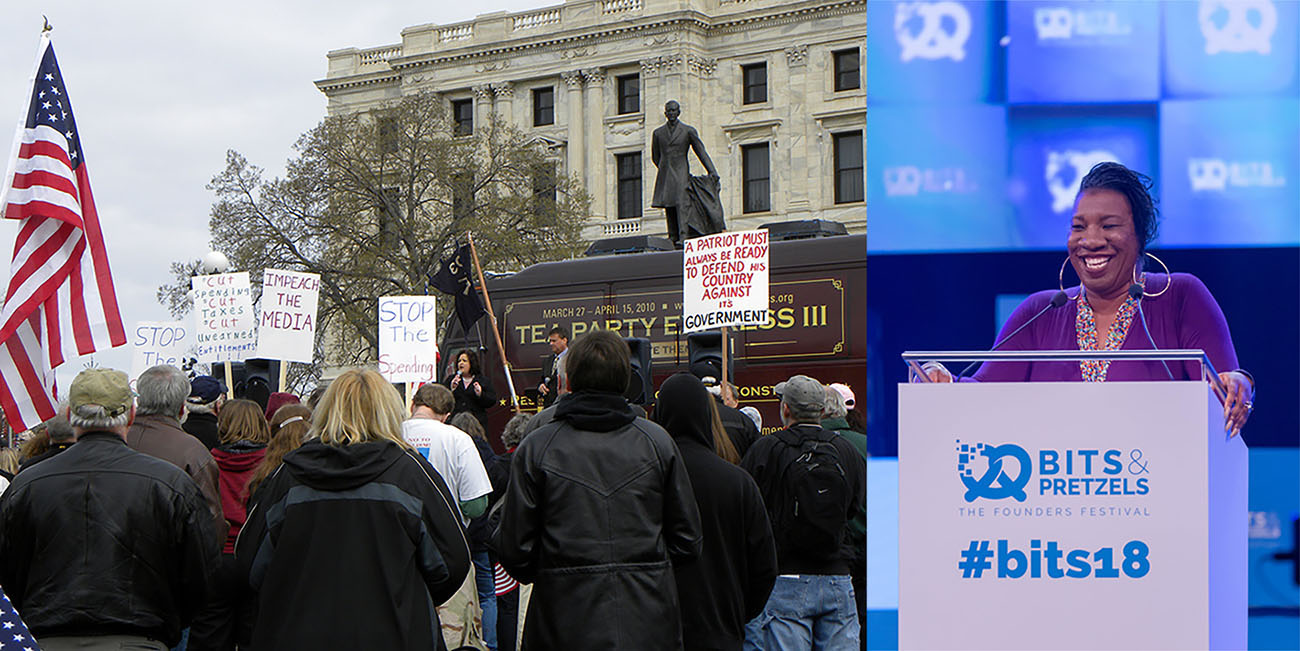
- The text integrates contemporary case studies, such as the Tea Party and Me Too movements, to provide historical and social context.
- Career-relevant topics like online privacy and workplace culture are included to help students apply sociology to their professional lives.
- Extensive survey data and government statistics are used to challenge preconceived notions and spark classroom discussions.
- The curriculum emphasizes the causes and impacts of discrimination across various institutions like healthcare, law enforcement, and the economy.
- The textbook balances the examination of cultural damage and history with the celebration of those who have driven social change.
- Pedagogical features like 'Sociology in the Real World' and 'Big Picture' connect abstract concepts to everyday life and global issues.
The text seeks to strike a balance between confronting the damaging aspects of our culture and history and celebrating those who have driven change and overcome challenges.
Textbook Features and Acknowledgements
- The textbook utilizes bolded key terms with in-context definitions and a comprehensive glossary for student reference.
- Section quizzes are integrated to provide immediate application of concepts through multiple-choice and short-answer questions.
- A 'Further Research' feature encourages students to engage with external sources and deeper discussions on sociological topics.
- The development of 'Introduction to Sociology 3e' involved a collaborative effort from a diverse group of professors, writers, and editors.
- Extensive peer review from academic professionals across numerous institutions was critical to ensuring pedagogical integrity and accuracy.
Their input has been critical in maintaining the pedagogical integrity and accuracy of the text.
OpenStax Sociology Preface
- The text lists numerous academic contributors from community colleges and universities across the United States.
- OpenStax provides free digital access to educational materials and supplementary resources like test banks and lecture slides.
- Verified instructor accounts are required to access specific teaching tools and assessment materials.
- The Community Hubs on OER Commons allow educators to share, upload, and download community-created teaching resources.
- Low-cost technology partnerships are available to provide integrated tools that complement the core textbook content.
- The introductory chapter defines sociology and outlines its historical development and primary theoretical perspectives.
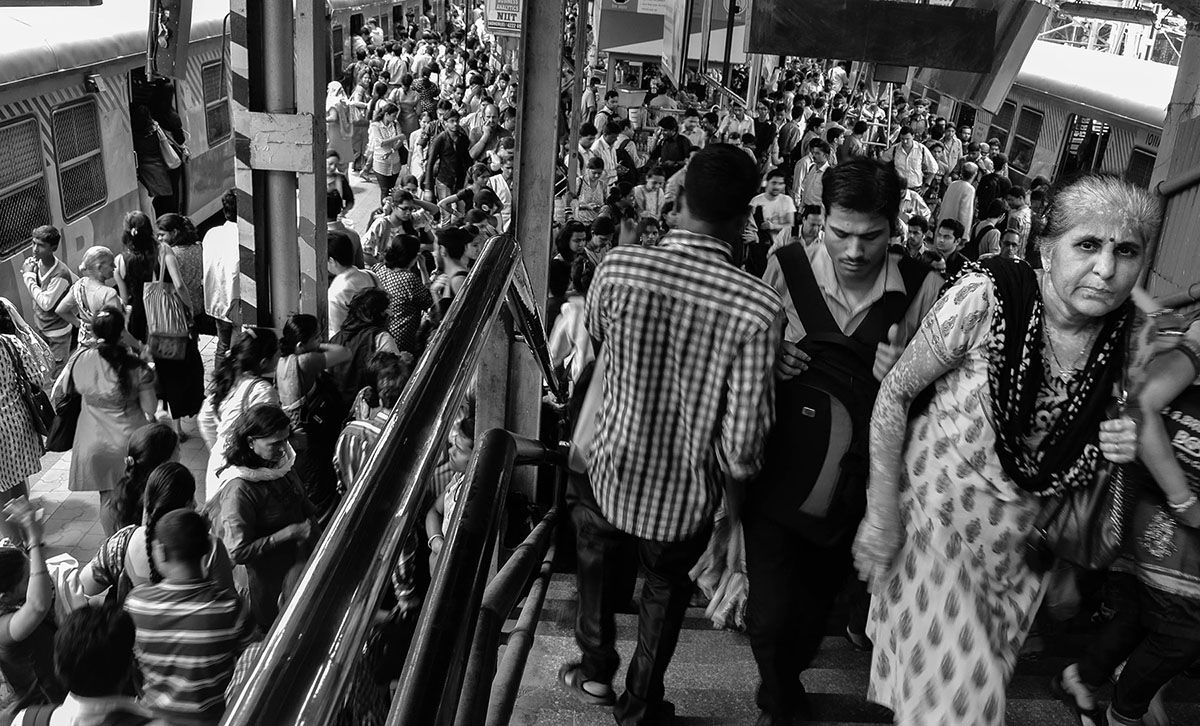
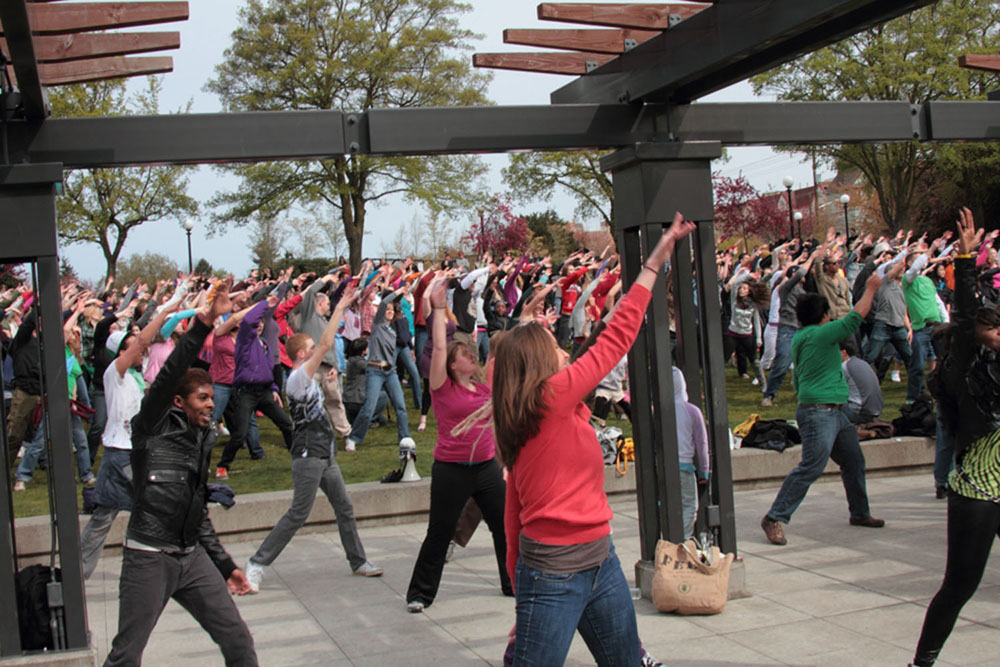
The vast majority of them don’t know each other, but they share much in common as they move together.
The Sociology of Commuting
- A busy train station serves as a microcosm of society where individual actions blend into collective patterns.
- Commuters develop unspoken social norms and customs, such as escalator etiquette and spatial awareness, without formal instruction.
- Experienced travelers can sense changes in schedules or track assignments simply by observing the rhythmic movement of the crowd.
- Sociologists study these environments to understand how daily transit affects job satisfaction, family relationships, and political attitudes.
- Sociological research provides actionable data that influences government policy, urban spending, and healthcare practices.
In some stations, walking against the crowd can be a tedious, nearly impossible process.
The Foundations of Sociology
- Sociology is the systematic study of groups, societies, and social interactions across micro and macro levels.
- A society is defined as a group of people in a specific geographic area who share a common culture and interact regularly.
- Culture encompasses a group's shared practices, values, and beliefs, representing their entire way of life and social rules.
- The sociological imagination allows individuals to see the connection between personal behavior and the broader historical and social structures.
- Reification is a conceptual error where abstract social constructs are treated as if they have a real, material existence.
- Sociologists identify patterns by examining how social forces and pressures influence individual choices, such as the evolving structure of the family.
It’s a way of seeing our own and other people’s behavior in relationship to history and social structure.
Social Facts and Figuration
- Sociologists examine social facts, such as laws, morals, and customs, to understand the rules governing social life.
- Research often focuses on how shifting cultural values and economic conditions impact the structure of the family unit.
- Sociology explores contemporary issues ranging from law enforcement policies like 'Stop and Frisk' to the influence of social media on communication.
- A fundamental sociological perspective is that the individual and society are inseparable and must be studied together.
- The concept of figuration, introduced by Norbert Elias, describes the simultaneous analysis of individual behavior and the societal forces shaping it.
- Social institutions like religion are experienced individually but are fundamentally shaped by government, holidays, and cultural rituals.
German sociologist Norbert Elias called the process of simultaneously analyzing the behavior of individuals and the society that shapes that behavior figuration.
Social Change Through Adversity
- Ashley and her partner moved from an urban center to a small Midwestern town, shifting from urban tolerance to rural discrimination.
- The couple faced direct systemic barriers in their new home, including housing denials and professional employment difficulties.
- Instead of succumbing to bitterness, Ashley organized local college groups and churches to form the town's first Gay-Straight Alliance.
- The alliance successfully educated the community and advocated for the elimination of discriminatory practices against LGBTQ individuals.
- Sociologist Nathan Kierns cites this case as a prime example of how negative social forces can trigger positive collective action.
Landlords would not rent to them. Ashley, who is a highly trained professional, had a great deal of difficulty finding a new job.
The Origins of Sociology
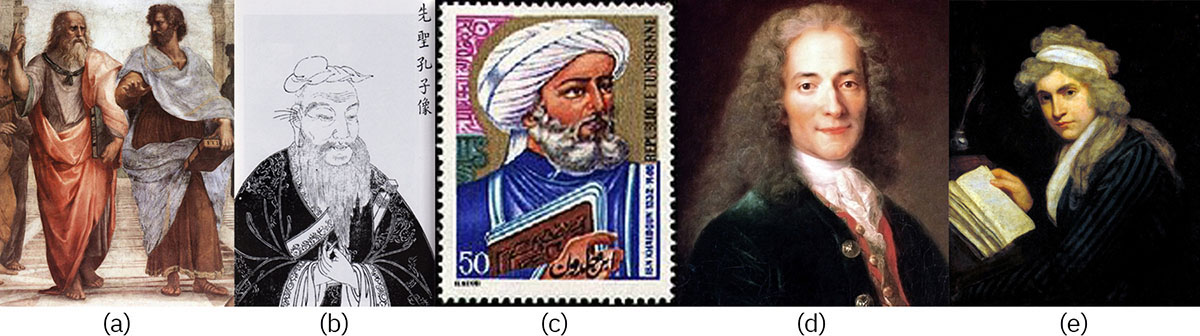
- Ancient philosophers like Plato, Aristotle, and Confucius explored social themes long before sociology was a formal academic discipline.
- For centuries, the Catholic Church's dominance in Europe suppressed non-religious social theory and biased the historical record.
- Early non-Western scholars like Ma Tuan-Lin and Ibn Khaldun pioneered the study of social dynamics and political economy.
- The decline of Church authority following the bubonic plague allowed for the rise of scientific reasoning and empirical observation.
- Enlightenment thinkers eventually developed general principles to explain social life, moving away from divine explanations.
- Increased literacy and the availability of non-religious texts provided the necessary data for modern sociological analysis.
If any social patterns challenged any belief of the Church, those practitioners were massacred, burned at the stake, or labeled heretics.
The Foundations of Sociology
- Early thinkers like Mary Wollstonecraft addressed social ills and gender conditions, though their contributions were long marginalized by the male academic establishment.
- The Industrial Revolution and increased global mobility in the 19th century fundamentally altered social structures, leading to urbanization and a decline in traditional religious beliefs.
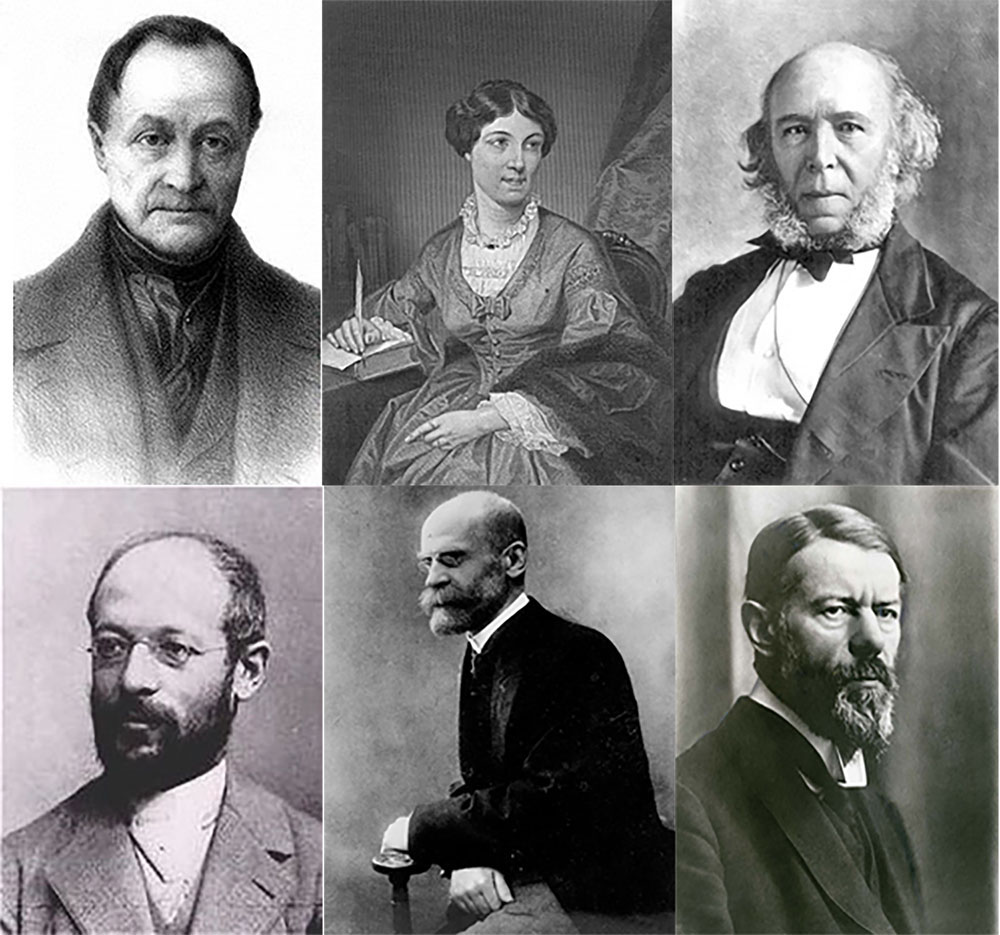
- Auguste Comte is credited with reinventing the term 'sociology' and establishing it as a formal discipline based on scientific principles.
- Comte proposed 'positivism,' the belief that social patterns could be studied using the same rigorous methods as the natural sciences.
- The primary goal for early sociologists was to identify the laws governing society in order to solve systemic problems like poverty and poor education.
Comte also believed in the potential of social scientists to work toward the betterment of society.
Founding Figures of Sociology
- Harriet Martineau pioneered sociological methodology by conducting international comparisons and critiquing the contradictions between American moral principles and the realities of capitalism and gender inequality.
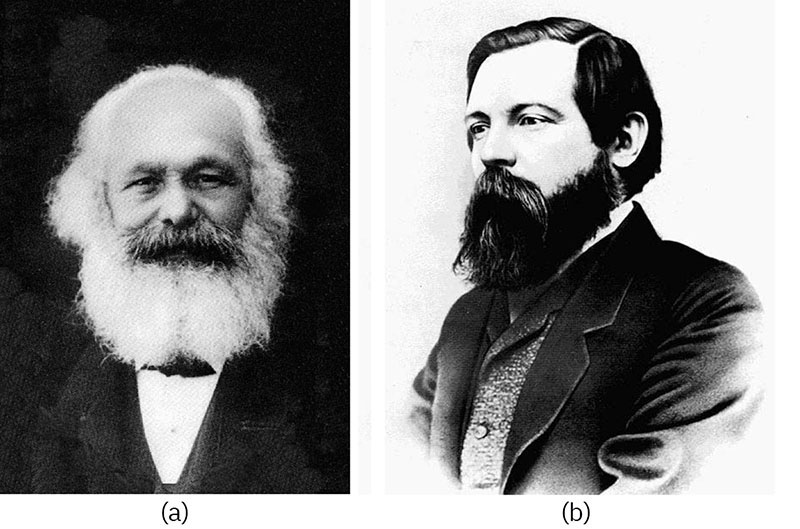
- Karl Marx rejected positivism in favor of a theory centered on class struggle, arguing that social change is driven by conflicts over the means of production.
- Marx predicted that the extreme inequalities of capitalism would inevitably lead to a worker revolt and the establishment of a communal economic system.
- Herbert Spencer published the first book with 'sociology' in the title and advocated for market forces to control capitalism rather than government intervention.
- Spencer's application of 'survival of the fittest' to human society provided a framework that was later misinterpreted to support racial superiority theories.
Martineau found the workings of capitalism at odds with the professed moral principles of people in the United States.
Foundations of Sociological Theory
- Georg Simmel introduced anti-positivism and focused on micro-level dynamics, specifically the interactions within two-person and three-person groups.
- Simmel explored the intersection of individual identity, the function of money, and the creative capacities of individuals within urban environments.
- Émile Durkheim established sociology as a formal academic discipline by founding the first European department of sociology in 1895.
- Durkheim proposed that societies transition from primitive states to industrial ones where individuals rise based on merit.
- Durkheim's research on suicide argued that social behaviors are driven by socio-religious forces rather than purely psychological causes.
- The concept of 'social facts' allowed Durkheim to categorize societies as 'healthy' or 'pathological' based on the stability of social norms.
He also believed that through such studies it would be possible to determine if a society was “healthy” or “pathological.”
Max Weber and Anti-Positivism
- Max Weber established a sociology department in Germany and authored the influential work 'The Protestant Ethic and the Spirit of Capitalism'.
- Weber introduced the concept of 'verstehen', which encourages researchers to understand social worlds from an insider's point of view.
- He proposed a philosophy of anti-positivism, arguing that researchers should strive for subjectivity to represent cultural norms and societal values.
- The tension between positivism and anti-positivism formed the basis for the modern divide between quantitative and qualitative sociology.
- Quantitative sociology relies on statistical patterns, while qualitative sociology uses in-depth interviews and content analysis to understand behavior.
- Sociological perspectives can be applied to modern policy debates, such as analyzing how a minimum wage increase affects family dynamics and economic stress.
In seeking verstehen, outside observers of a social world—an entire culture or a small setting—attempt to understand it from an insider’s point of view.
American Sociology and Public Engagement
- Public sociology aims to bridge the gap between academic dialogue and public forums to solve underlying social problems.
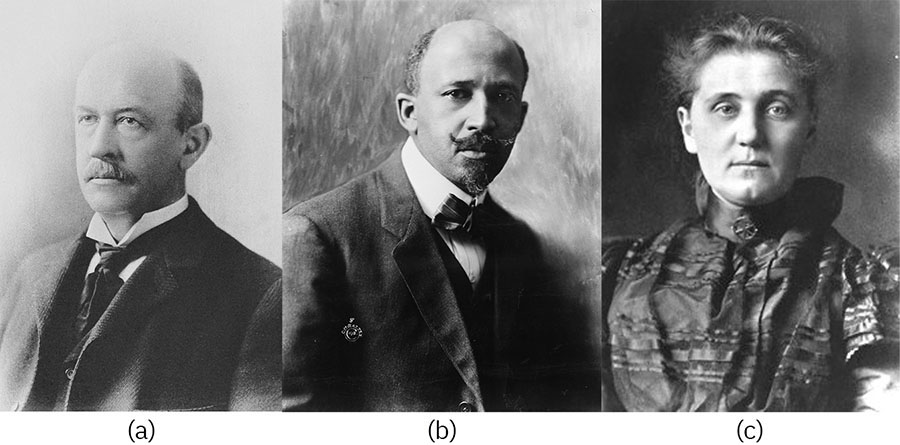
- Early American sociologists like William Sumner and Lester Ward established the discipline in U.S. universities by adopting empirical and scientific methods.
- W.E.B. Du Bois pioneered rigorous empirical methodology, conducting hundreds of interviews to document the social structures of African American communities.
- Du Bois used empirical evidence to dismantle pseudoscientific biological racism used to justify racial oppression.
- Beyond academia, Du Bois was a central figure in the Niagara Movement and a co-founder of the NAACP, advocating for immediate social and political equality.
- Thorstein Veblen expanded the field by analyzing the economy through a social lens, focusing on the leisure class and the nature of work.
These new, comprehensive research methods stood in stark contrast to the less scientific practices of the time, which Du Bois critiqued as being similar to doing research as if through the window of a moving car.
Foundations of Social Interactionism
- Jane Addams established Hull House as a hub for both social service and sociological research, influencing public policy on labor and healthcare.
- Charles Herbert Cooley introduced the 'looking-glass self,' suggesting that individuals shape their identities based on how they perceive others' reactions.
- George Herbert Mead expanded on social development, distinguishing between 'significant others' and the 'generalized other' in forming the self.
- Robert E. Park pioneered social ecology, arguing that urban chaos is a product of the environment rather than the specific individuals living within it.
- These early theorists collectively shifted the focus of sociology toward the impact of environment and interpersonal interaction on human behavior.
Calling this idea ‘the looking-glass self,’ Cooley argued that we ‘see’ ourselves by the reactions of others with whom we interact.
Sociological Theories and Paradigms
- Sociologists develop theories to create testable hypotheses about social interactions and patterns.
- Émile Durkheim's study of suicide demonstrated how individual actions are influenced by social factors like religious solidarity.
- Theories are categorized by scale, ranging from micro-level individual interactions to macro-level grand theories about entire societies.
- Sociological theory is an evolving field where classic foundations are continuously expanded by new research and perspectives.
- Three dominant paradigms—structural functionalism, conflict theory, and symbolic interactionism—provide the primary frameworks for analysis.
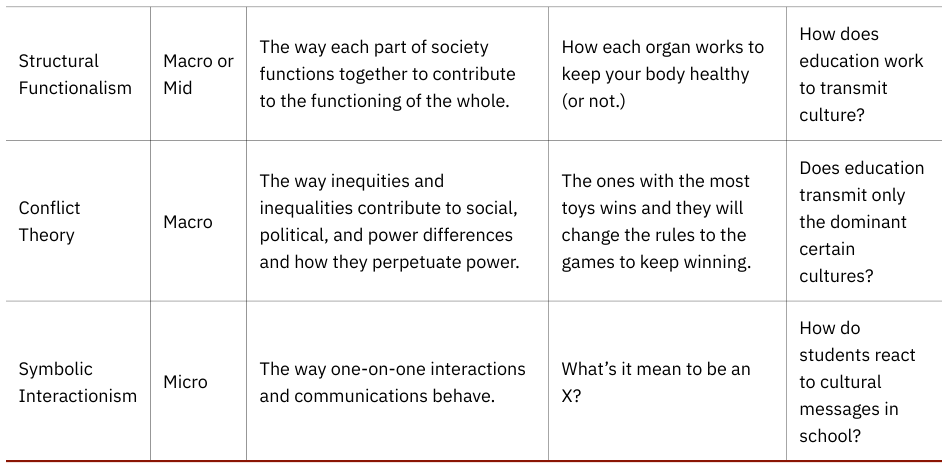
The ones with the most toys wins and they will change the rules to the games to keep winning.
The Foundations of Functionalism
- Functionalism views society as a complex system of interrelated parts, such as government and education, working together to maintain stability.
- Herbert Spencer pioneered the theory by comparing the social institutions of a society to the biological organs of a human body.
- Émile Durkheim argued that sociologists must study 'social facts'—laws, morals, and rituals—which exist beyond the individual to govern social life.
- Robert Merton distinguished between manifest functions, which are sought consequences, and latent functions, which are unintended or unsought.
- The theory introduces 'dynamic equilibrium' as a state where all parts of a healthy society work in harmony to ensure continuity.
- Social processes can also result in dysfunctions, which are undesirable consequences that disrupt the operation of society.
He argued that just as the various organs of the body work together to keep the body functioning, the various parts of society work together to keep society functioning.
Functionalism and Global Culture
- Structural-functional theory faces criticism for its circular logic and inability to explain social change or persistent dysfunctions.
- While functionalism is declining as a macro-level theory, it remains relevant for mid-level sociological analyses.
- Modern communication, travel, and trade are shrinking the world, potentially fostering an unprecedented global culture.
- Digital connectivity allows individuals to feel closer kinship with online global communities than with their own physical neighbors.
- Sociologists are investigating how this emerging international culture impacts local traditions and global social inequalities.
Some explore the dynamics involved in the social interactions of global online communities, such as when members feel a closer kinship to other group members than to people residing in their own countries.
Foundations of Conflict Theory
- Conflict theory, rooted in the work of Karl Marx, views society as a macro-level competition for limited social, material, and political resources.
- Social institutions like government and religion are seen as tools used by 'winners' to maintain their power and perpetuate the oppression of others.
- Max Weber expanded this view by noting that political power and social structure, not just economics, create inequalities based on race, gender, and education.
- Georg Simmel proposed that conflict can actually stabilize society by creating internal group solidarity and paving the way for future agreements.
- Critical theory emerged from the Frankfurt School as a holistic approach to identify structural inequalities and provide practical goals for social transformation.
- Modern applications include feminist theory and critical race theory, which analyze institutionalized power structures like white privilege and gender bias.
The perpetuation of power results in the perpetuation of oppression.
Sociological Perspectives on Food
- Food consumption serves as both a mundane daily necessity and a culturally significant ritual that defines social identity.
- Structural-functionalists analyze the evolution of the food industry from manual labor to mechanized production and mass consumerism.
- Conflict theorists investigate power imbalances, such as the tension between corporate profit motives and the public's right to information.
- Symbolic interactionists focus on micro-level interactions, including religious rituals and the social dynamics of family dinners.
- The text highlights how dietary identities like vegetarianism or locavorism create specific social group interactions.
- Critics of conflict theory argue it overemphasizes social upheaval while ignoring the inherent stability of many social structures.
A conflict theorist might be interested in the power differentials present in the regulation of food, by exploring where people’s right to information intersects with corporations’ drive for profit and how the government mediates those interests.
Symbolic Interactionism and Social Construction
- Symbolic interactionism is a micro-level theory focusing on how individuals create meaning through language and symbols.
- Herbert Blumer established that human interaction is based on meanings derived from social context and individual interpretation.
- Erving Goffman introduced dramaturgical analysis, suggesting individuals act out shifting cultural scripts like actors in a play.
- The perspective emphasizes that people are active agents who shape their social worlds rather than passive subjects of social forces.
- Constructivism, an extension of this theory, posits that reality and concepts like deviance are social constructs defined by consensus.
- Research in this field typically utilizes qualitative methods like participant observation to explore the subjective symbolic worlds of individuals.
Goffman used theater as an analogy for social interaction and recognized that people’s interactions showed patterns of cultural “scripts.”
Evolution of Sociological Theory
- Symbolic interactionism faces criticism for its narrow focus and the difficulty researchers have in maintaining objectivity.
- Structural-functionalism dominated the post-WWII era but failed to explain the rapid social changes of the 1960s and 1970s.
- The rise of the Civil Rights and women's movements shifted academic focus toward conflict theory and institutionalized inequality.
- Critical theory, including feminist and critical race theories, emerged to apply sociological principles toward active social change.
- Postmodern social theory arose in the 1980s, rejecting macro-level explanations in favor of new, constructivist perspectives.
The women’s movement and the Civil Rights movement forced academics to develop approaches to study these emerging social practices.
Sociology and Social Reform
- Sociology serves both as a scholarly pursuit of knowledge and a practical tool for improving societal conditions.
- The landmark Brown v. Board of Education decision utilized sociological research to overturn racial segregation in American schools.
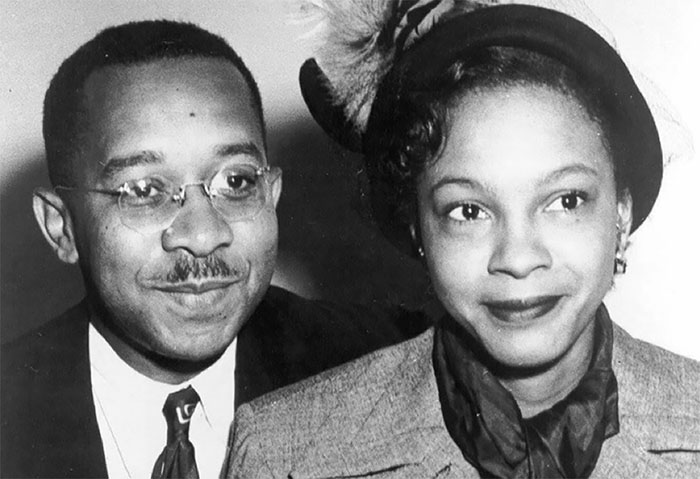
- Kenneth and Mamie Clark's 'doll test' provided empirical evidence that segregation created a damaging sense of inferiority in Black children.
- Sociological insights have been instrumental in advancing equal opportunity for women and improving rights for individuals with disabilities.
- The field has influenced diverse social reforms, including prison system changes and the preservation of indigenous lands and cultures.
When asked to choose the doll that looked like them, many children left the room, started to cry, and/or became depressed.
The Excitement of Sociology
- Sociology involves the disciplined study of society, focusing on both monumental historical moments and the banality of everyday life.
- The 'aha' moment in sociology occurs when a familiar scene is suddenly reinterpreted through an insight that radically questions previous assumptions.
- The field teaches individuals to recognize how they fit into the world and how social classifications like status and ethnicity affect perceptions.
- By rejecting easy explanations, sociology helps people organize their thinking to ask better questions and understand diverse perspectives.
- Studying sociology provides transferable skills such as statistical analysis, research design, and the ability to navigate large bureaucracies.
- A sociological background prepares students for diverse careers in social services, marketing, human resources, and criminal justice.
This is the point at which one begins to sense the excitement of sociology.
Social Media and Sociological Inquiry
- A cautionary tale illustrates how past social media posts can lead to college rejections despite a student's positive offline record.
- Digital footprints often persist through screenshots and archives even after the original content has been deleted by the user.
- While social media is protected from government censorship, private institutions like colleges and employers use it to evaluate character.
- Sociologists study these scenarios to determine if screening practices actually reduce campus assault or abusive behavior.
- Research in this field examines potential biases in AI algorithms used to detect problematic online content.
- Sociological findings help administrators and policymakers make informed decisions about institutional programs and admissions.
Even thought the student had removed them within a few days, the posts lived on in other forums and on a few friends’ pages; there was also the possibility that someone had screen-grabbed them.
Foundations of Sociological Theory
- Sociology is defined as the systematic and scientific study of society, social interactions, and the cultural forces that shape individual behavior.
- Functionalism views society as a complex structure of interrelated parts working together to maintain a state of dynamic equilibrium.
- Social processes are categorized by their outcomes, distinguishing between manifest functions (intended) and latent functions (unintended).
- The sociological imagination allows individuals to connect their personal experiences to broader historical and societal structures.
- Research methodologies in the field are split between quantitative statistical analysis and qualitative in-depth interviews or content analysis.
- Theoretical frameworks range from macro-level grand theories explaining large-scale relationships to micro-level studies of specific individual interactions.
reification an error of treating an abstract concept as though it has a real, material existence
Foundations of Sociological Thought
- Sociology emerged as a scientific discipline to analyze the profound societal shifts caused by the Industrial Revolution.
- Early scholars debated whether human behavior could be studied with the same objective methodologies used in the natural sciences.
- Theoretical perspectives are categorized into macro-level theories, like structural functionalism, and micro-level theories, like symbolic interactionism.
- The study of sociology fosters critical thinking about social issues, preparing individuals for careers in a diverse world.
- Sociological training enables citizens to make informed decisions and take effective action regarding complex social problems.
Some of the earliest sociologists thought that societies and individuals’ roles in society could be studied using the same scientific methodologies that were used in the natural sciences, while others believed that is was impossible to predict human behavior scientifically.
Sociology Review and Application
- The text provides multiple-choice questions covering the practical applications of sociology, including the influential Clark doll experiment on segregation.
- It highlights Peter Berger's perspective that sociology involves making the familiar strange and examining everyday life events.
- Short answer prompts encourage students to apply the sociological imagination to their own lives and societal pressures.
- The material contrasts major theoretical frameworks such as structural functionalism and conflict theory to explain societal operations.
- The section includes resources for further research on the history of the discipline and the impact of evolving communication technologies.
- Sociological study is framed as a tool for developing data analysis skills, statistical application, and theory generation.
Berger writes that sociology makes the familiar strange.
Sociological References and History
- The text provides a comprehensive list of academic citations covering foundational sociological concepts and modern case studies.
- Key historical figures mentioned include classical theorists like Émile Durkheim and George Herbert Mead alongside diverse scholars like Ibn Khaldun and Ma Duanlin.
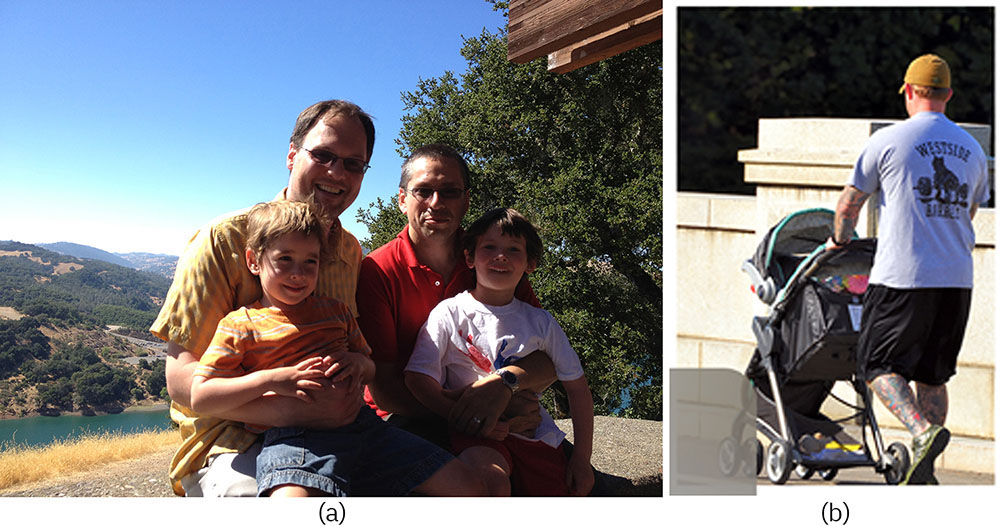
- Modern research topics cited range from the rise of single fathers by choice to the sociological implications of the 'Million People March' in the Philippines.
- The bibliography highlights the evolution of the discipline from 14th-century sages to contemporary 21st-century digital and census data.
- Specific focus is given to the 'Sociological Imagination' and the dangers of reification in social theory.
Ibn Khaldun: 14th Century Sage.
Foundational References in Sociology
- The text provides a comprehensive bibliography of seminal works that established the discipline of sociology.
- It highlights the contributions of W.E.B. Du Bois, emphasizing his role in the birth of modern sociology through Aldon Morris's scholarship.
- The list includes foundational European theorists such as Émile Durkheim, Karl Marx, and Georg Simmel, focusing on social labor and division.
- Key texts on symbolic interactionism and the presentation of self are cited, featuring authors like Erving Goffman and Herbert Blumer.
- The references bridge classical theory with contemporary applications, including studies on gender economics and mobile technology.
Morris, A. (2015). The Scholar Denied: W. E. B. Du Bois and the Birth of Modern Sociology.
Foundations of Sociological Research
- Sociology transitioned into a formal science by utilizing systematic research to build a collective body of knowledge.
- Sociologists employ empirical evidence and the scientific method to move beyond personal biases and limited observations.
- Peer review and the replication of studies are essential processes for validating sociological conclusions and ensuring objectivity.
- A study on COVID-19 stay-at-home orders in Sweden serves as a modern example of using statistical analysis to track changes in crime rates.
- The chapter outlines the shift from subjective interpretation to rigorous data collection through experiments and documentation.
Our observations about social situations often incorporate biases based on our own views and limited data.
Sociological Research Foundations
- Sociologists view every aspect of human behavior as a valid source for investigation.
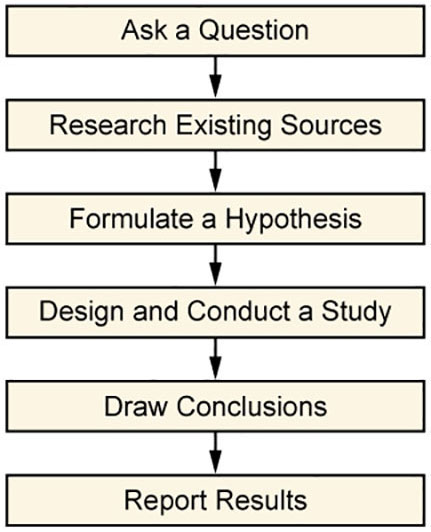
- The research process typically begins with a question regarding how or why social phenomena occur.
- Systematic research using the scientific method has led to transformative changes in workplaces, families, and education.
- Researchers must choose between a traditional scientific approach or an interpretive framework to design their studies.
- Key metrics for evaluating sociological research include accuracy, reliability, and validity.
When sociologists apply the sociological perspective and begin to ask questions, no topic is off limits.
The Scientific Method in Sociology
- Sociologists utilize established scientific methods like experiments and surveys to navigate the immense diversity of human social interactions.
- The scientific process provides essential parameters and boundaries that ensure research results remain objective, accurate, and focused.
- Sociological research aims to provide new insights into social practices and cultures rather than simply reducing knowledge to binary 'right or wrong' facts.
- Researchers investigate a wide spectrum of social outcomes, ranging from negative issues like crime and poverty to positive trends like healthy eating and education.
- The systematic six-step scientific method allows sociologists to set aside personal agendas and maintain logical consistency throughout their analysis.
Sociologists often look between the cracks to discover obstacles to meeting basic human needs.
Foundations of Sociological Research
- The first step in sociological research is defining a question that is narrow enough for specific study but broad enough to have universal merit.
- Researchers must conduct a literature review to understand existing knowledge, identify gaps, and ensure their work builds upon prior findings.
- A literature review also serves as a safeguard against plagiarism and helps refine the overall design of the research study.
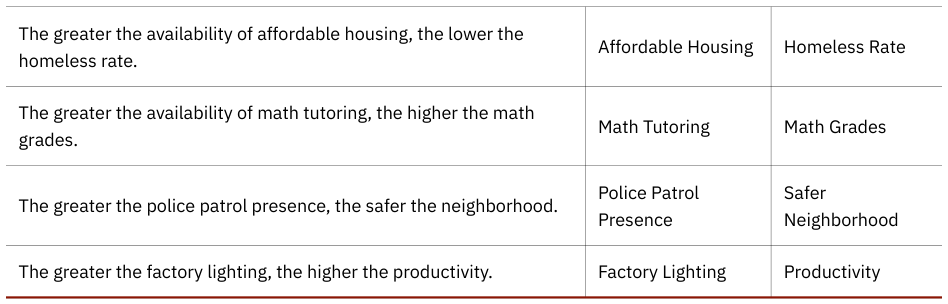
- Formulating a hypothesis involves predicting a relationship between a cause, known as the independent variable, and an effect, the dependent variable.
- Sociologists often use 'if, then' statements to frame how specific human behaviors or social conditions influence one another.
- Properly identifying variables allows researchers to measure how factors like education, gender, or religion impact social outcomes like income or family size.
“Are societies capable of sustained happiness?” would be too vague.
Variables and Research Design
- Independent variables are identified as the causal factors that influence change in dependent variables.
- The relationship between variables is often reversible, requiring researchers to specify the direction of causality within their hypothesis.
- Reliability in sociological research refers to the consistency of results and the likelihood of replication across different subjects or situations.
- Validity measures how accurately a study captures the specific concept it was designed to investigate.
- Operational definitions are essential for translating abstract concepts into concrete, observable, and measurable steps.
- Standardizing definitions, such as what constitutes a 'good grade,' ensures consistency and acceptance within the scientific community.
A sociologist might predict that increasing a child’s sense of self-esteem (the independent variable) will increase or improve habits of hygiene (now the dependent variable).
Analyzing and Reporting Sociological Data
- Sociologists analyze data to test hypotheses, but contradictory results are considered valuable contributions to the field.
- Researchers must account for the limitations of operational definitions, as specific data sets like local crime rates may not be generalizable to broader contexts.
- The reporting process involves academic scrutiny and replication of studies to establish the validity of social theories across different environments.
- An alternative to the scientific method is the interpretive framework, which prioritizes the subjective experiences and points of view of participants.
- Interpretive research is often descriptive or narrative, allowing researchers to adjust their methods mid-process based on direct interaction and storytelling.
Sociologists analyze general patterns in response to a study, but they are equally interested in exceptions to patterns.
Critical Sociology and Research Design
- Critical sociology, influenced by the Frankfurt School, argues that social science is inherently embedded in existing power structures like class, race, and gender.
- Sociological research is viewed as either a tool to rationalize oppression or a means to liberate humans from social inequality.
- The research design serves as a 'blueprint' for investigation, requiring sociologists to choose methods that best fit their specific topic and goals.
- Primary data collection methods include surveys, participant observation, ethnography, and experiments, while secondary analysis uses existing sources.
- Researchers must navigate complex ethical and practical challenges, such as deciding when to remain anonymous or overt within a social environment.
A researcher wouldn’t stroll into a crime-ridden neighborhood at midnight, calling out, “Any gang members around?”
The Mechanics of Survey Research
- Surveys are a primary scientific research method used to collect data on behaviors and opinions through questionnaires or interviews.
- The U.S. Census serves as a premier example of a large-scale sociological survey, evolving from six questions in 1790 to twelve today.
- A distinction exists between scientific sociological research and commercial marketing polls, which often target unrepresentative populations.
- While surveys may not perfectly capture actual social behavior, they are highly effective at documenting how people claim to feel, think, and act.
- The validity of survey results relies heavily on random sampling, ensuring every individual in a target population has an equal chance of selection.
- Ethical survey conduct requires researchers to inform subjects of the study's purpose and offer transparency regarding the final results.
While surveys are not great at capturing the ways people really behave in social situations, they are a great method for discovering how people feel, think, and act—or at least how they say they feel, think, and act.
Survey Methods and Data Types
- Researchers use instruments like questionnaires to gather quantitative data through closed-ended questions that can be statistically analyzed.
- Open-ended questions allow subjects to provide qualitative data, offering personal insights into subjective beliefs and complex internal thought processes.
- Anonymity in surveys encourages participants to share honest answers about sensitive topics that are difficult to discuss in public forums.
- Interviews provide a flexible, one-on-one environment where researchers can seek clarification and explore subtopics in depth.
- To ensure reliability, researchers must avoid leading questions and build a rapport of trust and empathy with their subjects.
- Surveys frequently combine both quantitative demographic data and qualitative personal explanations to create a comprehensive data set.
The researcher will also benefit from gaining a subject’s trust, from empathizing or commiserating with a subject, and from listening without judgment.
Sociological Field Research Dynamics
- Field research involves gathering primary data by observing or participating in subjects' natural environments rather than controlled settings.
- In this methodology, the sociologist is the one 'out of their element,' adapting to spaces ranging from coffee shops to tribal villages.
- While excellent for understanding the 'why' of human behavior, field research struggles to establish definitive cause-and-effect due to environmental variables.
- Sociologists apply these methods to modern pop culture, studying how fan bases for artists like Lady Gaga use social media for community and inspiration.
- Research into Beyoncé and Rihanna fans suggests that media award shows may manufacture myths of rivalry between successful Black female artists.
In field work, the sociologists, rather than the subjects, are the ones out of their element.
The Art of Participant Observation
- Rodney Rothman's 'fake job' experiment illustrates how easily an outsider can blend into a corporate environment through participant observation.
- Participant observation allows researchers to experience social life firsthand by joining a group's routine activities.
- Researchers often maintain anonymity or hide their true purpose to ensure the integrity of their observations and avoid compromising results.
- Field research is characterized by an open-minded approach where specific hypotheses emerge naturally from observed patterns.
- The flexibility of field research allows scientists to pivot their focus, as seen when the Lynds shifted from studying religion to industrialization.
Every day for two weeks, he pretended to work there. His main purpose was simply to see whether anyone would notice him or challenge his presence. No one did.
Covert Participant Observation
- Covert participant observation allows researchers to witness authentic behaviors by blending into a group without alerting members to their presence.
- The method requires significant time and effort, often involving role-playing, networking, or obtaining employment to gain insider access.
- Researchers must maintain a delicate balance between participating in the group and keeping a detached sociological perspective to identify hidden social patterns.
- Barbara Ehrenreich’s 'Nickel and Dimed' serves as a primary example of this method, where she lived as a minimum-wage worker to study economic survival.
- The findings of such qualitative research are typically descriptive, highlighting the extreme measures and poor treatment low-wage workers endure.
- While providing deep insight, the process forces researchers to pretend to be someone they are not, often for months or years at a time.
She witnessed firsthand the treatment of working class employees. She saw the extreme measures people take to make ends meet and to survive.
Ethnography and Institutional Power
- Ethnography involves the deep immersion of a researcher into a social community to observe everyday life and cultural norms.
- The core of ethnographic research is understanding how subjects perceive their own social standing and identity within a group.
- Institutional ethnography, developed by Dorothy E. Smith, focuses on concrete social relationships and power structures.
- This approach is often feminist-inspired, aiming to include women's experiences which were historically excluded from sociology.
- Modern feminists argue that objectifying marginalized groups helps those in authority maintain dominant positions.
- Smith's work challenges the 'conceptual practices of power' that have historically defined social science research from a male perspective.
Historically, social science research tended to objectify women and ignore their experiences except as viewed from the male perspective.
The Discovery of Middletown
- In 1924, Robert and Helen Lynd conducted an unprecedented ethnographic study of Muncie, Indiana, to document the lives of 'ordinary' Americans.
- The study focused on the transition from rural farm life to industrial urbanization, highlighting the shift toward a consumer-based material reality.
- The Lynds identified a class divide based on labor: the business class worked with abstract symbols, while the working class used tools for concrete objects.
- Despite the class divide, mass production allowed both groups to access the same modern amenities like cars, radios, and refrigerators.
- The Rockefeller Foundation initially rejected the manuscript as useless, yet it became an instant bestseller and a landmark in sociological research.
- The book's success proved that the American public was deeply interested in using scientific data to understand their own social identities.
The Rockefeller Foundation, which had commissioned the book, claimed it was useless and refused to publish it.
Case Studies and Experiments
- Case studies involve an in-depth analysis of a single individual, event, or situation using diverse data sources like interviews and observation.
- A primary limitation of case studies is the inability to form generalized conclusions or universal claims based on a single subject.
- Case studies are uniquely valuable for researching rare phenomena, such as 'feral children' who grow up isolated from human contact.
- The case of Oxana Malaya illustrates how extreme neglect can lead a child to mimic animal behaviors, providing data unattainable through other methods.
- Sociologists also use experiments to investigate cause-and-effect relationships and test specific hypotheses.
- Experimental research is categorized into two main types: controlled lab-based experiments and natural or field experiments.
Five years later, a neighbor called authorities and reported seeing a girl who ran on all fours, barking.
Sociological Experimental Methods
- Sociologists use lab-based and field-based experiments to test cause-and-effect relationships through if-then statements.
- Lab experiments allow for controlled data collection in limited time but often rely on artificial situations to manipulate variables.
- Field experiments offer higher accuracy by observing subjects in natural settings without researcher interference.
- The classical experimental design involves splitting a homogeneous group into an experimental group and a control group.
- The Hawthorne effect describes the phenomenon where subjects alter their behavior simply because they are aware of being observed.
- Ethical considerations often require researchers to disclose the study's purpose, which can introduce unavoidable artificiality.
This is called the Hawthorne effect—which occurs when people change their behavior because they know they are being watched as part of a study.
The Bumper Sticker Experiment
- Sociology professor Frances Heussenstamm designed an experiment in 1971 to test for police prejudice and racial profiling.
- The study involved fifteen students from diverse backgrounds who all maintained perfect driving records and followed identical commute routes.
- The independent variable was a Black Panther bumper sticker placed on each car to represent a specific social and political value.
- The dependent variable measured the frequency of traffic stops and citations issued to these previously un-ticketed drivers.
- The experiment resulted in thirty-three citations within just seventeen days, forcing an early conclusion as legal funds were exhausted.
- The rapid accumulation of tickets suggested that perceived political affiliation significantly altered how drivers were treated by law enforcement.
The first arrest, for an incorrect lane change, was made two hours after the experiment began.
Secondary Data Analysis
- Secondary data analysis involves using existing information from sources like historians, government agencies, and media rather than conducting firsthand research.
- A major benefit of this method is that it is nonreactive, meaning the researcher does not influence the subjects' behavior because there is no direct contact.
- Sociologists often apply new interpretations to old data, such as analyzing 1960s sitcoms to understand historical gender norms.
- Using existing records saves time and money but requires 'content analysis' to systematically organize and evaluate vast amounts of information.
- Challenges include the difficulty of accessing certain public records and the inability to verify the accuracy of data collected by others.
- Existing data may not always align perfectly with a researcher's specific questions, leaving gaps in variables like educational background or long-term outcomes.
One of the advantages of secondary data like old movies or WHO statistics is that it is nonreactive research (or unobtrusive research), meaning that it does not involve direct contact with subjects and will not alter or influence people’s behaviors.
Ethics and Value Neutrality
- Historical research must be contextualized within the cultural norms and attitudes of the era in which it was conducted.
- Max Weber introduced the concept of value neutrality, arguing that researchers must remain impartial and avoid letting personal values shape data interpretation.
- Modern sociologists debate whether complete objectivity is possible, often viewing findings as one fact-based perspective rather than absolute truth.
- Researchers have an ethical obligation to report all significant data, even when results contradict their personal beliefs or political agendas.
- The American Sociological Association (ASA) provides a formal Code of Ethics to protect human subjects and ensure the integrity of the discipline.
- Key ethical standards include maintaining privacy, seeking informed consent, and protecting participants from personal harm.
Investigators are ethically obligated to report results, even when they contradict personal views, predicted outcomes, or widely accepted beliefs.
Unethical Studies in Research
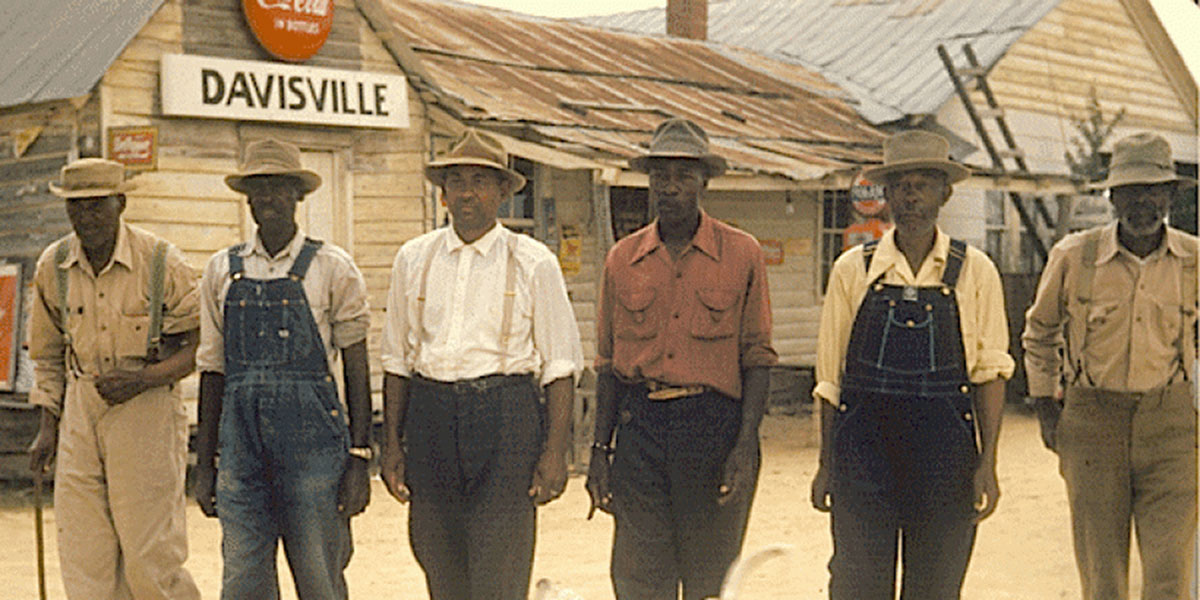
- The Tuskegee Experiment involved withholding penicillin from African American men with syphilis to observe the disease's progression without their informed consent.
- Henrietta Lacks' 'immortal' cells were harvested and mass-produced for medical research without her knowledge or permission, leading to the famous HeLa cell line.
- Stanley Milgram's obedience study caused extreme emotional distress to participants who believed they were administering painful electric shocks to others.
- The Stanford Prison Experiment was terminated early due to the psychological abuse of participants and later faced criticism regarding its validity and coaching.
- Laud Humphrey's research on same-sex encounters raised ethical alarms because he misrepresented his identity to observe and interview subjects in private settings.
The participants were told they were diagnosed with a disease of 'bad blood.'
Sociological Research Key Terms
- The text defines fundamental sociological research concepts, distinguishing between quantitative data (numerical) and qualitative data (descriptive).
- It outlines various research methodologies, including ethnography, field research, experiments, and nonreactive research using secondary data.
- Key scientific principles are established, such as the difference between correlation and causation and the importance of reliability and validity.
- The 'Hawthorne effect' is highlighted as a specific challenge where subjects alter their behavior because they know they are being observed.
- Ethical standards are addressed through the American Sociological Association's code of ethics and the practice of value neutrality.
- The scientific method is presented as a structured process involving hypothesis formation, data collection, and conclusion drawing.
Hawthorne effect when study subjects behave in a certain manner due to their awareness of being observed by a researcher
Sociological Research Methods and Frameworks
- The scientific method in sociology follows a structured six-phase process to ensure data is reliable, valid, and objective.
- Sociologists must define operational variables and establish cause-and-effect relationships between independent and dependent variables.
- Alternative to the scientific method, some researchers utilize an interpretive framework to gain deeper insight into social phenomena.
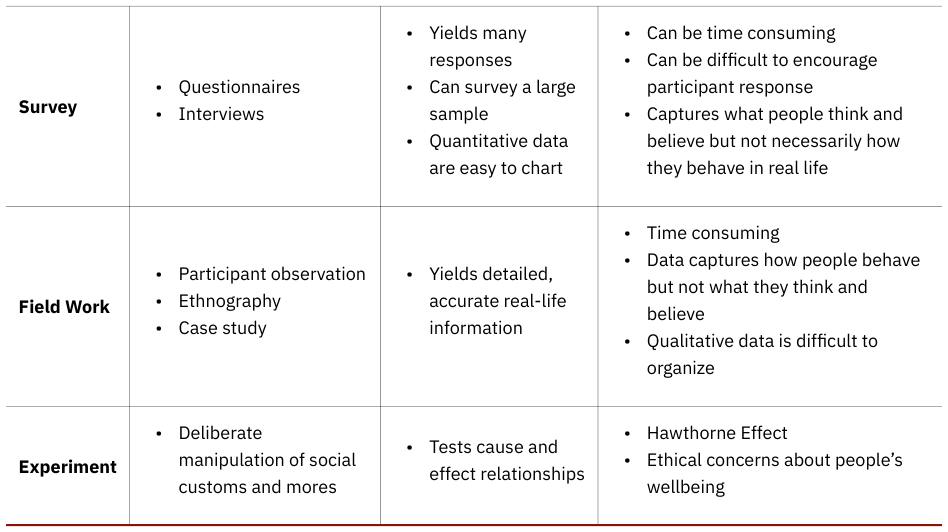
- Common data collection methods include surveys, field work, experiments, and secondary data analysis, each with unique trade-offs.
- Research design choice is critical, as methods like surveys capture beliefs while field work captures actual behavior.
- The Hawthorne Effect and ethical concerns represent significant challenges when conducting deliberate social experiments.
The information gathered may in itself be surprising, and the study design should provide a solid framework in which to analyze predicted and unpredicted data.
Ethics and Methodology in Sociology
- Sociologists bear a fundamental ethical responsibility to ensure the physical and psychological safety of their research participants.
- The American Sociological Association (ASA) provides strict guidelines for conducting studies, managing funding, and publishing results.
- Ethical failures in the past, often occurring before established codes, have resulted in significant harm to human subjects.
- Researchers must maintain 'value neutrality,' setting aside personal biases to report findings accurately even when they conflict with personal beliefs.
- Scientific rigor in sociology relies on precise operational definitions and the identification of independent and dependent variables.
- Methodological tools such as random sampling and participant observation are essential for ensuring the validity and reliability of social data.
They must report findings accurately, even if they contradict personal values and convictions.
Sociological Research and Ethics
- The text provides a section quiz covering the limitations of case studies and the nature of secondary data analysis as a nonreactive research method.
- It introduces the concept of value neutrality, a principle defined by Max Weber that requires researchers to remain objective and avoid personal bias.
- Ethical considerations in research are highlighted, specifically regarding the potential for conflict of interest when accepting funding from industry-related sources.
- The material outlines the initial steps of the scientific method, including developing a research question, conducting preliminary research, and formulating a hypothesis.
- Practical exercises challenge students to consider the personal and physical sacrifices required for field research and the logistical needs of data collection.
Which statement illustrates value neutrality?
Ethics and Research Methodology
- The text explores the ethical boundaries of sociological research and the necessity of the American Sociological Association's (ASA) detailed principles.
- It poses critical questions regarding the balance between individual human rights and the potential for large-scale societal benefits.
- The role of the ASA is highlighted as a nonprofit organization dedicated to articulating policy and implementing programs with broad impact for the field.
- A variety of historical and contemporary research resources are provided, ranging from 1914 scientific method papers to modern studies on COVID-19 and domestic violence.
- The section emphasizes the tension between scientific curiosity and the potential for physical or psychological harm to participants.
Do you think that, in the name of sociology, some researchers might be tempted to cross boundaries that threaten human rights?
Sociological References and Ethics
- The text provides a comprehensive bibliography of sociological research, ranging from classical studies like Durkheim’s work on suicide to modern analyses of pop culture icons.
- Several citations focus on the intersection of celebrity fandom and social identity, specifically examining Lady Gaga, Beyoncé, and Rihanna.
- The list includes foundational methodological studies, such as the Hawthorne experiments and the 'Middletown' cultural research.
- Contemporary social issues are represented through research on public attitudes toward gay rights, Ebola, and racial history.
- The section concludes by transitioning into ethical concerns in research, citing the infamous Tuskegee syphilis experiment as a primary example.
Caplain , Arthur (2007). Bad blood: The Tuskegee syphilis experiment .
Foundations of Cultural Sociology
- The bibliography highlights landmark ethical debates in social research, including the Milgram experiment and the Tuskegee Syphilis Study.
- References to Henrietta Lacks and Laud Humphreys underscore the historical tension between scientific inquiry and participant privacy.
- Max Weber's methodology provides a classical theoretical framework for the social sciences listed in the citations.
- The text transitions from academic references to an introduction of cultural elements, such as high culture and subcultures.
- A visual example of martial arts illustrates how deep respect and courtesy function as significant cultural practices within combat sports.
Even in other styles and other venues such as professional boxing or mixed martial arts, it is common to see opponents showing extreme courtesy and concern for each other despite the level of vitriol before a fight or the violence during it.
The Mechanics of Culture
- Everyday greetings like 'How are you?' function as social norms rather than literal inquiries, illustrating how culture dictates acceptable behavior.
- Culture is a complex system comprising shared values, beliefs, norms, language, symbols, and collective memories.
- Sociologists distinguish between culture (the shared practices and beliefs) and society (the group of people who share them).
- Violating cultural expectations, such as answering a casual greeting with excessive detail, often results in social disapproval or confusion.
- A community can range in scale from a small neighborhood to an entire country, serving as the physical territory where a society exists.
- The relationship between culture and society is symbiotic; neither can exist or be defined without the presence of the other.
Consider what would happen if you stopped and informed everyone who asked 'Hi, how are you?' exactly how you were doing that day, and in detail.
The Foundations of Culture
- Human group formation and social cooperation have been essential survival strategies for nearly 3 million years.
- Almost all human behaviors, including fundamental institutions like marriage, are learned rather than innate.
- Cultural practices such as arranged marriage are often preferred in certain societies for their ability to reduce stress and increase stability.
- Internalizing unwritten social rules provides individuals with a sense of security and helps them navigate daily life safely.
- Humor is a universal human trait, yet the specific triggers for laughter vary significantly across different cultural landscapes.
- Routine actions like commuting are governed by complex sets of cultural proprieties and expected behaviors.
Humor is common to all societies, but what makes something funny is not.
Material and Nonmaterial Culture
- Public transportation behaviors vary globally, from the moving bus boardings in Cairo to the intense crowding of Mumbai's train system.
- Material culture consists of tangible objects like metro passes, buses, and school buildings that people can physically touch.
- Nonmaterial culture encompasses the intangible ideas, beliefs, and social norms that dictate how people interact within a society.
- Physical objects often symbolize abstract concepts, such as a bus token representing the nonmaterial acceptance of capitalism.
- Cultural differences become most apparent during travel, yet certain universal expressions like a parent's frown remain recognizable worldwide.
- Maintaining a sociological imagination allows individuals to better understand and accept the diverse cultural norms they encounter.
In Mumbai, India, passengers must squeeze into overstuffed cars amid a lot of pushing and shoving on the crowded platforms.
The Nature of Cultural Universals
- Cultural universals are global patterns or traits common to all human societies, such as family structures and funeral rites.
- Anthropologist George Murdock identified that these universals often center on basic survival needs or shared human experiences like birth and death.
- Humor is considered a universal social tool used to release tension and foster unity across different cultures.
- Music acts as a powerful medium for evoking specific emotional responses, leading researchers to investigate if musical cues are cross-culturally understood.
- A study involving the isolated Mafa tribe in Cameroon tested whether individuals with no exposure to Western culture could still interpret its emotional intent.
Humor seems to be a universal way to release tensions and create a sense of unity among people.
Music as Universal Language
- Tribal members could identify happiness, sadness, and fear in Western piano music despite no prior exposure.
- Scientific evidence suggests that music functions as a universal language across diverse human cultures.
- Evolutionary research indicates that language and music may have originated from the same source.
- Music fosters a sense of group wholeness and collective identity more effectively than verbal communication.
- Because it is non-verbal, music transcends societal boundaries and linguistic barriers more easily than words.
- The study confirms that the emotional expressions conveyed through music are cultural universals.
Additionally, since music is largely nonverbal, the sounds of music can cross societal boundaries more easily than words.
Ethnocentrism and Cultural Imperialism
- Cultural differences are more prevalent than universals, manifesting in varied conversational etiquette, personal space, and dietary habits.
- Ethnocentrism involves judging other cultures by the standards of one's own, often leading to the belief that one's own culture is superior.
- While a sense of community pride can be healthy, high levels of ethnocentrism often result in stereotyping, conflict, and disdain for others.
- Cultural imperialism is the deliberate imposition of one's own cultural values on another society, historically seen in European colonial expansion.
- Modern cultural imperialism persists through international aid agencies and corporations that ignore indigenous methods in favor of Western practices.
European colonizers often viewed the people in these new lands as uncultured savages who needed to adopt Catholic governance, Christianity, European dress, and other cultural practices.
Navigating Culture Shock
- Culture shock occurs when individuals experience disorientation and frustration due to unanticipated cultural differences.
- Ethnocentrism often replaces initial excitement as travelers encounter unfamiliar social norms and behavioral expectations.
- Anthropologist Ken Barger’s experience with the Inuit illustrates how cultural values, like prioritizing effort over winning, are tied to survival.
- Cultural relativism is the practice of assessing a culture by its own standards rather than through the lens of one's own background.
- Sociologists face ethical dilemmas when trying to reconcile cultural relativism with practices that conflict with universal human rights or egalitarian values.
He knew he would never hold his own against these experts; sure enough, he finished last, to his mortification.
Navigating Cultural Perspectives
- Sociologists strive to maintain objectivity by minimizing personal biases during research analysis.
- Xenocentrism occurs when an individual views another culture as superior to their own, often after immersive experiences.
- Xenophobia represents the opposite extreme, characterized by an irrational fear or hatred of foreign cultures.
- Complete removal of cultural bias is considered impossible for any researcher.
- The goal for social scientists is to maintain a critical eye while balancing cultural pride and appreciation.
- Awareness of one's own biases is the primary tool for achieving a balanced sociological perspective.
An exchange student who goes home after a semester abroad or a sociologist who returns from the field may find it difficult to associate with the values of their own culture after having experienced what they deem a more upright or nobler way of living.
The Reality of Culture Shock
- Caitlin experiences culture shock during a trip to Spain, feeling isolated despite her years of language study due to unfamiliar nonverbal cues and social norms.
- Anthropologist Kalervo Oberg coined the term 'culture shock' to describe the stress of navigating new foods, schedules, and etiquette.
- Culture shock often leads to a temporary rejection of the new environment and a glorification of one's home culture as a defense mechanism.
- The text emphasizes that communication relies heavily on body language and shared cultural norms that are often taken for granted until they are missing.
- Adjusting to a new culture is a long-term process that can foster personal growth, cultural relativism, and a deeper understanding of one's own identity.
That night, Caitlin crawled into a strange bed, wishing she had not come.
Cultural Values and Social Control
- Exploration of the Sapir-Whorf hypothesis regarding how language shapes human perception and thought.
- Analysis of the mechanisms of social control used to maintain order and conformity within a culture.
- Examination of the foundational role that shared values and beliefs play in defining a society.
- Discussion on how cultural norms are reinforced through internal and external social pressures.
Explain the Sapir -Whor f hypothesis
Values, Beliefs, and Social Control
- Values represent a culture's principles and standards, while beliefs are the specific convictions people hold to be true.
- Societies are shaped by their values, which define concepts of beauty, success, and morality.
- There is a distinct gap between ideal culture—the standards a society strives for—and real culture, which includes social issues like crime and poverty.
- Individualistic cultures prioritize independence, whereas collectivist cultures focus on the welfare of the group.
- Societies maintain their values through sanctions, which are forms of social control used to reward conformity or punish inappropriate behavior.
Values portray an ideal culture, the standards society would like to embrace and live up to. But ideal culture differs from real culture.
Cultural Values and Social Control
- Social control mechanisms encourage individuals to conform to societal expectations even in the absence of authority figures.
- Values are dynamic and evolve over time as groups evaluate and debate collective social beliefs.
- Cultural values regarding physical intimacy vary significantly, particularly concerning public displays of affection between men.
- In the United States, male hand-holding is often interpreted as a romantic symbol, whereas in many other nations, it is a natural sign of friendship.
- The 2005 interaction between George W. Bush and the Crown Prince of Saudi Arabia highlighted how simple gestures carry diverse symbolic meanings across cultures.
Simple gestures, such as hand-holding, carry great symbolic differences across cultures.
Formal and Informal Norms
- Norms are the visible and invisible rules of conduct that reflect a society's values of what is good and right.
- Formal norms are written rules, such as laws and employee manuals, that are strictly enforced to support social institutions.
- Sociological perspectives like functionalism and conflict theory analyze who creates these norms and who suffers under them.
- Informal norms are unwritten, casual behaviors learned through observation and socialization rather than direct instruction.
- While formal norms carry legal weight, informal norms dictate the nuances of daily personal interactions and public etiquette.
- Even harmless breaches of informal norms, such as napping in a fast food booth, are rarely committed by the average person.
They don’t sit down at a table with strangers, sing loudly as they prepare their condiments, or nap in a booth.
Breaching Experiments and Social Norms
- Harold Garfinkel developed ethnomethodology to study how societal rules and norms shape social order through shared assumptions.
- Breaching experiments involve researchers subtly violating social etiquette to observe the reactions of unsuspecting participants.
- Emotional responses like outrage or confusion from bystanders reveal the invisible power and presence of unwritten social rules.
- Social norms are categorized into mores, which embody moral principles, and folkways, which lack moral underpinnings.
- Violating mores can lead to severe consequences, such as legal punishment, social shunning, or professional termination.
The second player’s outrage, anger, puzzlement, or other emotion suggested that a cultural norms had been violated.
Folkways and Cultural Symbols
- Folkways are the day-to-day traditions and expressions that direct appropriate behavior within a specific culture.
- These behaviors are often performed without conscious thought to allow individuals to navigate daily routines seamlessly.
- Folkways vary significantly across regions, such as the social expectations for greeting strangers or acquaintances.
- Symbols including gestures, signs, and words serve as communication methods that convey shared meanings within a society.
- Objects can possess both material value and nonmaterial symbolic value, such as trophies representing accomplishment or gold rings signifying marriage.
- While some symbols like stop signs are functional and universal, others require specific cultural knowledge to interpret correctly.
People need to act without thinking in order to get seamlessly through daily routines.
The Power of Symbols
- Symbols gain significant communicative power when used outside of their traditional contexts to convey political or social messages.
- The peace sign is a historical example of symbolic fusion, combining semaphore signals for 'N' and 'D' to represent nuclear disarmament.
- Defying cultural norms through everyday choices, such as wearing pajamas to class, serves as a symbolic rejection of traditional expectations.
- Controversial symbols often represent painful historical periods and can become targets of vandalism or destruction during social unrest.
- The removal or destruction of monuments, like the Berlin Wall or Civil War statues, acts as a symbolic gesture of societal transformation.
- Language serves as the universal symbolic system through which individuals learn and internalize all social and cultural norms.
Together, the semaphore signals for “N” and “D” represent nuclear disarmament—and form the well-known peace sign.
Language and Cultural Perception
- Language serves as a symbolic system for communication and the primary vehicle for transmitting culture across generations.
- While all languages share basic structural elements like subjects and objects, they vary wildly in complexity, from English's 26 letters to Mandarin's 8,000 characters.
- Regional variations and historical influences, such as the French impact on English, create distinct nuances in vocabulary and social status.
- Language is a living entity that evolves rapidly with technology, turning once-nonsensical terms like 'blogging' into standard vocabulary.
- The Sapir-Whorf hypothesis suggests that language is not just a tool for expression but a framework that shapes how individuals perceive reality and behave.
The hypothesis suggests that language shapes thought and thus behavior.
Language and Cultural Perception
- Grammatical gender in a native language influences how individuals perceive and describe inanimate objects, even when speaking a gender-neutral language like English.
- The structural emphasis of a language can impact physical environments and safety, as seen in the differing workplace accident rates between Sweden and Finland.
- The Sapir-Whorf hypothesis suggests that language provides the conceptual framework for interpreting experiences, such as identifying the specific feeling of ambivalence.
- Nonverbal communication is a learned cultural symbolic system where universal gestures like smiles or thumbs-up can have vastly different meanings across societies.
- Body language and physicality are often misinterpreted by outsiders, leading to false perceptions of conflict in cultures that favor high-energy communication.
German speakers described keys as hard, heavy, jagged, metal, serrated, and useful, while Spanish speakers used the adjectives, golden, intricate, little, lovely, shiny, and tiny.
The Bilingual Education Debate
- Dual-language instruction allows immigrant students to master core subjects like math and science without falling behind while they acquire English proficiency.
- Research from Johns Hopkins University indicates that students taught in both their native tongue and English make better academic progress than those in English-only programs.
- Over thirty U.S. states have passed laws making English their official language, driven by arguments for cost-saving and faster cultural assimilation.
- Opponents of English-only laws, including the ACLU, argue such mandates violate the rights of non-English speakers and ignore the reality of American diversity.
- The private sector often embraces bilingualism for financial reasons, using multilingual signage and product information to reach a broader consumer base.
- Bilingualism provides long-term professional advantages, as seen in fields like law enforcement that actively seek employees fluent in multiple languages.
While she was being driven to learn English, the dual-language option helped to ensure that she did not become lost and get behind in her learning of all subjects.
Class and Cultural Capital
- Societies contain internal variations where differences within a single culture can be more significant than differences between separate nations.
- Pierre Bourdieu’s concept of cultural capital identifies how material goods, attitudes, and knowledge function as social currency for specific economic classes.
- High culture is defined by patterns of experiences and attitudes associated with the elite, often linked to intellectualism, prestige, and wealth.
- Popular culture consists of mainstream experiences accessible to the masses, such as sporting events, television, and social media.
- The distinction between high and popular culture is fluid and changes over time; for example, Shakespearean plays transitioned from popular entertainment to high culture.
Five hundred years from now, will our descendants consider Dancing with the Stars as fine performance art?
Subcultures and Countercultures
- Subcultures are smaller groups within a larger society that share a specific identity while still participating in the dominant culture.
- Sociologists distinguish subcultures from countercultures, which actively reject and defy the norms and values of the larger society.
- Countercultures often develop their own rules and may operate entirely outside of mainstream society, sometimes seeking to install their own value systems.
- Cults are considered a form of counterculture, frequently clashing with legal and formal norms, as seen in the case of the Yearning for Zion sect.
- Cultural change is driven by innovation and diffusion, where new material items or ideas like smartphones and crowdfunding reshape social meanings.
- Major world religions, including Christianity, Islam, and Judaism, were initially treated as oppressed cults when they first emerged.
Counterculture members are ‘against’ the dominant ruling culture and want to install their own values.
Innovation, Discovery, and Invention
- Innovation is defined as the initial appearance of an object or concept in society, categorized into discoveries and inventions.
- Discoveries reveal existing but previously unknown aspects of reality, such as Galileo's observation of Saturn or Columbus's encounter with Hispaniola.
- Inventions create new forms from existing objects or concepts, often replacing older methods and establishing new cultural norms.
- The rapid adoption of technology, like mobile phones, necessitates the development of new social behaviors and etiquette to manage public interactions.
- A generation gap often emerges when material culture and technology diffuse through society faster than the underlying nonmaterial beliefs and values.
- The technology adoption lifecycle model illustrates how innovations gradually reach saturation within a society over time.
Material culture tends to diffuse more quickly than nonmaterial culture; technology can spread through society in a matter of months, but it can take generations for the ideas and beliefs of society to change.
Culture Lag and Diffusion
- Culture lag describes the delay between the introduction of material innovations and their eventual social acceptance or regulation.
- Outdated infrastructure in the United States serves as a primary example of culture lag, where physical systems fail to meet modern population demands.
- Diffusion is the process by which material and nonmaterial cultural elements spread across borders and into the mainstream.
- Globalization increases international interdependence and market integration through trade and cross-regional interactions.
- Modern technology like the Internet and social media accelerates diffusion, often spreading ideas and values before the physical objects associated with them arrive.
Like a gas in a laboratory experiment, the item or idea spreads throughout.
Theoretical Approaches to Culture
- Sociologists use functionalism, conflict theory, and symbolic interactionism to interpret the meaning of material and nonmaterial culture.
- Functionalists view society as a system of interdependent parts, similar to the biological systems of a human body.
- Cultural norms and values are seen as essential tools that support the fluid operation of society and meet personal needs.
- The value a society places on an institution, like education, is reflected in the complexity of its associated material and nonmaterial culture.
- Cultural artifacts, such as statues of iconic figures, serve as physical manifestations of shared societal values like truth and justice.
Functionalists view society as a system in which all parts work—or function—together to create society as a whole. They often use the human body as an analogy.
Functionalism Versus Conflict Theory
- Functionalists argue that cultural categories provide social cohesion and camaraderie by grouping people with shared ideas.
- Conflict theorists contend that social structures are inherently unequal and prioritize the power of dominant groups.
- Historical omission, such as the exclusion of the Tulsa Massacre from U.S. textbooks, serves to reinforce the narrative of the privileged.
- State-controlled education in nations like North Korea prevents citizens from understanding global differences and internal mistreatment.
- Cultural norms and laws often institutionalize oppression, as seen in the historical denial of voting rights for women and marriage rights for same-sex couples.
- Conflict theory emphasizes that material production and technological access dictate how different classes adapt to cultural change.
When an episode of HBO’s Watchmen showcased the event in stunning and horrific detail, many people expressed surprise that it had occurred and it hadn’t been taught or discussed.
Symbolic Interactionism and Cultural Evolution
- Symbolic interactionism focuses on micro-level, face-to-face interactions and how individuals derive meaning from their environment.
- Culture is viewed as a dynamic and fluid social construction maintained through continuous human interpretation and communication.
- Language serves as the primary vehicle for representing and transmitting symbolic meanings across generations.
- Shared values, beliefs, and systems of social control provide the essential social comfort and cohesion necessary for nations to exist.
- While culture shapes human perception and behavior, individuals retain the agency to question values and innovate through cultural diffusion.
We may be restricted by the confines of our own culture, but as humans we have the ability to question values and make conscious decisions.
Sociology and Stress Terminology
- The text defines culture as a complex system of shared beliefs, values, and practices, distinguishing between ideal standards and real-world behaviors.
- It categorizes stress into two forms: eustress, which promotes optimal performance, and distress, which leads to exhaustion and health erosion.
- The General Adaptation Syndrome model outlines the body's three-stage physiological response to stressors: alarm, resistance, and exhaustion.
- Cultural evolution is explained through concepts like diffusion, innovation, and culture lag, which is the delay between material changes and social acceptance.
- Social structure is maintained through norms, ranging from casual folkways to moral mores and formal written rules enforced by sanctions.
eustress good form of stress; low to moderate in intensity; associated with positive feelings, as well as optimal health and performance
Foundations and Dynamics of Culture
- Culture and society are distinct concepts, where society refers to a group of people and culture encompasses their shared values, beliefs, and practices.
- Cultural perception is often skewed by ethnocentrism or xenocentrism, making the practice of cultural relativism a difficult but necessary sociological goal.
- Societal norms are categorized into laws, mores which carry moral weight, and folkways which represent traditions without moral underpinnings.
- Subcultures exist within larger societies based on shared identities, while countercultures actively reject and replace dominant cultural norms.
- Technological innovation drives cultural change and globalization, though it often results in 'cultural lag' before new developments are socially integrated.
- Sociological perspectives on culture vary from functionalism's view of systemic harmony to conflict theory's focus on inherent inequality.
Countercultures reject the dominant culture’s values and create their own cultural rules and norms.
Sociological Elements of Culture
- The text distinguishes between material culture, such as flags, and nonmaterial culture, which includes abstract ideas like bravery and freedom.
- Key sociological concepts like ethnocentrism and xenocentrism describe how individuals perceive their own culture in relation to others.
- Social control is maintained through norms, including mores which are linked to morality and folkways which govern commonplace behaviors.
- The Sapir-Whorf hypothesis suggests that language shapes human experience and that people may not experience concepts for which they lack words.
- Cultural dynamics are explored through the lens of high culture versus popular culture, as well as subcultures and countercultures like the Ku Klux Klan.
- Technological and social shifts are categorized by terms such as cultural lag, globalization, and the diffusion of ideas across multinational markets.
The notion that people cannot feel or experience something that they do not have a word for can be explained by: Sapir-Whorf hypothesis.
Sociological Perspectives and Cultural Concepts
- The text distinguishes between invention, which reconfigures existing elements in new ways, and discovery, which involves finding pre-existing items or laws.
- Global expansion of brands like McDonald's serves as a primary example of cultural diffusion and globalization in modern society.
- Sociological theories such as Functionalism, Conflict Theory, and Symbolic Interactionism are applied to analyze social structures and inequalities.
- Functionalism specifically views society as a complex system of interdependent parts working together to maintain stability.
- The 'American Dream' is examined as a cultural construct often associated with functionalist perspectives on success and hard work.
- Critical thinking exercises encourage students to evaluate the Sapir-Whorf hypothesis and the impact of cultural lag on their daily lives.
What theoretical perspective views society as having a system of interdependent inherently connected parts?
Sociological Perspectives and Cultural Research
- Students are encouraged to apply sociological frameworks like functionalism or conflict theory to analyze modern social trends, such as veterans returning to college.
- Ethnocentrism in the workplace is identified as a significant barrier that limits professional growth and harms organizational health.
- The Sapir-Whorf hypothesis, which suggests language shapes thought, is illustrated through its influence on science fiction literature like Babel-17.
- Academic discussions on counterculture suggest that while it may seem dormant, it remains a cyclical phenomenon capable of re-emerging in the future.
- The text provides a comprehensive list of multidisciplinary references covering topics from humor studies and culture shock to universal emotions in music.
People who exhibit ethnocentrism in the workplace are not only putting their careers at risk, but missing opportunities to flourish and advance with colleagues and customers of different backgrounds.
Foundations of Cultural Sociology
- The text provides a comprehensive bibliography of the foundational elements of culture, including language, social norms, and customs.
- It highlights the Linguistic Relativity Hypothesis, which explores how the structure of a language affects its speakers' worldviews.
- The references cover diverse social phenomena, from the history of American Indian Code Talkers to the evolution of global protest symbols.
- Sociological concepts such as 'cultural lag' and the distinction between high, low, and popular culture are introduced through key academic citations.
- The section bridges classical sociological theory, like Sumner’s 'Folkways', with modern studies on globalization and cognitive science.
Sumner, William G. 1906. Folkways: A Study of the Sociological Importance of Usages, Manners, Customs, Mores, and Morals.
Society and Social Interaction
- The text introduces the concept of society through the daily routine of Inayah, a student balancing domestic chores, family care, and education.
- Inayah’s life reflects a blend of traditional responsibilities, such as morning prayers and laundry, with modern technology like social media updates.
- Societal safety concerns, specifically the threat of kidnappings, are shown to directly influence personal decisions like school placement.
- The narrative illustrates how individual interactions are governed by broader societal norms and cultural expectations regarding gender and age.
- The chapter aims to categorize different types of societies, ranging from preindustrial to postindustrial, and how they shape human reality.
Inayah was running late, so she didn’t have time to record a full video. Instead she took a few pictures and posted a good-morning clip, updated her status on another platform, and went to check on the younger girls.
Defining Society and Technological Advancement
- Sociology defines a society as a group of people in a definable community sharing a common culture and political authority.
- Technological advancement allows societies to exert more control over their environments, reducing dependence on natural fluctuations.
- While modern nations like China and the U.S. share infrastructure and economic traits, they differ significantly in political expression and media control.
- Sociologist Gerhard Lenski Jr. classified societies based on their level of industrialization, ranging from preindustrial to postindustrial.
- Preindustrial societies were characterized by small, rural populations with limited economic production based on human labor.
Societies with rudimentary technology depend on the fluctuations of their environments, while industrialized societies have more control over the impact of their surroundings.
Origins of Human Society
- Hunter-gatherer groups represent the oldest form of human social structure, relying entirely on wild resources and kinship ties.
- The nomadic lifestyle of hunter-gatherers was a direct response to resource scarcity and environmental dependence.
- Pastoral societies emerged approximately 7,500 years ago by shifting from foraging to the domestication and breeding of animals.
- The ability to breed livestock allowed pastoral groups to create a surplus of goods, which was not possible for hunter-gatherers.
- The development of pastoralism led to the rise of specialized occupations and the beginning of trade between local groups.
- Modern hunter-gatherer populations are rapidly declining as the global human population continues to expand.
Around the time that pastoral societies emerged, specialized occupations began to develop, and societies commenced trading with local groups.
Technology and Societal Evolution
- Industrial technology and energy extraction often cause devastating environmental disasters that displace indigenous populations like the Ogoni tribe.
- While Western technology can be destructive, initiatives like Barefoot College demonstrate how solar energy can empower less developed regions.
- The use of local grandmothers as solar engineers reduces dependency and increases community trust in new technological solutions.
- The transition to horticultural societies marked a shift from nomadic lifestyles to permanent settlements based on plant cultivation.
- Stable crop growth provided the basis for the first revolution in human survival by allowing for the accumulation of material goods.
Otherwise skeptical or hesitant villagers are more easily convinced of the value of the solar project when they realize that the “solar engineers” are their local grandmothers.
The Agricultural and Feudal Eras
- The Agricultural Revolution introduced permanent metal tools and crop rotation, leading to significant food surpluses.
- Increased resources allowed for the 'dawn of civilization,' where leisure time fostered music, poetry, and philosophy.
- Abundant resources created deeper social stratification, giving rise to a nobility class and increased gender inequality.
- Feudal societies emerged as hierarchical systems based on land ownership, where lords provided protection in exchange for labor.
- The feudal system relied on hereditary power structures with peasant families serving the same lords for generations.
- Ultimately, the feudal economic model collapsed and was superseded by the rise of capitalism and industrial technology.
This is also the age in which people had the time and comfort to engage in more contemplative and thoughtful activities, such as music, poetry, and philosophy.
The Rise of Industrial Society
- The Industrial Revolution replaced human and animal labor with steam power, drastically reducing the time required for production.
- Technological advancements in textile mills and agriculture increased the accessibility of goods like paper and glass while improving education and healthcare.
- The shift to urban centers fostered a new focus on upward mobility and wealth acquisition, breaking long-standing family and land traditions.
- Sociology emerged as a discipline to study the social disruptions caused by rapid urbanization, overcrowding, and poverty.
- Power shifted from the landed aristocracy to a new class of business-savvy individuals who influenced both the economy and government.
- The era established foundational social structures we still recognize today, including labor unions, time standardization, and modern concepts of childhood.
Life was changing quickly and the long-established traditions of the agricultural eras did not apply to life in the larger cities.
The Rise of Information Societies
- Information societies represent a shift from material goods production to the creation of information and services.
- Digital technology serves as the modern equivalent of the steam engine, driving economic and social evolution.
- Power in postindustrial societies is concentrated among those who control the storage and distribution of knowledge.
- Employment shifts from manufacturing to service-oriented roles like software programming and business consulting.
- Social class divisions are increasingly defined by access to education and technical skills rather than physical labor.
- Sociological perspectives from Durkheim, Marx, and Weber provide the framework for understanding these societal structures.
Digital technology is the steam engine of information societies, and computer moguls such as Steve Jobs and Bill Gates are its John D. Rockefellers and Cornelius Vanderbilts.
Durkheim and the Collective Conscience
- Émile Durkheim viewed society as a functionalist organism where the interconnectivity of elements creates a whole greater than the sum of its parts.
- He introduced the concept of the collective conscience, representing the communal beliefs and morals that govern individual behavior through social pressure.
- Durkheim argued that crime is defined by the collective reaction to it, meaning an act is criminal because it offends the shared moral consciousness.
- Preindustrial societies are characterized by mechanical solidarity, where social order is maintained through shared work, kinship, and tradition.
- Industrialization leads to organic solidarity, a system where social order is based on economic interdependence and the acceptance of individual differences.
- The transition between these states can lead to anomie, a state of 'normlessness' where the collective consciousness no longer provides firm social support.
An act offends the common consciousness not because it is criminal, but it is criminal because it offends that consciousness.
Durkheim, Marx, and Class Conflict
- Durkheim describes anomie as a state of social uncertainty and weakened norms that occurs during major economic or social shifts.
- Karl Marx's conflict theory posits that a society's economic base determines its cultural and social superstructure.
- Marx identified a fundamental struggle between the bourgeoisie, who own the means of production, and the proletariat laborers.
- Historical change is driven by class antagonisms and revolutions where one class dominates another.
- The rise of industrial capitalism led to exploitative conditions, including child labor and hazardous environments, which Marx termed the 'dictatorship of the bourgeoisie'.
Society as a whole is more and more splitting up into two great hostile camps, into two great classes directly facing each other—Bourgeoisie and Proletariat.
Marx and Modern Alienation
- Marx argued that the transition from agricultural to industrial capitalism replaced human connections with artificial wage-based relationships.
- Alienation from the product occurs when workers perform repetitive tasks without understanding or caring about the final output.
- Alienation from the process stems from the lack of control over working conditions, where creativity is suppressed by rigid corporate dictates.
- Competition for resources and job security causes alienation from others, turning potential collaborators into rivals.
- Alienation from self describes the loss of personal identity as workers become interchangeable cogs in an industrial machine.
- Despite the loss of autonomy compared to feudal times, the modern working class remains integrated into this system of exploitation.
Instead of being able to take pride in an identity such as being a watchmaker, automobile builder, or chef, a person is simply a cog in the machine.
Consciousness and Rationalization
- Marx defines false consciousness as a state where the proletariat adopts the ideology of the ruling class against their own interests.
- To achieve social change, workers must transition from a 'class in itself' to a 'class for itself' through class consciousness.
- Max Weber expanded on Marx's theories by identifying class, status, and power as the three primary elements of social structure.
- Weber introduced the concept of rationalization, where society prioritizes logic and efficiency over tradition and morality.
- Extreme rationalization can lead to a mechanized work environment that treats humans like components of a machine.
- The physical and mental toll of modern industrial labor is exemplified by repetitive stress conditions and the loss of individual agency.
Instead of existing as a “class in itself,” the proletariat must become a “class for itself” in order to produce social change.
Weber and the Iron Cage
- Max Weber shifted sociological focus toward symbolic interactionism, prioritizing individual experience over broad societal structures.
- Weber theorized that industrialization and bureaucracy lead to an 'iron cage,' where individuals are trapped by rationalized institutions.
- The concept of 'disenchantment of the world' describes a modern reality where efficiency and scale replace local, personal connections.
- The Protestant work ethic emerged from Calvinist predestination, where material success was interpreted as a sign of divine salvation.
- Weber argued that this religious drive for personal gain and hard work eventually provided the foundational logic for modern capitalism.
- Sociologists suggest that reality is a social construct maintained through daily interactions, similar to actors performing roles on a stage.
For Weber, the culmination of industrialization, rationalization, and the like results in what he referred to as the iron cage, in which the individual is trapped by institutions and bureaucracy.
Social Construction of Reality
- Sociologists Berger and Luckmann argue that society is created through habitualization, where repeated actions become patterns performed with minimal effort.
- Institutionalization is the process of implanting these social conventions into society, making them feel real even though they are human-made.
- The Thomas theorem suggests that subjective definitions of reality are more influential than objective facts because they dictate human behavior and consequences.
- A self-fulfilling prophecy occurs when a false idea becomes true because people act as if it were already a reality, such as in the case of a bank run.
- Symbolic interactionists study how language, gestures, and artifacts are interpreted to construct meaning in daily life.
- Cultural variations in symbols, such as the different meanings of a 'thumbs up' gesture, demonstrate that reality is shaped by specific social interactions.
If men define situations as real, they are real in their consequences.
Roles, Status, and Social Reality
- Roles are recognized patterns of behavior that represent an individual's social status within a community.
- Sociologists distinguish between ascribed statuses, which are involuntary, and achieved statuses, which are obtained by personal choice.
- A single status often involves a complex role-set, requiring an individual to navigate multiple expectations simultaneously.
- Role strain occurs when a single role demands too much from an individual, such as the multifaceted duties of parenting.
- Role conflict arises when the requirements of different statuses, like being both an employee and a parent, become contradictory.
- The story of Oedipus serves as a classic example of how individuals inadvertently contribute to the social construction of reality.
When there is a deadline at the office but a sick child needs to be picked up from school, which comes first?
Goffman's Dramaturgy and Social Performance
- Sociologist Erving Goffman proposed the theory of dramaturgy, which views social interaction as a theatrical performance where individuals act as players on a stage.
- Impression management is the process by which people use specific behaviors and 'props' to influence how they are perceived by others in different social settings.
- Social roles are context-dependent, meaning individuals perform differently depending on whether they are with coworkers, grandparents, or on a date.
- Successful social interaction requires a 'shared reality' where all participants agree on the roles being played, such as the relationship between a host and a guest.
- Charles Cooley’s 'looking-glass self' concept suggests that our internal sense of identity is constructed based on how we imagine others perceive and react to us.
- The use of physical symbols, like a judge’s gavel or specific clothing, serves to reinforce the gravity and expectations of a particular social scene.
In other words, people’s reactions to us are like a mirror in which we are reflected.
Sociological Foundations and Definitions
- The text provides a comprehensive glossary of sociological terms that categorize different types of societies based on their primary means of survival, from hunter-gatherer to information-based.
- It distinguishes between ascribed status, which is assigned by birth or traits, and achieved status, which is earned through personal effort and choice.
- Key concepts from classical theorists are defined, including Marx's ideas on the bourgeoisie and proletariat, and Durkheim's concepts of mechanical and organic solidarity.
- The definitions explore the psychological impact of social structures, such as alienation, anomie, and the 'iron cage' of institutional entrapment.
- The text outlines how social reality is constructed through processes like habitualization, institutionalization, and the self-fulfilling prophecy.
iron cage a situation in which an individual is trapped by social institutions
Societal Evolution and Theoretical Perspectives
- Societies are categorized by their technological development, transitioning from preindustrial to industrial and now postindustrial information-based models.
- Émile Durkheim theorized that societal advancement involves a shift from mechanical solidarity to organic solidarity.
- Karl Marx viewed society through the lens of class conflict, arguing that capitalism leads to the alienation of workers from their labor and themselves.
- Max Weber warned that the increasing rationalization of modern society could reach unhealthy extremes.
- The social construction of reality suggests that our definitions of society and the roles we assume dictate the nature of social interactions.
How we define society influences how society actually is.
Sociological Theory and Reality
- The text presents a series of assessment questions covering foundational sociological theories from Marx, Weber, and Durkheim.
- Key concepts explored include Marx's theory of alienation and the impact of the Protestant work ethic on social development.
- Max Weber's 'iron cage' and Émile Durkheim's functionalist perspective are highlighted as central frameworks for understanding society.
- The material examines the social construction of reality, specifically focusing on role conflict and the 'looking-glass self' in daily life.
- Critical thinking prompts encourage applying classical theories to modern phenomena like the Occupy movement and student alienation.
Paco knows that women find him attractive, and he’s never found it hard to get a date. But as he ages, he dyes his hair to hide the gray and wears clothes that camouflage the weight he has put on.
Social Roles and Theoretical Perspectives
- The text encourages individuals to visualize their social identity by mapping out ascribed and achieved statuses in a 'pie' chart to identify role conflicts.
- It explores the Thomas theorem and the concept of self-fulfilling prophecies through personal experience and current events.
- The Maasai people are highlighted as a modern example of a pastoral society with an economy centered on cattle herds.
- Key historical texts like The Communist Manifesto and The Division of Labor in Society are cited as foundational to understanding social structures.
- The social construction of reality is examined through modern lenses, including the use of media tropes and the works of sociologists like Goffman and Berger.
Draw a large circle, and then “slice” the circle into pieces like a pie, labeling each piece with a role or status that you occupy.
The Friction of Socialization
- Emergency workers develop specialized skills in decision-making, teamwork, and stress management that influence their lifelong professional identity.
- Noel's early exposure to the high-stakes, fast-paced environment of emergency medicine shaped their expectations for professional efficiency.
- Socialization into a specific professional culture, such as emergency services, can create a mismatch when transitioning to more bureaucratic environments.
- The conflict between Noel and their manager highlights how different organizational cultures value process and hierarchy over speed and urgency.
- Professional socialization involves not just learning technical tasks, but also internalizing the 'tempo' and communication norms of a specific field.
"Your frantic messaging and over-the-top language was incredibly disruptive...almost irresponsible," Tracy said.
Workplace Culture and Socialization
- Noel's decisive actions to save the hospital money caused unintended disruption and friction due to a clash with the existing organizational culture.
- Tracy emphasizes that individual talent and efficiency are secondary to working within the shared beliefs, values, and practices of the team.
- Failure to properly incorporate workers into corporate culture often leads to a cycle of mutual disappointment and high employee turnover.
- Socialization is the sociological process through which individuals learn to understand societal norms, expectations, and values.
- The responsibility for cultural adaptation is shared between the new employee and the company, requiring both observation and guidance.
- Socialization is a lifelong process that begins with basic childhood milestones and continues through professional integration in adulthood.
Decisiveness isn't good when it's disruptive.
Theories of Self-Development
- Socialization is a lifelong process that prepares individuals for new environments and expectations at every stage of life.
- Self-development, the process of recognizing a sense of self, is a necessary precursor to the broader socialization process.
- Sigmund Freud proposed that self-development is linked to early psychosexual stages, where failure to progress leads to adult psychological consequences.
- Erik Erikson expanded on Freud's work by suggesting that personality development is a continuous, eight-stage process ending only at death.
- Jean Piaget emphasized that the self evolves through the negotiation between internal mental perceptions and external social experiences.
- While psychology and sociology both study human behavior, they offer distinct perspectives on how the 'self' is constructed and socialized.
However, Erikson believed the personality continued to change over time and was never truly finished.
Psychology Versus Sociology
- Psychology focuses on how internal mental processes and development influence human behavior.
- Sociology examines how external social institutions, cultural norms, and interactions shape an individual's world.
- The distinction was pioneered by Émile Durkheim, who linked suicide rates to social causes rather than individual mental health.
- Modern research in these fields has diverged, with sociology targeting large-scale societal patterns and psychology honing in on the mind.
- While the disciplines occasionally collaborate, they provide distinct types of insights through inward-looking versus outward-looking lenses.
Another way to think of the difference is that psychologists tend to look inward (mental health, emotional processes), while sociologists tend to look outward (social institutions, cultural norms, interactions with others) to understand human behavior.
The Social Construction of Self
- Charles Cooley introduced the 'looking glass self,' suggesting our self-image is shaped by our perception of how others view us.
- George Herbert Mead argued that the 'self' is not innate but is a distinct identity developed exclusively through social interaction.
- The development of self requires the cognitive ability to view oneself from the perspective of the 'other,' a skill learned through socialization.
- Mead identified a developmental path consisting of the preparatory stage (imitation), the play stage (role-taking), and the game stage (understanding complex interactions).
- The final stage of development involves understanding the 'generalized other,' which represents the common behavioral expectations of society at large.
- The case of Danielle demonstrates that without social interaction, an individual fails to develop a 'self' because they cannot perceive themselves through others' eyes.
From Mead’s point of view, she had no “self.”
Stages of Moral Development
- Moral development is a critical component of socialization that teaches individuals to distinguish between societal concepts of good and bad.
- Lawrence Kohlberg developed a three-level theory to explain how individuals evolve in their moral decision-making processes.
- The preconventional stage is characterized by young children experiencing the world primarily through their physical senses.
- The conventional stage emerges in the teenage years as individuals begin to consider the feelings of others when determining morality.
- Postconventional morality involves abstract thinking and the recognition that legal systems and moral correctness are not always aligned.
- Historical events, such as the 2011 Egyptian protests, illustrate postconventional morality where citizens challenge legal but immoral government actions.
At this stage, people also recognize that legality and morality do not always match up evenly.
Gender Socialization and Moral Perspectives
- Carol Gilligan challenged Lawrence Kohlberg’s theory of moral development, arguing that his research was biased due to its exclusive focus on male subjects.
- Gilligan proposed that boys typically adopt a 'justice perspective' focused on rules, while girls often utilize a 'care and responsibility perspective' that considers motives.
- While Gilligan's specific findings were later discredited due to small sample sizes, they highlighted how gender socialization shapes behavioral expectations from a young age.
- Societal socialization often prepares boys for rule-based work environments and girls for flexible, nurturing home environments.
- The focus on physical appearance in young girls is a significant form of socialization, with studies showing 50 percent of girls aged three to six worry about being fat.
- Some educational institutions, like the Egalia preschool in Sweden, are experimenting with genderless environments to eliminate the reinforcement of societal gender norms.
We’re talking about kindergarteners who are concerned about their body image.
The Power of Socialization
- Socialization is the essential process through which a society perpetuates its culture and ensures its survival across generations.
- Individuals rely on social interaction to develop a sense of self and understand their place within the broader world.
- The process involves learning both material culture, such as voting machines and stoves, and nonmaterial culture, such as democratic values and dining etiquette.
- Language acquisition is the most critical component of socialization, as it is necessary for both communication and internal thought.
- Without the influence of social interaction, as seen in extreme cases of isolation, a human being fails to develop a functional identity or 'self'.
As we saw with Danielle, without socialization we literally have no self.
Nature Versus Nurture Dynamics
- The nature versus nurture debate explores whether human identity is shaped by genetic inheritance or social environment.
- Studies of identical twins raised apart suggest that genetics significantly influence temperament, gestures, and physical behavior.
- Sociologists emphasize that social factors like race, class, and religion are critical lenses for understanding human development.
- The case of Chris Langan, a man with a genius-level IQ, illustrates that high intelligence alone does not guarantee professional success.
- Social skills necessary for high-level success are learned behaviors rather than innate talents.
- Parenting strategies vary by economic class, with higher-income families often actively fostering negotiation skills and institutional questioning.
Elyse Schein and Paula Bernstein sat together in awe, feeling like they were looking into a mirror.
Socialization and Practical Intelligence
- Lower-income parents often socialize children to obey authority rather than confront systems, impacting their future advocacy skills.
- Chris Langan, despite his immense IQ, struggled to navigate institutional bureaucracy due to a lack of 'practical intelligence.'
- Practical intelligence is defined as the social knowledge of knowing what to say, to whom, and how to say it for maximum effect.
- Structural functionalists view socialization as a vital tool for cultural transmission and societal stability.
- Conflict theorists argue that socialization reproduces inequality by teaching different norms based on social class and race.
- The case of Langan illustrates that genius alone is insufficient for success without the social support and skills provided by socialization.
He’d had to make his way alone, and no one—not rock stars, not professional athletes, not software billionaires, and not even geniuses—ever makes it alone.
Agents of Socialization
- Socialization is the essential process through which individuals learn to function successfully within their specific social worlds.
- The process involves learning to use material culture, such as physical objects, and adopting nonmaterial culture, including beliefs and values.
- Social group agents, specifically families and peer groups, provide the primary and earliest experiences of socialization.
- Formal and informal social institutions like schools, workplaces, and the government serve as secondary agents of socialization.
- Social groups communicate expectations and reinforce societal norms to help individuals integrate into their communities.
How do we come to adopt the beliefs, values, and norms that represent its nonmaterial culture?
Family as Socialization Agent
- Family serves as the primary agent of socialization, teaching children how to use objects, relate to others, and distinguish reality from imagination.
- Socialization practices are not static; they are heavily influenced by historical periods and changing societal definitions of acceptable behavior.
- Social class significantly impacts parenting styles, with lower-income families often prioritizing obedience while wealthier families emphasize creativity and judgment.
- The tendency of parents to socialize children for the types of jobs they themselves hold contributes to the reproduction of the existing class system.
- Government policies and cultural norms regarding gender, such as Sweden's subsidized paternity leave, actively reshape how children perceive parental roles.
This means children are effectively socialized and raised to take the types of jobs their parents already have, thus reproducing the class system.
Agents of Socialization
- Peer groups consist of individuals with similar ages and social statuses who share common interests.
- Socialization through peers begins in early childhood with simple norms like game rules and turn-taking.
- During adolescence, peer groups become vital for developing an identity independent of parental influence.
- Peers offer unique socialization experiences because the activities shared with them differ significantly from family activities.
- Formal institutions such as schools, workplaces, and the government teach individuals how to navigate complex social systems.
- Mass media acts as an institutional agent by constantly reinforcing cultural norms and expectations.
Peer groups are important to adolescents in a new w ay, as the y begin to develop an identity separate from their parents and exert indep endenc e.
Schools and the Hidden Curriculum
- Schools serve a latent function by socializing children into societal behaviors beyond academic subjects.
- The 'hidden curriculum' refers to the informal teaching of social norms, such as following schedules and respecting bureaucracy.
- U.S. schools emphasize competition through grading systems and contests, preparing children for a society of winners and losers.
- Classroom rituals and teacher role models reinforce cultural expectations like teamwork and patience.
- Education fosters national pride and citizenship through practices like the Pledge of Allegiance and history curricula.
- Textbook revisions reflect evolving social attitudes, providing more accurate accounts of the treatment of minority groups.
Sociologists describe this aspect of schools as the hidden curriculum, the informal teaching done by schools.
Socialization Through History and Work
- Textbooks serve as a powerful tool of state-run socialization, often shaping national identity by framing historical events.
- South Korean protesters used extreme measures, including self-mutilation, to protest Japanese textbooks that allegedly whitewash colonial history.
- Historical disputes center on the use of euphemisms, such as describing forced sexual slavery as being 'drafted' for work.
- Workplace socialization requires adults to learn both material culture, like operating machinery, and non-material culture, like office hierarchy.
- Modern career trends, where individuals change jobs frequently, necessitate constant re-socialization into diverse work environments.
- Organizational experts argue that companies bear the responsibility of providing strong onboarding to ensure employee productivity and retention.
Each chopped off one of his own fingers because of textbooks.
Institutional Agents of Socialization
- Formal religious institutions socialize participants by teaching interaction with material culture and reinforcing family structures.
- Organized religion often upholds and enforces gender norms and power dynamics through shared socialized values.
- The government establishes age-based norms that define life stages such as adulthood and seniority, requiring new socialization at each transition.
- Legal requirements, such as Selective Service registration or Medicare enrollment, serve as institutional rites of passage.
- Mass media serves as a primary source of impersonal information, significantly influencing social norms and perceptions of material culture.
- The high volume of daily media consumption shapes individual beliefs, values, and expectations regarding what is considered true or important.
Each time we embark on one of these new categories—senior, adult, taxpayer—we must be socialized into our new role.
The Impact of Princess Culture
- Researchers and parents are increasingly concerned about the 'princess culture' promoted by entertainment giants like Disney.
- Traditional princess narratives often emphasize passive roles, the necessity of male rescue, and marriage as the ultimate happy ending.
- Critics argue that an early obsession with beauty and 'pink culture' can lead to reduced interest in STEM fields and physical activity.
- Some experts suggest that princess play is not inherently harmful if children balance it with diverse activities like sports or nature exploration.
- Recent media has shifted toward more empowered female leads, such as Moana and Merida, who prioritize bravery and family over romance.
- Active parental engagement and media literacy are proposed as more effective strategies than outright banning princess-themed content.
Another mother wondered what she did wrong when her three-year-old daughter refused to do 'nonprincessy' things, including running and jumping.
Socialization Across the Life Course
- Socialization is a lifelong process rather than a single event or a one-time 'stamping' by society.
- In the United States, socialization is heavily influenced by age norms and time-related regulations.
- Transition points such as starting school, entering the workforce, and retiring require learning new social roles.
- Legal mandates, like compulsory education and child labor laws, define childhood as a period for learning in the U.S.
- Global perspectives on socialization vary significantly, as seen in countries where child labor remains socially acceptable and common.
We aren’t “stamped” by some socialization machine as we move along a conveyor belt and thereby socialized once and for all.
Global Paths After High School
- In the United States, approximately two-thirds of high school graduates enroll in college, with 69 percent of those starting immediately in the fall.
- European nations like Denmark see much lower immediate enrollment rates, with some years seeing as few as 15 percent of students starting college right away despite it being free.
- Cultural socialization in the U.S. pressures youth to enter the workforce or higher education quickly, whereas other nations normalize gap years or mandatory military service.
- Social expectations for life transitions are enforced through cultural observation, shifting from childhood roles to new identities like 'significant other' or 'professional'.
- Educational pathways are heavily influenced by socioeconomic class, with middle- and upper-class families often viewing a four-year university as the default next step.
In Denmark, for example numbers of students who take a "year out" are so high that the government has sought to give students cash bonuses for attending immediately.
Millennial Adulthood Transitions
- The path to adulthood for the millennial generation is significantly longer and more complex than for previous cohorts.
- Economic shifts and changing social norms have delayed traditional milestones like homeownership and marriage.
- Socialization processes are adapting to a world where financial independence is often deferred.
- The text explores how family structures and expectations influence this extended transition period.
- Millennials are navigating a 'Big Picture' shift in how society defines successful maturity.
The Long Road to Adulthood for Millennials
Millennials and the Boomerang Generation
- Economic shifts and the 2008 financial recession significantly altered the socialization patterns and milestones of the Millennial generation.
- The 'Boomerang Generation' refers to college graduates who return to their parental homes due to a lack of adequate employment and high student debt.
- Traditional milestones of adulthood—completing school, leaving home, financial independence, marriage, and parenthood—are being delayed or bypassed.
- Adult socialization involves transitioning into new roles and engaging in anticipatory socialization, such as cohabitation before marriage or retirement planning.
- Recent economic downturns, including the 2020 unemployment spike, suggest a recurring cycle of financial insecurity for both Millennials and Gen Z.
The traditional cycle seems to have gone off course, as young people remain untethered to romantic partners or to permanent homes, going back to school for lack of better options, traveling, avoiding commitments, competing ferociously for unpaid internships or temporary (and often grueling) Teach for America jobs, forestalling the beginning of adult life.
The Process of Resocialization
- Resocialization involves the removal of old behaviors and the unlearning of customary habits to adapt to a new social role.
- The process is most common in total institutions, such as prisons, convents, or military bases, where individuals are isolated from the larger society.
- A degradation ceremony is the first step of resocialization, where individuals are stripped of their former identity and personal belongings.
- New identities are built through structured schedules and shared experiences, such as basic training in the military.
- Resocialization is often more stressful than initial socialization because it requires abandoning established identities and rules.
- Transitioning back to civilian life after leaving a total institution requires a second, often difficult, process of resocialization.
In a degradation ceremony, new members lose the aspects of their old identity and are given new identities.
The Mechanics of Resocialization
- Resocialization is a lifelong process that involves stripping away established behaviors to replace them with new rules and roles.
- Corporate training often utilizes resocialization principles to force employees or entire teams to leave their old professional cultures behind.
- The development of the 'self' is a sociological process driven by social interaction and the expectations of the 'generalized other.'
- Socialization is influenced by both nature and nurture, but sociology focuses on how social environments shape behavior patterns across class and gender.
- Total institutions may use 'degradation ceremonies' to systematically strip new members of their old identities.
- The process of resocialization is inherently stressful because it requires the removal of habits built up over a lifetime.
In a degradation ceremony, new members of a total institution lose aspects of their old identities and are given new ones.
Foundations of Socialization
- Socialization is the process through which individuals learn societal norms, beliefs, and values, distinguishing the inward focus of psychology from the outward focus of sociology.
- Research on rhesus monkeys and isolated children like Danielle suggests that social comfort and interaction are more critical for development than biological needs like food alone.
- Moral development theories by Kohlberg and Gilligan highlight how individuals transition from basic pleasure-pain responses to considering societal standards and gender-specific perspectives.
- Social class significantly influences parenting styles, with wealthy parents often socializing children for white-collar skills like creativity and problem-solving.
- Schools serve as major agents of socialization through both manifest functions like literacy and a 'hidden curriculum' that prepares students for the workforce.
- Case studies like Chris Langan's suggest that social skills and environmental socialization can be more influential for life success than high raw intelligence.
The Harlows’ study on rhesus monkeys showed that social comfort is more important than food.
Socialization and Life Transitions
- The text outlines key transition points in American life where individuals must be socialized into new roles, such as entering school or the workforce.
- It distinguishes between sociological and psychological approaches to studying human behavior and self-development.
- The importance of twin studies is highlighted as a method to differentiate the effects of genetics from social environment.
- The material explores agents of socialization, including how parents and peer groups influence gender norms and adolescent decision-making.
- The concept of resocialization is examined through examples like joining Greek life or entering total institutions.
- Further research resources are provided for studying moral development, corporate culture, and the nature versus nurture debate.
Why are twin studies an important way to learn about the relative effects of genetics and socialization on children?
Socialization and Its Discontents
- Veteran homelessness is identified as a systemic failure of resocialization from military to civilian life.
- Organizational socialization is explored as a critical but often neglected component of professional onboarding.
- Foundational psychological theories from Freud, Erikson, and Piaget provide the framework for understanding self-development.
- Gender socialization research highlights how societal expectations are shaped from early childhood through preschool and parental interaction.
- The 'nature versus nurture' debate is examined through studies of separated twins and the limitations of high intelligence without social support.
- The text transitions into the 'Agents of Socialization,' focusing on the institutions and groups that shape individual identity.
Many soldiers leave the military or return from war and have difficulty resocializing into civilian life.
Sociological References and Socialization
- The text provides a comprehensive bibliography focusing on gender roles, media influence, and educational structures.
- Several citations examine the 'Princess Effect' and the impact of Disney media on children's gender stereotypes and body esteem.
- International perspectives on parenting are highlighted, specifically regarding Swedish paternity leave and paternal child care.
- Educational and economic transitions are addressed through studies on school reforms, labor statistics, and the 'boomerang kids' phenomenon.
- The references include media critiques of the film industry, such as Pixar's directorial choices and Studio Ghibli's focus on female heroines.
South Koreans Sever Fingers in Anti-Japan Protest.
Sociological References and Group Dynamics
- The text provides a comprehensive list of references focusing on the shifting milestones of young adulthood, including the 'boomerang kids' phenomenon and the impact of the coronavirus recession.
- Global perspectives on childhood and education are highlighted through data on child labor from UNICEF and college transition rates from the NCES.
- Academic sources explore the socialization process across the life course and the effectiveness of professional training programs.
- The transition to Chapter 6 introduces the study of social groups, formal organizations, and their structural complexities.
- Visual references connect sociological concepts to modern social movements, specifically mentioning the Tea Party and the 'Me Too' movement started by Tarana Burke.
Tarana Burke, who originated the term “me too” in the context of supporting or acknowledging sexual harassment or assault victims, has spoken frequently on the evolution and issues regarding the Me Too movement.
Power of Collective Action
- Individuals form groups with varying levels of organization to achieve specific goals and influence societal structures.
- The Tea Party movement emerged as a grassroots response to government spending, eventually evolving into a formal political faction within the Republican Party.
- The Me Too movement utilized social media to demonstrate the magnitude of sexual harassment, leading to significant corporate and governmental reforms.
- While the Tea Party transitioned into a structured organization with legal nonprofit status, the Me Too movement remains a widespread social phenomenon without a single permanent organizational body.
- Sociologists analyze these collective behaviors through functionalist, conflict, and interactionist perspectives to understand their impact on social systems.
Within a day of Milano’s post, the “Me Too” phrase or hashtag was used over 500,000 times on Twitter, and was used in over 12 million posts by 4.7 million people on Facebook.
Sociological Perspectives on Groups
- The Functionalist perspective views society as a balanced system where social movements serve to voice discontent and stabilize the whole.
- The Conflict perspective focuses on macro-level inequality and how movements challenge organizations that protect those in power.
- Symbolic Interactionism takes a micro-level approach by studying day-to-day interactions, leadership styles, and group dynamics.
- Sociologists distinguish between generic everyday uses of the word 'group' and specific clinical or scientific definitions.
- The study of groups is central to understanding human interaction and the broader structure of society.
This approach might look at how each group enabled the voicing of discontent and so stabilized society.
Defining Social Groups
- A group is defined by at least two people who interact frequently and share a sense of aligned identity.
- Aggregates and categories differ from groups because they lack regular interaction or shared identity, such as people in a coffee shop line or an entire generation.
- Aggregates can transform into groups during shared experiences like natural disasters, where mutual dependence creates lasting cohesiveness.
- Primary groups are small, long-term, and emotional, serving expressive functions that significantly impact socialization.
- Secondary groups are larger, task-oriented, and impersonal, serving instrumental functions like those found in a classroom or office.
- The boundaries between group types are fluid, allowing secondary groups like coworkers to evolve into primary groups over time.
People who happen to be in the same place at the same time but who do not interact or share a sense of identity—such as a bunch of people standing in line at Starbucks—are considered an aggregate, or a crowd.
Evolution of Online Communities
- Writer Allison Levy sought an online community to combat the isolation of working from home and to facilitate professional brainstorming.
- A small, private forum of twenty- and thirty-something women writers emerged from a larger group, initially serving as a secondary professional resource.
- Over time, the group's focus shifted from industry trends to personal support regarding family, health, and life challenges.
- The group transitioned from a secondary professional network to a primary group that fulfills deep expressive and emotional needs.
- Despite the lack of physical contact and vast geographical distances, members developed a strong sense of mutual accountability and concern.
- The group provides a unique space for validation that members' 'real-life' friends and family often cannot offer.
Despite the distance and the lack of physical contact, the group clearly fills an expressive need.
Dynamics of Group Belonging
- Sociologist William Sumner established the concepts of in-groups and out-groups to describe the psychological sense of belonging or exclusion.
- In-groups are central to an individual's identity, while out-groups are often viewed with disdain, competition, or as being fundamentally different.
- While group affiliation can be positive, it often leads to negative behaviors like ethnocentrism, racism, and sexism by defining others as inferior.
- Secondary groups, such as workplaces, frequently develop internal cliques that practice favoritism and exclusion to gain internal status.
- The power of inclusion is described as a 'heady' feeling, whereas exclusion can serve as a potent but different kind of motivator.
The feeling that we belong in an elite or select group is a heady one, while the feeling of not being allowed in, or of being in competition with a group, can be motivating in a different way.
The Rise of Cyberbullying
- The traditional adage that words cannot cause physical harm is proven false by the severe psychological impact of bullying on vulnerable youth.
- Cyberbullying utilizes digital platforms for harassment, allowing bullies to attack victims from privacy without witnessing the immediate emotional damage.
- Statistics indicate that nearly 28 percent of teens have experienced cyberbullying, with some studies linking it to high rates of suicidal ideation.
- The 2010 suicide of Phoebe Prince served as a catalyst for international awareness and the implementation of state-level anti-bullying legislation.
- Federal initiatives, including White House summits and social media campaigns by national leaders, have elevated bullying to a major public health concern.
Cyberbullying allows bullies to harass others from the privacy of their homes without witnessing the damage firsthand.
The Power of Reference Groups
- Reference groups serve as a standard of measurement that individuals use to compare themselves and establish social norms.
- Most people belong to or observe multiple reference groups simultaneously, such as peers, family, athletes, and media figures.
- Reference groups often convey competing messages, such as the discrepancy between media portrayals of luxury and the reality of employment.
- Identifying one's reference groups is essential for understanding the source of social identities and personal aspirations.
- In environments like college, reference groups frequently evolve into in-groups and out-groups, creating social boundaries and stereotypes.
- The groups an individual chooses to associate with can define their social circle and identity for several years.
“Them?” a member might say. “They’re all right, but their parties are nowhere near as cool as ours.”
Dynamics of Group Size
- Small groups like dyads and triads are defined by the ability of all members to know one another and interact simultaneously.
- A dyad is the most fragile group structure because the withdrawal of a single member causes the group to cease to exist.
- Triads introduce complex social dynamics, such as the potential for two-against-one coalitions and majority opinions.
- While small groups enjoy high internal cohesiveness, they often lack the power and visibility required to achieve large-scale social change.
- Large groups gain significant influence and pressure-building capabilities but face increased risks of internal division and loss of cohesion.
- Leadership styles transition from informal in primary groups to formal, structured chains of command in secondary groups like the military.
In a triad, however, the dynamic is quite different. If one person withdraws, the group lives on.
Leadership Functions and Styles
- Leadership functions are categorized as instrumental, focusing on task completion, or expressive, focusing on emotional support.
- Societal expectations often gender these roles, associating men with instrumental leadership and women with expressive leadership.
- Democratic leaders prioritize consensus and group participation, which builds support but can lead to slow decision-making and factionalism.
- Laissez-faire leaders take a hands-off approach that empowers mature participants but risks a lack of progress or group dissolution.
- Authoritarian leaders focus on goal achievement through direct orders, a style that is efficient in crises but risks alienating subordinates.
- Research suggests that despite gendered stereotypes, most people prefer leaders who combine both expressive and instrumental qualities.
Women and men who exhibit the other-gender manner can be seen as deviants and can encounter resistance.
Gender and Political Leadership
- Kamala Harris made history as the first female Vice President, yet the U.S. has never elected a woman to the presidency despite numerous candidates.
- Research indicates a public preference for 'masculine' qualities in presidential candidates, creating a barrier for women who do not fit this archetype.
- Women face a 'likability trap' where they are penalized for lacking feminine traits, whereas male candidates' likability is unaffected by a lack of femininity.
- The study of Kamala Harris suggests that vice-presidential candidates may be perceived differently regarding gender balance than those seeking the presidency.
- Prescriptive stereotypes in the workplace mirror political biases, where assertive behavior in women is often viewed negatively as selfishness or competitiveness.
- Gendered expectations lead to the underrepresentation of women in top leadership roles within both the U.S. government and Fortune 500 companies.
But when a female candidate, like Hillary Clinton, ranks low on feminine qualities, their likability is significantly impacted.
Conformity and Group Norms
- Individuals balance the desire to fit in with the strategic choice of how and when to stand out from the crowd.
- Conformity is defined as the degree to which a person complies with established group norms or expectations.
- Reference groups serve as the primary benchmarks for determining appropriate dress, behavior, and social actions.
- Young people are especially sensitive to conformity, often viewing it as a tool for social survival or a means of rebellion.
- Psychologist Solomon Asch's research demonstrates that group pressure can significantly influence an individual's willingness to speak their truth.
A high school boy whose mother makes him wear ironed button-down shirts might protest that everyone else wears T-shirts and he will look stupid.
The Power of Conformity
- Solomon Asch's 1951 study demonstrated that individuals often provide incorrect answers to simple visual tasks to align with a unanimous group consensus.
- The frequency of conformity significantly decreases when participants are allowed to write their answers privately rather than speaking them aloud.
- Group size and the presence of a single ally are critical factors; having just one other dissenter reduces conformity by seventy-five percent.
- Asch identified two primary drivers for this behavior: the desire to be liked by the group and the belief that the group is better informed.
- Stanley Milgram's subsequent research expanded on these findings, showing that individuals are often willing to violate their own consciences when directed by an authority figure.
Clearly, it was easier to be a minority of two than a minority of one.
Social Influence and Formal Organizations
- The bystander effect occurs when individuals feel less responsible for intervening in emergencies due to the presence of others, a phenomenon known as diffusion of responsibility.
- People are statistically less likely to help a victim if they do not know them or if they assume someone else will take action.
- Formal organizations are large, impersonal secondary groups that dominate modern life and are typically characterized by bureaucratic structures.
- Sociologist Amitai Etzioni categorizes formal organizations into three types: normative, coercive, and utilitarian.
- Normative organizations are joined voluntarily for intangible rewards, while coercive organizations involve forced membership and controlled lifestyles.
- Utilitarian organizations are joined for specific material rewards, such as a high school diploma or a paycheck.
The bystander effect suggests that unless you know the person who has fallen, you are more likely to walk away than help.
Characteristics of Bureaucracies
- Sociologists define bureaucracies as an 'ideal type' of formal organization characterized by specific structural traits.
- Max Weber identified four key pillars of bureaucracy: hierarchy of authority, division of labor, explicit rules, and impersonality.
- The hierarchy of authority establishes a strict chain of command where every individual answers to a superior.
- A clear division of labor ensures that each member of the organization has a specialized task to perform.
- While often criticized as slow or unfriendly, these structures are designed for organizational consistency and accountability.
By ideal, sociologists don’t mean “best.” Rather, bureaucracies have a collection of characteristics that most of them exhibit.
The Mechanics of Bureaucracy
- Bureaucracies rely on a clear division of labor and explicit, standardized rules to maintain order and address emerging issues.
- Impersonality is designed to eliminate nepotism and favoritism, though it often leads to customer complaints regarding a lack of individual care.
- While bureaucracies aim to be meritocracies, the system is often skewed by wealthy families who can afford specialized coaching and prep services.
- The bureaucratic model originated during the Industrial Revolution to support mass production and assembly line work through rigid hierarchies.
- In the modern information age, strict adherence to traditional bureaucratic protocols can actually decrease productivity and hinder flexible problem-solving.
But what about in a restaurant where food is backed up in the kitchen and a hostess is standing nearby texting on her phone?
The Rigidity of Bureaucracy
- Strict adherence to explicit rules and division of labor can prevent organizations from adapting to change.
- Once established, bureaucracies often become self-perpetuating and difficult to redirect, similar to turning a tanker mid-ocean.
- State governments demonstrate this inertia through their repeated failure to address unbalanced budgets.
- Bureaucracies may perpetuate existing power imbalances by defining merit through traditionally privileged lenses.
- The Iron Rule of Oligarchy suggests that all large organizations are eventually ruled by a small group of elites.
- The concept of McDonaldization illustrates the increasing prevalence of highly standardized organizational models.
Maybe you have heard the expression “trying to turn a tanker around mid-ocean,” which refers to the difficulties of changing direction with something large and set in its ways.
The McDonaldization of Society
- McDonaldization is the process by which the fast-food business model—defined by efficiency, predictability, calculability, and control—dominates social institutions.
- While this model increases profit and global availability of goods, it often results in a marketplace filled with uniform, generic, and bland products.
- The phenomenon has spread beyond retail into government, healthcare, and education, where national standards often override local approaches.
- In education, the drive for efficiency led to policies like No Child Left Behind, which faced significant opposition and limited success in improving outcomes.
- A counter-trend known as 'de-McDonaldization' is emerging through farmers markets, microbreweries, and a renewed focus on individuality.
- The healthcare industry has mirrored this trend through 'merger mania' and mass-production models to handle increasing patient demand.
While McDonaldization has resulted in improved profits and an increased availability of various goods and services to more people worldwide, it has also reduced the variety of goods available in the marketplace while rendering available products uniform, generic, and bland.
The Reality of McJobs
- The healthcare industry is increasingly adopting efficiency and standardization methods similar to corporate bureaucracies, including mergers and AI integration.
- Fast food chains are frequently criticized for environmental damage, contributing to obesity, and offering low-status employment known as 'McJobs.'
- Undercover research by Jerry Newman suggests that fast food work requires significant skill, effort, and reliability, contrary to popular stereotypes.
- Some corporate executives view fast food experience on a résumé as a positive indicator of an applicant's ability to handle high-pressure environments.
- Companies like Costco and Chipotle represent a counter-trend by offering higher wages, better benefits, or responsibly sourced ingredients compared to traditional chains.
- The debate continues over whether these large bureaucratic organizations provide essential economic roles or represent the negative aspects of modern labor.
In the book, Newman cites a pharmaceutical executive who says a fast-food service job on an applicant’s résumé is a plus because it indicates the employee is reliable and can handle pressure.
Sociology of Groups and Organizations
- Groups are defined as collections of at least two people who share an identity and interact frequently, serving as primary tools for self-definition.
- Primary groups provide long-term emotional support, while secondary groups are larger, impersonal, and focused on specific tasks or time-limited goals.
- Leadership is categorized by function (instrumental for tasks versus expressive for emotional well-being) and style (democratic, authoritarian, or laissez-faire).
- Formal organizations are classified into three types: normative (voluntary interests), coercive (total institutions), and utilitarian (material needs).
- The 'McDonaldization of Society' describes the increasing dominance of fast-food business models—efficiency, predictability, and control—within social institutions.
- Group dynamics often involve a strong drive toward conformity, which can lead individuals to perform ethically suspect acts to align with the norm.
It is worth considering real-life examples of how conformity and obedience can lead people to ethically and morally suspect acts.
Bureaucracy and Group Dynamics
- Modern society faces a contradiction where the need for technological agility is hampered by increasingly rigid organizational bureaucracies.
- The 'McDonaldization of society' describes a trend toward the homogenization of local institutions, replacing unique local businesses with standardized franchises.
- Sociological perspectives on groups differ in scale, with Functionalist and Conflict theories addressing large-scale issues while Interactionism focuses on detailed, micro-level aspects.
- Secondary groups serve transactional and practical needs in society, contrasting with the emotional support provided by primary groups.
- Reference groups act as a behavioral standard for individuals, influencing their values and norms through social comparison.
- Group dynamics shift significantly with size, such as the transition from a dyad to a triad, and are influenced by leadership styles ranging from democratic to expressive.
Increasingly, Main Streets across the country resemble each other; instead of a Bob’s Coffee Shop and Jane’s Hair Salon there is a Dunkin Donuts and a Supercuts.
Sociology Quiz on Organizations
- The text outlines different leadership styles, specifically identifying the authoritarian model as one where communication flows strictly from the top down.
- It categorizes formal organizations into normative, utilitarian, and total institutions, such as jails, based on why people join them.
- The characteristics of bureaucracies are examined, highlighting their intended goals of increased productivity, efficiency, and equal treatment.
- The concept of 'McDonaldization' is explored, weighing the benefits of worldwide availability against the disadvantage of reduced variety in goods.
- The material prompts critical thinking on how technology and online connectivity have reshaped the nature of primary and secondary social groups.
- Discussion questions address the psychological impacts of group dynamics, including the Asch conformity study and the formation of in-groups and out-groups.
What is a disadvantage of the McDonaldization of society?
Sociology of Groups and Organizations
- The text poses critical questions regarding the role of fast food restaurants and their contribution to societal ills versus providing essential services.
- It explores the concept of McDonaldization and how modern corporate giants like Amazon and Facebook function as contemporary bureaucracies.
- The material examines consumer behavior and the personal motivations behind choosing large retail chains over local small businesses.
- Research resources are provided for studying group dynamics, including cyberbullying statistics and leadership style assessments.
- The references highlight social movements and organizational studies, ranging from Occupy Wall Street and #MeToo to classic sociological theories on group structure.
As mentioned above, the concept of McDonaldization is a growing one.
Sociological and Psychological References
- The text provides a comprehensive bibliography of academic and journalistic sources focusing on gender dynamics and leadership preferences.
- Several citations explore the public perception and media framing of prominent female political figures like Hillary Clinton and Sarah Palin.
- Key psychological concepts such as the diffusion of responsibility, the bystander effect, and obedience are represented through seminal works by Milgram and others.
- The references transition into the study of formal organizations, citing foundational sociological theories from Max Weber and Erving Goffman.
- Modern critiques of corporate structure are highlighted through concepts like 'McDonaldization' and the labor conditions of the fast-food industry.
Can Hillary Cry Her Way to the White House?
The Evolution of Deviance
- Public perception of marijuana has shifted dramatically from a deviant criminal activity to a widely accepted legal substance.
- Advocates successfully worked to decouple cannabis use from negative stereotypes regarding race, laziness, and criminal behavior.
- Statistical data shows a massive surge in support for legalization, rising from 12 percent in 1969 to 67 percent by 2019.
- Deviance is not an absolute concept; it is a fluid social construct that varies across different cultures and historical eras.
- Social norms regarding divorce, tattoos, and even jogging have transitioned from being stigmatized to being socially acceptable.
- The process of redefining deviance often involves significant social disagreement, especially when it affects core institutions like the family.
Tattoos, vegan lifestyles, single parenthood, breast implants, and even jogging were once considered deviant but are now widely accepted.
Defining Deviance and Crime
- Deviance is defined by sociologist William Graham Sumner as the violation of contextual, cultural, or social norms, ranging from minor faux pas to serious crimes.
- The Wells Fargo scandal illustrates how corporate deviance can impact millions of victims yet often results in financial penalties rather than jail time.
- Sociologists argue that deviance is not inherently negative; it can be a functional catalyst for social change, as seen in the U.S. civil rights movement.
- The labeling of an act as deviant is highly situational, depending on the location, the audience, and the specific individual involved.
- Social norms and perceptions of deviance evolve over time, influenced by shifting cultural standards regarding dress, behavior, and public health.
Deviance does not always align with punishment, and perceptions of its impact vary greatly.
The Relativity of Deviance
- Sociologist Todd Schoepflin used his friend's choice to drive a hearse as a case study for mild social deviance.
- While some viewed the hearse as a 'dead person machine,' many others saw it as a mark of distinction or a conversation starter.
- Deviance is defined as a violation of norms, but it is not always viewed negatively and can sometimes be seen as intriguing or appealing.
- The concept of deviance is broader than crime, encompassing both illegal acts and unconventional social behaviors.
- Deviance is relative to context, as behaviors acceptable in one setting, like a post-funeral party, may be condemned in another, like the funeral service.
- Perceptions of deviance can be influenced by systemic prejudices, where law-abiding actions are treated as deviant by a hostile majority.
A mechanic once refused to work on it, and stated that it was “a dead person machine.”
The Relativity of Deviance
- Marijuana was widely accepted in the U.S. until the early 1900s, when its prohibition was fueled by anti-immigrant sentiment and racialized rumors.
- The labeling of private behaviors as 'deviant' has historically served as a mechanism for the systemic oppression of marginalized groups.
- LGBTQ individuals faced decades of state-sanctioned harassment, including military discharges and lack of legal protection against hate crimes.
- The legal status of gambling illustrates how non-deviant behaviors can be criminalized based on arbitrary state regulations and location.
- Sociologists examine the tension between legal definitions of crime and societal perceptions of what constitutes truly deviant behavior.
Newspapers and lawmakers spoke about the 'Marijuana Menace' and the 'evil weed,' and articles and images began to portray it as a corrupting force on America’s youth.
Social Control and Sanctions
- Social control is the regulation and enforcement of norms used by societies to maintain social order.
- Sanctions serve as the primary means of enforcing rules and can be categorized as either positive or negative.
- Positive sanctions provide rewards for conforming to norms, while negative sanctions provide punishments for violations.
- Informal sanctions emerge during face-to-face interactions, such as disapproving looks or a smile of thanks.
- Formal sanctions are official recognitions of behavior, ranging from workplace promotions to legal imprisonment.
- Sociological paradigms like functionalism and conflict theory offer different perspectives on why deviance occurs and how it affects society.
Although shoplifting, a form of social deviance, may be illegal, there are no laws dictating the proper way to scratch your nose.
Functionalist Perspectives on Deviance
- Functionalist sociologists argue that deviance is a necessary and key component of a functioning society rather than a purely negative force.
- Émile Durkheim posited that deviance serves two main purposes: challenging outdated social views and reaffirming existing norms through punishment.
- Durkheim defined laws as the 'collective conscience,' noting that the severity of punishment often correlates with the size and homogeneity of a society.
- Robert Merton's Strain Theory suggests that deviance arises when there is a gap between socially accepted goals and the legitimate means available to achieve them.
- Merton identified five specific adaptations to social strain: conformity, innovation, ritualism, retreatism, and rebellion.
- The 'American Dream' serves as a primary example of a social goal that can lead to deviant behavior, such as embezzlement, when access to education or capital is restricted.
“A crime is a crime because we condemn it,” he said (1893).
Theories of Deviance and Inequality
- Rebellion involves individuals rejecting both societal goals and the conventional means of achieving them, often seeking to overthrow the existing system.
- Social Disorganization Theory posits that crime flourishes in communities with weak social ties and an absence of social control rather than being an innate individual trait.
- Environmental factors such as poverty, family disruption, and lack of social skills in early childhood are strong predictors of future deviant behavior.
- Conflict Theory views crime as a result of systemic inequality rather than a functional necessity of a stable society.
- Karl Marx's division of society into the bourgeoisie and proletariat provides the foundation for understanding how the powerful use law and government to maintain their status.
- Conflict theorists critique other models for oversimplifying social trends and ignoring the critical intersections of race, gender, and socioeconomic status.
A person isn’t born as someone who will commit crimes but becomes one over time, often based on factors in their social environment.
The Power Elite Theory
- Sociologist C. Wright Mills identified a 'power elite' consisting of wealthy executives, politicians, and military leaders who control societal resources.
- This elite group possesses the influence to manipulate social rules and legal definitions to maintain their superior status.
- The legal system often favors the privileged, resulting in a disparity where those with the least power feel the greatest impact of criminalization.
- Celebrities and high-profile figures frequently escape significant legal retribution for crimes that would carry heavier penalties for average citizens.
- Data on NFL players shows that despite numerous domestic violence convictions, collective jail time served was disproportionately low compared to the offenses.
In most cases, suspensions and fines levied by the NFL or individual teams were more severe than the justice system's.
Class Power and Criminal Justice
- White-collar crimes committed by the wealthy, such as Bernie Madoff's $50 billion Ponzi scheme, often result in far greater financial losses than common property crimes.
- Historical sentencing disparities, such as the 100-to-1 ratio between crack and powder cocaine possession, reflect systemic legal biases against lower-income communities.
- Conflict theory suggests that those in power create laws that protect their own interests while disproportionately penalizing the powerless.
- The 1994 Crime Bill and similar state laws led to mass incarceration, particularly affecting Black and Hispanic populations and creating cycles of poverty.
- Legislative reforms like the 2010 Fair Sentencing Act have reduced but not eliminated the legal inequities between different classes of drug offenses.
In other words, the sentencing disparity was 1 to 100.
Labeling Theory and Identity
- Labeling theory suggests that deviance is defined by societal reactions rather than the inherent nature of an act.
- Primary deviance consists of minor norm violations that do not alter an individual's self-concept or social standing.
- Secondary deviance occurs when a person internalizes a 'deviant' label, leading to a change in self-identity and further rule-breaking.
- A 'master status' is a dominant label, such as 'convict' or 'addict,' that becomes the primary characteristic used to define an individual.
- Techniques of neutralization, such as denial of responsibility or injury, are methods individuals use to deflect or justify deviant labels.
The person may begin to take on and fulfill the role of a “deviant” as an act of rebellion against the society that has labeled that individual as such.
Techniques of Neutralization
- The Denial of the Victim involves justifying harmful actions by claiming the victim deserved the outcome or that no real crime occurred.
- Employees may rationalize theft as a form of self-awarded compensation for perceived injustices like lack of raises.
- Condemnation of the Condemners shifts the focus from the deviant act to the character or motives of the accuser.
- The Appeal to a Higher Authority justifies illegal or unethical behavior by framing it as a means to a noble or altruistic end.
- These psychological techniques allow individuals to maintain a positive self-image while engaging in deviant behavior.
This is taking the focus off of their actions and putting the onus on the accuser to, essentially, prove the person is living up to the label.
The Impact of Felony Disenfranchisement
- Leola Strickland's case illustrates how non-violent felony convictions can lead to a lifetime ban on voting in certain states.
- Approximately 5.3 million Americans are barred from voting due to felony convictions, including those on parole, probation, or who never served prison time.
- The Fourteenth Amendment grants states the authority to deny voting privileges to individuals who have participated in rebellion or crime.
- Proponents argue that losing the right to vote is a legitimate part of the debt a criminal owes to society, similar to bans on holding public office.
- Opponents contend that disenfranchisement is a tool of social control with roots in racial discrimination, disproportionately affecting poor minority communities.
- Labeling theory suggests that stripping ex-criminals of their civic rights may further alienate them and encourage continued deviant behavior.
If ex-criminals are disenfranchised from voting, are they being disenfranchised from society?
Theories of Deviance and Control
- Edwin Sutherland’s differential association theory posits that deviant behavior is learned through social interaction with close associates who provide models for such behavior.
- Deviance is framed as a result of socialization processes rather than purely personal choice, often relying on a 'quantitative' tipping point of social definitions favoring the behavior.
- Research indicates that parental criminal conviction is the strongest predictor of antisocial behavior in children, suggesting a multigenerational transmission of deviance.
- Travis Hirschi’s control theory suggests that deviance arises from a lack of social connection, whereas strong social bonds encourage conformity.
- Hirschi identifies four key social bonds—attachment, commitment, involvement, and belief—that tie an individual to the norms of their community.
According to Sutherland, deviance is less a personal choice and more a result of differential socialization processes.
Theories of Deviance and Crime
- Functionalist theories suggest deviance arises from structural strains, social disorganization, or conformity to lower-class cultural norms.
- Conflict theory, rooted in Marxism, views deviance as a result of economic inequality and the power elite's ability to define laws to maintain the status quo.
- Symbolic interactionism focuses on the individual level, exploring how labeling, social learning, and feelings of disconnection lead to deviant behavior.
- A critical distinction is made between deviance, which violates social norms, and crime, which violates official laws and carries formal sanctions.
- The perception of crime is often ambiguous, as seen in historical instances where breaking the law was a tool for social justice, such as during the Civil Rights Movement.
- Legal codes serve as the primary mechanism for formal social control, though sentencing can be influenced by factors beyond the severity of the crime.
Walking to class backward is a deviant behavior . Driving with a blood alcohol p ercenta ge over the s tate’s limit is a crime .
Classifying Crime and Severity
- Society socializes individuals to rank the severity of crimes, typically viewing violence against persons as more heinous than property theft.
- Crimes are legally categorized into violent crimes involving force and nonviolent crimes involving property destruction or theft.
- Street crime is the most visible form of offense, but corporate crime committed by white-collar workers can be far more financially devastating to families.
- Victimless crimes involve illegal acts where the perpetrator does not explicitly harm another person, such as underage drinking or prostitution.
- Debates persist over victimless crimes, as some argue these actions indirectly harm society through systemic abuse or lost productivity.
- The classification of deviant and criminal behavior is a fluid process shaped by ongoing public and social discourse.
Although these types of offenses rarely receive the same amount of media coverage as street crimes, they can be far more damaging.
Evolution of Hate Crimes
- Hate crimes are defined as attacks based on characteristics like race or religion, with roots tracing back to early European settler violence against Native Americans.
- The term 'hate crime' only became official in the 1980s, despite the FBI beginning investigations into groups like the KKK in the early 1900s.
- There is a massive statistical discrepancy between Department of Justice estimates (205,000 victims annually) and FBI reports (roughly 7,000–8,000 incidents).
- Underreporting is driven by victim fear of retribution and the high legal burden for law enforcement to prove bias-motivation over other criminal factors.
- While race and religion remain primary motivators, high-profile murders in the 1990s brought national awareness to hate crimes targeting gender expression and sexual orientation.
- Hate crimes can surge suddenly against specific groups due to social triggers, such as the rise in violence against Asian Americans during the COVID-19 pandemic.
The discrepancy is due to many factors: very few people actually report hate crimes for fear of retribution or based on the difficulties of enduring a criminal proceeding; also, law enforcement agencies must find clear proof that a particular crime was motivated by bias rather than other factors.
Measuring Crime and Public Perception
- The FBI's Uniform Crime Reports (UCR) provide comprehensive data from law enforcement but often undercount crimes due to victims' fear or distrust of police.
- The National Crime Victimization Survey (NCVS) uses self-reporting to capture a higher rate of crime, including incidents never reported to authorities.
- The National Incident-Based Reporting System (NIBRS) was introduced in 2021 to provide more granular context for crimes, such as time and location.
- Despite a steady decline in violent crime since the 1990s, the American public largely believes that crime rates are rising or at an all-time high.
- Media consumption, including popular crime dramas and repetitive news coverage, significantly inflates public fear and creates inaccurate perceptions of safety.
- The U.S. criminal justice system is structured into three primary branches: the police, the courts, and the corrections system.
Many researchers have found that people who closely follow media reports of crime are likely to estimate the crime rate as inaccurately high and more likely to feel fearful about the chances of experiencing crime.
American Law Enforcement and Courts
- The United States lacks a unified national police force, instead utilizing a decentralized system of federal, state, and local agencies.
- Federal law enforcement officers operate under specific agencies like the FBI or DHS and are restricted to matters explicitly within federal jurisdiction.
- State and local police handle broader community duties, ranging from highway traffic regulation to patrolling local neighborhoods and managing jails.
- The judicial system is bifurcated into federal courts for government matters and state courts, which handle the majority of criminal and civil trials.
- In criminal trials, the jury typically determines guilt while the judge determines the penalty, with the right to appeal available to the losing side.
No unified national police force exists in the United States, although there are federal law enforcement officers.
The American Corrections System
- The U.S. corrections system manages over 6.4 million people, including those in prisons, jails, and under community supervision like parole and probation.
- While incarceration rates have declined from a 2007 peak, the United States still maintains the largest prison population of any nation in the world.
- Jails serve as temporary local confinement for those awaiting trial, whereas prisons are state or federal facilities for long-term sentences exceeding one year.
- Inmate opportunities for education and enrichment vary significantly based on crime severity, behavior, and available institutional funding.
- Parole and probation serve as supervised alternatives or follow-ups to incarceration, designed to reintegrate individuals into the community through strict behavioral guidelines.
The total correctional population (including parolees and those on probation), peaked in 2007 at 7.3 million, resulting in approximately 1 in 32 people being under some sort of correctional supervision.
Inequity in Crime and Law
- Sociological theories of crime are often influenced by the desire of decision-makers to protect the status quo or improve their political and financial standing.
- The 1980s crack cocaine epidemic led to harsh mandatory sentencing, such as 'three strikes laws,' which disproportionately impacted lower-income Black and Hispanic communities.
- Financial incentives like civil forfeiture and DEA training encouraged aggressive policing tactics and systematic racial profiling.
- High-profile killings of unarmed Black individuals by police, such as Eric Garner and Breonna Taylor, highlight persistent issues of unequal justice and lack of officer accountability.
- Public opinion on policing is complex; while many Black Americans distrust the police, a majority surveyed in 2020 preferred maintaining or increasing police presence in their communities.
Practices like civil forfeiture, in which law enforcement or municipalities could seize cash and property of suspected criminals even before they were convicted, provided a significant financial incentive to investigate drug crimes.
Sociology of Deviance and Control
- Deviance is defined as the violation of contextual, cultural, or social norms, which varies based on situational responses.
- Social control is maintained through a system of sanctions, which can be positive rewards or negative punishments, and formal or informal in nature.
- The criminal justice system enforces legal codes through three primary branches: the police, the courts, and the corrections system.
- Theories like labeling theory and differential association explore how social interactions and societal labels shape an individual's self-concept and deviant behavior.
- Structural theories, such as strain theory and social disorganization theory, examine how community ties and access to goals influence criminal activity.
- Crimes are categorized into various types including violent, nonviolent, corporate, victimless, and hate crimes.
Deviance is often relative, and perceptions of it can change quickly and unexpectedly.
Sociology of Deviance and Crime
- Functionalists view deviance as a social necessity that reinforces norms and highlights systemic injustices.
- Conflict theorists argue that crime is a byproduct of power imbalances and systemic inequality.
- Symbolic interactionists examine how deviance is socially constructed and learned through environmental interactions.
- The American legal system is composed of three branches—police, courts, and corrections—to uphold legal codes.
- While U.S. crime and incarceration rates are currently declining, inequitable law enforcement remains a significant social challenge.
- Social control is maintained through both formal and informal sanctions to ensure social order.
Violating norms can open society’s eyes to injustice in the system.
Sociology of Deviance and Crime
- Labeling theory suggests that individuals may adopt a 'master status' of deviance after being formally categorized by society, leading to recidivism.
- Sociological definitions distinguish between primary deviance, which does not result in a long-term label, and secondary deviance.
- Crime is categorized into distinct types including corporate crime, such as embezzlement, and violent crime, such as spousal abuse.
- Current trends in the United States indicate that rates of both violent and non-violent crimes are generally decreasing.
- The National Crime Victimization Survey (NCVS) provides critical data but faces limitations in reaching marginalized populations without stable phone access.
- Social control is maintained through informal negative sanctions and the cultural definitions of what constitutes acceptable behavior.
Since deviance is culturally defined, most of the decisions we make are dependent on the reactions of others.
Perspectives on Deviance and Crime
- Deviance can serve a positive function in society by sparking social movements that improve lives.
- The Skull and Bones Society at Yale is often viewed as a collegiate precursor to the global power elite.
- Conspiracy theories frequently link secret societies to major world events due to the high-profile status of their members.
- The U.S. criminal justice system utilizes complex data collection methods, including the National Crime Victimization Survey.
- Public opinion and legal landscapes regarding marijuana are shifting rapidly, reflecting changing social norms on deviance.
In the years since, conspiracy theorists have linked the secret society to numerous world events, arguing that many of the nation’s most powerful people are former Bonesmen.
Criminological Foundations and Legal Consequences
- The text provides a comprehensive bibliography of foundational sociological and criminological theories, including works by Émile Durkheim and C. Wright Mills.
- It highlights contemporary data sources regarding NFL player arrests and domestic violence statistics from the 21st century.
- Several citations focus on the legal and political implications of felon disenfranchisement and how it can influence election outcomes.
- The references address systemic inequalities in the justice system, specifically regarding sentencing disparities for cocaine offenses.
- Early childhood intervention programs are cited as a factor in long-range developmental impacts for low-income families.
- The collection bridges the gap between classical theory, such as differential association, and modern criminal justice reporting.
Lott, John R. Jr. and Sonya D. Jones. 2008. “How Felons Who Vote Can Tip an Election.”
Sociological Perspectives on Crime
- The bibliography highlights foundational research on social disorganization theory and the impact of community structure on crime rates.
- References to the Derek Chauvin trial and rising violence against Asian Americans reflect contemporary concerns with racial justice and hate crimes.
- Statistical sources from the Bureau of Justice and Pew Research indicate a disconnect between declining crime rates and public perception of safety.
- The inclusion of the Bernard Madoff case and crack cocaine sentencing briefs points to a broad study of both white-collar and drug-related offenses.
- Research on 'killing fields' and cultural mechanisms explores the deep-seated links between racial inequality and urban violence.
- Studies on the children of convicted parents suggest a focus on the intergenerational transmission of criminal behavior and social disadvantage.
Gun Homicide Rate Down 49% Since 1993 Peak: Public Unaware; Pace of Decline Slows in Past Decade.
Criminal Justice and Media References
- The text provides a comprehensive bibliography of sources focused on the American criminal justice system, including FBI Uniform Crime Reporting and Bureau of Justice Statistics.
- Several citations highlight a significant disconnect between public perception and actual crime rates, noting that many Americans believe crime is worsening despite statistical drops.
- The references address systemic issues such as racial profiling, hate crimes, and the fact that the U.S. inmate population significantly exceeds that of other nations.
- Research is cited regarding the psychological impact of media, specifically how broadcasting acute stress after events like the Boston Marathon bombing affects the public.
- The bibliography includes contemporary studies on community policing, police legitimacy, and evolving laws regarding civil asset forfeiture.
Study: Despite Drop in Gun Crime, 56% Think It’s Worse.
Celebrity Social Media Dynamics
- Celebrity departures from social media often spark widespread public discourse regarding online toxicity and mental health.
- The reasons for these hiatuses vary from escaping 'trolls' to managing the stress of constant digital updates.
- Social media platforms transform traditional secondary groups, like fanbases, into primary groups where strangers share intimate, family-like bonds.
- High-profile users like Selena Gomez describe social media as an addictive force that can become psychologically consuming.
- The study of media and technology involves examining how these platforms influence group dynamics, socialization, and cultural stratification.
Lorde indicated that the stress of continual updates, 'having front-row seats to the hellfire' necessitated a break.
The Evolution of Technology
- Technology is defined as the application of science to address the problems of daily life, ranging from ancient stone tools to modern robotics.
- Even simple tools like paper and pencils are forms of technology that have endured because of their effectiveness.
- Technological innovations are rarely entirely new but are instead advancements on previous iterations, such as the abacus leading to the modern computer.
- The shift from manual labor to agricultural machinery drove urbanization and lowered birth rates by reducing the need for large farm families.
- Technology influences every facet of modern existence, including the criminal justice system through advancements like DNA testing.
But if your instructor simply responded with, “pencil and paper,” they’d still be accurately describing technology.
The Widening Digital Divide
- Technological stratification creates a cycle where the gap between social classes widens faster as new innovations emerge.
- The digital divide has evolved into a knowledge gap, where differential access leads to varying levels of proficiency and marketability in the job market.
- E-readiness, the ability to process and interpret digital information, remains a critical and unaddressed barrier even when physical access is improved.
- Infrastructure upgrades for high-speed internet historically favored affluent urban and suburban areas, neglecting rural and impoverished communities.
- A new divide has emerged where minority groups are more likely to rely solely on smartphones for internet access, which limits their ability to perform complex tasks like job applications.
While it might seem that the Internet is the Internet, regardless of how you get there, there’s a notable difference.
The Persistent Digital Divide
- The digital divide encompasses not just basic access to technology, but the difference between using tools for empowerment versus mere entertainment.
- Geographic and economic disparities remain significant, with rural and low-income counties trailing the national average for home internet adoption by 13 percent.
- Lack of access directly correlates to lower representation of marginalized populations in computing education and professional career paths.
- Targeted initiatives and organizations like Black Girls Code have successfully increased the number of minority students in Advanced Placement computer science courses.
- The COVID-19 pandemic exposed the depth of the divide as remote learning highlighted gaps in hardware availability, software literacy, and technical support.
- Beyond physical access, the qualitative effectiveness of screen-based communication remains a point of contention for both educators and policymakers.
While millions of students were confined to home and remote instruction, they were divided by their Internet access, their familiarity with computer hardware and software, and their ability to solve their own technology issues.
The Ubiquity of Digital Connection
- Smartphone users check their devices over 100 times daily, with a significant majority now sleeping with phones within reach.
- While mobile technology improves productivity and planning, it creates a 'blurring' effect that makes it harder to disconnect from work.
- Constant device usage is linked to decreased attention spans and difficulty focusing on single tasks without distraction.
- Social media has evolved into a potent tool for political expression and social change, exemplified by 'hashtag activism.'
- Digital platforms are increasingly used for organized political disruption, such as the coordination of rally attendance or boycotts.
29% of cell owners describe their cell phone as 'something they can’t imagine living without.'
Digital Communication and Relationships
- Modern communication preferences have shifted toward non-voice messaging apps and texts, which many users now find more comfortable than phone calls.
- Constant digital check-ins and messaging can significantly increase the level of attachment and bonding between individuals.
- Despite higher attachment levels, relationships dominated by text messaging are often rated as lower quality and less satisfying than those involving voice conversation.
- Heavy reliance on mobile devices in friendships can lead to 'entrapment,' characterized by guilt and a perceived pressure to respond immediately.
- Increased online activity for social and business purposes has heightened public vulnerability and concerns regarding privacy and security.
Research found elements of guilt and pressure to respond (called entrapment) in mobile-dependent relationships, which led to overall dissatisfaction.
Privacy Concerns and Digital Childhood
- A vast majority of Americans feel they have little control over the data collected by both corporations and the government.
- Over 60 percent of the population believes it is impossible to navigate daily life without being tracked by data-gathering entities.
- Demographic differences exist in privacy perceptions, with older Americans and minority groups expressing higher levels of concern or suspicion regarding tracking.
- Legal frameworks like the Child Online Privacy Protection Act (COPPA) mandate that schools and platforms restrict data collection from children under thirteen.
- Parental approaches to digital privacy vary wildly, ranging from total social media avoidance to 'sharenting' where children are used as commercial influencers.
Sometimes referred to as 'sharents,' they may share entertaining videos, promote products through demos or try-ons, or post professionally produced photos on behalf of clothing companies or equipment makers.
The Net Neutrality Debate
- Net neutrality is the principle that Internet service providers should treat all data equally regardless of the user or content.
- Proponents argue that ISPs should be classified as common carriers, similar to water and electricity utilities, to prevent discriminatory practices.
- Conflict theorists warn that without neutrality, large corporations could pay for 'fast lanes,' effectively pricing out smaller local competitors.
- Opponents of net neutrality claim that common carrier regulations impose an unreasonable burden that limits profitability and innovation.
- Functionalist theorists suggest that profit incentives are necessary for companies to invest in infrastructure improvements and expand service to underserved areas.
- The Federal Communications Commission faces the challenge of regulating broadband without creating a digital divide of 'haves and have-nots.'
Supporters of net neutrality suggest that without such legal protections, the Internet could be divided into “fast” and “slow” lanes.
Technology and Media Interdependence
- Technology and media are fundamentally interwoven and inseparable from contemporary society in core and semi-peripheral nations.
- The definition of media encompasses all print, digital, and electronic means of communication, all of which rely on technological foundations.
- The pace of technological change has drastically expanded the circle of communication, allowing for instant sharing with hundreds of acquaintances.
- Innovations like Facebook's thought-to-text technology highlight the potential for increased efficiency alongside significant privacy implications.
- While technology creates and sustains all forms of media, it remains a broader category that extends beyond the media we consume.
While the prospect of drafting messages or papers by thinking about them would certainly speed up our processes, opening our thoughts directly to a social media company might have larger implications.
Evolution and Disruption in Technology
- The interconnected nature of modern innovation makes technology difficult to categorize, leading the U.S. Patent Office to use three distinct classifications: utility, design, and plant patents.
- Utility patents cover new processes or machines, while design patents protect original aesthetics and plant patents cover asexually reproduced hybrids like genetically modified crops.
- The evolutionary model of technological change suggests that breakthroughs lead to variations and prototypes, followed by periods of incremental adjustments.
- Generational technology is illustrated by the progression of data storage, moving from low-capacity floppy disks to Zip disks and eventually to flash drives.
- Disruptive technology represents a more radical shift, capable of creating entirely new markets or destroying established industries almost overnight.
- Current emerging technologies like blockchain and 3D printing possess the potential to fundamentally alter global logistics and traditional manufacturing industries.
Disruptive technology can create and destroy entire industries, sometimes in a rapid manner rather than in an evolutionary one.
Technological Disruption and Media Violence
- Digital innovation has caused the rapid decline of established industries, leading to mass layoffs and the transformation of the Manufacturing Belt into the Rust Belt.
- The loss of physical retail spaces like record stores has eroded community social fabrics where fans once gathered to share culture.
- The legal battle over violent video games reached the U.S. Supreme Court, which ruled that restricting sales to minors violated free speech rights.
- Psychological research suggests a causal link between violent games and immediate increases in aggressive thoughts and physiological arousal.
- Despite findings of increased aggression, other studies argue there is scant evidence that video games directly cause physical violence or criminal behavior.
- The ongoing debate distinguishes between correlation and causation, noting that violent individuals may simply be more drawn to violent media.
Beyond the economic impact, these stores were often parts of the fabric of communities, places for fans to gather to explore and share music.
The Evolution of Print Media
- The printing press revolutionized knowledge distribution, facilitating major historical shifts like the Renaissance and the Age of Enlightenment.
- The 19th-century introduction of the telegraph accelerated information transmission, allowing media moguls like Hearst to socially construct national events.
- Print media has historically served dual roles as both a tool for sensationalist power and a vehicle for countercultural revolutionary movements.
- The rise of television and the internet caused a steady decline in newspaper circulation, leading to a more fractured and segmented news audience.
- While digital pay plans help newspapers survive, digital advertising revenue has not yet fully compensated for the loss of traditional print revenue.
- Research suggests that reading on paper may lead to slightly better information retention and performance compared to reading on digital screens.
Sensationalism abounded, as did censorship that forbade any subjects that would incite the populace.
Evolution of Broadcast Media
- Research on whether digital screens decrease reading comprehension remains inconclusive compared to older studies.
- Radio and television revolutionized information delivery by providing a sense of immediacy and communal experience within the home.
- Major networks like ABC, CBS, and NBC historically dominated the media landscape, exerting significant control over public viewing habits.
- Public and independent broadcasters like PBS, the BBC, and Al Jazeera emerged as high-quality alternatives to commercialized news.
- Television serves as a powerful socializing force, with the average person watching up to five hours daily by the late 1990s.
- Media consumption reinforces social norms and values by providing consistent reference groups for the population.
Even though people were in their own homes, media allowed them to share these moments in real time.
Evolution of Film and New Media
- The film industry historically served as a social unifier, creating shared emotional experiences and cultural touchstones in theaters.
- While Hollywood is often viewed as the global center of cinema, India's Bollywood actually produces a higher volume of films annually.
- The COVID-19 pandemic severely disrupted the traditional movie industry, forcing a shift from theater ticket sales to streaming distribution.
- New media includes interactive formats like social networks and podcasts that rely on technologies developed within the last thirty years.
- The rapid growth and lack of oversight in new media require users to be increasingly vigilant regarding accuracy and ethics.
Like television, early films were unifying for society: as people gathered in theaters to watch new releases, they would laugh, cry, and be scared together.
The Strategy of Planned Obsolescence
- Planned obsolescence is a business strategy where products are designed to become unusable or obsolete from the moment of creation.
- Manufacturers often make repairs more expensive than replacements to encourage consumers to purchase newer models frequently.
- The practice can be a natural result of rapid technological advancement, but it is often used as a benign-looking tool to force repeat purchases.
- Software companies utilize upward compatibility to ensure older versions cannot read new files, effectively forcing users to upgrade to maintain functionality.
- Legal challenges, such as class-action lawsuits against Apple, highlight the ethical and legal boundaries when companies intentionally degrade device performance.
Not too quickly, of course, or consumers wouldn't stand for it—but frequently enough that you might find that it costs far more to fix a device than to replace it with a newer model.
The Evolution of Branding
- Traditional advertising revenue in television and print is declining as technology allows consumers to bypass conventional ads.
- Companies now utilize synergistic advertising to deliver consistent brand messaging across multiple platforms and physical locations simultaneously.
- Brand ambassadorships leverage peer-to-peer influence, particularly on college campuses, to build trust that traditional media lacks.
- Ambassador-referred customers are statistically more valuable, providing sixteen percent higher value to companies than other customers.
- The rise of social media influencers has created a constant marketing presence, though it raises ethical questions regarding the disclosure of paid relationships.
- The distinction between formal brand ambassadors and self-proclaimed influencers is blurring, leading to issues like 'influencer fatigue' in the luxury service industry.
The marketing team is betting that if we buy perfume because Beyoncé tells us to, we’ll also choose our workout gear, clothing, or make-up brand if another student encourages that choice.
Homogenization and Digital Tribalism
- Mainstream news outlets increasingly produce homogenized content, relying on the same sources and narratives across different platforms.
- Newer media streams allow for extreme customization, enabling users to avoid information that challenges their existing worldview.
- The fragmentation of media has fostered 'digital tribalism,' where individuals form online groups based on shared ideologies or lifestyles.
- Digital tribes are no longer defined by geography or ethnicity but by politics, brands, and emotional connections.
- While these tribes provide a sense of belonging, they are also susceptible to exploitation for commercial and political gain.
Digital tribalism, then, is the tendency to do so online, and also to forge new tribes purely based on online personas or ideologies.
The Globalization of Technology
- Thomas Friedman's concept of a 'flat' world suggests that personal computing and high-speed internet have leveled the global economic playing field.
- Technological shifts allow corporations in core nations to outsource labor to call centers in developing countries like India and China.
- Critics argue that the world is not truly flat, as economic activity and innovation still cluster in specific geographic 'peaks' while leaving other areas in 'valleys'.
- The disparity between ultra-modern cities like Shanghai and impoverished rural areas illustrates the limits of technological equalization.
- Sociological perspectives distinguish between media globalization (exchange of ideas) and technological globalization (exchange of hardware and systems).
China’s hugely innovative and powerful cities of Shanghai and Beijing are worlds away from the rural squalor of the country’s poorest denizens.
Media Consolidation and Global Influence
- Multinational corporations act as the primary vehicles for media globalization, controlling both content and distribution channels.
- Media consolidation has reduced the number of owners controlling the majority of U.S. outlets from fifty in 1983 to just five today.
- This oligopoly creates a conflict of interest where corporations prioritize stockholder profits and elite social interests over the public's right to know.
- Market domination by a few firms leads to reduced innovation, fewer dissenting viewpoints, and less incentive to improve services or lower prices.
- While technology can foster a 'global village' and real-time activism, the digital public sphere remains disproportionately wealthy, white, and English-speaking.
- The transfer of technology from core to peripheral nations often carries hidden political ideologies and risks of cultural colonialism.
In 1983, a mere 50 corporations owned the bulk of mass-media outlets. Today in the United States just five companies control 90 percent of media outlets.
Risks of Media Globalization
- Technological expansion often carries implicit cultural and societal norms from the originating nations to the recipients.
- Functionalists highlight the benefits of globalization, such as improved agricultural information sharing and new economic markets.
- National governments may exploit global media connectivity to censor information and maintain ideological control.
- The borderless nature of the internet allows individuals to bypass local laws to access illegal content like offshore gambling and illicit trade.
- Global media infrastructure creates a tension between the free flow of information and the preservation of local cultural integrity.
Either way, cultural and societal assumptions and norms are being delivered along with those high-speed wires.
Global Internet Regulation and Control
- The United States relies on democratic principles and the court system to balance free-market capitalism with restrictions on illegal online activities.
- China employs a highly restrictive approach, suppressing 'harmful information' such as political dissent and criticism of government handling of events.
- To maintain control, China blocks major global platforms like Twitter and Facebook, forcing citizens toward monitored local media alternatives.
- Technological suppression in China includes banning specific terms like 'human rights' and requiring real-name registration to discourage criticism.
- In Myanmar, the military junta utilized social media bans and internet shutdowns as a primary tool to stifle protest coordination and hide news of violent crackdowns.
- Global tech companies have begun to push back against state control, such as deactivating the accounts of Myanmar's military to prevent the spread of propaganda.
But first, the government banned Twitter, Instagram, Facebook, and WhatsApp in an effort to reduce coordination among protesters and restrain news about the crackdown.
Technological Diffusion and Inequality
- Technological diffusion across borders has accelerated over the last two decades, linking progress to economic growth.
- Innovations in low-tech sectors like agriculture and market vending have significantly reduced absolute poverty.
- Mobile phone proliferation has fostered competition and lowered prices for essential services like banking.
- A persistent digital divide exists within peripheral nations, where technology access is clustered in urban centers.
- The populations most in need of life-saving technologies often lack the funds, training, or infrastructure to implement them.
While the diffusion of information technologies has the potential to resolve many global social problems, it is often the population most in need that is most affected by the digital divide.
Mobile Technology in Sub-Saharan Africa
- While traditional infrastructure like roads and landlines remains stagnant, mobile phone access in Sub-Saharan Africa has increased fivefold in a decade.
- Shared-phone programs and mobile technology allow farmers and fishers to check market prices, reducing waste and improving economic efficiency.
- Mobile money-sending systems provide financial services to the unbanked, as there are twice as many mobile users globally as there are bank accounts.
- Corporate investment from multinational giants like Vodafone and Nokia seeks to capture new markets while providing tools for innovation.
- The rapid expansion of technology carries risks of cultural imperialism and the assumption that core nations know what is best for developing communities.
- Sociological perspectives on media and technology range from seeing them as tools for human progress to viewing them as instruments of capitalist exploitation.
Whether well intentioned or not, the vision of a continent of Africans successfully chatting on their iPhone may not be ideal.
Functionalist Perspectives on Media
- Functionalism examines how media and technology contribute to the smooth operation and stability of society.
- Television serves as a primary commercial engine, utilizing viewer data to target specific demographics with high precision.
- Advertising has expanded beyond traditional screens into public spaces, including transportation, buildings, and public schools.
- The entertainment function of media remains its most obvious manifest purpose, with billions of hours consumed annually.
- New technological innovations like online gaming and social media have evolved to provide increasingly interactive forms of entertainment.
- The commercialization of public schools through vending machines and sponsorships has sparked health-related policy debates and legislative bans.
For some, the ads during the Super Bowl are more water cooler-worthy than the game itself.
Media as a Socializing Force
- Media serves as a lifelong agent of socialization, teaching individuals cultural norms, values, and appropriate behavioral reactions.
- The media provides shared cultural touchstones during national events, creating a collective memory across generations.
- Research remains divided on the link between media violence and real-world aggression, with some studies showing desensitization while others find no definitive criminal link.
- Technology acts as a double-edged sword, offering improved global communication while contributing to latent issues like rising obesity rates.
- The constant flow of information can lead to 'narcotizing dysfunction,' where people become too overwhelmed by media input to take meaningful action.
Some sociologists assert that this level of media exposure leads to narcotizing dysfunction, a result in which people are too overwhelmed with media input to really care about the issue, so their involvement becomes defined by awareness instead of by action.
Conflict Perspective on Media
- The conflict perspective examines how media and technology create and reproduce social inequality rather than maintaining social stability.
- Gatekeeping allows powerful individuals and institutions to control the flow of information, deciding which messages reach the public and which are suppressed.
- Hegemonic media can be used by a dominant race, gender, or class to impose a specific worldview as the societal norm while minimizing marginalized groups.
- New media platforms like YouTube and Facebook weaken traditional gatekeeping by allowing users to share information freely and engage in self-policing.
- The influence of money in politics, particularly through SuperPACs, creates an unbalanced political arena where the wealthiest groups have the loudest voices.
In other words, the people in charge of the media decide what the public is exposed to, which, as C. Wright Mills (1956) famously noted, is the heart of media’s power.
Surveillance and Feminist Media Perspectives
- Modern technology has realized the panoptic surveillance envisioned by Bentham and Orwell through digital cameras, cell phone tracking, and facial recognition.
- Feminist theorists argue that media reinforces narrow beauty standards and gender stereotypes by portraying women within specific, idealized parameters.
- Research suggests that gender stereotyping in media contributes to the persistent gender gap in STEM fields by framing men as the primary keepers of technological knowledge.
- New media presents a dual reality: it can perpetuate harmful stereotypes and illegal activities like trafficking, yet it also offers alternative forums for feminist discourse.
- Cyberfeminism has emerged as a movement to promote feminism online, ranging from political blogging in war zones to the exploration of alternative subcultures.
The panoptic surveillance envisioned by Jeremy Bentham, depicted in the form of an all-powerful, all-seeing government by George Orwell in 1984, and later analyzed by Michel Foucault (1975) is increasingly realized in the form of technology used to monitor our every move.
Technology and Social Reality
- Technology serves as a powerful social symbol, representing status and wealth for some while signifying alienation or a brighter future for others.
- The interactionist perspective suggests that media constructs our shared reality by turning screen characters into primary or reference groups.
- Media discourse often creates a tension between corporate consumerism and alternative realities, such as 'off the grid' living or commercial-free trading.
- Social networking platforms like Facebook have transitioned from symbols of insider status to sophisticated tools for monetized consumerism.
- Crowdsourced review sites and social media often blur the line between objective observation and subtle corporate advertising.
- Brand loyalties are cultivated through digital interactions and incentives, creating long-term consumer habits that outlast the platforms themselves.
For some, the people they watch on a screen can become a primary group, meaning the small informal groups of people who are closest to them.
Technology and Media Definitions
- Technology is defined as the application of science to solve daily problems, though its rapid advancement creates significant social disparities.
- The digital divide and knowledge gap highlight how unequal access to technology prevents certain groups from gaining marketable skills.
- Media consolidation and oligopolies describe a trend where fewer owners control the majority of global information outlets.
- Technological change often follows an evolutionary model where breakthroughs lead to variations and eventual prototypes.
- New media platforms have shifted the advertising landscape, forcing companies to become more innovative and intrusive to capture consumer attention.
New media allow consumers to bypass traditional advertising venues and cause companies to be more innovative and intrusive as they try to gain our attention.
Technology, Media, and Society
- While technology drives globalization, economic benefits remain clustered in geographically advantaged areas rather than creating a truly level playing field.
- Functionalist theory suggests that media and technology contribute to social stability by increasing productivity and facilitating leisure.
- Conflict theorists argue that technology reinforces existing inequalities and primarily amplifies the voices of the powerful.
- Symbolic interactionism examines how technology serves as a status symbol, representing everything from professional success to a sterile future.
- The digital divide and the resulting knowledge gap create significant disparities in how individuals access and utilize information.
- Technological change often follows an evolutionary model where one breakthrough leads to numerous variations and subsequent developments.
Conflict theorists are more concerned with how technology reinforces inequalities among communities, both within and among countries.
Sociology of Media and Technology
- The text explores the psychological and behavioral impacts of media, specifically how violent video games may correlate with increased aggressive thoughts.
- Global implications of technology are examined through concepts like technological diffusion and media globalization, where ideas and innovations cross national borders.
- The risks of media globalization include cultural imperialism, the loss of local culture, and the creation of ideological biases.
- Theoretical perspectives such as functionalism and symbolic interactionism are applied to explain how media socializes users and constructs social reality.
- The concept of panoptic surveillance is introduced to describe modern monitoring practices through technology like GPS and nanny cams.
A parent secretly monitoring the babysitter through the use of GPS, site blocker, and nanny cam is a good example of: panoptic surveillance.
Sociology of Media and Technology
- The text explores the relationship between technology access and social opportunity, questioning if the internet should be a government-provided right or an individual responsibility.
- It examines how digital media has transformed human connections and whether new media can still provide the 'unifying moments' once created by traditional television.
- The content addresses the global digital divide and the implications of corporate media ownership on the delivery and perception of news.
- Sociological frameworks like functionalism, conflict theory, and symbolic interactionism are applied to issues like digital surveillance and the perception of reality.
- Specific attention is given to cyberfeminism and the media's role in the demonization of powerful female figures in the public eye.
Contrast a functionalist viewpoint of digital surveillance with a conflict perspective viewpoint.
Technology and Media Research References
- The text provides resources for exploring specialized digital theories such as cyberfeminism and the sociological implications of panoptic surveillance.
- It highlights the growing trend of high-profile celebrities, like Selena Gomez and Lorde, stepping back from social media due to mental health and privacy concerns.
- Research citations address the 'global digital divide,' examining how economic and political factors influence internet access across different nations.
- The references explore the psychological impact of mobile devices, including phone addiction, sleep disruption, and the 'entrapment' felt in digital friendships.
- Legal and ethical concerns regarding children are noted, specifically focusing on child ambassadors in marketing and the disabling of personalized ads on children's videos.
- Data security and privacy are central themes, evidenced by citations regarding the iCloud celebrity photo breach and general American distrust of personal data control.
Lorde Explains Why She Stepped Back from Social Media in 2018.
Digital Divides and Media Impacts
- The bibliography highlights the persistent digital divide affecting Native American, Black, and Hispanic students, particularly during the COVID-19 pandemic.
- Research explores how smartphones serve as a primary but incomplete bridge for minority groups to access the internet.
- The concept of planned obsolescence is examined as a corporate strategy, exemplified by legal settlements regarding device performance throttling.
- Scholarly focus is placed on the psychological effects of media, specifically the link between violent video games and aggressive behavior.
- The text references the cyclical nature of technological change, focusing on how dominant designs emerge from technological discontinuities.
Apple, US States Reach $113 million settlement on iPhone throttling.
Media and Technology References
- The bibliography highlights academic research comparing reading comprehension and task performance between paper and digital screens.
- Data from the Pew Research Center tracks the evolution of social media usage, book readership trends, and the digital divide in high-income households.
- Several entries focus on the commercialization of digital spaces, including the rise of college brand ambassadors and the backlash against Instagram influencers.
- The sources examine the shift in media consumption habits, such as the emergence of 'binge-watching' and the growth of video platforms like YouTube.
- Research explores the political and social implications of media choice, specifically how it affects political knowledge and social change among youth.
Don’t expect free stuff just because you have 2,000 Instagram followers.
Global Media and Technology References
- The text provides a comprehensive bibliography focusing on the intersection of technology, demographics, and global development.
- Research from the Pew Research Center highlights how mobile connectivity and technology use vary across different age groups and racial demographics.
- A significant portion of the citations explores the role of mobile phones as a potential catalyst for economic development in Africa.
- The references address the political implications of digital media, specifically examining social media's role in China and its potential for revolution.
- Theoretical frameworks mentioned include Marshall McLuhan's 'Understanding Media' and Thomas Friedman's concept of a 'flat world' driven by technology.
- The bibliography includes institutional reports from the World Bank and the ITU regarding technology diffusion and new global realities.
Can China Control Social Media Revolution?
Sociological Perspectives on Media
- The bibliography highlights research on gender stereotypes in media, specifically comparing toys like Care Bears and Transformers.
- Several studies examine the psychological impact of media violence, focusing on desensitization and its link to aggressive behavior in children.
- The text references foundational sociological works by Michel Foucault and C. Wright Mills regarding power, discipline, and social elites.
- Research into digital spaces explores cyberfeminism and the sexualization of female characters in virtual environments.
- The inclusion of campaign finance and television ownership data suggests a focus on the intersection of media, money, and political influence.
Virtual Virgins and Vamps: The Effects of Exposure to Female Characters’ Sexualized Appearance and Gaze in an Immersive Virtual Environment.
Social Stratification and Personal Mobility
- Social stratification defines how individuals are categorized into hierarchical layers based on factors like wealth and education.
- Jarrett's transition from rural farming to the military and then to retail work illustrates the complexities of modern social mobility.
- Economic necessity often drives individuals to seek supplemental income, which can inadvertently lead to new career trajectories.
- The role of mentorship and institutional support, such as military benefits, is crucial in facilitating access to higher education.
- Social pressure and the fear of failure can lead first-generation college students to hide their academic pursuits from their families.
Jarrett kept his college enrollment a secret from his mother, his brothers, and his friends. He did not want others to know about it, in case he failed.
Social Stratification and Education
- Jarrett's journey illustrates the personal challenges first-generation college students face, including self-doubt and family obligations.
- A daughter's observation about her father's abandoned studies served as a catalyst for Jarrett to re-enroll and set a positive example.
- Despite military accolades, Jarrett viewed his college graduation as a unique personal milestone distinct from team-based achievements.
- Statistics reveal a stark reality: 89% of first-generation students fail to earn a degree within six years of starting.
- First-generation students drop out at four times the rate of peers whose parents hold postsecondary degrees.
- The text introduces social stratification as the framework for understanding why educational outcomes vary so significantly by family background.
One day after telling her to start her homework, she was reluctant and said, 'You're not doing your homework anymore; I shouldn’t have to do mine.'
Defining Social Stratification
- Social stratification is the systematic categorization of people into rankings based on socioeconomic factors.
- Key determinants of social standing include wealth, income, education, family background, and power.
- The term is borrowed from geology, comparing societal layers to the vertical strata found in rock formations.
- Societal layers represent the unequal distribution of resources, with the 'top' layer possessing the most assets.
- An individual's specific position within this hierarchical structure is defined as their socioeconomic status (SES).
Typically, society’s layers, made of people, represent the uneven distribution of society’s resources.
The Myth of Individual Merit
- The American belief in social mobility emphasizes individual choice and hard work as the primary drivers of success.
- Sociologists view stratification as a society-wide system rather than a reflection of individual effort or failure.
- Social standing is heavily influenced by parental inheritance, including cultural norms, values, and support networks.
- First-generation college students often struggle because they lack the inherited resources and institutional knowledge of their peers.
- Occupational prestige and pay are often disconnected, influenced by cultural beliefs that devalue certain noble professions like teaching.
- Social stratification is reinforced by cultural attitudes that justify why some groups receive more wealth or esteem than others.
No individual, rich or poor, can be blamed for social inequalities, but instead all participate in a system where some rise and others fall.
Systems of Social Stratification
- Sociologists categorize social stratification into closed systems, which allow little change in status, and open systems, which are based on achievement.
- Caste systems are closed structures where social standing is determined at birth and dictates occupation, marriage, and housing regardless of individual talent.
- Cultural ideologies, such as beliefs in fate or moral duty, are used to reinforce and justify the rigid hierarchies of closed systems.
- Class systems represent open stratification where individuals can achieve vertical mobility through education, wealth, and personal choice.
- Modern globalization and corporate meritocracy are actively shifting traditional caste-based expectations toward achievement-oriented models in places like India.
- Open systems permit exogamous marriages based on love and compatibility rather than strictly maintaining social boundaries through endogamy.
Caste systems promote beliefs in fate, destiny, and the will of a higher power, rather than promoting individual freedom as a value.
Meritocracy and Status Consistency
- Meritocracy is a theoretical ideal where social standing is based solely on personal effort and merit, though it has never existed in a pure form.
- Sociologists identify meritocratic elements in modern societies through the evaluation of academic and job performance.
- Status consistency refers to how consistently an individual ranks across various stratification factors like income, education, and occupation.
- Caste systems are characterized by high status consistency, while flexible class systems often exhibit low status consistency.
- Low status consistency in a class system reflects greater social mobility and the availability of choices and opportunities.
- The example of a business owner with low formal education illustrates how individual achievement can create inconsistencies in social rank.
In a class system, low status consistency correlates with having more choices and opportunities.
Royalty and Social Mobility
- Meghan Markle and Prince Harry's departure from royal duties highlights the tension between inherited status and personal autonomy.
- The British monarchy's historical foundation relied on a closed system of primogeniture where wealth and titles were passed exclusively to male heirs.
- The Industrial Revolution shifted Britain's social structure, allowing commoners to gain wealth and blurring the lines between nobility and the working class.
- While the modern British class system now mirrors the United States, the royal family retains significant ceremonial power and inherited wealth.
- By moving to Los Angeles and pursuing media ventures, Harry and Meghan are transitioning from a system of ascribed status to one based on achieved celebrity.
Prince Harry, however, had been "His Royal Highness" since he was born; by nature of his ancestry he was entitled to vast sums of money, property, and cultural-political positions.
Categorizing American Social Class
- Sociologists generally identify three primary levels of class in the United States: upper, middle, and lower.
- Wealth is considered the most significant indicator of class because it can be inherited, thereby perpetuating the existing class structure.
- Economists often define class by income distribution, with the middle class representing the 60 percent of citizens between the top and bottom quintiles.
- The Pew Center uses median household income to define class, setting the middle-class range between two-thirds and twice the national median.
- A sociological perspective defines class through the lens of power, specifically the degree of control individuals exert over their own lives and the lives of others.
- The lower class is characterized by having very little control over their work environments or personal life trajectories.
Members of the upper class not only have power and control over their own lives, but their social status gives them power and control over others’ lives.
The American Upper Class
- The upper class comprises the top one percent of the U.S. population but controls approximately one-third of the nation's total wealth.
- Wealth grants this elite group immense power to shape society through control of media, corporate decision-making, and higher education boards.
- Upper-class individuals exert political influence by funding campaigns and driving legislation to protect their economic interests or support specific causes.
- A traditional social divide exists between 'old money' families, who possess inherited prestige, and 'new money' individuals who earned their wealth.
- Old money families socialize their members into specific elite customs and norms, whereas new money members may still exhibit middle-class behaviors.
- The upper class often lives in exclusive, gated environments designed for luxury and safety, physically separating them from the rest of society.
The upper class is considered the top, and only the powerful elite get to see the view from there.
Defining the Middle Class
- The American middle class is a broad self-identification encompassing annual incomes ranging from $30,000 to $150,000.
- Education serves as a primary divider, with lower-middle class members typically holding associate or bachelor's degrees while upper-middle class members pursue postgraduate studies.
- Upper-middle class families leverage their wealth to provide specialized tutoring and arts lessons, fostering greater social mobility for their children.
- Lower-middle class workers often occupy technical or administrative roles that are supervised by the upper-middle class.
- Economic stability is fragile for the lower-middle class, as they often lack significant savings and are frequently the first targeted during corporate layoffs.
In addition, their grip on class status is more precarious than those in the upper tiers of the class system.
The Tiers of the Lower Class
- The lower class is categorized into three distinct subsets: the working class, the working poor, and the underclass.
- Working-class individuals typically hold steady but physically demanding jobs such as landscaping or building, often under close supervision.
- The working poor occupy unskilled, seasonal, or temporary positions that lack essential benefits like healthcare or retirement planning.
- Economic survival is hindered by a federal minimum wage that has lost significant purchasing power due to inflation, dropping 31% in real value since 1968.
- The underclass represents the lowest tier, often residing in inner cities and facing chronic unemployment, homelessness, and reliance on insufficient welfare systems.
- Significant disparities exist between the minimum wage and the 'living wage' required to meet basic standards, especially in high-cost urban areas.
The real value of the federal minimum wage has dropped 17% since 2009 and 31% since 1968.
Class Traits and Stereotypes
- Class traits are behaviors, customs, and norms that traditionally define a person's social standing and cultural exposure.
- Common stereotypes associate the upper class with luxury goods and refined tastes, while middle and lower classes are linked to outdoor hobbies and big-box retailers.
- Recent decades have seen a blurring of class distinctions, where personal interests and fashion choices often defy economic expectations.
- High-net-worth individuals frequently make headlines for 'frugal' behaviors like using coupons, shopping at thrift stores, or wearing inexpensive clothing.
- Practicality often overrides status symbols, as seen in wealthy urbanites choosing public transportation over private cars for efficiency.
A factory worker could be a skilled French cook. A billionaire might dress in ripped jeans, and a low-income student might own designer shoes.
Dynamics of Social Mobility
- Social mobility is the ability of individuals to change their position within a social stratification system, moving either upward or downward.
- Upward mobility is often highlighted through inspirational stories of athletes like Pelé or Mariano Rivera, yet systemic barriers make such rises from poverty statistically rare.
- Intergenerational mobility tracks class changes across different generations of a family, reflecting long-term societal shifts.
- Intragenerational mobility focuses on the changes in social status an individual experiences within their own lifetime compared to their peers or siblings.
- Structural mobility occurs when large-scale societal changes, such as industrialization or economic recessions, shift the status of entire groups simultaneously.
- Sociologists emphasize that while mobility is a core cultural ideal, it is often more difficult to achieve than public perception suggests.
Pelé, perhaps the most transformative figure in soccer, learned the game while using a rag-stuffed sock for a ball.
Wealth Inequality and Living Standards
- The United States standard of living is defined by the ability to acquire material comforts and is influenced by factors like income, literacy, and housing affordability.
- Wealth distribution is highly skewed, with the top one percent of the population holding one-third of the nation's wealth while the bottom 50 percent holds only two percent.
- The American middle class is shrinking significantly, dropping from 69 percent of the population in 1971 to 51 percent in 2020, which threatens the national standard of living.
- Wealth correlates directly with life outcomes, providing better access to education, healthcare, and decision-making power over one's daily life.
- The 'feminization of poverty' describes the global and domestic trend where women, particularly single mothers, disproportionately live in poverty due to the wage gap and childcare burdens.
The wealthiest one percent of the population holds one-third of our nation’s wealth while the bottom 50 percent of Americans hold only 2 percent.
Social Welfare and Poverty
- Poverty is defined as having an income 50% less than the average median income, with specific thresholds set for individuals and families.
- The United States utilizes federal and state social welfare programs to provide basic necessities like food, medical care, and cash assistance.
- Temporary Assistance for Needy Families (TANF) aims for economic self-sufficiency but imposes strict work requirements and a five-year lifetime limit.
- The Supplemental Nutrition Assistance Program (SNAP) originated during the Great Depression to distribute surplus food to the hungry.
- SNAP participation saw a massive increase during the 2020 pandemic, reaching 43 million people compared to 500,000 in 1965.
This program began in the Great Depression, when unmarketable or surplus food was distributed to the hungry.
Global Stratification and Inequality
- Global stratification is the systematic comparison of wealth, status, power, and economic stability between different nations.
- The Industrial Revolution acted as a primary catalyst for modern inequality, creating unprecedented wealth in the West while non-industrialized nations fell behind.
- Sociologists measure global inequality using metrics such as income, purchasing power, and the overall quality of life available to a population.
- The definition of poverty is relative and varies significantly by country, as seen in the comparison between an Ethiopian grass hut and an American trailer.
- While luxury industries like tourism can provide jobs in poorer nations, they often exist in stark proximity to extreme local poverty.
- Despite vast differences in national wealth, all countries face the shared challenge of supporting their lower-class populations.
With such differences in global stratification, what constitutes poverty?
Measuring Global Economic Stratification
- Economists use Gross National Product (GNP) and Gross Domestic Product (GDP) to rank countries based on economic status and productivity.
- The GDP serves as a primary indicator of a nation's economic health by totaling the income of residents and the value of all goods and services produced.
- Traditional labels like 'First World' and 'Third World' are now considered outdated because they oversimplify complex differences in wealth and power.
- Modern classification often divides nations into 'more developed' and 'less developed' categories based on their ability to distribute wealth.
- Global stratification directly impacts quality of life, with low-income nations lacking basic amenities like clean water, electricity, and education.
- Life expectancy and literacy rates vary significantly between high-income and low-income countries due to unequal resource distribution.
This model, however, is outdated because it lumps countries together that are quite different in terms of wealth, power, prestige, and economic stability.
Measuring Global Wealth and Stratification
- The Population Reference Bureau (PRB) uses Gross National Income (GNI) and Purchasing Power Parity (PPP) to compare the economic well-being of nations.
- GNI measures a country's total productive output of goods and services, while PPP measures the relative buying power of that country.
- The GNI PPP metric allows researchers to calculate the average relative income per resident, providing a standardized way to compare international standards of living.
- Social stratification is present even in high-paying professional fields like the NBA, where salaries range from $200,000 to over $43 million.
- Sociological perspectives such as functionalism, conflict theory, and symbolic interactionism offer different lenses for analyzing wealth inequality and its purpose.
Even within specific fields, layers are stratified, members are ranked, and inequality exists.
Functionalism and Social Stratification
- The functionalist perspective suggests that social stratification exists because it serves a vital purpose for society's operation.
- The Davis-Moore thesis argues that social rewards must be proportional to the functional importance of a specific social role.
- Higher pay, prestige, and power act as necessary incentives to motivate qualified individuals to undergo rigorous training for difficult jobs.
- The theory posits that the scarcity of qualified individuals for high-skill tasks, like surgery or engineering, justifies their higher status.
- Critics like Melvin Tumin argue the thesis fails to account for systemic inequalities related to race, gender, and educational access.
- Tumin further suggested that stratification can actually prevent qualified individuals from reaching their full potential by creating barriers to entry.
Without the incentive of higher pay, better benefits, and increased respect, why would someone be willing to rush into burning buildings?
Conflict Theory and Stratification
- Conflict theorists argue that social stratification benefits only a small portion of society rather than the whole.
- The perspective highlights systemic inequalities, such as the vast pay gap between professional athletes and public school teachers.
- Drawing on Karl Marx, the theory posits that stratification stems from a person's relationship to the means of production.
- Marx identified two primary classes: the bourgeoisie who own the businesses and the proletarians who perform manual labor.
- Modern conflict theorists maintain that the strained relationship between employers and employees continues to perpetuate poverty and class conflict.
- The system is viewed as being designed to enrich business owners while keeping the working class in a state of economic struggle.
Upper-class capitalists raked in profits and got rich, while working-class proletarians earned skimpy wages and struggled to survive.
Symbolic Interactionism and Social Standing
- Symbolic interactionism examines social stratification through a micro-level lens, focusing on how social standing influences daily human interactions.
- Social stratification naturally groups individuals together, leading people to live, work, and associate primarily with those who share similar income levels and educational backgrounds.
- An individual's appearance, including hairstyles, clothing, and personal style, serves as a visual indicator of their perceived social status.
- Conspicuous consumption involves the purchase and use of specific products, such as luxury cars or trendy sneakers, to make a deliberate social statement about one's status.
- Interactionists analyze how people interpret their own identity and the identity of others based on visible class traits and markers.
A $17,000 car provides transportation as easily as a $100,000 vehicle, but the luxury car makes a social statement that the less expensive car can’t live up to.
Mechanics of Social Stratification
- Social stratification is a socioeconomic system that ranks society members based on wealth, power, and prestige, often categorized as either open or closed systems.
- Class systems are considered open because they allow for social mobility based on individual achievement, whereas caste systems are closed and based on birth.
- Meritocracy is defined as an ideal, theoretical system where social standing is determined solely by personal effort and merit, though a pure version has never existed.
- Social mobility can occur across generations (intergenerational), within a single lifetime (intragenerational), or due to large-scale societal shifts (structural).
- The United States maintains a high standard of living but experiences significant economic inequality, characterized by a concentration of wealth and prevalent relative poverty.
- Global stratification applies these ranking concepts to entire nations, comparing productivity and economic stability to identify international leaders and inequalities.
A meritocracy is an ideal system of social stratification that confers standing based on solely on personal worth, rewarding effort.
Perspectives on Social Stratification
- Sociologists analyze social stratification through functionalist, conflict, and symbolic interactionist lenses.
- Functionalism suggests that social hierarchies exist to provide incentives for high skill and education.
- Conflict theory argues that stratification primarily promotes inequality between owners and workers.
- Symbolic interactionism focuses on how social class is constructed and maintained through micro-level daily interactions.
- Social mobility varies by system, with meritocracies and class systems offering more movement than closed caste systems.
- Global stratification is often measured by economic power, industrialization, and the GNI PPP of nations.
They observe how social standing affects people’s everyday interactions and how the concept of “social class” is constructed and maintained through everyday interactions.
Sociological Perspectives on Stratification
- The Davis-Moore thesis argues that social stratification and unequal reward distribution serve a functional purpose in maintaining society.
- Melvin Tumin challenged functionalist views by suggesting stratification can unfairly deny qualified individuals access to high-level positions.
- Symbolic interactionism examines how social class influences personal comfort levels and daily interactions, such as a worker's preference for specific dining environments.
- Marxist theory focuses on the concept of alienation, where workers feel disconnected from their labor and each other under capitalist systems.
- Conflict theorists define the capitalist class as those who accumulate wealth while the laboring class remains in poverty.
- Personal reflection on family history, class traits, and the 'American Dream' serves as a practical method for analyzing social mobility and status consistency.
After work, Pat, a janitor, feels more comfortable eating in a truck stop than a French restaurant.
Analyzing Social Stratification Perspectives
- The text prompts a critical examination of how labels like 'developed' and 'underdeveloped' influence our perceptions of global citizens.
- It explores the Davis-Moore thesis, questioning whether social stratification serves a necessary functional role in society or if it can be refuted.
- The symbolic interactionist perspective is applied to understand how class, prestige, and power dictate daily routines and individual belief systems.
- The material provides interactive resources for mapping income levels and socioeconomic classifications across different demographic categories.
- Global economic inequality is highlighted as a multifaceted issue requiring data-driven narratives to understand its impact on various populations.
How do systems of class, based on factors such as prestige, power, income, and wealth, influence your own daily routines, as well as your beliefs and attitudes?
Social Stratification and Inequality References
- The text provides a comprehensive list of academic and governmental sources focused on social stratification and economic inequality.
- Key topics include the decline of the federal minimum wage's real value and the widening gap between CEO and worker pay.
- References highlight the specific challenges faced by women in poverty and the shifting boundaries of the American middle class.
- The bibliography includes tools for measuring economic status, such as living wage calculators and income calculators.
- The section transitions into global stratification, citing data on Gross National Income (GNI) and historical economic growth theories.
- Theoretical perspectives on social stratification are introduced as the subsequent area of study.
CEO Pay Up 298%, Average Worker's? 4.3% (1995-2005).
Global Inequality and Rana Plaza
- The 2013 Rana Plaza collapse in Bangladesh stands as the deadliest garment factory accident in history, claiming over 1,100 lives.
- Workers were forced to enter the building under threat of losing pay despite visible structural cracks discovered the previous day.
- The labor force consisted largely of young women earning between 12 and 22 cents per hour for thirteen-hour shifts.
- Approximately 32 percent of the clothing produced in the facility was destined for major Western retailers like Walmart and The Children’s Place.
- The disaster highlights the ethical complexities of global stratification and the accountability of corporations outsourcing to peripheral nations.
- Global economic development is increasingly defined by a widening gap between the 'haves' and 'have-nots' across the world.
When some of the garment workers refused to enter the building, they were threatened with the loss of a month’s pay.
Measuring Global Economic Inequality
- Global inequality concentrates resources within specific nations and among the wealthiest individuals, mirroring domestic wealth gaps.
- Comparing the income ratio of the top 10 percent to the bottom 10 percent provides a quick but incomplete snapshot of inequality.
- The Human Development Index (HDI) evaluates potential achievement by combining data on lifespan, education, and income.
- The Gini Coefficient measures income distribution on a scale from 0 to 1, where higher numbers signify greater inequality.
- These diverse metrics aim to center people and their actual capabilities rather than focusing solely on national financial totals.
A nation with high income but low education will still have difficulty in overall opportunity.
Perspectives on Global Inequality
- The International Poverty Line, often set at $1.90 per day, serves as a global benchmark for measuring extreme poverty.
- Tracking economic indicators allows policymakers to evaluate the effectiveness of financial assistance programs and social interventions.
- Functionalism suggests global inequality results from varying levels of technological adaptation and that core nations can stimulate peripheral economies.
- Conflict theory highlights how core nations maximize profits by exploiting the resources and unprotected labor of peripheral nations.
- Symbolic interactionism examines the subjective experience of poverty, contrasting relative poverty in wealthy nations with absolute poverty in developing ones.
For example, how many U.S. companies take advantage of overseas workers who lack the constitutional protection and guaranteed minimum wages that exist in the United States?
Dimensions of Global Stratification
- Global stratification involves the unequal distribution of resources both between different nations and within individual nations.
- Extreme poverty is defined as living on less than $1.90 per day, a condition affecting approximately 689 million people as of 2017.
- While economic inequality is the most common metric for stratification, social inequality based on race, religion, and ethnicity is equally harmful.
- Institutionalized racism, such as South Africa's apartheid, demonstrates how social inequality can lead to global condemnation and severe economic disparity.
- Gender-based inequalities, including practices like female genital mutilation, highlight the conflict between cultural tradition and international human rights.
- Global discrimination against sexual orientation and gender identity results in severe human rights abuses ranging from restricted freedoms to state-sanctioned executions.
From culturally sanctioned rape to state-sanctioned executions, the abuses are serious.
Classifying Global Inequality
- The terminology used to describe global inequality often carries an ethnocentric bias that implies non-industrialized nations are inferior.
- Cold War era nomenclature categorized nations into first, second, and third worlds based on economic development and political alignment.
- Sociologist Manuel Castells expanded these categories by adding the 'fourth world' to represent stigmatized and politically voiceless minority groups.
- The concept of 'noblesse oblige' emerged during this period, suggesting developed nations have a moral responsibility to provide aid to poorer ones.
- Modern shifts in terminology aim for a more inclusive worldview that avoids the implication that all nations must follow a Western industrial path.
- Global classification systems are essential tools for identifying trends in diverse fields such as health, medicine, and economics.
Later, sociologist Manual Castells (1998) added the term fourth world to refer to stigmatized minority groups that were denied a political voice all over the globe.
Wallerstein's World Systems Approach
- Immanuel Wallerstein’s theory views the global economy as a complex hierarchy that subordinates some nations while empowering others.
- Core nations are highly industrialized, urbanized technological leaders that exert control over the global economy and exploit other nations.
- Peripheral nations lack significant industrialization, possess unstable governments, and remain economically dependent on core nations for aid and jobs.
- Semi-peripheral nations occupy a middle ground, serving as sources of raw materials and expanding markets while simultaneously exploiting peripheral nations.
- The World Bank classifies global inequality using income-based metrics, categorizing nations as high, middle, or low income based on gross national income per capita.
- High-income nations, despite their dominance, face internal economic challenges such as capital flight and deindustrialization.
Peripheral nations have very little industrialization; what they do have often represents the outdated castoffs of core nations or the factories and means of production owned by core nations.
Capital Flight and Deindustrialization
- Capital flight occurs when companies move industrial operations from one nation to another to maximize profit.
- Deindustrialization is a direct consequence of capital flight, characterized by a lack of new companies replacing lost jobs.
- Global corporations prioritize locations that offer the lowest costs for infrastructure, training, and labor.
- Emerging economies attract businesses by creating industrial zones with existing infrastructure and lower overhead.
- The movement of production to peripheral nations often results in the closure of factories that support the middle class in core nations.
Those opportunities lead to businesses closing the factories that provide jobs to the middle class within core nations and moving their industrial production to peripheral and semi-peripheral nations.
Capital Flight and Outsourcing
- Capital flight involves the movement of jobs and infrastructure from one nation to another, exemplified by the decline of the U.S. auto industry in Detroit.
- The relocation of services, such as tech support and IT, represents a shift from manufacturing-based outsourcing to white-collar job migration.
- Global service workers are often highly educated and multilingual, providing skilled labor at a fraction of the cost found in core nations like the United States.
- The rise of semi-peripheral countries with emerging infrastructures allows multinational companies to bypass the higher costs associated with domestic labor.
- Domestic unemployment is exacerbated by outsourcing, yet this trend is fueled by a consumer culture that prioritizes the lowest possible prices for goods.
- The market for outsourcing is built by consumers who seek discounts at big-box stores, often ignoring the long-term impact on their own local job markets.
We have, as a country, outsourced ourselves out of jobs, and not just menial jobs, but white-collar work as well.
Global Economic Classifications and Challenges
- The World Bank categorizes middle-income economies into lower and upper tiers based on Gross National Income (GNI) per capita.
- A primary obstacle for middle-income nations is debt accumulation, where borrowing for growth becomes unsustainable during global economic shifts.
- Low-income nations, defined by aGNI of $1,035 or less, are predominantly located in Asia and Africa.
- Low-income countries face unique crises including the 'feminization of poverty' and high rates of absolute poverty.
- Economic status is fluid; nations like Myanmar demonstrate how political instability and coups can reverse economic progress.
Once global markets have reduced the value of a country’s goods, it can be very difficult to ever manage the debt burden.
The Thousand Faces of Poverty
- Poverty lacks a single universal definition, ranging from the inability to afford a car in New York to chronic malnutrition in Sub-Saharan Africa.
- Relative poverty occurs when individuals can afford basic necessities but fall significantly below their society's average standard of living.
- Extreme poverty is defined by the World Bank as living on less than $1.90 per day, lacking basic food, clean water, and safe housing.
- Newer World Bank metrics include thresholds of $3.20 and $5.50 per day to track populations that have escaped extreme poverty but remain highly vulnerable.
- Subjective poverty focuses on personal perception, where a family's self-assessment of their well-being may differ wildly from an outsider's observation.
Poverty has a thousand faces and a thousand gradations; there is no single definition that pulls together every part of the spectrum.
The Global Underground Economy
- The underground economy consists of unregulated markets operating without taxes, permits, or legal protections.
- In parts of Asia and Africa, the informal sector accounts for up to 80 percent of nonagricultural work.
- While economists traditionally view the sector negatively due to lack of tax revenue, it provides a vital survival net during global recessions.
- Women in peripheral nations are the primary participants in the informal sector, which offers stability but limited growth potential.
- The informal economy in the United States is estimated at 10 percent and includes unlicensed services like childcare and street vending.
But these tiny sums mark the difference between survival and extinction for the world’s poor.
The Feminization of Poverty
- Women experience a unique 'time poverty' due to the dual burden of domestic responsibilities and the need for income generation.
- The term 'feminization of poverty' describes the global trend where women disproportionately represent the world's poor.
- Gender-based barriers such as limited access to credit and education prevent women from improving their economic status.
- Research identifies the rise of female-headed households and intra-household biases as primary drivers of this inequality.
- Neoliberal economic policies implemented globally have contributed to the widening poverty gap between men and women.
- Demographic data shows that for every 100 men aged 25-34 living in poverty, there are 122 women in the same condition.
In general, time is one of the few luxuries the very poor have, but study after study has shown that women in poverty, who are responsible for all family comforts as well as any earnings they can make, have less of it.
Global Women's Economic Empowerment
- Women in peripheral nations face systemic barriers including fewer assets, less land ownership, and restricted civil rights.
- Higher education levels for women are directly correlated with significant national economic growth.
- International efforts focus on reducing institutional discrimination, ending domestic violence, and increasing female agency.
- Microcredit programs aim to provide financial resources but have a mixed track record, sometimes trapping women in debt cycles.
- Collective savings programs, where local groups pool resources, have shown more positive outcomes than traditional microfinance.
- The United Nations suggests that financial tools are most effective when combined with cultural empowerment initiatives.
Unfortunately, these microfinance programs don't have a track record of alleviating poverty, and in some cases they can lead to negative outcomes such as trapping women in a cycle of debt, or increasing domestic violence.
Roots of African Poverty
- Africa contains the majority of the world's poorest countries, with income levels declining relative to the rest of the global economy.
- Economic stability is frequently undermined by public health crises, such as the 2014 Ebola outbreak, which deplete the workforce and tourism revenue.
- Environmental challenges, including a lack of irrigation infrastructure and the historical depletion of natural resources by colonial powers, hinder agricultural productivity.
- Colonial legacies created artificial borders and rigid ethnic hierarchies that have fueled long-standing civil wars and political instability.
- Modern conflicts in regions like Ethiopia and Nigeria involve severe human rights abuses, including ethnic cleansing and the use of child soldiers.
- Extreme poverty in regions like Cambodia forces a focus on immediate survival, making long-term goals like education and social mobility nearly impossible.
The painful rebirth of a self-ruled Africa has meant many countries bear ongoing scars as they try to see their way towards the future.
Poverty in Asia and MENA
- While Africa contains the poorest countries, Asia holds the majority of the world's poorest individuals, primarily concentrated in South Asia.
- Extreme population density in Asia creates immense pressure on resources, leading to 60 percent of the world's slum population residing there.
- Impoverished Asian workers, including children, often face high-demand, low-pay labor in garment factories and manufacturing facilities.
- Natural disasters like typhoons and flooding disproportionately affect the poor in Asia due to insecure housing and lack of building codes.
- The Middle East and North Africa (MENA) region faces slow economic growth, with nearly a quarter of the population living on less than $2.00 a day.
- High socioeconomic inequality and unemployment in the MENA region were primary catalysts for the Arab Spring and continue to drive social unrest.
For those living in insecure structures—often constructed from various leftover materials and not subject to any type of building codes—such events can leave entire swaths of the population homeless and vulnerable to disease or injury.
The Fight Against Sweatshops
- United Students Against Sweatshops (USAS) actively investigates the labor practices behind college apparel and campus services.
- Major apparel brands often outsource manufacturing to global factories, pressuring them for the lowest costs and fastest turnaround times.
- These economic pressures frequently lead to sweatshop conditions, including low wages, excessive hours, and unsafe environments.
- The Worker Rights Consortium (WRC) was established to monitor international manufacturing facilities and publish reports on labor conditions.
- Global economic downturns, such as in 2020, exacerbate worker exploitation as brands demand lower prices and reduce order volumes.
In order to keep up with demand and manufacture the clothing at the required cost, the factories may pay their employees less, force them to work longer hours, and may maintain unsafe conditions.
Cycles of Poverty and Slavery
- Poverty functions as a self-perpetuating cycle where consequences such as poor health and limited education simultaneously act as barriers to escaping economic hardship.
- The 'sedimentation of global inequality' describes how poverty becomes deeply entrenched in specific regions, making it increasingly difficult to reverse over time.
- Economic inequality is strongly correlated with higher rates of violent crime and significant physical and mental health challenges, including malnutrition and chronic stress.
- Modern slavery persists globally through various forms, including chattel slavery, child labor, and human trafficking, often driven by extreme economic disparity.
- Debt bondage remains a prevalent trap where individuals pledge labor for basic necessities but are charged more for room and board than they can ever earn.
- Sociological theories like modernization theory suggest that low-income nations can improve their standing by industrializing and adjusting cultural attitudes toward work.
The poor often experience inadequate healthcare, limited education, and the inaccessibility of birth control.
Modernization and Dependency Theories
- Modernization theory is criticized for its ethnocentric bias, assuming all nations possess equal resources and share the same goal of industrialization.
- While core nations offer better healthcare and sanitation, the push for modernization often threatens local traditions, community structures, and cultural history.
- Dependency theory argues that global inequality results from core nations exploiting peripheral nations, creating a cycle of economic reliance.
- Core nations and global financial institutions control the flow of capital, often creating segmented labor markets that primarily benefit dominant economies.
- Dependency theorists suggest that core nations maintain partners in a state of 'controlled health'—strong enough to provide labor but not strong enough to become competitors.
- Symbolic interactionism offers an alternative lens to functionalist and conflict perspectives by focusing on individual experiences, such as those of factory workers in China.
In other words, companies want to see their partner countries healthy enough to provide work, but not so healthy as to establish a threat.
Global Stratification and Factory Life
- Leslie Chang’s research follows young women like Min and Chunming who migrate from rural Chinese homesteads to urban factories.
- The city of Dongguan serves as a massive industrial hub, producing one-third of the world's shoes and thirty percent of its computer disk drives.
- A symbolic interactionist approach reveals how these workers navigate workplace friendships and family relationships while leaving tradition behind.
- The text defines global stratification as the unequal distribution of resources between core, peripheral, and semi-peripheral nations.
- Key sociological concepts such as debt bondage, capital flight, and the global feminization of poverty explain the mechanics of international inequality.
As a symbolic interactionist would do, Chang examines the daily lives and interactions of Min and Chunming—their workplace friendships, family relationships, gadgets and goods—in this evolving global space where young women can leave tradition behind and fashion their own futures.
Global Stratification and Poverty
- Global stratification involves resource gaps between and within nations, encompassing both economic disparities and social inequalities like race and gender.
- Poverty is categorized into three types: relative (below national standards), absolute (lacking basic necessities), and subjective (based on personal expectations).
- Geographically, Africa contains the highest concentration of poor countries, while Asia contains the largest total number of individuals living in poverty.
- Modernization theory suggests that industrialization and technological advancement are the primary drivers of national development.
- Dependency theory critiques modernization as Eurocentric, arguing that wealthy core nations maintain global inequality by exploiting the labor and resources of peripheral nations.
Subjective poverty has more to do with one’s perception of one’s situation.
Global Stratification and Poverty
- The text outlines different classifications of poverty, distinguishing between absolute poverty (lack of basic necessities) and relative poverty (inability to meet a society's average standard of living).
- It introduces subjective poverty, which is based on an individual's perception of their economic standing relative to their expectations and education.
- The material covers forms of exploitation including chattel slavery and debt bondage, where workers are trapped by inflated costs of living and low wages.
- Global economic shifts are highlighted through the concept of capital flight, where corporations move manufacturing from core nations to lower-cost regions.
- The text contrasts modernization theory, which focuses on cultural values and technological evolution, with dependency theory, which examines how core nations dominate the global economy through systemic advantages.
Once the workers are in debt, they have no choice but to continue working for the company, since their skills will not transfer to a new position.
Global Stratification and Inequality
- Dependency theory explains global inequality by examining how core nations exploit peripheral nations for economic gain.
- The text explores the 'feminization of poverty' and how it manifests differently across core and peripheral nations.
- Subjective poverty is introduced as a concept where the perception of being poor depends on the observer's perspective and social context.
- Modernization theory is critiqued for being Eurocentric, prompting a comparison with dependency theory's potential biases.
- The section provides resources for researching modern slavery, human trafficking in the United States, and global development goals.
Does it make sense that poverty is in the eye of the beholder?
Global Inequality and Stratification References
- The text provides a comprehensive bibliography focusing on global labor rights, specifically referencing the Rana Plaza factory collapse in Bangladesh.
- It lists key academic and institutional sources for studying global stratification, including the World Bank, CIA World Factbook, and United Nations.
- The references highlight the intersection of economic inequality with gender, sexual orientation, and human rights.
- Specific economic themes covered include foreign debt dynamics in middle-income countries and the 'feminization of poverty.'
- The citations include foundational sociological theories, such as Immanuel Wallerstein’s capitalist world economy and Manuel Castells’ work on the millennium.
- Recent updates explore the efficacy of microloans in lifting women out of poverty and the role of political capture in economic disparity.
Rana Plaza: A Look Back and Forward.
Global Inequality and Labor References
- The bibliography highlights the persistence of modern slavery and the rise of the underground economy in global markets.
- Several sources focus on the feminization of poverty, identifying women as a new global underclass and questioning the efficacy of microfinance.
- The text documents the link between high unemployment, growing inequality, and the resulting social unrest and violent crime worldwide.
- Labor exploitation is specifically examined within the fashion industry, including the use of sweatshops and the impact of layoffs on vulnerable workers.
- Student activism and international organizations are cited as key forces in protesting labor abuses and monitoring extreme poverty trends.
Nearly Nude Penn State Students Protest Sweatshop Labor.
Global Stratification and Racial Perspectives
- The text provides a comprehensive bibliography of World Bank and World Poverty reports focusing on regional issues like famine in Africa and caste systems in Asia.
- It highlights the intersection of gender and poverty, specifically examining how household composition affects economic status throughout the life cycle.
- Theoretical frameworks for global stratification are introduced, specifically contrasting Modernization Theory with Dependency Theory.
- The transition of labor is explored through the lens of 'Factory Girls' in China, illustrating the movement from rural villages to urban industrial centers.
- The section transitions into a new chapter on Race and Ethnicity, opening with a visual juxtaposition of social unrest and messages of hope and purpose.
The juxtaposition of anger and hope. Over a window broken during protests in Richmond, Virginia, the business owner placed a sign that reads 'Did You Know That You Matter.'
The Trayvon Martin Case
- The 2012 shooting of seventeen-year-old Trayvon Martin by George Zimmerman ignited a national debate on racial profiling.
- Zimmerman, a neighborhood watch coordinator, ignored police instructions not to follow Martin before a fatal physical confrontation occurred.
- The initial release of Zimmerman under Florida's 'Stand Your Ground' law sparked widespread public outcry and allegations of systemic bias.
- Zimmerman was eventually charged with second-degree murder but was found not guilty during his subsequent trial.
- The case serves as a sociological case study regarding how race influences perceptions of suspicion and the application of justice.
- Sociologists use this event to examine institutionalized fear of Black men and the distinction between dominant and subordinate groups.
During the call, Zimmerman said in reference to suspicious people, "[expletive] punks. Those [expletive], they always get away."
Defining Race and Ethnicity
- Sociologists distinguish between race as physical traits, ethnicity as shared culture, and minority groups as subordinate populations lacking power.
- The concept of a minority group can extend beyond race to include groups like the elderly, who face significant rates of physical and psychological abuse.
- Historical racial classifications, such as those by Johann Friedrich Blumenbach, categorized humanity into five color-coded groups based on skull studies.
- Modern social science has rejected biological explanations of race, labeling them as pseudoscience often used to justify racist practices.
- Research into the 'IQ gap' has demonstrated that intelligence differences are linked to educational access and socialization rather than biological race.
- The prevailing scientific consensus now views race as a social construction rather than a biologically identifiable reality.
Research in this school of thought suggests that race is not biologically identifiable and that previous racial categories were based on pseudoscience; they were often used to justify racist practices.
Defining Race and Ethnicity
- The terminology used to describe racial groups is constantly evolving and reflects the social construction of race.
- Recent shifts in journalism include the capitalization of racial names, echoing efforts led by W.E.B. Du Bois a century ago.
- Ethnicity is distinct from race, focusing on shared cultural practices, language, and beliefs rather than physical traits.
- The 'White' racial category often encompasses a diverse range of distinct ethnic groups such as Irish, Italian, and Russian.
- Ethnicity is frequently and incorrectly conflated with national origin, despite nations often containing many distinct ethnic groups.
- Groups may 'reclaim' previously derogatory terms as a way to redefine their social identity and relationships.
For example, someone in the United States may, with no ill-intent, refer to all Vietnamese people as an ethnic group. But Vietnam is home to 54 formally recognized ethnic groups.
Pan-Ethnicity and Minority Dynamics
- Pan-ethnic identities emerge when diverse ethnic groups form a collective identity for political or social recognition while maintaining individual cultural roots.
- The adoption of pan-ethnic labels like 'Asian American' or 'Latinx' is often situational and can vary based on age, location, and social context.
- Sociologically, a minority or subordinate group is defined by a lack of social power rather than numerical size, as seen in historical examples like South African apartheid.
- Minority groups are characterized by unequal treatment, involuntary membership, awareness of subordination, and high rates of in-group marriage.
- Scapegoat theory posits that dominant groups often displace their frustrations and aggression onto subordinate groups during times of social or economic crisis.
Note that being a numerical minority is not a characteristic of being a minority group; sometimes larger groups can be considered minority groups due to their lack of power.
The Rise of Multiple Identities
- Historically, miscegenation was often illegal and mixed-race children were typically assigned a single racial identity based on the subordinate group.
- The Creole society in New Orleans served as a rare historical exception where mixed-race individuals held distinct social and economic status.
- Modern legal protections and the removal of miscegenation laws have significantly reduced the social stigma surrounding racial exogamy.
- Public figures like Tiger Woods exemplify the modern trend of celebrating complex, multi-ethnic backgrounds rather than adhering to a single category.
- The U.S. Census has only recently evolved to allow individuals to identify with multiple racial and ethnic categories, reflecting shifting societal views.
He jokingly refers to his ethnicity as 'Cablinasian,' a term he coined to combine several of his ethnic backgrounds.
Sociological Perspectives on Race
- Functionalism views society as a system seeking equilibrium, where racial inequality is seen as a temporary dysfunction that requires systemic adjustments to restore balance.
- Racism can paradoxically strengthen in-group solidarity by ostracizing out-groups, though it creates long-term dysfunctions like the failure to utilize a population's full talent.
- The functionalist view suggests that persistent racial inequalities must have served a historical purpose, such as providing moral justification for dominant groups to maintain power.
- Symbolic interactionism posits that race and ethnicity function as symbols of identity, and that racial prejudice is constructed through social interactions rather than innate traits.
- Interactionists argue that dominant groups maintain the status quo by sharing abstract, often media-driven caricatures of subordinate groups without personal contact.
- The social construction of race is highlighted by the fluid ways individuals define their racial identity regardless of physical traits like skin pigmentation.
Consider how a community might increase solidarity by refusing to allow outsiders access.
Theories of Racial Inequality
- Conflict theory examines U.S. history as a series of struggles between the dominant White ruling class and minority groups who are perceived as threats.
- Historical examples of systemic suppression include the implementation of Jim Crow laws and the professional marginalization of figures like surgical pioneer Vivien Thomas.
- Intersection theory, developed by Patricia Hill Collins and Kimberlé Crenshaw, posits that race, gender, and class create overlapping layers of disadvantage.
- The experience of prejudice is not uniform; for instance, an impoverished Asian woman faces different stereotypes than a White woman based on their intersecting identities.
- The 'culture of prejudice' theory suggests that racism is embedded in everyday life through media, advertisements, and casual stereotypes.
- Societal exposure to biased imagery, such as stereotypical mascots, makes it difficult for individuals to recognize the extent of their own internalized prejudices.
Vivien Thomas (1910–1985), the Black surgical technician who helped develop the groundbreaking surgical technique that saves the lives of “blue babies” was classified as a janitor for many years, and paid as such, despite the fact that he was conducting complicated surgical experiments.
Stereotypes and the Roots of Prejudice
- Stereotypes are oversimplified generalizations about groups that fail to account for individual differences and can be applied to race, age, or gender.
- New stereotypes are rarely invented; instead, they are often recycled from assimilated groups and applied to newly subordinate populations.
- Prejudice consists of beliefs and attitudes formed outside of personal experience, often serving as a 'prejudgment' of others.
- Confirmation bias reinforces prejudice by causing individuals to view isolated negative incidents as proof of their existing biased beliefs.
- Prejudice is not an instinctive human trait but is a learned behavior acquired through socialization, media, and direct instruction.
In fact, new stereotypes are rarely created; rather, they are recycled from subordinate groups that have assimilated into society and are reused to describe newly subordinate groups.
Dynamics of Discrimination and Privilege
- Discrimination is defined as the active behavior or action against a group, distinct from the biased internal thinking known as prejudice.
- Institutional discrimination occurs when societal systems, such as the military or housing markets, possess embedded disenfranchisement regardless of individual intent.
- Privilege represents the unearned benefits received by members of a dominant group, often described as an institutional condition rather than a personal choice.
- Many individuals struggle to acknowledge their own privilege because they fear it diminishes their personal accomplishments or implies personal malice.
- Sociologist Peggy McIntosh famously characterized privilege as an 'invisible weightless knapsack' of special provisions that the wearer benefits from without asking.
- Prejudice and discrimination intersect in four distinct ways, ranging from 'unprejudiced nondiscriminators' to 'prejudiced discriminators' who commit hate crimes.
Instead, it was an 'invisible weightless knapsack full of special provisions' that she didn't ask for, yet from which she still benefitted.
The Mechanics of Racism
- Racism is defined as a powerful form of prejudice used to justify social inequalities through claims of racial superiority or inferiority.
- Dominant racial groups utilize specific practices to maximize their own advantages while systematically disadvantaging minority groups.
- The impact of these practices is widespread, affecting critical areas such as the wealth gap, housing, employment, and incarceration rates.
- Minority individuals typically face a combination of both individual and systemic racism throughout their lives.
- The text encourages self-reflection by asking individuals to consider their own roles in these systems and how to stop them.
It is a set of practices used by a racial dominant group to maximize advantages for itself by disadvantaging racial minority groups.
Dimensions of Modern Racism
- Individual racism encompasses both conscious and unconscious prejudices expressed between people, such as racist jokes or beliefs in racial superiority.
- Systemic racism involves institutional procedures and structures that disadvantage minority groups, such as the inequitable funding of schools.
- Racial profiling is a specific systemic harm where law enforcement targets minorities for harsher treatment, evidenced by disproportionate arrest rates.
- Historical racism links current economic and social disparities to the past mistreatment of ancestors, particularly regarding wealth and education.
- Cultural racism embeds assumptions of racial inferiority into societal norms, often framing European culture as more 'evolved' or 'rational' than others.
- Color-avoidance racism, or 'colorblindness,' ignores systemic issues by focusing only on individual acts, effectively supporting racism by denying its existence.
The U.S. cultural narrative that typically focuses on individual racism fails to recognize systemic racism.
Implicit Bias and Anti-Racism
- Despite mainstream opposition to racism, it persists through specific practices like racial steering in real estate and media stereotyping.
- Implicit bias involves unconscious associations that lead to unfair actions, often contradicting an individual's conscious beliefs about equality.
- Educational tracking systems often reinforce structural racism by disproportionately placing minority students in lower-rigor classes.
- Anti-racism is defined as a radical reorientation of consciousness and a proactive choice to challenge racist ideas and policies.
- Effective anti-racism requires individuals to own their socialization in racist ideas and work collaboratively to replace inequitable systems.
- The transition from being racist to antiracist is defined by daily actions and choices rather than fixed identity traits.
To be antiracist is a radical choice in the face of history, requiring a radical reorientation of our consciousness.
Racial Tension and Ferguson
- The 2014 shooting of Michael Brown by Officer Darren Wilson highlighted deep-seated racial tensions and conflicting narratives regarding police use of force.
- Ferguson's police force exhibited a significant racial imbalance, with only three Black officers out of fifty-three in a predominantly Black community.
- Systemic issues like redlining and the sedimentation of racial inequality have historically limited wealth accumulation and political representation for Black residents.
- Statistical data from 2013 showed that Black individuals in Ferguson were disproportionately targeted in police stops, searches, and arrests.
- The incident reflects broader nationwide inequalities, including de facto school segregation and a significant racial unemployment gap.
- Despite national dialogue, studies suggest that racial disparities in the use of deadly force by police have not significantly changed since the Ferguson protests.
The national dialogue shifted during the next few weeks, with some commentators pointing to a nationwide sedimentation of racial inequality and identifying redlining in Ferguson as a cause of the unbalanced racial composition in the community.
Pluralism, Assimilation, and Amalgamation
- Pluralism is defined by the 'salad bowl' metaphor, where diverse cultures coexist while maintaining their unique identities and mutual respect.
- Assimilation involves minority groups losing their original cultural identity as they adopt the characteristics and traditions of the dominant culture.
- Sociologists measure assimilation through four specific benchmarks: socioeconomic status, spatial concentration, language proficiency, and intermarriage.
- Amalgamation, or the 'melting pot' model, occurs when different groups combine to form an entirely new cultural identity.
- Historical barriers to these processes in the United States have included systemic prejudice, discrimination, and legal restrictions like antimiscegenation laws.
In the United States, the mutual respect required by pluralism is often missing, and the nation’s past model of a melting pot posits a society where cultural differences aren’t embraced as much as erased.
The Toxicity of Genocide
- Genocide represents the most toxic intergroup relationship, defined as the deliberate annihilation of a targeted group.
- The Holocaust serves as a primary example of overt genocide, where the Nazi regime systematically murdered 12 million people, including 6 million Jews.
- The colonization of the Americas resulted in a massive indigenous population collapse, from 12 million in 1500 to roughly 237,000 by 1900.
- While war and forced removal killed many Native Americans, the primary cause of death was the introduction of European diseases to which they had no immunity.
- Debate persists regarding whether the spread of disease among indigenous tribes was an unintended consequence of conquest or a deliberate biological tactic.
- Genocide remains a contemporary issue, evidenced by the 21st-century ethnic and geographic conflicts in the Darfur region of Sudan.
Some argue that the spread of disease was an unintended effect of conquest, while others believe it was intentional, citing rumors of smallpox-infected blankets being distributed as “gifts” to tribes.
Expulsion and Segregation Dynamics
- Expulsion involves a dominant group forcing a subordinate group to leave a specific area or country, often serving as a precursor to genocide.
- The internment of over 120,000 Japanese Americans during WWII illustrates state-sanctioned expulsion based on perceived ancestry rather than evidence of wrongdoing.
- Segregation is the physical separation of groups in residential, workplace, and social spheres, categorized as either de jure (legal) or de facto (informal).
- South Africa's apartheid system represents a stark historical example of de jure segregation that stripped Black citizens of their civil rights for decades.
- In the United States, the 'separate but equal' doctrine established by Plessy v. Ferguson codified racial segregation until it was overturned by Brown v. Board of Education in 1954.
The Order authorized the establishment of internment camps for anyone with as little as one-eighth Japanese ancestry (i.e., one great-grandparent who was Japanese).
Segregation and American Diversity
- De facto segregation persists in the United States despite legal mandates like Brown v. Board of Education and the Civil Rights Act.
- Sociologists use segregation indices to measure integration, revealing that major cities like New York still require massive population shifts to achieve racial balance.
- The history of the United States is defined by waves of immigration, ranging from Western European settlers to the forced migration of enslaved Africans.
- Most immigrant groups faced initial disenfranchisement and social hierarchy challenges before achieving varying levels of social mobility.
- Modern legislative efforts like the DREAM Act and DACA aim to provide legal pathways and protections for undocumented immigrants who arrived as children.
- The U.S. Census Bureau tracks the nation's increasing multiculturalism through self-identification across five minimum racial categories.
Segregation is still alive and well in the United States, with different racial or ethnic groups often segregated by neighborhood, borough, or parish.
U.S. Demographics and Racial Definitions
- The 2019 U.S. Census data reveals a diverse population where White individuals comprise 76.3% and Hispanic or Latino individuals make up 18.5%.
- The U.S. Census Bureau provides specific geographic and ancestral definitions for racial categories including White, Black, American Indian, Asian, and Pacific Islander.
- Racial data collection is a critical tool for federal policy decisions, civil rights enforcement, and assessing disparities in health and environmental risks.
- Native Americans are identified as the only nonimmigrant group in the United States, encompassing indigenous peoples from across the Americas.
- While Native Americans once numbered in the millions, they represented less than one percent of the total U.S. population by 2010.
- Multiculturalism in the U.S. carries significant political repercussions, influencing everything from legislative redistricting to employment opportunities.
Native Americans are Indigenous peoples, the only nonimmigrant people in the United States.
Native American Sports Mascots
- Many sports team names like Indians and Warriors perpetuate historical stereotypes of Native Americans as fierce or savage.
- The National Congress of American Indians (NCAI) argues these mascots reinforce racist views used to justify forced assimilation.
- While some professional teams like the Washington Football Team have changed names, hundreds of K-12 and college teams still use them.
- Organizations like American Indian Cultural Support focus on the negative impact these stereotypes have on children's education.
- The debate centers on whether these names honor strength or reduce a diverse group of people to a singular, harmful myth.
- Recent shifts in social justice and cultural sensitivity have led to high-profile name changes in Major League Baseball and the NFL.
These names arise from historically prejudiced views of Native Americans as fierce, brave, and strong: attributes that would be beneficial to a sports team, but are not necessarily beneficial to people in the United States who should be seen as more than that.
Native American Conquest and Subjugation
- The term 'Indian' originated from Christopher Columbus's geographical error and has since been used to incorrectly group hundreds of sovereign tribal nations.
- European colonization resulted in a brutal conquest characterized by mass death from disease and overt military massacres.
- Native Americans represent the only minority group in the United States whose subordination was achieved purely through conquest by a dominant group.
- The U.S. government codified discrimination through laws like the Indian Removal Act and the Dawes Act to seize land and dismantle tribal sovereignty.
- Forced assimilation through off-reservation boarding schools aimed to 'civilize' children by stripping them of their language, culture, and family ties.
- The 1960s civil rights movement eventually led to the Indian Civil Rights Act of 1968, granting tribes protections under the Bill of Rights.
If indigenous people tried to retain their stewardship of the land, Europeans fought them off with superior weapons.
Legacies of Displacement and Enslavement
- Native Americans currently navigate triple sovereignty as citizens of their tribal nations, the United States, and individual states.
- Centuries of degradation have left Native American populations at the bottom of the economic spectrum with disproportionately lower life expectancies.
- The term 'African American' is complex, as it encompasses diverse identities including recent immigrants from Africa, Europe, and the Caribbean.
- African Americans represent a unique minority group in the U.S. whose ancestors were primarily brought to the country by force rather than choice.
- The transition from indentured servitude to chattel slavery was codified in the early 1700s to meet the labor demands of a growing agricultural economy.
- The creation of a permanent slave class was ensured by laws declaring that the children of enslaved people were also considered property.
By 1808, the slave trade was internal in the United States, with enslaved people being bought and sold across state lines like livestock.
Slavery and Persistent Inequality
- Slavery represents the ultimate expression of conflict theory, where a dominant group maintained power through total control and dehumanization.
- The economic divide between the North and South regarding cheap labor was as significant a catalyst for the Civil War as moral objections to slavery.
- The Civil Rights Act of 1964 served as the primary legislative blow to institutionalized racism, banning discrimination across multiple social categories.
- Modern data from the National Urban League shows that while some equality metrics are improving, significant gaps remain in unemployment and incarceration.
- The racialized criticism of Barack Obama illustrates that even high-achieving African Americans face prejudice rooted in historical power dynamics.
- Despite legal progress, the 'echoes of centuries of disempowerment' continue to manifest as systemic disparities in health, education, and wealth.
Although Black people have come a long way from slavery, the echoes of centuries of disempowerment are still evident.
Racial Justice and Asian Diversity
- The 2020 racial justice movements expanded protests against police brutality and systemic racism following the death of George Floyd.
- Black Lives Matter evolved from a 2013 response to the George Zimmerman acquittal into a central force for modern civil rights activism.
- Protesters demanded holistic law enforcement reforms, including the redistribution of police funding toward community-driven initiatives.
- A historic $27 million settlement was awarded to George Floyd's family, marking the largest pre-trial wrongful death settlement for a Black person.
- Asian Americans comprise approximately 5.9 percent of the U.S. population and represent a vast diversity of distinct cultural backgrounds and immigration histories.
Do you think such settlement is adequate to provide justice for the victims, their families and communities affected by the horrific racism?
Asian American Immigration Waves
- Asian American history is defined by diverse national origins and varying motivations for migration across different historical eras.
- Mid-nineteenth-century Chinese immigrants were primarily men seeking gold and railroad work to support families back home.
- Japanese immigration in the 1880s differed from Chinese patterns due to a strong home government that negotiated for family reunification.
- The ability of Japanese immigrants to bring wives led to the faster growth of second- and third-generation communities compared to the Chinese.
- Late twentieth-century migration from Korea and Vietnam was often driven by political instability rather than purely economic factors.
- The Refugee Act of 1980 was a critical legislative tool in helping Vietnamese asylum seekers settle in the United States after the fall of Saigon.
The work was grueling and underpaid, but like many immigrants, they persevered.
Asian American Exclusion and Stereotypes
- The Chinese Exclusion Act of 1882 and the Immigration Act of 1924 severely restricted Asian migration based on economic fears and racial purity ideologies.
- Early legislation like the California Alien Land Law of 1913 and WWII internment camps further marginalized Japanese Americans through property bans and expulsion.
- The 'model minority' stereotype characterizes Asian Americans as high-achieving groups that do not challenge the status quo, creating unrealistic expectations and social stigmas.
- While seemingly positive, the model minority myth can lead to the denial of government assistance and mask ongoing professional and educational discrimination.
- The COVID-19 pandemic triggered a massive surge in anti-Asian hate crimes, with incidents jumping from roughly 100 annually to over 3,000 in 2020.
Stereotyping all Asians as smart and capable can also lead to a lack of much-needed government assistance and to educational and professional discrimination.
European Immigration Waves
- White Americans remain the dominant racial group in the United States, comprising over 76 percent of the adult population.
- The second and third great waves of immigration consisted primarily of German, Irish, Italian, and Eastern European groups.
- German immigrants often arrived as political refugees with enough resources to establish enduring enclaves in the American Midwest.
- Irish immigrants, fleeing the Potato Famine, faced significant economic hardship and discrimination in East Coast urban centers.
- Eastern European immigration was driven by a mix of land shortages, political unrest, and the flight of Jewish people from violent pogroms.
The Eastern European immigration wave also included Jewish people escaping pogroms (anti-Jewish massacres) of Eastern Europe and the Pale of Settlement in what was then Poland and Russia.
European Immigrant Experiences
- German immigrants generally established roots in enclaves with less victimization than other groups, except during the World Wars.
- Irish immigrants faced extreme poverty and were viewed by Anglo-Americans as a separate, inferior race suitable only for menial labor.
- The discrimination against the Irish mirrored the rhetoric used against African Americans, forcing them into segregated communities.
- Southern and Eastern European immigrants, particularly Italians, were later targeted as the 'dregs of Europe' by established groups.
- Italian immigrants often performed dangerous physical labor for low pay and were occasionally victims of lynchings and violence.
- Despite historical struggles, German Americans have become the largest White ethnic group and are now fully culturally assimilated.
In fact, Irish immigrants were subject to criticism identical to that with which the dominant group characterized African Americans.
White Ethnic American Assimilation
- Irish Americans have achieved widespread assimilation, with more people of Irish descent now living in the United States than in Ireland.
- Italian Americans have reached near-complete cultural assimilation, though 'Little Italy' neighborhoods remain as symbolic remnants of their history.
- The acceptance of Italian Americans increased significantly after World War II, during which over 500,000 served in the military against the Axis powers.
- Jewish identity in America is uniquely multifaceted, functioning as both a collective ethnic group and a religious affiliation.
- Sociologists emphasize that while social characteristics help explain experiences, individual diversity within these groups must be recognized to avoid stereotypes.
- The transition from segregated slums to suburban integration mirrors the broader trajectory of many White ethnic groups in the U.S.
Italian Americans also became more accepted after World War II, partly because of their significant contribution to the war effort, which saw over 500,000 Italian Americans join the military and fight against the Axis powers, which included Italy itself.
Arab and Hispanic American Identities
- Early Arab immigrants were primarily Christians from Syria, Lebanon, and Jordan, while post-1965 arrivals are more likely to be Muslim and highly educated.
- The 2020 U.S. Census continues to classify individuals from the Middle East and North Africa (MENA) as white, despite advocacy for a separate category.
- Islamophobia and racial profiling, particularly in air travel, have persisted as significant challenges for Arab Americans since the September 11 attacks.
- Hispanic Americans constitute approximately 18.5 percent of the U.S. population, with the majority identifying as Mexican, Puerto Rican, or Cuban.
- There is ongoing internal debate within the Hispanic community regarding the use of pan-ethnic labels versus specific national origin identifiers.
Particularly when engaged in air travel, being young and Arab-looking is enough to warrant a special search or detainment.
Mexican and Cuban Migration Patterns
- Mexican migration historically relied on a circular pattern where workers returned home after earning wages in U.S. agriculture.
- The U.S. government has maintained an ambivalent relationship with Mexican labor, exemplified by the simultaneous use of the Bracero Program and Operation Wetback.
- Sociological research suggests that increased border enforcement since 1986 inadvertently transformed temporary migration into permanent one-way illegal immigration.
- Cuban immigrants often arrived with higher levels of education and wealth, fleeing communism to settle primarily in the Miami area.
- U.S. policy toward Cubans has evolved into a 'wet foot/dry foot' rule, granting residency only to those who successfully reach the shore.
- Unlike many other immigrant groups, early Cuban arrivals were granted refugee status and social services due to the political climate of the Cold War.
Interestingly, 1954 also saw the enactment of “Operation Wetback,” which deported thousands of illegal Mexican workers.
Mexican and Cuban Immigration
- Mexican Americans face a unique legal environment characterized by intense national debate and high rates of undocumented entry.
- The disparity in economic opportunity across the border is the primary driver for undocumented immigration rather than a disregard for law.
- Research indicates that Mexican immigrants experience slower rates of economic and civic assimilation compared to other groups.
- The lack of legal status for many Mexican immigrants severely limits their opportunities for social and professional advancement.
- Cuban Americans are often viewed as a model minority due to their higher initial socioeconomic status and political alignment with U.S. interests.
- Despite the success of model minorities like Cuban Americans, their status can obscure underlying issues of powerlessness within the broader society.
He notes that in some years, three times as many Mexican immigrants may have entered the United States undocumented as those who arrived documented.
Arizona's SB 1070 Controversy
- Mexican Americans frequently face stereotyping and discrimination due to high population numbers and immigration status concerns.
- Arizona's Senate Bill 1070, known as the 'Support Our Law Enforcement and Safe Neighborhoods Act,' sparked national debate over immigration enforcement.
- The law mandates that police verify the immigration status of anyone they suspect is in the country illegally during lawful stops.
- Critics argue the law facilitates racial profiling, leading to the phenomenon described as 'Driving While Brown.'
- The legislation has faced numerous legal challenges from the ACLU, the federal government, and even law enforcement officers.
- Despite the controversy, several other states have attempted to implement similar measures to Arizona's stringent law.
Critics say this law will encourage racial profiling (the illegal practice of law enforcement using race as a basis for suspecting someone of a crime), making it hazardous to be caught “Driving While Brown.”
Sociology of Race and Ethnicity
- Race is defined as a social construct rather than a biological reality, while ethnicity focuses on shared cultural and national origins.
- Power dynamics define minority groups, which are often subjected to systemic practices like redlining, racial steering, and the sedimentation of inequality.
- Theoretical perspectives range from functionalism's focus on social stability to conflict theory's examination of power disparities and struggles.
- Intergroup relations exist on a spectrum from pluralism, where cultures retain distinct identities, to extreme intolerance such as genocide.
- Prejudice represents biased internal thoughts, whereas discrimination involves the external actions and institutional policies that enforce racial hierarchies.
pluralism the ideal of the United States as a “salad bowl:” a mixture of different cultures where each culture retains its own identity and yet adds to the “flavor” of the whole
Sociology of Race and Ethnicity
- Minority groups are sociologically defined by a lack of power rather than numerical size, as evidenced by Black people under apartheid in South Africa.
- Ethnicity is a broad category encompassing shared beliefs, languages, and religions, distinct from the biological or social constructs of race.
- Prejudice and discrimination are differentiated as biased thoughts versus biased actions, with racism often functioning as a 'social fact' that persists without individual intent.
- Intergroup relations range from the extreme intolerance of genocide to the cultural integration models of the 'melting pot' (amalgamation) and 'salad bowl' (pluralism).
- The American experience includes unique subordinate group histories, such as the indigenous status of Native Americans and the 'model minority' stereotype applied to Asian Americans.
What intergroup relationship is represented by the “salad bowl” metaphor?
Sociological Perspectives on Race
- The text provides critical thinking questions regarding the distinction between 'minority' and 'subordinate' group terminology.
- It examines the impact of institutionalized racism through specific practices like redlining and racial steering.
- The material explores intergroup dynamics, asking readers to evaluate the merits of pluralism, assimilation, and amalgamation.
- It prompts a self-reflective analysis of White privilege and the persistence of everyday stereotyping.
- The section includes a curated list of external resources for researching implicit bias, First Amendment rights, and global indigenous struggles.
- References highlight the contemporary relevance of these topics by citing the Trayvon Martin and George Floyd cases.
Why do you think the term “minority” has persisted when the word “subordinate” is more descriptive?
Sociological References on Race
- The text provides a comprehensive bibliography of academic sources focusing on the sociological study of race, ethnicity, and minority groups.
- Key themes include the development of panethnic identities among Latino-Hispanic and Asian American populations.
- The references explore the historical and biological theories of race, including the work of Johann Friedrich Blumenbach and modern critiques of biological race theories.
- Several citations address the psychological and social impacts of prejudice, including the frustration-aggression theory and the racial IQ gap debate.
- The list highlights evolving linguistic and media standards, such as the decision by major news outlets to capitalize the 'B' in Black.
- Theoretical frameworks mentioned include Black Feminist Thought, functionalism via Émile Durkheim, and the ideology of race.
Seipel, Brooke. 2020 "Why the AP and Others Are Now Capitalizing the 'B' in Black"
Sociological Perspectives on Race
- The bibliography highlights foundational texts on systemic racism and the mechanics of structural racialization in modern society.
- Several sources focus on the physiological and social impacts of skin tone, linking complexion to hypertension and family dynamics.
- The references document specific instances of racial tension and violence, including the Michael Brown shooting and subsequent Ferguson protests.
- Academic works explore the 'social costs' of success for minority students and the legal battles surrounding racial symbols in schools.
- The collection emphasizes the transition from 'color-blind' ideologies to active anti-racist frameworks and allyship.
White Privilege: Unpacking the Invisible Knapsack.
Race and Ethnicity References
- The text provides a comprehensive bibliography of sources detailing the demographic and social landscape of race and ethnicity in the United States.
- Key census data highlights the socioeconomic status of Arab households and the specific population metrics of American Indian and Alaska Native groups.
- Several citations address the historical and ongoing debate regarding the genocide of Indigenous peoples in both America and Australia.
- Modern social issues are represented through reports on the rise of hate crimes against Asian Americans and the continued struggle for Black racial justice.
- Legal and administrative challenges are documented, including the classification of Middle Eastern and North African (MENA) individuals as 'White' in census counts.
- The references explore the intersection of identity and policy, covering topics from DACA and the DREAM Act to racial profiling laws in Arizona.
US Census fails to add MENA category: Arabs to remain “White” in count.
Sociological Perspectives on Identity
- The text provides a comprehensive bibliography of academic and legal sources focusing on race and ethnic relations in America and globally.
- Key documents highlight the advocacy of the National Congress of American Indians, specifically their opposition to 'Indian' mascots and their educational outreach on tribal nations.
- Legal and governmental references include Arizona's Senate Bill 1070 and federal standards for collecting data on race and ethnicity.
- The inclusion of the George Floyd settlement and immigration statistics reflects a focus on contemporary social justice and demographic shifts.
- The chapter transition introduces the sociological study of sex, gender, and sexuality, noting that while roles are evolving, gender-based mistreatment persists.
But despite this progress, many people are misunderstood or mistreated based on gender.
Gender Integration in Professions
- The text uses a vivid scenario of a heroic firefighter to illustrate how unconscious gender bias leads us to assume certain roles are male.
- Historically male-dominated fields like firefighting are becoming more integrated, challenging long-standing gender-specific norms.
- Women in these professions must navigate cultures and physical standards originally designed by and for men.
- Integration raises complex questions about whether equal treatment means identical treatment, especially regarding discipline and hierarchy.
- The text explores the power dynamics and societal perceptions involved when women undergo rigorous or painful training, such as being pepper-sprayed.
- Professional training requirements, like experiencing chemical deterrents firsthand, apply regardless of gender to ensure operational readiness.
As the EMTs pull off the firefighters' helmet, you're surprised to see features you identify as a woman's.
Gender Identity and Social Roles
- Law enforcement trainees often undergo voluntary pepper spraying to foster empathy and restraint through shared suffering.
- Social and peer pressure can make it difficult for individuals to withdraw from extreme training scenarios once they have invested time and identity.
- Gender and sexuality serve as foundational lenses through which individuals perceive the world and are perceived by others.
- Societal roles are frequently imposed upon individuals rather than being self-defined, leading to rigid expectations.
- Individuals who deviate from established gender categories often face systemic exclusion and discrimination.
While there are no guarantees that the future enforcement officer will use the substances judiciously, having experienced the painful effects of pepper spray is deemed more likely to produce a level of empathy and restraint.
Distinguishing Sex and Gender
- Sociologists distinguish sex as biological physiology, including reproductive systems and secondary physical characteristics.
- Gender is defined as the social positions, behaviors, and personal traits that a specific culture attributes to being male or female.
- While biological sex characteristics are generally universal across human societies, gender expressions vary significantly between different cultures.
- The binary view of gender is not universal, as many cultures recognize gender as fluid rather than a strict male-female dichotomy.
- Examples like the Samoan Fa’afafine demonstrate how some societies integrate a 'third gender' that embodies both masculine and feminine traits.
The kilt worn by a Scottish man does not make him appear feminine in that culture.
Evolution of Sex and Gender
- The formal distinction between sex and gender emerged in the 1950s through the work of psychologists and other professionals.
- Justice Antonin Scalia defined gender as the cultural or attitudinal characteristics distinct from physical sex in a 1994 briefing.
- Justice Ruth Bader Ginsburg used the terms interchangeably to avoid the sexual connotations of the word sex when arguing before male justices.
- The 2020 landmark Supreme Court ruling expanded workplace protections for LGBTQ people by linking sexual orientation and gender identity to the term sex.
- Legal debates continue over whether modern interpretations of these terms align with or recalibrate their original legislative intent.
Ginsburg decided on this approach earlier in her career while she was arguing before the Supreme court; her Columbia Law School secretary suggested it to Ginsburg, saying that when 'those nine men' (the Supreme Court justices), 'hear that word and their first association is not the way you want them to be thinking.'
Sociology of Sexuality and Orientation
- Sexuality is defined as an individual's capacity for sexual feelings and attraction, which is heavily influenced by cultural and societal norms.
- Sexual orientation encompasses physical, mental, and emotional attraction and is categorized into diverse identities including heterosexuality, homosexuality, bisexuality, and asexuality.
- Modern terminology has expanded to include pansexuality, omnisexuality, and demisexuality, reflecting a more nuanced understanding of attraction beyond binary gender.
- A distinction is made between sexual attraction and romantic attraction, such as the difference between being asexual and being aromantic.
- The LGBTQ+ acronym continues to evolve to include intersex, pansexual, and polysexual identities, acknowledging that these orientations often exist on a spectrum.
- Terminology regarding gender and sexuality is not universal and is frequently defined by the individual to reflect their personal experience.
Sexuality and gender terminology are constantly changing, and may mean different things to different people; they are not universal, and each individual define them for themselves.
Understanding Sexual Orientation and Heteronormativity
- Advocacy organizations emphasize that admitting ignorance about sexual orientation terms is preferable to making assumptions or applying incorrect labels.
- Heteronormativity in society creates a default assumption of heterosexuality, which can lead to the 'othering' and distress of LGBTQ individuals.
- Awareness of sexual orientation typically emerges between middle childhood and early adolescence, independent of sexual activity.
- There is no scientific consensus on a single cause for sexual orientation, with research exploring genetic, hormonal, and social influences.
- Alfred Kinsey's research introduced the concept of sexuality as a continuum rather than a strict binary, famously rejecting the division of the world into 'sheep and goats.'
- Later scholarship by Eve Kosofsky Sedgwick expanded these ideas by distinguishing between 'homosocial' and 'homosexual' relationships.
The world is not to be divided into sheep and goats… The living world is a continuum in each and every one of its aspects.
Fluidity and Social Norms
- Women in the United States experience greater social freedom to express homosocial affection through physical closeness than men.
- Heteronormative expectations create rigid barriers for men, who face higher levels of social disapproval for physical intimacy with the same sex.
- The deeply personal nature of sexual orientation often leads to periods of internal questioning and uncertainty before self-acceptance.
- Societal biases and existing family structures, such as marriage, can create intense guilt and difficulty during the disclosure process.
- Adolescents face unique challenges when navigating nonconforming orientations during an already turbulent developmental period.
Feelings of guilt, responsibility, rejection, and simple uncertainty can make the process and growth very challenging.
Socialization and Gender Roles
- Gender roles are societal concepts defining how men and women are expected to look and behave based on cultural norms.
- Socialization begins at birth, often through color-coded labels and gender-specific toys that reinforce stereotypical traits like aggression or nurturing.
- Children tend to choose gender-normative toys because they receive positive reinforcement, such as praise and physical closeness, from parents.
- Occupational sorting results in men and women being concentrated in different professions based on traditional cultural expectations rather than personal preference.
- The 'motherhood penalty' creates barriers for women in the workforce, while the 'fatherhood premium' often benefits men whose parental roles are seen as compatible with work.
Even today, our society is quick to outfit male infants in blue and girls in pink, even applying these color-coded gender labels while a baby is in the womb.
Gender Identity and Transgender Visibility
- U.S. society permits a degree of flexibility in gender roles without necessarily altering an individual's core gender identity.
- Gender identity is defined as a person's deeply held internal perception of their own gender, which may differ from their sex assigned at birth.
- Transgender individuals include those assigned male at birth who live as women and those assigned female at birth who live as men.
- Data estimates suggest approximately 1.4 million adults and 2 percent of high school students in the U.S. identify as transgender.
- Gender identity is distinct from sexual orientation, and assumptions about one should not be based on the other.
- Public figures like Laverne Cox have increased visibility for transgender people through major media achievements and advocacy.
Gender identity is a person’s deeply held internal perception of one's gender.
Gender Transition and Intersex Identity
- Transitioning is a multifaceted process that can include social, legal, and medical changes to align one's life with their gender identity.
- Not all transgender individuals choose medical intervention; many express their identity through dress, mannerisms, and social presentation without altering their anatomy.
- Cross-dressing is distinguished from being transgender, as it is often a form of personal style or self-expression rather than an indication of gender identity.
- The origins of transgender identity are complex, with experts suggesting a combination of biological, genetic, and social factors.
- Intersex individuals possess biological traits that do not fit typical binary definitions, and these traits may be identified at birth or later in life.
- Medical ethicists and intersex advocates generally oppose unnecessary surgeries on infants, arguing that individuals should decide on body alterations for themselves.
Most in the medical and intersex community reject unnecessary surgeries intended to make a baby conform to a specific gender assignment.
Gender Identity and Terminology
- Intersex and transgender are distinct categories with different biological and identity implications.
- The term cisgender uses the Latin prefix 'cis' to describe individuals whose identity matches their birth sex.
- Cisnormativity is the societal assumption that being cisgender is the only normal or expected state.
- Gender identity and expression terms are independent of an individual's sexual orientation.
- The language surrounding gender and sexuality is dynamic and constantly evolving within society.
As many societies are heteronormative, they are also cisnormative, which is the assumption or expectation that everyone is cisgender, and that anything other than cisgender is not normal.
Understanding Gender Dysphoria
- Gender dysphoria is defined by the DSM-5 as significant distress resulting from a lack of identification with one's biological sex.
- The World Health Organization recently moved away from mental health labeling, reclassifying the condition as 'gender incongruence' under sexual health.
- While some children may eventually align with their assigned sex, consistent and long-term gender expression is generally not considered a temporary phase.
- Societal reluctance to accept transgender identities is particularly pronounced regarding children, despite experts finding evidence of dysphoria in those as young as seven.
- Many transgender individuals suppress their identities due to social pressure, often waiting until adulthood to transition and living with prolonged distress.
Society, particularly in the United States, has been reluctant to accept transgender identities at any age, but we have particular difficulty accepting those identities in children.
Global LGBTQ Legal Realities
- Hate crimes against LGBTQ individuals in the United States account for nearly one in five reported hate crimes, despite the removal of anti-LGBTQ laws.
- Globally, 67 countries penalize same-sex acts, with six United Nations member states imposing the death penalty for consensual relationships.
- Historical U.S. policies once mirrored current global extremes, including military discharges, police raids on social clubs, and arrests based on gendered clothing laws.
- Discrimination persists in institutional sectors like healthcare, where over 70 percent of transgender individuals report negative experiences with professionals.
- Institutional heterosexism and stereotypes lead to significant health disparities, as fear of discrimination causes many LGBTQ individuals to delay or avoid medical care.
As of 2020, six United Nations members imposed the death penalty for consensual same-sex acts, and another 61 countries penalized same sex acts, through jail time, corporal punishment (such as lashing), or other measures.
Systemic Bias and Allyship
- Heterosexism functions as a systematic disadvantage embedded within social institutions, mirroring the structures of racism and sexism.
- Homophobia and transphobia manifest as irrational aversions and prejudices that drive stereotyping and discrimination against LGBTQ individuals.
- Social institutions offer power to those who conform to heterosexual orientations while penalizing those who do not.
- While public activism like pride parades is vital, experts emphasize that internal education is a crucial step for effective allyship.
- Interpersonal engagement with friends, family, and coworkers is a primary site for challenging systemic discrimination.
Much like racism and sexism, heterosexism is a systematic disadvantage embedded in our social institutions, offering power to those who conform to heterosexual orientation while simultaneously disadvantaging those who do not.
LGBTQ Rights and Allyship
- Recent legal milestones in the US include the repeal of 'Don't Ask, Don't Tell' and the Supreme Court's legalization of same-sex marriage.
- The 2020 Supreme Court decision expanded the Civil Rights Act to protect against employment discrimination based on sexual orientation and gender identity.
- Despite federal progress, some state laws still allow discrimination against LGBTQ individuals based on religious beliefs.
- Effective allyship involves respecting individual privacy, avoiding 'outing' others, and using preferred names and pronouns.
- Intersectionality is crucial, as LGBTQ individuals are shaped by diverse factors like race, age, and ability, leading to varied perspectives and needs.
- Supporting others often requires a mindset shift, such as adapting to new pronouns, which is described as a worthwhile and manageable effort.
One person should never out a person to someone else or assume that someone is publicly out.
Language and Gender Socialization
- Language is evolving to include non-binary identities, notably through the use of 'they' as a singular, gender-inclusive pronoun.
- Inclusive language in biology and healthcare shifts focus from gendered assumptions to anatomical accuracy, such as referencing ovaries rather than women.
- Societal norms regarding gender and sexuality can act as barriers; dismantling these norms helps eliminate implicit and explicit biases.
- Gender roles are reinforced through 'cultural scripts' that dictate expected behaviors for men and women from a young age.
- Socialization is the process by which individuals learn to adhere to these prescribed societal scripts and gendered expectations.
For example, women do not produce eggs; ovaries produce eggs.
Gender Socialization and Stereotypes
- Children become aware of distinct gender roles as early as age two or three and are often firmly entrenched in them by age five.
- Gender roles are acquired through socialization, where individuals learn to behave according to societal values, beliefs, and attitudes.
- Stereotypes involve overgeneralizing the traits and behaviors of men and women, such as the false notion that women are too weak to ride motorcycles.
- Sexism stems from these stereotypes and involves prejudiced beliefs that value one sex over another, varying in severity globally.
- In some cultures, sexism leads to unequal access to basic needs like nutrition and education, causing girls to believe they deserve different treatment.
- Sociologists identify institutional discrimination as sex-based inequality that is built directly into the social structure at a macro-level.
At four or five, most children are firmly entrenched in culturally appropriate gender roles.
Agents of Gender Socialization
- Socialization agents like family, school, and media create normative expectations that make socially constructed gender roles feel natural.
- Parents often socialize sons and daughters differently, granting boys more autonomy while expecting daughters to be passive and perform domestic tasks.
- Fathers generally hold firmer expectations for gender conformity than mothers, particularly regarding their sons' activities and play styles.
- Schools reinforce gender stratification through subtle behaviors, such as seating arrangements and differential treatment in the classroom.
- Studies indicate teachers often provide male students with more praise and opportunities to expand on ideas while interrupting female students more frequently.
- Gender socialization patterns vary across social class and ethnicity, with some groups modeling more egalitarian structures than others.
Repeated exposure to these agents over time leads men and women into a false sense that they are acting naturally rather than following a socially constructed role.
Agents of Gender Socialization
- Schools and peer groups reinforce gender competition, often permitting boys more freedom while expecting girls to be obedient and rule-following.
- Children act as agents of socialization by applying normative expectations to peers, often using negative sanctions like marginalization to punish nonconformity.
- Mass media significantly underrepresents women, with male characters outnumbering females nine to one in top-grossing G-rated movies over a twenty-year span.
- Advertising continues to pigeonhole women into domestic roles or dehumanizing portrayals that intermingle violence and sexuality.
- Gender stratification remains embedded in society despite historical legal milestones regarding property rights, voting, and equal pay.
Boys, especially, are subject to intense ridicule for gender nonconformity.
Gender Stratification and Labor
- Despite comprising nearly half of the workforce, men disproportionately occupy high-earning and authoritative positions.
- The gender pay gap persists even in equal roles, with women earning approximately 80 to 81 cents for every dollar earned by men.
- Women face a 'double duty' by performing the majority of unpaid household labor, which reinforces subordinate roles within family structures.
- Cross-cultural studies suggest that while the division of labor by gender is a universal phenomenon, tasks assigned to men are consistently granted higher prestige.
- The 'motherhood penalty' significantly impacts earnings, as women with children are offered lower starting salaries compared to non-mothers and men.
- Gender inequality in the workplace is often rooted in broader social patterns of discrimination regarding child-rearing rather than isolated employer decisions.
Even if the job types were very similar and the differences slight, men’s work was still considered more vital.
The Glass Ceiling and Politics
- The glass ceiling remains a significant invisible barrier preventing women from reaching the highest levels of corporate leadership.
- While the number of female CEOs in the world's largest companies grew from two to forty-one over twenty years, they still represent only eight percent of leadership.
- Barriers to corporate advancement include persistent stereotypes about aggression, gender biases regarding motherhood, and a lack of influential mentors.
- Political representation in the United States remains disproportionately male, with Congress failing to reflect the 51 percent female majority of the general population.
- The lack of gender parity in government means that women's issues are often decided by individuals who do not share their lived perspectives.
- Despite record-breaking numbers of women in the House and Senate in 2021, legislative equality has not yet been achieved.
The idea that women are unable to reach the executive suite is known as the glass ceiling.
The Rise of Second-Wave Feminism
- Misogyny is identified as a persistent underlying ideology in the United States that asserts male superiority over women.
- Betty Friedan's 1963 book 'The Feminine Mystique' challenged the post-war expectation that women's sole destiny was marriage and motherhood.
- The National Organization for Women (NOW) was established in 1966 to advocate for women's full participation in American life and equal rights.
- Radical protests, such as the 1968 Miss America Pageant demonstration, used symbolic actions to highlight the exploitation and oppression of women.
- The movement achieved significant legal and social reforms, including the criminalization of domestic violence, reform of rape laws, and the Roe v. Wade decision.
- Media representation shifted through actions like the Ladies Home Journal sit-in and the founding of Ms. Magazine by Gloria Steinem and Dorothy Pitman-Hughes.
The protestors tossed instruments of women’s oppression, including high-heeled shoes, curlers, girdles, and bras, into a “freedom trash can.”
Women Breaking Political Barriers
- Patsy Mink, the first Asian American congresswoman, co-authored Title IX to combat the gender discrimination she personally faced in medical school admissions.
- The National Women’s Political Caucus (NWPC) was established in 1971 by prominent feminists to fund and support women seeking political office.
- Shirley Chisholm became the first Black woman in Congress, where she defied expectations of silence by advocating for Head Start and school lunch programs.
- Chisholm's 1972 presidential run served as a foundational milestone for women of color seeking high-level political and social prominence.
- Sociologists apply various theoretical frameworks, such as feminist and conflict perspectives, to analyze gender disparities in education and political representation.
Refusing to take the quiet role e xpecte d of new R epresenta tives, she immediately began sponsoring bills and initiatives.
Sociological Perspectives on Gender
- Structural functionalism views the traditional division of labor as a historical necessity rooted in the physical constraints of pregnancy and nursing.
- Functionalists argue that gender roles were maintained across generations because they ensured the family system functioned efficiently.
- World War II disrupted traditional functionalist roles as women entered the workforce, creating a societal imbalance when men returned to reclaim those jobs.
- Conflict theory interprets gender relations as a struggle for dominance where men act as the dominant group and women as the subordinate group.
- Friedrich Engels compared the household dynamic to the labor market, likening women to the proletariat due to their economic dependence on men.
- Modern conflict theorists suggest that while female wage-earning increases household democracy, women often still bear the primary domestic burden.
Engels suggested that the same owner-worker relationship seen in the labor force is also seen in the household, with women assuming the role of the proletariat.
The Social Construction of Gender
- Feminist theory applies conflict theory to analyze how patriarchal societies maintain gender inequalities and marginalize female viewpoints.
- Research on the Minangkabau people suggests that matriarchal social structures foster cooperation rather than competition between genders.
- Symbolic interactionism explores how individuals use gendered stereotypes, such as logic for masculinity or emotion for femininity, to navigate social interactions.
- The concept of 'doing gender' posits that gender is a continuous performance rather than an innate biological trait.
- Meanings attached to symbols and language, such as the word 'gay,' are fluid and evolve based on shifting social contexts and cultural appropriateness.
- Social constructionism challenges biological determinism by arguing that gendered behaviors are shaped by cultural definitions rather than biology.
Thus, gender is something we do or perform, not something we are.
Gender Bias in Mental Health
- A 1971 study by Broverman and Broverman revealed that mental health workers ascribed vastly different traits to males and females.
- Male characteristics like logic and directness were found to be nearly identical to the traits used to describe a 'healthy person' of unspecified gender.
- Female traits such as passivity and emotionality were implicitly associated with being less healthy or of unsound mind.
- A 2006 replication of the study showed that these gendered perceptions of mental health have remained largely unchanged over decades.
- Societal labeling and institutionalized sexism may contribute to the higher rates of clinical depression diagnoses among women.
Later, when asked to describe the characteristics of a healthy person (not gender specific), the list was nearly identical to that of a male.
Sociological Perspectives on Sexuality
- Sociologists study sexuality as a person's capacity for sexual feelings, focusing on cultural attitudes and practices rather than biological physiology.
- While sexual behavior is a cultural universal, specific interpretations of acceptable practices vary significantly across different global societies.
- The incest taboo is a rare shared norm across all cultures, though the definition of which specific relatives are off-limits differs by society.
- Socialization regarding sexual attitudes is historically rooted in religion, but peers and media have become dominant influences for modern youth.
- Cross-national data reveals a wide spectrum of tolerance, with Scandinavian nations often being the most liberal and non-Western nations valuing chastity more highly.
- National attitudes can be deeply polarized, as seen in Spain where citizens are split almost evenly on the morality of homosexuality.
The incest taboo is present in every society, though which relative is deemed unacceptable for sex varies widely from culture to culture.
Sexual Policy and Outcomes
- Open approaches to sexuality in Switzerland and the Netherlands correlate with fewer social problems.
- Teen pregnancy rates in these nations are among the lowest in the world.
- Sexually transmitted disease rates are significantly lower than those found in the United States.
- These European models demonstrate the potential benefits of sexual freedom and frankness.
- Implementing similar progressive policies in politically conservative nations would likely face significant resistance.
It would appear that these approaches are models for the benefits of sexual freedom and frankness.
American Sexual Double Standards
- The United States maintains more restrictive attitudes toward sex compared to other industrialized nations like France, Germany, and Spain.
- Research debunks the myth that men think about sex every seven seconds, finding the actual average is roughly 19 times per day for men and 10 for women.
- A persistent sexual double standard allows men more freedom in sexual partners while often restricting women to sex within committed relationships.
- CDC data reflects this double standard, showing 35-year-old men typically have twice as many lifetime sexual partners as women of the same age.
- Modern youth express more pragmatic views on premarital sex and unwed childbearing while still overwhelmingly valuing future monogamy.
- Despite shifting social norms, the U.S. remains significantly more likely to condemn homosexuality and extramarital sex than its international peers.
The United States prides itself on being the land of the “free,” but it is rather restrictive when it comes to its citizens’ general attitudes about sex compared to other industrialized nations.
The Sex Education Debate
- While 93 percent of U.S. adults support sex education in schools, the primary controversy lies in the curriculum's focus: abstinence-only versus comprehensive programs.
- Abstinence-only programs exclude information on preventing unwanted pregnancies and STIs, leading to a significant gap in critical health education.
- Approximately two-thirds of Americans believe comprehensive education on safer sexual practices is more effective than abstinence-only approaches.
- Despite public preference for comprehensive education, the federal government provides $85 million annually to fund abstinence-only programs.
- The U.S. teenage pregnancy rate is nearly four times higher than that of Germany, which utilizes a comprehensive sex education model.
- Declining ages for the onset of puberty mean many young girls feel underprepared, as formal education often begins too late to address these biological changes.
The results, as stated earlier, are relatively clear: the United States has nearly four times the rate of teenage pregnancy than a country like Germany, which has a comprehensive sex education program.
Sociological Perspectives on Sexuality
- Functionalists argue that regulating sexual behavior is essential for maintaining marital cohesion and the stability of the family unit.
- From a functionalist view, traditional marriage norms ensure that procreation and socialization occur within a legally recognized, stable environment.
- Functionalism historically views homosexuality as dysfunctional to society's survival if it were to replace heterosexuality on a large scale.
- Conflict theory examines sexuality through the lens of power differentials, where dominant groups impose their worldview on marginalized ones.
- The debate over same-sex marriage involves ideological struggles over the definition of family and economic struggles over legal entitlements like Social Security.
- Activists compare the fight for marriage equality to historical precedents, such as the 1960s legalization of interracial marriage.
From a functionalist standpoint, homosexuality cannot be promoted on a large-scale as an acceptable substitute for heterosexuality.
Interactionism and Queer Theory
- Interactionists examine how societal meanings and the devaluation of femininity lead to the ridicule of those who deviate from masculine norms.
- The American Psychological Association's pre-1973 classification of homosexuality as a disorder illustrates how institutional labeling shapes social attitudes.
- Applying Cooley’s 'looking-glass self,' the text explains how pervasive homophobia and social rejection can lead to internalized self-hate and severe mental health risks.
- Queer Theory challenges the rigid Western binary of gender and sexual orientation, advocating for a more fluid understanding of identity.
- By reclaiming the term 'queer,' scholars reject traditional labeling and emphasize the mismatch between anatomical sex, gender identity, and desire.
- Theorist Eve Kosofsky Sedgwick argues that reducing sexuality to the single factor of a partner's sex ignores the vast diversity of human sexual experience.
Constant exposure to derogatory labels, jokes, and pervasive homophobia would lead to a negative self-image, or worse, self-hate.
Complexity of Human Sexuality
- Human sexuality is characterized by immense individual variation, where identical acts can hold vastly different meanings for different people.
- Sexual identity and desire vary in intensity, ranging from central life pillars to minor aspects of the self.
- Queer theory challenges societal norms by questioning how sex, gender, and sexuality are perceived and experienced.
- Distinguishing between biological sex, social gender, and sexual orientation is essential for analyzing systemic inequalities.
- Sociological study aims to build awareness of the prejudices faced by subordinate categories, including women and transgender individuals.
- Key sociological terms like 'doing gender' and 'biological determinism' help define the performance and perception of identity.
Many people have their richest mental/emotional involvement with sexual acts that they don’t do, or don’t even want to do.
Sociology of Gender and Sexuality
- Sex and gender are distinct identifiers, with sex relating to biological traits and gender relating to social and cultural behaviors.
- Gender roles are learned from early childhood through socialization agents including family, education, peer groups, and mass media.
- The stratification of gender roles leads to significant inequalities in economic status, social mobility, and political power.
- Sociologists study sexual attitudes and practices as cultural norms rather than focusing on physiology or anatomy.
- The United States maintains relatively conservative sexual attitudes, which often results in limited or selective sex education programs.
- Theoretical perspectives like functionalism and symbolic interactionism offer different frameworks for understanding how gender is performed and maintained in society.
Peers tend to reinforce gender roles by criticizing and marginalizing those who behave outside of their assigned roles.
Sociology of Gender and Sexuality
- The text presents a series of quiz questions and short answer prompts focusing on the sociological distinctions between sex, gender, and sexuality.
- It explores the factors contributing to the gender pay gap, including marital status, education levels, and the impact of having children.
- Theoretical perspectives like Functionalism and Conflict Theory are applied to explain gender inequality and the regulation of sexual behavior.
- The material highlights historical and political milestones, such as the 19th Amendment and the representation of women in the U.S. Congress.
- Comparative analysis suggests that U.S. sexual attitudes are generally more conservative than those in other Western societies like Sweden.
- Short answer prompts encourage students to reflect on gendered play in childhood and the societal implications of heteronormativity.
Compared to most Western societies, U.S. sexual attitudes are considered conservative.
Sex, Gender, and Identity Research
- The bibliography highlights the medical and regulatory complexities of female hyperandrogenism in international sports.
- Research indicates that discrimination and heteronormative ideals significantly impact the physical and mental health of LGBTQ individuals.
- Studies examine the early development of gender identity through parental interaction and childhood play patterns with gendered toys.
- Sociological field experiments explore the 'fatherhood premium' and how parental status affects employment opportunities differently for men and women.
- The collection emphasizes the importance of respectful language and ethical approaches to intersex pediatric surgeries and sexual health.
Row Over South African Athlete Highlights Ambiguities of Gender.
LGBTQ+ Rights and Research Bibliography
- The text provides a comprehensive list of academic and institutional references focusing on the intersection of gender, sexuality, and the law.
- Key themes include the historical evolution of homosexuality and gender variance within clinical and diagnostic frameworks.
- Statistical data from the FBI and Williams Institute highlight the prevalence of hate crimes and the demographic scale of transgender adults in the US.
- Research explores the detrimental impact of gender stereotypes on professional hiring practices and women's self-confidence.
- Global perspectives are included through reports on state-sponsored homophobia and anti-LGBT persecution in Central America.
- Resources from advocacy groups like GLAAD and interACT offer guidance on allyship and understanding intersex identities.
How Gender Stereotypes Can Kill a Woman's Self-Confidence.
Gender and Sexuality References
- The text provides a comprehensive bibliography of academic and legal sources focusing on gender identity, sexuality, and LGBTQ+ issues.
- Key citations address the intersection of spirituality and Native American gender identity, specifically the concept of Two-Spirit people.
- Several sources highlight the risks faced by transgender youth, including violence victimization, substance use, and suicide risk.
- Legal and institutional documents are included, such as Supreme Court syllabi and clinical guidelines from the Mayo Clinic regarding gender-diverse children.
- The references explore global and cultural variations of gender, such as the Samoan Fa’afafine, challenging Western binary frameworks.
- Sociological and psychological research cited examines the impact of parenting, workplace bias against mothers, and employment discrimination against LGBT individuals.
The Samoan Fa’afafine: One Case Study and Discussion of Transsexualism.
References on Gender and Inequality
- This section provides a comprehensive bibliography focusing on gender roles, gender dysphoria, and systemic gender inequality.
- Key sociological concepts such as the 'motherhood penalty' and the 'second shift' are highlighted through seminal research citations.
- The references track the evolution of the feminist movement, from the 1968 Miss America protests to Shirley Chisholm's political legacy.
- Media and cultural influences on gender are explored through studies on advertising, television demographics, and box office data.
- Academic and professional disparities are documented, including the gender gap in self-perception among students and congressional membership profiles.
‘Unbought and Unbossed’: How Shirley Chisholm Helped Paved the Path for Kamala Harris Nearly Five Decades Ago.
Scholarly References on Gender
- The text provides a comprehensive bibliography of academic sources focusing on gender socialization, stereotypes, and institutional discrimination.
- Key sociological concepts are referenced, including the 'glass ceiling' in corporate environments and the performance of gender roles in daily life.
- Research highlights the impact of gender discourses in educational settings, specifically how schools and peer groups shape identity from a young age.
- The sources cover diverse cultural and familial structures, ranging from Latino gender socialization to modern matriarchal societies.
- Statistical data from the U.S. Census Bureau and news reports on Fortune 500 companies ground the theoretical research in economic and social reality.
‘Spice Girls,’ ‘Nice Girls,’ ‘Girlies,’ and ‘Tomboys’: Gender Discourses, Girls’ Cultures and Femininities in the Primary Classroom.
Sociological Perspectives on Human Sexuality
- The bibliography highlights a global shift toward increasing rates of premarital sex and changing sexual attitudes across cultures.
- Research from major health organizations like the APA and CDC focuses on the health and identity of LGBTQ+ youth.
- Academic studies examine the evolutionary basis of mate preferences and the frequency of sexual cognitions across genders.
- Public health reports criticize the effectiveness of abstinence-only education, labeling it a failure in preparing youth.
- Comparative data shows significant international disparities in teenage pregnancy, with the Netherlands maintaining the lowest rates in the EU.
- The inclusion of Queer Theory texts suggests a move toward analyzing sexuality through critical and non-normative frameworks.
Abstinence-Only Education Is a Failure.
Sociological Perspectives on Aging
- The text transitions from a comprehensive bibliography of sexual health and gender studies to the introduction of gerontology.
- A curated list of academic sources explores the persistence of the sexual double standard and the evolution of queer theory.
- The introduction to Chapter 13 shifts the focus toward the elderly and their role in fostering connections between past and present identities.
- The chapter outline identifies key areas of study including the process of aging, societal challenges, and theoretical perspectives on the elderly.
- A specific emphasis is placed on the complex relationship between aging family members and the unexpected help they may require but resist.
Older people, especially family members, can foster a connection between our past and present and help build our memories and identities.
The Fragility of Memory
- A joyful cooking session between grandmother Bibi and her grandchildren turns into a dangerous emergency when a grease fire erupts.
- Bibi instinctively throws water on the oil fire, a critical error that causes the flames to spread and necessitates an intervention by her daughter, Gloria.
- The incident reveals a distressing lapse in Bibi's cognitive function, as she has forgotten the basic safety rules she once taught her own children.
- Bibi’s emotional breakdown and confusion highlight the psychological toll of losing one's competence and memory during the aging process.
- The narrative serves as a case study for the sociological exploration of aging, focusing on the challenges the elderly face in daily life and the resulting strain on family dynamics.
Bibi was crying. She looked at the children and sank toward the floor. “I don't remember that. I'm so sorry. It's a fire, I thought. Put water on it.”
Cultural Perceptions of Aging
- Media portrayals of the elderly often rely on negative stereotypes, depicting seniors as grumpy or incapable rather than as multifaceted individuals.
- Society tends to glorify youth, associating it with beauty and sexuality while viewing the natural signs of aging as sources of shame or embarrassment.
- Unlike childhood, which is a shared experience, the process of aging is poorly understood by the public until they reach old age themselves.
- Age-based stereotypes are frequently accepted without the same level of critical scrutiny or institutional sensitivity training applied to race and gender.
- The stigma of aging can lead seniors to reject necessary help, resulting in physical risks such as the delayed COVID-19 vaccinations observed in high-risk elderly populations.
- Gerontology is a multidisciplinary field dedicated to studying the biological, social, and psychological challenges of the aging process.
While stereotypes associated with race and gender may lead to more critical thought and sensitivity, many people accept age stereotypes without question.
Social Gerontology and Aging Trends
- Social gerontology examines the sociological aspects of aging, focusing on mental well-being, physical health, and the process of dying.
- Aging is defined not just by physiological changes but by cultural attitudes, with many individuals feeling younger than their chronological age.
- The definition of 'old age' is often subjective and fluid, as people frequently define it as being older than their current age to postpone the label.
- Multigenerational households in the U.S. reached a low point in 1980 but have seen a significant resurgence, now encompassing roughly 20 percent of the population.
- Industrialization and modernization have historically reduced the social prestige of the elderly, even as medical advancements have extended their lifespans.
- While the elderly may no longer be essential for family economic survival, their growing numbers grant them significant political and voting influence.
Equally revealing is that as people grow older they define “old age” in terms of greater years than their current age.
Demographics of an Aging Population
- Modern appearance is no longer a reliable indicator of age due to health habits, hair dyes, and shifting attitudes.
- The U.S. Census Bureau tracks age distribution to analyze its correlation with critical demographic factors like income and health.
- The U.S. median age has risen to approximately forty, signaling that the national population as a whole is growing older.
- The most significant growth in population charts is seen in the 65-84 age group, with the 85+ demographic also expanding.
- Sociological cohorts help governments plan for economic challenges by identifying shared traits and life experiences within age groups.
- Native American cohorts face unique challenges, including lower life expectancy due to healthcare barriers and environmental toxins in traditional diets.
In modern U.S. society, appearance is not a reliable indicator of age.
Subgroups of the Elderly
- The elderly population is not a monolith and is categorized into three distinct subgroups: young-old, middle-old, and old-old.
- Today's young-old demographic generally enjoys better health, financial stability, and happiness compared to previous generations.
- Increased availability of resources in the United States allows individuals to better prepare for the physical and social challenges of aging.
- There is a significant shift toward proactive quality-of-life decision-making, such as choosing independent living arrangements before a crisis occurs.
- Legal and financial tools like living wills and retirement planning are increasingly used to ensure autonomy in later life stages.
In the past, family members made care decisions when an elderly person reached a health crisis, often leaving the elderly person with little choice about what would happen.
Defining the Elderly
- The definition of 'elderly' varies significantly between chronological age, physical health status, and government eligibility for benefits like Social Security.
- Global standards for aging differ by region, with core nations typically using 65 as a benchmark while semi-peripheral nations may use 50 or 55.
- Organizations like AARP have rebranded to remove the word 'retired,' reflecting a shift where many individuals work well into their seventies.
- Aging is a social construction, meaning its definition is created through social interactions and cultural perceptions rather than biology alone.
- Generational perspectives on aging vary wildly, with Millennials viewing 59 as 'old' while Baby Boomers push that threshold to age 73.
- Perceptions of the 'prime of life' are often tied to the current age of the respondent, as seen in Millennials identifying their own current age range as the peak.
Originating in Canada in the late 1980s, groups of Raging Grannies have protested nuclear weapons, the Iraq War, pesticides, genetically modified foods, and racial injustice.
The Graying of America
- The U.S. population is undergoing a massive demographic shift characterized by a rapid increase in the number and percentage of elderly citizens.
- Since 1900, the population over sixty-five has grown more than tenfold, far outpacing the growth rate of younger demographics.
- Life expectancy is a primary driver of this trend, with centenarians representing one of the fastest-growing segments of the population.
- Gender disparities in aging persist, as women generally outlive men, though the life span gap between the sexes has begun to narrow.
- Generational cohorts, including Boomers, Gen X, and Millennials, maintain distinct perspectives on aging milestones and categories.
This increase has been called “the graying of America,” a term that describes the phenomenon of a larger and larger percentage of the population getting older and older.
The Baby Boomer Shift
- The Baby Boomer cohort, born between 1946 and 1964, is currently redefining the societal experience of aging.
- As the first generation with significant youth spending power, Boomers continue to influence market trends as they enter their 60s and 70s.
- This generation rejects traditional notions of old age, preferring terms like 'later life' or 'the third age' over being called 'old'.
- The aging of this cohort is the primary driver behind the dramatic increase in the global population over sixty-five.
- Census data shows a distinct 'bulge' moving up the population pyramid, with all Boomers expected to be 65 or older by 2030.
- The market has responded to Boomer desires with a wide range of products designed to ward off the physical signs of aging.
People in the Boomer generation do not want to grow old the way their grandparents did; the result is a wide range of products designed to ward off the effects—or the signs—of aging.
The Aging Baby Boomer Crisis
- The aging Baby Boomer cohort is projected to drive healthcare spending up by 5.5 percent annually, with Medicare costs potentially reaching 15 percent of GDP by 2080.
- A critical shortage of geriatric specialists exists, with demand expected to rise 45 percent while current specialist numbers remain significantly below the required 33,000.
- Unlike previous generations, Boomers demand high activity levels and medical support to maintain vigorous lifestyles, which is currently driving medical industry innovation.
- Financial instability is a major concern as the average Boomer has saved only $144,000, far below the recommended ten times their annual income needed for retirement.
- The Social Security system faces a potential collapse by 2037 due to a shrinking worker-to-retiree ratio, leading to proposals for raising the retirement age to seventy.
No matter what the cause, many retirees report a great deal of stress about running out of money.
The Global Aging Boom
- The global population of people aged 65 and older is projected to double to 1.5 billion by 2050, significantly impacting the dependency ratio.
- China faces a looming 'aging boom' where nearly one-third of its population will be over sixty by 2050, threatening its economic growth.
- Cultural expectations for elder care vary widely, with Asian cultures emphasizing family responsibility and filial piety compared to Western individualism.
- In the United States, elder care is often viewed as a voluntary burden and is sometimes conditionally based on future inheritance or past support.
- Global shifts, such as more women entering the workforce, are creating a greater demand for government-supported care institutions over traditional home care.
In the United States, decisions to care for an elderly relative are often conditionally based on the promise of future returns, such as inheritance.
Global Aging and Social Policy
- Middle-class families in the United States often struggle with the financial burden of outsourcing professional healthcare for the elderly.
- Cultural differences influence caregiving, with Latinos, African Americans, and Asians being the least likely to utilize out-of-home assisted care.
- Peripheral and semi-peripheral nations face a rising elderly population without the resources available to core nations, leading to the feminization of poverty among older women.
- The Madrid Plan was established in 2002 as an international effort to link aging policies with global development and empowerment.
- While the Madrid Plan has not met all its goals, it has increased awareness of how social exclusion and discrimination overlap with basic human rights for the elderly.
- The field of gerontology is expanding to address the biological, social, and psychological changes inherent in the aging process.
The feminization of the aging poor, evident in peripheral nations, is directly due to the number of elderly women in those countries who are single, illiterate, and not a part of the labor force.
The Life Course and Aging
- The life course is defined as the sequence of predictable life events from birth to death, characterized by shifting responsibilities and cultural expectations.
- Aging involves a complex transition between levels of dependence and independence, moving from total reliance in infancy to self-sufficiency in adulthood.
- Perceptions of old age vary significantly, with some viewing it as a period of leisure and exploration while others fear it and seek medical interventions to avoid its effects.
- Age functions as a 'master status' that profoundly influences an individual's self-concept, social roles, and daily interactions within their culture.
- Societal age prejudice can begin as early as childhood, potentially leading to institutional and cultural segregation between different age groups.
Age, much like race, class, and gender, is a hierarchy in which some categories are more highly valued than others.
The Birth of Geriatrics
- Dr. Ignatz Nascher coined the term 'geriatrics' in the early 1900s to establish a medical specialty focused on the elderly.
- Nascher challenged the prevailing medical view that elderly patients were untreatable and simply suffering from 'old age.'
- He argued that caring for the elderly should be a distinct discipline, drawing a parallel to the specialized field of pediatrics.
- A primary motivation for Nascher was the plight of the elderly poor who were often neglected in squalid public almshouses.
- Despite his pioneering efforts, Nascher died in 1944 feeling disappointed by the slow progress and lack of advancement in the field.
There was nothing medicine could do, his professors declared, about the syndrome of “old age.”
The Process of Aging
- Aging is categorized into primary aging, involving biological cellular changes, and secondary aging, which results from controllable lifestyle factors like diet and exercise.
- Physical markers such as thinning skin and graying hair typically become prominent after age fifty, though many seniors remain healthy and active.
- Cultural values significantly influence self-perception; societies that prize youth foster negative views of aging, while those valuing wisdom promote positive outlooks.
- Statistical data shows that while chronic conditions like arthritis and hypertension are common in seniors, medical advances are reducing the disabling effects of these diseases.
- Aging is a gendered experience where women often face systemic disadvantages, including lower Social Security benefits and the trivialization of their medical concerns.
- The psychological fear of physical decline can often be more challenging for individuals to manage than the actual physiological changes themselves.
If people can accept the changes in their bodies as a natural process of aging, the changes will not seem as frightening.
Masculinity and Aging
- Natural declines in male sexual performance are increasingly medicalized to preserve a youthful sense of masculinity.
- Aging men face a reduction in traditional social avenues, such as sports, to assert their masculine identities among peers.
- Western cultural perceptions often shift toward viewing the aging male body as increasingly genderless.
- Aging involves a complex interplay of biological, social, and psychological transitions that redefine self-image.
- Despite physical changes, many older adults continue to engage in lifelong activities or explore new interests depending on their health.
And some social scientists have observed that the aging male body is depicted in the Western world as genderless.
Psychological Transitions in Old Age
- The transition into the final phase of life involves a reversal of the 'expanding' arc of youth, shifting toward a contraction of social roles.
- Retirement is a modern phenomenon that evolved from 19th-century pension systems and expanded through Social Security and Medicare.
- The loss of work routines can lead to a crisis of self-worth for those who struggle to adapt to new social identities.
- Erik Erikson’s final developmental stage requires individuals to choose 'integrity over despair' by reconciling their life's achievements and regrets.
- Gender differences emerge in late-life widowhood, where women often find new freedom while men may suffer from the loss of emotional care and domestic support.
In the final stage, old age, the challenge is to embrace integrity over despair.
Aging and Human Sexuality
- Sexual identity and activity persist well into later life, despite a lack of open public dialogue regarding the elderly.
- The medicalization of sexual dysfunction has historically focused on men, with female sexual health only recently gaining recognition.
- Age-gap relationships face unique social pressures and logistical challenges depending on the specific life stages of the partners involved.
- The population of LGBTQ seniors is projected to double by 2030 as the baby boom generation continues to age.
- Elderly individuals face specific health risks, including a surprising statistic that one in five new AIDS cases occurs in adults over sixty-five.
The reality is that our sexual selves do not disappear after age sixty-five.
LGBTQ Aging and Elder Care
- LGBTQ older adults experience higher rates of disability and depression compared to their heterosexual counterparts.
- A lack of traditional support systems, such as children or legal partners, creates significant barriers to receiving elder care.
- Seniors in assisted-living facilities often engage in 'disclosure management,' choosing silence over openness regarding their identity to ensure safety.
- Only 22 percent of LGBTQ seniors believe they can be open about their sexual orientation or gender identity in long-term care settings.
- Legal recognition of same-sex marriage is identified as a critical factor in providing financial protection and reducing the need for social retreat.
- Policy recommendations include expanding federal research on LGBTQ elders and amending the Family and Medical Leave Act to include diverse caregivers.
She 'selectively disclosed' her sexual identity, feeling safer with anonymity and silence.
The Study of Mortality
- Historically, low life expectancy meant death occurred at any age, but modern medicine has shifted the association of death primarily toward old age.
- Grief is defined as a complex psychological, emotional, and social response to loss, often first experienced by young adults losing a grandparent.
- Cultural values heavily influence perceptions of death, with many in the United States viewing it as a tragic loss rather than a natural transition.
- Elisabeth Kübler-Ross revolutionized the field of thanatology by identifying five stages of dying: denial, anger, bargaining, depression, and acceptance.
- The concept of 'dying with dignity' has sparked ethical debates regarding physician-assisted suicide and the use of technology to prolong life without quality.
A person then resorts to the third stage, bargaining: trying to negotiate with a higher power to postpone the inevitable by reforming or changing the way he or she lives.
Dignity and Death in Aging
- The legal landscape of physician-assisted suicide in the U.S. began with Oregon's 1997 Death with Dignity Act and has expanded to multiple states despite federal challenges.
- Societal efforts to institutionalize terminal care often conflict with the universal human preference to die at home in familiar surroundings.
- Hospice care represents a shift from 'cure-oriented' medicine to comfort-based treatment, focusing on peace and dignity during the transition out of life.
- As medical technology prolongs life and the population ages, society must re-evaluate the balance between family obligations and professional elder care.
- The process of senescence involves biological, emotional, and social changes that can lead to challenges like age discrimination and financial instability.
The focus is not on getting better or curing the illness, but on passing out of this life in comfort and peace.
Elderly Poverty and Economic Shifts
- Historically, the elderly in the United States faced high poverty rates, with nearly 35 percent living below the poverty line in 1960.
- Poverty among seniors significantly declined by 2008 due to dual-income households, improved retirement programs, and better healthcare.
- The 2008 recession reversed these positive trends, causing the elderly poverty rate to climb back to 14 percent by 2010.
- Economic instability during the recession resulted in an 18 percent loss in value for retirement accounts for those over age fifty.
- Improved health and lifestyle awareness have allowed many seniors to work past traditional retirement ages to bolster their savings.
- Sociologists are monitoring whether the pre-recession patterns of financial security for the elderly will return or if late-age destitution will persist.
Some who had planned a leisurely retirement have found themselves at risk of late-age destitution.
Ageism and Social Shifts
- Ageism is defined as discrimination based on age, a term coined by Dr. Robert Butler to describe biases that reduce the elderly to inferior positions.
- Prejudices against the elderly often manifest as unfair assumptions, such as perceiving cautious driving or physical frailty as universal traits of aging.
- While mild ageism involves patronizing attitudes, severe cases impact employment, healthcare quality, and personal autonomy in assisted living.
- Historically, many preindustrial societies functioned as gerontocracies where the oldest members held the most power and social prestige.
- Industrialization and rapid technological advancement have shifted power toward younger demographics, lowering the average age of corporate leadership.
- The transition from agrarian to modern societies has altered family dynamics, moving away from traditional structures where the elderly were central to the household.
Sure enough, Peter thought, a gray-haired old man guilty of “DWE,” driving while elderly.
The Burden of Aging
- The shift from agrarian to industrial economies transformed the elderly from integral family contributors to perceived economic burdens.
- Industrialization initiated a long-term trend of older generations living separately from their adult children, often leading to emotional strain and guilt.
- Elderly frailty creates a complex dependency dynamic because, unlike children, elders are fully developed adults with lifetimes of experience and opinions.
- Elder abuse is a significant social issue categorized into physical, sexual, psychological, neglectful, and financial exploitation.
- The National Center on Elder Abuse identifies specific behavioral and physical symptoms, such as sudden banking changes or unusual withdrawal, to detect mistreatment.
Unlike a child, who also is dependent on another for care, an elder is an adult with a lifetime of experience, knowledge, and opinions—a more fully developed person.
The Prevalence of Elder Abuse
- Recent studies indicate that approximately one in ten elderly individuals in the United States has experienced some form of abuse.
- Financial abuse, neglect, and emotional abuse are the most frequently reported types, while physical and sexual abuse occur at lower rates.
- Caregiver risk factors include high stress, isolation, lack of support, and a personal history of depression or childhood abuse.
- Paid caregivers are more likely to engage in neglect, particularly when facing low job satisfaction, burnout, or inadequate training.
- Family members who are financially dependent on the elderly person they care for are statistically more likely to perpetrate physical abuse.
- In response to these findings, senior housing facilities have implemented more rigorous screening procedures for caregiver applicants.
Many of the caregivers who physically abused elders were themselves abused—in many cases, when they were children.
The Legacy of WWII Veterans
- World War II served as a pivotal moment that established the United States as a global economic and military superpower.
- The population of the 16 million Americans who served is rapidly declining, with projections suggesting no living veterans will remain by 2036.
- Many aging veterans suffer from untreated PTSD and high rates of substance abuse due to a lack of mental health resources following the war.
- Veterans of the WWII era face a suicide risk four times higher than their civilian peers of the same age.
- The Honor Flight Network was established to provide free travel for elderly veterans to visit their national memorial in Washington, DC.
- Sociologists analyze the roles and experiences of the elderly through the lenses of functionalism, symbolic interactionism, and conflict theory.
Reports show that WWII-era veterans are four times as likely to take their own lives as people of the same age with no military service.
Functionalist Perspectives on Aging
- Functionalism examines how the elderly function as a vital part of society to maintain social stability and equilibrium.
- Disengagement theory posits that withdrawing from social responsibilities is a natural and functional part of the aging process as individuals approach death.
- Activity theory suggests that high levels of social involvement and active roles are the primary keys to happiness and life satisfaction for seniors.
- Continuity theory argues that the elderly make conscious choices to maintain internal and external consistency by building on previously established social roles.
- Critics of these theories point out that they often fail to account for social inequality, individual personality differences, or the realities of chronic illness.
Because men focus on work and women focus on marriage and family, when they withdraw they will be unhappy and directionless until they adopt a role to replace their accustomed role that is compatible with the disengaged state.
The Crisis of Aging Inmates
- The COVID-19 pandemic highlighted the extreme vulnerability of prison populations, particularly due to the high concentration of elderly inmates in confined spaces.
- For the first time in history, the population of inmates over age 50 is larger than any other age group, with those 55 and older tripling between 2000 and 2016.
- This demographic shift is driven by 'tough-on-crime' policies from the 1980s and 1990s, such as mandatory minimums and 'three strikes' laws, alongside general population aging.
- Elderly inmates present significant ethical and practical challenges, as many suffer from chronic illnesses and are physically incapable of committing further crimes.
- Incarcerating an aging person costs approximately three times more than a younger person, leading some officials to advocate for early release to save millions in taxpayer funds.
In many cases, elderly prisoners are physically incapable of committing a violent—or possibly any—crime.
Conflict Perspectives on Aging
- Conflict theory views society as a struggle between groups for power and scarce resources, often pitting the elderly against younger generations.
- Economic tensions rise as Social Security and Medicare costs consume approximately 28 percent of federal tax dollars.
- Modernization theory posits that industrialization shifts society from extended to nuclear families, diminishing the social status and roles of elders.
- In individualistic societies, caring for elderly relatives is often viewed as a voluntary obligation rather than a social requirement.
- Age stratification theory suggests that age serves as a basis for social control, limiting access to political and economic power based on one's age cohort.
In an individualistic industrial society, caring for an elderly relative is seen as a voluntary obligation that may be ignored without fear of social censure.
Theories of Age Stratification
- Societal norms dictate how individuals should 'act their age,' often penalizing behaviors that violate age-specific cultural expectations.
- The Age Discrimination in Employment Act (ADEA) was a landmark legislative shift that ended mandatory retirement and protected older workers' rights.
- Age stratification theory is often criticized for failing to account for how age intersects with other power dynamics like race and gender.
- Exchange theory suggests that as people age, they lose social power and become more dependent because they have fewer resources to trade.
- To avoid social isolation, the elderly may engage in resource management, such as leveraging inheritances or providing childcare.
- Critics argue that exchange theory overemphasizes material assets while devaluing the importance of nonmaterial bonds like love and friendship.
In this model, the only means to avoid being discarded is to engage in resource management, like maintaining a large inheritance or participating in social exchange systems via child care.
Symbolic Interactionist Perspectives on Aging
- Symbolic interactionism posits that aging has no inherent meaning; instead, the experience of growing old is defined by social interactions and cultural symbols.
- Rose’s subculture of aging theory suggests that elderly individuals form tight-knit communities and a shared group consciousness when excluded from broader social groups.
- The selective optimization with compensation theory explains how seniors manage diminishing energy by focusing on their most meaningful personal goals.
- Physical decline is not viewed as purely negative but as a catalyst for individuals to prioritize activities that offer the most personal value.
- Tornstam’s theory of gerotranscendence argues that aging leads to increased wisdom, a decrease in self-centeredness, and a more peaceful connection to the natural world.
- As people age, they may develop softer views of right and wrong, becoming more tolerant of life's inherent ambiguities and contradictions.
Tornstam believes that throughout the aging process, the elderly become less self-centered and feel more peaceful and connected to the natural world.
Sociological Perspectives on Aging
- Aging is not a guaranteed path to wisdom, as individuals must actively struggle to overcome personal failings and potential bitterness.
- Functionalist theories like activity and continuity theory suggest that maintaining social roles and internal consistency is vital for satisfaction in old age.
- Disengagement theory proposes that withdrawing from social relationships is a natural, albeit controversial, part of the aging process.
- Social structures often stratify the elderly by age, similar to race or class, which can lead to ageism and a loss of social power.
- The concept of gerotranscendence suggests that successful aging involves rising above previous limited views of life to achieve a broader perspective.
- Modernization and industrialization are identified as primary forces that have historically diminished the influence and status of the elderly.
Some elderly people might still grow bitter and isolated, feel ignored and left out, or become grumpy and judgmental.
Sociology of Aging and Society
- The 'graying of the United States' is a demographic shift driven largely by the aging Baby Boomer generation, impacting social systems like Social Security and Medicare.
- Aging is a multidimensional process involving biological, psychological, and social changes that are heavily influenced by cultural attitudes and medical technology.
- Elderly populations face significant social challenges including ageism, potential poverty following economic recessions, and the risk of elder abuse due to physical frailty.
- Sociological perspectives on aging include functionalism, which looks at societal roles; conflict theory, which examines group competition; and symbolic interactionism, which focuses on identity creation.
- Global disparities exist in life expectancy and national preparedness for aging populations between core and peripheral nations.
Ageism, which involves stereotyping and discrimination against the elderly, leads to misconceptions about their abilities.
Sociology of Aging Quiz
- The life course is defined as the typical sequence of events in an individual's life within a specific culture.
- Life expectancy in the United States has shown a gradual rise in recent decades despite global conflicts.
- Elderly individuals face specific social challenges including ageism, poverty, and a high risk of mistreatment when frail or dependent.
- Abuse against the elderly is most frequently perpetrated by their own caregivers rather than strangers.
- Functionalist and activity theories suggest that maintaining active community roles is vital for successful aging.
- Modernization theory identifies industrialization as the primary driver of changes in how society treats the elderly.
Which action reflects ageism? Speaking slowly and loudly when talking to someone over age sixty-five years old.
Sociological Perspectives on Aging
- The text encourages critical analysis of the 'Baby Boomer' generation and how age-based population breakdowns influence sociological research.
- Students are prompted to conduct family mini-censuses to predict how shifting age demographics will alter family dynamics and needs over the next decade.
- The application of Elisabeth Kübler-Ross’s five stages of grief is explored through personal loss to foster empathy for the elderly experience.
- The exercises challenge individuals to confront their own assumptions about aging and the subjective perception of time across the lifespan.
- A significant focus is placed on identifying and debunking ageist stereotypes, myths, and systemic discrimination faced by both the elderly and teenagers.
- Personal case studies are suggested to document instances where individuals were denied opportunities solely based on their age.
Make a list of all the biases, generalizations, and stereotypes about elderly people that you have seen or heard. Include everything, no matter how small or seemingly trivial.
Sociological Perspectives on Aging
- The text encourages analyzing the life of Jeanne Calment, the world's oldest person, through functionalist, symbolic interactionist, and conflict theorist lenses.
- It prompts an evaluation of lifestyle theories for the elderly, specifically comparing activity, continuity, and disengagement theories.
- Resources such as 'Graceful Aging' and the 'New Dynamics of Aging' program provide visual and interdisciplinary insights into senior health and legal needs.
- Specific cohorts, such as military veterans, are highlighted as unique aging populations with shared life experiences and dedicated support networks like the Honor Flight.
- The research references emphasize the growing demographic of 'supercentenarians' and the economic implications of aging populations globally.
Remember Madame Jeanne Calment of France was the world's oldest living person until she died at 122 years old?
Aging and the Baby Boom
- The aging Baby Boomer generation is projected to create a significant 'boom' in healthcare demand and spending.
- A record number of Americans, approximately 64 million, are now living in multigenerational households.
- Cultural perspectives on aging, such as filial piety in Asia versus Western approaches, significantly shape social contracts and elder care.
- Positive self-perceptions of aging have been linked to increased longevity and better health outcomes.
- The 'Third Age' concept explores how Baby Boomers are restructuring the social experience of later life.
- Older adults lacking social or family networks face increased barriers to accessing essential healthcare services like vaccines.
The Baby Boom = The BIG Boom in Healthcare.
Sociology of Aging Bibliography
- The references highlight the demographic shift caused by the Baby Boomer generation and its economic implications for Social Security.
- Research explores the cultural evolution of elderly care in Japan, focusing on changing norms and lessons for global policy.
- Data from the U.S. Census Bureau provides a statistical foundation for understanding age and sex composition in the 21st century.
- The text notes a resurgence of multi-generational family households as a significant social and demographic trend.
- Medical and social perspectives are addressed through topics like age stereotypes and the increasing frequency of hip and knee replacements.
Will Baby Boomers Bankrupt Social Security?
Scholarly Perspectives on Aging
- The text provides a comprehensive bibliography of research concerning the demographic shifts and social implications of the global aging population.
- Key academic sources explore the cultural history of aging in America and the specific challenges faced by elderly individuals in Asian societies.
- Several citations highlight the intersectionality of aging, focusing on the health disparities and resilience within the LGBTQ+ elder community.
- The references address the physical and psychological processes of aging, including sexual dysfunction, geriatric medical history, and gender differences in widowhood.
- Media representation is scrutinized through studies on the negative stereotyping of aging women in popular film as unattractive or unintelligent.
- Economic concerns are noted through modern financial advice regarding retirement savings targets and the adequacy of the geriatrics workforce.
The Aging Women in Popular Film: Underrepresented, Unattractive, Unfriendly, and Unintelligent.
Scholarly Perspectives on Aging
- The bibliography highlights a significant focus on the intersection of sexuality and aging, including studies on LGBT identity disclosure and sexual fitness.
- Several sources address the systemic issues of age segregation and the cultural challenges of end-of-life care in older populations.
- Research explores the gendered aspects of aging, specifically regarding medical diagnosis bias and the social scripts of hegemonic masculinity.
- The collection includes data-driven reports on retirement trends, health statistics for U.S. adults, and the global highlights of population aging.
- Institutional resources from the Hospice Foundation of America and the National Senior Citizens Law Center provide practical context for long-term care and terminal illness.
Older Women and Health Services: Moving from Ageism Toward Empowerment.
Challenges and Perspectives on Aging
- The text provides a comprehensive bibliography focusing on the multifaceted challenges facing the elderly, including physical, emotional, and financial abuse.
- Research highlights the significant economic impact of the 2008 financial crisis on the well-being of older Americans.
- Specific attention is given to the mental health of veterans, noting a concerning rise in suicide rates among World War II veterans.
- The references explore the logistical and social challenges of 'graying prisons' as state facilities adapt to an aging inmate population.
- Theoretical frameworks such as Continuity Theory are introduced to analyze how individuals maintain consistency during the transition to retirement.
- The collection emphasizes a biopsychosocial perspective, integrating biological, psychological, and social factors in the study of adult development.
Graying Prisons: States Face Challenges of an Aging Inmate Population.
Sociological Perspectives on Aging
- The bibliography highlights foundational sociological theories of aging, including disengagement theory, activity theory, and age stratification.
- A significant portion of the recent literature focuses on the 'graying' of the prison population and the specific vulnerabilities of elderly inmates.
- Research explores the intersection of aging with social institutions, such as the legal system, healthcare (Medicare/Medicaid), and employment law.
- The text references the 'generational stake' and the evolving dynamics of grandparent-grandchild relationships within the life course.
- Modern scholarship addresses contemporary crises, such as the vulnerability of the aging prison population to COVID-19.
If we see a young couple in a park, what do we assume about them? Are our assumptions based on what we see, or what we’ve experienced?
Defining Modern Family Dynamics
- Elena and Cam built a stable life together through professional growth and shared community service without prioritizing marriage.
- The couple faced persistent social and familial pressure to marry, often rooted in traditional cultural expectations and gender roles.
- Despite family predictions that Elena would focus on domestic life after her degree, she instead advanced her career and increased her income.
- The transition to parenthood occurred through international adoption after the couple had been together for over a decade.
- The narrative challenges traditional definitions of family by questioning if legal marriage is a necessary component of a committed household.
The y were happy. The y were commit ted to each other . The y didn ’t get married.
The Evolving Family Structure
- Marriage is traditionally defined as a legally recognized social contract implying permanence, though its definition varies across cultures.
- In the United States, households headed by married couples dropped from 66 percent in 1960 to 45 percent in 2010.
- Sociologists distinguish between the 'family of orientation' (the family one is born into) and the 'family of procreation' (the family formed through marriage).
- Social conservatives often define family by structure and roles, whereas sociologists focus on emotional connections and economic cooperation.
- The decline in traditional marriage affects societal assumptions in legal, financial, and educational systems that were built around the two-parent model.
It means that teachers and counselors and even people who meet children in a restaurant can’t assume they live with two married parents.
Sociological Perspectives on Family
- Families are defined by participants who view themselves as a primary group with long-term emotional ties.
- The concept of family can extend beyond blood relations to include close friends or teammates.
- Functionalism posits that families perform essential roles for both individual members and society at large.
- Key family functions include providing physical and emotional well-being and socializing children.
- The family unit acts as a reciprocal care system where adult children eventually support elderly parents.
- Interactionism focuses on the subjective experience of belonging, while functionalism emphasizes societal balance.
In other words, families are groups in which people come together to form a strong primary group connection and maintain emotional ties to one another over a long period of time.
Defining the Modern Family
- Public perception of what constitutes a family is increasingly tied to the presence of children, which significantly boosts the acceptance of unmarried and same-sex couples.
- There is a notable disconnect between the rigid legal definition used by the U.S. Census Bureau and the more flexible, subjective views held by 60 percent of the population.
- Despite changing structures, family remains the primary priority for Americans, with 76 percent citing it as the most important element of their lives.
- Generational shifts show that Millennials are far less likely to live in a traditional family unit at age 40 compared to Baby Boomers and Gen Xers at the same age.
- Sociologists argue that the modern concept of family has become more diverse and less structured, prioritizing emotional closeness over legal formalities.
The study also revealed that 60 percent of U.S. respondents agreed that if you consider yourself a family, you are a family.
Evolving Family and Marriage
- Data indicates a significant trend of women delaying childbirth later into their lives.
- Millennial men are substantially less likely to live with their own children compared to previous generations.
- The decline in active parenting roles among men is likely reshaping broader societal attitudes toward family structures.
- A central cultural debate persists regarding whether marriage is strictly defined by religious scripture and reproduction.
- Progressive viewpoints argue that marriage should be a right for any two consenting adults to prevent discrimination.
- The definition of marriage carries significant weight due to associated civil, social, and economic benefits.
In 2019, 32 percent of Millennial men were living in a household with their children, compared to 41 percent of Gen X men in 2003 and 44 percent of Boomer men in 1987.
Evolving Marriage and Kinship Patterns
- Changing social norms, such as the rise of cohabitation and single parenting, have led nearly 40 percent of survey respondents to view marriage as becoming obsolete.
- Marriage is increasingly delayed in modern societies as individuals prioritize higher education and career development over traditional family formation.
- While monogamy is the standard in the United States, polygamy is culturally accepted in many parts of the world, though it is practiced by a small minority of the population.
- Polygamy is often associated with high-status men in specific regions, but its prevalence tends to decrease as urbanization and access to education increase.
- Global kinship systems are divided between bilateral descent, which traces both parental lines, and unilateral descent, which follows only one parent's lineage.
In a recent survey, 39 percent of respondents answered “yes” when asked whether marriage is becoming obsolete.
Systems of Descent and Residence
- Unilineal descent systems, including patrilineal and matrilineal, determine family membership and inheritance through a single parental line.
- Patrilineal societies often view women as temporary members, whereas matrilineal societies, like the Crow and Cherokee, trace kinship through female ancestors.
- Ambilineal systems offer flexibility, allowing parents to choose a kinship line based on prestige or specific cultural customs.
- Patrilocal and matrilocal residence rules dictate where a couple lives, often rendering the 'outsider' spouse disconnected from their own blood relatives.
- While patrilineal systems are frequently patriarchal, matrilineal systems rarely result in true matriarchies, as family life remains a female-centric cultural pillar regardless of power dynamics.
In China, where patrilocal and patrilineal customs are common, the written symbols for maternal grandmother (wáipá) are separately translated to mean 'outsider' and 'women'.
The Family Life Cycle
- Early sociological models, such as Paul Glick's 1955 design, viewed family development as a predictable series of linear stages from marriage to the 'empty nest.'
- Evelyn Duvall expanded these theories into a seven-stage framework defined primarily by the ages of children and their transition out of the home.
- Each stage of the family life cycle is characterized by unique structures, challenges, and achievements that a family must navigate to transition successfully.
- While useful for marketing and consumer research, these rigid 'stage' theories have been criticized for failing to account for diversity in ethnicity, culture, and lifestyle.
- Modern sociology has shifted toward the 'family life course' model, which views family events as fluid and non-consecutive rather than strictly linear.
- Contemporary understandings of family development now recognize that milestones like childbearing often occur independently of traditional marriage.
Today, however, these models have been criticized for their linear and conventional assumptions as well as for their failure to capture the diversity of family forms.
Evolution of Television Families
- Television in the 1960s prioritized the suburban nuclear family, where single parenthood was only depicted as a result of widowhood rather than divorce.
- The 1973 reality show 'An American Family' shocked audiences by documenting a real-life divorce and a son coming out as gay, earning the label 'The Broken Family' from Newsweek.
- The 1980s and 1990s introduced the 'dysfunctional family' trope, portraying traditional structures in a less flattering and more cynical light.
- Modern television has shifted toward diverse family structures, including gay couples, multi-generational households, and blended families as seen in 'Modern Family'.
- Contemporary shows like 'Black-ish' and 'Shameless' explore complex intersections of race, generational conflict, and socioeconomic struggles within the family unit.
- The success of modern family-based media relies on relatability rather than idealism, allowing viewers to see reflections of their own complex lives.
Although the Loud’s union was among the 30 percent of marriages that ended in divorce in 1973, the family was featured on the cover of the March 12 issue of Newsweek with the title “The Broken Family.”
Evolving American Family Structures
- The traditional nuclear family of two married parents and children is no longer the reality for a significant portion of U.S. households.
- Census data shows a decline in children living with married parents, dropping from 77 percent in 1980 to 66 percent in 2010.
- Single-parent households are increasing, with a notable rise in the percentage of children living specifically with solo fathers.
- Blended families, including step-parents and step-siblings, have remained a stable presence in American life, accounting for 16 percent of children.
- Cohabitation and same-sex partnerships represent growing variations of the family unit that challenge historical definitions.
The combination of husband, wife, and children that 99.8 percent of people in the United States believe constitutes a family is not representative of 99.8 percent of U.S. families.
Non-Parental Care and Siblings
- In 2018, three million children lived with guardians who were not their biological or adoptive parents due to factors like incarceration, drug use, or abuse.
- The majority of these children are cared for by relatives, with grandparents accounting for approximately half of all such arrangements.
- Foster care systems provide financial support and oversight for non-relative caregivers and, in some cases, kinship providers.
- Maintaining sibling bonds during placement is critical for emotional stability and faster adjustment to new living environments.
- Older siblings may become 'parentified' during family crises, taking on adult responsibilities that can lead to long-term psychological trauma.
These "parentified" siblings may have trouble navigating the complexities of parental roles when they themselves are often still very young.
Family Structure and Cohabitation Trends
- Children in two-parent households generally experience more financial and educational advantages than those in single-parent homes.
- Poverty rates are significantly higher for children of never-married mothers compared to those of divorced mothers.
- Cohabitation is increasingly common, with 15 percent of young adults living with unmarried partners as social stigma declines.
- While many couples view living together as a 'trial run' for marriage, research suggests it has little positive effect on long-term marital success.
- The rise in cohabitation contributes to the highest median ages for first marriages ever recorded in the U.S.
While couples may use this time to “work out the kinks” of a relationship before they wed, the most recent research has found that cohabitation has little effect on the success of a marriage.
Evolution of Same-Sex Households
- The number of same-sex couple households in the U.S. increased by 50 percent between 2000 and 2020, reflecting growing social acceptance.
- The 2015 Obergefell v. Hodges decision granted same-sex couples access to federal spousal benefits, including Social Security and family leave.
- Demographically, same-sex couples have a slightly higher average household income and a lower average age than opposite-sex couples.
- Sociological research involving 81 studies found no evidence that opposite-sex parenting is superior to same-sex parenting.
- Legalization of same-sex marriage is linked to improved mental health outcomes, including a decline in suicide rates among high school students.
For example, when same-sex marriage was not legal, an LGBTQ person couldn't take the same type of family leave as an opposite sex spouse could if their partner became ill, and could even be prohibited from visiting their partner in the hospital.
Singlehood and Divorce Statistics
- Approximately 30 percent of American adults are single, with significant demographic variations based on age, gender, race, and urban location.
- Societal pressure to marry affects both genders, but women face greater scrutiny and are often unfairly portrayed as unhappy or lacking.
- Modern women over thirty-five increasingly report high levels of security and happiness, prioritizing career and educational success over marriage.
- Cultural and religious factors significantly influence marriage rates, with Asian Americans being the most likely and African Americans the least likely to marry.
- The common statistic that half of all marriages end in divorce is misleading because it often compares unrelated annual marriage and divorce rates.
- Alternative data analysis suggests the actual U.S. divorce rate has peaked at 41 percent when measuring individuals who have ever been married.
This reasoning is deceptive, however, because instead of tracing actual marriages to see their longevity (or lack thereof), this compares what are unrelated statistics.
Sociological Perspectives on Family
- Functionalists view the family as a vital social institution that stabilizes society through status roles and specific functions.
- Sociologist George Murdock identified four universal functions of the family: sexual regulation, reproduction, education, and economic support.
- The family serves as the primary agent of socialization, teaching children the cultural norms, values, and behaviors necessary for adult life.
- Functionalism suggests a gendered division of labor, where men typically hold instrumental roles and women hold expressive roles to maintain balance.
- Conflict theorists argue that defining families as private entities can shield internal family matters from necessary public or governmental oversight.
When family members move outside of these roles, the family is thrown out of balance and must recalibrate in order to function properly.
Sociological Perspectives on Family
- Conflict theory views the family as an arena for power struggles rather than a peaceful haven, often centered on the performance of status roles.
- Power within a marriage is frequently tied to access to valuable resources, specifically financial income from labor outside the home.
- The division of household labor is a primary source of marital discord because unpaid domestic work confers no social or economic power.
- Symbolic interactionism posits that 'family' is a social construct rather than an objective reality, defined by subjective meanings and compassion.
- Modern definitions of roles like 'parent,' 'mother,' and 'father' have shifted from biological or rigid economic ties to emotional and social responsibilities.
- The criteria for being a 'good father' has evolved from providing financial security to the more complex task of fostering a child's emotional and intellectual growth.
Conflict theory highlights the role of power in family life and contends that the family is often not a haven but rather an arena where power struggles can occur.
Evolving Family Challenges
- Family structures are dynamic and undergo significant changes over time.
- Modern transitions such as divorce and remarriage introduce unique difficulties for individuals.
- Long-standing domestic issues like abuse remain persistent threats to family stability.
- The health of the family unit is directly impacted by these structural and social shifts.
Events like divorce and remarriage present new difficulties for families and individuals.
Trends and Causes of Divorce
- Divorce rates in the U.S. peaked in 1980 and have since declined to levels similar to 1970, largely due to delayed marriage and higher education levels.
- Regional variations show higher divorce rates in the South, where people marry younger, compared to the Northeast where marriage is often delayed.
- Financial stability is a major predictor of marital longevity; couples without a strong asset base are 70 percent more likely to divorce within three years.
- The transition to parenthood, particularly the birth of the first child or multiples, significantly increases emotional and financial stress on a marriage.
- Divorce appears to follow a cyclical pattern, with children of divorced and remarried parents being 91 percent more likely to divorce themselves.
- Long-term marital satisfaction often declines as spouses' values and life goals diverge over time.
Divorce, while fairly common and accepted in modern U.S. society, was once a word that would only be whispered and was accompanied by gestures of disapproval.
Dynamics of Remarriage and Divorce
- Individuals from divorced backgrounds may adopt a mindset that marriages are replaceable rather than repairable, contributing to higher subsequent divorce rates.
- When both partners in a marriage have been previously divorced, the likelihood of the union ending in divorce increases by 90 percent.
- Occupational factors and low-wage industries, such as bartending and restaurant service, show a correlation with significantly higher divorce rates.
- The vast majority of remarriages occur following a divorce rather than the death of a spouse, with men typically remarrying sooner than women.
- Second marriages often bypass traditional courtship rituals and involve complex family structures, with only 8 percent including only biological children of the new couple.
That sentiment is also reflected in the finding that when both partners of a married couple have been previously divorced, their marriage is 90 percent more likely to end in divorce.
Impact of Divorce on Children
- Long-term research challenges the common belief that children are generally better off when unhappy parents divorce, except in cases of high-conflict homes.
- Children in low-conflict homes often suffer more from the stress of divorce than from the marital unhappiness itself, frequently feeling responsible for the split.
- The developmental impact of divorce varies by age, with school-aged children struggling to understand the reasoning and infants suffering from the loss of routine.
- Gender-specific living arrangements suggest that boys show less aggression when living with fathers, while girls show higher maturity when living with mothers.
- Despite the prevalence of divorce and the complexities of blended families, high school seniors' desire for and belief in lifelong marriage has increased over the last 25 years.
They may feel responsible for the divorce and attempt to bring their parents back together, often by sacrificing their own well-being.
Challenges of Domestic Violence
- Violence and abuse represent some of the most disconcerting challenges facing modern families across various relationships.
- The true frequency of family violence is difficult to measure accurately because many cases of spousal and child abuse go unreported.
- Sociologists use the term Intimate Partner Violence (IPV) to encompass unmarried, cohabitating, and same-sex couples.
- Women are disproportionately affected by IPV, with estimates suggesting one in five women will experience it in her lifetime.
- IPV often begins as emotional abuse before escalating into physical violence, sexual abuse, stalking, or technological aggression.
IPV often starts as emotional abuse and then escalates to other forms or combinations of abuse.
Patterns of Intimate Partner Violence
- Intimate partner violence (IPV) is a global crisis, with over 130 women killed daily by partners or family members due to gender inequality and discrimination.
- The nature of IPV varies significantly by gender, with women experiencing higher rates of rape and stalking alongside physical violence compared to men.
- Transgender individuals face a disproportionately high risk, being 1.7 times more likely to experience IPV than cisgender individuals.
- Reporting gaps remain a major hurdle, as more than half of nonfatal IPV cases go unreported and victims often wait years before making a first report.
- Victims frequently decline to confirm abuse even when confronted by police, often citing a desire to protect the abuser or a belief that the matter is private.
- Demographic data reveals that Native American, Alaskan Native, and Black women experience higher rates of IPV than other racial groups.
Perpetrators of IPV work to establish and maintain dependence in order to hold power and control over their victims, making them feel stupid, crazy, or ugly—in some way worthless.
Intimate Partner Violence Statistics
- Intimate partner violence (IPV) rates are disproportionately higher among LGBTQ individuals compared to their cisgender and heterosexual counterparts.
- Bisexual women report the highest rates of IPV at 61 percent, significantly exceeding rates for lesbian and straight women.
- Transgender individuals are 1.7 times more likely to experience IPV than cisgender individuals, with high rates of both physical and sexual abuse.
- Psychological violence is the most frequent form of IPV encountered by college students, followed by physical and sexual violence.
- Early victimization in high school or young adulthood often establishes a pattern of continuous abuse throughout a person's lifetime.
- A significant barrier to addressing these issues is the victim's belief that police authorities will not take action.
IPV victimization during young adulthood, including the college years, is likely to lead to continuous victimization in adulthood, possibly throughout a lifetime.
The Crisis of Child Abuse
- In 2010, over 3.3 million reports of child abuse were filed, involving nearly 6 million children.
- Neglect is the most prevalent form of maltreatment, accounting for over 78 percent of reported cases.
- Parents are the primary perpetrators of abuse, responsible for over 81 percent of documented incidents.
- Infants under one year old are the most vulnerable demographic, often suffering from neglect or shaken-baby syndrome.
- Environmental stressors such as poverty, unemployment, and lack of support services significantly contribute to the risk of parental violence.
- Shaken-baby syndrome, often triggered by a baby's crying, results in approximately 1,400 deaths or serious injuries annually.
A baby’s cry is the number one trigger for shaking.
Dynamics of Child Physical Abuse
- Physical abuse is legally defined by the resulting injury rather than the caregiver's intent, distinguishing it from non-injurious corporal punishment.
- Cultural and educational factors influence the use of physical discipline, with higher prevalence noted in the American South and among those without college degrees.
- Research indicates that spanking is ineffective and often leads to increased aggression in children, yet it remains legal in the school systems of 23 states.
- Risk factors for abuse include parental youth, substance use, social isolation, and a history of being mistreated as a child.
- The long-term consequences are severe, with 80 percent of abuse victims meeting the criteria for at least one psychiatric disorder by age twenty-one.
- Abuse victims face significantly higher risks of academic failure, delinquency, and repeating the cycle of abuse with their own children.
Approximately 30 percent of abused children will later abuse their own children.
Sociology of Family and Marriage
- Child abuse and risky behaviors create long-term consequences that impact healthcare, education, and criminal justice systems, making family issues a societal concern.
- Sociologists define family as socially recognized groups joined by blood, marriage, or adoption that form emotional connections and economic units.
- The traditional nuclear family model is evolving as increases in cohabitation, singlehood, and same-sex partnerships redefine domestic structures.
- Kinship and descent systems vary globally, ranging from unilateral lines (patrilineal or matrilineal) to bilateral tracing of both parents' ancestry.
- Marriage is viewed as a legally recognized contract with an expectation of permanence, though its forms—such as monogamy and polygamy—differ across cultures.
- Modern sociological models like the 'family life course' view family progression as a fluid process rather than a set of rigid, predictable stages.
the problems resulting from child abuse do not just belong to the child and family, but to society as a whole.
Challenges and Trends in Family Life
- While divorce rates have steadily declined over the last twenty-five years, the negative impacts on children remain a significant sociological concern.
- Sociologists define family based on social sanctions and connections through blood, marriage, or adoption, rather than just biological lines.
- The median age for first marriages has increased for both men and women over the last fifty years, reflecting shifting social priorities.
- Children living with married parents generally experience more advantages than those in single-parent or cohabitating households.
- Intimate partner violence and child abuse, particularly neglect, represent severe ongoing threats to family stability and child welfare.
- Research indicates that children from high-conflict households may actually benefit from the divorce of their parents compared to remaining in a volatile environment.
Children are also negatively impacted by violence and abuse within the home, with nearly 6 million children abused each year.
Sociology of Family and Marriage
- The text explores evolving public perceptions of traditional versus nontraditional family structures in the United States.
- It distinguishes between bilateral and unilateral descent systems and how they define kinship and inheritance.
- The material examines the rise of cohabitation as an alternative or precursor to marriage and its subsequent impact on marital stability.
- Financial status is identified as a critical factor influencing the longevity and health of domestic partnerships.
- The section addresses the dark reality of Intimate Partner Violence (IPV), specifically focusing on the reasons why more than half of cases go unreported.
Explain why more than half of IPV goes unreported? Why are those who are abused unlikely to report the abuse?
Sociological Perspectives on Family
- The bibliography highlights the evolving definition of family structures, moving away from a single 'typical' model toward diverse global variations.
- Research into polygamy indicates that while it is rare globally, it remains a significant and legal cultural practice in specific regions like West Africa.
- Genetic and anthropological studies, such as those on Neolithic Mediterranean routes, provide a historical context for male diffusion and kinship patterns.
- The intersection of religion, law, and politics is explored through the lens of Islamic cultures and their impact on kinship and state relations.
- Media and cultural studies examine how the portrayal of family on television reflects and shapes societal expectations of domestic life.
- Modern family life cycles are being redefined by social changes, including cohabitation and the survival of indigenous cultural patterns.
One Wife Isn’t Enough… So They Take Two or Three.
Sociology of Family References
- The text provides a comprehensive bibliography of sociological research focusing on the evolving definitions of family and kinship.
- Key themes include the decline of traditional marriage and the rise of diverse family structures, such as same-sex relations and cohabitation.
- Several sources examine the intersection of family life with external factors like education, faith, and socioeconomic status.
- The references highlight specific family dynamics, including the roles of grandparents as parents and the experiences of foster care alumni.
- Media and cultural representations are addressed through studies on the evolution of the television family and televised life.
What to Expect When You’re Expecting a Co-Wife.
Sociological Perspectives on Family Dynamics
- The text provides a comprehensive bibliography of research concerning modern family structures, including divorce rates and cohabitation trends.
- Data from the U.S. Census Bureau and Pew Research highlight significant shifts in living arrangements, such as the rise of single-parent households.
- Research indicates that the legalization of same-sex marriage is statistically linked to a reduction in suicide attempts among high school students.
- Statistical evidence suggests that same-sex couples are more likely to engage in adoption or foster care compared to opposite-sex couples.
- Longitudinal studies examine the specific challenges families face, including the long-term psychological and social effects of divorce on children.
- Demographic shifts show a notable increase in the number of women living without a spouse or remaining never-married in urban centers.
Legalization of same-sex marriage linked to reduction of suicide attempts among high school students.
Family Violence and Welfare References
- The bibliography compiles extensive research on the socioeconomic drivers of domestic violence, highlighting how economics and neighborhood environments play a role.
- Multiple sources examine the long-term consequences of child abuse and neglect, including the specific impact of parental substance abuse on child welfare.
- Research explores the cultural acceptance of corporal punishment, noting that a significant portion of Americans still view spanking as an acceptable practice.
- The data tracks the continuity of violence from early dating experiences into adult intimate partner relationships, while also identifying sources of resilience.
- Governmental and academic reports analyze the efficacy of police intervention and protective orders in preventing the recurrence of domestic assault.
Berlin, Lisa. 2009. “Correlates and Consequences of Spanking and Verbal Punishment for Low-Income White, African American, and Mexican American Toddlers.”
Sociological Perspectives on Family Dynamics
- The bibliography highlights extensive research into the structural impacts of single parenthood and divorce on child development.
- Recent data indicates a significant shift in marital trends, including the U.S. divorce rate reaching a fifty-year low as of 2020.
- Scholarly focus has expanded to include intimate partner violence within specific demographics, such as transgender populations and adolescent girls.
- Geographic variations in marital stability are noted, with higher divorce rates traditionally observed in the South compared to the Northeast.
- Research explores the 'marriage license as a hitting license' theory, comparing assault rates across dating, cohabiting, and married couples.
- Institutional reports from the U.S. Census Bureau and Department of Health and Human Services provide the statistical backbone for family policy analysis.
The Marriage License as a Hitting License: A Comparison of Assaults in Dating, Cohabiting, and Married Couples.
The Sociology of Religion
- Sociologists study religion because it is a universal human phenomenon found in all societies since the dawn of history.
- Émile Durkheim defined religion as a unified system of beliefs and practices regarding sacred things that unite individuals into a single moral community.
- Religion serves as a significant cultural filter that influences individual behavior, social reactions, and real-world choices.
- The study of religion helps mitigate social conflict and stereotyping by promoting understanding and tolerance between different faith groups.
- Sociological tools like surveys and historical analysis are used to examine how religion interacts with other social components and institutions.
Pioneer sociologist Émile Durkheim described it with the ethereal statement that it consists of “things that surpass the limits of our knowledge” (1915).
The Foundations of Religion
- Religion is defined as a system of beliefs and practices regarding the sacred that serves to bind individuals through shared obligations.
- While often perceived as a personal experience, religion functions as a social institution that addresses basic societal needs and values.
- Sociologists identify religion as a cultural universal, noting that every known culture practices some form of public religious observance.
- The study of religion is categorized into three distinct pillars: religious experience, specific beliefs, and required rituals.
- Universal life events, such as funeral rites, demonstrate how religion provides a structured framework for common human experiences across diverse cultures.
Religious experience refers to the conviction or sensation that we are connected to “the divine.”
Foundations of Religious Sociology
- Émile Durkheim, Max Weber, and Karl Marx are identified as the three primary social theorists who established the study of religion within modern sociology.
- Durkheim defined religion through the distinction between the 'sacred' (extraordinary) and the 'profane' (ordinary), suggesting objects only gain religious meaning through social context.
- According to Durkheim, religion serves essential social functions by fostering community cohesion, enforcing social control, and providing meaning during tragedies.
- Durkheim posited that religious worship is ultimately a celebration of the power of society itself, implying that social stability could survive the decline of traditional faith.
- Max Weber shifted the focus to social change, arguing in 'The Protestant Ethic and the Spirit of Capitalism' that religious values directly fueled the rise of modern capitalism.
- Weber observed that Protestantism encouraged material success and hard work while discouraging frivolous spending, creating a 'work ethic' that persists in secular form today.
When people celebrate sacred things, they celebrate the power of their society.
Religion and the Work Ethic
- Max Weber famously argued that Protestant values regarding individual achievement and hard work were foundational to the rise of modern capitalism.
- While Weber's theories remain influential in sociology, modern research suggests that religious affiliation no longer significantly correlates with work ethic.
- The information age has shifted the work ethic toward a desire for autonomy, fulfillment, and complex decision-making rather than simple manual labor.
- The 'McDonaldization' of service industries creates dehumanizing, routine environments that strip workers of incentives and discourage a strong work ethic.
- Karl Marx viewed religion as a tool of social stratification that maintains inequality, famously describing it as the 'opium of the people.'
- Foundational sociologists Durkheim, Weber, and Marx all viewed religion as a central force in society, though they disagreed on its specific function and relationship to the economy.
The pay, working conditions, and robotic nature of the tasks dehumanizes the workers and strips them of incentives for doing quality work.
Functionalist Perspectives on Religion
- Functionalism suggests that religion and society are interdependent, relying on each other for existence, value, and significance.
- Religion addresses spiritual mysteries by providing answers to existential questions regarding creation, suffering, and the afterlife.
- Religious rituals offer emotional comfort and organizational structure during times of crisis through shared symbols and patterns.
- A primary function of religion is fostering social interaction, group cohesion, and the formation of supportive social networks.
- The sense of 'in-group' versus 'out-group' identity can lead to extreme social dynamics such as the Inquisition or Salem witch trials.
- Religion acts as a mechanism for social control by reinforcing norms related to dress, legal compliance, and sexual behavior.
Because religion can be central to many people’s concept of themselves, sometimes there is an “in-group” versus “out-group” feeling toward other religions in our society or within a particular practice.
Conflict and Feminist Perspectives
- Conflict theorists argue that religion functions as an institution that reinforces and maintains social inequality.
- Religious doctrines have historically been used to justify oppressive structures, such as the divine right of kings and the caste system.
- Institutions often encourage the poor to accept their current hardships by promising divine rewards in the afterlife.
- Religious leaders maintain power by claiming exclusive authority to interpret sacred texts or communicate with the divine.
- Feminist theorists highlight that while women primarily handle religious socialization, they are largely excluded from positions of power.
This power dynamic has been used by Christian institutions for centuries to keep poor people poor and to teach them that they shouldn’t be concerned with what they lack because their “true” reward will come after death.
Rational Choice Theory in Religion
- Rational choice theory (RCT) suggests that individuals select religious affiliations by maximizing positive outcomes and minimizing negative ones.
- Sociologists Finke and Stark argue that religion persists because it provides more satisfying explanations for the supernatural and life after death than science.
- Religious organizations are viewed as a marketplace where groups compete for members who weigh 'costs' like time and commitment against 'rewards' like social belonging.
- RCT helps explain the growth and decline of various religious structures, including sects and cults, which is the most empirically supported part of the theory.
- Critics argue the theory relies too heavily on economic terminology and fails to account for the non-rational nature of faith or the existence of atheists.
- The application of RCT to sociology remains controversial as scholars debate whether spiritual needs can be meaningfully measured as costs and rewards.
In a pluralistic society with many religious options, religious organizations will compete for members, and people will choose between different churches or denominations in much the same way they select other consumer goods.
Symbolic Interactionism and World Religions
- Symbolic interactionism posits that religious beliefs and experiences are only sacred if individuals in a society collectively regard them as such.
- Interactionists focus on the communication of sacred symbols like the Star of David, the cross, and the crescent and star.
- The sociological study of religion examines one-on-one interactions between religious leaders and practitioners in everyday life.
- Cultural traditions and religious practices often influence one another, leading to diverse expressions of the same faith across different regions.
- World religions are categorized and differentiated by their organizational structures, belief systems, and histories of origin.
- Sociologists classify religious belief systems into categories such as animism, polytheism, monotheism, and atheism.
To interactionists, beliefs and experiences are not sacred unless individuals in a society regard them as sacred.
Sociology of Religious Organizations
- Religions organize themselves through various structures including cults, sects, denominations, and ecclesia.
- The term 'cult' is often used pejoratively in modern society, though most major religions began as cults or new religious movements.
- Sects are small breakaway groups that often emerge in protest of a parent organization to return to perceived fundamentals.
- Denominations represent large, mainstream religious organizations that coexist with others without state sponsorship.
- An ecclesia is a nationally recognized or official state religion that holds a monopoly and aligns closely with secular power.
- Religious organizations are not static and often transition through different phases, such as Christianity's evolution from cult to ecclesia.
For instance, when the Roman Catholic Church emerged, it borrowed many of its organizational principles from the ancient Roman military and turned senators into cardinals, for example.
Classifying Religious Organizations and Beliefs
- Religious organizations can be viewed as a continuum of social influence, ranging from cults and sects to denominations and ecclesia.
- An ecclesia is a state-sponsored religious body, such as the Anglican Church in England or Islamic law in Saudi Arabia, that holds significant societal power.
- Scholars categorize religions based on the nature of the divine, including polytheism, monotheism, atheism, animism, and totemism.
- Classification is often subjective; for example, the Christian Trinity or Hindu manifestations can be viewed as either monotheistic or polytheistic depending on the perspective.
- Nonbelievers, including atheists and agnostics, constitute a significant global population and maintain moral frameworks independent of divine belief.
For instance, the Christian notion of the Holy Trinity (God, Jesus, Holy Spirit) defies the definition of monotheism, which is a religion based on belief in a single deity, to some scholars.
Foundations of Eastern Religions
- Hinduism is the world's oldest religion, originating 4,500 years ago with core beliefs in dharma, karma, and reincarnation.
- Buddhism was founded by Siddhartha Gautama, who transitioned from a life of luxury to spiritual devotion and enlightenment.
- The Four Noble Truths of Buddhism identify suffering as a result of attachment and advocate for the 'middle way' to achieve freedom.
- Confucianism focuses on self-discipline, respect for authority, and the kind treatment of others as a means of maintaining social cohesion.
- Unlike many other belief systems, Confucianism is often viewed as a social philosophy rather than a religion due to its lack of formal worship or a godhead.
Siddhartha was said to have given up a comfortable, upper-class life to follow one of poverty and spiritual devotion.
Foundations of Taoism and Judaism
- Taoism, founded by Laozi, focuses on achieving inner peace and harmony through the 'Tao' or path.
- Taoist philosophy emphasizes spiritual existence and polar forces, contrasting with the rule-based social conduct of Confucianism.
- Judaism is defined by a monotheistic covenant with Yahweh and its foundational role in the Abrahamic religious tradition.
- The Torah and Talmud serve as central texts, prioritizing moral behavior and worldly action over personal salvation in the afterlife.
- The Jewish Diaspora, following the destruction of the Second Temple, led to a global distribution of Jewish people who often identify as an ethnic group.
- The United States currently hosts the second-largest Jewish population in the world, following Israel.
Jews emphasize moral behavior and action in this world as opposed to beliefs or personal salvation in the next world.
Foundations of Islam and Christianity
- Islam is a monotheistic faith centered on the teachings of the prophet Muhammad and the sacred text of the Qur’an.
- The practice of Islam is defined by five pillars: faith in Allah, daily prayer, charity, fasting, and pilgrimage to Mecca.
- While often associated with the Middle East, the largest Muslim population resides in Indonesia, and the group is growing rapidly in the United States.
- Christianity, the world's largest religion, originated 2,000 years ago based on the teachings of Jesus of Nazareth regarding charity and the 'Golden Rule'.
- A primary theological divergence among Abrahamic faiths is the identity of Jesus; Christians view him as the Messiah, while Jews and Muslims do not.
- Despite differences, Jews, Christians, and Muslims share many historical religious stories and a common belief in a singular God.
While Christians believe that he already appeared in the person of Jesus Christ, Jews and Muslims disagree.
Christianity and Social Change
- Protestantism represents the largest collective group of Christians in the U.S., though Catholicism remains the largest single denomination.
- Different Christian sects utilize varying sacred texts, such as the Book of Mormon or the Catholic Apocrypha, alongside the Bible.
- The Holy Trinity and the Ten Commandments serve as foundational doctrinal elements across most Christian denominations.
- The invention of the printing press revolutionized religion by allowing individuals to interpret sacred texts in their own languages.
- Religion acts as a dual force in history, serving as both a catalyst for social progress and a significant barrier to change.
- The Protestant Reformation, sparked by Martin Luther's printed critiques, fundamentally reshaped Western civilization and religious authority.
The translation of sacred texts into everyday, nonscholarly language empowered people to shape their religions.
Faith and Social Justice
- Liberation theology emerged in Latin America as a movement combining Christian principles with political activism to combat poverty and social injustice.
- The movement interprets scripture through the perspective of the oppressed and has influenced modern feminist theology in Europe and North America.
- Religious institutions face internal conflict over LGBTQ rights, exemplified by church trials for ministers who officiate same-sex marriages.
- Denominations like the Episcopal Church and various Jewish branches have moved toward full inclusion and the sanctioning of same-sex unions.
- Global religious leaders, including Pope Francis, face significant internal resistance when advocating for more inclusive or 'gay-friendly' church policies.
- In decentralized religions like Hinduism, the acceptance of LGBTQ individuals and marriages often rests with the discretion of individual priests.
What happens when a religious leader officiates a gay marriage against denomination policies? What about when that same minister defends the action in part by coming out and making her own lesbian relationship known to the church?
The Rise of Megachurches
- Megachurches are defined as Christian congregations with an average weekly attendance exceeding 2,000 people.
- The number of these institutions in the United States has surged from approximately fifty in 1970 to over 1,000 today.
- Architecturally, these churches often resemble sports or concert arenas, featuring jumbotrons, food courts, and state-of-the-art sound systems.
- Leadership typically centers on a single, highly charismatic male pastor who often maintains a significant television and social media presence.
- Common traits include conservative theology, financial stability, and a focus on youth activities and community service.
- While global in reach, the U.S. phenomenon is concentrated in states like Texas, Florida, California, and Georgia.
The architecture of these church buildings often resembles a sport or concert arena.
Secularization and Religious Trends
- Foundational sociologists like Weber and Marx predicted that modernization would lead to a steady decline in religious influence.
- While secularization is rising, it is often blamed for social problems and even natural disasters by some political and religious figures.
- The United States remains significantly more religious than other industrialized nations, with 65 percent of adults valuing religion in their daily lives.
- The 'religiously unaffiliated' demographic is growing, yet many in this group identify as 'spiritual but not religious' and maintain private practices.
- Religious observance varies widely by denomination, with Jehovah's Witnesses and Evangelical Protestants showing the highest rates of weekly attendance.
One-time presidential contender Michele Bachmann even linked Hurricane Irene and the 2011 earthquake felt in Washington D.C. to politicians’ failure to listen to God.
Separation of Church and State
- The legality of religious expression at public events often hinges on spontaneity versus state-sanctioned planning.
- A hypothetical football game scenario illustrates that student-led or team-led prayer is generally protected, while program-mandated prayer is illegal.
- Public opinion polls reveal a significant double standard in how Americans view religious freedom for different faiths.
- Data shows that while 70 percent of people approve of Christian monuments in public spaces, only 33 percent approve of Islamic monuments.
- Critics of state-sanctioned religion argue that any official endorsement of one faith inherently undermines the freedom of all others.
- The ongoing debate over the separation of church and state continues to be defined by myriad lawsuits and shifting social attitudes.
These statistics suggest that, for most people in the United States, freedom of religion is less important than the religion under discussion.
Sociological Perspectives on Religion
- Religion is defined as a social institution and cultural universal consisting of unified systems of beliefs, values, and practices regarding the sacred.
- Major sociological theorists offer differing views: Durkheim focused on social cohesion, Weber on social change, and Marx on the perpetuation of inequality.
- Religious organizations are categorized by their societal influence, ranging from state-sponsored ecclesia and mainstream denominations to smaller sects and cults.
- The landscape of modern religion includes diverse forms such as megachurches with thousands of members and liberation theology which links faith to political activism.
- While religious affiliation is statistically declining in the United States, the motivations and methods of individual spiritual identification remain complex and varied.
Karl Marx viewed religion as a tool used by capitalist societies to perpetuate inequality.
Sociology of Religion Quiz
- The text examines major sociological perspectives on religion, including functionalism's focus on social stability and conflict theory's emphasis on maintaining inequality.
- It distinguishes between different types of religious organizations, such as sects that split from larger groups and state-sponsored ecclesia.
- The material covers global belief systems, highlighting the shared narratives and monotheistic roots of Christianity, Islam, and Judaism.
- It addresses contemporary religious phenomena in the United States, such as the rise of megachurches and the application of liberation theology to combat social injustice.
- The quiz prompts students to differentiate between sacred and profane objects and to analyze how religious norms meet specific social needs.
A sect often believes it must split from the larger group to return to important fundamentals.
Sociology of American Religion
- The text explores the evolution of religious organizations in the U.S., specifically how sects change over time and the contemporary role of cults.
- It prompts critical thinking on how personal ideology and monotheism can act as obstacles to understanding unfamiliar polytheistic religions.
- The material examines the intersection of social stratification and religious belief, both across society and within specific practitioner groups.
- A central debate is raised regarding whether the United States is trending toward secularization or fundamentalism compared to previous generations.
- The text provides resources for studying the rise of megachurches and the increasing inclusion of LGBT citizens within religious communities.
- Sociological perspectives are highlighted through references to the Protestant work ethic and functionalist views on the role of religion in society.
Do you believe the United States is becoming more secularized or more fundamentalist?
Sociological Perspectives on Religion
- The text provides a comprehensive bibliography of foundational sociological works by Émile Durkheim, Karl Marx, and Max Weber.
- It highlights contemporary research into the 'Rational Choice Theory' of religion, framing faith through economic and consumerist metaphors.
- The references explore the intersection of religion with ethnicity and race, specifically focusing on Judaism in Russia and the United States.
- The list includes diverse religious texts and studies ranging from the Tao Te Ching and the Dalai Lama to the King James Bible.
- Current social issues within religious institutions are noted, such as the legal and ecclesiastical trials of LGBTQ+ clergy members.
The Rational Choice Theory of Religion: Shopping for Faith or Dropping your Faith?
Religious References and Educational Foundations
- The text provides a comprehensive bibliography of sources exploring the intersection of religion, sexuality, and institutional stances on LGBTQ+ issues.
- It highlights the sociological study of megachurches and their growing influence on the American religious landscape.
- Several citations examine the controversial rhetoric linking natural disasters to divine judgment or specific social groups.
- The transition into Chapter 16 introduces the sociological study of education as a global and multifaceted institution.
- The inclusion of Paulo Freire’s philosophy suggests a focus on education as a tool for self-actualization and social liberation.
“What the educator does in teaching is to make it possible for the students to become themselves” (Paulo Freire, Pedagogy of the Oppressed).
The College Degree Contradiction
- A college degree is increasingly viewed as a mandatory requirement for success in U.S. society rather than an optional career enhancement.
- A significant contradiction exists where the necessity of a degree has grown alongside sharp increases in tuition and stagnant government support.
- National student loan debt reached a staggering $1.6 trillion by 2020, with individual average debt burdens rising significantly over the last decade.
- While college graduates earn an average of $30,000 more per year than non-graduates, this wage gap varies wildly depending on the specific major chosen.
- Proposed solutions to the debt crisis include canceling existing loans, making college free, or eliminating degree requirements for skilled workers.
- Beyond financial metrics, the value of a degree includes the expansion of a student's worldview through exposure to diverse academic disciplines.
The contradiction, however, lies in the fact that the more impactful a college degree has become, the harder it has become to achieve it.
The Value of Education
- Specialization is most effective when built upon a broad perspective and cultural capital.
- Education enriches a student's life and enhances their ability to collaborate with experienced professionals.
- The core value of education lies in developing the skill of self-examination, echoing Socratic philosophy.
- Educational impact and costs are critical concerns for sociologists, policymakers, employers, and parents.
- Global education studies focus on identifying resource disparities and the goal of universal access.
The real value of an education, then, is to enhance our skill at self-examination.
Global Educational Disparities
- Education serves as a social institution for teaching academic knowledge, learning skills, and cultural norms across all nations.
- A country's wealth and resources are primary drivers of educational quality, with some nations lacking basic amenities like running water to support schooling.
- International differences are also shaped by cultural values, such as the length of the school year, which is significantly longer in South Korea than in the United States.
- Top-performing nations on the PISA test share common traits, including recruiting teachers from the top 5 to 10 percent of university graduates.
- Social background accounts for a significant portion of performance differences, with the U.S. showing a lower percentage of 'resilient students' compared to high-ranking areas like Shanghai.
- The relative decline in U.S. educational rankings in math and science poses a potential threat to the country's future economy and social landscape.
Countries that do not have such basic amenities as running water are unable to support robust education systems or, in many cases, any formal schooling at all.
The Finnish Education Paradox
- Finland transformed its education system from one of the lowest-ranked to a global leader by prioritizing equity over competition.
- The Finnish model challenges traditional norms by starting school at age seven and providing significantly more recess and fewer homework hours than the U.S.
- The system eschews gifted programs, private schools, and high-stakes standardized testing in favor of universal support.
- Teachers are recruited from the top 10 percent of graduates and are required to hold a Master's degree, yet they are not subjected to rigorous performance testing.
- By focusing on the 'bigger picture' and providing free education through the university level, Finland ensures no individual's skills are wasted.
- Success is measured by high performance in international assessments like PISA and PIAAC, proving that an equity-based system can produce top-tier results.
The Finnish paradox is that by focusing on the bigger picture for all, Finland has succeeded at fostering the individual potential of most every child.
Formal and Informal Education
- Education is categorized into formal learning through curricula and informal learning through social participation.
- Historically, formal education was a luxury for the upper class until the Industrial Revolution expanded access to the general population.
- Informal education facilitates the learning of cultural values, norms, and practical life skills like hygiene and social interaction.
- Cultural transmission occurs in both settings, teaching students everything from academic history to social etiquette like dating norms.
- Universal access remains a global challenge, influenced by factors such as class, gender, and disability status.
- In the United States, the funding of free public education is a highly contested political issue at national and local levels.
In that same classroom, the student might learn the cultural norm for asking a classmate out on a date through passing notes and whispered conversations.
Education Spending and Universal Access
- A comprehensive ranking of U.S. state education spending per student reveals significant disparities, ranging from over $16,000 to under $8,000.
- The landmark 1972 case Mills v. Board of Education established a precedent for the universal right to education for children with special needs.
- The court ruled that financial constraints or administrative inefficiencies cannot be used as a justification for denying education to 'exceptional' children.
- The ruling emphasized that constitutional rights must outweigh a district's interest in preserving financial resources.
- Modern educational debates focus on the implementation of universal access through methods like 'inclusion' versus 'mainstreaming.'
The inadequacies of the District of Columbia Public School System whether occasioned by insufficient funding or administrative inefficiency, certainly cannot be permitted to bear more heavily on the 'exceptional' or handicapped child than on the normal child.
Sociological Perspectives on Education
- Functionalism, conflict theory, feminism, and interactionism offer distinct lenses for analyzing the role of education in society.
- Functionalists distinguish between manifest functions, which are intended and visible, and latent functions, which are hidden or unintended.
- A primary manifest function is socialization, where schools act as agencies that prepare children for adult economic roles and social interaction.
- Education serves as a mechanism for social control by teaching students conformity to law and respect for authority figures.
- Social placement is a key manifest function, as higher education provides a pathway for upward social mobility and financial security.
- Students often prioritize practical subjects like business over the arts to maximize their potential for success on the social ladder.
Émile Durkheim characterized schools as “socialization agencies that teach children how to get along with others and prepare them for adult economic roles.”
Latent Functions of Education
- Education serves latent functions beyond formal instruction, such as facilitating courtship and the formation of long-term social networks.
- The school environment provides essential training in group collaboration and interpersonal skills that are directly transferable to the professional workplace.
- University campuses act as hubs for social and political advocacy, fostering tolerance and collective action like the Occupy Wall Street movement.
- Functionalist theory distinguishes between manifest functions like socialization and latent functions like the creation of a generation gap.
- U.S. schools emphasize individualism and self-esteem, whereas countries like Japan and China prioritize social esteem and the collective good.
- Educational institutions instill national values through competitive athletics and the daily practice of patriotic rituals like the Pledge of Allegiance.
In countries such as Japan and China, where the good of the group is valued over the rights of the individual, students do not learn as they do in the United States that the highest rewards go to the “best” individual in academics as well as athletics.
Sociological Perspectives on Education
- Functionalist theory posits that schools serve a sorting role, identifying and accelerating students based on academic merit.
- Schools have increasingly assumed roles traditionally held by families, such as teaching human sexuality and financial literacy.
- Conflict theorists argue that the educational system reinforces and perpetuates existing social inequalities rather than reducing them.
- From a conflict perspective, schools preserve the status quo by pushing lower-status individuals toward obedience.
- The educational system is viewed by conflict theorists as a mechanism for those in power to maintain their dominance.
To them, educational systems preserve the status quo and push people of lower status into obedience.
Social Class and Educational Inequality
- Socioeconomic status significantly dictates educational outcomes regardless of a student's innate academic ability or desire to learn.
- Working-class students face structural barriers including financial responsibilities, lack of technology, and limited family support systems.
- Pierre Bourdieu’s concept of cultural capital explains how schools reward the values and knowledge of the dominant social class.
- The 'hidden curriculum' and standardized testing often measure cultural familiarity rather than natural intelligence, reinforcing social hierarchies.
- Educational tracking systems create self-fulfilling prophecies that keep students in their existing social strata.
- Conflict theorists argue that schools function to train working-class students to accept lower positions in the social hierarchy.
The cycle of rewarding those who possess cultural capital is found in formal educational curricula as well as in the hidden curriculum.
Inequality in Educational Systems
- Conflict theorists argue that IQ tests are inherently biased toward the cultural knowledge of affluent populations, reinforcing existing power structures.
- Feminist theory examines how educational systems perpetuate gender inequality and limit opportunities for women globally.
- Illiteracy remains a gendered issue, with women comprising nearly two-thirds of the world's illiterate population.
- Despite legal milestones like Title IX in the United States, women historically faced significant delays in accessing public higher education.
- A persistent post-education wage gap exists, with male college graduates earning significantly more than their female counterparts shortly after graduation.
- Feminist scholars advocate for equal educational access as a fundamental requirement for women to achieve financial independence and equal rights.
These tests, to conflict theorists, are another way in which education does not provide opportunities, but instead maintains an established configuration of power.
Admissions Scandals and Grade Inflation
- The 2019 college admissions scandal exposed a criminal conspiracy where wealthy parents used fraud and bribery to secure spots at elite universities.
- The scandal raised questions about how underprepared students could survive at prestigious institutions without the academic merit to gain entry.
- Grade inflation, the practice of awarding higher grades than earned, may act as a safeguard that allows underprepared students to succeed.
- Data shows that 'A' is now the most common grade awarded at many four-year colleges, with median grades at schools like Harvard reaching an A- level.
- Causes for this shift include a culture rewarding effort over results, the pressure of student course evaluations, and the competitive advantage high GPAs provide in the job market.
- Despite awareness of inflation, graduate schools and employers still tend to favor applicants with higher GPAs over those from schools with more rigorous grading standards.
And those higher-grade applicants are still preferred even if decision-maker knows that the applicant’s college may be inflating grades.
Labeling and Credentialism in Education
- Symbolic interactionism explores how labeling theory functions within schools, often reflecting the power dynamics between authorities and students.
- Academic labels, such as 'low achiever' based on test scores, are difficult to shed and often result in a self-fulfilling prophecy.
- Jeremy Iversen’s research demonstrates that even bright individuals can be dismissed by teachers, potentially causing actual students to 'live down' to negative expectations.
- Credentialism serves as a symbolic system where degrees and certificates act as labels for an individual's perceived skill level and social status.
- Modern schools face a complex 'minefield' of challenges including bullying, declining funding, and the lasting impacts of the COVID-19 pandemic.
- Since the Brown v. Board of Education ruling, schools have become central sites for intense political and legal conflicts regarding educational equality.
One teacher told him, without knowing he was a bright graduate of a top university, that he would never amount to anything.
The Struggle for Educational Equality
- The 1954 Brown v. Board of Education ruling overturned the 'separate but equal' doctrine, declaring racial segregation in schools unconstitutional.
- Desegregation efforts faced intense local resistance, requiring federal military intervention in Arkansas and Alabama to protect Black students' rights.
- Despite legal integration, a significant 'performance gap' persists due to the long-term socially embedded effects of racism and socioeconomic inequality.
- The 1966 Coleman Report identified that family background and socioeconomic status are the primary predictors of a student's academic success.
- In response to systemic learning deficits, the federal Head Start program was established to provide academic preschool to low-income students.
President Eisenhower, in response, sent members of the 101st Airborne Division from Kentucky to uphold the students’ right to enter the school.
Desegregation and Educational Reform
- The Harlem Nine, led by Mae Mallory, successfully challenged New York City's de facto segregation and inferior educational resources in 1958.
- Court-ordered busing programs aimed to balance racial diversity by transporting students across neighborhood lines, sparking significant public resistance.
- The 2001 No Child Left Behind Act tied federal funding to standardized test performance, drawing criticism for its 'one size fits all' approach.
- The 2015 Every Student Succeeds Act (ESSA) shifted accountability from the federal government back to individual states.
- Implementation of ESSA goals faced delays due to administrative changes and the global COVID-19 pandemic.
She and the rest of the group, known as the Harlem Nine, were publicly chastised and pursued by the judicial system.
Standardized Testing and Educational Equity
- The No Child Left Behind Act incentivized 'teaching to the test,' prioritizing standardized success over broader educational concepts.
- There is a fundamental conflict between fact-based rote learning and student-centered problem-solving approaches.
- The SAT and ACT serve as long-standing benchmarks for college admissions but create significant pressure for high school students.
- Financial disparities in access to expensive test-prep courses and tutors exacerbate existing inequities in the education system.
- A growing number of selective colleges are moving toward 'test-optional' admissions to address these systemic disparities.
The former, to critics of “teaching to the test,” only equips students to regurgitate facts, while the latter, to proponents of the other camp, fosters lifelong learning and transferable work skills.
Evolution of Special Education
- The implementation and reauthorization of IDEA and No Child Left Behind significantly increased investment and standards for students with disabilities.
- Significant disparities in disability classification and support levels persist based on race, ethnicity, geography, and socioeconomic status.
- Misconceptions about disorders like ADHD and dyslexia often lead to underdiagnosis or a lack of support that can extend into adulthood.
- Standardized testing mandates under NCLB led to improved test scores for some but also increased dropout rates and exclusionary school practices.
- While the national graduation rate for students with disabilities has risen to 73 percent, it still lags behind the general population average of 88 percent.
- Students in lower-income areas receive fewer services and often enter higher education with lower levels of preparation due to identification gaps.
There was also evidence that some schools were less welcoming to students with disabilities, as a way to increase average scores.
The Landscape of School Choice
- Education is inherently unequal, leading parents and advocates to seek specialized schooling environments outside of traditional public systems.
- Public alternatives include vocational, magnet, charter, and virtual schools, while private options range from religious institutions to boarding schools.
- Homeschooling offers student-centered learning but faces criticism regarding the potential lack of social development for children.
- Proponents of school choice argue that personalized environments help students avoid bullying and align with specific career goals or philosophies.
- Opponents of school choice contend that funding diverted to alternative schools would be more effectively utilized if reinvested into the general public school system.
- The scale of non-traditional education is significant, with data showing that one in five students in North Carolina does not attend a traditional public school.
Proponents of this type of education argue that it provides an outstanding opportunity for student-centered learning while circumventing problems that plague today’s education system.
Pandemic Disruptions in Education
- The COVID-19 pandemic caused unprecedented stress and conflict across all levels of the American education system.
- College enrollment saw a significant decline as students and families questioned the value of high tuition costs during the crisis.
- Preliminary data suggests widespread negative outcomes, including academic underperformance and increased mental health struggles.
- The pandemic acted as an amplifier for existing inequalities, disproportionately affecting under-resourced districts and underserved students.
- Despite the hardships, the crisis forced technological and social innovations that may lead to long-term improvements in differentiated instruction.
- Sociologists are still assessing the full impact, but most agree that the fundamental structure of education has been permanently altered.
Countless arguments raged over attendance, mental health, instructional quality, safety, testing, academic integrity, and the best ways to move forward as the situation began to improve.
Sociological Perspectives on Education
- Educational systems globally are shaped by resource distribution and funding, leading to significant disparities in student outcomes.
- Functionalists argue that education serves society by preparing students for future roles and facilitating cultural transmission.
- Conflict theorists and feminist scholars view schools as mechanisms that perpetuate class, racial, and gender inequalities.
- Symbolic interactionism examines how the educational process applies labels to individuals, affecting their social identity.
- Modern educational challenges include navigating socioeconomic diversity, standardized testing, and providing equitable access for students with disabilities.
Conflict theorists see schools as a means for perpetuating class, racial-ethnic, and gender inequalities.
Sociological Perspectives on Education
- The text explores the concept of tracking and sorting as mechanisms for assigning students to specific educational programs based on perceived ability.
- Functionalist theory posits that education serves the collective needs of families, individuals, and society as a whole.
- Conflict theorists argue that educational sorting and biased IQ tests perpetuate socioeconomic divisions by rewarding upper-class cultural knowledge.
- The hidden curriculum is highlighted through the rewarding of students for meeting deadlines and respecting authority figures.
- Key predictors for student success are identified as socioeconomic status and family background rather than school size or age.
- Legal and social issues such as Plessy v. Ferguson and social promotion illustrate the historical and systemic challenges within the public school system.
Conflict theorists see IQ tests as being biased... they reward affluent students with questions that assume knowledge associated with upper-class culture.
Debates and Issues in Education
- The effectiveness of academic tracking remains a contested topic, with ongoing research exploring its impact on student learning outcomes.
- Organizations like FairTest advocate for the elimination of bias and systemic flaws within standardized testing to ensure equitable evaluation.
- Public schools face a complex legal and social challenge in balancing student free speech rights with the necessity of maintaining a safe learning environment.
- Economic data presents a conflicting picture of higher education, weighing rising tuition costs against the long-term investment value of a degree.
- Research indicates a significant gap between academic specialization and the workforce, with only a minority of graduates finding jobs related to their majors.
- Global education models, such as Finland's equality-based system, serve as benchmarks for discussing domestic school reform and funding.
In the public school system, there can be a clash between the need for a safe learning environment and the guarantee to free speech granted to U.S. citizens.
Educational Research and Theoretical Perspectives
- The bibliography highlights a growing concern regarding the United States falling behind other nations in global education rankings.
- Significant attention is given to the phenomenon of grade inflation at both the high school and collegiate levels, including its impact on institutional prestige.
- Financial disparities in education are noted, specifically highlighting New York's high per-pupil spending compared to other states.
- Theoretical perspectives on education explore the sociological implications of tracking, school choice, and the struggle of recent graduates in a troubled economy.
- International educational contexts are referenced, including studies on South Korean expectations and the state of education in Afghanistan.
Study Confirms U.S. Falling Behind in Education.
Modern Educational Policy References
- The bibliography highlights the rise of alternative schooling models, including charter school experiments and the growth of homeschooling in the United States.
- Several citations focus on the systemic challenges and failures within special education and the educational outcomes for students with disabilities.
- The text references the financial pressures of higher education, specifically the increasing debt burden for college graduates and significant enrollment drops.
- Legal and historical precedents are cited, covering topics from desegregation efforts like the 'Harlem Nine' to Supreme Court cases regarding student speech.
- Standardized testing and national benchmarks are addressed through references to the Common Core State Standards and controversial state exam questions.
Talking Pineapple Question on State Exam Stumps...Everyone!
Florida's Voting Rights Conflict
- In 2018, Florida voters passed a landmark referendum to restore voting rights to individuals with felony convictions, bypassing the traditional legislative process.
- Despite a two-thirds majority in favor, the state government effectively curtailed the measure by requiring the payment of all fines and penalties before rights are restored.
- Florida's disenfranchisement laws disproportionately impact minority communities, with 23 percent of the Black population unable to vote due to felony convictions.
- The legislative requirement for financial restitution prevented approximately 700,000 people from voting in the 2020 Presidential election.
- The situation highlights a fundamental tension between direct democracy (referendums) and the power of elected officials to interpret and implement the people's will.
Florida is going through a conflict that has faced the nation from its earliest days: Who has the right to make decisions? Who has the power?
Power and Authority Dynamics
- Governmental structures often use architecture to symbolize authority and national identity, as seen in the modern design of the Bangladesh Capitol Complex.
- While thousands of governmental entities exist globally, they all share the fundamental characteristic of exerting control over their populations.
- Political scientists primarily focus on the distribution of power within formal systems, such as the three branches of the United States government.
- Sociologists examine the broader social consequences of power, specifically how it creates social conflicts and affects individuals based on their socioeconomic status.
- The study of power and authority explores how local and global agendas are shaped by those in control, impacting people differently across social classes.
Sociologists, however, tend to be more interested in the influences of governmental power on society and in how social conflicts arise from the distribution of power.
The Dynamics of Power
- Power is defined by sociologist Max Weber as the ability to exercise one's will over others, influencing everything from personal relationships to global governance.
- While figures like Hitler and Mussolini exemplify the destructive potential of absolute power, historical leaders like Gandhi and Martin Luther King Jr. demonstrate that power can effect positive change through nonviolence.
- Governments exert power internationally through military alliances, regime changes, and economic sanctions to influence or constrain other nation-states.
- Modern technology and social media have shifted the balance of power, allowing citizens to coordinate grassroots movements and bypass government-controlled media censorship.
- The Arab Spring serves as a primary example of how digital communication can empower citizens to exercise their will over their own leaders, proving that state power is not always absolute.
Pittacus (c. 640–568 B.C.E.) opined, “The measure of a man is what he does with power,” and Lord Acton perhaps more famously asserted, “Power tends to corrupt; absolute power corrupts absolutely” (1887).
ISIS and International Intervention
- The brutal public beheading of British aid worker Alan Henning by ISIS followed similar executions of American and British citizens.
- ISIS utilized social media platforms like YouTube and Twitter to broadcast these murders and demand an end to Western intervention.
- An international coalition led by the United States formed to combat ISIS, involving NATO members and several Arab nations.
- Geopolitical complexities influenced participation, with some nations like Britain and France hesitant to strike targets within Syrian borders.
- Turkey's initial reluctance to join airstrikes was attributed to the fact that ISIS held forty-nine Turkish citizens hostage.
- The conflict sparked intense domestic debate in the U.S. regarding the effectiveness of military action versus the risks of further destabilizing the region.
The specifics of target locations are a key point, however, and they emphasize the delicate and political nature of current conflict in the region.
Defining Types of Authority
- Authority is defined as accepted power that people agree to follow because they perceive it as worthy of respect and legitimate.
- The legitimacy of authority is often situational, as seen in the example of a police officer who can legally issue a ticket but cannot demand personal favors.
- Influence can exist independently of government positions, stemming from shared values or personal qualities rather than formal power.
- Sociologist Max Weber categorized authority into three distinct types: traditional, charismatic, and legal-rational.
- Traditional authority relies on long-standing custom, while charismatic authority is based on a leader's unique personal qualities.
- Legal-rational authority resides in the office or bureaucratic structure rather than the individual person holding the position.
If the same officer, however, were to command the driver to follow her home and mow her lawn, the driver would likely protest that the officer does not have the authority to make such a request.
Weber's Three Types of Authority
- Traditional authority derives its legitimacy from long-standing customs and the preservation of the past, often relying on group respect rather than force.
- Patrimonialism is a modern variant of traditional authority where a ruler uses personal favorites and military instruments to enforce their whims.
- Charismatic authority is based on the personal qualities of a leader who often emerges during crises to offer radical solutions or a new world order.
- Rational-legal authority is vested in systems, laws, and ideologies rather than specific individuals, as seen in constitutional governments.
- In practice, these categories often overlap, with leaders like Gandhi embodying both charismatic and rational-legal traits.
In this form of authority, all officials are personal favorites appointed by the ruler. These officials have no rights, and their privileges can be increased or withdrawn based on the caprices of the leader.
Forms of Government
- Anarchy is generally viewed as an undesirable state for society due to the lack of organized governance.
- Historical forms of government have evolved continuously to adapt to changing populations and societal mindsets.
- Western societies currently prioritize democracy as the most stable and just system of governance.
- Winston Churchill famously noted that while democracy has flaws, it remains superior to all other tested systems.
- Mohandas Gandhi utilized nonviolent protest and fasting to challenge British rule and advocate for Indian independence.
- The section introduces a comparative study of common political structures including monarchy, oligarchy, and dictatorship.
Indeed it has been said that democracy is the worst form of government except for all those other forms that have been tried from time to time.
The Evolution of Monarchies
- Monarchy is a form of government where a single person rules until death or abdication, typically through hereditary succession.
- Modern monarchies are often ceremonial figureheads representing tradition rather than active political power.
- Absolute monarchies, primarily found in the Middle East and Africa, grant rulers unmitigated power without formal checks.
- Oman serves as a primary example of an absolute monarchy where the Sultan creates all laws and appoints all judges.
- Constitutional monarchies require rulers to abide by a constitution, often placing actual leadership in the hands of elected officials.
- Despite limited authority, ceremonial monarchs endure due to their cultural significance and the pageantry of their roles.
In spite of their limited authority, monarchs endure in such governments because people enjoy their ceremonial significance and the pageantry of their rites.
The Rise of Oligarchy
- Oligarchies are governed by small, elite groups who derive power from military or economic strength rather than noble birthright.
- The term carries a negative connotation of corruption, yet many modern nations claiming to be democracies may function as 'elected oligarchies.'
- In Russia, the collapse of communism allowed business owners to seize natural resources, creating a rigid power structure that limits social mobility.
- Economists and journalists argue the United States is entering a second Gilded Age where the top 1% holds more wealth than the bottom 50%.
- The Citizens United Supreme Court decision is viewed by critics as a mechanism that enables ultra-wealthy donors to effectively buy political influence.
One example is a lavish dinner party hosted for a pampered pet dog who attended wearing a $15,000 diamond collar.
Wealth and Legislative Influence
- Wealthy individuals and corporations utilize lobbying groups and think tanks to exert direct influence on government policy.
- The widespread use of 'model legislation' allows industry groups to write bills that lawmakers then promote as their own work.
- Between 2010 and 2018, over 10,000 bills were introduced in legislatures after being authored by outside interest groups.
- Special interest groups manage and compensate expert witnesses to testify in front of regulatory bodies to support their agendas.
- Research indicates that 78 percent of Congressional decisions primarily benefit the top 10 percent of American earners.
- Only 5 percent of laws have been shown to benefit the bottom 90 percent of the population without also benefiting the wealthy.
These laws often thwart the will of the voters, or place the interests of a very small group of people above those of everyone else.
The Nature of Dictatorship
- Dictatorships are defined by a single person or small group wielding absolute authority over both the government and the population.
- Regimes often maintain power through economic control, military might, and the strategic use of brutality to keep citizens fearful and compliant.
- Some dictators utilize charismatic authority, where subjects believe the leader possesses special abilities, leading to emotional devotion.
- Totalitarian dictatorships represent an extreme form of control, regulating private aspects of life such as religion, occupation, and family size.
- While some dictators are labeled 'benevolent' for improving living standards, many are defined by gross abuses of power and mass intimidation.
Individuals are less likely to rebel when they are starving and fearful.
Foundations of Democratic Governance
- Democracy aims to provide all citizens an equal voice in state policy regardless of socioeconomic status.
- A just and comprehensive constitution is fundamental for defining the roles and limitations of both leaders and citizens.
- Democratic societies protect basic rights such as freedom of speech, assembly, and the right to organize political parties.
- The United States operates as a constitution-based federal republic rather than a pure democracy for practical reasons.
- Representative democracy allows citizens to elect officials who promote policies favoring their interests while maintaining a system of checks and balances.
- The U.S. system utilizes the Electoral College and three distinct branches of government to distribute and limit power.
In a purely democratic society, all citizens would vote on all proposed legislation, and this is not how laws are passed in the United States.
U.S. Politics and Participation
- Political science and sociology offer different lenses for viewing politics, with sociology focusing on how political structures reflect underlying social norms and values.
- A fundamental tension exists in the United States between the theoretical ideals of equality and the practical realities of a capitalist orientation.
- The core of the American democratic system is the principle of representative government, yet historical disenfranchisement of women and minorities remains a significant part of its legacy.
- Voter turnout in the U.S. is consistently low, with often half or more of the eligible population failing to participate in major elections.
- Low participation rates can skew democratic outcomes, especially when specific demographic or socioeconomic groups are more diligent about voting than others.
- Advocacy groups are increasingly focused on mobilizing underrepresented populations, such as Native Americans and Latinos, to address shifting national demographics.
A cursory sociological analysis of U.S. politics might suggest that Americans' desire to promote equality and democracy on a theoretical level is at odds with the nation’s real-life capitalist orientation.
Evolution of Voting Rights
- Historically, minorities faced systemic barriers to voting, including poll taxes and literacy tests that were not fully outlawed until the 1965 Voting Rights Act.
- The landmark Supreme Court case Reynolds v. Sims established the 'one person, one vote' principle, ending the disproportionate voting power of rural areas.
- A 2013 Supreme Court ruling weakened the Voting Rights Act, leading several states to implement strict voter ID laws that critics argue target minorities and the poor.
- Opponents of new voter ID laws point to Department of Justice data showing that voter fraud is statistically negligible, suggesting the laws address a non-existent problem.
- Socioeconomic status significantly impacts voter turnout, as low-wage workers often lack the job flexibility or childcare necessary to reach the polls.
- Despite legal protections, white men continue to dominate the U.S. Congress, indicating that legal rights do not automatically translate into equal political representation.
Contemp orar y voter identification laws are trying to solve a problem that hasn ’t existed in over a c entur y.
Barriers and Branches of Power
- Voter identification laws create significant logistical and financial barriers that disproportionately affect minority and low-income populations.
- Socioeconomic status influences political efficacy, as many marginalized individuals doubt their voices will be heard due to a lack of visible political power.
- Beyond voting and financial contributions, citizens can exert influence through advocacy, public demonstrations, and running for local office.
- The U.S. judicial system, led by the Supreme Court, serves as a critical arbiter of constitutionality and a mirror for evolving cultural values.
- Sociologists utilize functionalism, conflict theory, and symbolic interactionism to analyze the complex structures of government and power.
Some people of low socioeconomic status or minority race/ethnicity doubt their vote will count or voice will be heard because they have seen no evidence of their political power in their communities.
Functionalism and Conflict Theory
- Functionalism identifies four primary government purposes: planning society, meeting needs, maintaining order, and managing international relations.
- Functionalists view social change and protests as undesirable disruptions to the established consensus and social order.
- Conflict theory, rooted in Karl Marx's work, argues that social structures and power imbalances cause issues like poverty and crime.
- Marxists believe that conflict is the only mechanism through which the underprivileged can achieve equality in a capitalist society.
- C. Wright Mills introduced the concept of the 'power elite,' a small group that uses government policy to protect its own wealth.
- G. William Domhoff describes the power elite as a distinct subculture defined by exclusive social patterns and elite institutions.
Marx believed that conflict between groups struggling to either attain wealth and power or keep the wealth and power they had was inevitable in a capitalist society.
The Persistence of Political Conflict
- Despite advancements in military technology, the fundamental drivers of human conflict—wealth, territory, liberty, and autonomy—remain unchanged throughout history.
- Karl Marx theorized that conflict is a necessary mechanism for social progress, where revolutions dismantle elite power structures to create more egalitarian societies.
- Modern internal political struggles, such as U.S. government shutdowns and the rise of alternative political groups, reflect ongoing competition for preferred social outcomes.
- The Arab Spring illustrates how collective action can lead to varied results, ranging from successful democratic transitions to prolonged civil war and lack of consensus.
- Global uprisings in countries like Ukraine and Hong Kong, as well as the 2020 George Floyd protests, demonstrate how specific grievances often evolve into broader anti-government sentiments.
Marx saw a historical pattern in which revolutionaries toppled elite power structures, after which wealth and authority became more evenly dispersed among the population, and the overall social order advanced.
Symbolic Interactionism in Politics
- Symbolic interactionism examines government through the lens of individual interactions and the meanings assigned to emblems of power.
- Unlike macro-sociology, this perspective focuses on micro-level, face-to-face interactions such as backroom meetings and lobbying efforts.
- National symbols like the White House, the eagle, and the American flag serve as icons that incite respect and reverence for authority.
- The media acts as a gatekeeper, often presenting a 'sanitized' version of politics while obscuring the raw interactions of decision-makers.
- Political outcomes are viewed as the result of ongoing social processes between individuals that create new meanings and ensure future cooperation.
What the public often sees is the front porch of politics that is sanitized by the media through gatekeeping.
Sociology of Power and Government
- Sociologists distinguish between power as the ability to control others and authority as influence based on perceived legitimacy.
- Concentrated power in systems like dictatorships or oligarchies often correlates with higher rates of civil liberty violations and economic inequality.
- The validity of U.S. democracy relies on fair elections, yet participation remains low despite legislative efforts like the 'one person, one vote' ruling.
- Functionalism views political structures as systems of cooperation and shared values, while conflict theory sees them as results of competition for wealth.
- Symbolic interactionism focuses on how individuals perceive and react to symbols of power during face-to-face political interactions.
Democratic ideals, although hard to implement and achieve, promote basic human rights and justice for all citizens.
Sociology of Power and Government
- The text examines various forms of government, distinguishing between absolute monarchies like Oman and totalitarian dictatorships that seek total control over citizens.
- It clarifies that the United States operates as a representative democracy rather than a true democracy because citizens elect officials to vote on policy on their behalf.
- Historical barriers to voting in the U.S. are highlighted, specifically the use of literacy tests in Southern states to disenfranchise African Americans.
- The principle of 'one person, one vote' is defined as the legal standard that all individuals' votes should carry equal weight in the democratic process.
- Theoretical perspectives on power are contrasted, linking functionalism to social interdependence and conflict theory to the evolution of social structures through struggle.
- Modern political movements such as the Arab Spring and Occupy Wall Street are categorized as contemporary examples of conflict theory in action.
Which statement best expresses why the United States is not a true democracy?
Sociological Perspectives on Power
- The text explores how conflict theory and functionalism interpret social movements and the influence of wealth on political systems.
- It distinguishes between different types of authority, specifically examining why charismatic leaders like Hitler and Jesus are categorized similarly.
- The material questions the nature of modern governance, asking whether the United States functions as an oligarchy and how social class dictates voting behavior.
- It addresses the 'power elite' concept, a term coined by C. Wright Mills to describe a small group of influential people at the top of society.
- The section provides resources for further research on felony disenfranchisement, the Tea Party movement, and the 1965 Voting Rights Act.
Explain why leaders as divergent as Hitler and Jesus Christ are both categorized as charismatic authorities.
Power, Authority, and Governance
- The text provides a comprehensive bibliography focused on the sociological and political dimensions of power and authority.
- Key academic references include Max Weber’s foundational theories on social organization and patrimonialism.
- Contemporary sources examine the rise of extremist groups like ISIS and the ethical debates surrounding U.S. military intervention.
- The bibliography highlights the role of technology and youth movements in political shifts, specifically regarding the Arab Spring.
- Several entries investigate the erosion of democracy in the United States, citing the influence of corporate lobbying and the transition toward oligarchy.
- Legal and social issues such as ex-felon disenfranchisement and the impact of the Citizens United decision are identified as critical areas of study.
You elected them to write new laws. They're letting corporations do it instead.
References and Economic Foundations
- The text provides a comprehensive bibliography focusing on the intersection of wealth inequality, oligarchy, and democratic stability.
- Legal and political citations highlight the debate over voter fraud and the evolving relevance of the Voting Rights Act of 1965.
- Sociological references explore power dynamics in America, specifically questioning who holds authority in a modern democracy.
- The transition to Chapter 18 introduces the study of work and the economy, emphasizing the increasing intensity of modern labor.
- Global perspectives are included through data on Arab countries and international wealth inequality trends.
Today, employees are working harder than ever in offices and other places of employement.
Sociology of Economic Systems
- The economy is defined sociologically as the social institution through which resources are managed and exchanged to meet human needs.
- Émile Durkheim distinguished between mechanical solidarity in simple societies and organic solidarity in complex, specialized ones.
- Organic solidarity creates a system of mutual interdependence where specialized workers, such as teachers and doctors, rely on one another for survival.
- Historical records, including the earliest Sumerian clay tablets, suggest that writing was originally developed to track economic transactions.
- The decline of Detroit serves as a modern case study of how shifts in manufacturing and outsourcing can devastate a city's economic health.
- Economic evolution is marked by a transition from basic bartering to complex global systems influenced by technological advancement.
Our earliest forms of writing (such as Sumerian clay tablets) were developed to record transactions, payments, and debts between merchants.
The Persistent Gender Wage Gap
- The Equal Pay Act of 1963 was established to mandate equal pay for substantially similar work, yet a significant wage gap remains over fifty years later.
- As of 2020, women earned approximately 81 cents for every dollar earned by men, showing only a four-cent improvement since 2013.
- The wage gap has severe long-term consequences, reducing a family's ability to meet daily needs and significantly lowering retirement savings for women.
- Intersectionality reveals even deeper disparities, with Latina and African American women earning significantly less than White men compared to the national average.
- Significant pay discrepancies exist even in high-education STEM fields, with male PhD recipients reporting much higher starting salaries than their female counterparts.
Latina women make 56 cents, or 44 percent less, for every dollar a White man makes.
Recession, Recovery, and Inequality
- The 2008 Great Recession was triggered by aggressive lending, risky investment behavior, and a failure of government oversight and rating agencies.
- Government intervention saved the financial system from collapse, but the public suffered through prolonged unemployment and significant wealth reduction.
- While employment rates eventually stabilized, the middle class has faced a long-term decline in wealth and income since the 1970s.
- Post-recession growth saw corporate profits and CEO pay skyrocket while median incomes for most segments of the population remained stagnant or receded.
- The COVID-19 pandemic abruptly ended a period of historic low unemployment, causing a sudden spike to nearly 15 percent and devastating diverse industries.
- Despite a return to normal unemployment levels by 2021, the long-term economic impact on displaced workers remains significant.
With the entire financial system on the verge of permanent damage, the U.S. government bailed out many of these firms and provided support to other industries, such as airlines and automobile companies.
Evolution of Economic Systems
- The text outlines the historical transition between major economic systems, focusing on the shift from subsistence-based societies to modern capitalism and socialism.
- Sociologists analyze how economic structures change over time, noting that countries like Russia and Vietnam have recently transitioned between state-run and market-based models.
- Early hunter-gatherer societies lacked a formal economy because the scarcity of goods and lack of preservation methods prevented trade between groups.
- The development of agricultural technologies allowed societies to move beyond subsistence, as seen in the engineering of the Banaue Rice Terraces.
- Economic systems are often in flux, with some regions currently shifting from traditional agricultural production toward service-based industries like tourism.
Many sociologists contend that hunter-gatherers did not have a true economy, because groups did not typically trade with other groups due to the scarcity of goods.
The Birth of Agriculture
- The domestication of animals and crops marked the emergence of the first true economic systems.
- Archaeological evidence suggests that agriculture developed independently in multiple locations across the globe.
- The earliest known agricultural practices began in the Fertile Crescent approximately 11,000 years ago.
- Major river valleys in India and China followed shortly after, establishing farming between 10,000 and 9,000 years ago.
- Agricultural development reached Sub-Saharan Africa and the Western Hemisphere significantly later, between 5,000 and 3,000 years ago.
The firs t true economies arrived when people started raising crops and domesticating animals .
The Rise of Agricultural Economies
- The invention of the plow allowed families to produce surplus food, facilitating the transition from nomadic hunting to settled farming.
- Food surpluses enabled labor specialization, leading to the emergence of new trades, irrigation systems, and animal domestication.
- The growth of urban centers necessitated the creation of administrative roles, legal systems, and law enforcement to manage property and disputes.
- Bartering systems evolved into monetary economies to solve the problem of timing and specific needs in trade.
- Early money consisted of symbolic objects like shells or grain before transitioning to durable precious metals and minted coins.
- Legal codes were established to define currency value, inheritance rules, and taxation, formalizing the structure of early societies.
Knowing there would be abundant food each year as long as crops were tended led people to abandon the nomadic life of hunter-gatherers and settle down to farm.
From Barter to Mercantilism
- Heidemarie Schwermer's 'Gib und Nimm' experiment demonstrates a moneyless lifestyle focused on swapping goods and services to emphasize inner value over wealth.
- Sociological perspectives analyze such unconventional economic behaviors through the lenses of functionalism, conflict theory, and symbolic interactionism.
- The historical expansion of city-states into empires necessitated the development of complex economies and the financing of global voyages for resources.
- Mercantilism emerged as a dominant economic policy, focusing on the accumulation of precious metals through strict control of colonial and foreign markets.
- Government-funded technological improvements and restrictive trade practices under mercantilism eventually paved the way for the Industrial Revolution.
Schwermer says the change has helped her focus on people’s inner value instead of their outward wealth.
The Industrial Revolution's Impact
- Technological innovations like the Spinning Jenny and the steam engine transitioned manufacturing from manual labor to machine-driven efficiency.
- The shift to coke-based iron production and steam power revolutionized transportation and lowered the costs of raw materials.
- Agricultural practices shifted from subsistence farming to large-scale monocropping supported by gasoline-powered tools and refrigeration.
- Urbanization and the assembly line model redefined the nature of work, focusing on specialized, repetitive tasks for increased speed.
- The era saw unprecedented global population and income growth alongside the emergence of severe labor inequalities and unsafe working conditions.
Owners amassed vast fortunes while laborers, including young children, toiled for long hours in unsafe conditions.
The Rise of Information Societies
- Postindustrial societies prioritize the production, storage, and dissemination of information as their most valuable commodity.
- Economies are categorized into four sectors: primary (raw materials), secondary (manufacturing), tertiary (services), and quaternary (ideas and research).
- Well-developed nations show a massive shift toward the tertiary sector, with nearly 80 percent of the U.S. workforce employed in service industries.
- Automation and computerized robotics have significantly reduced the need for human labor in traditional factory settings.
- The transition to a digital economy has transformed physical goods, like CDs and DVDs, into streamed or downloaded digital assets.
- Outsourcing and the growth of the internet have reshaped the global economy, moving manufacturing to less-developed nations while creating online-only industries.
As you can see, the factory floor seems largely devoid of people.
Mechanics of Capitalism
- Capitalism is defined as an economic system centered on private ownership and the drive to generate profit and wealth.
- Investors provide capital for business ventures and are entitled to shares of the profit after production and distribution costs.
- Profits are often reinvested to expand existing businesses, fund new startups, or used for personal consumption.
- The prices of goods and the cost of raw materials are dictated by the law of supply and demand and market competition.
- Wages are determined by the scarcity of specific talents and skills, as well as the overall availability of jobs in the workforce.
- Competition among businesses can benefit consumers by driving down prices and increasing product quality.
In times when man y people are unemployed and jobs are scarce, people are often willing to accept les s than the y would when their services are in high demand .
Monopolies and Government Regulation
- The Industrial Revolution allowed capitalists to build massive corporations that monopolized entire industries by controlling the full production cycle.
- Predatory tactics by these monopolies led the United States government to pass antitrust laws starting in the late 1800s.
- While the U.S. is considered capitalist, the government exerts significant control through taxes, wage regulations, and safety guidelines.
- Public infrastructure and services like schools, highways, and utilities are often state-owned or operated, blending private and public interests.
- The debate persists over whether government intervention is a necessary protection for workers or an overreach toward socialism.
Many companies controlled all aspects of the production cycle for their industry, from the raw materials, to the production, to the stores in which they were sold.
Principles and Varieties of Socialism
- Socialism is defined by government ownership of production with the goal of sharing wealth and work equally among all societal members.
- The system views all goods and services as social products, entitling every contributor to a share of the resulting benefits.
- Socialist ideologies vary regarding the extent of control, ranging from total public ownership to the regulation of private small businesses.
- Control can be exerted through central national planning or decentralized collective management by local communities.
- Market socialism has emerged as a subtype that incorporates capitalist traits, such as private ownership and market-driven pricing, to address economic challenges.
- In the United States, the rise of labor unions and a high standard of living historically limited the political appeal of organized socialism.
Socialists claim that a capitalistic economy leads to inequality, with unfair distribution of wealth and individuals who use their power at the expense of society.
Historical Roots of Socialism
- The concept of shared material goods and common ownership dates back to ancient Greece, early Christianity, and Thomas More's 1516 work, Utopia.
- Modern socialism emerged primarily as a reaction to the extreme wealth inequality and miserable working conditions of the industrial revolution.
- Max Weber acknowledged the rationalism of socialism but feared it could lead to an 'iron cage of future bondage' through total government control.
- Pierre-Joseph Proudhon famously declared 'property is theft,' arguing that owners who do not labor are stealing from those who do.
- Karl Marx and Friedrich Engels viewed socialism not as a small-scale experiment but as an inevitable historical stage following a worker-led revolution.
- Marxist theory suggests that industrial capitalism is a necessary precursor to socialism by raising production levels high enough to support a communal state.
Max Weber admired some aspects of socialism, especially its rationalism and how it could help social reform, but he worried that letting the government have complete control could result in an "iron cage of future bondage" from which there is no escape.
Socialism and the Mixed Economy
- The term 'socialist' has historically been used as a political insult in the U.S. to imply a lack of patriotism or a preference for totalitarianism.
- Modern political figures like Bernie Sanders and Alexandria Ocasio-Cortez have reclaimed the label 'democratic socialist,' advocating for European-style government involvement.
- Proposed democratic socialist policies include universal healthcare, student loan forgiveness, and the elimination of for-profit prisons.
- Despite the American emphasis on private industry, the U.S. already exhibits socialistic tendencies through massive farm subsidies and corporate bail-outs.
- The U.S. is technically a mixed economy where the government acts as the largest employer and heavily influences private banking and energy production.
- Economists and philanthropists suggest that while capitalism excels at growth, it struggles with equitable distribution, whereas socialism faces the opposite challenge.
Most capitalists don’t know how to divide the economic pie well and most socialists don’t know how to grow it well.
The Convergence Theory Pattern
- Capitalist nations like the United States increasingly incorporate socialist features such as utilities regulation and social safety nets.
- Formerly communist nations like China and Russia have transitioned toward market socialism to stimulate economic growth and reduce stagnation.
- Convergence theory suggests that as economies develop, diverse societies move toward a similar industrial organizational structure.
- Economic growth triggers shifts in labor, including increased job mobility, urbanization, and a greater need for workforce retraining.
- The rapid post-WWII development of Germany, Japan, and the 'East Asian Tigers' serves as primary evidence for economic convergence.
- Sociologists monitor modern geopolitical shifts, such as Brexit, to study the ongoing dynamics of international economic alignment and divergence.
This describes the theory that societies move toward similarity over time as their economies develop.
Economic Convergence and Social Structure
- Developing nations require inexpensive capital and access to international markets to achieve rapid economic growth.
- Economies may diverge rather than converge if they lack the necessary infrastructure or market access to catch up.
- Developing countries can utilize 'leapfrogging' technology, such as skipping landlines for satellite and cell transmissions.
- Historical reliance on cash crops and plantation-based social structures often restricted educational and economic mobility.
- Economic improvement typically fosters broader social benefits, including better education and increased leisure time.
- Sociological perspectives, such as functionalism, provide frameworks for studying how these economic components interact.
While developed countries spent significant time and money establishing elaborate system infrastructures based on metal wires or fiber-optic cables, developing countries today can go directly to cell phone and satellite transmission with much less investment.
Sociological Perspectives on the Economy
- The functionalist perspective views the economy as a machine where social stratification is a necessary mechanism to reward highly skilled and essential professions.
- Economic health is seen as vital to national stability, ensuring the efficient distribution of goods and services from production to consumption.
- Dysfunctions occur when institutions fail to adapt to change, exemplified by the housing bubble burst and the subsequent Great Recession.
- While functionalists suggest letting natural market cycles fluctuate, governments often intervene through interest rate adjustments to avoid sustained depressions.
- The conflict perspective argues that the economy reproduces inequality, with wealth concentrated among a ruling class that exploits the working population.
- Modern wealth disparity in the United States challenges the notion of a meritocracy, echoing historical tensions between the elite and the oppressed.
In short, letting the natural cycle fluctuate is not a gamble most governments are willing to take.
Symbolic Interactionism and Globalization
- Symbolic interactionists use a micro-analytical lens to study how reality is socially constructed through daily communication and shared symbols.
- Career inheritance describes the phenomenon where children enter their parents' occupations due to early exposure to specific norms and values.
- Job satisfaction is highest when workers feel they have autonomy, control over decision-making, and freedom from constant surveillance.
- Globalization integrates governments, cultures, and financial markets into a single world market, often starting with a single motive like market expansion.
- While globalization can provide benefits like clean water technology, it also creates complex economic shifts such as job losses due to increased imports.
- International trade agreements like NAFTA demonstrate the dual nature of globalization, offering both potential job growth and significant economic risks.
Melvin Kohn and his fellow researchers (1990) determined that workers were most likely to be happy when they believed they controlled some part of their work, when they felt they were part of the decision-making processes associated with their work, when they have freedom from surveillance, and when they felt integral to the outcome of their work.
The Dynamics of Globalization
- NAFTA's implementation resulted in significant U.S. job losses and increased Mexican unemployment, leading to the agreement's replacement by the USMCA in 2020.
- Multinational corporations drive globalization by concentrating wealth and operating across national borders without regard for traditional sovereignty.
- Modern production relies on global assembly lines and commodity chains, where design, manufacturing, and support are distributed across multiple nations.
- The international division of labor forces wealthy nations to compete with low-wage labor pools, often triggering xenophobia among domestic workers.
- To mitigate backlash, corporations often 'Americanize' products, such as selling U.S. flag shirts that were actually manufactured in Mexico.
- While global trade dates back to antiquity, post-WWII technological and communication advances have caused an explosive acceleration in economic integration.
Corporations trying to maximize their profits in the United States are conscious of this risk and attempt to “Americanize” their products, selling shirts printed with U.S. flags that were nevertheless made in Mexico.
The Global Wealth Divide
- Data reveals a staggering economic gap where the wealthiest nation's GDP per capita is 255 times greater than the poorest.
- Globalization offers potential for accelerated development and international empowerment but remains unevenly distributed.
- Critics argue that massive international corporations often exert undue influence over governments, prioritizing profit over local populations.
- Rapid industrialization in developing nations frequently occurs without regulatory protections, leading to environmental damage and weak labor rights.
- Wealthy nations may exploit trade imbalances by forcing open foreign markets while simultaneously protecting their own domestic products.
- Least Developed Countries (LDCs) face extreme vulnerability due to a lack of infrastructure and sensitivity to international price volatility.
The GDP per capita of the poorest country is 255 times less than that of the wealthiest country.
The Evolving American Workforce
- The traditional American Dream, centered on hard work and education, has become increasingly complex following the 2008 recession.
- Economic polarization is a defining trend in the current U.S. workforce, impacting job stability and opportunity.
- Virtual worlds have emerged as legitimate platforms for employment, where entrepreneurs trade digital real estate and currency for real cash.
- The monetization of gaming relies on artificial scarcity, driving supply and demand for virtual goods and services.
- Professional gaming and esports have integrated into the real-world economy through sponsorships, scholarships, and prize money.
- The modern workforce is being reshaped by the significant contributions and changing roles of women and immigrants.
If it seems strange that people would pay real money for imaginary goods, consider that for serious gamers the online world is of equal importance to the real one.
The Polarized American Job Market
- Outsourcing has significantly reduced the availability of high-paying blue-collar and clerical positions in the United States.
- Automation continues to replace human labor in routine tasks, such as bookkeeping and supermarket checkout services.
- The job market is experiencing polarization, with growth concentrated in low-skill, low-pay service roles and high-skill, high-pay professional roles.
- The decline of mid-level positions has created a gap that makes upward mobility more difficult for those with average skill sets.
- While the U.S. system is theoretically a meritocracy, conflict theorists argue that social capital and networking are often more critical for success than hard work alone.
Now one cashier can oversee transactions at six or more self-scan aisles, which was a job that used to require one cashier per aisle.
Education and Future Job Growth
- Automation and outsourcing are eliminating traditional roles, shifting demand toward community, social service, finance, and healthcare sectors.
- The aging baby boomer population is a primary driver for growth in the healthcare industry, ranging from nursing aides to geriatric management.
- Occupations requiring formal certification or licensing generally command significantly higher salaries than those without such requirements.
- Traditional low-wage safety nets like farming and forestry are in decline, leaving uneducated workers with fewer steady employment options.
- Projected job growth is highest for individuals with advanced degrees, with master's and professional degree holders seeing the most opportunity.
- The lack of a college degree is becoming a structural barrier to achieving upward mobility and the American Dream.
Quite simply, without a degree, it will be more difficult to find a job.
Shifting Workforce Demographics
- Since the late 1970s, men have enrolled in and graduated from college at significantly lower rates than women.
- The decline in male educational attainment has created a vacuum in skilled positions now being filled by women, minorities, and immigrants.
- Women are increasingly earning higher degrees, positioning them for high-paying and high-skill career paths.
- Despite higher educational achievement and faster wage growth, women still earn only 81 percent of what men earn in identical roles.
- The historical balance between rising education levels and job requirements is shifting due to these gendered educational trends.
While women are getting more and better jobs and their wages are rising more quickly than men's wages are, U.S. Census statistics show that they are still earning only 81 percent of what men are for the same positions.
Immigration and the U.S. Workforce
- Immigration is primarily driven by the movement of people from areas with few jobs to regions offering economic opportunity.
- By 2005, immigrants reached a historic high of 14.7 percent of the total U.S. workforce, spanning both high-skill and low-skill sectors.
- During the 2008 recession recovery, foreign-born workers gained over 600,000 jobs while native-born workers lost 1.2 million.
- The resilience of immigrant employment may be due to greater geographic flexibility or a willingness to accept lower wages and fewer benefits.
- While public debate often focuses on low-wage labor, 15 percent of legal immigrants are highly skilled professionals sponsored for specialized talents.
- Undocumented workers remain concentrated in low-paying industries like agriculture and construction with limited mobility due to legal risks.
The answer is that as of June 2009, when the National Bureau of Economic Research (NEBR) declared the recession officially over, “foreign-born workers gained 656,000 jobs while native-born workers lost 1.2 million jobs”.
Unemployment and Poverty Dynamics
- Job loss during recessions often leads to long-term unemployment or re-employment at significantly lower wages.
- The United States primarily experiences relative poverty, where individuals cannot maintain the average national lifestyle.
- Relative poverty is distinguished from absolute poverty, which is the inability to afford basic survival necessities like food.
- Official unemployment statistics are often misleading because they exclude underemployed workers in low-status roles.
- To be counted as unemployed, an individual must have actively sought work within the past four weeks and earned no income.
- The 'hidden' unemployed include those who have given up searching or are working fewer hours than desired.
In the United States, we tend to have what is called relative poverty, defined as being unable to live the lifestyle of the average person in your country.
Unemployment and the Working Poor
- Official U.S. unemployment statistics often undercount the actual jobless population by excluding discouraged workers and marginalized groups.
- Structural unemployment arises from a fundamental mismatch between available jobs and workers due to geographic, technological, or educational gaps.
- The United States has a higher percentage of 'working poor'—individuals employed for at least 27 weeks who remain below the poverty line—than many other developed nations.
- Factors such as part-time status, lack of higher education, and having children significantly increase the likelihood of falling into the working poor category.
- Poverty in the U.S. is increasingly affecting young people, creating a cycle where lack of access to education prevents future stable employment.
- Sociologists highlight the 'expense of being poor,' noting that a lack of credit and stable income prevents the poor from accessing the same cost-saving measures as the wealthy.
A higher percentage of the people living in poverty in the United States have jobs compared to other developed nations.
The High Cost of Poverty
- Higher income levels provide structural advantages such as better credit terms and the ability to negotiate lower payments for major purchases.
- The 'poverty penalty' manifests in daily life through the inability to buy in bulk, resulting in higher per-unit costs for basic necessities.
- Housing represents the largest financial burden for adults, often consuming 70-80 percent of the total income for those living in poverty.
- Renters are excluded from the wealth-building benefits of homeownership, missing out on credit building and equity accumulation.
- Sociologists study these systemic disparities to inform debates on how government and social interventions can mitigate economic inequality.
- Economic systems like capitalism and market socialism define the framework through which resources are managed and wealth is distributed.
And people in poverty pay significantly more for their housing than others – sometimes 70-80 percent of their total income.
Economic Systems and Global Work
- Economic systems evolved from agricultural trade to the competing modern structures of capitalism and socialism.
- Globalization integrates world markets but risks empowering multinational corporations over sovereign political decisions.
- The United States job market is experiencing polarization, with growth concentrated in high-skill abstract roles and low-paying manual labor.
- Structural changes like outsourcing and automation are creating a social stratification that persists despite the ideal of meritocracy.
- Social safety nets like Welfare and Social Security are essential as the changing economy pushes even working individuals toward poverty.
Economic forces, such as outsourcing and automation, are polarizing the workforce, with most job opportunities being either low-level, low-paying manual jobs or high-level, high-paying jobs based on abstract skills.
Economic Systems and Globalization Quiz
- The text covers fundamental economic theories including mercantilism, capitalism, and the development of socialism under Karl Marx.
- It explores the concept of convergence and the specific characteristics of global cities and multinational corporations.
- The material addresses the social impacts of globalization, including xenophobia resulting from job loss and environmental concerns.
- Labor market trends in the United States are examined through the lenses of meritocracy, job polarization, and absolute poverty.
- The section concludes with prompts regarding the transition toward a technology-driven service economy and its effect on social structures.
Ben is very anti-immigration and campaigns for large-scale deportation of Mexican nationals, even though, logically, their presence does not harm him and their absence will not restore his job.
Work and Economic Systems
- The text explores the social consequences of job market polarization, suggesting that a lack of mid-level employment may lead to corresponding gaps in educational attainment.
- It challenges readers to evaluate the concept of meritocracy in the United States and the impact of globalization on local cultural identities.
- Alternative economic models are presented, including the rise of 'green jobs' and the potential for worker-owned companies as a departure from traditional capitalism.
- The World Social Forum is highlighted as a civil society alternative to the World Economic Forum, critiquing the latter's heavy focus on capitalistic structures.
- Current labor trends emphasize the evolving role of women in the workforce and the persistent issue of the gender pay gap across various industries.
- Data from government and academic sources indicate significant shifts in economic stability, such as record-high agricultural subsidies and urban financial crises.
For example, if midlevel education won’t lead to employment, we could see polarization in educational levels as well.
Academic Foundations of Economic Sociology
- The bibliography spans diverse economic histories, from the ancient Code of Hammurabi and the world's first coins to modern COVID-19 unemployment data.
- Key sociological theories are represented, including Davis and Moore's principles of stratification and Max Weber’s influence on critical theory.
- The references highlight the evolution of global economies through the Industrial Revolution, post-communist transitions, and the expansion of the European Union.
- Research on labor and class structures explores how professional aspirations and psychological functioning vary across the United States, Japan, and Poland.
- Modern critiques of financial systems are included, specifically Ray Dalio’s analysis on the necessity of reforming contemporary capitalism.
Dalio, Ray. 2019. "Why and How Capitalism Needs To Be Reformed Parts 1&2."
Economic Foundations and Globalization
- The bibliography highlights foundational economic and social theories, citing seminal works by Karl Marx, Friedrich Engels, and Marcel Mauss.
- A significant portion of the references focuses on the critique of property and the exploration of alternative lifestyles, such as living without money.
- The text transitions into the specific study of globalization, examining its impact on labor, agriculture, and the environment.
- References include data from major international bodies like the OECD, CIA, and United Nations to provide statistical context for global development.
- Specific case studies address the human cost of industrial labor, including hazardous jobs in Turkey and job losses attributed to NAFTA.
Property Is Theft! A Pierre-Joseph Proudhon Anthology.
Labor and Economic Trends
- The text provides a comprehensive list of academic and governmental sources regarding the polarization of job opportunities in the U.S. labor market.
- It highlights significant research on the 'working poor' and the comparative analysis of poverty within affluent democratic nations.
- Data from the U.S. Bureau of Labor Statistics and Census Bureau track employment projections, income levels, and health insurance coverage through the early 21st century.
- The references examine the impact of immigration on the labor force, specifically comparing the job gains of foreign-born workers against native-born workers following the Great Recession.
- Emerging economic niches are noted, including the phenomenon of earning real-world currency through virtual environments.
- Gender disparities in higher education are addressed, noting that women increasingly see more value and benefit in college degrees compared to men.
Making Real Money in Virtual Worlds
Sociology of Health and Medicine
- The text introduces the sociological study of health, emphasizing that health is a socially constructed concept.
- It highlights the extreme risks faced by medical personnel on the front lines of infection zones.
- The chapter outlines global health disparities and the specific state of health within the United States.
- Comparative health systems and various theoretical perspectives are used to analyze medical institutions.
- References suggest a gender gap in education and the political discourse surrounding national health policies.
Medical personnel are at the front lines of extremely dangerous work.
From Ebola to COVID-19
- The 2014 Ebola outbreak in West Africa caused over 11,000 deaths and triggered global tensions regarding travel and medical safety.
- While Ebola remained largely regional, the COVID-19 pandemic affected the entire globe, forcing extreme measures like border closures and lockdowns.
- Political leadership in countries like the United States and Brazil actively rejected containment measures, leading to the highest death tolls worldwide.
- Conflicting messages regarding masks and social distancing became political weapons in the U.S., undermining scientific guidance during an election year.
- The pandemic's impact extended beyond physical health to include shattered families, economic loss, and long-term emotional and educational disruptions.
Conflicting messages about mask wearing and social distancing became political weapons amid the country's Presidential election, and localized outbreaks and spikes of deaths were continually traced to gatherings that occurred against scientific guidance.
The Social Construction of Health
- The long-term societal outcomes of the COVID-19 pandemic remain uncertain and will likely take years to fully comprehend.
- Medical sociology examines how humans manage health, illness, and healthcare through physical, mental, and social lenses.
- The pandemic has shifted public attitudes toward general health, government trust, and the authority of scientific experts.
- Medical sociologists focus on the doctor-patient relationship, healthcare socioeconomics, and the cultural impact on wellness.
- The concept of the social construction of health suggests that illness is not merely a physiological problem but is shaped by socio-cultural contexts.
- Research in the field is categorized into the cultural meaning of illness, the social construction of the illness experience, and the social construction of medical knowledge.
After all, if disease is a measurable, physiological problem, then there can be no question of socially constructing disease, right? Well, it’s not that simple.
The Social Construction of Illness
- Medical sociologists argue that illnesses possess independent biological and experiential components.
- Cultural norms, rather than biology, determine which conditions are stigmatized or classified as disabilities.
- Stigmatization of diseases like mental disorders or AIDS can lead to sub-par healthcare and social exclusion.
- The fear of social stigma often prevents individuals from seeking necessary medical treatment, worsening their conditions.
- Contested illnesses, such as fibromyalgia, face skepticism from medical professionals, impacting the quality of patient care.
Our culture, not our biology, dictates which illnesses are stigmatized and which are not, which are considered disabilities and which are not, and which are deemed contestable.
The Social Construction of Illness
- The concept of the social construction of illness posits that there is no objective reality to the illness experience, only individual and cultural perceptions.
- Patients actively manage their identities by controlling how they reveal their diseases and adapting their lifestyles to cope with their conditions.
- Chronic illness can either shrink an individual's world or serve as a catalyst for self-discovery and the reimagining of a new identity.
- Cultural markers for diseases like AIDS and breast cancer evolve over time, dictating how both the individual and society view the afflicted.
- Medical institutions now utilize subjective tools, such as the Rating of Perceived Exertion (RPE) and pain scales, acknowledging that personal perception is a vital health metric.
- Medical knowledge is not neutral; it often reflects and reproduces societal inequalities related to gender, class, race, and ethnicity.
For some people, a long-term illness can have the effect of making their world smaller, more defined by the illness than anything else.
The Pink Marketing Juggernaut
- Every October, the color pink dominates global markets and public spaces to raise awareness and funds for breast cancer research.
- The movement, popularized by the Susan G. Komen Foundation since 1991, has expanded to include products ranging from kitchen appliances to handguns.
- Advocacy groups like Breast Cancer Action (BCA) urge consumers to 'Think Before You Pink' by questioning the actual percentage of profits donated.
- The term 'pinkwashing' describes the controversial practice of using pink branding on products that may actually contribute to cancer risks.
- A notable example of pinkwashing occurred when the Komen Foundation partnered with KFC, leading to criticism over the link between fatty foods and cancer.
- The debate centers on whether the benefits of massive fundraising and awareness campaigns outweigh the ethical contradictions of certain corporate partnerships.
In 2014, people wanting to support the fight against breast cancer could purchase any of the following pink products: KitchenAid mixers, Master Lock padlocks and bike chains, Wilson tennis rackets, Fiat cars, and Smith & Wesson handguns.
Global Health and Social Epidemiology
- Social epidemiology examines how social problems and wealth distribution directly influence the health outcomes of different populations.
- Cardiovascular disease has become the leading cause of death in lower-income countries, with 70 percent of cases linked to modifiable risks.
- Global health disparities are categorized by a nation's development level, ranging from core industrialized nations to peripheral undeveloped nations.
- High-income nations face a rising obesity epidemic driven by sedentary lifestyles, processed foods, and a shift from manual labor to service industries.
- In the United States, obesity rates have reached 42 percent, contributing to significant societal costs and lower life expectancies.
- While heart disease is a major killer, the combined impact of all cancers now accounts for twice as many deaths as cardiovascular disease in wealthy nations.
Reviewing the status of global health offers insight into the various ways that politics and wealth shape access to healthcare, and it shows which populations are most affected by health disparities.
Global Health Disparities
- Low-income nations prioritize infectious disease and basic infrastructure over healthcare costs.
- Lack of clean water and sanitation remains a primary driver of medical issues in developing regions.
- Child mortality in low-income countries is eleven times higher than in high-income nations.
- Most leading causes of child death, such as pneumonia and malaria, are preventable with affordable interventions.
- Medical professional availability in poor nations is only one-tenth of that in wealthy countries.
- The United States faces a paradox of high wealth but lower care accessibility compared to other industrialized nations.
The child mortality rate in low-income nations was 11 times higher than that of high-income countries—76 deaths per 1,000 live births compared to 7 deaths per 1,000 live births.
Racial Disparities in American Healthcare
- Significant life expectancy gaps exist between races, with White males living approximately five years longer than Black males as of 2018.
- Infant mortality rates reveal extreme inequality, with Non-Hispanic Black infants facing a mortality rate nearly three times higher than Asian infants.
- Minority groups, including African Americans, Mexican Americans, and Native Americans, suffer from higher incidences of chronic diseases like cancer and heart disease.
- Historical data shows that health gaps narrowed during the 1960s Civil Rights movement but began to widen again in the early 1980s.
- Inequality persists even when adjusting for insurance coverage, as minority groups consistently receive lower quality of care and have less access to medical services.
- Quality of care metrics show that Black and Native American populations receive worse care than White populations across 40 percent of measured categories.
The National Healthcare Disparities Report shows that even after adjusting for insurance differences, racial and ethnic minority groups receive poorer quality of care and less access to care than dominant groups.
Socioeconomic Status and Health
- Health outcomes by race and ethnicity in the United States are deeply intertwined with socioeconomic status (SES).
- Socioeconomic status remains one of the most consistent predictors of a person's morbidity and mortality across their entire lifespan.
- The correlation between low SES and poor health persists across nearly all diseases and risk factors with very few exceptions.
- Education is a critical component of SES that influences how effectively health information is utilized by different groups.
- Diseases like lung cancer and AIDS shifted from being widespread to being concentrated in low SES groups after health information was disseminated.
- Inequalities in the reach and effectiveness of educational initiatives contribute to the health gap between different socioeconomic classes.
This finding persists across all diseases with few exceptions, continues throughout the entire lifespan, and extends across numerous risk factors for disease.
Institutionalized Sexism in Healthcare
- Women face significant barriers to healthcare access, with one in four reporting delayed treatment or skipped medication due to high costs.
- Institutionalized sexism is evident in psychiatric diagnostics, where women receive 75 percent of Borderline Personality Disorder diagnoses.
- Psychologist Dana Becker argues that certain mental health labels act as 'catch-all' diagnoses that carry pejorative connotations against women.
- The medicalization of natural female biological processes, such as menstruation and menopause, redefines normal life stages as deviant conditions needing remedy.
- Research indicates that social support is as effective as medical intervention in managing the pain and anxiety associated with childbirth.
- Access to alternative, non-medicalized birth models remains a privilege that is often unavailable to women of lower social classes.
Becker argues that it has been used as a catch-all diagnosis for too many women.
The Medicalization of Sleeplessness
- Sleep hygiene, encompassing lifestyle habits like consistent bedtimes and exercise, is the recommended first step for addressing sleeplessness.
- Despite lifestyle adjustments, sleeplessness remains a massive public health issue affecting up to 70 million Americans.
- Pharmaceutical companies have invested heavily in advertising sleep aids, spending an average of $188 million weekly following major health reports.
- Data shows a sevenfold increase in insomnia diagnoses between 1993 and 2007, suggesting that general sleeplessness has been medicalized into a clinical disorder.
- Research indicates that cognitive behavioral therapy is more effective than medication, yet prescriptions continue to rise despite potential overtreatment and side effects.
- The shift from traditional remedies like 'counting sheep' to pharmaceutical intervention has created a highly lucrative market for the drug industry.
A century ago, people who couldn’t sleep were told to count sheep. Now they pop a pill, and all those pills add up to a very lucrative market for the pharmaceutical industry.
Mental Health in America
- Over 50 million American adults, or 20 percent of the population, live with a mental illness or disorder.
- Anxiety disorders are the most prevalent mental health condition, affecting nearly 28 percent of U.S. adults over their lifetime.
- Mood disorders, including depression and bipolar disorder, are the leading cause of illness-related hospitalizations in the United States.
- Personality disorders affect 9 percent of the population and are characterized by behaviors that seem normal to the individual but abnormal to society.
- The classification of mental disorders is an evolving and sometimes controversial field, as seen in the updates to the Diagnostic and Statistical Manual on Mental Disorders (DSM).
In other words, personality disorders cause people to behave in ways that are seen as abnormal to society but seem normal to them.
Neurodevelopmental Disorders and Social Perception
- ADHD affects approximately 9 percent of children and 4 percent of adults in the United States, impacting education, workplace success, and family life.
- There is ongoing social debate regarding the potential overprescription of medication for ADHD and the complexities of diagnosing the disorder as it changes with age.
- Autism Spectrum Disorder (ASD) is characterized by deficits in social interaction and communication, with diagnosis rates rising significantly from 1 in 166 in 2005 to 1 in 54 by 2021.
- Increased awareness of ASD has improved treatment access but has also contributed to significant fear and stigma among parents and families.
- Individuals with ASD often face social shunning and mistreatment due to misconceptions, such as the false assumption that non-verbal individuals lack intelligence.
- The definition and diagnosis of these health issues are deeply influenced by the intersection of social institutions and cultural norms.
For example, people with an autism spectrum disorder who cannot verbalize are often assumed to be unintelligent, or are sometimes left out of conversations or activities because others feel they cannot participate.
Disability and Social Inclusion
- The World Health Organization distinguishes between impairment as a physical limitation and disability as a social limitation.
- The Americans with Disabilities Act (ADA) of 1990 was designed to address a world previously built for the convenience of the able-bodied.
- Stigmatization often spoils the identity of people with disabilities, reducing them to a 'master status' based on their condition rather than their full personhood.
- Mental health disorders can be particularly debilitating, significantly impacting a person's social status, housing, and employment opportunities.
- Labor statistics reveal a massive disparity in employment, with only 18.6 percent of people with disabilities participating in the workforce compared to 63.5 percent of those without.
They are labeled and ascribed a master status, becoming 'the blind girl' or 'the boy in the wheelchair' instead of someone afforded a full identity by society.
The Stigma of Obesity
- Society harbors widespread negative stereotypes characterizing obese individuals as lazy, unmotivated, and lacking self-discipline.
- The insults currently directed at the overweight population mirror historical prejudices used against various racial and ethnic groups.
- Prejudice often stems from the misconception that obesity is entirely preventable through self-control, ignoring biological and genetic factors.
- Discrimination against large people is documented in higher education, workplace success, and even within the medical profession.
- Media portrayals frequently equate thinness with kindness and happiness while using obesity as a shorthand for negative traits or comedic relief.
- The open denigration of obese individuals in popular culture lacks a parallel in how other subordinate groups are currently treated.
In an example of stereotype interchangeability, the same insults that are flung today at the overweight and obese population (lazy, for instance) have been flung at various racial and ethnic groups in earlier history.
Global Healthcare Systems
- Structural differences in healthcare systems vary significantly between core, peripheral, and semi-peripheral nations.
- Core nations typically focus on modern medicine supported by heavy investments in technology and research.
- Peripheral nations are often defined by a lack of basic healthcare administration and infrastructure.
- Most global systems utilize a combination of modern and traditional medicine to meet population needs.
- In the United States, the medical establishment is increasingly incorporating alternative medicine into formal education.
- Traditional medicine remains a primary or significant component of healthcare in quickly modernizing countries like China.
In peripheral and semi-peripheral countries, a lack of basic healthcare administration can be the defining feature of the system.
U.S. Healthcare and Insurance Gaps
- The United States healthcare system is divided into public programs like Medicare and Medicaid and private options through employers or direct purchase.
- Despite various programs, millions of Americans remain uninsured, leading to a lack of preventative care and increased reliance on urgent care for acute issues.
- The Affordable Care Act (ACA) significantly reduced the uninsured rate from 18 percent to a low point in 2016 by expanding Medicaid and protecting those with pre-existing conditions.
- Underinsurance remains a hidden crisis where individuals have coverage but still spend 5 to 10 percent of their income on out-of-pocket medical costs.
- High healthcare costs and the lack of employer-provided insurance for part-time or small-business workers contribute to persistent coverage gaps.
- The ACA introduced an individual mandate and subsidies to address income discrepancies and ensure premium funds are directed toward actual medical care.
People having some insurance may mask the fact that they could be underinsured; that is, people who pay at least 10 percent of their income on healthcare costs not covered by insurance.
The ACA Political Struggle
- The Affordable Care Act (ACA) has served as both a critical safety net for millions and a primary target for political and legal opposition.
- A 2012 Supreme Court ruling determined that states could not be forced to participate in the ACA's Medicaid expansion, leading to significant regional disparities in coverage.
- Opposition to 'Obamacare' was a major catalyst for Republican electoral gains in the 2010 and 2014 Congressional elections.
- Public sentiment shifted as millions gained coverage, making healthcare preservation a key driver for Democratic successes in 2018 and 2020.
- The law remains a deeply contentious issue, facing ongoing challenges from conservative groups, independent businesses, and various state governments.
The Affordable Care Act has been a savior for some and a target for others.
Comparative Global Healthcare Systems
- While the United States is often cited as having the best healthcare, it excels in specialized areas like cancer care but lags in preventable mortality compared to other nations.
- Socialized medicine, exemplified by Great Britain's NHS, involves government ownership of both the facilities and the employment of medical staff.
- Universal healthcare, utilized by countries like Canada and Germany, guarantees coverage for all citizens but often relies on private providers rather than government-owned facilities.
- The United States already operates a socialized medicine system through the Veterans Health Administration, despite political rhetoric against the concept.
- Healthcare challenges in developing nations are far more dire, where basic necessities like clean water, immunizations, and antibiotics are often unavailable due to poverty and fractured governance.
And despite some U.S. citizens’ knee-jerk reaction to any healthcare changes that hint of socialism, the United States has one socialized system with the Veterans Health Administration.
Global Health and Functionalist Perspectives
- The World Health Organization established Millennium Development Goals to address critical health disparities in child mortality, maternal health, and infectious diseases.
- Despite significant progress in reducing infant and maternal mortality, the highest rates of death remain concentrated in low-income countries and the African region.
- While incidence rates for diseases like HIV/AIDS and malaria are decreasing per capita, these gains are often neutralized by rapid population growth.
- The functionalist sociological perspective views health as essential to social stability, treating illness as a form of sanctioned deviance.
- Sociologist Talcott Parsons defined the 'sick role' as a set of social expectations where the ill are granted temporary exemptions from responsibilities if they seek professional medical help.
According to the functionalist perspective, health is vital to the stability of the society, and therefore sickness is a sanctioned form of deviance.
Sociological Perspectives on Healthcare
- Talcott Parsons' functionalist view suggests that sickness is a form of deviance that weakens society, requiring doctors to act as gatekeepers of social control.
- Conflict theorists argue that healthcare issues are rooted in capitalism, where health is treated as a commodity to be bought and sold for profit.
- The commodification of health allows dominant groups to maintain power by ensuring their own access while limiting resources for subordinate groups.
- Health disparities are exacerbated by systemic inequalities including racism, sexism, ageism, and heterosexism, placing a heavier burden on marginalized populations.
- Critics of the conflict perspective argue it overlooks the role of profit-driven research in medical advancements and the necessity of specialized medical expertise.
- The power imbalance between doctors and patients provides physicians with significant social and economic benefits that are difficult to challenge.
According to conflict theorists, capitalism and the pursuit of profit lead to the commodification of health: the changing of something not generally thought of as a commodity into something that can be bought and sold in a marketplace.
Social Construction of Illness
- Interactionist theory posits that health and illness are socially constructed concepts shaped by cultural meanings and attributions.
- Medicalization is the process of redefining 'bad' or deviant behavior as a medical 'sickness,' shifting the focus from punishment to treatment.
- Demedicalization occurs when behaviors previously labeled as medical disorders are normalized, such as the removal of homosexuality from the APA's list of mental disorders.
- The historical shift in viewing alcoholism from a moral failing to a genetic disease illustrates how medical labels change social responses and patient responsibility.
- Critics of medicalization point out that pharmaceutical companies often benefit financially by pathologizing common conditions like fatigue or insomnia.
- Historical examples like 'drapetomania' demonstrate how medical diagnoses have been used to pathologize appropriate responses to social injustice.
Thus, “badness” was transformed into “sickness.”
Foundations of Medical Sociology
- Medical sociology examines how human societies manage health, illness, and healthcare systems for both the sick and the healthy.
- The concept of medicalization describes how behaviors once labeled as 'bad' or deviant are redefined as medical conditions requiring treatment.
- Social epidemiology reveals a global health divide where high-income nations face obesity-related chronic diseases while low-income nations struggle with infectious diseases and poor sanitation.
- Health outcomes in the United States are significantly influenced by social factors including race, ethnicity, gender, and socioeconomic status.
- The 'sick role' and 'stigmatization' illustrate how social expectations and labels can fundamentally alter an individual's identity and treatment by society.
stigmatization the act of spoiling someone's identity; they are labeled as different, discriminated against, and sometimes even shunned due to an illness or disability
Sociological Perspectives on Global Healthcare
- Healthcare systems vary globally, with core nations utilizing public or private funding while peripheral nations often lack basic administrative infrastructure.
- Sociological theories offer different lenses: functionalism views health as essential for social stability, while conflict theory examines health as a site of social struggle.
- The interactionist perspective focuses on the social construction of health, including how society determines which illnesses are stigmatized or contested.
- Global health disparities are stark, with high-income nations facing chronic issues like obesity and low-income nations struggling with preventable childhood diseases.
- Medicalization is the process by which behaviors once considered deviant are redefined as medical conditions requiring professional intervention.
- In the United States, significant health inequalities persist across racial and ethnic lines, particularly regarding life expectancy and infant mortality rates.
The interactionist perspective is concerned with how social interactions construct ideas of health and illness.
Sociology of Health Quiz
- The text provides a comprehensive review of healthcare systems, including the Patient Protection and Affordable Care Act and Great Britain's socialized medicine.
- It explores theoretical frameworks such as functionalism, which defines the rights and responsibilities of the 'sick person' in society.
- Conflict theory is applied to analyze how class, race, and gender inequalities persist within modern healthcare delivery.
- The concept of demedicalization is highlighted through historical examples like the removal of homosexuality from the DSM.
- Global health perspectives are addressed through the lens of social epidemiology and the World Health Organization's Millennium Development Goals.
- The material encourages critical thinking on the social construction of illness and the stigmatization of specific diseases across different cultures.
The removal of homosexuality from the DSM is an example of demedicalization.
Theoretical Perspectives on Health
- Simple interventions like insecticide-treated mosquito nets can reduce childhood malaria deaths by as much as fifty percent.
- The United States opioid crisis was driven by a complex interplay of pharmaceutical marketing, medical policies, and social factors.
- The social construction of illness is a key theoretical framework for understanding how society defines and responds to health conditions.
- Public health challenges are often exacerbated by misinformation, such as the retracted and fraudulent study linking vaccines to autism.
- Outbreaks of preventable diseases like measles and pertussis are frequently linked to populations that are intentionally undervaccinated.
- The commercialization of health awareness, such as 'pinkwashing' in breast cancer campaigns, raises ethical questions about corporate motives.
The causes were widespread and were rooted in pharmaceutical company approaches, medical policies, and social causes.
Global and National Health References
- The text provides a comprehensive list of academic and institutional references focused on global health and epidemiology.
- Key topics include the stigmatization of illness, the economics of obesity-related mortality, and the prevalence of major depressive episodes across nations.
- Recent data highlights a shift in high-income countries where cancer has overtaken cardiovascular disease as the leading cause of death.
- Significant attention is given to healthcare disparities among racial and ethnic minority groups within the United States.
- The sources cite major health organizations including the WHO, CDC, UNICEF, and the Agency for Healthcare Research and Quality.
Cancer overtakes CVD to become leading cause of death in high income countries.
Sociological Perspectives on Health References
- The references highlight the medicalization of behavioral and psychological conditions, including ADHD, autism spectrum disorders, and personality traits.
- Several sources examine the social determinants of health, focusing on how race, ethnicity, and socioeconomic status impact medical care and outcomes.
- The text includes critical feminist perspectives on medical diagnoses, specifically addressing the disparagement of women through labels like Borderline Personality Disorder.
- Public health issues such as infant mortality, sleep deprivation, and the stigmatization of obesity in media are documented through various institutional reports.
- The bibliography tracks the evolution of healthcare policy and access, including progress reports on the Affordable Care Act and the Ritalin debate.
Becker, Dana. n.d. “Borderline Personality Disorder: The Disparagement of Women through Diagnosis.”
Sociological Perspectives on Health
- The bibliography highlights the medicalization of daily life, specifically focusing on how sleeplessness has transitioned into a public health concern.
- Significant emphasis is placed on the sociological study of stigma, particularly regarding mental illness and obesity.
- Research citations explore the intersection of socioeconomic status and health outcomes, including cardiovascular risk factors.
- The references document critical public health trends, such as the decline in American life expectancy during the first half of 2020.
- The list includes foundational texts that challenge traditional views of psychiatry, such as Thomas Szasz's theory on the myth of mental illness.
The Medicalization of Sleeplessness: A Public Health Concern.
Comparative Health and Medicine References
- The text provides a comprehensive bibliography focused on the structural and economic aspects of the United States healthcare system.
- Key sources analyze the impact of the Affordable Care Act (ACA) on insurance coverage rates and job markets across different states.
- Several citations compare the quality and efficiency of U.S. healthcare against international systems, including Canada's single-payer model.
- The references highlight the critical role of Medicaid and CHIP in providing health coverage for children and vulnerable populations.
- Economic and political analyses explore the tension between budget cuts and the maintenance of patient care quality in federal programs.
- Data from the CDC and WHO are cited to provide statistical context on child mortality and neurodevelopmental disorders like ADHD.
Anders, George. 1996. Health Against Wealth: HMOs and the Breakdown of Medical Trust.
Sociological Perspectives on Global Population
- The text provides a comprehensive bibliography of health-related research, including studies on the MMR vaccine and autism in Japan.
- Data from the U.S. Census Bureau and World Health Organization highlight global disparities in health insurance coverage and public health statistics.
- Theoretical frameworks for health and medicine are introduced through the works of sociologists like Talcott Parsons and Peter Conrad.
- Satellite imagery of Earth serves as a visual metaphor for global population distribution and the density of urban centers.
- The chapter outline transitions from health and medicine to the study of demography, urbanization, and the environment.
Africa is mostly empty of lights with the exception of a few densely populated areas to the south, west, and north.
The Fracking Controversy
- Fracking is a method of extracting oil and gas from shale by injecting high-pressure water, sand, and chemicals into the earth.
- The process consumes massive amounts of water, which incurs high environmental costs during transportation.
- Contaminated wastewater from the process is often unsuitable for consumption, yet much of it returns to the water cycle.
- Chemicals used in the extraction process are potentially carcinogenic and pose a risk of polluting local groundwater supplies.
- There is ongoing debate regarding whether seismic instability and minor earthquakes are a direct consequence of the practice.
Once mixed with fracking chemicals, water is unsuitable for human and animal consumption, though it is estimated that between 10 percent and 90 percent of the contaminated water is returned to the water cycle.
The Fracking and Coal Dilemma
- Fracking offers economic benefits including job growth, lower energy costs, and increased domestic oil production.
- Environmental concerns regarding fracking include potential water pollution, earthquakes, and continued reliance on non-renewable fossil fuels.
- Natural gas is a lower-emission alternative to coal, leading to a significant drop in demand for the more expensive and damaging coal industry.
- The coal industry has seen a massive employment collapse from nearly a million workers at its peak to only about 50,000 by 2015.
- Automation and the rise of inexpensive natural gas have devastated coal-dependent regions, leaving many workers without employment options.
- The shift in energy production raises ethical questions about balancing economic growth against environmental degradation and worker displacement.
At its peak, the coal industry employed nearly a million people, and its thriving towns drove other businesses.
Sociology of Population and Environment
- Demography and urban sociology examine the complex relationships between population growth, urbanization, and environmental sustainability.
- Functionalist sociologists analyze how migration and urban specialization contribute to global stability and the strengthening of international ties.
- Conflict theorists focus on social inequalities, investigating how lack of family planning and environmental racism disproportionately affect marginalized populations.
- Symbolic interactionists study the daily human experience of urban life and the specific language used to frame debates like global climate change.
- The rapid growth of the global population to over seven billion raises critical questions about the planet's carrying capacity and waste management.
A conflict theorist might also study environmental racism and other forms of environmental inequality.
Demography and Population Dynamics
- The global human population has reached 8 billion, characterized by an exponential growth rate that is filling the planet rapidly.
- Demography is the formal study of populations, focusing on the critical aspects of fertility, mortality, and migration.
- Sociologists distinguish between fertility, the actual number of children born, and fecundity, the biological potential for childbearing.
- Population growth is analyzed by comparing crude birth rates and crude death rates per 1,000 people annually.
- Migration, whether voluntary, involuntary, or forced, significantly alters the demographic makeup and quantity of people in specific regions.
The rapidity with which this happened demonstrated an exponential increase from the time it took to grow from 5 billion to 6 billion people. In short, the planet is filling up.
The Border Crisis Cycle
- The United States has faced recurring border crises involving unaccompanied minors across the Obama, Trump, and Biden administrations.
- Migrants describe temporary holding facilities as 'perreras' (dog kennels) or 'hieleras' (ice boxes) due to their harsh and overcrowded conditions.
- A 2008 bipartisan law guarantees unaccompanied minors a hearing to request asylum based on a credible fear of persecution or torture.
- The immigration system frequently becomes overwhelmed by surges, leading to backlogs and children being placed in foster care or private housing facilities.
- Different administrations have attempted various deterrents or procedural speed-ups, including the controversial Trump-era policy of family separation.
- Long-term solutions remain elusive as policymakers struggle to address the root causes of violence and extreme poverty in migrants' home countries.
The holding facilities, described as cages by some and often referred to as “perreras” (dog kennels) or “hieleras” (ice boxes) by the migrating people, are meant to be temporary stopovers while people await hearings or related refugee processes.
Demography and Population Composition
- Sociological perspectives like functionalism, conflict theory, and interactionism offer different lenses for analyzing the impact of migration and social stratification.
- Population composition is defined by the snapshot of a demographic profile, primarily shaped by changing fertility, mortality, and migration rates.
- Key demographic tools include the sex ratio and population pyramids, which visualize the distribution of a population by age and gender.
- Global data reveals stark contrasts in fertility and mortality, such as Afghanistan's high rates compared to the significantly lower rates in Finland and the United States.
- Demographic shifts, such as dropping fertility rates, have profound implications for a nation's political climate and economic stability.
- Sociologists utilize four primary frameworks—Malthusian, zero population growth, cornucopian, and demographic transition—to understand human interaction and population issues.
Do these statistics surprise you? How do you think the population makeup affects the political climate and economics of the different countries?
Theories of Global Population
- Thomas Malthus theorized that population growth would eventually outpace food production, leading to 'positive checks' like war, famine, and disease.
- Malthusian predictions failed to materialize historically due to technological advances in agriculture, medical breakthroughs, and the rise of contraception.
- Neo-Malthusians like Paul Ehrlich shifted the focus from food scarcity to total environmental collapse caused by resource depletion and pollution.
- The concept of Zero Population Growth (ZPG) suggests a balance where births and immigration equal deaths and emigration to ensure sustainability.
- Cornucopian theory rejects these pessimistic outlooks, arguing that human ingenuity will always find solutions to environmental and social challenges.
They would go to war over increasingly scarce resources and reduce the population to a manageable level, and then the cycle would begin anew.
Demographic Transition Theory
- Demographic transition theory proposes that societies evolve through a predictable four-stage model as they industrialize.
- Stage 1 is defined by high birth and death rates with short life expectancy, while Stage 2 sees falling death rates and rising life expectancy as industrialization begins.
- Stage 3 occurs in thoroughly industrialized societies where birth rates begin to decline alongside increasing longevity.
- Stage 4 represents the postindustrial era characterized by population stability or decline due to low birth and death rates.
- The United Nations categorizes nations by fertility levels, predicting massive growth in sub-Saharan Africa and population shrinkage in much of Europe and China.
- Global population trends suggest a shift where high-fertility countries will triple in size while low-fertility nations face a 20 percent decline by 2100.
Whether you believe that we are headed for environmental disaster and the end of human existence as we know it, or you think people will always adapt to changing circumstances, we can see clear patterns in population growth.
Migration Trends and Urbanization
- The United States remains the world's primary destination for migrants, housing approximately 45 million foreign-born individuals as of recent estimates.
- While Latin America and the Caribbean have historically been the largest sources of U.S. immigrants, recent data shows a shift with more people now entering from Asian countries.
- Refugee admissions to the U.S. saw a significant decline from 85,000 in 2016 to just 18,000 in 2020, representing a small fraction of total immigration.
- Public opinion surveys indicate broad bipartisan support for providing pathways to citizenship for undocumented immigrants and those protected under the DREAM Act.
- Urbanization is defined as the study of social and economic relationships in cities, which often function as microcosms of universal human behavior.
- Sociologists observe that geographic populations typically begin to behave like cities once they reach a concentration of approximately 100,000 people.
There is no strict dividing line between rural and urban; rather, there is a continuum where one bleeds into the other.
Urbanization and Global Displacement
- Sociologist Gideon Sjoberg identifies three prerequisites for city development: a favorable environment, advanced technology for food surplus, and strong social organization.
- Ancient cities were limited in size by factors such as poor sewage control, restricted food supplies, and the feudal ties of serfs to the land.
- The Industrial Era triggered a massive demographic shift in the United States as workers migrated from rural farms to urban factory centers.
- Modern global displacement reached a historic peak in 2013, with over 50 million refugees, asylum-seekers, and internally displaced persons worldwide.
- The Syrian conflict and violence in Africa have created a humanitarian crisis requiring massive international aid for food, shelter, and medical care.
In 2013, the number of refugees, asylum-seekers, and internally displaced people worldwide exceeded 50 million people for the first time since the end of World War II.
The Evolution of Urban Sprawl
- Suburbs emerged in the 1850s as a solution for city dwellers seeking more space while maintaining access to urban jobs.
- The expansion of suburbs has led to urban sprawl, which significantly increases traffic congestion and daily commuting times.
- Increased commuting distances have resulted in an exponential rise in petroleum consumption and harmful carbon emissions.
- Wealthier residents are increasingly moving to exurbs, which are communities located even further beyond the suburban ring.
- The combination of cities, suburbs, and exurbs forms massive metropolises and megalopolises that consume vast natural resources.
The bucolic suburban landscape of the early twentieth century has largely disappeared due to sprawl.
Contrasting Global Suburban Realities
- The definition of a suburb varies significantly by nation, contrasting the American ideal of middle-class wealth with the French 'banlieues' associated with poverty and housing projects.
- French suburbs often face high unemployment and crime rates, housing large populations of Arabic and African immigrants who experience systemic marginalization.
- The 2005 Clichy-sous-Bois riots, sparked by the accidental deaths of two youths fleeing police, highlighted the deep-seated tension between residents and the state.
- Political responses in France have oscillated between Jacques Chirac's social program pledges and Nicolas Sarkozy's 'zero-tolerance' and 'war without mercy' rhetoric.
- In the United States, suburban dynamics are shaped by 'White flight' and shifting migration patterns that continue to complicate the intersection of race and socio-economics.
This contradicts the clichéd U.S. image of a typical white-picket-fence suburb.
Industrialization and Urban Evolution
- The Industrial Era triggered massive global population shifts from rural areas to urban centers due to factory growth and technological efficiency.
- Postindustrial cities like London and New York have transitioned from manufacturing hubs to service- and information-based economies.
- Gentrification occurs as affluent classes renovate historically poor neighborhoods, displacing the urban underclass through rising price pressures.
- Urbanization is currently highest in North America and Latin America, while the global south now contains the world's most densely populated cities.
- The primary challenge for future urbanization is achieving sustainable development that avoids environmental depletion in less developed nations.
Gentrification occurs when members of the middle and upper classes enter and renovate city areas that have been historically less affluent while the poor urban underclass are forced by resulting price pressures to leave those neighborhoods for increasingly decaying portions of the city.
Sociological Perspectives on Urbanization
- Urbanization is studied through the lenses of functionalism and conflict theory, focusing on human ecology and political economy respectively.
- Human ecology examines the relationship between people and their physical environments, noting how land use follows predictable patterns.
- Transportation infrastructure reflects cultural priorities, such as the U.S. focus on interstate highways versus the European emphasis on rail and cycling.
- The concentric zone model describes cities as a series of expanding circles where different social classes and businesses invade and succeed adjacent areas.
- The model categorizes urban space into five distinct zones, ranging from the central business district to the wealthy estates of the exurbs.
This model views a city as a series of concentric circular areas, expanding outward from the center of the city, with various “zones” invading adjacent zones.
Conflict Perspective and Environmental Sociology
- The conflict perspective posits that urban growth is driven by political and economic leaders who prioritize the interests of the upper and middle classes.
- Sociologists Feagin and Parker identified three factors of urban control: leadership influence on money flow, the balancing of land exchange value, and the interplay between structure and agency.
- NIMBY (Not In My Back Yard) movements demonstrate how affluent neighborhoods exert more control over local land use to avoid environmental hazards.
- Environmental sociology examines the interaction between humans and their environments, often focusing on the relationship between built and natural spaces.
- The concept of carrying capacity is a central theme in environmental sociology, defining the maximum life an area or the entire planet can sustain.
- Environmental challenges such as pollution, e-waste, and environmental racism are becoming increasingly critical as extreme weather patterns emerge.
These decisions generally benefit the middle and upper classes while exploiting the working and lower classes.
The Tragedy of the Commons
- The concept describes how shared resources are often ruined because individuals lack the incentive to practice restraint.
- Historical observations by William Forster Lloyd and Garrett Hardin highlight that overgrazing occurs when no single person is held responsible for land health.
- Satellite imagery from 1970s Africa illustrates a stark contrast between lush, privately managed land and devastated, communal nomadic land.
- Private ownership often leads to sustainable practices like crop rotation and fallow periods that communal access lacks.
- The 'tragedy' extends beyond cattle to modern global issues like food security, water access, and clean air for a growing population.
- Exceeding the earth's carrying capacity through collective negligence poses a fundamental threat to human survival.
Outside the fence, the ground was bare and devastated.
The Evolution of Climate Controversy
- The term 'climate change' is preferred over 'global warming' because it encompasses short-term temperature fluctuations and extreme weather events within a long-term warming trend.
- Despite scientific consensus and record-breaking temperatures in years like 2020, climate change remains a deeply polarized issue in the United States.
- Public opinion is shifting toward recognizing climate change as an immediate threat, potentially driven by the influence of younger generations and the visibility of green energy.
- Domestic opposition persists regarding the placement of clean energy infrastructure and any policies that might increase consumer costs or taxes.
- Global efforts like the Paris Accord face enforcement challenges and geopolitical tension between post-industrial core nations and developing peripheral nations.
- World systems analysis reveals a conflict where developing nations seek the same industrial economic opportunities that core nations used to build their wealth.
These extremes, while they make for dramatic television coverage, can cause immeasurable damage to crops, property, and lives.
Pollution and Global Equity
- Developing nations argue that if they must adopt green policies, core nations should provide offsets or subsidies.
- There is a fundamental conflict regarding the fairness of environmental restrictions on nations that did not benefit from the industrial boom.
- Pollution occurs when contaminants reach levels that cause damage to water, air, or land environments.
- While ecosystems have a limited capacity to self-heal, exceeding specific contaminant thresholds leads to catastrophic results.
- The tension between industrial growth and environmental protection remains an unresolved global challenge.
It may well not be "fair" that the core nations benefited from ignorance during their industrial boom.
The Global Water Crisis
- Unsafe water and lack of sanitation cause hundreds of thousands of pediatric deaths annually and contribute to chronic malnutrition for 160 million children.
- The physical and social burden of water hauling often falls on children and pregnant women, hindering education and causing long-term bodily strain.
- Industrial and agricultural practices create massive 'water footprints,' with single items like a steak requiring up to 900 gallons of water to produce.
- Global population growth and climate change are turning access to clean water into a primary resource battleground for the twenty-first century.
- Pollution from industrialization, including sewage and agricultural runoff, creates aquatic 'dead zones' and renders abundant water sources undrinkable.
Water is a key resource battleground in the twenty-first century.
Soil Degradation and Waste Management
- Water pollutants like mercury bioaccumulate through the food chain, eventually reaching humans as apex consumers.
- Modern agricultural practices and over-tilling have mirrored the Dust Bowl era, leading to significant topsoil loss and desertification in regions like China.
- The 1960s Green Revolution provided immediate food security through pesticides but caused long-term damage to traditional farming ecosystems.
- Coastal dredging intended to protect beachfront property often backfires by destroying reefs and increasing the severity of storm impacts.
- The rapid obsolescence of electronics has created a massive waste crisis, as toxic components are frequently disposed of improperly in landfills or incinerators.
Multiply your electronics times a few million, take into account the numerous toxic chemicals they contain, and then imagine either burying those chemicals in the ground or lighting them on fire.
The Crisis of E-Waste
- Common materials like Styrofoam and plastics fail to decompose naturally, releasing carcinogens when burned and contaminating groundwater in landfills.
- Electronic waste, or e-waste, is the fastest-growing segment of global garbage, containing toxic chemicals and dangerous heavy metals.
- A significant future challenge involves the complex recycling process required for expended solar panels, despite their role in green energy.
- Many companies export e-waste to developing nations where workers face deadly toxin exposure while scavenging for precious metals like copper and silver.
- While some governments and corporations are implementing stricter regulations and 'take-back' programs, many companies still resist environmental oversight.
Overseas, without the benefit of environmental regulation, e-waste dumps become a kind of boomtown for entrepreneurs willing to sort through endless stacks of broken-down electronics for tiny bits of valuable copper, silver, and other precious metals.
The Hidden Costs of Pollution
- China's severe air quality issues have led citizens to conduct independent pollution monitoring due to distrust in government data.
- Humanity's reliance on fossil fuels and urbanization creates a 'tragedy of the commons' where individual benefits lead to collective environmental ruin.
- Air pollution acts as a cumulative toxin in the human body, similar to cigarette smoke, while also damaging crops and increasing energy costs.
- Nuclear energy presents a long-term storage crisis for toxic waste that threatens future generations and the entire food chain.
- Disasters like the 2011 Japanese earthquake highlight the logistical impossibility of safely managing nuclear radiation during unforeseen catastrophes.
In other words, we all pay a lot more than the price at the pump when we fill up our tank with gas.
Environmental Crises and Inequality
- Major environmental disasters like the Deepwater Horizon oil spill and Fukushima create long-lasting toxic residues that devastate ecosystems and local economies.
- The town of Centralia, Pennsylvania, serves as a haunting example of a permanent disaster where an underground coal fire has burned since 1962.
- Residents of toxic sites often suffer from 'cancer clusters' without realizing the environmental cause of their health issues.
- Environmental racism describes how minority and low-income neighborhoods are disproportionately burdened with toxic waste facilities and pollution.
- Global health disparities are exacerbated by unsafe working conditions and the lack of environmental regulations in impoverished areas.
- Research indicates that environmental hazards pervade nearly every aspect of life for marginalized groups, including housing and education.
Todd was in his yard when a sinkhole four feet wide and 150 feet deep opened beneath him.
Environmental Racism and Health
- A twenty-year comparative study identified race as a more significant predictor than socioeconomic status for the location of hazardous waste facilities.
- Black children face a significantly higher risk of lead poisoning, being five times more likely to be affected than White children.
- People of color are disproportionately represented in residential areas containing commercial hazardous waste sites.
- Sociologists are investigating how environmental racism influences the long-term recovery and cleanup efforts following Hurricane Katrina.
- The research highlights a systemic link between racial identity and exposure to life-threatening environmental health hazards.
A twenty-year comparative study led by sociologist Robert Bullard determined “race to be more important than socioeconomic status in predicting the location of the nation’s commercial hazardous waste facilities”
Native American Environmental Racism
- Approximately 50 percent of all Native Americans live in communities containing uncontrolled hazardous waste sites.
- The sovereign status of tribes is complicated by federal 'trust' land titles, allowing the U.S. government to bypass tribal approval for industrial projects.
- Tribal lands have been targeted for high-level nuclear waste dumping, uranium mining, and coal extraction, often through financial coercion or forced removal.
- Native American communities face significant health consequences from contamination but encounter burdensome red tape when seeking reparations.
- Environmental racism persists because those with resources can successfully lobby to keep pollutants out of their own backyards, shifting the burden to disenfranchised groups.
Keith Lewis, an indigenous advocate for Native American rights, commented on this buyout, after his people endured decades of uranium contamination, saying that 'there is nothing moral about tempting a starving man with money.'
Sociology of Environment and Population
- The text defines key sociological concepts related to population dynamics, including Malthusian theory, demographic transition, and carrying capacity.
- It highlights the tension between urban development and environmental preservation through terms like sustainable development and fracking.
- Environmental racism is identified as the disproportionate burdening of disadvantaged communities with environmental hazards.
- The 'NIMBY' (Not In My Back Yard) phenomenon often results in objectionable projects being moved to areas with fewer resources to fight them.
- Urbanization patterns are explored through concepts such as gentrification, white flight, and the formation of megalopolises.
And equally often, the NIMBYists win, and the objectionable project is moved closer to those who have fewer resources to fight it.
Demography, Urbanization, and Environment
- Sociologists use various frameworks like Malthusian and demographic transition theories to study the rapid growth of the human population, particularly in peripheral countries.
- Urbanization offers economic opportunities and access to goods but creates social strain and environmental pressure through high population density.
- The challenge for modern cities is to achieve equitable resource distribution while mitigating pollution and excessive energy consumption.
- Environmental sociology highlights how human activity compromises the food chain and global health through soil, water, and air pollution.
- Environmental racism describes the phenomenon where poor and disadvantaged communities bear a disproportionate burden of the planet's pollution.
While everyone is at risk, poor and disadvantaged neighborhoods and nations bear a greater burden of the planet’s pollution, a dynamic known as environmental racism.
Sociology Section Quiz Review
- The text covers urbanization trends, including the rise of exurbs and the distinct socio-economic profile of Parisian suburbs compared to U.S. models.
- It examines the sociological impact of gentrification, noting how it displaces less affluent residents into undesirable areas.
- Environmental sociology concepts are introduced, specifically the 'tragedy of the commons' and the human impact on global water supplies.
- The quiz highlights environmental racism, defined as the disproportionate exposure of people of color to hazardous living conditions.
- Waste management and global pollution are addressed through the study of e-waste disposal and the primary methods of landfilling and incineration.
The fact that a disproportionate percentage of people of color live in environmentally hazardous areas.
Sociology of Environment and Urbanization
- The text poses critical questions regarding the sociological distinctions between suburban and exurban living and their demographic impacts.
- It explores the 'tragedy of the commons' and the ethical dilemmas surrounding e-waste responsibility between corporations and consumers.
- The concept of NIMBY (Not In My Backyard) protests is introduced as a framework for analyzing community activism against local environmental impacts.
- Resources are provided for studying population dynamics through interactive pyramids and the work of Zero Population Growth advocates.
- The material encourages personal accountability through the calculation of individual carbon and water footprints.
- Urbanization research is highlighted through the lens of human ecology and the complexities of pedestrian traffic in modern cities.
Can you think of a modern example of the tragedy of the commons, where public use without accountability has created a negative outcome?
Energy and Demographic References
- The text provides a comprehensive bibliography focusing on the environmental and public health impacts of hydraulic fracturing (fracking).
- Several sources examine the economic shifts in the energy sector, specifically how automation has replaced labor in the coal industry.
- The references transition into demography and population studies, highlighting key findings on U.S. immigration and global migration patterns.
- Specific attention is given to the 2014 immigration crisis involving undocumented children at the Texas border and the subsequent political responses.
- The list includes foundational demographic texts alongside contemporary reports from the Pew Research Center and the U.S. Geological Survey.
Coal jobs were lost to automation, not trade.
Sociological and Environmental References
- The text provides a comprehensive bibliography focusing on the intersection of immigration policy, environmental impacts, and population studies.
- Key citations address the environmental consequences of fracking, specifically its link to seismic activity in the Dallas-Fort Worth area.
- A significant portion of the references tracks the evolution of U.S. immigration policy, including the treatment of unaccompanied minors and family reunification.
- The list includes foundational demographic texts, such as Malthus's 'An Essay on Population' and Simon's 'The Ultimate Resource'.
- Global displacement and urbanization are highlighted through reports on the refugee crisis and historical urban growth models.
How Fracking Disposal Wells Are Causing Earthquakes in Dallas-Fort Worth.
Sociology of Urbanism and Environment
- The bibliography highlights foundational sociological theories on human ecology and urban behavior from the early 20th century.
- Recent citations address the shifting demographics of cities, including the reversal of 'white flight' and global urbanization trends.
- Several sources focus on the social tensions within urban peripheries, specifically citing crime and political unrest in the Paris suburbs.
- The references transition from urban history to environmental sociology, focusing on the intersection of corporate practices and natural resources.
- A significant portion of the environmental citations explores the concept of environmental racism and the impact of toxic waste on specific racial groups.
Sarkozy Promises War without Mercy for Paris Suburbs.
Environmental Crisis and Policy References
- The bibliography highlights the intersection of environmental justice and indigenous rights, specifically regarding uranium contamination in Navajo country.
- Several sources track the evolution of the electronics industry from a technological 'wonderland' to a significant source of toxic e-waste.
- NASA data and international reports document a sustained long-term climate warming trend, with 2020 tying for the warmest year on record.
- The references address the 'Tragedy of the Commons' and the environmental impacts of modern energy practices like hydraulic fracturing.
- Emerging green technologies, such as solar panels, are identified as future waste challenges as they reach the end of their lifecycles.
Solar Panels Are Starting to Die, Leaving Behind Toxic Trash.
Social Movements and Change
- Social movements are often associated with dramatic historical imagery like the Boston Tea Party or the March on Washington.
- Beyond high-profile protests, social change is driven daily through quiet actions like volunteering, donating, and local advocacy.
- The Occupy Wall Street movement challenged traditional norms by operating without a centralized leader or a singular message.
- Activism manifests in diverse forms ranging from silent displays and social media activity to violent clashes and large-scale marches.
- Modern social movements like OWS target financial institutions rather than focusing solely on government policy.
But social movement occurs every day, often without any pictures or fanfare, by people of all backgrounds and ages.
The Rise of Occupy Wall Street
- The Occupy Wall Street (OWS) movement was sparked by a call from Adbusters to replicate the 'Tahrir moment' of the Arab Spring in lower Manhattan.
- The movement was a direct response to the 2008 financial crisis and the subsequent $700 billion taxpayer bailout of 'too big to fail' institutions.
- Economic data from the era highlights a massive wealth disparity, with the top 1 percent capturing 58 percent of economic growth while worker wages remained stagnant.
- OWS is characterized as a 'non-demand movement' where the process of direct democracy and digital communication served as the primary message.
- Protesters targeted issues including corporate personhood, student debt, and the perceived immunity of financial executives from criminal prosecution.
- While the movement did not immediately change economic policy, it successfully shifted public consciousness toward the realities of income inequality.
Castells has dubbed OWS 'A non-demand movement: The process is the message.'
Dynamics of Collective Behavior
- Revolutionary change typically originates from the middle class rather than the bottom of the social hierarchy.
- A shift in power occurs when formerly prosperous individuals experience unmet expectations and intolerable conditions.
- The Arab Spring and Occupy Wall Street serve as examples of movements driven by educated people using social media.
- Collective behavior includes flash mobs, which are spontaneous-seeming gatherings designed to celebrate or protest.
- Social media challenges and shared experiences reinforce human bonds and interrupt mundane routines.
- Sociologists analyze collective behavior through emergent norm, value-added, and assembling perspectives.
Thus, change comes not from the very bottom of the social hierarchy, but from somewhere in the middle.
Dynamics of Collective Behavior
- Collective behavior is defined as noninstitutionalized activity where people voluntarily engage in group actions not mandated by an institution.
- Sociologists identify three primary forms of collective behavior: the crowd, the mass, and the public.
- Crowds are categorized into four types: casual, conventional, expressive, and acting, based on their level of interaction and purpose.
- A mass consists of people with common interests who are not necessarily in close proximity, while a public is a diffused group sharing ideas.
- Theoretical perspectives have shifted from viewing crowds as irrational mobs to seeing them as logical beings engaging in rational behavior.
- The emergent-norm perspective suggests that behavior appearing deviant to outsiders, like looting during a disaster, may be a functional response to new situational norms.
Eventually, those theorists who viewed crowds as uncontrolled groups of irrational people were supplanted by theorists who viewed the behavior some crowds engaged in as the rational behavior of logical beings.
Emergent Norm Theory
- Sociologists Turner and Killian developed emergent norm theory to explain how crowd behavior is shaped by shifting, situational norms.
- The theory adopts a symbolic interactionist perspective, focusing on how individuals perceive and respond to evolving social environments.
- New norms typically emerge when people encounter strange or extraordinary situations where previous social rules no longer apply.
- Behavior often labeled as irrational or criminal by outsiders, such as looting during a disaster, is seen by participants as a rational response to survival needs.
- Crowds are viewed as organized and governed by logic rather than being impulsive or uncontrolled masses.
- While explaining the origin of situational behavior, the theory lacks a clear definition of how these new norms spread and gain universal acceptance.
Normally, individuals would not wade into a corner gas station and take canned goods without paying, but given that they were suddenly in a greatly changed situation, they established a norm that they felt was reasonable.
Theories of Collective Behavior
- Neil Smelser’s value-added theory outlines six specific conditions, such as structural strain and precipitating factors, that must align for collective behavior to occur.
- The 2014 Ferguson protests serve as a real-world application of Smelser’s model, illustrating how unmet community expectations and police intervention drive crowd dynamics.
- Social control is identified as the final stage of Smelser’s theory and the only mechanism capable of ending a collective behavior episode.
- Clark McPhail’s assembling perspective shifts the sociological focus from collective behavior to collective action, viewing crowd participants as rational actors.
- McPhail categorizes various types of crowd engagement, including collective vocalization and gesticulation, to understand the lifecycle of gatherings.
The element of social control escalated over the following days until August 18, when the governor called in the National Guard.
Dynamics of Social Movements
- Clark McPhail's framework categorizes collective behavior through specific actions like collective locomotion and object manipulation.
- Sociologists critique individual-focused behavioral models for failing to account for the broader cultural context of crowd actions.
- Social movements are defined as purposeful, organized groups working toward specific social goals on local, national, or global scales.
- Modern technology has accelerated the spread of information, facilitating a near-constant stream of global quests for social change.
- Examples of impactful movements range from public health initiatives like antitobacco campaigns to large-scale political uprisings.
While mos t of us le arne d about social movements in his tory classes, we tend to take for granted the fundamental chang es the y caused —and w e ma y be completely unfamiliar with the trend to ward glob al social movements .
Local and State Social Movements
- Local social movements often manifest on college campuses, addressing both national issues and specific institutional grievances.
- The Cooper Union protests demonstrated how student activism can lead to leadership changes and state-partnered financial recovery plans.
- Labor-focused movements in Wisconsin highlighted the role of university staff and teaching assistants in resisting anti-union legislation.
- State-level movements can escalate to secessionist efforts, such as the 'Texit' movement in Texas which seeks a public referendum on independence.
- State legislatures often react to national judicial rulings by passing localized laws, such as Indiana's Religious Freedom Restoration Act.
Faced with the prospect of reduced job protections, pay, and benefits, the staff members began one of the earliest protests against Walker's action, by protesting on campus and sending an ironic message of love to the governor on Valentine's Day.
Dynamics of Social Movements
- Recent state-level RFRA laws have expanded from protecting religious minorities to allowing individuals and businesses to deny services based on personal beliefs.
- The Supreme Court's ruling on the Defense of Marriage Act has granted federal benefits to same-sex couples, illustrating the interplay between state and federal law.
- Global social movements and NGOs like OXFAM and the Fair Trade movement address transnational issues such as poverty, sex trafficking, and GMOs.
- Sociologist David Aberle categorizes social movements into four types: reform, revolutionary, religious/redemptive, and alternative.
- Resistance movements, such as the KKK or pro-life groups, specifically aim to prevent or reverse changes within the existing social structure.
Arkansas's 2021 law allowed doctors to refuse to treat patients based on the doctor's religious beliefs.
Lifecycle of Social Movements
- Sociologists Blumer and Tilly identified a distinct four-stage process through which social movements evolve.
- The preliminary stage involves the initial emergence of awareness and the rise of leadership regarding a specific issue.
- During the coalescence stage, individuals organize and join forces to publicize their cause and raise broader awareness.
- The institutionalization stage marks a shift from grassroots volunteerism to an established organization with professional staff.
- The final decline stage occurs when a movement either achieves its goals, loses public interest, or is abandoned for new causes.
In the institutionalization stage, the movement no longer requires grassroots volunteerism: it is an established organization, typically with a paid staff.
Social Media and Movement Dynamics
- Social media platforms like Twitter and MySpace have served as the foundational birthplaces for massive global movements such as #MeToo and Black Lives Matter.
- Digital tools significantly accelerate the preliminary stage of social movements by spreading issue awareness globally at the speed of a click.
- The technology allows for a new type of leadership to emerge, where digital savvy and online engagement can be more influential than traditional public speaking skills.
- Political campaigns now use social media for micro-targeting, rapid response, and real-time sentiment analysis, making older campaign strategies appear quaint by comparison.
- In the institutionalization stage, a movement can exist simultaneously as a formal organization, a personal belief system, and a viral hashtag, which may lead to internal complexities.
- Social media provides campaigns with instant feedback loops, allowing for immediate course correction and fundraising based on events that occurred only hours prior.
Issue awareness can spread at the speed of a click, with thousands of people across the globe becoming informed at the same time.
Social Media and Movement Dynamics
- Tarana Burke distinguishes between the viral hashtag, the media coverage of popular stories, and the actual movement work of supporting survivors.
- Sociologists differentiate between 'strong-tie' activism, which sustains high-risk engagement, and 'weak-tie' social media connections.
- Social media is evolving from a weak-tie platform into a space that can foster primary group status and strengthen real-world bonds.
- Digital platforms have become essential for resource mobilization, particularly in raising hundreds of millions of dollars for political and nonprofit causes.
- Engagement on social media often translates to tangible action, with over half of engaged users contributing financially or participating in advocacy.
The people who dropped out of the movement—who went home after the danger became too great—did not display any less ideological commitment.
Resource Mobilization Theory
- Resource mobilization theory posits that movement success depends on the ability to acquire time and money to empower organized efforts.
- A social movement industry (SMI) is formed by multiple organizations working toward the same goals, while the social movement sector comprises all such industries in a society.
- The Civil Rights Movement utilized existing leadership training and organizational structures, such as the NAACP, to mobilize resources effectively.
- The Montgomery bus boycott necessitated immediate logistical mobilization, including the creation of carpools and the involvement of local churches.
- Charismatic leadership and the proliferation of diverse organizations like SNCC and CORE helped the movement gain respect from federal elites and achieve legislative changes.
- Despite historical successes, social movements face ongoing struggles to maintain gains, as evidenced by recent legal challenges to the Voting Rights Act.
But her action that day was spontaneous and unplanned. Her arrest triggered a public outcry that led to the famous Montgomery bus boycott, turning the movement into what we now think of as the 'civil rights movement'.
The Power of Social Framing
- Sociological frames act as behavioral templates that dictate how individuals interpret social events and follow situational norms.
- Diagnostic framing simplifies complex social issues into clear problems with defined 'wrong' behaviors and specific targets for blame.
- Prognostic framing provides a concrete solution and a strategic plan for how that solution should be implemented by the movement.
- Motivational framing serves as the final call to action, urging individuals to engage in specific behaviors like voting or lobbying.
- Frame alignment is an intentional process where different social movements merge their goals to maximize impact and recruit new participants.
- The alignment process is categorized into four distinct aspects: bridging, amplification, extension, and transformation.
It probably does not occur to you to wear pajamas to a fine-dining establishment, throw food at other patrons, or spit your drink onto the table.
Mechanisms of Social Movement Evolution
- Bridging connects previously unorganized individuals or separate groups that share common goals to create a unified organization.
- Amplification involves expanding a movement's core ideas to include broader issues, thereby increasing its universal appeal and mobilization potential.
- Extension occurs when movements mutually support one another's causes based on shared sympathies, even if their primary goals are not directly aligned.
- Transformation requires a movement to completely revise its goals after achieving initial success to avoid becoming obsolete.
- New Social Movement Theory focuses on complex, postmodern movements related to identity and culture, such as ecofeminism and transgender rights.
- Social change is driven by both intentional collective behavior and external factors like technology, population shifts, and environmental disruptions.
If it wants to remain active, the movement has to change with the transformation or risk becoming obsolete.
Drivers of Social Change
- Social change is driven by a combination of technology, social institutions, population shifts, and environmental factors.
- Thomas Friedman identifies three eras of globalization defined by power sources: military expansion (wind/horse), global economy (steam/rail), and the digital age (Internet).
- Technological advancements in medicine and agriculture directly influence human longevity and environmental health.
- While technology offers benefits, it also creates disruptive consequences such as job loss, pollution, and increased surveillance.
- The digital divide highlights a growing global inequality between those with access to technology and those without.
- Rapid technological evolution often outpaces personal and societal preparation for new risks like cyber aggression and privacy loss.
A given technology can create beneficiaries, but that same technology—especially if it is disruptive—can lead others to lose their jobs, suffer from pollution, or be monitored or victimized.
Technology and Social Change
- Communication technology has fundamentally altered social interaction, with crowdsourcing emerging as a powerful tool for collective problem-solving.
- Crowdsourcing platforms like Kickstarter and Wikipedia bypass traditional financial and editorial gatekeepers to generate content and funding.
- Digital mapping and real-time data tracking have revolutionized disaster relief, as seen during the 2010 Haiti earthquake and 2011 Japanese tsunami.
- The rise of 'electronic aggression' or cyberbullying represents a significant negative consequence of rapid technological adoption.
- Sociologist William F. Ogburn’s concept of 'cultural lag' explains how society often embraces new technology before fully understanding its social consequences.
- Unlike traditional bullying, electronic aggression is pervasive, anonymous, and nearly impossible to delete, leading to severe mental health outcomes.
Unique to electronic aggression is that it can happen twenty-four hours a day, every day; it can reach a child (or an adult) even though she or he might otherwise feel safe in a locked house.
Interconnected Drivers of Social Change
- Industrialization serves as a primary example of how a shift in one social institution triggers a domino effect across family structure, urban living, and government involvement.
- Modern educational systems remain largely tethered to outdated agricultural calendars and industrial job preparation despite shifting societal needs.
- Population shifts, whether caused by external forces like epidemics or institutional changes, fundamentally reorganize social priorities and resource allocation.
- The aging Baby Boomer generation in the United States is creating a massive shift in housing demands, healthcare costs, and labor market expertise.
- Global population growth in impoverished regions places extreme stress on planetary resources and necessitates improved family planning access.
- Environmental health and natural disasters act as critical determinants of human prosperity, influencing everything from cancer rates to urban vulnerability.
Originally schools were set up to accommodate an agricultural calendar so children could be home to work the fields in the summer, and even today, teaching models are largely based on preparing students for industrial jobs, despite that being an outdated need.
The Anatomy of Disaster
- Social change is driven by the convergence of four key elements: environment, technology, social institutions, and population demographics.
- The devastation of Hurricane Katrina was exacerbated by technological failures in levee construction and institutional incompetence within emergency management agencies.
- Pre-existing social inequalities meant that the 25 percent of the population without private transportation, primarily African Americans, suffered the most severe consequences.
- The 'triple shock' theory suggests that disasters are often followed by economic shifts that replace public services with private, for-profit entities.
- Post-disaster reconstruction in New Orleans led to permanent demographic shifts by reducing public housing and replacing public schools with charter systems.
Klein supports her claim by quoting then-Congressman Richard Baker as saying, 'We finally cleaned up public housing in New Orleans. We couldn't do it, but God did.'
The Paradox of Modernization
- Modernization is defined as the transition from undeveloped to technologically driven societies through structural specialization.
- Assessments of modernity often carry an ethnocentric bias, assuming peripheral nations desire to emulate the core nations' capitalist models.
- Technological advancements frequently fail to deliver promised time-saving benefits, as seen in the stagnant amount of time spent on housework over fifty years.
- The immediacy of digital communication has eliminated natural breaks in business cycles, increasing the pressure on employees to be constantly available.
- The influx of information via the internet presents a challenge in distinguishing between trustworthy sources and poor-quality data.
- Balancing the preservation of cultural identity with the necessity of addressing poverty and disease requires a nuanced approach to global development.
How many times have you ground your teeth in frustration at an Internet site that refused to load or at a dropped call on your cell phone?
Sociology of Collective Behavior
- Collective behavior is defined as noninstitutionalized activity involving voluntary engagement from groups such as crowds, masses, or publics.
- The emergent-norm perspective suggests that crowd behavior is governed by social norms that arise spontaneously in specific situations.
- Social movements are categorized by their goals, ranging from reform and resistance to revolutionary changes that seek to overhaul entire societal structures.
- Frame alignment processes, including bridging and transformation, serve as intentional strategies for recruiting participants to social causes.
- Resource mobilization theory posits that a movement's success depends heavily on its ability to acquire resources and effectively mobilize individuals.
- Modernization increases structural specialization and differentiation within societies, often influencing the trajectory of social change.
Flash mob a large group of people who gather together in a spontaneous activity that lasts a limited amount of time.
Social Movements and Change
- Social movements are organized groups that seek to drive change, provide political voice to the marginalized, or achieve common goals.
- The emergence and success of these movements are influenced by both macro-level societal structures and micro-level individual motivations.
- Social change is driven by four primary interrelated causes: technology, social institutions, population shifts, and environmental factors.
- Modernization is a common outcome of social change, characterized by increased specialization and industrial differentiation within a society.
- There is significant sociological debate regarding the Western-centric assumption that all nations should aspire to North American or European models of development.
While this assumes that more modern societies are better, there has been significant pushback on this western-centric view that all peripheral and semi-peripheral countries should aspire to be like North America and Western Europe.
Social Change and Movement Dynamics
- The text explores the mechanisms of social change, identifying technology, social institutions, population, and the environment as primary drivers.
- It distinguishes between modernization theory, which focuses on industrialization and labor specialization, and dependency theory, which highlights global inequality and exploitation.
- The concept of the 'digital divide' is examined as a significant barrier between core and peripheral nations, affecting access to information and technology.
- Social movement framing is categorized into diagnostic, prognostic, and motivational types to explain how movements define problems and propose solutions.
- Collective behavior is analyzed through the lens of emergent-norm perspective and value-added theory to understand how crowds and masses interact.
- The material emphasizes the importance of preserving cultural identity and avoiding hegemonic assumptions when core nations influence peripheral modernization.
Children in peripheral nations have little to no daily access to computers and the Internet, while children in core nations are constantly exposed to this technology.
Sociology of Collective Action
- The bibliography highlights foundational theories of collective behavior, including Gustave LeBon's 19th-century study of the 'popular mind' and Clark McPhail's critique of the 'madding crowd' myth.
- Contemporary social movements like Occupy Wall Street and the Civil Rights Movement are documented through diverse media sources and academic reviews.
- The text references the evolution of social movement theory, moving from elementary forms of behavior to complex political and economic constructions in advanced capitalism.
- Legal and political milestones, such as the unconstitutionality of DOMA and Arkansas's medical 'conscience' bill, serve as critical case studies for social activism.
- Digital-age dynamics are explored through Manuel Castells' work on internet-based networks of outrage and the sociological importance of 'weak ties' in social media.
The Myth of the Madding Crowd.
Sociological Foundations of Activism
- The references highlight the evolution of social movements from traditional grassroots organizing to modern digital hacktivism and social media campaigns.
- Key sociological theories such as Resource Mobilization and Frame Analysis are cited to explain how movements organize and resonate with the public.
- The text documents the legal and social shifts regarding same-sex marriage and the Defense of Marriage Act in the United States.
- Case studies include high-profile digital phenomena such as WikiLeaks, the Arab Spring, and the hacktivist collective Anonymous.
- Modern political discourse is examined through the lens of social media's influence on campaigns and the 'Texit' secession movement.
- Historical perspectives on activism are provided through the re-examination of the Montgomery Bus Boycott and the role of social ties in participation.
Small Change: Why the Revolution Will Not Be Tweeted.
Societal Change and Modern References
- The text provides a comprehensive bibliography focused on social change, environmental crises, and technological impacts.
- Key references address the rise of cyberbullying and its tragic consequences, highlighting the need for digital safety and youth protection.
- Environmental concerns are prominent, citing record-breaking natural disasters and the ongoing global extinction crisis.
- The sources explore the intersection of social media and disaster relief, demonstrating how crowdsourcing can aid emergency response.
- The section includes an answer key for multiple chapters, indicating its role as a foundational academic or educational resource.
Harnessing the C rowdsourcing Power o f Social Media f or Disaster Relief.
Textbook Index and Answer Key
- The text provides a comprehensive answer key for chapters 11 through 21, likely corresponding to multiple-choice assessments.
- A detailed alphabetical index covers sociological concepts ranging from 'absolute monarchies' to 'expressive crowds.'
- The index highlights key sociological theories including conflict theory, dependency theory, and emergent norm theory.
- Demographic and social issues such as ageism, environmental racism, and the digital divide are cataloged with page references.
- The document serves as a navigational tool for an OpenStax sociology textbook, facilitating quick access to definitions and study results.
Environmental racism 611 environmental so ciolog y604 epidemiology 575
Sociological Index and Terminology
- The text provides a comprehensive alphabetical index of sociological concepts ranging from expressive functions to patrilineal descent.
- Key theoretical frameworks are highlighted, including Functionalism, Malthusian theory, and modernization theory.
- Social structures and institutions such as family, education, media, and global stratification are categorized with specific page references.
- The index covers diverse social phenomena including gentrification, gender dysphoria, hate crimes, and the McDonaldization of society.
- Methodological terms like field research, hypothesis, and operational definition indicate the text's academic and research-oriented nature.
McDonaldiza tion o f Society 162
Sociological Index and Terminology
- The text serves as a comprehensive index of sociological concepts, ranging from foundational theories to specific social phenomena.
- Key themes include social stratification, racial inequality, and the mechanisms of social control and deviance.
- The list highlights the intersection of health, aging, and society through terms like social epidemiology and gerontology.
- Global and economic perspectives are represented via terms such as peripheral nations, structural unemployment, and technological globalization.
- The inclusion of various 'movements' (reform, resistance, revolutionary) underscores the discipline's focus on collective action and social change.
sedimentation o f racial inequality 300
Index and Population Growth
- The text marks the conclusion of a comprehensive academic or scientific volume.
- It specifically references the concept of zero population growth as a final thematic entry.
- The document provides indexing information for navigating the preceding 656 pages of content.
- It includes a call to action for accessing educational materials for free via OpenStax.
- The page serves as a functional end-matter guide for researchers and students.
zero p opula tion growth 596656 Index
OpenStax and Sociology Foundations
Our books are free and flexible, forever.
Sociology Textbook Structure and Access
Unlike traditional textbooks, OpenStax resources live online and are owned by the community of educators using them.
Textbook Features and Acknowledgements
Their input has been critical in maintaining the pedagogical integrity and accuracy of the text.
OpenStax Sociology Preface
The vast majority of them don’t know each other, but they share much in common as they move together.
The Foundations of Sociology
- The sociological imagination connects personal behavior to broader historical and social structures.
- Reification is the error of treating abstract social constructs as if they had material existence.
It’s a way of seeing our own and other people’s behavior in relationship to history and social structure.
Social Facts and Figuration
German sociologist Norbert Elias called the process of simultaneously analyzing the behavior of individuals and the society that shapes that behavior figuration.
Founding Figures of Sociology
- Harriet Martineau pioneered sociological methodology through international comparisons and critiques of capitalism and gender inequality.
- Karl Marx argued that social change is driven by class struggle over the means of production.
Martineau found the workings of capitalism at odds with the professed moral principles of people in the United States.
American Sociology and Public Engagement
- W.E.B. Du Bois conducted hundreds of interviews to empirically document African American communities.
- Du Bois used evidence to dismantle pseudoscientific biological racism and co-founded the NAACP.
These new, comprehensive research methods stood in stark contrast to the less scientific practices of the time, which Du Bois critiqued as being similar to doing research as if through the window of a moving car.
Symbolic Interactionism and Social Construction
- Erving Goffman’s dramaturgical analysis treats social life as shifting performances based on cultural scripts.
- Constructivism argues that reality and ideas like deviance are socially defined by consensus.
Goffman used theater as an analogy for social interaction and recognized that people’s interactions showed patterns of cultural “scripts.”
Evolution of Sociological Theory
The women’s movement and the Civil Rights movement forced academics to develop approaches to study these emerging social practices.
Sociology and Social Reform
- Brown v. Board of Education used sociological research to overturn school segregation.
- Kenneth and Mamie Clark’s doll test showed that segregation produced damaging inferiority in Black children.
When asked to choose the doll that looked like them, many children left the room, started to cry, and/or became depressed.
Social Media and Sociological Inquiry
Even thought the student had removed them within a few days, the posts lived on in other forums and on a few friends’ pages; there was also the possibility that someone had screen-grabbed them.
Sociology Review and Application
Berger writes that sociology makes the familiar strange.
Foundational References in Sociology
Morris, A. (2015). The Scholar Denied: W. E. B. Du Bois and the Birth of Modern Sociology.
Sociological Research Foundations
When sociologists apply the sociological perspective and begin to ask questions, no topic is off limits.
The Scientific Method in Sociology
Sociologists often look between the cracks to discover obstacles to meeting basic human needs.
Critical Sociology and Research Design
A researcher wouldn’t stroll into a crime-ridden neighborhood at midnight, calling out, “Any gang members around?”
The Mechanics of Survey Research
While surveys are not great at capturing the ways people really behave in social situations, they are a great method for discovering how people feel, think, and act—or at least how they say they feel, think, and act.
The Art of Participant Observation
Every day for two weeks, he pretended to work there. His main purpose was simply to see whether anyone would notice him or challenge his presence. No one did.
Covert Participant Observation
- Barbara Ehrenreich’s Nickel and Dimed used participant observation to study survival as a minimum-wage worker.
- Such qualitative research exposed the extreme measures and poor treatment low-wage workers endure.
She witnessed firsthand the treatment of working class employees. She saw the extreme measures people take to make ends meet and to survive.
Ethnography and Institutional Power
Historically, social science research tended to objectify women and ignore their experiences except as viewed from the male perspective.
The Discovery of Middletown
The Rockefeller Foundation, which had commissioned the book, claimed it was useless and refused to publish it.
Sociological Experimental Methods
This is called the Hawthorne effect—which occurs when people change their behavior because they know they are being watched as part of a study.
The Bumper Sticker Experiment
- Frances Heussenstamm’s 1971 experiment tested police prejudice by placing Black Panther bumper stickers on students’ cars.
- Previously ticket-free drivers received thirty-three citations in seventeen days, suggesting political labeling altered police treatment.
The first arrest, for an incorrect lane change, was made two hours after the experiment began.
Unethical Studies in Research
- The Tuskegee Experiment withheld penicillin from African American men with syphilis without informed consent.
- Henrietta Lacks’s cells were harvested and mass-produced for research without her knowledge or permission.
The participants were told they were diagnosed with a disease of 'bad blood.'
Sociological Research Key Terms
Hawthorne effect when study subjects behave in a certain manner due to their awareness of being observed by a researcher
Sociological Research Methods and Frameworks
The information gathered may in itself be surprising, and the study design should provide a solid framework in which to analyze predicted and unpredicted data.
Sociological References and Ethics
Caplain , Arthur (2007). Bad blood: The Tuskegee syphilis experiment .
The Mechanics of Culture
Consider what would happen if you stopped and informed everyone who asked 'Hi, how are you?' exactly how you were doing that day, and in detail.
Navigating Culture Shock
- Ken Barger’s Inuit example shows how values such as prioritizing effort over winning are tied to survival.
- Cultural relativism means evaluating a culture by its own standards rather than one’s own.
He knew he would never hold his own against these experts; sure enough, he finished last, to his mortification.
Language and Cultural Perception
- The Sapir-Whorf hypothesis suggests language is not only expressive but shapes perception, reality, and behavior.
- Language evolves rapidly with technology, turning once-nonsensical terms like “blogging” into ordinary vocabulary.
The hypothesis suggests that language shapes thought and thus behavior.
Functionalism Versus Conflict Theory
- Omitting events like the Tulsa Massacre from textbooks can reinforce the narratives of privileged groups.
- Cultural norms and laws can institutionalize oppression, such as denying women voting rights or same-sex couples marriage rights.
When an episode of HBO’s Watchmen showcased the event in stunning and horrific detail, many people expressed surprise that it had occurred and it hadn’t been taught or discussed.
The Rise of Industrial Society
- Sociology emerged to study the disruptions caused by industrialization, urbanization, overcrowding, and poverty.
- The Industrial Revolution shifted power from landed aristocrats to business-savvy people influencing the economy and government.
Life was changing quickly and the long-established traditions of the agricultural eras did not apply to life in the larger cities.
Durkheim and the Collective Conscience
- Durkheim argued that an act is criminal because it offends the shared moral consciousness of a society.
- Industrialization can produce anomie, a state of normlessness when collective consciousness no longer gives firm support.
An act offends the common consciousness not because it is criminal, but it is criminal because it offends that consciousness.
Marx and Modern Alienation
- Marx’s alienation from self describes workers losing identity as they become interchangeable parts of an industrial machine.
- Competition for resources and job security alienates workers from others, turning collaborators into rivals.
Instead of being able to take pride in an identity such as being a watchmaker, automobile builder, or chef, a person is simply a cog in the machine.
Weber and the Iron Cage
- Weber’s “iron cage” describes people trapped by rationalized institutions and bureaucracy.
- Weber argued that Protestant ideals of hard work and material success helped form the logic of modern capitalism.
For Weber, the culmination of industrialization, rationalization, and the like results in what he referred to as the iron cage, in which the individual is trapped by institutions and bureaucracy.
Social Construction of Reality
- The Thomas theorem holds that subjective definitions of reality shape behavior and consequences more than objective facts.
- A self-fulfilling prophecy occurs when a false idea becomes true because people act as if it already were.
If men define situations as real, they are real in their consequences.
The Social Construction of Self
- George Herbert Mead argued that the self is not innate but develops through social interaction.
- The case of Danielle shows that without social interaction, a person may fail to develop a functional sense of self.
From Mead’s point of view, she had no “self.”
Nature Versus Nurture Dynamics
- Chris Langan’s genius-level IQ illustrates that high intelligence alone does not guarantee professional success.
- Social skills needed for high-level success are learned behaviors, not innate talents.
Elyse Schein and Paula Bernstein sat together in awe, feeling like they were looking into a mirror.
Schools and the Hidden Curriculum
- The hidden curriculum teaches informal norms such as following schedules, respecting bureaucracy, and competing through grades.
- Schools socialize children into social behaviors beyond academic subjects.
Sociologists describe this aspect of schools as the hidden curriculum, the informal teaching done by schools.
The Process of Resocialization
- Resocialization requires unlearning old habits to adapt to a new social role.
- Total institutions often begin with degradation ceremonies that strip people of former identities and belongings.
In a degradation ceremony, new members lose the aspects of their old identity and are given new identities.
Power of Collective Action
- The Me Too movement used social media to reveal the scale of sexual harassment and spur corporate and governmental reforms.
- The Tea Party became a formal political faction, while Me Too remained a broad movement without a single permanent organization.
Within a day of Milano’s post, the “Me Too” phrase or hashtag was used over 500,000 times on Twitter, and was used in over 12 million posts by 4.7 million people on Facebook.
The Rise of Cyberbullying
- Cyberbullying lets bullies harass from a distance without seeing the immediate emotional damage.
- The suicide of Phoebe Prince helped spur international awareness and state anti-bullying laws.
Cyberbullying allows bullies to harass others from the privacy of their homes without witnessing the damage firsthand.
The Power of Conformity
- Asch’s study showed that people often give wrong answers to simple tasks to match a unanimous group.
- One ally reduced conformity by seventy-five percent, showing how dissent weakens group pressure.
Clearly, it was easier to be a minority of two than a minority of one.
The McDonaldization of Society
- McDonaldization spreads the fast-food model—efficiency, predictability, calculability, and control—across social institutions.
- De-McDonaldization appears in farmers markets, microbreweries, and renewed demand for individuality.
While McDonaldization has resulted in improved profits and an increased availability of various goods and services to more people worldwide, it has also reduced the variety of goods available in the marketplace while rendering available products uniform, generic, and bland.
The Evolution of Deviance
- Deviance is fluid, varying across cultures and historical eras rather than existing as an absolute category.
- U.S. support for marijuana legalization rose from 12 percent in 1969 to 67 percent by 2019.
Tattoos, vegan lifestyles, single parenthood, breast implants, and even jogging were once considered deviant but are now widely accepted.
Functionalist Perspectives on Deviance
- Durkheim argued that deviance challenges outdated views and reaffirms existing norms through punishment.
- Merton’s strain theory says deviance emerges when accepted goals are blocked by unequal access to legitimate means.
“A crime is a crime because we condemn it,” he said (1893).
Class Power and Criminal Justice
- The 100-to-1 sentencing disparity between crack and powder cocaine reflected systemic legal bias against lower-income communities.
- The 1994 Crime Bill and similar laws contributed to mass incarceration, especially among Black and Hispanic populations.
In other words, the sentencing disparity was 1 to 100.
The Impact of Felony Disenfranchisement
- About 5.3 million Americans are barred from voting because of felony convictions, including some who never served prison time.
- Critics argue disenfranchisement is social control rooted in racial discrimination and disproportionately affects poor minority communities.
If ex-criminals are disenfranchised from voting, are they being disenfranchised from society?
Measuring Crime and Public Perception
- Despite a steady decline in violent crime since the 1990s, many Americans believe crime is rising or at a peak.
- Crime dramas and repetitive news coverage inflate public fear and distort perceptions of safety.
Many researchers have found that people who closely follow media reports of crime are likely to estimate the crime rate as inaccurately high and more likely to feel fearful about the chances of experiencing crime.
Inequity in Crime and Law
- Civil forfeiture and DEA training encouraged aggressive policing and systematic racial profiling.
- High-profile police killings of unarmed Black people reveal persistent unequal justice and weak officer accountability.
Practices like civil forfeiture, in which law enforcement or municipalities could seize cash and property of suspected criminals even before they were convicted, provided a significant financial incentive to investigate drug crimes.
The Widening Digital Divide
- The digital divide has become a knowledge gap, where unequal access limits digital proficiency and job marketability.
- Minority groups are more likely to rely only on smartphones for internet access, limiting complex tasks like job applications.
While it might seem that the Internet is the Internet, regardless of how you get there, there’s a notable difference.
Media Consolidation and Global Influence
- Media consolidation reduced the owners controlling most U.S. outlets from fifty in 1983 to just five today.
- This oligopoly can reduce dissenting views, innovation, and the public’s access to information.
In 1983, a mere 50 corporations owned the bulk of mass-media outlets. Today in the United States just five companies control 90 percent of media outlets.
Global Internet Regulation and Control
- China blocks major platforms and bans terms like “human rights” to suppress criticism and political dissent.
- Myanmar’s military junta used social media bans and internet shutdowns to stifle protests and hide violent crackdowns.
But first, the government banned Twitter, Instagram, Facebook, and WhatsApp in an effort to reduce coordination among protesters and restrain news about the crackdown.
Surveillance and Feminist Media Perspectives
- Digital cameras, cell tracking, and facial recognition have realized a modern panoptic surveillance society.
- Media gender stereotypes contribute to the STEM gender gap by framing men as the primary holders of technological knowledge.
The panoptic surveillance envisioned by Jeremy Bentham, depicted in the form of an all-powerful, all-seeing government by George Orwell in 1984, and later analyzed by Michel Foucault (1975) is increasingly realized in the form of technology used to monitor our every move.
Wealth Inequality and Living Standards
- The top one percent holds one-third of U.S. wealth, while the bottom 50 percent holds only two percent.
- The U.S. middle class shrank from 69 percent in 1971 to 51 percent in 2020, threatening living standards.
The wealthiest one percent of the population holds one-third of our nation’s wealth while the bottom 50 percent of Americans hold only 2 percent.
Global Inequality and Rana Plaza
- The 2013 Rana Plaza collapse killed over 1,100 garment workers, making it the deadliest garment factory accident in history.
- Workers were forced inside despite visible cracks, under threat of losing pay.
When some of the garment workers refused to enter the building, they were threatened with the loss of a month’s pay.
Dimensions of Global Stratification
- Extreme poverty means living on less than $1.90 per day, affecting about 689 million people in 2017.
- Global discrimination against sexual orientation and gender identity ranges from restricted freedoms to state-sanctioned executions.
From culturally sanctioned rape to state-sanctioned executions, the abuses are serious.
The Feminization of Poverty
- Women experience “time poverty” from the dual burden of domestic labor and income generation.
- The feminization of poverty describes women’s disproportionate representation among the world’s poor.
In general, time is one of the few luxuries the very poor have, but study after study has shown that women in poverty, who are responsible for all family comforts as well as any earnings they can make, have less of it.
Cycles of Poverty and Slavery
- Poverty is self-perpetuating: poor health and limited education both result from poverty and block escape from it.
- Debt bondage traps people when basic necessities cost more than their labor can ever repay.
The poor often experience inadequate healthcare, limited education, and the inaccessibility of birth control.
The Trayvon Martin Case
- Trayvon Martin’s 2012 shooting ignited national debate over racial profiling and justice.
- Zimmerman’s initial release under Florida’s Stand Your Ground law sparked public outcry over systemic bias.
During the call, Zimmerman said in reference to suspicious people, "[expletive] punks. Those [expletive], they always get away."
Defining Race and Ethnicity
- Modern social science rejects biological race as pseudoscience and treats race as a social construction.
- Research on the “IQ gap” points to educational access and socialization rather than biological race.
Research in this school of thought suggests that race is not biologically identifiable and that previous racial categories were based on pseudoscience; they were often used to justify racist practices.
Dynamics of Discrimination and Privilege
- Privilege is the unearned benefit of dominant-group membership, often operating as an institutional condition rather than a personal choice.
- Peggy McIntosh described privilege as an “invisible weightless knapsack” of unrequested advantages.
Instead, it was an 'invisible weightless knapsack full of special provisions' that she didn't ask for, yet from which she still benefitted.
Dimensions of Modern Racism
- Systemic racism includes institutional structures such as inequitable school funding that disadvantage minority groups.
- Colorblindness ignores systemic racism by focusing only on individual acts, thereby helping preserve racism.
The U.S. cultural narrative that typically focuses on individual racism fails to recognize systemic racism.
Implicit Bias and Anti-Racism
- Educational tracking often reinforces structural racism by placing minority students disproportionately in lower-rigor classes.
- Anti-racism requires daily action to challenge racist ideas, policies, and systems.
To be antiracist is a radical choice in the face of history, requiring a radical reorientation of our consciousness.
The Toxicity of Genocide
- Colonization reduced Indigenous populations in the Americas from about 12 million in 1500 to roughly 237,000 by 1900.
- Debate continues over whether disease spread was an unintended consequence of conquest or a deliberate biological tactic.
Some argue that the spread of disease was an unintended effect of conquest, while others believe it was intentional, citing rumors of smallpox-infected blankets being distributed as “gifts” to tribes.
Native American Conquest and Subjugation
- Native Americans are the only U.S. minority group subordinated purely through conquest by a dominant group.
- Boarding schools sought forced assimilation by stripping Native children of language, culture, and family ties.
If indigenous people tried to retain their stewardship of the land, Europeans fought them off with superior weapons.
Asian American Exclusion and Stereotypes
- The model minority myth masks ongoing discrimination and can justify denying assistance to Asian Americans.
- Anti-Asian hate incidents surged during COVID-19, jumping from roughly 100 annually to more than 3,000 in 2020.
Stereotyping all Asians as smart and capable can also lead to a lack of much-needed government assistance and to educational and professional discrimination.
Distinguishing Sex and Gender
- The male-female gender binary is not universal; many cultures recognize gender as fluid.
- Samoan Fa’afafine show how some societies integrate a third gender combining masculine and feminine traits.
The kilt worn by a Scottish man does not make him appear feminine in that culture.
Gender Transition and Intersex Identity
- Intersex people have biological traits that do not fit typical binary definitions and may be identified at birth or later.
- Intersex advocates and medical ethicists generally oppose unnecessary infant surgeries, arguing individuals should choose body alterations themselves.
Most in the medical and intersex community reject unnecessary surgeries intended to make a baby conform to a specific gender assignment.
Global LGBTQ Legal Realities
- Globally, 67 countries penalize same-sex acts, and six UN member states impose the death penalty for consensual relationships.
- Over 70 percent of transgender people report negative healthcare experiences, contributing to health disparities.
As of 2020, six United Nations members imposed the death penalty for consensual same-sex acts, and another 61 countries penalized same sex acts, through jail time, corporal punishment (such as lashing), or other measures.
Gender Stratification and Labor
- Women earn about 80 to 81 cents for every dollar men earn, even in equal roles.
- Across cultures, gendered labor division is common, but tasks assigned to men are consistently granted higher prestige.
Even if the job types were very similar and the differences slight, men’s work was still considered more vital.
The Social Construction of Gender
- “Doing gender” treats gender as an ongoing performance rather than an innate biological trait.
- Feminist theory analyzes how patriarchal societies maintain gender inequalities and marginalize women’s viewpoints.
Thus, gender is something we do or perform, not something we are.
Evolution of Same-Sex Households
- A review of 81 studies found no evidence that opposite-sex parenting is superior to same-sex parenting.
- Legalizing same-sex marriage is linked to improved mental health, including lower suicide rates among high school students.
For example, when same-sex marriage was not legal, an LGBTQ person couldn't take the same type of family leave as an opposite sex spouse could if their partner became ill, and could even be prohibited from visiting their partner in the hospital.
Challenges of Domestic Violence
- Intimate partner violence often begins as emotional abuse before escalating into physical, sexual, stalking, or technological aggression.
- Women are disproportionately affected, with estimates suggesting one in five will experience IPV in her lifetime.
IPV often starts as emotional abuse and then escalates to other forms or combinations of abuse.
Foundations of Religious Sociology
- Durkheim argued that religion fosters cohesion, social control, and meaning during tragedy.
- Weber argued that Protestant values helped fuel modern capitalism through a durable work ethic.
When people celebrate sacred things, they celebrate the power of their society.
Separation of Church and State
- Americans show a religious-freedom double standard: 70 percent approve Christian monuments in public spaces, but only 33 percent approve Islamic monuments.
- Critics argue any official endorsement of one faith undermines freedom for all others.
These statistics suggest that, for most people in the United States, freedom of religion is less important than the religion under discussion.
The Finnish Education Paradox
- Finland transformed its schools by prioritizing equity over competition.
- The Finnish model starts school at age seven, provides more recess, assigns less homework, and avoids high-stakes standardized testing.
The Finnish paradox is that by focusing on the bigger picture for all, Finland has succeeded at fostering the individual potential of most every child.
Social Class and Educational Inequality
- Bourdieu’s cultural capital explains how schools reward the knowledge and values of the dominant class.
- The hidden curriculum and standardized tests can measure cultural familiarity rather than natural intelligence, reinforcing hierarchy.
The cycle of rewarding those who possess cultural capital is found in formal educational curricula as well as in the hidden curriculum.
Florida's Voting Rights Conflict
- Florida voters restored voting rights for people with felony convictions, but the state required payment of all fines and penalties first.
- The requirement prevented about 700,000 people from voting in the 2020 presidential election.
Florida is going through a conflict that has faced the nation from its earliest days: Who has the right to make decisions? Who has the power?
Wealth and Legislative Influence
- Model legislation lets industry groups write bills that lawmakers later promote as their own.
- From 2010 to 2018, more than 10,000 bills introduced in legislatures were authored by outside interest groups.
These laws often thwart the will of the voters, or place the interests of a very small group of people above those of everyone else.
Racial Disparities in American Healthcare
- Minority groups consistently receive lower-quality healthcare even after adjusting for insurance coverage.
- Black and Native American populations receive worse care than White populations across 40 percent of measured quality categories.
The National Healthcare Disparities Report shows that even after adjusting for insurance differences, racial and ethnic minority groups receive poorer quality of care and less access to care than dominant groups.
Environmental Racism and Health
- A twenty-year study found race was a stronger predictor than socioeconomic status of hazardous waste facility locations.
- Black children are five times more likely than White children to suffer lead poisoning.
A twenty-year comparative study led by sociologist Robert Bullard determined “race to be more important than socioeconomic status in predicting the location of the nation’s commercial hazardous waste facilities”
The Rise of Occupy Wall Street
- Occupy Wall Street responded to the 2008 financial crisis and the $700 billion bailout of “too big to fail” institutions.
- As a “non-demand movement,” OWS made direct democracy and digital communication part of its message.
Castells has dubbed OWS 'A non-demand movement: The process is the message.'