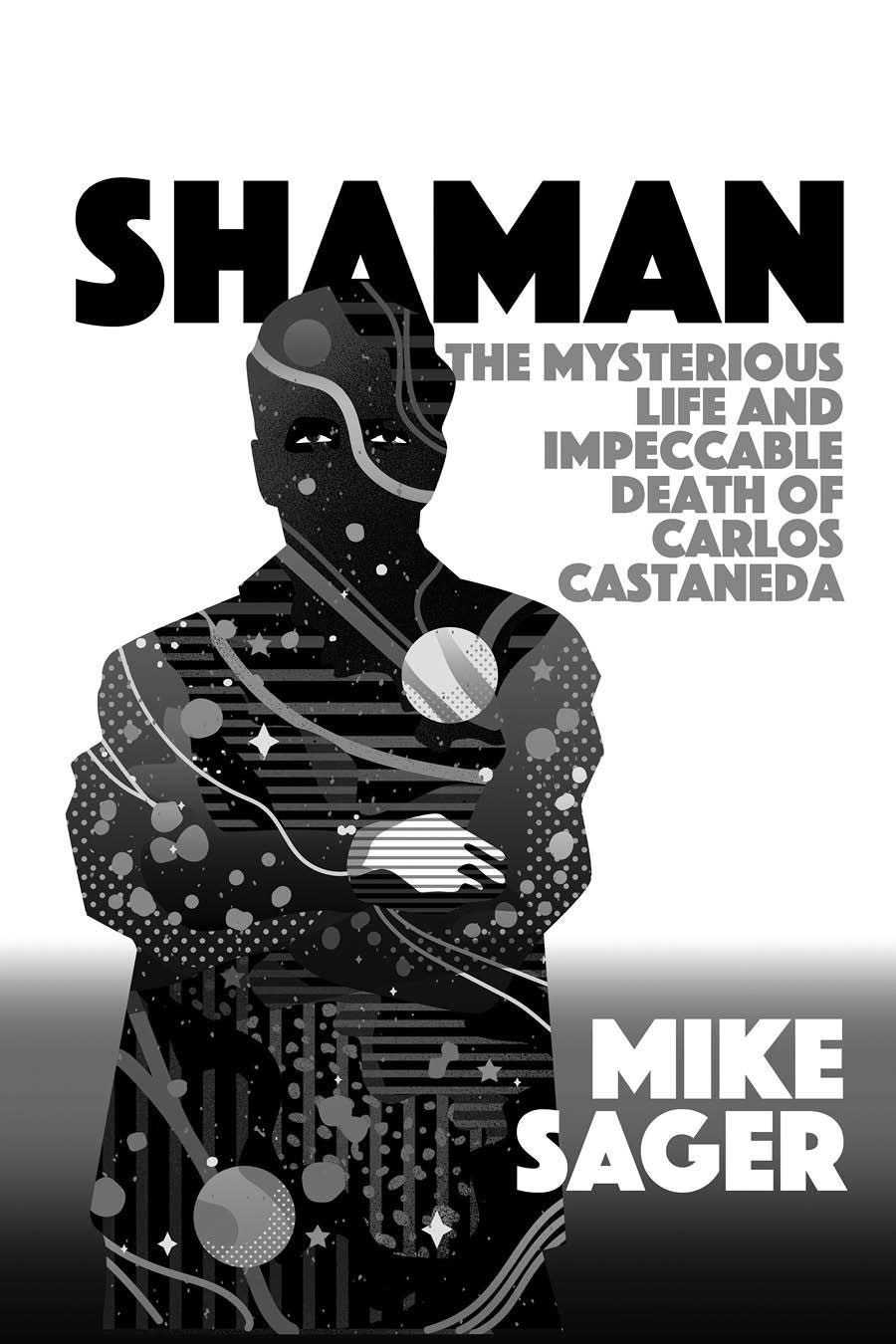
Generative illustration for Shaman: The Mysterious Life and Impeccable Death of Carlos Castaneda






Shaman: The Mysterious Life and Impeccable Death of Carlos Castaneda
Overview unavailable.
Castaneda Front Matter
- Collects praise for Mike Sager’s literary journalism, highlighting his vivid style, curiosity, and focus on overlooked people and subcultures.
- Lists Sager’s other nonfiction and fiction books, including works on drugs, celebrity, war, crime, and American counterculture.
- Provides publication and copyright details for Shaman: The Mysterious Life and Impeccable Death of Carlos Castaneda.
- Introduces the book’s subject: Carlos Castaneda as a disputed figure—visionary shaman to some, fraud to others—told through accounts from people close to him.
The Followers' Night Vigil
- A couple known as 'the Followers' conducts a covert stakeout of a mysterious compound in Los Angeles belonging to a figure called 'the Sorcerer'.
- Greg Mamishian, a Vietnam veteran and electrician, provides the practical support and humor for their missions, valuing quality of life over material success.
- Gaby Mamishian, a German immigrant with a history of radical activism and spiritual seeking, serves as the visionary and strategist of the duo.
- The couple's shared obsession with the Sorcerer began after they were cast out of his inner circle, turning their 'missions' into a bonding ritual for their marriage.
- The operation is characterized by a blend of mystical belief and mundane reality, involving 'energy tracking' alongside McDonald's fries and stakeouts in a dusty Hyundai.
Gaby supplied the vision, the ideas, the tenacity. She read the omens, established the energetic connection, tracked the phantom, stood vigil against inorganic predators seeking to appropriate their energy.
The Sorcerer's Inner Circle
- Gaby and Greg reflect on their expulsion from a sorcerer's inner circle while maintaining their practice of ancient magical ways.
- Greg provides practical support and levity, having experienced vivid visions and the ability to shift his 'assemblage point' into other worlds.
- Gaby is driven by deep personal investment and has begun hearing the 'Emissary,' an internal voice of knowledge that guides her choices.
- The pair continues to practice 'Magical Passes' to gather energy, despite their estrangement from their former mentor.
- During a stakeout in Westwood Village, Gaby feels a growing sense of dread and a warning from her internal voice that something is wrong.
She was listening intently to one of the Sorcerer’s three-hour monologues—highly entertaining affairs, think Lenny Bruce meets Fidel Castro meets Mescalito, the cricket-like being with a warty green head that embodies the spirit of peyote.
The Sorcerer of Westwood Village
- Followers Greg and Gaby conduct clandestine surveillance on a mysterious stucco compound in Los Angeles, sensing a shift in the 'universal intent' of their mission.
- The compound's architecture reflects shamanic duality, with separate entrances representing the 'Tonal' (known world) and the 'Nagual' (the mysterious unknown).
- The resident 'Sorcerer' is revealed to be Carlos Castaneda, a legendary counterculture author who claimed to be the last in a line of ancient Toltec shamans.
- Despite his global fame and millions of books sold, Castaneda maintained a mythic anonymity, claiming to live in the desert while actually residing in a quiet UCLA neighborhood.
- The surveillance mission aims to document a man who strictly forbade photographs or recordings as part of his philosophy of 'erasing personal history.'
- The followers are beginning to realize that the public persona of the 'Mexican bellhop' shaman is largely a fabrication at odds with his actual lifestyle.
The Sorcerer was also known as the Nagual, the last of a line of shamans stretching back thousands of years to the Toltecs.
The Sorcerer of Westwood Village
- Carlos Castaneda lived a secret life in Westwood Village despite his public persona as an elusive enigma.
- Followers Greg and Gaby conducted clandestine surveillance to document the Sorcerer, who strictly forbade photography or recordings.
- The surveillance was viewed by the participants as an amateur anthropological exercise and a way to seek their own 'nonordinary reality.'
- Castaneda's academic background at UCLA provided a framework for his followers to justify their intrusive behavior as an 'academic homage.'
- A chance encounter with a family of raccoons at 'Pandora’s Gate' is interpreted by the followers as a symbolic or beckoning omen.
The story described Castaneda as “an enigma wrapped in a mystery wrapped in a tortilla.”
The Secrets of Trash Night
- Greg and Gaby witness a family of raccoons enter the Sorcerer's compound through a hidden hedge gate, followed by an unsettling encounter with a black moth.
- The couple experiences a visceral, supernatural warning to 'Keep Out' but chooses to ignore the physical sensation of alarm.
- The pair has established a weekly ritual of stealing the Sorcerer's trash bags on Tuesday nights to study his private life.
- By analyzing the refuse in their Topanga Canyon cabin, they have pieced together a 'puzzle picture' of the mysterious man's daily existence.
- Their findings contradict the Sorcerer's public image of celibate solitude, revealing he lives with at least five women, including powerful 'Witches.'
- The act of 'liberating' the trash serves as a literal extension of their devotion to the Sorcerer's magical teachings.
He looked at Greg and Gaby for a long moment, a beckoning type of expression, dark eyes sparkling from within his dark mask, as if to say: 'Follow me.'
Secrets in the Sorcerer's Trash
- Followers of the Sorcerer meticulously sifted through his trash to uncover the reality of his supposedly celibate and solitary life.
- The refuse revealed a household of luxury and excess, including designer clothing from Armani and Neiman Marcus, often found cut into pieces.
- Evidence suggested a complex web of aliases, legal documents, and health issues, including insulin syringes and prescriptions for phenobarbital.
- Trash findings exposed the Sorcerer's secret marriages to two of his 'Witches,' performed just two days apart in Las Vegas.
- The mundane items—Diet Pepsi, airline vodka bottles, and Julio Iglesias records—contrasted sharply with the mystical image projected to the public.
- The scavenging operation was interrupted when a 'Chacmool'—a fierce member of the inner circle—caught the followers in the act.
The Sorcerer and the W itches, who were in their sixties, ate a lot of chicken and eggs—the mounds of bones and shells rankled the Follower ’ s vegetarian sensibilities and stunk up their tiny cabin.
The Confrontation and Margaret Runyan
- The Followers are intercepted by a 'Chacmool'—one of the Sorcerer’s fierce bodyguards—while attempting to leave with bags of trash.
- Despite the confrontation, Gaby and Greg experience a strange, detached calmness and a sense of moral justification for their actions.
- The Chacmools are described as personal assistants who demonstrate 'Magical Passes,' which are aerobic movements with esoteric names.
- The narrative shifts to January 1960, introducing Margaret Runyan, a chief telephone operator with a sophisticated social life in Los Angeles.
- Margaret is depicted as a well-dressed, 'put together' woman of West Virginian origin who is currently entertaining a wealthy Jordanian suitor.
The Chacmool looked at Greg and Gaby with flames in her eyes. 'What do you think you’re doing?' she thundered indignantly.
The Enigmatic Margaret Runyan
- Margaret Runyan was a fashion-conscious professional who embodied an early prototype of the independent, postmodern woman.
- Despite two brief marriages to men who demanded she become a housewife, she prioritized her career and personal autonomy.
- She was deeply immersed in 'pseudo-sciences' and mystical philosophies, following the teachings of the lecturer Neville Goddard.
- Goddard's philosophy focused on 'controlled imagination' and the ability to alter reality by erasing personal history and tapping into the 'I AM'.
- The narrative introduces her complex relationship with Carlos Castaneda, a South American anthropology student she had been dating for five years.
- Runyan's life was a blend of high-fashion socialite aesthetics and a serious pursuit of esoteric spiritual knowledge.
The great failure of her early life, she would later confide, was thinking she had to marry a man in order to sleep with him.
The Magnetism of Carlos Castaneda
- Carlos Castaneda is introduced as a charismatic and intense South American anthropology student at UCLA with a complex, magnetic personality.
- His relationship with Margaret Runyan is defined by his overwhelming presence and his tendency to disappear for weeks at a time.
- Runyan describes social interaction with Castaneda as an exhausting experience, likening it to being hit by successive waves of pure energy.
- Despite his physical appearance not being classically handsome, Castaneda's storytelling and focused attention make Runyan feel uniquely understood.
- The narrative reveals the origins of their relationship, sparked by a chance meeting at a dressmaker's studio where Runyan was immediately smitten.
- A confrontation occurs at Runyan's apartment where Castaneda calmly insists on meeting her new friend despite her attempts to turn him away.
Social intercourse with him was a palpable, exhausting experience—'like being drenched by successive sets of huge waves of pure energy directed at me alone.'
The Seduction of Carlos Castaneda
- Runyan uses the 'controlled imagination' techniques of Neville Goddard to manifest a relationship with Castaneda.
- Castaneda presents himself as a worldly artist with a dramatic, possibly fabricated, backstory involving an illicit birth in Italy.
- The couple immersed themselves in the 1950s Los Angeles beatnik scene, interacting with figures like Ginsberg and Kerouac.
- Castaneda displayed an early obsession with power and social mobility, idolizing Soviet Premier Nikita Khrushchev.
- Despite his lack of funds and various menial jobs, Castaneda maintained a dapper appearance and a sharp, eccentric intellect.
- The relationship was built on a foundation of shared intellectual interests, romantic poetry, and Castaneda's evolving personal mythology.
Goddard taught that the sleeping state sealed instructions given to the unconscious mind.
The Evolution of Castaneda
- Castaneda cultivated a meticulous personal image, blending high fashion with frugal self-tailoring while frequently altering the details of his past.
- Despite his social aspirations, he struggled with insecurities regarding his ethnicity and physical appearance within his university community.
- His intellectual life was defined by late-night 'bull-sessions' focused on parapsychology, astral projection, and the works of Aldous Huxley.
- The publication of 'The Sacred Mushroom' by Andrija Puharich served as a pivotal influence, shifting his academic focus toward anthropology.
- He became obsessed with the concept of 'nonordinary reality' and the use of psychotropic plants in ancient shamanistic rituals.
- Castaneda identified deeply with individuals who claimed to channel ancient personas or access subconscious states through hypnosis and ritual.
The cozy, spirited gatherings, usually held at the apartment of a friend, would run into the wee hours, fueled by Castaneda’s favorite wine, Mateus Rosé, which he jokingly referred to as 'my most valuable teacher.'
Castaneda's Quest for Nonordinary Reality
- Castaneda was deeply influenced by the works of Puharich and Huxley regarding ancient rituals and the use of hallucinogens to reach nonordinary reality.
- Struggling with feelings of inadequacy and the monotony of a 'brown paper bag' life, Castaneda sought a path to reach his untapped potential.
- A university assignment on ethnobotany prompted Castaneda to search for an indigenous informant in the Sonoran Desert to secure an easy grade.
- In a sudden and impulsive moment of jealousy or realization, Castaneda proposed marriage to Margaret Runyan after being challenged by a rival suitor.
- Years later, Castaneda used poetic and mystical language to entice Gloria Garvin, promising to help her 'soar' beyond her metaphorical cage.
“You have always been like a bird, like a little bird in a cage,” he said, projecting his voice above the rush and pound of the waves.
The Magic of Castaneda
- Carlos Castaneda uses romantic, almost cinematic language to recruit Gloria Garvin into his spiritual circle.
- Garvin recognizes the cliché nature of Castaneda's words but finds them uniquely transformative and magical in person.
- The narrative traces Garvin's introduction to Castaneda's work back to a drug-fueled afternoon in a Haight-Ashbury Victorian house.
- Castaneda's 'The Teachings of Don Juan' is described as a blend of Hemingway's style and magical realism that perfectly captured the 1960s zeitgeist.
- The book details an apprenticeship with a Yaqui sorcerer, blurring the lines between anthropology and psychedelic fiction.
- The text highlights the sensory richness of Castaneda's writing, from the taste of peyote to encounters with the entity Mescalito.
You have always been like a bird, like a little bird in a cage; you are wanting to fly, you’re ready, the door is open—but you’re just sitting there.
The Path of the Warrior
- Castaneda's narrative blends scholarly detachment with surreal accounts of indigenous mysticism, featuring encounters with spirits and anthropomorphic entities.
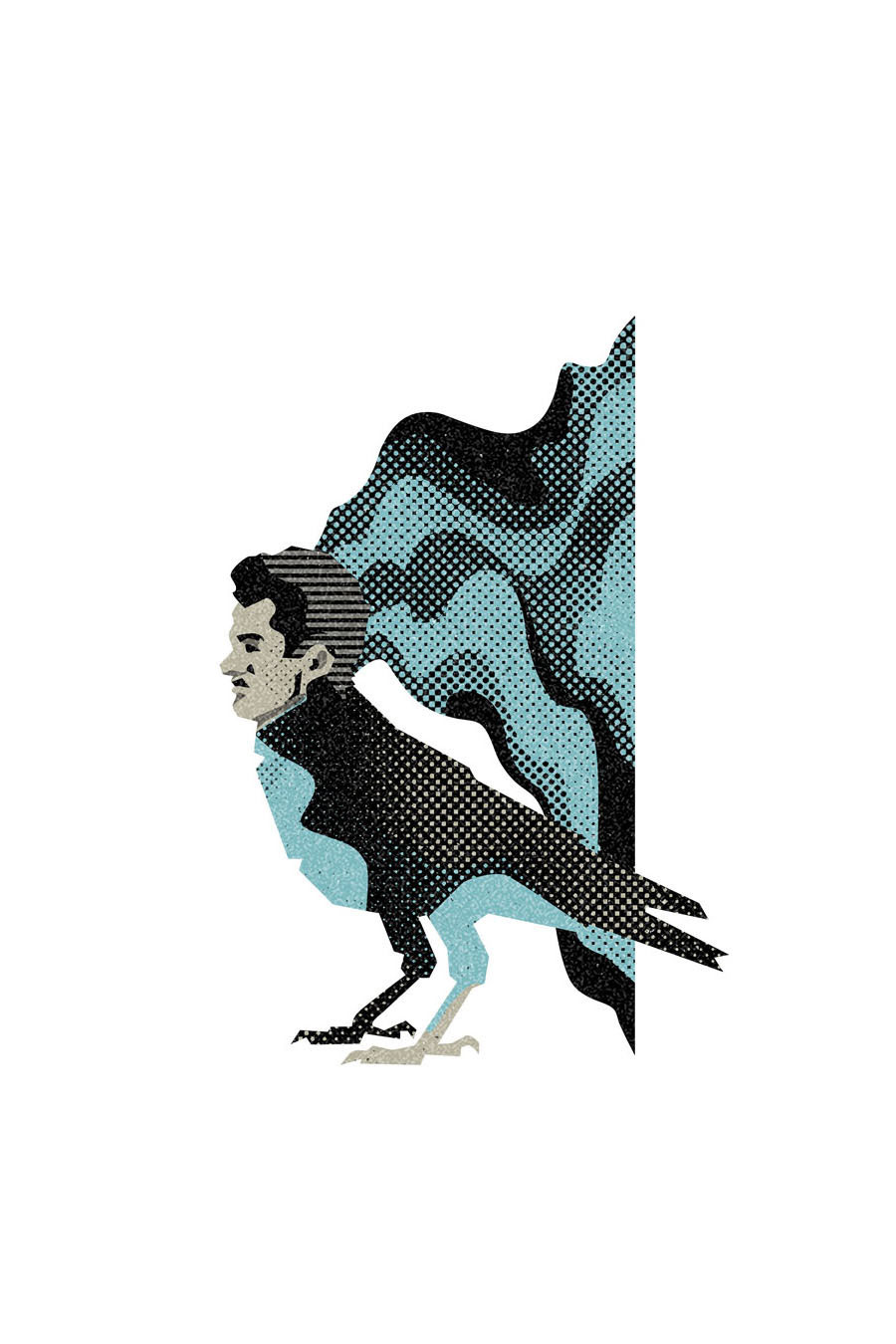
- The text describes the use of psychotropic substances like peyote and datura to achieve transformations, such as the sensation of turning into a crow.
- Castaneda acts as a skeptical rationalist, attempting to use Socratic dialogue to reconcile mystical experiences with Western scientific thought.
- The ultimate goal of the apprenticeship is to become an 'Impeccable Warrior' who lives in the constant presence of death and acts without sentiment.
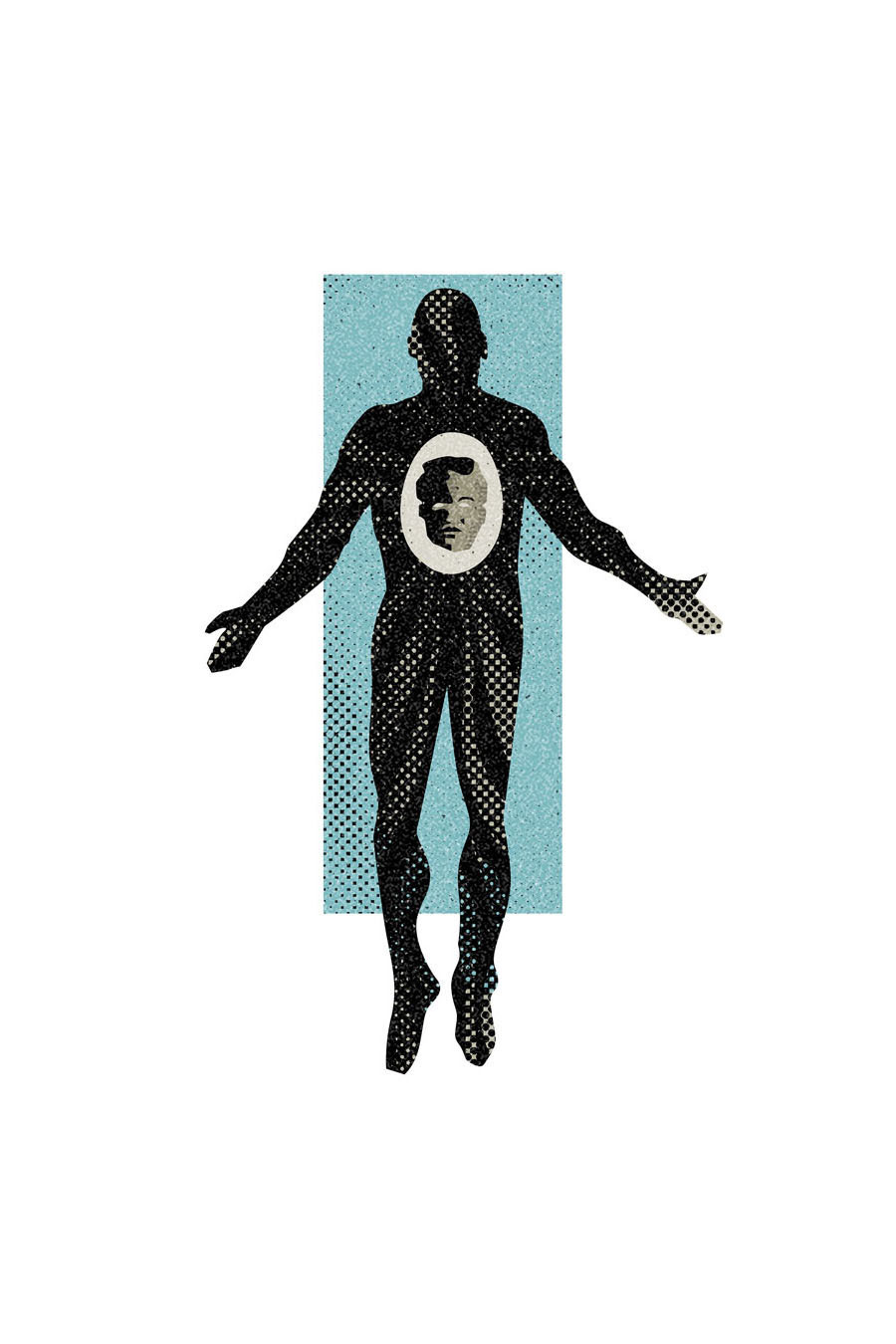
- Don Juan teaches that humans are not flesh but 'luminous eggs' made of light filaments that connect every individual to the entire universe.
- Perception is governed by the 'Assemblage Point,' a specific area of luminosity that, when shifted, allows a practitioner to enter other worlds.
Human beings, he explains, are actually made of fine filaments of light, glowing white cobwebs that stretch from the head to the navel, forming an egg-shaped assemblage of circulating threads, with arms and legs of luminous bristles bursting in all directions.
The Way of the Warrior
- Carlos Castaneda introduces the concept of the 'Assemblage Point,' a luminous center behind the shoulders that dictates human perception and access to other worlds.
- A chance meeting at UCLA between Castaneda and a young woman named Garvin marks the beginning of a manipulative mentorship that leads her to break off her engagement.
- Castaneda's third book, Journey to Ixtlan, shifts the narrative away from psychotropic drugs, claiming they were merely 'crutches' for his initial lack of sensitivity.
- The philosophy of the 'Impeccable Warrior' is introduced, emphasizing a life of calculation, control, and abandon over a life of whining and victimhood.
- As his books gained academic and commercial success, Castaneda became a cult figure, inspiring a wave of counter-culture tourists to seek shamanic experiences in Mexico.
“Too bad you brought this nincompoop along with you.”
The Warrior and the Mythmaker
- Don Juan defines the warrior as a hunter who balances calculated control with total abandon, contrasting this with the 'distorted' life of a victim.
- The massive commercial success of 'Journey to Ixtlan' transformed Castaneda into a millionaire and a counter-culture icon.
- In a rare Time magazine interview, Castaneda constructed an elaborate personal history involving a Brazilian birth and a family of high status.
- Castaneda framed his mother's death as a result of 'acedia' or spiritual apathy, a condition he sought to transcend through Don Juan's teachings.
- He characterized his biological father as a symbol of indecision and weakness, using him as a foil for the 'impeccability' required of a warrior.
- The narrative details Castaneda's supposed global education and his eventual pivot to anthropology at UCLA after failing as a sculptor in Milan.
A warrior is not a leaf at the mercy of the wind.
The Invention of Carlos Castaneda
- Castaneda initially presented a romanticized biography involving a foster family in Los Angeles and sculpture studies in Milan.
- Time magazine and researcher Richard de Mille uncovered a contradictory reality based on immigration records and Peruvian history.
- The real Castaneda was born in Peru to a watchmaker father and a young mother, later attending fine arts school in Lima rather than Italy.
- Former associates describe him as a charismatic 'big liar' and a 'first-class seducer' who survived by gambling and selling faulty watches.
- Castaneda dismissed the factual discrepancies by arguing that using statistics to verify his life was as futile as using science to validate sorcery.
To ask me to verify my life by giving you my statistics is like using science to validate sorcery.
The Castaneda Fraud Debate
- Carlos Castaneda dismissed requests for biographical accuracy, claiming that statistical verification 'robs the world of its magic.'
- While UCLA professors defended his doctorate, many social scientists condemned his work as a fictionalized composite masquerading as anthropology.
- Researcher Richard de Mille compiled extensive evidence suggesting the books were masterfully executed works of fiction rather than ethnography.
- Botanical and chemical inconsistencies were noted, such as the claim of smoking mushroom powder, which experts say is physically impossible.
- Climatologists pointed out that Castaneda's descriptions of pleasant desert hikes in June and August contradict the lethal 120-degree reality of the Sonoran Desert.
- The narrative conspicuously lacks any mention of the ubiquitous desert pests and predators that typically plague travelers in that region.
To ask me to verify my life by giving you my statistics is like using science to validate sorcery.
The Sham-Man's Deception
- Critics point to numerous ecological inconsistencies in Castaneda's accounts, such as climbing desert trees that are physically impossible to scale and avoiding ubiquitous desert pests.
- The author's survival feats, including catching multiple quail and running through thorny cacti without injury, are viewed as physically implausible by desert experts.
- Scholars argue that Don Juan's teachings are not authentic Yaqui wisdom but a synthesis of Eastern mysticism, European philosophy, and existing anthropological literature.
- The historical identity of Don Juan is questioned, as Yaqui culture traditionally lacks peyote rituals and the practice of taking apprentices as described.
- Anthropologist Jay Courtney Fikes suggests Don Juan was a composite character created from UCLA library research rather than genuine field work.
- Despite the debunking, some critics like Richard de Mille view Castaneda as a brilliant 'spellbinder' who used fiction to convey deeper philosophical truths.
This is a sham-man bearing gifts, an ambiguous spellbinder dealing simultaneously in contrary commodities—wisdom and deception.
The Sham-Man and His Witches
- Critic Richard de Mille characterizes Carlos Castaneda as a 'sham-man' who uses deception and fictionalized narratives to convey philosophical truths.
- Rumors within the UCLA anthropology department suggested Castaneda's desert trips were a cover for his numerous romantic entanglements.
- Castaneda began assembling an inner circle of women, including Florinda Donner-Grau and Taisha Abelar, who would later be known as his 'Witches.'
- The 'Witches' adopted new identities and claimed their own mystical apprenticeships, forming a loyal triumvirate that supported Castaneda for life.
- Castaneda used mystical rhetoric to propose to Gloria Garvin, claiming Don Juan identified her as the woman at the 'center of the hurricane.'
- Garvin's encounter with Castaneda resulted in a profound psychological shift, leaving her feeling as though she had surrendered an irreclaimable part of herself.
This is a sham-man bearing gifts, an ambiguous spellbinder dealing simultaneously in contrary commodities—wisdom and deception.
Intimate Kisses and Lucid Dreams
- A pivotal, intense kiss between Castaneda and Garvin marks a moment of profound personal surrender and the suspension of time.
- Jeremy Davidson, a computer technician and spiritual seeker, experiences a vivid lucid dream following the techniques of Don Juan.
- Davidson practices 'systematic intake' within his dream, observing an alpine landscape and an abandoned gingerbread-style resort.
- The dream sequence demonstrates the application of Castaneda's teachings, specifically the instruction to look at one's hands to stabilize the dream state.
- Davidson's background as a skeptic and former adherent of various religions highlights the intellectual profile of those drawn to Castaneda's sorcery.
- The narrative shifts from physical intimacy to the metaphysical exploration of the 'blue-green world' where sorcerers reside.
He took off running—hopping and skipping from boulder to boulder like an astronaut bounding across the surface of the moon.
The Path of the Nagual
- Davidson, a lifelong seeker and skeptic, finds a profound connection to the writings of Carlos Castaneda after exploring various religions and philosophies.
- Castaneda transitioned from a disciple to a prophet figure, claiming the title of Nagual after the 'immaculate death' of his mentor, Don Juan.
- The teachings describe the Second Attention, an unseen universe of consecutive worlds arranged like the layers of an onion.
- Perception is governed by the Assemblage Point, a luminous location behind the shoulder blades that can be reconditioned to access other realms.
- The ultimate goal of these techniques is for the practitioner to remain in the Second Attention as a 'luminous egg' for eternity.
- Davidson adopts the system's core tenets of living impeccably as a Warrior and taking total responsibility for one's life.
To this end, he prescribed a series of techniques designed to displace the Assemblage Point, a place of intense luminosity located about an arm’s length behind the shoulder blades, where perception occurs.
The Sorcerer's Way
- Davidson finds a profound sense of purpose in the belief system of Don Juan, which emphasizes living impeccably as a 'Warrior' and a 'Man of Knowledge.'
- The philosophy shifts from passive faith to active results, offering procedures to access the 'Second Attention' and other worlds in the present life.
- To follow the path, Davidson adopts rigorous disciplines including erasing personal history, eliminating self-importance, and using death as an advisor.
- He practices 'recapitulation,' a laborious process of reviewing every human contact from birth to reclaim wasted energy.
- Upon successfully entering the Second Attention, Davidson experiences vivid, supernatural landscapes ranging from a blue-green world to a dark realm of ghoul-like creatures.
- His journey through these alternate dimensions is guided by 'The Spirit' and driven by his vocalized intent to find the Sorcerers.
He tried to have a romance with knowledge, and to write to the people he cared about a blank check of affection.
The Spirit and the Shadow
- Davidson navigates a series of surreal dreamscapes, encountering ghoul-like creatures and sentient shadow rectangles.
- A mysterious inner voice instructs Davidson to refine his willpower by restating his 'intention' rather than a 'demand.'
- The dream shifts from a primitive cave chase to a modern shopping mall, where Davidson eventually enters a sex shop.
- Davidson ignores the warnings of his inner voice to engage in a sexual encounter, leading to an abrupt awakening and a sense of spiritual failure.
- The narrative shifts to a physical reality where Carlos Castaneda pressures a sick Melissa Ward to attend a dinner in her honor.
He had not acted like a Warrior. He shouldn’t have crossed the wishes of the inner voice. He shouldn’t have defied The Spirit.
The Electric Warrior
- Melissa Ward, a woman steeped in 1970s counter-culture, receives a persistent and high-pressure phone call from Carlos Castaneda while she is ill with the flu.
- Castaneda insists that Ward attend a mysterious dinner held in her honor, claiming she is destined to 'become one of us.'
- Despite her physical illness, Castaneda uses hyperbolic language, calling her the 'Electric Warrior' and claiming she was sought for 'all of eternity.'
- Ward feels a sense of dread and 'creeps' regarding the invitation, perceiving the invitation as having a distinct cult-like undertone.
- The narrative establishes Ward's background as a child of a secret military base who grew up influenced by psychedelics and the very literature Castaneda authored.
Become one of us! The way he said it made her skin crawl. It had the distinct ring of something cult-like; she didn’t like the sound of it, not at all.
The Electric Warrior's Call
- Carlos Castaneda aggressively pressures Melissa Ward to attend a mysterious dinner, claiming she is the 'Electric Warrior' they have been seeking for eternity.
- Ward feels a deep sense of unease and dread regarding Castaneda's cult-like language and the invitation to 'become one of us.'
- Ward's background is rooted in 1970s counter-culture, eastern religions, and the works of philosophical writers like Gurdjieff and Huxley.
- Her first encounter with Castaneda's work occurred at age eighteen while she was battling a severe illness in a secluded cabin.
- During her recovery, Ward experienced a mystical month-long interaction with a giant black crow that mirrored the sorcery themes in Castaneda's 'Journey to Ixtlan.'
- By 1993, Ward had moved on from these mystical experiences to lead a busy, successful life as a UCLA student and nutrition consultant.
“You are the Electric Warrior! We have been searching for you for all of eternity! We have found you just in the nick of time. You must come!”
The Crow and the Call
- While suffering from severe colitis in a cabin, Ward discovers Carlos Castaneda's 'Journey to Ixtlan' and experiences a series of uncanny encounters with a giant crow.
- The crow's presence mirrors the supernatural themes of the book, acting as a benevolent companion until Ward recovers from her illness.
- Years later, after building a successful life at UCLA, Ward is devastated by the grueling experience of nursing her dying mother alone.
- Falling into a deep depression, Ward is unexpectedly invited by a friend to a private session with Carlos Castaneda.
- Castaneda's emergence into public life after twenty years of seclusion marks a significant shift in his mysterious career.
- Ward's previous mystical experience with the crow serves as the catalyst for her re-entry into Castaneda's world during her time of grief.
It was hopping up and down, acting very strangely, like it was trying to get her attention.
The Birth of Tensegrity
- Carlos Castaneda emerged from a twenty-year public absence to commercialize his teachings through newly formed corporate entities like Cleargreen.
- The group introduced Tensegrity, a modernized system of 'magical passes' claimed to be passed down through twenty-seven generations of Toltec shamans.
- Tensegrity combined elements of martial arts, yoga, and aerobics to help practitioners achieve 'indescribable feats of perception' and travel to other worlds.
- Despite earlier claims that the sorcerer's way was a solitary pursuit, Castaneda began promoting group practice to create a 'mass' for more powerful results.
- The sudden shift toward expensive public seminars and corporate management contradicted Castaneda's previous stance against selling his techniques.
- Critics and observers questioned whether the change was driven by New Age market trends or the increasing influence of the 'Witches' over an aging Castaneda.
They’d decided to rev things up, to actively promote the ideas and practices of Don Juan on a larger scale, and to make them available for public consumption.
The Rise of Tensegrity
- Castaneda introduced Tensegrity as a physical and spiritual practice, claiming it was authorized by the miraculous return of Carol Tiggs from the 'Second Attention.'
- Critics and anthropologists viewed the movement as a manufactured ritual designed to monetize the existing mythology of the Don Juan books.
- The movement became a lucrative enterprise, selling expensive seminars and branded merchandise like Teflon balls and foam rubber disks.
- Allegations surfaced that the 'magical passes' were actually appropriated from kung fu instructor Howard Lee, leading to a rift between him and Castaneda.
- Tensegrity was marketed as a 'two-fer' that appealed to the 1990s obsession with both physical fitness and New Age philosophy.
- The seminars featured choreographed demonstrations by the 'Chacmools' and passionate speeches by Castaneda and the Witches.
There were allegations Castaneda had paid a substantial sum of money and the phallus of a puma to Lee to deter him from taking legal action against Cleargreen.
The Recruitment of Melissa Ward
- Melissa Ward, depressed and seeking direction, attends an intimate Santa Monica lecture by Carlos Castaneda in 1993.
- Castaneda captivates the audience with a torrential, unorganized monologue and an otherworldly, fluid presence.
- After singling Ward out for her 'energy,' Castaneda begins a pattern of intense daily phone calls and personal questioning.
- He demands total celibacy and a detailed 'recapitulation' of her past sexual partners and innermost secrets.
- Despite his romantic tone and claims of being soulmates, Castaneda maintains a physical distance, canceling private meetings at the last minute.
- Ward finds his constant attention habit-forming and addictive, despite her lack of sexual interest in him.
“You must zip it up! You must not let anyone touch your baby-thing,” he said.
The Electric Warrior's Initiation
- Castaneda cultivated a romantic but physically distant relationship with Ward, using constant phone calls and declarations of soulmate status to create a psychological dependency.
- Ward was officially designated as the 'Electric Warrior' during a lavish Christmas Eve banquet that she found both sophisticated and deeply unsettling.
- Despite being the guest of honor, Ward experienced hostility and disdain from the 'Witches' in the inner circle, who critiqued her personal tastes and intellect.
- The inner circle functioned as a high-energy social club characterized by intellectualism, juvenile practical jokes, and theatrical performances led by figures like Bruce Wagner.
- Ward found herself seduced by the group's camaraderie and the relief it provided from her personal problems, even as she recognized the 'creepy' nature of the cult-like hierarchy.
Though she was being treated like the special guest—or like a bride—the Witches struck her as very catty and a bit hostile.
The Theater of Infinity
- The inner circle formed a 'Sorcery Theater' led by Bruce Wagner, performing satirical skits that lampooned Castaneda’s own philosophy and rules.
- Despite the public success of the seminars, the private atmosphere within the Pandora compound became stagnant and directionless by late 1994.
- Castaneda’s physical health began to visibly decline, marked by ashen skin, a 'sour smell' of decay, and rumors of diabetes.
- Internal power dynamics shifted as Castaneda complained about the 'tyranny' of the Witches, who had become increasingly dismissive of his authority.
- The section culminates in a chilling private encounter where Castaneda tells Melissa Ward he is 'leaving soon' and taking everyone with him, sparking fears of a mass suicide.
The first thing that came into her mind was Jim Jones, Kool-Aid, the mass cult suicide in Guyana.
The Son and the Sorcerer
- Castaneda alarms his inner circle by claiming he is 'leaving' and taking everyone with him, sparking fears of a cult-like mass suicide.
- C. J. Castaneda, the author's adopted son, lives a grueling life as a coffee kiosk entrepreneur in Atlanta, far removed from his father's mystical world.
- The complex history of C. J.'s birth reveals a marriage between Castaneda and Margaret Runyan that was already fracturing due to infidelity and career ambitions.
- Castaneda’s path to fame began with a UCLA anthropology assignment to find an indigenous informant, leading to his alleged meeting with an 'old Indian' at a bus station.
- The tension between Castaneda’s academic aspirations and his domestic life led to a separation and Runyan's subsequent relationship with a Mormon businessman.
The first thing that came into her mind was Jim Jones, Kool-Aid, the mass cult suicide in Guyana.
The Secret Family Life
- Carlos Castaneda orchestrated a complex deception by arranging for a man named Gerritsen to father a child with his wife, Margaret Runyan.
- Castaneda faked a Mexican divorce to appease Runyan while secretly ensuring they remained legally married.
- Despite having no biological relation, Castaneda legally adopted the boy, C.J., and claimed him as his natural son to the public.
- Castaneda displayed deep paternal devotion, taking the boy to UCLA classes and paying for exclusive private schooling and lessons.
- The future 'Witches' of Castaneda's inner circle, Florinda Donner-Grau and Carol Tiggs, acted as caretakers for the child during his early years.
- Castaneda maintained this domestic facade and financial support for years, even as his literary fame began to grow.
People became accustomed to seeing the brown-skinned man carrying the tow-headed boy everywhere on his shoulders.
The Severed Bond
- Carlos Castaneda maintained a deeply affectionate and financially supportive relationship with his son Cho-cho and former partner Margaret Runyan for decades.
- Castaneda dedicated his first book to them and frequently expressed that his love for the boy was his most beautiful and magical dream.
- By the early 1990s, the formation of Cleargreen marked a radical shift where Castaneda's inner circle began gatekeeping his personal life.
- During a brief 1993 reunion, Castaneda showed genuine joy at seeing his son, but was physically ushered away by his followers, the Chacmools.
- The Chacmools actively sabotaged the relationship by discarding the son's contact information and later banning him from workshops.
- The transition into the 1990s saw Castaneda systematically isolated from his past life, old friends, and family by his new organization.
As C. J. watched in horror, she balled it up and threw it into an outdoor trash receptacle.
The Nagual's Final Departure
- As Carlos Castaneda's health declined in the late 1990s, his organization, Cleargreen, became increasingly isolationist and litigious toward former associates.
- Castaneda's physical deterioration, including near-blindness and weight loss, contradicted the promised health benefits of his Tensegrity workshops.
- His final book, The Active Side of Infinity, introduced a darker cosmology involving predatory entities called 'Flyers' that feed on human awareness.
- The text emphasizes the shamanic concept of 'the fire from within,' where an enlightened sorcerer avoids biological death by transforming into pure energy.
- Castaneda's final public appearances and writings served as a preparation for his own 'definitive journey' into the active side of infinity.
- The narrative shifts abruptly to April 1998, focusing on Castaneda's estranged son, C.J., as a significant moment in the family timeline approaches.
I saw how every one of them turned into a blob of luminosity, and together they ascended and floated above the mesa, like phantom lights in the sky.
The Blue Apparition
- C. J. Castaneda experiences a vivid, spectral visitation from his father, Carlos Castaneda, who appears young and glowing blue in his bedroom.
- Following the apparition, C. J. undergoes a disorienting time slip where he believes he has completed his morning routine, only to find the clocks have reset to the previous night.
- The physical evidence of C. J.'s wet hair from a shower he supposedly hasn't taken yet creates a chilling supernatural paradox.
- Realizing the significance of the vision and the temporal anomaly, C. J. concludes that Carlos Castaneda has died.
- The narrative shifts to June 1998, where a dedicated follower named Greg Mamishian begins investigating the mystery at a mortuary near Culver City.
- The text reveals the obsessive nature of Castaneda's followers, who spent years tracking his movements and documenting his private life.
That’ s when he noticed: Carlos Castaneda was sitting in a chair in the corner of the room, glowing a spectral shade of blue.
The Followers' Final Watch
- Greg and Gaby have spent over two years conducting an amateur anthropological study of Carlos Castaneda through surveillance and trash collection.
- Despite a confrontation with the inner circle and a promise to stop, the couple resumed their activities by shifting their schedule to 3 a.m.
- In February 1998, the couple witnessed a frail, skeletal Castaneda being physically carried into his compound by his followers.
- The sight of the dying 'Nagual' contradicted his mystical promises of leaving the Earth in a flash of light and full awareness.
- The couple realized that Castaneda's impending death would signal the end of their shared obsession and 'binding folly.'
- Following this sighting, Castaneda disappeared from public life, prompting the couple to intensify their surveillance efforts.
Castaneda was thin and fragile, floppy like a rag doll.
The Sorcerer's Final Vanishing
- Carlos Castaneda withdrew from all public and private life as his health appeared to fail, prompting intense surveillance from his followers.
- The inner circle engaged in a frantic period of property renovation and disposal, leading followers to speculate about Castaneda's impending death or departure.
- By late April 1998, the compound was found completely abandoned, stripped of furniture and people, leaving the community in a state of confusion.
- Rumors of world cruises or ritual suicides circulated until a probate notice revealed Castaneda had died on April 27, 1998.
- Castaneda's will explicitly disinherited his son, C.J., and transferred his multi-million dollar estate to a trust controlled by his inner circle.
When landscapers arrived and began tearing up the internal courtyard of the compound, the Followers couldn’t help but wonder if they were digging a grave.
The Sorcerer's Secret Exit
- Carlos Castaneda's death from liver cancer was kept secret for two months before being revealed by the Los Angeles Times.
- Castaneda's final will explicitly disowned his son, C.J., and transferred all assets to a trust controlled by his inner circle.
- The death certificate contained false information, listing Castaneda as a teacher for a school district that never employed him.
- While his lawyer cited a desire for privacy, his organization Cleargreen claimed he had transcended the world with 'full awareness' like his teacher Don Juan.
- The sudden disappearance of Castaneda's 'Witches' and discrepancies in mortuary records sparked confusion and investigation among his followers.
- Followers like Greg and Gaby were left struggling to determine if their leader died as a common man or vanished as a mystical sorcerer.
The cognition of our world of everyday life does not provide for a description of a phenomenon such as this.
The Fire From Within
- Greg uses his investigative skills to track down Carlos Castaneda's death certificate and the specific mortuary that handled his remains.
- He confronts the mortuary staff with the central myth of Castaneda's teachings: that a sorcerer should vanish via 'the fire from within' rather than a mundane death.
- A mortuary official confirms she personally witnessed the cremation, debunking the spiritual claim of bodily ascension.
- An autopsy later reveals the cause of death as metabolic encephalopathy resulting from cancer and liver failure.
- Greg reflects on the duality of Castaneda as a 'sham-man' who used deception to deliver philosophical wisdom.
- The chapter concludes with Greg discarding Castaneda's old sport coat, symbolizing his final break from the cult leader's influence.
What I want to know is: Did this man burn with the fire from within? Or did you burn him in your oven?
The Sham-Man's Legacy
- Greg experiences a complex mixture of disappointment and relief after learning of a subject's neurological breakdown and death.
- The narrative reflects on the legacy of Carlos Castaneda, described as a 'sham-man' who used deception to convey deeper spiritual truths.
- Greg symbolically discards his favorite corduroy sport coat, signaling a definitive end to his long-term obsession or investigation.
- The text highlights the duality of wisdom and deception, suggesting that stories can be packed with truth even if they are not factually true.
- The conclusion of the piece transitions into a comprehensive bibliography of Mike Sager's work, focusing on the 'American underbelly' and fringe figures.
This is a sham-man bearing gifts, an ambiguous spellbinder dealing simultaneously in contrary commodities—wisdom and deception.
The Followers' Night Vigil
Gaby supplied the vision, the ideas, the tenacity. She read the omens, established the energetic connection, tracked the phantom, stood vigil against inorganic predators seeking to appropriate their energy.
Secrets in the Sorcerer's Trash
- The Sorcerer’s trash revealed luxury and excess—designer clothing, legal papers, aliases, insulin syringes, and prescriptions.
- The refuse also exposed his secret marriages to two of his “Witches,” performed two days apart in Las Vegas.
The Sorcerer and the W itches, who were in their sixties, ate a lot of chicken and eggs—the mounds of bones and shells rankled the Follower ’ s vegetarian sensibilities and stunk up their tiny cabin.
The Theater of Infinity
- As Castaneda’s health declined—ashen skin, a sour smell, and rumors of diabetes—the Witches grew increasingly dismissive of his authority.
- In a chilling private encounter, Castaneda told Melissa Ward he was “leaving soon” and taking everyone with him, raising fears of mass suicide.
The first thing that came into her mind was Jim Jones, Kool-Aid, the mass cult suicide in Guyana.
The Secret Family Life
- Castaneda orchestrated a complex deception by arranging for Gerritsen to father a child with Margaret Runyan.
- Though not the biological father, Castaneda adopted C.J., claimed him publicly as his son, and sustained a domestic facade for years.
People became accustomed to seeing the brown-skinned man carrying the tow-headed boy everywhere on his shoulders.
The Fire From Within
- A mortuary official confirmed she personally witnessed Castaneda’s cremation, undercutting the myth that a sorcerer should vanish by “the fire from within.”
- An autopsy later found he died from metabolic encephalopathy caused by cancer and liver failure.
What I want to know is: Did this man burn with the fire from within? Or did you burn him in your oven?